Category Archives: Poetry

Remembering Peter O’Toole

20131216-232227.jpg

My mistress’ eyes are nothing like the sun (Sonnet 130)
by William Shakespeare

My mistress’ eyes are nothing like the sun;
Coral is far more red than her lips’ red;
If snow be white, why then her breasts are dun;
If hairs be wires, black wires grow on her head.
I have seen roses damasked, red and white,
But no such roses see I in her cheeks;
And in some perfumes is there more delight
Than in the breath that from my mistress reeks.
I love to hear her speak, yet well I know
That music hath a far more pleasing sound;
I grant I never saw a goddess go;
My mistress when she walks treads on the ground.
And yet, by heaven, I think my love as rare
As any she belied with false compare.

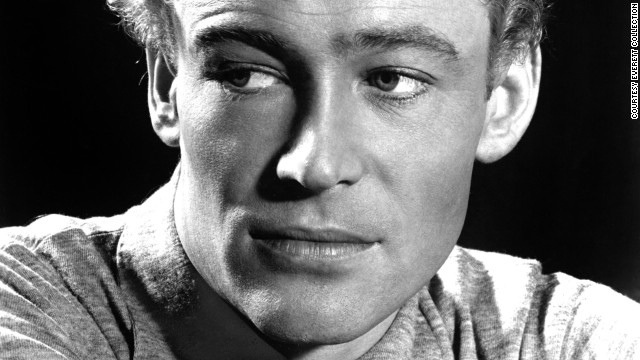
I decided to use this poem today because as I was listening to NPR on my way home yesterday and heard an interview from when Melissa Block spoke to O’Toole in 2007. Recalling the interview, Block said that “the most memorable part of our conversation had to do with Shakespeare; in particular, with Shakespeare’s sonnets.” O’Toole said that he knows all 156 of them, and said:

They’re my life companion. They’re at the side of my bed. They travel with me. I pick them up, and I read them all the time. I find them endlessly informing, endlessly beautiful, endlessly – they say, they hit the spot so many times on so many things.

After some prodding, he recited one of his favorites, Sonnet 130, which is the poem above. I’ve always enjoyed this sonnet too; it’s almost the anti-sonnet, a parody. Yet, one may look at it in other ways as well. First of all, love is not what is on the outside,but what is on the inside. A second, for almost four centuries, questions have arisen about William Shakespeare’s sexuality. If you think of his description of the “lady” above she seems more masculine than feminine.

The only indication that Shakespeare may have been homosexual is found, not in his life, but in his writings. One of his most prominent works, his 154 Sonnets, is most often cited in such discussions. The majority of these sonnets deal with the author’s love for a young man, referred to in the works as his “beloved fair youth.”

Sonnet 154

The little Love-god lying once asleep,
Laid by his side his heart-inflaming brand,
Whilst many nymphs that vowed chaste life to keep
Came tripping by; but in her maiden hand
The fairest votary took up that fire
Which many legions of true hearts had warmed;
And so the General of hot desire
Was, sleeping, by a virgin hand disarmed.
This brand she quenched in a cool well by,
Which from Love’s fire took heat perpetual,
Growing a bath and healthful remedy,
For men diseased; but I, my mistress’ thrall,
Came there for cure and this by that I prove,
Love’s fire heats water, water cools not love.

The writer’s intense romantic feelings for this person have triggered many to believe that Shakespeare may have been gay. Even the dedication of another of his works, his poem “The Rape of Lucrece,” is strongly worded. “The love I dedicate to your Lordship is without end.”

It has not been uncommon for writers and musicians to substitute the sex of the object of their desire to hide their sexuality. So maybe Sonnet 130 is just that, the description of a plain woman instead of a tall, dark, and handsome young man that the sonnet nearly describes. It’s just a theory and probably a bad theory, yet, still let’s read this sonnet and remember two things:

Shakespeare was a wonderful poet, and should be read often.
Peter O’Toole was a wonderful actor who will be missed, yet we will always have two of my favorite movies to remeber him by: Lawrence of Arabia and A Lion in Winter.


Travel

20131209-223223.jpg

Travel
by Edna St. Vincent Millay

The railroad track is miles away,
And the day is loud with voices speaking,
Yet there isn’t a train goes by all day
But I hear its whistle shrieking.

All night there isn’t a train goes by,
Though the night is still for sleep and dreaming,
But I see its cinders red on the sky,
And hear its engine steaming.

My heart is warm with friends I make,
And better friends I’ll not be knowing;
Yet there isn’t a train I wouldn’t take,
No matter where it’s going.

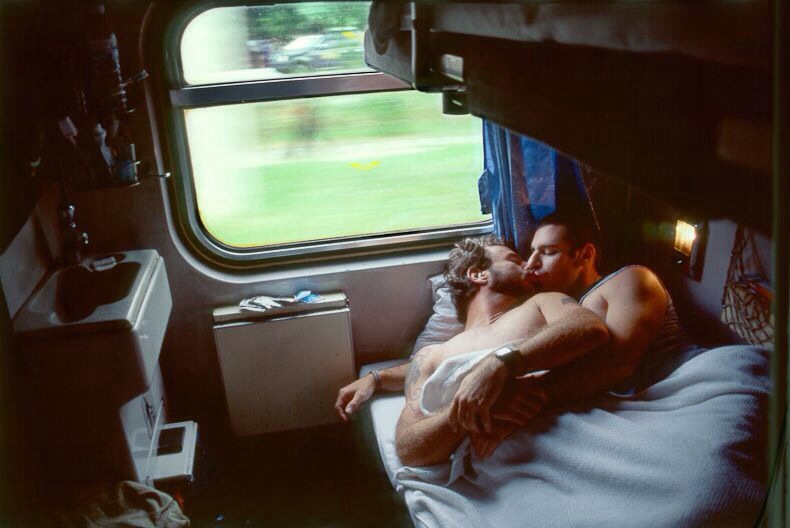
The way I choose poems is probably a mystery to a lot of my readers. Truthfully, there is probably no rhyme or reason to it. I choose what I like and post it. Today was a bit different. I came across the picture above and knew I wanted a poem about trains. I love traveling by train; it was one of my favorite things about Europe. Railway travel is honestly not very practical where I love in the South. However, when I saw the picture above, I immediately thought about how romantic it would be to be in a sleeper car curled up next to your lover as the trains rocks back and forth down the railway. So I knew I had to find a poem about trains and decide to do some research. After reading a dozen or so poems, I came across the beautiful poem above by Edna St. Vincent Millay. After reading is poem, I fell in love with the last two lines:

Yet there isn’t a train I wouldn’t take,
No matter where it’s going.

I feel the same way, especially if I was traveling with a lover. I have never enjoyed flying, so I much prefer train travel. There isn’t a train I wouldn’t take, no matter where it was going. Do any of you like traveling by train?

Edna St. Vincent Millay

Poet and playwright Edna St. Vincent Millay was born in Rockland, Maine, on February 22, 1892. Her mother, Cora, raised her three daughters on her own after asking her husband to leave the family home in 1899. Cora encouraged her girls to be ambitious and self-sufficient, teaching them an appreciation of music and literature from an early age. In 1912, at her mother’s urging, Millay entered her poem “Renascence” into a contest: she won fourth place and publication in The Lyric Year, bringing her immediate acclaim and a scholarship to Vassar. There, she continued to write poetry and became involved in the theater. She also developed intimate relationships with several women while in school, including the English actress Wynne Matthison. In 1917, the year of her graduation, Millay published her first book, Renascence and Other Poems. At the request of Vassar’s drama department, she also wrote her first verse play, The Lamp and the Bell (1921), a work about love between women.

Millay, whose friends called her “Vincent,” then moved to New York’s Greenwich Village, where she led a notoriously Bohemian life. She lived in a nine-foot-wide attic and wrote anything she could find an editor willing to accept. She and the other writers of Greenwich Village were, according to Millay herself, “very, very poor and very, very merry.” She joined the Provincetown Players in their early days, and befriended writers such as Witter Bynner, Edmund Wilson, Susan Glaspell, and Floyd Dell, who asked for Millay’s hand in marriage. Millay, who was openly bisexual, refused, despite Dell’s attempts to persuade her otherwise. That same year Millay published A Few Figs from Thistles (1920), a volume of poetry which drew much attention for its controversial descriptions of female sexuality and feminism. In 1923 her fourth volume of poems, The Harp Weaver, was awarded the Pulitzer Prize. In addition to publishing three plays in verse, Millay also wrote the libretto of one of the few American grand operas, The King’s Henchman (1927).

Millay married Eugen Boissevain, a self-proclaimed feminist and widower of Inez Milholland, in 1923. Boissevain gave up his own pursuits to manage Millay’s literary career, setting up the readings and public appearances for which Millay grew quite famous. According to Millay’s own accounts, the couple acted liked two bachelors, remaining “sexually open” throughout their twenty-six-year marriage, which ended with Boissevain’s death in 1949. Edna St. Vincent Millay died in 1950.


Mending Wall

20131202-220722.jpg

Mending Wall
by Robert Frost

Something there is that doesn’t love a wall,
That sends the frozen-ground-swell under it,
And spills the upper boulders in the sun;
And makes gaps even two can pass abreast.
The work of hunters is another thing:
I have come after them and made repair
Where they have left not one stone on a stone,
But they would have the rabbit out of hiding,
To please the yelping dogs. The gaps I mean,
No one has seen them made or heard them made,
But at spring mending-time we find them there.
I let my neighbor know beyond the hill;
And on a day we meet to walk the line
And set the wall between us once again.
We keep the wall between us as we go.
To each the boulders that have fallen to each.
And some are loaves and some so nearly balls
We have to use a spell to make them balance:
‘Stay where you are until our backs are turned!’
We wear our fingers rough with handling them.
Oh, just another kind of outdoor game,
One on a side. It comes to little more:
There where it is we do not need the wall:
He is all pine and I am apple orchard.
My apple trees will never get across
And eat the cones under his pines, I tell him.
He only says, ‘Good fences make good neighbors.’
Spring is the mischief in me, and I wonder
If I could put a notion in his head:
‘Why do they make good neighbors? Isn’t it
Where there are cows? But here there are no cows.
Before I built a wall I’d ask to know
What I was walling in or walling out,
And to whom I was like to give offense.
Something there is that doesn’t love a wall,
That wants it down.’ I could say ‘Elves’ to him,
But it’s not elves exactly, and I’d rather
He said it for himself. I see him there
Bringing a stone grasped firmly by the top
In each hand, like an old-stone savage armed.
He moves in darkness as it seems to me,
Not of woods only and the shade of trees.
He will not go behind his father’s saying,
And he likes having thought of it so well
He says again, ‘Good fences make good neighbors.’

The image at the heart of “Mending Wall” is arresting: two men meeting on terms of civility and neighborliness to build a barrier between them. They do so out of tradition, out of habit. The poem seems to meditate conventionally on three grand themes: barrier-building (segregation, in the broadest sense of the word), the doomed nature of this enterprise, and our persistence in this activity regardless. But, as we so often see when we look closely at Frost’s best poems, what begins in folksy straightforwardness ends in complex ambiguity. The speaker would have us believe that there are two types of people: those who stubbornly insist on building superfluous walls (with clichés as their justification) and those who would dispense with this practice—wall-builders and wall-breakers. But are these impulses so easily separable? And what does the poem really say about the necessity of boundaries?

Frost’s poem is often listed as one of the great friendship poems, and I believe it speaks wonderfully of some of the intricacies of friendships. I have wonderful friends close to home and some who live far away from me and are part of my camaraderie of cyber friends. My friends closer to home are those I went to school with, work with, or met through family or acquaintances. All of my blog friends, who by the way mean as much to me as my friends who live nearby, live in far away places (with one or two exceptions). I think though that with all friendships we build walls. Just as the speaker in “Mending Wall” asks why we need the wall, I too ask why we need the walls. I don’t know that I have an answer for that, but I think I might have an idea. I know there are certain things in real life that I don’t share with my friends. Different friends I will reveal different things to. It’s not that I’m lying to them, at least I don’t see it that way, but it is because different friends share different parts of my life. Most of my friends know that I a gay, but not all of them. Why don’t I tell them? I really don’t know, but part of it is that the subject never came up. They may or may not know or may think they do know, but it really doesn’t matter to me. It is really not my defining characteristic, so why should it matter.

Yet, I am very honest about myself within the context of my blog. A lot of that has to do with the anonymity of writing a blog. Some people know me personally who read my blog. I am very honest and open with those people. I trust them to be open and honest with me and many of them are. Some have become my greatest friends, and they know who I am talking about. I love them dearly, and I hope they know it. Others I’m just getting to know. I feel as if I can often be more honest with them, but are their still walls involved? Of course there are, usually that wall is the great distance between us, but I still endeavor to be completely honest with them. Some may get to know me and not like my honesty or some other aspect about me. When that happens, I rarely know what it is, even though I wish I did know. If I knew what I said or did I might could mend things. Then again, I might just have a fundamental flaw that they see that I don’t, but I would lie, to fix it if possible. Sometimes, I just want to know what changed so suddenly in the friendship, but that wall is there and my southern upbringing taught me that it is rude to be impolite. The walls are around us, and I know that we don’t need them, just as the speaker in this poem states. Yet, you still have to wonder, do “Good fences make good neighbors”?

Hell, I think I got off the subject here, yet I chose this poem to speak about friendships. I do love the poems of Robert Frost. “Mending Wall” is one of my favorites. I can’t wait until we get to Frost’s poetry in the American Literature class that I teach. I have always enjoyed teaching the poets.

I want to add one more poem to end this post. It is also from a favorite poet of mine and it speaks for itself.

Dear Friends
by Edwin Arlington Robinson

Dear friends, reproach me not for what I do,
Nor counsel me, nor pity me; nor say
That I am wearing half my life away
For bubble-work that only fools pursue.
And if my bubbles be too small for you,
Blow bigger then your own: the games we play
To fill the frittered minutes of a day,
Good glasses are to read the spirit through.

And whoso reads may get him some shrewd skill;
And some unprofitable scorn resign,
To praise the very thing that he deplores;
So, friends (dear friends), remember, if you will,
The shame I win for singing is all mine,
The gold I miss for dreaming is all yours.


Thanksgiving Poems

20131125-231137.jpg

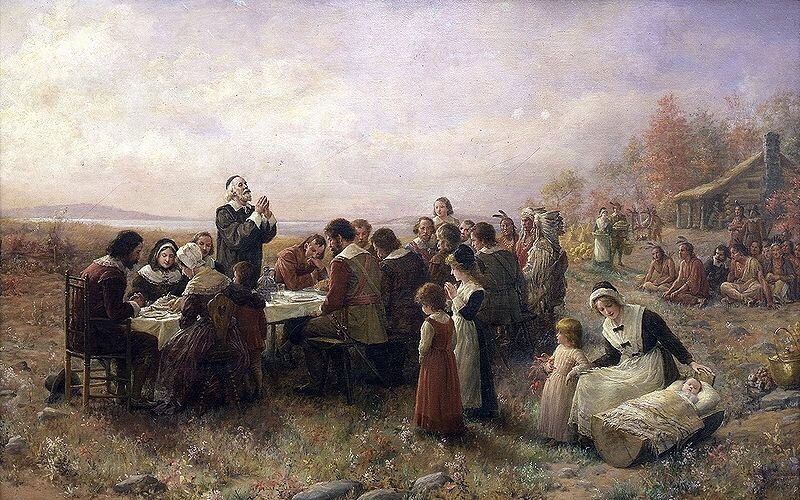
The time has come again to celebrate the Thanksgiving holiday here in the United States. As children, we are taught the story of “the first Thanksgiving.” We are told about the Pilgrim settlers who came together with their Native American neighbors. They shared with each other the bountiful harvests that they had reaped. Tables were filled with favorite dishes from the “new world” (North America) and the “old world” (Europe). It is a heart warming story, and it provides the plot for some really good plays at elementary schools across the country.

Sometimes it is easy to forget what holidays really mean, and just as easy to take them for granted. It is easy to forget that the word “holiday” itself is simply a contraction of the words “Holy Days.” When we acknowledge that holidays are Holy, the Thanksgiving Holy Day can become more special to us as Christians. May we be ever mindful that the thanks offered on Thanksgiving are thanks offered to God.

It is also easy to view holidays only as they affect ourselves. One of this week’s two poems is actually a hymn that can be a lesson in broadening our appreciation for holidays. This hymn, which Americans often associate with their own celebration of Thanksgiving and sing in their Thanksgiving plays, was a Prayer of Thanksgiving brought to the “New World” in the early 1600s by Dutch settlers–not by Pilgrims. It was translated to English centuries later by Theodore Baker (1851-1934).

Thanksgiving is not simply an American holiday. Rather, the American holiday is simply one way to recognize a Holy Day that is acknowledged in the Dutch Prayer of Thanksgiving–a prayer that existed before any Pilgrims celebrated with the Indians. Before that, Hebrew prayers of thanksgiving appeared in the Psalms and other places in the Bible. Indeed, the sacrifices that Able offered to God in Genesis are proof that worshiping and giving thanks to God extends all the way back to the very first family in the scriptures.

Read the words of this week’s featured hymn prayerfully, remembering the blessings that we enjoy every day as people of God in all of the world and in all generations.

We Gather Together
Words by Nederlandtsch Gedencklanck;
trans. by Theodore Baker

We gather together to ask the Lord’s blessing;
he chastens and hastens his will to make known.
The wicked oppressing now cease from distressing.
Sing praises to his name, he forgets not his own.

Beside us to guide us, our God with us joining,
ordaining, maintaining his kingdom divine;
so from the beginning the fight we were winning;
thou, Lord, wast at our side, all glory be thine!

We all do extol thee, thou leader triumphant,
and pray that thou still our defender wilt be.
Let thy congregation escape tribulation;
thy name be ever praised! O Lord, make us free!

When we celebrate Thanksgiving here in the United States, we usually think of the Pilgrims and the Indians eating a meal to thank God for helping them survive their first year in America, and to thank the Indians for their help in adapting to these new surroundings. Therefore, I wanted to include this week a poem that was translated from a traditional Iroquois prayer of thanksgiving. The Native Americans saw the near complete destruction of their lives when Europeans settled the Americas, and I think we should honor them as well during this week of Thanksgiving.

The Thanksgivings
By Harriet Maxwell Converse

Translated from a traditional Iroquois prayer

We who are here present thank the Great Spirit that we are here
to praise Him.
We thank Him that He has created men and women, and ordered
that these beings shall always be living to multiply the earth.
We thank Him for making the earth and giving these beings its products
to live on.
We thank Him for the water that comes out of the earth and runs
for our lands.
We thank Him for all the animals on the earth.
We thank Him for certain timbers that grow and have fluids coming
from them for us all.
We thank Him for the branches of the trees that grow shadows
for our shelter.
We thank Him for the beings that come from the west, the thunder
and lightning that water the earth.
We thank Him for the light which we call our oldest brother, the sun
that works for our good.
We thank Him for all the fruits that grow on the trees and vines.
We thank Him for his goodness in making the forests, and thank
all its trees.
We thank Him for the darkness that gives us rest, and for the kind Being
of the darkness that gives us light, the moon.
We thank Him for the bright spots in the skies that give us signs,
the stars.
We give Him thanks for our supporters, who had charge of our harvests.
We give thanks that the voice of the Great Spirit can still be heard
through the words of Ga-ne-o-di-o.
We thank the Great Spirit that we have the privilege of this pleasant
occasion.
We give thanks for the persons who can sing the Great Spirit’s music,
and hope they will be privileged to continue in his faith.
We thank the Great Spirit for all the persons who perform the ceremonies


Chances

20131117-193540.jpg

Chances
by Gregg Wattenberg and John Ondrasik

Chances are when said and done
Who’ll be the lucky ones who make it all the way?
Though you say I could be your answer
Nothing lasts forever no matter how it feels today

Chances are we’ll find a new equation
Chances roll away from me
Chances are all they hope to be

Don’t get me wrong I’d never say never
‘Cause though love can change the weather
No act of God can pull me away from you

I’m just a realistic man, a bottle filled with shells and sand
Afraid to love beyond what I can lose when it comes to you
And though I see us through, yeah

Chances are we’ll find two destinations
Chances roll away from me
Still chances are more than expectations
The possibilities over me

It’s a fight with two to one, lay your money on the sun
Until you crash what have you done? Is there a better bet than love?
What you are is what you breathe, you gotta cry before you sing

Chances, chances
Chances lost are hope’s torn up pages
Maybe this time

Chances are we’ll be the combination
Chances come and carry me
Chances are waiting to be taken, and I can see

Chances are the fascinations
Chances won’t escape from me
Chances are only what we make them and all I need

A friend of mine suggested that I listen to this song, and I instantly fell in love with it. In fact from what I can tell, he has great taste in music, far better than I do. I love music, but I often listen to NPR on the radio in the mornings going to work, and most of the times on the way home. If I’m not listening to NPR or an audiobook. I don’t often listen to music on the radio because we have crappy stations around here. Too bad I don’t have Sirius/XM satellite radio. If I did, I’d probably listen to more music. The music I hear from my students is often ear shatteringly bad, so it’s nice when someone introduces me to some new music, especially when they have great tastes. This song was just the beginning on a journey of great music from this particular friend of mine.

Every once in a while, I enjoy featuring a song instead of a poem on Tuesdays. Songs really is poetry set to music, especially a good song. “Chances” is the title of a song written by Gregg Wattenberg and John Ondrasik, and recorded by Ondrasik under his stage name Five for Fighting. The song was released on July 21, 2009, as the first single from the band’s 2009 album, Slice. The song was the band’s fourth single to chart on the Billboard Hot 100.

If you are interested in listening to the song and watching the video, check out http://youtu.be/n8cfbBgXIow. Interestingly, the video was filmed at Singing Springs Movie ranch a week before the Station Fire burned 250 square miles in the Angeles National Forest. All structures and vegetation seen in the video were destroyed.


Remembering the War Poets

20131110-225741.jpg

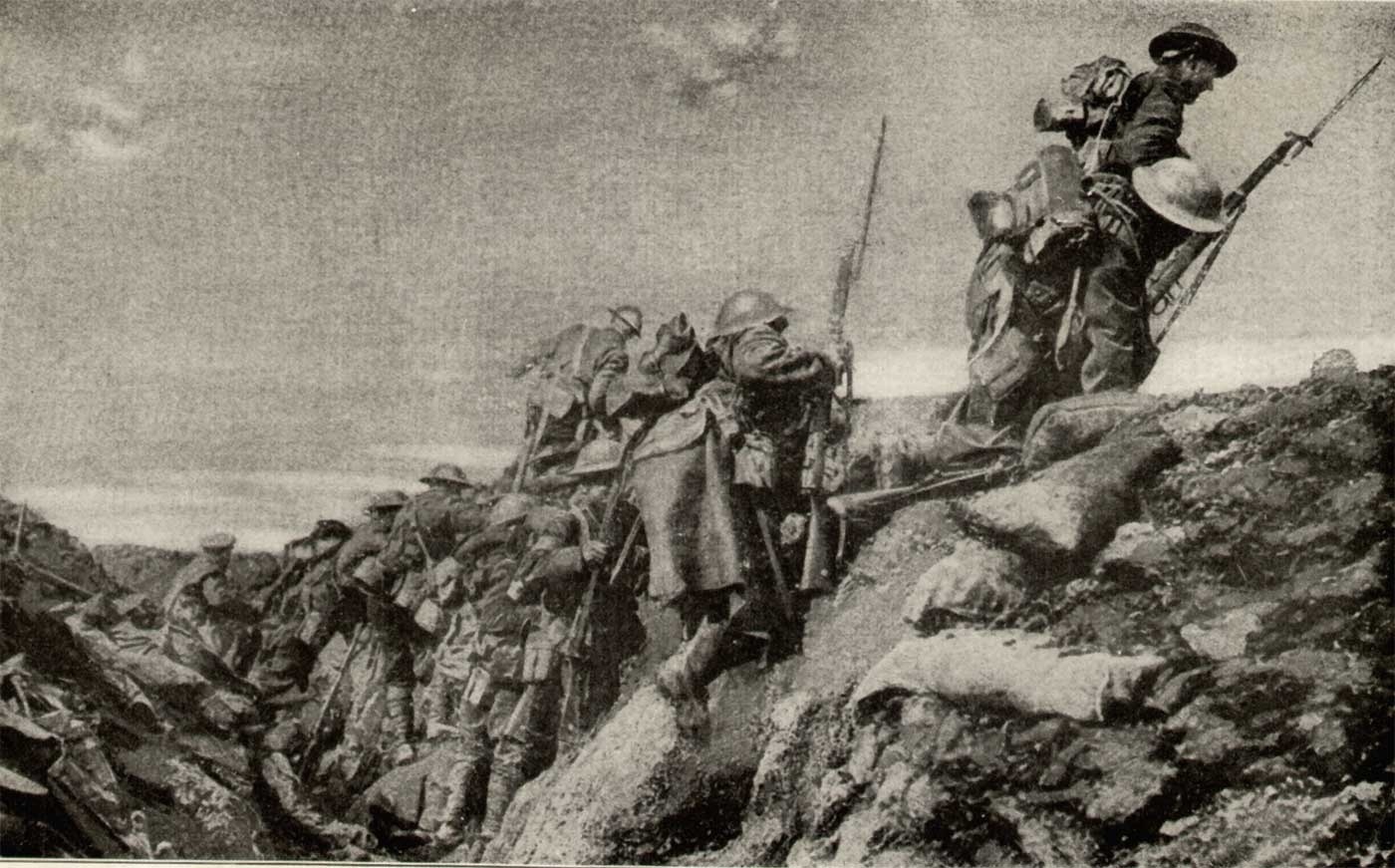
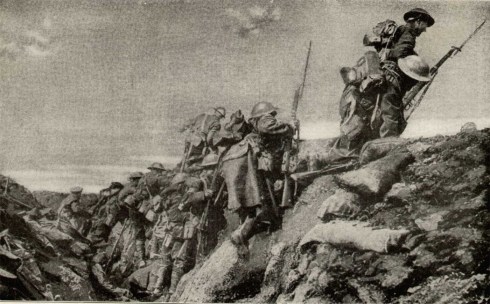
Yesterday was Veterans Day—originally Armistice Day—was renamed in 1954 to include veterans who had fought in all wars. As discussed in yesterday’s post, this day of remembrance has its roots in World War I—Nov. 11, 1918 was the day the guns fell silent at the end of the Great War. On this day after Veterans Day, we celebrate the poetry of World War I, one of the legacies of that conflict. My love of poetry and the history of World War I go hand in hand. As an undergraduate, I became fascinated with World War I, and from there, I became fascinated with the poetry from that war, which only intensified my love of poetry. So I am dedicating this post to the three poems that I believe are the most important for understanding the First World War.

Soldiers like Siegfried Sassoon, Wilfred Owen, John McCrae and Rupert Brooke wrote evocative poems about their experiences. One of the most famous poems of the war is Brooke’s “The Soldier.” Brooke died of dysentery and blood poisoning aboard a troop ship headed for Gallipoli in April 1915. Brooke’s poem “The Soldier” reads:

The Soldier
by Rupert Brooke

If I should die, think only this of me:
That there’s some corner of a foreign field
That is for ever England. There shall be
In that rich earth a richer dust concealed;
A dust whom England bore, shaped, made aware,
Gave, once, her flowers to love, her ways to roam,
A body of England’s, breathing English air,
Washed by the rivers, blest by suns of home.

And think, this heart, all evil shed away,
A pulse in the eternal mind, no less
Gives somewhere back the thoughts by England given;
Her sights and sounds; dreams happy as her day;
And laughter, learnt of friends; and gentleness,
In hearts at peace, under an English heaven.

“The Soldier” shows the eagerness for war that was so apparent in the militarism that helped move the world toward war. “The Soldier” was written at the beginning of the First World War in 1914, as part of a series of sonnets written by Rupert Brooke. Brooke himself, predominantly a prewar poet, died the year after “The Soldier” was published. “The Soldier”, being the conclusion and the finale to Brooke’s ‘1914’ war sonnet series, deals with the death and accomplishments of a soldier. This sonnet encompasses the memoirs of a deceased soldier who declares his patriotism to his homeland by declaring that his sacrifice will be the eternal ownership of England of a small portion of land upon which he died.

As the Great War continued and bogged down on the Western Front, the attitude of patriotism began to wane slightly. Militarism had given the world the impression that wars would be short and glorious occasions, yet as 1914 turned into 1915 with no sign of end in sight, war was not seen through the naive young eyes of ready and willing soldiers, but of those of war weary soldiers of the front. One of these soldiers was a Canadian doctor named John McCrae. He was inspired to write it on May 3, 1915, after presiding over the funeral of friend and fellow soldier Alexis Helmer, who died in the Second Battle of Ypres. According to legend, fellow soldiers retrieved the poem after McCrae, initially unsatisfied with his work, discarded it. “In Flanders Fields” was first published on December 8 of that year in the London-based magazine Punch.

In Flanders Fields
by John McCrae

In Flanders fields the poppies blow
Between the crosses, row on row,
That mark our place, and in the sky,
The larks, still bravely singing, fly,
Scarce heard amid the guns below.

We are the dead; short days ago
We lived, felt dawn, saw sunset glow,
Loved and were loved, and now we lie
In Flanders fields.

Take up our quarrel with the foe!
To you from failing hands we throw
The torch; be yours to hold it high!
If ye break faith with us who die
We shall not sleep, though poppies grow
In Flanders fields.

“In Flanders Fields” demonstrates McCrae’s preoccupation with death and how it stands as the transition between the struggle of life and the peace that follows. It is written from the point of view of the dead. It speaks of their sacrifice and serves as their command to the living to press on. As with many of the most popular works of the First World War, it was written early in the conflict, before the romanticism of war turned to bitterness and disillusion for soldiers and civilians alike, yet it has a more sorrowful tone than Brooke’s “The Soldier.”

One of the lasting legacies of “In Flanders Field” is the symbolism of the poppies. The red poppies that McCrae referred to had been associated with war since the Napoleonic Wars when a writer of that time first noted how the poppies grew over the graves of soldiers. The damage done to the landscape in Flanders during the battle greatly increased the lime content in the soil, leaving the poppy as one of the few plants able to grow in the region. Even today, you will see many citizens of the British Commonwealth, and even some in the United States, wear a red poppy pinned to his or her lapel to commemorate the soldiers of the Great War.

The last poem I want to discuss is that of Wilfred Owen’s “Dulce et Decorum est.” This is a poem written by poet Wilfred Owen in 1917, during World War I, and published posthumously in 1920. Owen’s poem is known for its horrific imagery and condemnation of war. When Owen wrote this poem, the romanticism of war was long gone. The Battles of Verdun and the Somme had destroyed any residual romanticism left in soldiers of the trenches.

Dulce Et Decorum Est
by Wilfred Owen

Bent double, like old beggars under sacks,
Knock-kneed, coughing like hags, we cursed through sludge,
Till on the haunting flares we turned our backs
And towards our distant rest began to trudge.
Men marched asleep. Many had lost their boots
But limped on, blood-shod. All went lame; all blind;
Drunk with fatigue; deaf even to the hoots
Of disappointed shells that dropped behind.

GAS! Gas! Quick, boys!– An ecstasy of fumbling,
Fitting the clumsy helmets just in time;
But someone still was yelling out and stumbling
And floundering like a man in fire or lime.–
Dim, through the misty panes and thick green light
As under a green sea, I saw him drowning.

In all my dreams, before my helpless sight,
He plunges at me, guttering, choking, drowning.

If in some smothering dreams you too could pace
Behind the wagon that we flung him in,
And watch the white eyes writhing in his face,
His hanging face, like a devil’s sick of sin;
If you could hear, at every jolt, the blood
Come gargling from the froth-corrupted lungs,
Obscene as cancer, bitter as the cud
Of vile, incurable sores on innocent tongues,–
My friend, you would not tell with such high zest
To children ardent for some desperate glory,
The old Lie: Dulce et decorum est
Pro patria mori.

The historian and literary critic Paul Fussell has noted in The Great War and Modern Memory that, “Dawn has never recovered from what the Great War did to it.” He argues that World War I, with its unprecedented trench warfare and mass devastation across the European landscape, left a dark cloud hanging over the world. Despite the patriotism, optimism, and idealism held by the young men who eagerly fought for their respective country, World War I was fraught with widespread destruction and loss.

The very symbol of dawn, which traditionally would bring with it the hope and freshness of a new day, was reconfigured in a war like no other in history. Instead of the symbolic hope and freshness of a new day, the Great War dawn often brought with it the profound reality of a landscape flecked with causalities and devastation as young soldiers peered from the dark depths of their trenches. With dawn as a common symbol in poetry, it is no wonder that, like a new understanding of dawn itself, a comprehensive body of “World War I Poetry” emerged from the trenches as well.

Perhaps the most widely read and anthologized World War I poet, Wilfred Owen fought and ultimately died in World War I. His famous poem “Dulce et Decorum Est” presented a raw portrait of the life soldiers often experienced during the War. From the horrors of the trenches, we have the beauty of the War Poets to keep the memory of the war alive.

November

20131104-203330.jpg

November
by William Cullen Bryant

Yet one smile more, departing, distant sun!
One mellow smile through the soft vapory air,
Ere, o’er the frozen earth, the loud winds run,
Or snows are sifted o’er the meadows bare.
One smile on the brown hills and naked trees,
And the dark rocks whose summer wreaths are cast,
And the blue gentian flower, that, in the breeze,
Nods lonely, of her beauteous race the last.
Yet a few sunny days, in which the bee
Shall murmur by the hedge that skirts the way,
The cricket chirp upon the russet lea,
And man delight to linger in thy ray.
Yet one rich smile, and we will try to bear
The piercing winter frost, and winds, and darkened air.

About William Cullen Bryant
William Cullen Bryant’s poetry is affiliated with the Romantics, often reflecting an obsession with nature and a thoughtful desire for silence and solitude. Bryant was born on November 3, 1794. An American nature poet and journalist, Bryant wrote poems, essays, and articles that championed the rights of workers and immigrants. In 1829, Bryant became editor in chief of the New York Evening Post, a position he held until his death in 1878. His influence helped establish important New York civic institutions such as Central Park and the Metropolitan Museum of Art. In 1884, New York City’s Reservoir Square, at the intersection of 42nd Street and Sixth Avenue, was renamed Bryant Park in his honor.


Follow Your Arrow

20131028-215534.jpg

“Follow Your Arrow”
Kacey Musgraves

If you save yourself for marriage
You’re a bore
If you don’t save yourself for marriage
You’re a horr…ible person
If you won’t have a drink
Then you’re a prude
But they’ll call you a drunk
As soon as you down the first one

If you can’t lose the weight
Then you’re just fat
But if you lose too much
Then you’re on crack
You’re damned if you do
And you’re damned if you don’t
So you might as well just do
Whatever you want
So

Make lots of noise
Kiss lots of boys
Or kiss lots of girls
If that’s something you’re into
When the straight and narrow
Gets a little too straight
Roll up a joint, or don’t
Just follow your arrow
Wherever it points, yeah
Follow your arrow
Wherever it points

If you don’t go to church
You’ll go to hell
If you’re the first one
On the front row
You’re self-righteous
Son of a-
Can’t win for losing
You’ll just disappoint ’em
Just ’cause you can’t beat ’em
Don’t mean you should join ’em

So make lots of noise
Kiss lots of boys
Or kiss lots of girls
If that’s something you’re into
When the straight and narrow
Gets a little too straight
Roll up a joint, or don’t
Just follow your arrow
Wherever it points, yeah
Follow your arrow
Wherever it points

Say what you think
Love who you love
‘Cause you just get
So many trips ’round the sun
Yeah, you only
Only live once

So make lots of noise
Kiss lots of boys
Or kiss lots of girls
If that’s what you’re into
When the straight and narrow
Gets a little too straight
Roll up a joint, I would
And follow your arrow
Wherever it points, yeah
Follow your arrow
Wherever it points

Sometimes a song really resonates with me and as I thing music should be it is also beautiful poetry. I came across this song as a free download from my Starbucks app. One listen, and I was hooked. After listening to “Follow Your Arrow” from Musgraves’ Same Trailer Different Park! the Nashville-based singer-songwriter’s first album for Mercury Records, it’s clear that this is a girl who has something to say. A true language artist, Kacey nimbly spins webs of words to create the quirky puns, shrewd metaphors, and steely ironies that fill the record.

On “Follow Your Arrow,” she points out the hypocrisies that society imposes on even the most conservative among us (If you save yourself for marriage you’re a bore/If you don’t save yourself for marriage you’re a horr…ible person) which she balances with a chorus that preaches throwing caution and propriety to the wind: (Make lots of noise/Kiss lots of boys/Or kiss lots of girls if that’s something your into/When the straight and narrow gets a little too straight/Roll up a joint/Or don’t/Follow your arrow wherever it points.) Her message is clear: Be yourself and be happy.

Here’s the song if your interested in listening:

http://vimeo.com/60697460


Ode to Masturbation

20131021-202043.jpg

Ode to Masturbation
By Ocean Vuong

Pearled semen trickles from vessel
as the silence of possibilities dries
on the floor and inside my palm.

Even now, as the body trembles
from the pleasure of its making,
somewhere, a plane
is pregnant with death.

When starlight sparkling
on the surface of falling bombs
and flames turn muscle
into pompous, skin into ash,

the sound of a scream in mid-death,
straining to push the weight
of last words, can you blame the hand
for craving the softest parts?

Reach down, there is music
in the body, play yourself
like a lyre, insert the finger
into sanctum, feel
the quivering of crevices, skin
palpitating ripples as if stretched
over drumbeats.

Reach down. Let explosions be muted
by climaxes, the Holy Water
between your thighs flow
into rivulets of cleansing,
let it rinse the soil of drying blood.
Reach down, there is music
in the cunt, the cock,
the asshole. Grab your balls—
that grenade of white flowers.

Reach down as fathers destroy the sons
and daughters of other fathers,
as faces emerge from wombs
and exiled into memory.
Reach down as a thousand I love you’s
fail to reach the man caressing
the trigger’s black tongue.

Because even now, in a city shimmering
from shards of broken halos,
we are not holy, only beautiful.
Because even now as I kneel to wipe
this cooling pool of sperm,

down the hall—a man
is beating madness into a child’s skull,
and not once will I ask
my unborn children
to forgive
this hand.

20131021-202130.jpg

Born in 1988 in Saigon, Vietnam, Ocean Vuong was raised by women (a single mother, aunts, and a grandmother) in housing projects throughout Hartford, Connecticut and received his B.A. in English Literature from Brooklyn College.

He is the author of two chapbooks: No (YesYes Books, 2013) and Burnings (Sibling Rivalry Press, 2010), which was an American Library Association’s Over The Rainbow selection and has been taught widely in universities, both in America and abroad. A recipient of a 2013 Pushcart Prize, other honors include fellowships from Kundiman, Poets House, and the Saltonstall Foundation For the Arts, as well as an Academy of American Poets Prize and the Connecticut Poetry Society’s Al Savard Award. Poems appear in Denver Quarterly, Quarterly West, Passages North, Guernica, The Normal School, Beloit Poetry Journal, Crab Orchard Review, Best of the Net 2012 and the American Poetry Review, which awarded him the 2012 Stanley Kunitz Prize. Work has also been translated into Hindi, Korean, Vietnamese, and Russian.


City That Does Not Sleep

20131014-211348.jpg

City That Does Not Sleep
Federico García Lorca
Translated by Robert Bly

In the sky there is nobody asleep. Nobody, nobody.
Nobody is asleep.
The creatures of the moon sniff and prowl about their cabins.
The living iguanas will come and bite the men who do not dream,
and the man who rushes out with his spirit broken will meet on the
street corner
the unbelievable alligator quiet beneath the tender protest of the
stars.
Nobody is asleep on earth. Nobody, nobody.
Nobody is asleep.
In a graveyard far off there is a corpse
who has moaned for three years
because of a dry countryside on his knee;
and that boy they buried this morning cried so much
it was necessary to call out the dogs to keep him quiet.
Life is not a dream. Careful! Careful! Careful!
We fall down the stairs in order to eat the moist earth
or we climb to the knife edge of the snow with the voices of the dead
dahlias.
But forgetfulness does not exist, dreams do not exist;
flesh exists. Kisses tie our mouths
in a thicket of new veins,
and whoever his pain pains will feel that pain forever
and whoever is afraid of death will carry it on his shoulders.
One day
the horses will live in the saloons
and the enraged ants
will throw themselves on the yellow skies that take refuge in the
eyes of cows.
Another day
we will watch the preserved butterflies rise from the dead
and still walking through a country of gray sponges and silent boats
we will watch our ring flash and roses spring from our tongue.
Careful! Be careful! Be careful!
The men who still have marks of the claw and the thunderstorm,
and that boy who cries because he has never heard of the invention
of the bridge,
or that dead man who possesses now only his head and a shoe,
we must carry them to the wall where the iguanas and the snakes
are waiting,
where the bear’s teeth are waiting,
where the mummified hand of the boy is waiting,
and the hair of the camel stands on end with a violent blue shudder.
Nobody is sleeping in the sky. Nobody, nobody.
Nobody is sleeping.
If someone does close his eyes,
a whip, boys, a whip!
Let there be a landscape of open eyes
and bitter wounds on fire.
No one is sleeping in this world. No one, no one.
I have said it before.
No one is sleeping.
But if someone grows too much moss on his temples during the
night,
open the stage trapdoors so he can see in the moonlight
the lying goblets, and the poison, and the skull of the theaters.

By Federico García Lorca, translated and edited by Robert Bly, and published by Beacon Press in Selected Poems: Lorca and Jiménez.

About Federico García Lorca

Lorca was an avante-garde homosexual Spanish poet and playwright who had a serious and obsessive affair with Salvador Dalí. Lorca, born near Granada, was considered the greatest Spanish poet of the twentieth century. He trained as a classical pianist, but also studied law, literature and musical composition. From his friendship with homosexual Spanish composer Manuel de Falla, Spanish folklore became his muse. Lorca’s early anthologies of poems were stylized imitations of the ballads and poems that were told throughout the Spanish countryside. When Romancero Gitano (Gypsy Ballads, 1928) was published, it brought him fame across the Hispanic world.

In 1919, García Lorca traveled to Madrid, where he remained for the next fifteen years. Giving up university, he devoted himself entirely to his art. He organized theatrical performances, read his poems in public, and collected old folksongs. During this period García Lorca wrote El Maleficio de la mariposa (1920), a play which caused a great scandal when it was produced. He also wrote Libro de poemas (1921), a compilation of poems based on Spanish folklore. Much of García Lorca’s work was infused with popular themes such as Flamenco and Gypsy culture. In 1922, García Lorca organized the first “Cante Jondo” festival in which Spain’s most famous “deep song” singers and guitarists participated. The deep song form permeated his poems of the early 1920s. During this period, García Lorca became part of a group of artists known as Generación del 27, which included Salvador Dalí and Luis Buñuel, who exposed the young poet to surrealism. In 1928, his book of verse, Romancero Gitano (“The Gypsy Ballads“), brought García Lorca far-reaching fame; it was reprinted seven times during his lifetime.

In 1929, García Lorca came to New York. The poet’s favorite neighborhood was Harlem; he loved African-American spirituals, which reminded him of Spain’s “deep songs.” In 1930, García Lorca returned to Spain after the proclamation of the Spanish republic and participated in the Second Ordinary Congress of the Federal Union of Hispanic Students in November of 1931. The congress decided to build a “Barraca” in central Madrid in which to produce important plays for the public. “La Barraca,” the traveling theater company that resulted, toured many Spanish towns, villages, and cities performing Spanish classics on public squares. Some of García Lorca’s own plays, including his three great tragedies Bodas de sangre (1933), Yerma (1934), and La Casa de Bernarda Alba (1936), were also produced by the company.

In 1936, García Lorca was staying at Callejones de García, his country home, at the outbreak of the Civil War. He was arrested by Franquist soldiers, and on the 17th or 18th of August, after a few days in jail, soldiers took García Lorca to “visit” his brother-in-law, Manuel Fernandez Montesinos, the Socialist ex-mayor of Granada whom the soldiers had murdered and dragged through the streets. When they arrived at the cemetery, the soldiers forced García Lorca from the car. They struck him with the butts of their rifles and riddled his body with bullets. His books were burned in Granada’s Plaza del Carmen and were soon banned from Franco’s Spain. To this day, no one knows where the body of Federico García Lorca rests.

When Federico García Lorca was executed by Spanish Fascists in 1936, one of the men on the death squad reportedly said that he had “fired two bullets into his ass for being a queer.” Although rumors of Lorca’s sexuality have persisted for decades, the historical interest in Spain’s most celebrated poet and dramatist has dealt mostly with the political significance of his murder. Known for his leftist politics and religious iconoclasm, he’s become the symbol of the crimes of the Spanish Civil War. Little is mentioned about Lorca’s sexuality beyond his romanticized love for Salvador Dalí. (Apparently, Lorca was “obsessed” with him; Dalí didn’t like to be touched.)

In a footnote to history, Manuel de Falla, who had become disillusioned with the Franco regime, tried but failed to prevent the murder of Lorca, his close friend. As a result, de Falla left Spain in 1939 for Argentina, never to return to his native country.