Category Archives: Poetry

All The World’s a Stage

As You Like It, Act II, Scene VII [All the world’s a stage]

By William Shakespeare

Jaques to Duke Senior

                                  All the world’s a stage,
And all the men and women merely players;
They have their exits and their entrances,
And one man in his time plays many parts,
His acts being seven ages. At first, the infant,
Mewling and puking in the nurse’s arms.
Then the whining schoolboy, with his satchel
And shining morning face, creeping like snail
Unwillingly to school. And then the lover,
Sighing like furnace, with a woeful ballad
Made to his mistress’ eyebrow. Then a soldier,
Full of strange oaths and bearded like the pard,
Jealous in honor, sudden and quick in quarrel,
Seeking the bubble reputation
Even in the cannon’s mouth. And then the justice,
In fair round belly with good capon lined,
With eyes severe and beard of formal cut,
Full of wise saws and modern instances;
And so he plays his part. The sixth age shifts
Into the lean and slippered pantaloon,
With spectacles on nose and pouch on side;
His youthful hose, well saved, a world too wide
For his shrunk shank, and his big manly voice,
Turning again toward childish treble, pipes
And whistles in his sound. Last scene of all,
That ends this strange eventful history,
Is second childishness and mere oblivion,
Sans teeth, sans eyes, sans taste, sans everything.


A Shakespearean Contrast of Ideal Beauty

The following two poems are my favorite Shakespearean sonnets.  You have probably heard the first many times before, but you may not have read the second.  In the well-known Sonnet 18, the speaker compares his beloved to the summer season, and argues that his beloved is better. He also states that his beloved will live on forever through the words of the poem.  Sonnet 130 satirizes the concept of ideal beauty that was a convention of literature and art in general during the Elizabethan era. Influences originating with the poetry of ancient Greece and Rome had established a tradition of this, which continued in Europe’s customs of courtly love and in courtly poetry, and the work of poets such as Petrarch. It was customary to praise the beauty of the object of one’s affections with comparisons to beautiful things found in nature and heaven, such as stars in the night sky, the golden light of the rising sun, or red roses.  The images conjured by Shakespeare in both sonnets were common ones that would have been well-recognized by a reader or listener of this sonnet.


Sonnet 18
Shall I compare thee to a summer’s day?
Thou art more lovely and more temperate;
Rough winds do shake the darling buds of May,
And summer’s lease hath all too short a date;
Sometime too hot the eye of heaven shines,
And often is his gold complexion dimm’d;
And every fair from fair sometime declines,
By chance or nature’s changing course untrimm’d;
But thy eternal summer shall not fade,
Nor lose possession of that fair thou ow’st;
Nor shall Death brag thou wander’st in his shade,
When in eternal lines to time thou grow’st:
So long as men can breathe or eyes can see,
So long lives this, and this gives life to thee.

Sonnet 130

My mistress’ eyes are nothing like the sun;
Coral is far more red than her lips’ red;
If snow be white, why then her breasts are dun;
If hairs be wires, black wires grow on her head.
I have seen roses damask, red and white,
But no such roses see I in her cheeks;
And in some perfumes is there more delight
Than in the breath that from my mistress reeks.
I love to hear her speak, yet well I know
That music hath a far more pleasing sound;
I grant I never saw a goddess go;
My mistress, when she walks, treads on the ground:
And yet, by heaven, I think my love as rare
As any she belied with false compare.

–William Shakespeare


The Official 2012 Olympic Poem

Breathe

From starting gun to finish line,
electric nerves before you dive,
you are the minute hand on the clock,
you are the doubt,
the second thoughts –
breathe.

You are the perfect parabola
of each envisioned leap,
the interlinking rings,
the ligaments, elastic lungs
Believe –

believe in the red-haired girl
with gold on her mind
one kiss chase and kicking leaves,
now a flame breathing to ignite another
Become

full of chance as the National Lottery,
become the ones who reaches
deep inside for sky,
fights gravity like paper planes
and breathes.

The winners of Britain’s National Lottery 12 Poets of 2012 Competition met in April from across the Britain in Birmingham to compile the poem, called Breathe, and was released on Tuesday 19th June 2012.

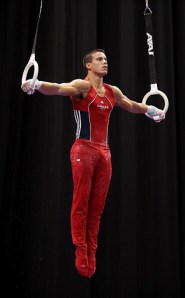
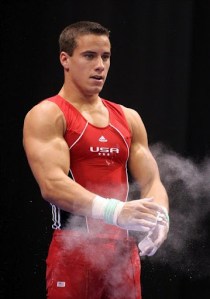
And now for a few more pictures of my favorite American gymnast, Jake Dalton:


Idyll by Siegfried Sassoon


Idyll
by Siegfried Sassoon

In the grey summer garden I shall find you 
With day-break and the morning hills behind you. 
There will be rain-wet roses; stir of wings; 
And down the wood a thrush that wakes and sings. 
Not from the past you’ll come, but from that deep
Where beauty murmurs to the soul asleep: 
And I shall know the sense of life re-born 
From dreams into the mystery of morn 
Where gloom and brightness meet. And standing there 
Till that calm song is done, at last we’ll share
The league-spread, quiring symphonies that are 
Joy in the world, and peace, and dawn’s one star.


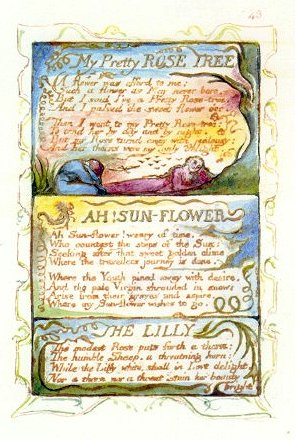
Ah! Sun-flower

Afternoon” by Philip Gladstone

Ah! Sun-flower

BY WILLIAM BLAKE

Ah Sun-flower! weary of time,
Who countest the steps of the Sun:
Seeking after that sweet golden clime
Where the traveller’s journey is done;

Where the Youth pined away with desire,
And the pale Virgin shrouded in snow
Arise from their graves and aspire
Where my Sun-flower wishes to go.

Ah Sunflower” is a poem written by the English poet William Blake. It was published as part of his collection Songs of Experience in 1794Ed Sanders of The Fugs set the poem to music and recorded it on The Fugs First Album in 1965. For the passing of the 2nd millennium British composer Jonathan Doveset the text of “Ah, Sunflower” and two other poems by Blake (“Invocation” and “The Narrow Bud Opens Her Beauties To The Sun”) in his piece “The Passing of the Year” (2000), a song cycle for double chorus and piano. In 2002 the Canadian sisters Kate and Anna McGarrigle wanted to record Ed Sanders’ setting in French; they asked Philippe Tatartcheff to translate the poem, only to find the words no longer scanned with the tune. So they composed a new tune which accommodated both languages. That appeared the following year on their album La vache qui pleure in both English and French recordings. (From Wikipedia)


Male Nudes with Sunflowers” by Sheri Larsen

While reading Where the Heart Beats by Kay Larson (see my post Where the Heart Beats), I came across an interesting passage about Allen Ginsberg, who was a longtime fan of William Blake.  In his Harlem apartment in 1948, Ginsberg was masturbating while reciting the above poem, but “the poem’s elusive heart was not revealing itself.”  Then he heard a voice, which he believed was either Blake or God from the “Ancient of Days” intoning their words and revealing the meaning of these words.  According to Larson, Ginsberg saw the solidity of the world seem to flicker and go transparent. In an interview in 1995, Ginsberg stated, “And I was living (in 1948) in Harlem, East Harlem, New York, on the sixth floor of a tenement. There was a lot of theology books around, in an apartment that I had rented from a theology student-friend, so I was reading a lot of Plato’s Phaedrus, St John of the Cross…and (William) Blake. And I had the sudden… reading “The Sick Rose” and “The Sunflower”, I had the odd sensation of hearing Blake’s voice outside of my own body, a voice really not too much unlike my own when my voice is centered in my sternum, maybe a latent projection of my own physiology, but, in any case, a surprise, maybe a hallucination, you can call it, hearing it in the room, Blake reciting it, or some very ancient voice of the Ancient of Days reciting, “Ah Sunflower…” So there was some earthen-deep quality that moved me, and then I looked out the window and it seemed like the heavens were endless, or the sky was endless, I should say.”   The vision continued to unfold over the next few days.  The poem awakened a deeper “real universe,” a cosmic consciousness for Ginsberg, which he saw everywhere he looked.  Though he tried to invoke the experience again, he was never able to do so. (Probably because he did not have the correct sequence of drugs or alcohol again, but who knows.)  The point is that the poem revealed something to Ginsberg.  Something that we may never fully understand.


The experience my have inspired a later poem by Ginsberg published in 1955. The Ginsberg poem, “Sunflower Sutra” brings to light a very important and universal issue. Although it was written in the 1950’s it is still comparable to the here and now. When Ginsberg wrote this poem, it was the time of conservatives, consumerism, and strong morals. Ginsberg did not relate to such a culture and instead expressed himself through his poems, which blatantly rejected such outlooks on life. “Sunflower Sutra” is about the death of the inner beauty and spirit in one’s soul in relation to the destruction of nature and the realization that it is never too late to bring such creativity and beauty back to life. Ginsberg describes the fall of a mighty the sunflower. Once a bright yellow beacon of life, it now is “broken like a battered crown.” Having been covered by the dirt and grime of industry, by human “ingenuity,” this sunflower is really representing a demise in humanity. Rather than choosing nature as a prime example for life, choosing the “perfect beauty of a sunflower,” we have chosen industry and technology, and have forgotten that we are flowers. Ginsberg berates the dust and grime which have rained down from the locomotives onto “my sunflower O my soul” and wonders “when did you forget you were a flower?” This poem really is not about a flower, but the tragedy of losing one’s inner beauty, the vivacity and brightness which makes one shine.


Sunflower Sutra

I walked on the banks of the tincan banana dock and
sat down under the huge shade of a Southern
Pacific locomotive to look at the sunset over the
box house hills and cry.
Jack Kerouac sat beside me on a busted rusty iron
pole, companion, we thought the same thoughts
of the soul, bleak and blue and sad-eyed,
surrounded by the gnarled steel roots of trees of
machinery.
The oily water on the river mirrored the red sky, sun
sank on top of final Frisco peaks, no fish in that
stream, no hermit in those mounts, just ourselves
rheumy-eyed and hungover like old bums
on the riverbank, tired and wily.
Look at the Sunflower, he said, there was a dead gray
shadow against the sky, big as a man, sitting
dry on top of a pile of ancient sawdust–
–I rushed up enchanted–it was my first sunflower,
memories of Blake–my visions–Harlem
and Hells of the Eastern rivers, bridges clanking Joes
Greasy Sandwiches, dead baby carriages, black
treadless tires forgotten and unretreaded, the
poem of the riverbank, condoms & pots, steel
knives, nothing stainless, only the dank muck
and the razor-sharp artifacts passing into the
past–
and the gray Sunflower poised against the sunset,
crackly bleak and dusty with the smut and smog
and smoke of olden locomotives in its eye–
corolla of bleary spikes pushed down and broken like
a battered crown, seeds fallen out of its face,
soon-to-be-toothless mouth of sunny air, sunrays
obliterated on its hairy head like a dried
wire spiderweb,
leaves stuck out like arms out of the stem, gestures
from the sawdust root, broke pieces of plaster
fallen out of the black twigs, a dead fly in its ear,
Unholy battered old thing you were, my sunflower O
my soul, I loved you then!
The grime was no man’s grime but death and human
locomotives,
all that dress of dust, that veil of darkened railroad
skin, that smog of cheek, that eyelid of black
mis’ry, that sooty hand or phallus or protuberance
of artificial worse-than-dirt–industrial–
modern–all that civilization spotting your
crazy golden crown–
and those blear thoughts of death and dusty loveless
eyes and ends and withered roots below, in the
home-pile of sand and sawdust, rubber dollar
bills, skin of machinery, the guts and innards
of the weeping coughing car, the empty lonely
tincans with their rusty tongues alack, what
more could I name, the smoked ashes of some
cock cigar, the cunts of wheelbarrows and the
milky breasts of cars, wornout asses out of chairs
& sphincters of dynamos–all these
entangled in your mummied roots–and you there
standing before me in the sunset, all your glory
in your form!
A perfect beauty of a sunflower! a perfect excellent
lovely sunflower existence! a sweet natural eye
to the new hip moon, woke up alive and excited
grasping in the sunset shadow sunrise golden
monthly breeze!
How many flies buzzed round you innocent of your
grime, while you cursed the heavens of the
railroad and your flower soul?
Poor dead flower? when did you forget you were a
flower? when did you look at your skin and
decide you were an impotent dirty old locomotive?
the ghost of a locomotive? the specter and
shade of a once powerful mad American locomotive?
You were never no locomotive, Sunflower, you were a
sunflower!
And you Locomotive, you are a locomotive, forget me
not!
So I grabbed up the skeleton thick sunflower and stuck
it at my side like a scepter,
and deliver my sermon to my soul, and Jack’s soul
too, and anyone who’ll listen,
–We’re not our skin of grime, we’re not our dread
bleak dusty imageless locomotive, we’re all
beautiful golden sunflowers inside, we’re blessed
by our own seed & golden hairy naked
accomplishment-bodies growing into mad black
formal sunflowers in the sunset, spied on by our
eyes under the shadow of the mad locomotive
riverbank sunset Frisco hilly tincan evening
sitdown vision.
          Allen Ginsberg

          Berkeley, 1955


The Grandmother by Lord Alfred Tennyson

I.
And Willy, my eldest-born, is gone, you say, little Anne?
Ruddy and white, and strong on his legs, he looks like a man.
And Willy’s wife has written: she never was over-wise,
Never the wife for Willy: he would n’t take my advice. 

II.
For, Annie, you see, her father was not the man to save,
Had n’t a head to manage, and drank himself into his grave.
Pretty enough, very pretty! but I was against it for one.
Eh!–but he would n’t hear me–and Willy, you say, is gone. 

III.
Willy, my beauty, my eldest-born, the flower of the flock;
Never a man could fling him: for Willy stood like a rock.
`Here’s a leg for a babe of a week!’ says doctor; and he would be bound,
There was not his like that year in twenty parishes round. 

IV.
Strong of his hands, and strong on his legs, but still of his tongue!
I ought to have gone before him: I wonder he went so young.
I cannot cry for him, Annie: I have not long to stay;
Perhaps I shall see him the sooner, for he lived far away. 

V.
Why do you look at me, Annie? you think I am hard and cold;
But all my children have gone before me, I am so old:
I cannot weep for Willy, nor can I weep for the rest;
Only at your age, Annie, I could have wept with the best. 

VI.
For I remember a quarrel I had with your father, my dear,
All for a slanderous story, that cost me many a tear.
I mean your grandfather, Annie: it cost me a world of woe,
Seventy years ago, my darling, seventy years ago. 

VII.
For Jenny, my cousin, had come to the place, and I knew right well
That Jenny had tript in her time: I knew, but I would not tell.
And she to be coming and slandering me, the base little liar!
But the tongue is a fire as you know, my dear, the tongue is a fire. 

VIII.
And the parson made it his text that week, and he said likewise,
That a lie which is half a truth is ever the blackest of lies,
That a lie which is all a lie may be met and fought with outright,
But a lie which is part a truth is a harder matter to fight. 

IX.
And Willy had not been down to the farm for a week and a day;
And all things look’d half-dead, tho’ it was the middle of May.
Jenny, to slander me, who knew what Jenny had been!
But soiling another, Annie, will never make oneself clean. 

X.
And I cried myself well-nigh blind, and all of an evening late
I climb’d to the top of the garth, and stood by the road at the gate.
The moon like a rick on fire was rising over the dale,
And whit, whit, whit, in the bush beside me chirrupt the nightingale. 

XI.
All of a sudden he stopt: there past by the gate of the farm,
Willy,–he did n’t see me,–and Jenny hung on his arm.
Out into the road I started, and spoke I scarce knew how;
Ah, there’s no fool like the old one — it makes me angry now. 

XII.
Willy stood up like a man, and look’d the thing that he meant;
Jenny, the viper, made me a mocking courtesy and went.
And I said, `Let us part: in a hundred years it’ll all be the same,
You cannot love me at all, if you love not my good name.’ 

XIII.
And he turn’d, and I saw his eyes all wet, in the sweet moonshine:
Sweetheart, I love you so well that your good name is mine.
And what do I care for Jane, let her speak of you well of ill;
But marry me out of hand: we two shall be happy still.’ 

XIV.
`Marry you, Willy!’ said I, `but I needs must speak my mind,
And I fear you’ll listen to tales, be jealous and hard and unkind.’
But he turn’d and claspt me in his arms, and answer’d, `No, love, no;’
Seventy years ago, my darling, seventy years ago. 

XV.
So Willy and I were wedded: I wore a lilac gown;
And the ringers rang with a will, and he gave the ringers a crown.
But the first that ever I bare was dead before he was born,
Shadow and shine is life, little Annie, flower and thorn. 

XVI.
That was the first time, too, that ever I thought of death.
There lay the sweet little body that never had drawn a breath.
I had not wept, little Anne, not since I had been a wife;
But I wept like a child that day, for the babe had fought for his life. 

XVII.
His dear little face was troubled, as if with anger or pain:
I look’d at the still little body–his trouble had all been in vain.
For Willy I cannot weep, I shall see him another morn:
But I wept like a child for the child that was dead before he was born. 

XVIII.
But he cheer’d me, my good man, for he seldom said me nay:
Kind, like a man, was he; like a man, too, would have his way:
Never jealous–not he: we had many a happy year;
And he died, and I could not weep–my own time seem’d so near. 

XIX.
But I wish’d it had been God’s will that I, too, then could have died:
I began to be tired a little, and fain had slept at his side.
And that was ten years back, or more, if I don’t forget:
But as to the children, Annie, they’re all about me yet. 

XX.
Pattering over the boards, my Annie who left me at two,
Patter she goes, my own little Annie, an Annie like you:
Pattering over the boards, she comes and goes at her will,
While Harry is in the five-acre and Charlie ploughing the hill. 

XXI.
And Harry and Charlie, I hear them too–they sing to their team:
Often they come to the door in a pleasant kind of a dream.
They come and sit by my chair, they hover about my bed–
I am not always certain if they be alive or dead. 

XXII.
And yet I know for a truth, there’s none of them left alive;
For Harry went at sixty, your father at sixty- five:
And Willy, my eldest born, at nigh threescore and ten;
I knew them all as babies, and now they’re elderly men. 

XXIII.
For mine is a time of peace, it is not often I grieve;
I am oftener sitting at home in my father’s farm at eve:
And the neighbors come and laugh and gossip, and so do I;
I find myself often laughing at things that have long gone by. 

XXIV.
To be sure the preacher says, our sins should make us sad:
But mine is a time of peace, and there is Grace to be had;
And God, not man, is the Judge of us all when life shall cease;
And in this Book, little Annie, the message is one of Peace. 

XXV.
And age is a time of peace, so it be free from pain,
And happy has been my life; but I would not live it again.
I seem to be tired a little, that’s all, and long for rest;
Only at your age, Annie, I could have wept with the best. 

XXVI.
So Willy has gone, my beauty, my eldest-born, my flower;
But how can I weep for Willy, he has but gone for an hour,–
Gone for a minute, my son, from this room into the next;
I, too, shall go in a minute. What time have I to be vext? 

XXVII.
And Willy’s wife has written, she never was over-wise.
Get me my glasses, Annie: thank God that I keep my eyes.
There is but a trifle left you, when I shall have past away.
But stay with the old woman now: you cannot have long to stay.


The Next Table


The Next Table
by C. P. Cavafy translated by Avi Sharon
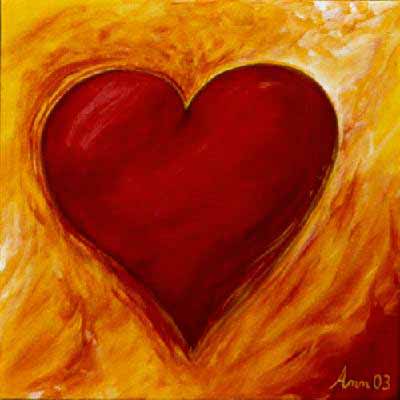
He can’t be more than twenty-two.
And yet I’m certain it was at least that many years ago
that I enjoyed the very same body.
This isn’t some erotic fantasy.
I’ve only just come into the casino
and there hasn’t been time enough to drink.
I tell you, that’s the very same body I once enjoyed.
And if I can’t recall precisely where—that means nothing.
Now that he’s sitting there at the next table,
I recognize each of his movements—and beneath his clothes
I see those beloved, naked limbs again.
From C. P. Cavafy: Selected Poems translated by Avi Sharon. Published by Penguin Classics. 


Constantine Cavafy was born Konstantínos Pétrou Kaváfis in Alexandria, Egypt, in 1863, the ninth child of Constantinopolitan parents. His father died in 1870, leaving the family poor. Cavafy’s mother moved her children to England, where the two eldest sons took over their father’s business. Their inexperience caused the ruin of the family fortunes, so they returned to a life of genteel poverty in Alexandria. The seven years that Constantine Cavafy spent in England—from age nine to sixteen—were important to the shaping of his poetic sensibility: he became so comfortable with English that he wrote his first verse in his second language.

After a brief education in London and Alexandria, he moved with his mother to Constantinople, where they stayed with his grandfather and two brothers. Although living in great poverty and discomfort, Cavafy wrote his first poems during this period, and had his first love affairs with other men. After briefly working for the Alexandrian newspaper and the Egyptian Stock exchange, at the age of twenty-nine Cavafy took up an appointment as a special clerk in the Irrigation Service of the Ministry of Public Works—an appointment he held for the next thirty years. Much of his ambition during these years was devoted to writing poems and prose essays.

Cavafy had an unusually small social circle. He lived with his mother until her death in 1899, and then with his unmarried brothers. For most of his mature years Cavafy lived alone. Influential literary relationships included a twenty-year acquaintance with E. M. Forster. The poet himself identified only two love affairs, both apparently brief. His one intimate, long-standing friendship was with Alexander Singopoulos, whom Cavafy designated as his heir and literary executor when he was sixty years old, ten years before his death.

Cavafy remained virtually unrecognized in Greece until late in his career. He never offered a volume of his poems for sale during his lifetime, instead distributing privately printed pamphlets to friends and relatives. Fourteen of Cavafy’s poems appeared in a pamphlet in 1904; the edition was enlarged in 1910. Several dozens appeared in subsequent years in a number of privately printed booklets and broadsheets. These editions contained mostly the same poems, first arranged thematically, and then chronologically. Close to one-third of his poems were never printed in any form while he lived.

In book form, Cavafy’s poems were first published without dates before World War II and reprinted in 1949. PÍÍMATA (The Poems of Constantine P. Cavafy) appeared posthumously in 1935 in Alexandria. The only evidence of public recognition in Greece during his later years was his receipt, in 1926, of the Order of the Phoenix from the Greek dictator Pangalos.

Perhaps the most original and influential Greek poet of the 20th century, his uncompromising distaste for the kind of rhetoric common among his contemporaries and his refusal to enter into the marketplace may have prevented him from realizing all but a few rewards for his genius. He continued to live in Alexandria until his death in 1933, from cancer of the larynx. It is recorded that his last motion before dying was to draw a circle on a sheet of blank paper, and then to place a period in the middle of it.


Hot Summer Nights

Hot Summer Nights 
by Mary Hamrick

It haunts me so
those summer nights
in dim lit homes

where music flows
and tempers flare
and lullabies fill the air.

I while away the hours
under the electric swell of light,
(pulse-scorched out).

Bone-idle and coral pink,
this dry spell grills,
but Southern nights do fill me.

Spider-blue legs peddle tales
as gossips-a-brewing
and roaming by my streets.

Scuttling through like marsh rabbit,
neighbors wave their charmed hellos.
Feverish and swollen together,

they inhale the blossoms,
riding high, and move through summer
as the lake declines.

It haunts me so
those summer nights
in dim lit homes

where music flows
and tempers flare
and lullabies fill the air.

Mary Hamrick was born in New York and moved to Florida as a young girl; her writing often reflects the contrast between her Northern and Southern upbringing. Her work appears online in Mad Hatters’ Review and Tattoo Highway.


Shakespeare’s Sonnet 33

No. 35, Gay or Bi Shakespeare (or was deVere his ghost writer?) Shakespeare is in love with a younger man, but is lamenting his loss of what had been a loving relationship.

SONNET 33

Full many a glorious morning have I seen

Flatter the mountain-tops with sovereign eye,

Kissing with golden face the meadows green,

Gilding pale streams with heavenly alchemy;

Anon permit the basest clouds to ride

With ugly rack on his celestial face,

And from the forlorn world his visage hide,

Stealing unseen to west with this disgrace:

Even so my sun one early morn did shine

With all triumphant splendor on my brow

But out, alack! he was but one hour mine,

The region cloud hath mask’d him from me now.

Yet him for this my love no whit disdaineth;

Suns of the world may stain when heaven’s sun staineth.


Comment: “Between the time Shakespeare wrote Sonnet 32 and 33, the poet’s entire attitude toward his relationship with his young friend had changed. While he had been focused on his own mortality throughout Sonnets 27-32, now the poet has a new and more pressing dilemma to jar him from his previous obsession. In Sonnets 33-35 the poet makes it clear that he has been deeply hurt by his young friend, who many believe to be the historical Earl of Southampton, Shakespeare’s patron. We cannot say what specific wrong-doing prompted such displeasure, although we can assume that the young man had many interests other than the poet, and he may have surrounded himself with other friends (and possibly other lovers), leaving the poet feeling isolated and unwanted. The poet’s dislike of his friend’s actions are clear from the overall reading, but also from his choice of words: “ugly”, “disgrace”, “basest”, “disdaineth”, and “staineth.” Moreover, the sun permits the clouds to cover his face as he cowers off to the west, and the direct comparison is made between the sun and the poet’s friend in the third stanza. Even though he denies it in the concluding couplet, the poet seems to resent the friend for causing a rift in their relationship. 

“As mentioned, the sonnet does end on a positive note with the poet ready to forgive his friend, content to accept that disappointment in this life is wholly natural. “Two Renaissance commonplaces, the sun-king comparison and the sun-son word play, are put to such good use in the friend’s behalf that ‘out alack’, the emphatic but conventional phrase denoting the speaker’s regret, seems no more than a polite formula.”

Source of Sonnet and comment: http://www.shakespeare-online.com/sonnets/33.html 

Mabillard, Amanda. An Analysis of Shakespeare’s Sonnet 33. Shakespeare Online. 2000. (day/month/year you accessed the information) <http://www.shakespeare-online.com/sonnets/33detail.html >. 


Comment and Notes of Another Shakespeare Scholar: “A sonnet that hardly needs an introduction. This and the following record a rejection by the youth of the poet. How serious or real this was we have no means of knowing. Perhaps it is an imaginary interlude in the sonnet sequence. Most readers however take it as having autobiographical content, and that approach is given credence by what appears to be the genuineness of the sorrow, and by the fact that the episode of estrangement, whatever caused it, is dealt with in this and the following three sonnets. 

“The fact that we are more disposed to believe in the biographical truth of the sonnet because of its beauty of imagery and language is a reality of human nature which cannot be easily dispensed with. It would be disapponting to learn that the youth and the poet’s impassioned love for him were mere creations of an idle brain, with deliberate intent to lay a false trail and make truth out of fiction. For while we may allow that a Macbeth and a Hamlet are engendered in the heat of artistic creation, their existence gives us a vicarious experience which is not harmed by their fictional reality. I am not convinced that this is so with the sonnets, for we long to trust their sincerity, and to see what it teaches us of our own capacity for love, what it explores and what it defines. Therefore I always assume what I take to be the standard or Wordsworthian approach (pace Browning), that this is a true record of love, no doubt edited and embellished, (for who could ever be word perfect in such matters?). 

“But we have to acknowledge also that the lover’s frown and her (in this case his) overcast brow, like the sun clouding over on a fine morning, was also a part of the sonnet tradition. Shakespeare was here making use of that rich tradition, as well as recording in his own inimitable way the feelings of one so cast down by his beloved’s disdain.” 

Notes: 

1. Full many a glorious morning have I seenFull many = very many.

2. Flatter the mountain tops with sovereign eyeFlatter – also has the meaning to stroke. In its normal sense it conveys the idea of insincerity and deception, and ultimate disillusionment. Hence the morning sun was making the mountains appear more brilliant than they in fact were.  sovereign eye = majestic, kingly gaze. Note that here the usual flattery of king by subject has been reversed. The king flatters his courtiers, the mountains.

3. Kissing with golden face the meadows greenThe sun kisses the earth. The glorious morning is partly subsumed into the character of the sun, as a result of sovereign eye and kissing.

4. Gilding pale streams with heavenly alchemyGilding = turning to gold; covering with gold. alchemy – this was the science which sought to discover how to turn base metals into gold. It was considered to be part magic, part science, and had a reputation for trickery and deceit. Nevertheless Elizabeth employed an alchemist in the early years of her reign, having been lured by the prospect of large sums of gold…

5. Anon permit the basest clouds to rideAnon = very soon, almost immediately; permit – the subject is morning line 1, and, by implication, the sky and the sun.basest = blackest, dirtiest, of humble origin; low born. Cf. Edmund in King Lear:…Why brand they us With base? with baseness? bastardy? base, base? I.2.9-10. There is also a contrast with gilding and alchemy. Base metals were the ugly materials of the alchemist’s study, which were destined to be turned into gold, the noblest metal of all.to ride – as horsemen. The clouds ride on the face of heaven as horsemen ride on the face of the earth.

6. With ugly rack on his celestial facerack = a line or procession of moving clouds; thin, flying, broken clouds, or any portion of floating vapor in the sky.(Webster’s) The winds in the upper region, which move the clouds above, which we call the rack, … pass without noise. Bacon. his = the sun’s, the sky’s, the morning’s.

7. And from the forlorn world his visage hide:the forlorn world – the world becomes forlorn, presumably because it is darkened by the ugly rack of clouds, which hide the sun’s celestial face (visage).

8. Stealing unseen to west with this disgrace:Stealing = moving furtively, stealthily, like a thief.  with this disgrace = with the disgrace of having his visage blotted out. disgrace could also refer to physical disfigurement.

9. Even so my sun one early morn did shine:my sun = the youth whom I love; you; the heavenly eye of my life. This is however the first mention ofsun in the sonnet.

10. With all triumphant splendour on my browall triumphant splendour = gloriously arrayed, in total splendour. triumph conveys the idea of a triumphal procession, a procession to commemorate the victory of a famous commander. on my brow = upon my forehead, upon my face.

11. But out, alack, he was but one hour mine:But, out, alack – editors gloss this as being an emphatic way of saying ‘Alas’, out being an intensifier, and cognate with its use in expressions such as ‘out upon it!’. However I think it also has reference here to the sun, which was only ‘out’, i.e. shining, for one hour. he was but one hour mine = I enjoyed his (the sun’s, my love’s) presence for only one hour.

12. The region cloud hath mask’d him from me nowThe region = the upper air, the upper region of the sky. him = my love, (the sun).

13. Yet him for this my love no whit disdainethhim….my love – these cannot both refer to the youth. If my love = the youth, then him must be the sun of 5-8 and 9-12, which has been disgraced by clouds ruining his face. But if him refers to the youth, then my love is ‘my love for him’, personified, which does not disdain him (the youth) for having become inaccessible. no whit = not in the least, not a jot.

14. Suns of the world may stain when heaven’s sun stainethThe homophonic meaning, sons, is played upon. Sons of the flesh are also liable to blemish and disgrace, as heavenly suns are. stain can be used transitively or intransitively, so that the youth, as well as becoming stained himself, has passed the infection on to others.

Source of 2nd scholar’s comment/notes: http://www.shakespeares-sonnets.com/sonnet/33

For more on Shakespeare:http://artofmalemasturbation.tumblr.com/Shakespear and http://artofmalemasturbation.tumblr.com/sonnets (NSFW)


Le cancre


Le cancre


Il dit non avec la tête
Mais il dit oui avec le coeur
Il dit oui à ce qu’il aime
Il dit non au professeur
Il est debout
On le questionne
Et tous les problèmes sont posés
Soudain le fou rire le prend
Et il efface tout
Les chiffres et les mots
Les dates et les noms
Les phrases et les pièges
Et malgré les menaces du maître
Sous les huées des enfants prodiges
Avec des craies de toutes les couleurs
Sur le tableau noir du malheur
Il dessine le visage du bonheur.

Jacques Prévert


The dunce

He says no with his head
But he said yes with heart
He said yes to what he loves
He said no to the teacher
He stands
He is questioned
And all problems are posed
Sudden laughter seizes him
And he erases all
The words and figures
Names and dates
Sentences and snares
And despite the teacher’s threats
To the jeers of infant prodigies
With chalk of every color
On the blackboard of misfortune
He draws the face of happiness.

Jacques Prévert


Jacques Prévert (4 February 1900 – 11 April 1977) was a French poet and screenwriter. His poems became and remain very popular in the French-speaking world, particularly in schools. Some of the movies he wrote are extremely well regarded, with Les Enfants du Paradis considered one of the greatest films of all time.