Category Archives: Poetry

Yea Alabama

Yea Alabama


Yea, Alabama! Drown ’em Tide!
Every ‘Bama man’s behind you,
Hit your stride.
Go teach the Bulldogs to behave,
Send the Yellow Jackets to a watery grave.
And if a man starts to weaken,
That’s a shame!
For Bama’s pluck and grit have
Writ her name in Crimson flame.
Fight on, fight on, fight on men!
Remember the Rose Bowl, we’ll win then.
Go, roll to victory,
Hit your stride,
You’re Dixie’s football pride,
Crimson Tide, Roll Tide, Roll Tide!!

Technically, this is a fight song, not a poem, but I am still happy that Alabama won the BCS National Championship.

ROLL TIDE!

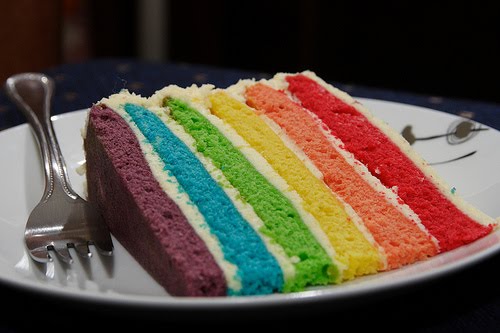
The Rainbow

The Rainbow

My heart leaps up when I behold
   A Rainbow in the sky:
So was it when my life began;
So is it now I am a man;
So be it when I shall grow old,
   Or let me die!
The Child is father of the man;
And I wish my days to be
Bound each to each by natural piety.

William Wordsworth

My Heart Leaps Up, also known as The Rainbow, is a poem by the British Romantic Poet William Wordsworth. Noted for its simplicity of structure and language, it describes the joy that he feels when he sees a rainbow and notes that he has felt this way since his childhood. He concludes the poem by noting how his childhood has shaped his current views and stating that “the child is father of the man.”

Wordsworth wrote “My Heart Leaps Up” on the night of March 26, 1802. Earlier that day, he wad written “To The Cuckoo”. He was in Dove Cottage, Grasmere with his wife, Mary. After he wrote it he often thought about altering it, but decided to leave it as it was originally written. It was published as part of Poems in Two Volumes in 1807.

The day after he wrote “My Heart Leaps Up” Wordsworth began to write his larger and better known Ode: Intimations of Immortality. The last three lines from “My Heart Leaps Up” are used as an epigraph to Intimations of Immortality. Some scholars have noted that “My Heart Leaps Up” indicates Wordsworth’s state of mind while writing the larger poem and provide clues to its interpretation.

Some commentators have speculated that Wordsworth felt such joy because the rainbow indicates the constancy of his connection to nature throughout his life. Others have said that it celebrates “the continuity in Wordsworth’s consciousness of self.” Many commentators also draw parallels to the rainbow of Noah and the covenant that it symbolized. Wordsworth’s use of the phrase “bound each to each” in the poem also implies the presence of a covenant. Some commentators have drawn further parallels with the story of Noah. Harold Bloom has suggested that Wordsworth casts the rainbow as a symbol of the survival of his poetic gift, just as the rainbow symbolised to Noah the survival of mankind. Bloom suggests that Wordsworth’s poetic gift relied on his ability to recall the memories of his joy as a child.

William Wordsworth

On April 7, 1770, William Wordsworth was born in Cockermouth, Cumbria, England. Wordsworth’s mother died when he was eight–this experience shapes much of his later work. Wordsworth attended Hawkshead Grammar School, where his love of poetry was firmly established and, it is believed, he made his first attempts at verse. While he was at Hawkshead, Wordsworth’s father died leaving him and his four siblings orphans. After Hawkshead, Wordsworth studied at St. John’s College in Cambridge and before his final semester, he set out on a walking tour of Europe, an experience that influenced both his poetry and his political sensibilities. While touring Europe, Wordsworth came into contact with the French Revolution. This experience as well as a subsequent period living in France, brought about Wordsworth’s interest and sympathy for the life, troubles and speech of the “common man”. These issues proved to be of the utmost importance to Wordsworth’s work. Wordsworth’s earliest poetry was published in 1793 in the collections An Evening Walk and Descriptive Sketches. While living in France, Wordsworth conceived a daughter, Caroline, out of wedlock; he left France, however, before she was born. In 1802, he returned to France with his sister on a four-week visit to meet Caroline. Later that year, he married Mary Hutchinson, a childhood friend, and they had five children together. In 1812, while living in Grasmere, they grieved the loss of two of their children, Catherine and John, who both died that year.

Equally important in the poetic life of Wordsworth was his 1795 meeting with the poet, Samuel Taylor Coleridge. It was with Coleridge that Wordsworth published the famous Lyrical Ballads in 1798. While the poems themselves are some of the most influential in Western literature, it is the preface to the second edition that remains one of the most important testaments to a poet’s views on both his craft and his place in the world. In the preface Wordsworth writes on the need for “common speech” within poems and argues against the hierarchy of the period which valued epic poetry above the lyric.

Wordsworth’s most famous work, The Prelude (1850), is considered by many to be the crowning achievement of English romanticism. The poem, revised numerous times, chronicles the spiritual life of the poet and marks the birth of a new genre of poetry. Although Wordsworth worked on The Prelude throughout his life, the poem was published posthumously. Wordsworth spent his final years settled at Rydal Mount in England, travelling and continuing his outdoor excursions. Devastated by the death of his daughter Dora in 1847, Wordsworth seemingly lost his will to compose poems. William Wordsworth died at Rydal Mount on April 23, 1850, leaving his wife Mary to publish The Prelude three months later.


Meditations on the Fall and Winter Holidays

Meditations on the Fall and Winter Holidays
by Charles Reznikoff
I
New Year's

The solid houses in the mist
are thin as tissue paper;
the water laps slowly at the rocks;
and the ducks from the north are here
at rest on the grey ripples.

The company in which we went
so free of care, so carelessly,
has scattered. Good-bye,
to you who lie behind in graves,
to you who galloped proudly off!
Pockets and heart are empty.

This is the autumn and our harvest--
such as it is, such as it is--
the beginnings of the end, bare trees and barren ground;
but for us only the beginning:
let the wild goat's horn and the silver
trumpet sound!

Reason upon reason
to be thankful:
for the fruit of the earth,
for the fruit of the tree,
for the light of the fire,
and to have come to this season.

The work of our hearts is dust
to be blown about in the winds
by the God of our dead in the dust
but our Lord delighting in life
(let the wild goat's horn
and the silver trumpet sound!)
our God Who imprisons in coffin and grave
and unbinds the bound.

You have loved us greatly and given us
Your laws
for an inheritance,
Your sabbaths, holidays, and seasons of gladness,
distinguishing Israel
from other nations--
distinguishing us
above the shoals of men.
And yet why should we be remembered--
if at all--only for peace, if grief
is also for all? Our hopes,
if they blossom, if they blossom at all, the petals
and fruit fall.

You have given us the strength
to serve You,
but we may serve or not
as we please;
not for peace nor for prosperity,
not even for length of life, have we merited
remembrance; remember us
as the servants
You have inherited.


II
Day of Atonement

The great Giver has ended His disposing;
the long day
is over and the gates are closing.
How badly all that has been read
was read by us,
how poorly all that should be said.

All wickedness shall go in smoke.
It must, it must!
The just shall see and be glad.
The sentence is sweet and sustaining;
for we, I suppose, are the just;
and we, the remaining.

If only I could write with four pens between five fingers
and with each pen a different sentence at the same time--
but the rabbis say it is a lost art, a lost art.
I well believe it. And at that of the first twenty sins that we confess,
five are by speech alone;
little wonder that I must ask the Lord to bless
the words of my mouth and the meditations of my heart.

Now, as from the dead, I revisit the earth and delight
in the sky, and hear again
the noise of the city and see
earth's marvelous creatures--men.
Out of nothing I became a being,
and from a being I shall be
nothing--but until then
I rejoice, a mote in Your world,
a spark in Your seeing.


III
Feast of Booths

This was a season of our fathers' joy:
not only when they gathered grapes and the fruit of trees
in Israel, but when, locked in the dark and stony streets,
they held--symbols of a life from which they were banished
but to which they would surely return--
the branches of palm trees and of willows, the twigs of the myrtle,
and the bright odorous citrons.

This was the grove of palms with its deep well
in the stony ghetto in the blaze of noon;
this the living stream lined with willows;
and this the thick-leaved myrtles and trees heavy with fruit
in the barren ghetto--a garden
where the unjustly hated were justly safe at last.

In booths this week of holiday
as those who gathered grapes in Israel lived
and also to remember we were cared for
in the wilderness--
I remember how frail my present dwelling is
even if of stones and steel.

I know this is the season of our joy:
we have completed the readings of the Law
and we begin again;
but I remember how slowly I have learnt, how little,
how fast the year went by, the years--how few.


IV
Hanukkah

The swollen dead fish float on the water;
the dead birds lie in the dust trampled to feathers;
the lights have been out a long time and the quick gentle hands that lit them --
rosy in the yellow tapers' glow--
have long ago become merely nails and little bones,
and of the mouths that said the blessing and the minds that thought it
only teeth are left and skulls, shards of skulls.
By all means, then, let us have psalms
and days of dedication anew to the old causes.

Penniless, penniless, I have come with less and still less
to this place of my need and the lack of this hour.
That was a comforting word the prophet spoke:
Not by might nor by power but by My spirit, said the Lord;
comforting, indeed, for those who have neither might nor power--
for a blade of grass, for a reed.

The miracle, of course, was not that the oil for the sacred light--
in a little cruse--lasted as long as they say;
but that the courage of the Maccabees lasted to this day:
let that nourish my flickering spirit.

Go swiftly in your chariot, my fellow Jew,
you who are blessed with horses;
and I will follow as best I can afoot,
bringing with me perhaps a word or two.
Speak your learned and witty discourses
and I will utter my word or two--
not by might not by power
but by Your Spirit, Lord.


Charles Reznikoff Photo: courtesy of New Directions
Charles Reznikoff
On August 31, 1894, Charles Reznikoff was born in Brooklyn, New York. His parents, Russian Jewish immigrants, had fled the pogroms that followed the assassination of Alexander II, and during Reznikoff's childhood many of his relatives joined the family in the United States. Reznikoff was a precocious student, graduating from grammar school when he was eleven, three years ahead of his class. At the age of sixteen, he went to study journalism at the University of Missouri, but he abandoned this endeavor after a year to pursue a degree in law, which he earned from New York University in 1915. He was admitted to the Bar of the State of New York in 1916, but he practiced law only briefly, "because I wanted to use whatever mental energy I had for my writing."
Reznikoff's first book of poetry, Rhythms, was privately published in 1918. He took a series of writing and editing jobs to support himself, working on the editorial staffs of the American Law Book Company and, beginning in 1955, the Jewish Frontier. In 1930, Reznikoff married Marie Syrkin, who later became a distinguished professor at Brandeis University. Throughout the 1930s, Reznikoff gained recognition as one of the principal proponents of Objectivism, along with Louis Zukofsky, George Oppen, and Carl Rakosi. The group of poets established the Objectivist Press, which published three of Reznikoff's books. His work enjoyed little commercial success, however, and much of it continued to be self-published.
The most comprehensive edition of Reznikoff's work is Poems 1918-1975: The Complete Poems of Charles Reznikoff (Black Sparrow Press, 1989). His other books of poetry include Holocaust (1975) and Testimony (1965), which are his most celebrated works, as well as Going To and Fro and Walking Up and Down (1941),Jerusalem the Golden (1934), Poems (1920), and Rhythms (1918). He also published several prose works and a number of plays. After his death, a novel entitled The Manner Music was discovered by his patron, John Martin, and published posthumously in 1976, with an introduction by Robert Creeley.
Apart from his foray in the south and a year spent as a Hollywood screenwriter in the 1930s, Reznikoff was a lifelong resident of New York City. He died on January 22, 1976.


A Christmas Carol

A Christmas Carol
by George Wither

So now is come our joyful feast,
 Let every man be jolly;
Each room with ivy leaves is dressed,
 And every post with holly.
  Though some churls at our mirth repine,
  Round your foreheads garlands twine,
  Drown sorrow in a cup of wine,
 And let us all be merry.

Now all our neighbors’ chimnies smoke,
 And Christmas blocks are burning;
Their ovens they with baked meats choke,
 And all their spits are turning.
  Without the door let sorrow lie,
  And if for cold it hap to die,
  We’ll bury it in a Christmas pie,
 And evermore be merry.

Now every lad is wondrous trim,
 And no man minds his labor;
Our lasses have provided them
 A bagpipe and a tabor.
  Young men and maids, and girls and boys,
  Give life to one another’s joys;
  And you anon shall by their noise
 Perceive that they are merry.

Rank misers now do sparing shun,
 Their hall of music soundeth;
And dogs thence with whole shoulders run,
 So all things aboundeth.
  The country-folk themselves advance,
  For crowdy-mutton’s come out of France;
  And Jack shall pipe and Jill shall dance,
 And all the town be merry.

Ned Swatch hath fetched his bands from pawn,
 And all his best apparel;
Brisk Nell hath bought a ruff of lawn
 With droppings of the barrel.
  And those that hardly all the year
  Had bread to eat or rags to wear,
  Will have both clothes and dainty fare,
 And all the day be merry.

Now poor men to the justices
 With capons make their errands;
And if they hap to fail of these,
 They plague them with their warrants.
  But now they feed them with good cheer,
  And what they want they take in beer,
  For Christmas comes but once a year,
 And then they shall be merry.

Good farmers in the country nurse
 The poor, that else were undone;
Some landlords spend their money worse,
 On lust and pride at London.
  There the roisters they do play,
  Drab and dice their land away,
  Which may be ours another day;
 And therefore let’s be merry.

The client now his suit forbears,
 The prisoner’s heart is eased;
The debtor drinks away his cares,
 And for the time is pleased.
  Though others’ purses be more fat,
  Why should we pine or grieve at that;
  Hang sorrow, care will kill a cat,
 And therefore let’s be merry.

Hark how the wags abroad do call
 Each other forth to rambling;
Anon you’ll see them in the hall,
 For nuts and apples scrambling;
  Hark how the roofs with laughters sound,
  Anon they’ll think the house goes round;
  For they the cellar’s depths have found,
 And there they will be merry.

The wenches with their wassail-bowls
 About the streets are singing;
The boys are come to catch the owls,
 The wild mare in is bringing.
  Our kitchen boy hath broke his box,
  And to the dealing of the ox
  Our honest neighbors come by flocks,
 And here they will be merry.

Now kings and queens poor sheep-cotes have,
 And mate with everybody;
The honest now may play the knave,
 And wise men play at noddy.
  Some youths will now a mumming go,
  Some others play at rowland-hoe,
  And twenty other gameboys moe;
 Because they will be merry.

Then wherefore in these merry days
 Should we, I pray, be duller?
No, let us sing some roundelays
 To make our mirth the fuller.
  And whilst we thus inspired sing,
  Let all the streets with echoes ring;
  Woods, and hills, and everything
 Bear witness we are merry.

George Wither, (1588–1667), poet and pamphleteer. His satires Abuses Stript and Whipt, published 1613, in spite of the innocuous character of their denunciations of Avarice, Gluttony, and so forth, earned him imprisonment in the Marshalsea. There he wrote five pastorals under the title of The Shepheards Hunting, a continuation of The Shepheard’s Pipe, which he had written in conjunction with William Browne, the ‘Willie’ of these verses. His Fidelia appeared in 1617 and again, with the famous song ‘Shall I, wasting in despair’, in 1619; it was this song, printed by Percy in his Reliques, that was to rescue Wither’s reputation from a century of neglect.


In 1622 appeared Faire-Virtue, the Mistresse of Phil’arete, a long sequence of poems in various verse forms in praise of his semi-allegorical mistress. From this time Wither’s poetry became increasingly religious and satirical in tone, which led to accusations that he was a Puritan, and his portrayal as ‘Chronomastix’ in Jonson’s masque Time Vindicated (1623). He published The Hymnes and Songs of the Church in 1623, a poem on the plague in 1628, a book of Emblems in 1634–5, and Heleluiah in 1641.



The Lover’s Story

A few weeks ago, I received an email from the poet Christopher Hennessy saying how much he appreciated my poetry posts.  Christopher asked if he could send me a copy of his first book of poetry Love-In-Idleness.  I was absolutely delighted and waited with eager anticipation to read his poetry.  I was not disappointed and found Christopher’s poetry to be quite moving.  The poem “The Lover’s Story” is one of my favorites.

The Lover’s Story
by Christopher Hennessy

Emperor Ai of the Han Dynasty, rather than wake his lover, asleep on his royal gown, cut the sleeve as proof of his devotion.

To trace my name onto his back
was enough to make him want me.
I needed only a push to the ground,
the choke of his panicked kiss.

Sleepily, I circled him, entranced,
then a languorous fall
to his feet to trail my tongue
ankle to waste,

the seduction concealed
under the robes. Blindness,
the perfect muscle of faith.
Imagining ourselves strangers.

After sex, I only pretended to sleep,
nesting in the folds of his robe.
Hidden in the sleeve—a purple sail.
I chewed my lip to keep awake,

fearing I might admit to a trust
in his love or a promise of mine.
Had I heard the rip as his teeth cut
into the robe’s silk, I’d have shouted:

Old Fool, you ruin your gown
for a delicate coward, for the hush
of your mouth on mine.
Or, had we not been so in love,

I could have whispered:
My emperor, make soft noises
as you leave, quick gasps of grief,
so I can hold myself to the dark.


Christopher Hennessy is the author of Outside the Lines: Talking with Contemporary Gay Poets(University of Michigan Press). He earned an MFA from Emerson College and currently is a Ph.D. candidate in English Literature at the University of Massachusetts-Amherst. He was included in Ploughshares’ special “Emerging Writers” edition, and his poetry, interviews, and book reviews have appeared in American Poetry ReviewVerseCimarron ReviewThe Writer’s Chronicle, The Bloomsbury ReviewCourt Green, OCHOCrab Orchard Review, Natural BridgeWisconsin Review, Brooklyn ReviewMemorious, and elsewhere. Hennessy is a longtime associate editor for The Gay & Lesbian Review-Worldwide.

Thank you, Christopher.


Now Winter Nights Enlarge

Now Winter Nights Enlarge
by Thomas Campion

Now winter nights enlarge
     This number of their hours;
And clouds their storms discharge
     Upon the airy towers.
Let now the chimneys blaze
     And cups o’erflow with wine,
Let well-tuned words amaze
     With harmony divine.
Now yellow waxen lights
     Shall wait on honey love
While youthful revels, masques, and courtly sights
     Sleep’s leaden spells remove.

This time doth well dispense
     With lovers’ long discourse;
Much speech hath some defense,
     Though beauty no remorse.
All do not all things well:
     Some measures comely tread,
Some knotted riddles tell,
     Some poems smoothly read.
The summer hath his joys,
     And winter his delights;
Though love and all his pleasures are but toys
     They shorten tedious nights.

Thomas Campion

Born in London on February 12, 1567, to John and Lucy Campion, Thomas Campion was a physician, a composer, and a poet. His parents died while he was a child, and at the age of fourteen he and a stepbrother were sent away to Cambridge. Campion did not earn a degree at Cambridge, but he came into contact with writers such as Thomas Nashe and Gabriel Harvey. In 1586, he enrolled at Gray’s Inn, a law school, where he performed in plays and masques. The facts of his life from this time until 1602 remain vague; in 1602 Campion entered the University of Caen and shortly thereafter, at the age of forty, took up a medical practice in London.
His first published works were five songs, which appeared in 1591. Campion’s first collection of poems, Thomae Campiani Poemata, was published in Latin in 1595. The book included over 129 epigrams as well as a number of elegies and an incomplete epic poem. The epigrams show Campion’s ability to draw a portrait in a few precise lines, and he would later publish 453 epigrams in Epigrammatum Libri II (1619). By 1597, Campion had focused his attention almost completely on writing the words and music for songs. In 1601, he contributed twenty-one songs, and a brief treatise on song, to the Philip Rosseter’s Book of Ayeres. Rosseter was the King James’ lutenist. Campion would publish four more books of ayeres, or solo songs, including Light Conceits of Lovers (1613), and The Third and Fourth Booke of Ayres (circa 1617). The lyrics in these books are distinguished by their fine musical quality; as Campion noted in the preface to one of his books, “I have chiefly aimed to couple my words and notes lovingly together.”
Campion’s book of prosody, Observations in the Art of English Posie, was published in 1602. In it, he explored the relationship of music and poetry, and warned against “the childish titillation of rhyming.” Campion also wrote a number of libretti for masques performed in King James’ court, including Lord Hay’s Masque (1607) and The Squire’s Masque (1614). These works, commissioned by King James, allowed Campion to associate with many of England’s artistic and aristocratic elite. Campion died on March 1, 1620, in London, probably of the plague, and was buried at St. Dunstan’s-in-the-West, Fleet Street. He never married and died with only twenty-three pounds to his name, which he left to his friend and collaborator, Philip Rosseter.

Birthday Reflections

Today is my birthday.  I am now entering my thirty-fourth year on this earth. When I was in my twenties, my birthday was a great reason to go out and party. In my thirties, I try not to spend my birthdays thinking, “I thought I’d be somewhere bigger doing something better by now.”  Though sometimes, this thought does cross my mind.  The truth is, I wish I had finished my dissertation by now and was teaching full-time in college.  However, I have the firm belief that God has a plan for me.  I don’t know yet what it is, but I have to believe that I am where I am supposed to be at this point in my life.  There is no room for regrets in life, though we all have them.  Instead, I like to take each day as they come and look to the future.  I try to be the person I want to be and strive to be all that I can be, which is really the most we can ask of ourselves.  We also must know our limitations, so that we are not disappointed when we try to do too much at once.

Happy birthday to me!

I love having a birthday.  It’s my special day, and though some people hate being a year older, I always find it better than the alternative.  At thirty-four, I still have a lot of life left to live, and on this journey, I hope that it is  bit of an adventure.  There is an old Chinese curse that states: “May you live in interesting times.”  I have never thought this to be a curse, especially as an historian.  In the present, we live on the front lines of history, and what would life be, if it were always boring.

So on this birthday I want to leave you with a poem that I came across.  This goes out to all those who have had a birthday already this year or will be having one this year.

A Birthday Wish
by Faye Diane Kilday
I wish you love and laughter,
happiness and cheer,
I hope that you’ll have fun
today…
And throughout the coming
year.
I hope your aspirations will
become reality…
I hope you’ll be exactly what
you really want to be.
But most of all I hope this
birthday’s better than the
rest…
For you’re a special person
who deserves the very best!
© Faye Kilday 2000

How Do I Love Thee?

How Do I Love Thee? 
(Sonnet 43)
by Elizabeth Barrett Browning

How do I love thee? Let me count the ways.
I love thee to the depth and breadth and height
My soul can reach, when feeling out of sight
For the ends of being and ideal grace.
I love thee to the level of every day’s
Most quiet need, by sun and candle-light.
I love thee freely, as men strive for right.
I love thee purely, as they turn from praise.
I love thee with the passion put to use
In my old griefs, and with my childhood’s faith.
I love thee with a love I seemed to lose
With my lost saints. I love thee with the breath,
Smiles, tears, of all my life; and, if God choose,
I shall but love thee better after death.

This sonnet may be a bit corny today, but it is one of my favorite sonnets. I happen to love sonnets, and I find this one particularly beautiful. My poor high school English Lit students get a bit sick of sonnets when I teach them British poetry. I still love this one.

Elizabeth Barrett Browning

  • Born: 6 March 1806
  • Birthplace: Durham, England
  • Died: 29 June 1861

After anonymously publishing a book of poetry and a translation of Aeschylus’ Prometheus Bound, Elizabeth Barrett published The Seraphim and Other Poems in 1838 under her own name. Her literary success drew the attention of poet Robert Browning and they met and fell in love. In defiance of her father, and in spite of ill-health, she married Browning secretly in 1846. She continued to publish poems, including the “novel in verse” Aurora Leigh, published in 1857.

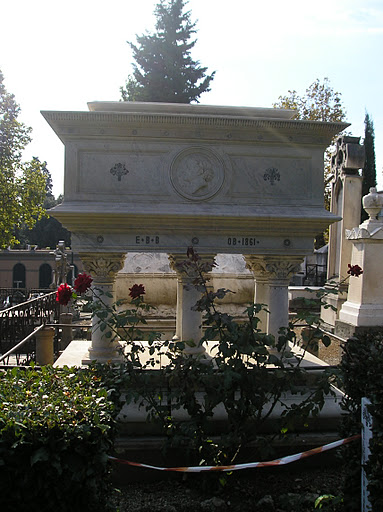
Elizabeth Barrett Browning’s grave in the English Cemetery in Florence Italy.  It is one of the most elaborate graves in the cemetery, which is taken care of by two very sweet and loving nuns.  If you ever have the chance to visit Florence, take the trek out to the cemetery.  It’s well worth it.

The Pumpkin by John Greenleaf Whittier

The Pumpkin
by John Greenleaf Whittier

Oh, greenly and fair in the lands of the sun,
The vines of the gourd and the rich melon run,
And the rock and the tree and the cottage enfold,
With broad leaves all greenness and blossoms all gold,
Like that which o’er Nineveh’s prophet once grew,
While he waited to know that his warning was true,
And longed for the storm-cloud, and listened in vain
For the rush of the whirlwind and red fire-rain.

On the banks of the Xenil the dark Spanish maiden
Comes up with the fruit of the tangled vine laden;
And the Creole of Cuba laughs out to behold
Through orange-leaves shining the broad spheres of gold;
Yet with dearer delight from his home in the North,
On the fields of his harvest the Yankee looks forth,
Where crook-necks are coiling and yellow fruit shines,
And the sun of September melts down on his vines.

Ah! on Thanksgiving day, when from East and from West,
From North and from South comes the pilgrim and guest;
When the gray-haired New Englander sees round his board
The old broken links of affection restored,
When the care-wearied man seeks his mother once more,
And the worn matron smiles where the girl smiled before,
What moistens the lip and what brightens the eye?
What calls back the past, like the rich Pumpkin pie?

Oh, fruit loved of boyhood! the old days recalling,
When wood-grapes were purpling and brown nuts were falling!
When wild, ugly faces we carved in its skin,
Glaring out through the dark with a candle within!
When we laughed round the corn-heap, with hearts all in tune,
Our chair a broad pumpkin,—our lantern the moon,
Telling tales of the fairy who travelled like steam
In a pumpkin-shell coach, with two rats for her team!

Then thanks for thy present! none sweeter or better
E’er smoked from an oven or circled a platter!
Fairer hands never wrought at a pastry more fine,
Brighter eyes never watched o’er its baking, than thine!
And the prayer, which my mouth is too full to express,
Swells my heart that thy shadow may never be less,
That the days of thy lot may be lengthened below,
And the fame of thy worth like a pumpkin-vine grow,
And thy life be as sweet, and its last sunset sky
Golden-tinted and fair as thy own Pumpkin pie!

In the poem “The Pumpkin” by 19th century poet John Greenleaf Whittier, the tradition of Thanksgiving is described as a time of remembrance and return, a celebration of abundance, both of sustenance and of love, at a family gathering. The poet depicts the scene sensually, packing each line with the fruits of a healthy harvest and the warmth of a kitchen sweet from baking. By the end of the poem, the words achieve an almost too-full splendor:

And the prayer, which my mouth is too full to express,
Swells my heart that thy shadow may never be less,
That the days of thy lot may be lengthened below,
And the fame of thy worth like a pumpkin-vine grow…

Having lived on a farm his entire life, Whittier offers his reader the plentiful harvest as a symbol of a productive year, evoking the historical origin of Thanksgiving as the meal held in 1621 by the Wampanoag together with the Pilgrims who settled in Plymouth, Massachusetts; the harvest festival was a shared tradition of both cultures, and the account of a peaceful celebration between the two groups is still the basis for the holiday today. While some of the elements of the story are myths that were consciously exaggerated in the 1890s and early 1900s in the hopes of forging a national identity in the aftermath of the Civil War, the core message of acceptance and commonality still remains for many celebrants.

SOURCES:


The Book of David by Bryan Borland

THE BOOK OF DAVID
from My Life as Adam

by Bryan Borland

He’s divorced and remarried now,
blue collared factory slave
in Mississippi somewhere, shackled
to the second shift, daily
repetitive movements undoing history,
heat and grease replacing the smell
of freedom at sixteen,
of my bedroom in November, my parents off
chasing Rolling Stones.

He corrected me when I sang “bright red” instead
of “flat bed” Ford in “Take It Easy,”
said to treat it like a popsicle then
let me lay my head on his stomach

(most straight boys don’t).

So many men but he was the only one who
took the time to teach me.

I’d watch him communicate patiently with
his deaf younger brother, his rough hands
transformed through sign language,
a gentle education
on the complexities of the world.
These are my last memories of him.

I picture him now guiding the new guys on
how to operate the machines.

I picture them listening.

About the Author
Bryan Borland is a multi-time Pushcart-nominated poet from Little Rock, Arkansas, and the owner of Sibling Rivalry Press, LLC, a young publishing house whose goal is to develop, promote, and market underground artistic talent – those who don’t quite fit into the mainstream. As a poet, Bryan writes primarily narrative poems that create portraits of moments through words. Whether chronicling old friends and lovers in his “Book of” series (“The Book of David,” The Book of Cody,” “The Book of Dmitri,” etc.) or inviting us into his family through poems like “Sons of Abraham” and “Supper,” Bryan seeks to poetically etch tally marks into the walls of life; to, in essence, prove he’s been here.
His first collection of poetry, My Life as Adam, is a potent cocktail of family life, religion, and sexuality, the three pillars of Southern life. It was one of only five books of poetry selected by the American Library Association for their first annual “Over the Rainbow” list of noteworthy LGBT-themed publications. 
Through Sibling Rivalry Press, Borland has also worn the editor’s hat, putting together Ganymede Unfinished, a tribute to the late John Stahle and his beautiful journalGanymede that features the work of poets Jee Leong Koh, Jeff Mann, Matthew Hittinger, writers Charlie Vázquez, Perry Brass, and Scott Hess, artist Seth Ruggles Hiler, and photographer Eric Davis, among others. The success of Ganymede Unfinished led Bryan to create Assaracus, the world’s only quarterly print journal dedicated exclusively to gay male poets. Assaracus has exploded onto the poetry scene and has featured the work of Antler, Gavin Dillard, Raymond Luczak, and Emanuel Xavier.
Bryan is a staple at the Arkansas Literary Festival’s Pub or Perish reading series, and in 2011, he gave the keynote address of the Atlanta Queer Literary Festival. He was also named as one of the Arkansas Times‘ “Eight for the Future” in a cover story focusing on young Arkansans making an impact.
Bryan doesn’t mind, and, in fact, embraces being labeled a gay poet. As Philip F. Clark wrote to Borland while editing My Life as Adam, “Someone out there is waiting to read you. Write for yourself, but write for him, too.”
Want more Bryan? You can read an interview with him here , another interview with him here, and yet another interview with him here. You can add him as a friend onFacebook and can follow him on Twitter. You can also hang out with him if you ever get to Little Rock.