Category Archives: Poetry

After Apple-Picking

After Apple-Picking


My long two-pointed ladder’s sticking through a tree
Toward heaven still,
And there’s a barrel that I didn’t fill
Beside it, and there may be two or three
Apples I didn’t pick upon some bough.
But I am done with apple-picking now.
Essence of winter sleep is on the night,
The scent of apples: I am drowsing off.
I cannot rub the strangeness from my sight
I got from looking through a pane of glass
I skimmed this morning from the drinking trough
And held against the world of hoary grass.
It melted, and I let it fall and break.
But I was well
Upon my way to sleep before it fell,
And I could tell
What form my dreaming was about to take.
Magnified apples appear and disappear,
Stem end and blossom end,
And every fleck of russet showing clear.
My instep arch not only keeps the ache,
It keeps the pressure of a ladder-round.
I feel the ladder sway as the boughs bend.

And I keep hearing from the cellar bin
The rumbling sound
Of load on load of apples coming in.
For I have had too much
Of apple-picking: I am overtired
Of the great harvest I myself desired.
There were ten thousand thousand fruit to touch,
Cherish in hand, lift down, and not let fall.
For all
That struck the earth,
No matter if not bruised or spiked with stubble,
Went surely to the cider-apple heap
As of no worth.
One can see what will trouble
This sleep of mine, whatever sleep it is.
Were he not gone,
The woodchuck could say whether it’s like his
Long sleep, as I describe its coming on,
Or just some human sleep.
–Robert Frost (1914)
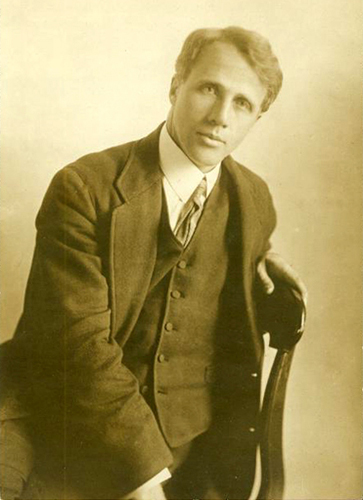
Born in San Francisco, Frost spent most of his adult life in rural New England and his laconic language and emphasis on individualism in his poetry reflect this region. He attended Dartmouth and Harvard but never earned a degree, and as a young man with growing family he attempted to write poetry while working a farm or teaching school. American editors rejected his submitted poems. With considerable pluck Frost moved his family to England in 1912 and the following year a London publisher brought out his first book. After publishing a second book, Frost returned to America determined to win a reputation in his own country, which he gradually achieved, becoming one of the country’s best-loved poets. Unlike his contemporaries, Frost chose not to experiment with new verse forms but to employ traditional patterns, or as he said, he chose “the old-fashioned way to be new.” Despite the surface cheerfulness and descriptive accuracy of his poems, he often presents a dark, sober vision of life, and there is a decidedly thoughtful quality to his work.
In the poem above we see how, like Wordsworth, Frost takes an ordinary experience and transforms it into a meditative moment, a philosophical musing. Apple-picking slides gradually away from merely harvesting fruit to considering how life has been experienced fully but with some regrets and mistakes. The reference to winter coming on feels like the presence of mortalilty. The question about what kind of sleep to anticipate suggests untroubled oblivion or possibly some kind of new life just as the woodchuck reawakens to fresh life in the spring after his hibernation.

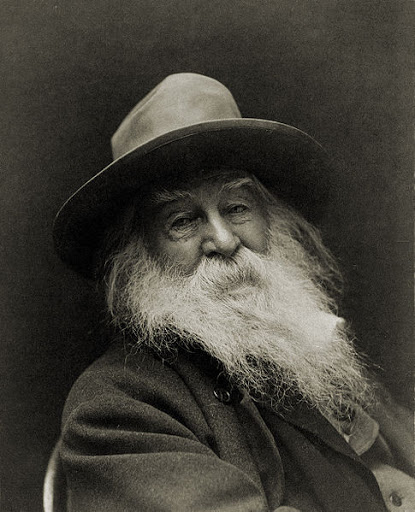
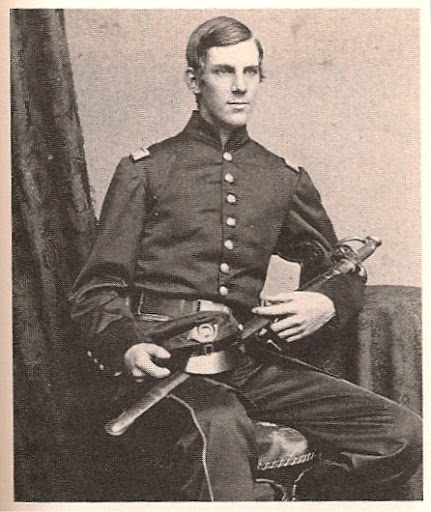
Moment of Zen: Autumn

Autumn is here and you can certainly feel it. The weather is wonderful here. Highs in the upper 70s and low 80s, with Lows in the 60s at night. This is the first comfortable day in nearly six months. It probably won’t last long, but I love fall weather. Hopefully, it will continue to get cooler.

To celebrate the Fall Season, here is William Shakespeare’s “Sonnet 73” to get you in the mood for Fall.

Sonnet 73
by William Shakespeare (1609)
That time of year thou mayst in me behold
When yellow leaves, or none, or few, do hang
Upon those boughs which shake against the cold,
Bare ruined choirs, where late the sweet birds sang.Autumn (2)2
In me thou see’st the twilight of such day
As after sunset fadeth in the west;
Which by and by black night doth take away,
Death’s second self, that seals up all in rest.
In me thou see’st the glowing of such fire,
That on the ashes of his youth doth lie,
As the deathbed whereon it must expire,
Consumed with that which it was nourished by.
This thou perceiv’st, which makes thy love more strong,
To love that well which thou must leave ere long.

As I Lay with My Head in Your Lap Camerado

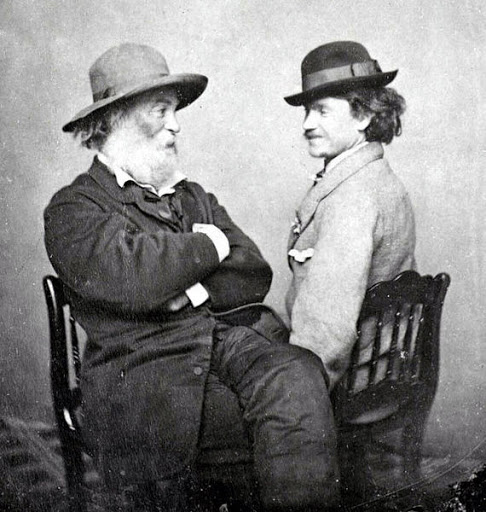
In honor of the official repeal of DADT today, I wanted to post a poem about homosexual love in the military. Long before DADT was an official policy, Walt Whitman was serving as a nurse for the US Army during the Civil War. Drum Taps (1865), Walt Whitman’s sequence of poems on the Civil War that reflects his experience as a hospital volunteer, includes several poems that appreciate soldiers in more or less homoerotic terms (for example, “First O Songs for a Prelude” and “O Tan-Faced Prairie-Boy”).

But it is elegies such as “Vigil Strange I Kept on the Field One Night,” “Reconciliation,” and “As I Lay with My Head in Your Lap Camerado” that allow Whitman to express himself unrestrainedly.

In “Reconciliation,” the speaker’s tenderness for the fallen soldier overpowers the enmity between armies, in terms that anticipate Wilfred Owen’s “Strange Meeting”: “my enemy is dead, a man divine as myself is dead, / I look where he lies white-faced and still in the coffin–I draw near, / Bend down and touch lightly with my lips the white face in the coffin.”

As I Lay with My Head in Your Lap Camerado

As I lay with my head in your lap camerado,
The confession I made I resume, what I said to you and the open air
I resume,
I know I am restless and make others so,
I know my words are weapons full of danger, full of death,
For I confront peace, security, and all the settled laws, to
unsettle them,
I am more resolute because all have denied me than I could ever have
been had all accepted me,
I heed not and have never heeded either experience, cautions,
majorities, nor ridicule,
And the threat of what is call’d hell is little or nothing to me,
And the lure of what is call’d heaven is little or nothing to me;
Dear camerado! I confess I have urged you onward with me, and still
urge you, without the least idea what is our destination,
Or whether we shall be victorious, or utterly quell’d and defeated.

Walt Whitman

In this particular poem, Whitman writes a brief, but beautiful confession and declaration of his own sexuality. It is a brief, but significant love poem, and the manner of Whitman’s “confession” can be explored in a number of ways, but it ultimately points to a homosexual relationship. The first obvious hint that this poem is linked to Whitman’s homosexuality is his adjustment of the word “camerado.” The original Spanish word is actually “camarada” with a feminine ending, and it means “friend” or comrade.” By changing this specific word to have a male ending, we know that Whitman is aiming and professing this poem to a male friend. The significance of this male friend becomes more apparent as Whitman continues with his poem.  His use of the actually word “confession” within the second line – “The confession I made I resume, what I said to you and the open air I resume” is another example of Whitman confessing openly his sexuality. As Whitman continues to describe this poem, he draws attention to the fact that it will make others “restless” and his words are “weapons full of danger, full of death.”

The intensity of the poem, although subtle but existent, is what ultimately points that nature of the poem has to do with love or at least intimacy. Whitman seems very determined in this poem, especially as he says “Dear camerado! I have urged you onward with me, and still urge you, without the least idea what is our destination or whether we shall be victorious, or utterly quell’d and defeated.” Whitman seems to be dismissing everything else, and urging this other person to do the same. He is rejecting any significance of heaven or hell, and embracing the fact that whatever road he is going down may bring hard times. Indeed, to announce homosexuality during Whitman’s era would have brought on a lot of criticism and grief.

Sources:


Moment of Zen

Though I think not
To think about it,
I do think about it
And shed tears
Thinking about it.

Ryōkan Taigu (良寛大愚)

Ryōkan Taigu (良寛大愚) (1758–1831) was a quiet and eccentric Sōtō Zen Buddhist monk who lived much of his life as a hermit. Ryōkan is remembered for his poetry and calligraphy, which present the essence of Zen life.


The Love That Dares To Speak Its Name

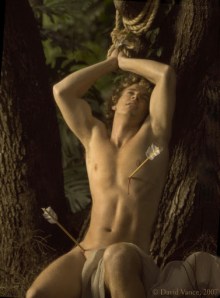
“The Love that Dares to Speak its Name” is a controversial poem by James Kirkup.  In fact, some might find the poem to be quite offensive, but after reading it and researching about it, I found it fascinating, even if it is blasphemous.  Maybe intellectual curiosity sometimes kills the cat, but I decided to write about it anyway.  It is written from the viewpoint of a Roman centurion who is graphically described having sex with Jesus after his crucifixion, and also claims that Jesus had had sex with numerous disciples, guards, and even Pontius Pilate.  If the poem was not about Jesus Christ and the centurion, Longinus, I would truly consider the poem beautiful and erotic in an odd necrophilia sort of way that is also quite disturbing.  Maybe it is either way, or maybe I have been reading too much Edgar Allen Poe in the high school English class that I am currently teaching.

The poem was at the centre of the Whitehouse v. Lemon trial for blasphemous libel, where the editor of Gay News—which first published in the poem in 1976—was convicted and given a suspended prison sentence.  In later years, Britain’s Royal Crown Prosecution Service attempted to charge the Lesbian and Gay Christian Movement with a similar charge of blasphemous libel after a complaint by religious conservatives over a hypertext link on their web site to text of “The Love that Dares to Speak its Name” by James Kirkup.

The Love That Dares To Speak Its Name
By James Kirkup

As they took him from the cross
I, the centurion, took him in my arms-
the tough lean body
of a man no longer young,
beardless, breathless,
but well hung.


He was still warm.
While they prepared the tomb
I kept guard over him.
His mother and the Magdalen
had gone to fetch clean linen
to shroud his nakedness.


I was alone with him.
For the last time
I kissed his mouth. My tongue
found his, bitter with death.
I licked his wound-
the blood was harsh
For the last time
I laid my lips around the tip
of that great cock, the instrument
of our salvation, our eternal joy.
The shaft, still throbbed, anointed
with death’s final ejaculation


I knew he’d had it off with other men-
with Herod’s guards, with Pontius Pilate,
With John the Baptist, with Paul of Tarsus
with foxy Judas, a great kisser, with
the rest of the Twelve, together and apart.
He loved all men, body, soul and spirit. – even me.


So now I took off my uniform, and, naked,
lay together with him in his desolation,
caressing every shadow of his cooling flesh,
hugging him and trying to warm him back to life.
Slowly the fire in his thighs went out,
while I grew hotter with unearthly love.


It was the only way I knew to speak our love’s proud name,
to tell him of my long devotion, my desire, my dread-
something we had never talked about. My spear, wet with blood,
his dear, broken body all open wounds,
and in each wound his side, his back,
his mouth – I came and came and came


as if each coming was my last.
And then the miracle possessed us.
I felt him enter into me, and fiercely spend
his spirit’s finbal seed within my hole, my soul,
pulse upon pulse, unto the ends of the earth-
he crucified me with him into kingdom come.


-This is the passionate and blissful crucifixion
same-sex lovers suffer, patiently and gladly.
They inflict these loving injuries of joy and grace
one upon the other, till they dies of lust and pain
within the horny paradise of one another’s limbs,
with one voice cry to heaven in a last divine release.


Then lie long together, peacefully entwined, with hope
of resurrection, as we did, on that green hill far away.
But before we rose again, they came and took him from me.
They knew not what we had done, but felt
no shame or anger. Rather they were glad for us,
and blessed us, as would he, who loved all men.


And after three long, lonely days, like years,
in which I roamed the gardens of my grief
seeking for him, my one friend who had gone from me,
he rose from sleep, at dawn, and showed himself to me before
all others. And took me to him with
the love that now forever dares to speak its name.

Further Reading:


Lest We Forget

On the morning of September 11, 2001, nineteen terrorists from the Islamist extremist group, al Qaeda, hijacked four commercial airplanes, deliberately crashing two of the planes into the upper floors of the North and South Towers of the World Trade Center complex and a third plane into the Pentagon in Arlington, VA. The Twin Towers ultimately collapsed because of the damage sustained from the impacts and the resulting fires. After learning about the other attacks, passengers on the fourth hijacked plane, Flight 93, fought back, and the plane was crashed into an empty field in western Pennsylvania about 20 minutes by air from Washington, DC.
The attacks killed nearly 3,000 people from 93 nations. 2,753 people were killed in New York,  184 people were killed at the Pentagon, and 40 people were killed on Flight 93.


Ode of Remembrance
With proud thanksgiving, a mother for her children,
England mourns for her dead across the sea.
Flesh of her flesh they were, spirit of her spirit,
Fallen in the cause of the free.
Solemn the drums thrill: Death august and royal,
Sings sorrow up into immortal spheres.
There is music in the midst of desolation,
And a glory that shines upon her tears.
They went with songs to the battle, they were young.
Straight of limb, true of eyes, steady and aglow.
They were staunch to the end against odds uncounted,
They fell with their faces to the foe.
They shall not grow old, as we that are left grow old:
Age shall not weary them, nor the years condemn.
At the going down of the sun and in the morning,
We will remember them.
Lest We Forget

They mingle not with their laughing comrades again;
They sit no more at familiar tables at home;
They have no lot in our labour of the daytime;
They sleep beyond England’s foam.
But where our desires are and our hopes profound,
Felt as a well-spring that is hidden from sight,
To the innermost heart of their own land they are known,
As the stars are known to the night.

As the stars will be bright when we are dust,
Moving in marches upon the heavenly plain;
As the stars that are starry in the time of our darkness,
To the end, to the end, they remain.
Lest We Forget

English poet Laurence Binyon, overwhelmed by the carnage and loss of life by British and Allied forces in World War 1, penned one of the most moving tributes the world has known to those who died in war.

Originally titled For the Fallen, the ode first appeared in The Times of London on September 21, 1914. It has now become known in Australia and Canada as the Ode of Remembrance.  I think that on the 10th anniversary of 9/11 it is a fitting memorial.  After the verse in bold is recited in memory of those who died, it is followed by the response, “Lest we forget” as I have added it above.


The Hug by Thom Gunn

The Hug
It was your birthday, we had drunk and dined
Half of the night with our old friend
Who’d showed us in the end
To a bed I reached in one drunk stride.
Already I lay snug,
And drowsy with the wine dozed on one side.

I dozed, I slept. My sleep broke on a hug,
Suddenly, from behind,
In which the full lengths of our bodies pressed:
Your instep to my heel,
My shoulder-blades against your chest.
It was not sex, but I could feel
The whole strength of your body set,
Or braced, to mine,
And locking me to you
As if we were still twenty-two
When our grand passion had not yet
Become familial.
My quick sleep had deleted all
Of intervening time and place.
I only knew
The stay of your secure firm dry embrace.
Thom Gunn

Photo © Ander Gunn 1992

In 1929, Thom Gunn was born in Gravesend, Kent, England, the older son of two journalists. His parents were divorced when the poet was ten years old, and his mother committed suicide while he was a teenager. Before her death, his mother had inspired a deep love of reading in him, including affection for the writings of Marlowe, Keats, Milton, and Tennyson, as well as several prose writers.

Before enrolling in Trinity College, Cambridge, in 1950, he spent two years in the national service and six months in Paris. In 1954, the year after his graduation, Gunn’s first poetry collection, Fighting Terms, was published. The book was instantly embraced by several critics, including John Press, who wrote, “This is one of the few volumes of postwar verse that all serious readers of poetry need to possess and to study.” Gunn relocated to San Francisco and held a one-year fellowship at Stanford University, where he studied with Yvor Winters.

Over the next few decades, he published several collections that were not as warmly received as his earliest work, including The Sense of Movement (1957), My Sad Captains (1961), Touch (1967), Moly (1971), To the Air (1974), Jack Straw’s Castle (1976), Selected Poems 1950-1975 (1979), and The Passages of Joy (1983).

During the 1970s and 80s, Gunn’s poems were marked by the poet’s personal experiences as he wrote more openly about his homosexuality and drug use. Many critics believed he was betraying his talents. But with the publication of The Man with Night Sweats in 1992, a collection memorializing his friends and loved ones who had fallen victim of the AIDS pandemic, critics were reminded of Gunn’s early promise. As Neil Powell wrote of the book, “Gunn restores poetry to a centrality it has often seemed close to losing, by dealing in the context of a specific human catastrophe with the great themes of life and death, coherently, intelligently, memorably. One could hardly ask for more.” Gunn received the Lenore Marshall Poetry Prize for the collection in 1993.

He went on to publish several more books of poetry in the United States and Britain, including Boss Cupid (Farrar, Straus & Giroux, 2000), Frontiers of Gossip (1998), and Collected Poems (1994). He has also written several collections of essays, including The Occasions of Poetry (1982; U.S. edition, 1999).

Gunn’s honors include the Levinson Prize, an Arts Council of Great Britain Award, a Rockefeller Award, the W. H. Smith Award, the PEN (Los Angeles) Prize for Poetry, the Sara Teasdale Prize, a Lila Wallace-Reader’s Digest Award, the Forward Prize, and fellowships from the Guggenheim and MacArthur foundations.

Thom Gunn died on April 25, 2004, in his home in San Francisco.


Fauns and Satyrs

The satyrs were woodland spirits, often depicted in arts with head and upper body of man, horns and pointy ears, and goat legs. They were also depicted with large erect phallus (penis).

They were often seen accompanying Dionysus, the god of wine and ecstasy. They were shown in drunken revelry and orgy, dancing with Dionysus’ female followers, the maenads.
Pan, the god of shepherd was a satyr, so was probably Silenus or Seilenus. Silenus was one of the loyal followers of Dionysus, who brought up the wine god.

Satyrs were usually represented as being very hairy and having the tails and ears of a horse and often the horns and legs of a goat. An important part of Dionysus’ entourage, they were lustful, fertile creatures, always merrily drinking and dancing.

In Greek mythology, satyrs (in Greek, Σάτυροι — Sátyroi) are a troop of male companions of Pan and Dionysus— “satyresses” were a late invention of poets— that roamed the woods and mountains. In mythology they are often associated with male sex drive and vase-painters often portrayed them with uncontrollable erections.

The Fauns and Satyrs were he-creatures, like men, with the hind-legs of goats, short horns on their foreheads, and long pointed ears. But there was a difference between the Fauns and Satyrs. The Fauns were handsome, gentle, innocent, and rather foolish. The Satyrs were hideous, clumsy, hairy monsters, with flat faces, little eyes, and huge mouths, great gluttons, often drunk, and sometimes mischievous: most of them were dull and stupid, but many of them had plenty of sense and knowledge. The Fauns and Satyrs lived among the woods and hills like the Dryads and Oreads.

The king of all these Nymphs, Fauns, and Satyrs was a god named Pan, who was himself a very hideous satyr. He had nothing to do with the gods of Olympus, but lived on the earth, chiefly in a part of Greece called Arcādia. “Pan” is the Greek for “all”—you remember the same word in the name of “Pan-dora.” He was called “Pan” because he was the god of “all” nature—all the hills and mountains, all the woods and forests, all the fields, rivers, and streams.

Anonymous poem: A Faun meets a Taormina shepherd

In the most remote areas of Taormina’s wilderness,
Young shepherds met fauns and satyrs, Pan and Dionysos,
Hidding behind a rock, vanishing in a flash, a flash of light.

Most of the time they were mere illusions, a reflection of the sun,
A mirage in Taormina’s wilderness, at the peak of the hot wave,
Or just a noise of a rock falling down from a cliff… 

But Pasqualino met a faun, a real faun, sitting on a rock,
Far away from the usual paths of Taormina’s young shepherds,
So far that he was in the middle of nowhere… 

“Are you a god or just an illusion ?”, asked Pasqualino.
“Did I love you a long time ago, I am sure I know you”,
Answered the faun with his Dionysiac horns… 

“Cute shepherd of Taormina, please, play a melody for me,
A melody from your reed flute, perhaps I will sing one for you,
A song of love, of the love of gods for Taormina’s shepherds… 

Please, have a seat on this rock, beside me, let us sing and dream,
Hope and remember, love and be loved, let me tell you the legend of fauns,
Please tell me the story of your life, where you are from, what you dream about…” 

And Pasqualino played the most beautiful of the tunes the boys of Taormina know,
A music wide as an horizon, deep as eyes, sensitive as a caressing hand,
A music of longing and sorrow, of dream and hope, of loneliness and communion. 

Wilhelm von Gloeden’s camera obscura was able to catch the magic of this encounter,
The encounter of a Faun and of a young shepherd from Taormina,
At the turn of a century, at the threshold of two worlds, reality and imagination. 

While looking at this photograph, forever I can listen to this forgotten melody,
To the melody of Fauns meeting young shepherds in the most remote wilderness,
Of Fauns falling in love with them, and crossing the invisible border, 

The border between gods and humans, between dream and reality,
Between hope and memory,
So far, so deep, at this crossroads where a lover meet his loved one.

Anonymous poet, around 1907, Von Gloeden Archive, 1907, call number 1907/Anon/12 (Rêves Siciliens)


The Homoerotic Poetry of Catullus

Catullus 

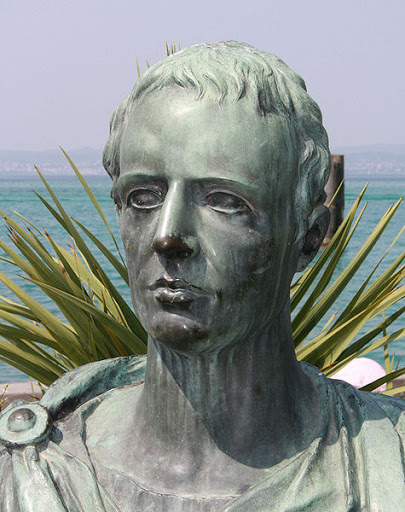
Gaius Valerius Catullus (ca. 84 BC – ca. 54 BC) was a Roman poet of the 1st century BC.His surviving works are still read widely, and continue to influence poetry and other forms of art. Catullus invented the “angry love poem.” He was imitated by Tibullus, Propertius, Horace and Ovid, as well as Ben Jonson and Robert Herrick in English. Most of Catullus’ poems are short. In a few concise lines he expresses love, friendship or bitterness. Most of his poems are heterosexual, but a good number of them are devoted to boys and are “particularly lusty.”

50. Yesterday: to Licinius Calvus 1

Yesterday, Calvus, idle day
we played with my writing tablets,
harmonising in being delightful:
scribbling verses, each of us
playing with metres, this and that,
reciting together, through laughter and wine.
And I left there fired with your charm,
Calvus, and with your wit,
so that, restless, I couldn’t enjoy food,
or close my eyes quietly in sleep,
but tossed the whole bed about wildly
in passion, longing to see the light,
so I might speak to you, and be with you.
But afterwards I lay there wearied
with effort, half-dead in the bed,
I made this poem for you, pleasantly,
from which you might gather my pain.
Now beware of being rash, don’t reject
my prayers I beg, my darling,
lest Nemesis demand your punishment. She’s
a powerful goddess. Beware of annoying her.

99. Stolen Kisses: to Iuventius 2

I stole a sweet kiss while you played, sweet Iuventius,
one sweeter than sweetest ambrosia.
Not taken indeed with impunity: for more than an hour
I remember, I hung at the top of the gallows,
while I was justifying myself to you, yet with my tears
I couldn’t lessen your anger a tiny morsel.
No sooner was it done, than, your lips rinsed
with plenty of water, you banished it with your fingers,
so nothing contracted from my lips might remain,
as though it were the foul spit of a tainted whore.
More, you handed me unhappily to vicious love
who’s not failed to torment me in every way,
so that sweet kiss, altered for me from ambrosia,
was more bitter than bitter hellebore then.
Since you lay down such punishments for unhappy love,
now, after this, I’ll never steal kisses again.

1 Gaius Licinius Calvus, orator, poet, friend of Catullus and colleague of Cicero. Ovid mentions him alongside Catullus and Tibullus.


2 An unidentified friend of Catullus.


Les regrets de Joachim du Bellay

Les regrets de Joachim du Bellay

Sonnet CV (Originally French)

De voir mignon du Roy un courtisan honneste,
Voir un pauvre cadet l’ordre au col soustenir,
Un petit compagnon aux estat parvenir,
Ce n’est chose (Morel) digne d’en faire feste.


Mais voir un estaffier, un enfant, une beste.
In forfant, un poltron Cardinal devenir,
Et pour avoir bien sceu un singe entretenir
Un Ganymide avoir le rouge sur la teste:


S’estre veu par les mains d’un soldat Espagnol
Bien hault sur un eschelle avoir la corde au col
Celuy, que par le nom de Sainct-Père lon nomme:


Un bélistre en trois jours aux princes s’égaller,
Et puis le voir de là en trois jours dévaller:
Ces miracles (Morel) ne se font point qu’à Rome.

The Regrets of Joachim du Bellay

Sonnet 105 (English Translation)

Seeing King’s darling as an honest courtier,
Watch a poor junior order to support to the collar,
A little companion to achieve status,
This is something, my dear Morel, worthy of making a feast.

Yet seeing a footman, a child, a beast,
A rascal, a coward made a Cardinal
For having taken care of a monkey well,
A Ganymede wearing the red hat on his head

Is to be seen through the hands of a Spanish soldier
Although a high ladder to have the rope to the neck
The one, by the name of the Holy Father’s common names:

A scoundrel in three days for the princes are equal,
And then view there over three days to unwrap:
These are miracles, my dear Morel, that take place in Rome alone.

I searched the internet to the best of my ability to find an English translation of this poem and never found more than a few lines translated.  So with my limited ability at translating French and the use of Google Translate with some further help from various French-English Dictionaries, the English Translation above is my best attempt at a translation, though I am afraid I am not poetic enough to translate it in the style of a Petrarchan Sonnet in which it was originally written.  If anyone knows of a better English translation, please let me know.

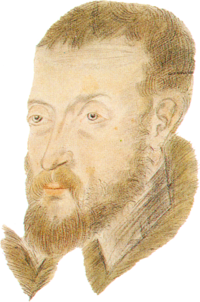
Du Bellay

With that caveat at the beginning you may be wondering why I even posted this poem today.  For me, the answer is quite interesting.  The poem was written by the poet Joachim du Bellay, who lived in Rome while in the retinue of his relative Cardinal Jean du Bellay.  This sonnet is one of the two sonnets in his series Les regrets (1558) which expressed his scandalized opinion of Julius III during what became known as The Innocenzo Scandal.

The Innocenzo Scandal

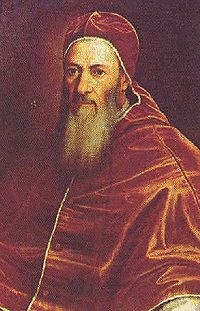
Julius III

Pope Julius III (1550-1555) was born in Rome, September 10, 1487 as Giovanni Maria Ciocchi del Monte, he took the name Julius and studied law at Perugia and Siena. After taking holy orders, he became chamberlain to Pope Julius II.  Although an outstanding canonists, his careless homosexuality, especially as he got older, created a scandal for the papacy. In his sixties, he picked up a 14-year-old boy on the streets of Parma. The boy, ironically named Innocenzo was described as being stunningly beautiful, and Julius was so enraptured with him that he forced his brother to adopt Innocenzo.

In February of 1550 Cardinal Del Monte was elected pope as Julius III, and immediately made the 17 year old Innocenzo a Cardinal. Attempts to give the boy an education which could have prepared him for ecclesiastic office had already proven useless – “a few social graces, a few bits of knowledge, perhaps about the glories of the Classical world, and Innocenzo’s formal education was over.” Nevertheless, Julius issued a Papal Bull declaring Innocenzo legitimate – a necessary move given that persons of illegitimate birth were not eligible for membership of the College of Cardinals – and named him Cardinal Nephew, effectively in charge of all papal correspondence. But the role of secretary to the papacy proved manifestly beyond Innocenzo’s abilities, and so, in order to find a way for his favourite to retain the appearance of power without having any real responsibility, Julius upgraded a hitherto minor position, that of secretary intimus, which, as Cardinal Secretary of State, was eventually to become the highest of Vatican offices. Innocenzo, although relieved of all real duties, continued to be showered with benefices and high offices, much to the disgust of his fellow cardinals. As Cardinal he was given the titular church of San Callisto, in 1562.

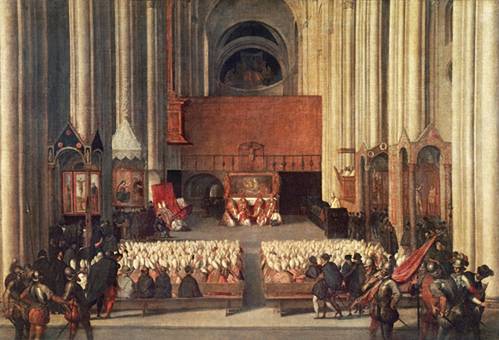
Council of Trent

Cardinals who were more sensitive to the need to reform the mores of the Church in order to combat the Protestant Reformation protested in vain against Innocenzo’s elevation. Rumors also circulated around European courts. Gossip called the boy Julius’s “Ganymede.” The relationship became a staple of anti-papal polemics for over a century: it was said that Julius, awaiting Innocenzo’s arrival in Rome to receive his cardinal’s hat, showed the impatience of a lover awaiting a mistress, and that he boasted of the boy’s prowess. The Venetian ambassador, Matteo Dandolo, wrote that Cardinal Del Monte “was a little scoundrel”, and that the Pope “took him [Innocenzo] into his bedroom and into his own bed as if he were his own son or grandson”. Onofrio Panvinio wrote that Julius was “excessively given to intemperance in a life of luxuriousness and to his libido,” and, more explicitly characterized him as “puerorum amoribus implicitus” (‘entangled in love for boys’). One more mocking rumor made the rounds in Rome, saying that Innocenzo had been made a cardinal as a reward for his being the keeper of the pope’s monkey.

Remember that this scandal took place in one of the most tumultuous periods of the Roman Catholic Church. It occurred in the midst of the Wars of Religion that resulted from the Protestant Reformation.  As a Cardinal, Julius III, had served as the first president of the Council of Trent, which was the core movement in the Catholic Counter-Reformation.