



Pride goeth before destruction, and an haughty spirit before a fall. Better it is to be of an humble spirit with the lowly, than to divide the spoil with the proud.
—Proverbs 16:18-19 (KJV)
Should we celebrate LGBTQ+ Pride when it is considered one of the Seven Deadly Sins? The answer is yes because LGBTQ+ Pride is not a sinful pride as described in scripture. It is a celebration of who we are, and the person God created us to be. Pride in the Bible is the antonym of humility. The Britannica Dictionary offers four definitions for Pride:
It is the second definition that the Bible says God abhors and is a sin. LGBTQ+ Pride is an example of the first and third definitions. LGBTQ+ Pride is about self-respect, not superiority. The Bible offers two basic types of pride: legitimate pride and sinful pride.
The word “pride” is mentioned in the Bible multiple times, but the exact count varies depending on the translation. The New King James Version mentions the word “pride” 51 times, but there are many more instances of pride that do not use the word itself. None of those instances encourage pride. Pride, in a biblical context, refers to an excessive sense of self-worth, arrogance, and superiority often leading to rebellion against God. In the Bible, pride is frequently associated with disobedience, rebellion, and an elevation of self above God and others. It is regarded as a sin that hinders humility and disrupts one’s relationship with God.
To give a biblical example, in Revelation 18, an angel announces the judgment of Babylon and describes what provokes God’s wrath on the world. Revelation 18:7 says: “In the measure that she glorified herself and lived luxuriously, in the same measure give her torment and sorrow; for she says in her heart, ‘I sit as queen, and am no widow, and will not see sorrow.’” Here we see pride is what Revelation describes as the antichrist. (The Epistle of James speaks of many antichrists, not just one as some Christians believe. An antichrist is someone who is the opposite of Christ though they will often claim to be Christ-like.) Pride is an attitude that we can trust in wealth and independence and have no need for God in our lives. As Believers, we are called to rely on the Lord for all that we need.
Matthew Poole, an English Puritan who lived from 1624–1679, summarized in his commentaries the situation this way, “Pride goeth before destruction; it is commonly a forerunner and cause of men’s ruin because it highly provokes both God and men.” There is a tension between the will of man and the will of God. For things to go well for us, we must be willing to surrender our lives to God and follow the example set forth by Christ. We are called to trust God with our hearts and believe God when He promises that He will take care of us. Proverbs 3:5-6 tells us, “Trust in the Lord with all your heart, and lean not on your own understanding; in all your ways acknowledge Him, and He shall direct your paths.”
In contrast to sinful pride, LGBTQ+ pride is not meant to celebrate arrogance or superiority. LGBTQ+ pride is the promotion of the self-affirmation, dignity, equality, and increased visibility of lesbian, gay, bisexual, transgender, and queer people as a social group. Pride, as opposed to shame and social stigma, is the predominant outlook that bolsters most LGBTQ+ rights movements. Pride is a celebration of who we are and the rights we have fought to be acknowledged and protected. It is about equality, not superiority. We have parades, parties, and rainbows everywhere to celebrate Pride, and it may look like a sinful pride from the outside looking in, but it is actually a humble pride. We do not seek superiority over others; we seek equality and recognition.
In his annual proclamation for Pride month, President Biden wrote, “To the entire LGBTQI+ community — and especially transgender children — please know that your President and my entire Administration have your back. We see you for who you are: made in the image of God and deserving of dignity, respect, and support.” I can’t reiterate enough that we are made in the image of God and deserving of dignity, respect, and support. This is what Pride should be for LGBTQ+ Christians.
P.S. I could have done a whole post about Donald Trump and the sins of pride. He is one of the most sinful examples of pride in the public eye today, but with his conviction on Thursday and his and other Republicans subsequent reactions, I can only be reminded of Proverbs 16:18, “Pride goeth before destruction, and an haughty spirit before a fall.”
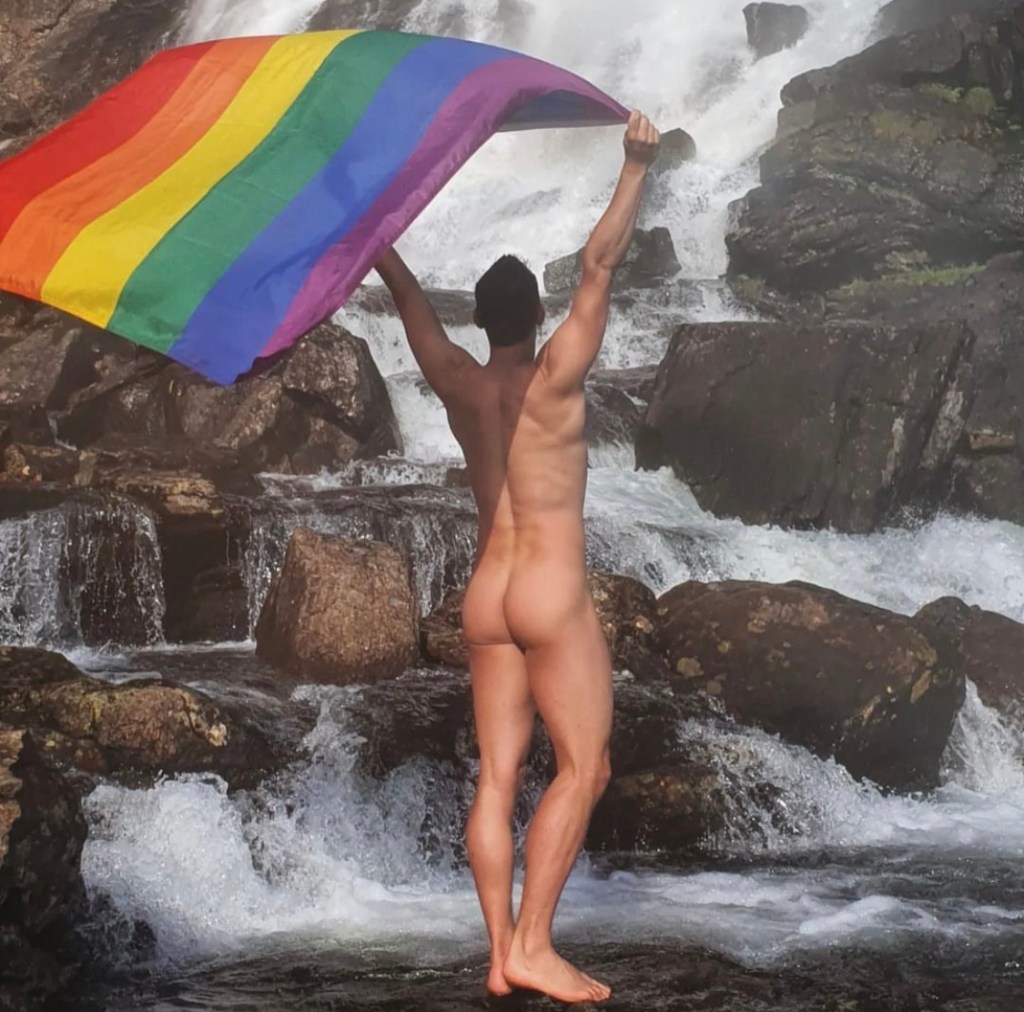
I love the sound of rushing water whether it’s a mountain stream or a waterfall. The sound is infinitely soothing. With that said, today also marks the beginning of Pride Month, and the above picture seems to be the perfect one to kick off the month.








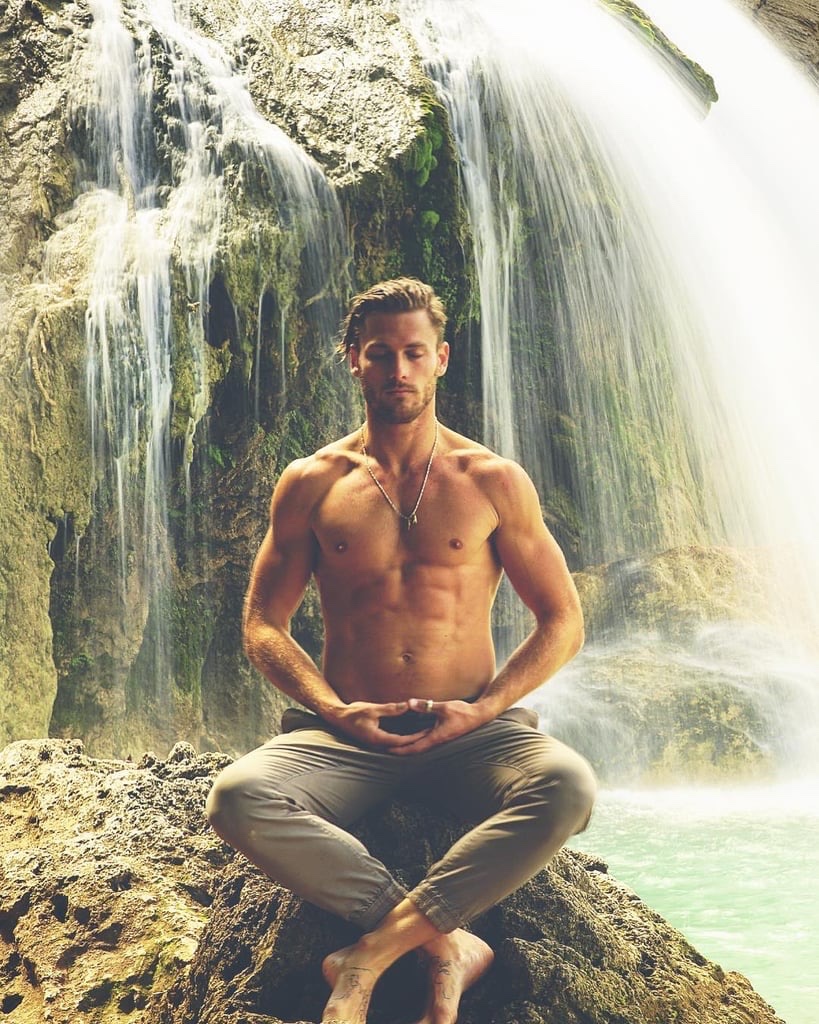
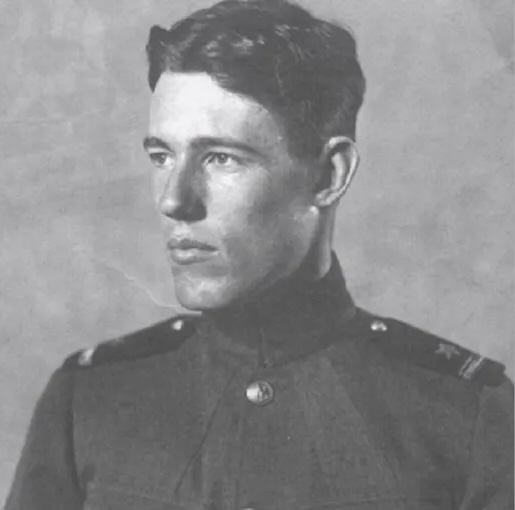
Prescott Townsend (1894-1973) was born into an old, wealthy Boston family. His mother was both a descendant of Myles Standish through her grandmother Susannah Perkins Staples (the sister of Yale Law School founder Seth Perkins Staples) and other Mayflower passengers, and the great-granddaughter of the American founding father Roger Sherman and his wife Rebecca Minot Prescott, through their son Roger Sherman, Jr. Townsend came out as a teenager, and his parents were accepting but told him to be cautious.
He attended the Volkman School, graduated in 1918 from Harvard University, and attended Harvard Law Schoolfor one year. He spent the summer of 1914 in logging camps in Montana and Idaho, and traveled to North Africa and the Soviet Union. After serving in World War I, Prescott lived in Paris for a time, becoming immersed in the bohemian culture of the era. He then “sought to establish an outpost of that culture” in his hometown of Boston and returned to Boston’s Beacon Hill neighborhood, where he began a relationship with theater producer Elliot Paul, with whom he founded the experimental Barn Theatre in 1922.
Paul introduced Townsend to numerous avant-garde creatives, including openly gay writer André Gide. Townsend operated speakeasies, restaurants, and theaters, cultivating a bohemian neighborhood on Beacon Hill’s Joy Street. He also spent time in Provincetown, where he became friendly with playwright Eugene O’Neill and other theater artists. He pioneered the popularity of A-frame houses, building several in Provincetown. He was later a founder of the Provincetown Playhouse, where the works of Eugene O’Neill were first performed.
Prescott was very happy to be a patron of the arts, and artists were very happy to take his money, However, the Great Depression ended all that.
By the 1930s, Prescott Townsend repeatedly addressed the Massachusetts legislature as an acknowledged homosexual man advocating for the repeal of sodomy legislation, urging the lawmakers “to legalize love.” He was indulged due to his family’s wealth and Boston Brahmin status, but he was ignored by lawmakers. While working at the shipyard during World War II, Townsend was arrested in 1943, for participating in an “unnatural and lascivious act.” He did not deny it, and was sentenced to eighteen months in the Massachusetts House of Corrections.
Shortly after, Prescott was officially stricken from both the New York and Boston Social Registers. In the 1950s, he held meetings at his home/bookstore, which he described as “the first social discussion of homosexuality in Boston.” In talks in Boston and Provincetown he promoted his “Snowflake Theory” of human personality and sexuality, stating that the human mind is like a snowflake in that no two are alike, and each has six opposing sides: I/You, He/She, Hit/Submit. He embraced a more in-your-face generation of activists in the late 1960s, marked by the uprising at New York City’s Stonewall Inn in 1969 and at age 76, he attended the first Pride parade in New York on the one-year anniversary of the Stonewall riots.
Toward the end of his life, his two remaining properties on the Hill were on its North Slope, traditionally the side where servants of patrician South Slope residents lived. He accommodated a motley collection of tenants, mostly young gay men, in an eight-unit building at 75 Phillips St. He always advocated for the outsider, the hippies, vagabonds, and runaway homeless queer youth his was a legacy of love, money and uplift.
Townsend died at age 78. He had, for years, been suffering from failing health brought on by Parkinson’s disease, and on May 23, 1973, his body was found in the Beacon Hill apartment of John Murray, who had been caring for him during the final years of his life. The police reported that “when we came in to take charge of the body, Mr. Townsend was found in a kneeling prayer position at his bedside.” Of his entire family, only one sister, a nephew and a great-nephew attended his memorial service at the Arlington Street Church.
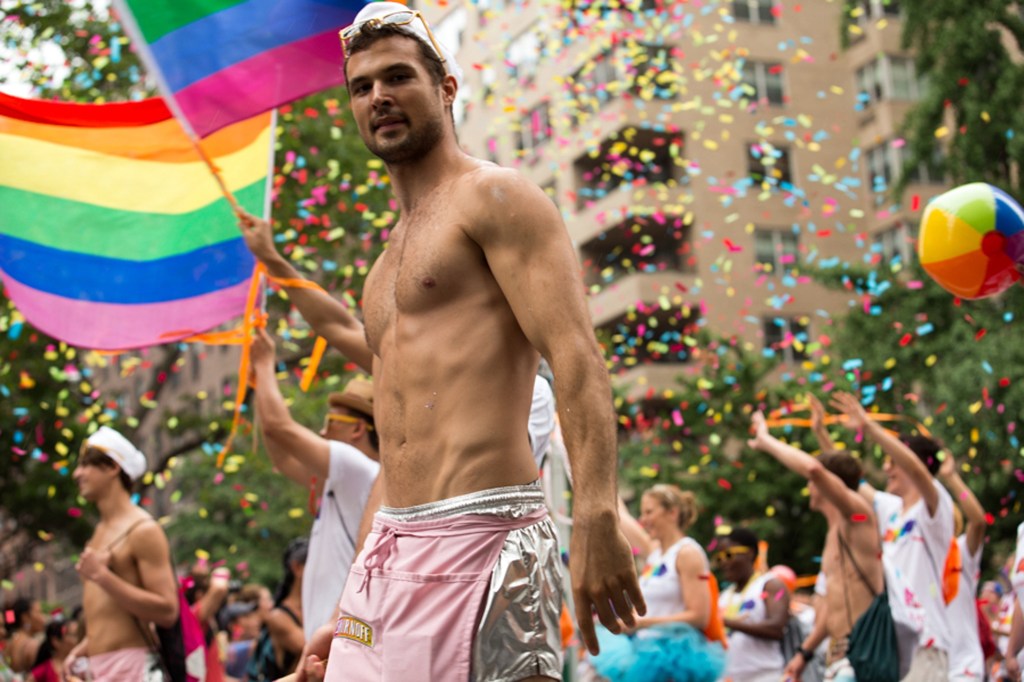
The Vermont Pride Parade was yesterday. Luckily, it only rained a small amount, not enough really for an umbrella unlike last year. There was the usual mix of oddness that has become a hallmark of Vermont. The Flynn Center (a Burlington theater) had a performance of their “Playing Field” horse. It would be difficult to explain, but you can go to this link to get an idea of what I’m talking about. A friend of mine said, “ It was totally weird but fitting!” I replied, “ If it’s weird, it’s always fitting in Vermont.” This is the same friend who when talking about the dating pool in Vermont said, “The odds are good, but the goods are odd.” It’s a perfect description for Vermont.
I always love seeing the various groups marching. There are politicians, drag queens, contingents from various colleges (the local Catholic college always has the most students), and various affirming religious congregations. Then there are the furries, Wiccans, medieval reenactors, etc. There was also a float with a stripper pole with different girls pole dancing for the crowd. As I said, the usual Vermont weirdness.
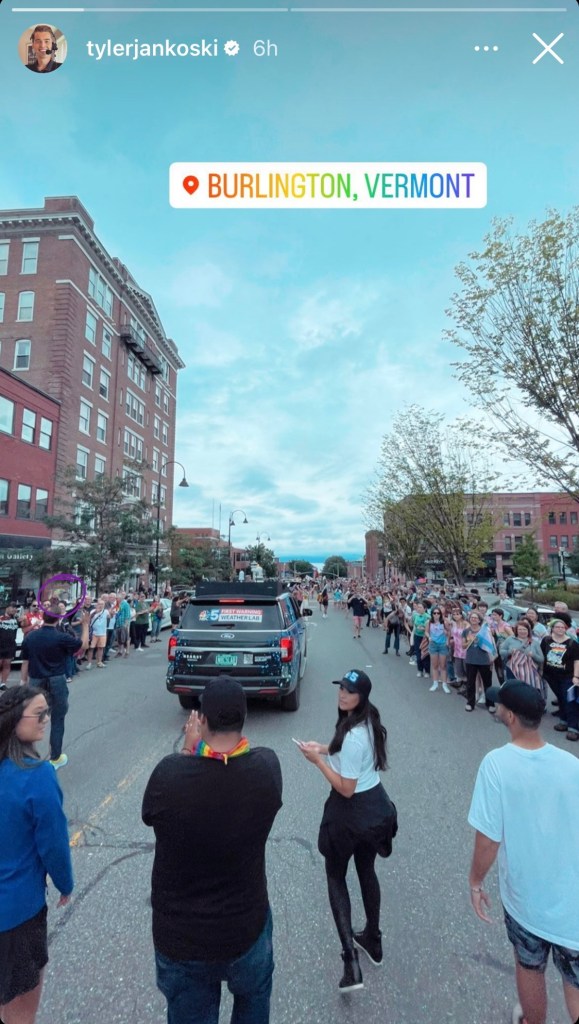
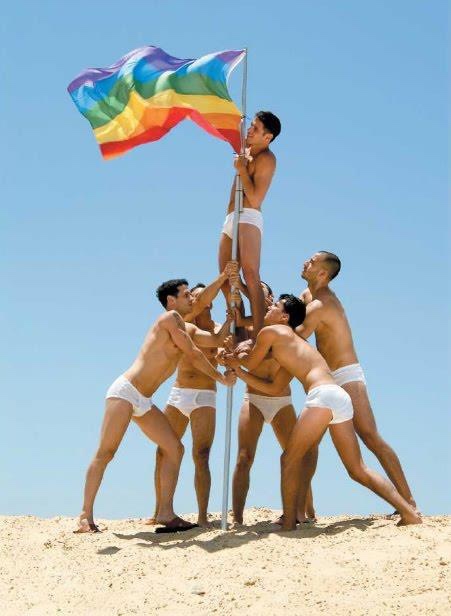
The local television stations also always march in the parade. One of the local meteorologists added a picture of the parade and it’s crowd for his Instagram story. I mention this because my friend and I are in the picture, though we are really small and blurry. If you’re able to zoom in, I circled us in purple. We are on the right side of the crowd. (The picture above is not part of the Vermont Parade, but the one below is.)
I am acting with great boldness toward you; I have great pride in you; I am filled with comfort. In all our affliction, I am overflowing with joy.
—2 Corinthians 7:4
For those of us who were raised in a strict Christian environment, we had to learn not to hate ourselves and to accept who we are and our sexuality. Some Christians are opposed to the concept of LGBTQ+ pride. They feel LGBTQ+ people should be ashamed of who we are and any public celebration of LGBTQ+ sexuality is wrong. Those who reject us are those who are straying from the teachings of Jesus. I still believe in the teachings of Christ and believe that God created me just the way I am. I learned to accept myself and be proud of who I am. I am proud to be both gay and Christian.
Christians who know church history can identify with persecution. During the early years of the Christian church, Christians were put in prison and killed for their faith. The civil authorities in the Roman Empire were persecuting people for being Christian. Both Christianity and the LGBTQ+ community share a history of discrimination and persecution. Unfortunately, discrimination and persecution of LGBTQ+ people continue today, largely led by people claiming to be Christian. Some Christians do not understand how much they have in common with the LGBTQ+ community. Instead of working closely together to ensure their mutual human rights are respected, many Christians actively work to keep LGBTQ+ people from having the same rights other members of society enjoy.
LGBTQ+ pride promotes the self-affirmation, dignity, equality, and increased visibility of LGBTQ+ people. Pride, as opposed to shame and social stigma, is the predominant outlook that bolsters most LGBTQ+ rights movements. Ranging from solemn to carnivalesque, pride events are typically held during the month of June (or September if you are in Vermont). Some pride events include LGBTQ+ pride parades and marches, rallies, commemorations, community days, dance parties, and festivals. Pride may be considered one of the seven deadly sins, but there is nothing wrong with LGBTQ+ people having self-affirmation, dignity, equality, and increased visibility. In fact, God expects us to have pride, a pride that is justifiable and reasonable because it is based on what God has done for humanity. 1 Thessalonians 5:11 tells us to “comfort each other and build one another up.”
Hebrews 10:24-25 commands us, “And let us consider one another in order to stir up love and good works, not forsaking the assembling of ourselves together, as is the manner of some, but exhorting one another, and so much the more as you see the Day approaching.” Some LGBTQ+ people find pride to be one time of the year when they do not feel alone, isolated, cut off, rejected, hated, and despised. Pride helps LGBTQ+ people feel they are not a tiny, powerless minority group. Through pride, many LGBTQ+ people find a sense of belonging, a sense of being worthwhile. Society has long taught LGBTQ+ people to hate themselves. By celebrating pride, the LGBTQ+ community can start the long process of overcoming self-hate. Standing side-by-side with God, LGBTQ+ Christians are accepted, loved, connected, and made powerful by God.
LGBTQ+ Christians can find meaning in pride. God wants LGBTQ+ people to stop hating and fearing themselves because those who live secret lives of pain are not able to fully celebrate their identity in Christ. We are told in 1 Corinthians 12:26, “And if one member suffers, all the members suffer with it; or if one member is honored, all the members rejoice with it.” Through LGBTQ+ pride, God calls LGBTQ+ Christians to help those in our community who suffer because when one of us suffers, we all suffer. Transgender people are suffering under new state laws across the country, and when there is even one unjust law against the LGBTQ+ community, it is a law against all of us. Pride helps bring us together as a community, so let’s take pride in the love and acceptance we provide for one another.

Today is Flag Day. It commemorates the adoption of the flag of the United States on June 14, 1777, by resolution of the Second Continental Congress. The Flag Resolution, passed on June 14, 1777, stated: “Resolved, That the flag of the thirteen United States be thirteen stripes, alternate red and white; that the union be thirteen stars, white in a blue field, representing a new constellation.” But June is also Pride Month, so I thought I’d do a post about the Pride Flag. Flags are symbols of community membership, unity, and visibility. A country’s flag shows a sense of citizenship and national pride. Likewise, the Pride Flag was created as a symbol of community membership, unity, and visibility.
In the late 1970s, Harvey Milk, a member of the San Francisco Board of Supervisors and the first openly gay man elected to public office, asked his friend Gilbert Baker to design a symbol to represent (what was then referred to as) the gay community. Baker collaborated with his friend Lynn Segerblom (also known as Faerie Argyle Rainbow) to design the rainbow-striped flag with eight colors:
Baker and Segerblom’s flag debuted at the Gay Freedom Day Parade in SF in 1978. Each of the original eight colors had their own unique symbolism. With the help of close to 30 volunteers working in the attic of the Gay Community Center in San Francisco, Baker was able to construct the first draft of the now world-renowned rainbow flag. It was first showcased at San Francisco’s Gay Freedom Day Parade on June 25, 1978.
After the design was unveiled, participants of the parade proudly waved the new symbol in solidarity. Baker then took the design to Paramount Flag Company, which sold a version of the flag without hot pink and turquoise, which were replaced with blue for practicality purposes. After the assassination of Harvey Milk on November 27, 1978, demand for the rainbow banner only increased. Popularity spiked again a decade later when a West Hollywood resident sued his landlord over the right to hang his flag outside his residence.

Despite their outsized global impact, the two original flags were thought to be lost for more than four decades. One flag was stolen from a community center and never recovered. But Baker managed to quietly rescue a 10- by 28-foot segment of the second flag, which had been placed in storage after sustaining water damage. Baker took the item with him when he moved to New York City in 1994. After Baker’s death in 2017, the flag and his other belongings were shipped to his sister, who later passed the fragment along to Charley Beal, president of the Gilbert Baker Foundation. Beal did not realize he was in possession of the original 1978 banner until early 2020, when a vexillologist (or flag expert) examined the item firsthand and confirmed its provenance. In June 2021, the GLBT Historical Society Museum unveiled a glass case containing this rare artifact: a segment of the original rainbow gay pride flag, its colors as vibrant as ever.
The iconic rainbow design has succeeded in part because it conveys a bright, hopeful message. In the years since it debuted, the rainbow flag has only grown in popularity and is now seen around the globe as a positive representation of the LGBTQ+ community. A mile-long version of the flag was created to celebrate the 25th anniversaries of two landmark events; the Stonewall Riots and Baker’s creation of the flag itself.
Baker died on March 31, 2017, at the age of 65, just two years after the legalization of same-sex marriage throughout the U.S. His legacy lives on in the six-colored flag that flies proudly every Gay Pride month, recognizing the lives, and loves, of LGBTQ+ people worldwide.
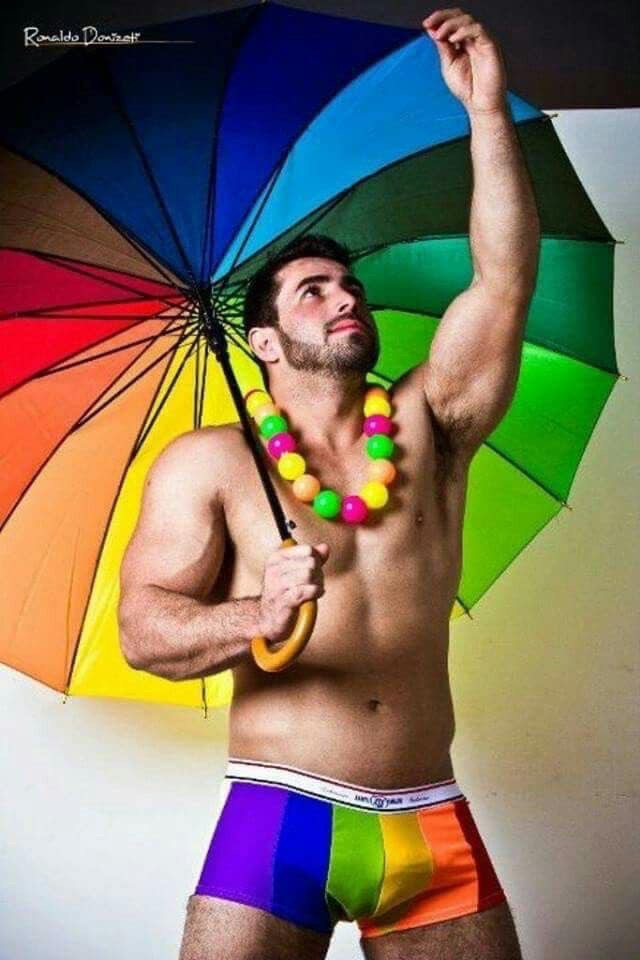
It almost did rain on our Pride parade, and it did a little bit. We got an outside table at one of the restaurants on the parade route. As we were waiting for the parade to start, it rained slightly off an on, but the rain stopped once the parade started and held off until just after the parade finished passing us by. Then, it began to rain in earnest. My back was just outside the umbrella above our table. I was getting soaked as we waited for our waiter to bring us the check. By the time we paid, I was wet enough that I could feel the cold rain water runny through the crack of my ass. The back of my shirt and shorts were soaked. We decided that with the rain, we would not be going to any of the post parade festivities since they were all scheduled to be outside.
Even with the rain, the parade was as fun as always. Vermont’s sole congressman, Peter Welch, who’s running for Patrick Leahy’s Senate seat, marched in the parade as did the Democratic nominees for governor, lieutenant governor, and the open House of Representatives seat. All of the local television stations had a contingent along with numerous LGBTQ+ organizations. Actor and comedian Alec Mapa was the grand marshal. Saint Michael’s College (Vermont’s only Catholic college) and Champlain College had large groups marching in the parade. While the University of Vermont may have been represented, I did not see them. Saint Michael’s is run by the Society of Saint Edmund, aka the Edmundites, one of the smallest (24 members) and most liberal Catholic orders. The Edmundites are only found in Colchester and Swanton, Vermont and Selma, Alabama. Saint Michael’s is always the largest group of marchers in the parade, which includes the men’s and women’s hockey teams.
The first pride parade I ever attended was in Paris in 2005 while I was on a study abroad trip. The only other pride parades I have attended have been in Burlington. When I was growing up, there were no pride parades nearby. I don’t think I could have ever imagined being able to attend a pride parade. Because of this, pride parades always make me a little emotional. I get a little choked up watching the parade go by. My life has come a long way since that first pride parade seventeen years ago, especially since I moved to Vermont seven years ago. I know a lot of people may take pride parades for granted, but for me, they give me hope for a better future for LGBTQ+ people everywhere.
Thou shalt not bear false witness against thy neighbor.
— Exodus 20:16
I was trying to come up with an LGBTQ+ Pride topic for this week’s Sunday post. I decided to write about being our “authentic self.” Isn’t that a large part of coming out? We want to be true to ourselves and to stop lying to others about who we really are. “Thou shalt not bear false witness against thy neighbor” is the ninth commandment (the designation varies between religions) of the Ten Commandments. According to the New Testament, Jesus explains that obedience to the prohibition against false testimony from the ten commandments is a requirement for eternal life. According to Jesus, false testimony comes from the sinful desires of the heart and makes people unclean.
However, when I googled “the bible and authentic self” most articles are about how Christians should resist being their authentic selves. One piece said, “To those who are of the world, ‘be yourself’ means speak your mind, don’t hold anything back, love yourself more than anyone else, and openly reject anyone you just don’t like. The advice to ‘be yourself’ can quickly turn into an excuse to be unfriendly and overly blunt.” The problem with this is that this statement is only valid if you are a terrible person. “Love yourself more than anyone else, and openly reject anyone you just don’t like.” While that sounds like a lot of Christians I know today who reject those who aren’t like themselves, it is certainly not in the spirit of the Bible. Another article Sue Bohlin, a speaker/writer and “webmistress” for Probe Ministries, lays out precisely why so many Christians fear authenticity, “In today’s culture, coming out and admitting you’re gay is applauded as ‘being authentic.’ Claiming you are a man trapped in a woman’s body, or vice versa, is ‘being authentic.’ But refusing to accept such labels means you’re inauthentic.” The Bohlin goes on to say:
More and more Christians are throwing in the towel in their fight against unholy sexual and relational temptations, claiming to follow their “authentic self.” Even worse, a growing number of churches are doing something similar by embracing same-sex marriage. I have a question for them. If God really created them to be gay and blesses that identity today, what will happen a hundred years from today? Will there be homosexuality in heaven? There will be no sex in heaven because the only marriage will be between the Church and the Lamb, the Lord Jesus Christ. If one’s identity is wrapped up in same-sex attractions, as it is by those claiming to be “gay Christians,” who will they be when all sexual and relational brokenness is a thing of the past, a mere memory of earthly life?
I suggest that a believer’s true and real and lasting “authentic self” is all wrapped up in not who we say we are, but who God says we are: His beloved child, redeemed and purified and made holy as He is holy. Chosen, accepted, and included a citizen of heaven and a member of God’s household. Belonging to Jesus because He bought us with His very lifeblood. Sealed with the Spirit, made brand new from the inside out.
There is a MAJOR flaw to her argument. When she says, “A believer’s true and real and lasting “authentic self” is all wrapped up in not who we say we are, but who God says we are,” is her fatal flaw. Our authentic self is who God says we are. Genesis 1:27 says, “So God created man in his own image.” John 1:3 says, “All things were made by him; and without him was not any thing made that was made.” God made us. He made us in his image. Therefore, if we are gay, God is also gay. God is also straight, bisexual, transgender, asexual, etc. He represents all things because he created everything; therefore, he is every part of every aspect of the spectrum of sexuality.
The most significant issue is that most Christians are closed-minded and narrowly focused on their beliefs. They pick and choose what Bible verses they want to follow and ignore those inconvenient for them. For example, they condemn LGBTQ+ people, but they do not condemn divorce of which Jesus does condemn in the Sermon on the Mount. Yet, what is most curious is that if homosexuality was so wrong (an abomination), why did Jesus never mention it, not even once? Furthermore, LGBTQ+ issues are not discussed anywhere by any of the New Testament authors. Yes, there is a verse that is often misinterpreted in Leviticus to condemn homosexuality, but if Christians follow that one verse from Leviticus, then shouldn’t they also follow all of the other prohibitions from Leviticus?
Leviticus 18:22 prohibits male same-sex intercourse, and Leviticus 20:13 prescribes the death penalty for violators. But Christians have never lived under the Old Testament law. The Old Testament contains 613 commandments for God’s people to follow. Leviticus includes rules about offerings, clean and unclean foods, diseases, bodily discharges, sexual taboos, and priestly conduct. But the New Testament teaches that Christ’s death and resurrection fulfilled the law, which is why its many rules and regulations have never applied to Christians. Romans 10:4 says, “For Christ is the end of the law for righteousness to every one that believeth.” Colossians 2:13-14 says, “And you, being dead in your sins and the uncircumcision of your flesh, hath he quickened together with him, having forgiven you all trespasses; Blotting out the handwriting of ordinances that was against us, which was contrary to us, and took it out of the way, nailing it to his cross.” Hebrews 8:13 says, “In that he saith, A new covenant [New Testament/Jesus’s Teachings]*, he hath made the first old [Old Testament/Laws of Moses]*. Now that which decayeth and waxeth old is ready to vanish away.”
Even greater than cherry-picking verses from the Bible, many heterosexual Christians often still claim that sexuality is a choice. Because of their close-mindedness, they cannot understand that LGBTQ+ individuals are born this way. They were created by God in his image, in all the various degrees of sexuality. They are often so small-minded that they cannot imagine being born anyway other than cisgender heterosexuals. They do not want to open their minds to God’s true words because then they may have to look at themselves and see their own flaws. The only choice we have about our sexuality is whether or not we choose to be our authentic selves the way God created us.
As members of the LGBTQ+ community, so many of us for so long have been taught to be ashamed of who we are because we do not fit the predominant image and standard profile of acceptable persons. We have been taught to look at ourselves through lenses that cannot see our true beauty and essence as citizens in society, as people of God, and as children of the greater universe. When we look at ourselves, we must try as best we can to see everything there, but this is sometimes hard to do without a genuine desire to take a hard look and see what’s there, to view ourselves clearly, squarely, and freely. The beauty and goodness of what we see sometimes give way to the not so beautiful things that we see, say, and do. We must cast aside all fear in taking that honest look if we are to grow into a greater awareness of who we really are and what we can ultimately become as genuine persons of promise and value.
*Added for clarification.
This post is a repost from June 2021. I’m reposting it today because today is Vermont Pride.



 | noisilycool3bc985058… on Pic of the Day |
| noisilycool3bc985058… on The Strength of Love |
 | Steve Davis on Not Quite the Weekend |
 | Bryan Spellman on I Should Have Written It … |
| noisilycool3bc985058… on Pic of the Day |



 Joe
Joe

