Category Archives: Resources

History and Geography of Ritual Circumcision

map-mgm66LARGE
Introduction

Ritual circumcisions can be separated into two types, depending on the circumstances in which they are performed:

Spiritual circumcisions expressing a community identity, usually religious, are wrapped in complex meanings that invoke numerous myths, notably Biblical and African.

circumcision11 The secular model of ritual circumcision exemplified in the USA includes—apart from intensely debated medico-scientific justifications—a real social dimension and also reflects a desire for membership in a community.
Whatever the circumstances, physicians may be asked to perform circumcision and should be aware of the significance of this procedure.

Mutilations prescribed for oneself or others are of ancient origin and universal in scope: practically no body part has been spared their impact. Sexual mutilations are the most frequent: noteworthy are subincision, practiced by Australian aborigines,[34, 43] Fijians, and Amazon Indians; hemicastration, found in Ethiopia, Egypt, and the islands of Micronesia; castration of harem keepers and choir boys (to preserve high voices); genital mutilations of girls (excision, infibulation, clitoridectomy); and finally circumcision, probably the most common of these practices.

map-usa-notfund Etymologically, the term “circumcision” denotes excision of all or part of the prepuce and comes from the Latin “circum” (around) and “caedere” (to cut). Semantically, the word bears no direct relation to the prepuce. Sometimes [in French] the terms “posthectomie” or “péritomie” are used.

The historical conditions in which circumcision arose are obscure. The practice probably began around the 4th century B.C. as attested to by statues and paintings depicting circumcision among Sumerians, Ethiopians, Phoenicians, Babylonians, as well as by circumcised Egyptian mummies. However, the frequency of circumcision in these periods and its possible social significance are unclear.

75_circumcision-safety-has-its-price A schematic distinction can be drawn between two major types of circumcision, based on the circumstances in which the operation is performed: therapeutic circumcision, which is beyond the scope of this paper, and ritual circumcision. The latter can be subdivided into religious circumcision, as in a ceremony marking a rite of passage and affirming membership in a group, usually religious, and secular circumcision, in which a religious motive is not invoked presumptively. The routine circumcision practiced in the USA for controversial prophylactic reasons is an example of the secular type.

Despite this conceptual distinction, we will see that both religious and secular circumcision are laden with complex meanings heavily impregnated with morality and social identity.  history of circumcision Click on images for a larger version.

This begins a new series on The Closet Professor about Male Circumcision.


Gay Rights Movement: Post-Stonewall

This post continues a new series on The Closet Professor about the history of the early gay rights movement. Most if not all of you have heard of the Stonewall Riots, and though most people credit Stonewall with the beginning of gay rights, there were precursors to the movement. This series is based on a paper I once wrote about the gay rights movement but has been updated to some extent. I hope you enjoy it and find it informative.
image image Not all gays believed that the riots and “revolution” were a good thing. The older and more wealthy gay men who frequented Fire Island in the summer either ignored the riots or were embarrassed by then. They belonged to the beliefs of the Mattachine Society who believed in assimilation and accommodationist tactics. The Mattachines wanted gays to act like heterosexuals and thus blend into the greater society.[1] The differences between the accommodationists and the liberationist will be a trend in gay politics to this day.
image On the evening of July 4, 1969, the New York Mattachine Society called a meeting. The purpose of the gathering was to stop anymore riots and to get gays and lesbians to follow more closely their view of how the revolution should proceed, mainly for them to act like straight people and gain respect among normal society. Most of the gays in the room that night were tired of the Mattachine’s tactics. They wanted a new movement, one that challenged what normal was, one that was more militant, and one in which they did not have to change who they were. That night, the gays and lesbians at the Mattachine Society meeting formed the beginnings of the Gay Liberation Front.[2]
image The Gay Liberation Front (GLF) never had the same organizational hierarchy that the Mattachine Society had. The GLF allowed for each chapter to move in its own direction and determine how best to achieve their overall goals in their local area. The GLF was also more visible than many people actually preferred to be, but for the GLF to succeed they had no choice but to use the “We’re here, we’re queer, get used to it” tactics.[3] The GLF had their share of splinter groups and unlikely alliances, such as with the Black Panthers.
image The gay liberation movement also moved into more proper politics in the early 1990s. The AIDS epidemic took a great deal of the steam out of the movement that had continued to build during the seventies. In the early nineties, groups like the Human Rights Council, the largest gay and lesbian political action committee, the Gay and Lesbian Task Force, and the Lambda Legal Defense Fund tackled legislative and legal issues pertaining to gay and lesbian rights. Gays and lesbians even entered the political arena with a branch of the Democratic Party, the Stonewall Democrats, and with a branch of the Republican Party, the Log Cabin Republicans. The same old issues of whether gays should assimilate into society or make society accept them for who they are and at the same time have equal rights are still apparent in the splits that exist within the gay community.[4]


[1]Ibid., 206-207.
[2]Ibid., 211-212.
[3]James T. Sears, Rebels, Rubyfruit, and Rhinestones: Queering Space in the Stonewall South, (New Brunswick: Rutgers University Press, 2001), 60, 64.
[4]Benjamin H. Shepard, “The Queer/Gay Assimilationist: The Suits vs. the Sluts,” Monthly Review: An Independent Socialist Magazine 53:1 (May 2001): 49-63.
Further Reading:
“ 4 Policemen Hurt in ‘Village’ Raid,” The New York Times, 29 June 1969.
Duberman, Martin. 1994. Stonewall. New York: Plume.
“Hostile Crowd Dispersed Near Sheridan Square,” New York Times, 3 July 1969.
Meeker, Martin. 2001. “Behind the Mask of Respectability: Reconsidering the Mattachine Society and Male Homophile Practice, 1950s and 1960s.” Journal of the History of Sexuality. 1:78-116.
“Police Again Rout ‘Village’ Youths,” New York Times, 30 June 1969.
Sears,James T. 2001. Rebels, Rubyfruit, and Rhinestones: Queering Space in the Stonewall South. New Brunswick: Rutgers University Press.
Shepard, Benjamin H. 2001. “The Queer/Gay Assimilationist: The Suits vs. the Sluts.” Monthly Review: An Independent Socialist Magazine 53:1, 49-63.
Smith, Howard. “Full Moon Over the Stonewall,” The Village Voice, 3 July 1969.
Suran, Justin David. 2001. “Coming Out Against the War: Antimilitarism and the Politicization of Homosexuality in the Era of Vietnam.” American Quarterly 3: 452-488.
Truscott,Lucian, IV. “Gay Power Comes To Sheridan Square.” The Village Voice. 3 July 1969.
“Village Raid Stirs Melee.” New York Post. 28 June 1969.


Gay Rights Movement: Stonewall Riots

This post continues a new series on The Closet Professor about the history of the early gay rights movement.  Most if not all of you have heard of the Stonewall Riots, and though most people credit Stonewall with the beginning of gay rights, there were precursors to the movement.  This series is based on a paper I once wrote about the gay rights movement but has been updated to some extent.  I hope you enjoy it and find it informative.
image While the two movements described by Meeker and Suran are precursors of the gay liberation movement sparked by the Stonewall Riots, the most often cited catalyst of the gay liberation movement is the series of riots that began on the night of Friday, June 27, 1969, after a raid on the Stonewall Inn, which continued for the next three nights. Raids of gay bars in New York City, particularly Greenwich Village, were not uncommon in the summer of 1969, what made the raid on the Stonewall on June 27 so different was that the patrons of the bar resisted instead of going peacefully.
1post The New York Post was the first of the New York newspapers to report the raid and the first “melee” that followed the raid. The Post described the scene following the raid on the Stonewall Inn, “a tavern frequented by homosexuals at 53 Christopher St.” The raid was staged because of the unlicensed sale of liquor. On that first night twelve people were arrested with charges ranging from assault to disorderly conduct because of the impromptu riot that soon ensued. As the police drove away with those in custody from the raid, the newspaper describes how “hundreds of passerby” shouted “Gay Power” and “We Want Freedom” while laying siege to the bar with “an improvised battering ram, garbage cans, bottles and beer cans in a protest demonstration.” More police were sent to 53 Christopher Street where the disturbance raged for more than two hours.[1]
1times1 For the next two days and again on July 3, the New York Times ran small pieces about the “Village Raid.” On June 29, the Times reported that shortly after 3 a.m. on the previous day, that the bar had been raided. About two hundred patrons were thrown out of the bar and soon were joined by about two hundred more in protest of the raid. Police seized several cases of liquor from the establishment, which the police stated was operating without a liquor license. The Times reported that the “melee” lasted for only about forty-five minutes after the raid before the crowd dispersed and thirteen people in all were arrested with four policemen suffering injuries, one a broken wrist. The June 29 article also stated that the raid was one of three conducted in the last two weeks, and on the night of June 28, “throngs of young men congregated outside the inn. . .reading aloud condemnations of the police.” [2] image The June 30 edition of the newspaper stated that on the early morning of June 29, a crowd of about four hundred gathered again on Christopher street and a Tactical Patrol Unit was called in to control the disturbance at about 2:15 a.m. The crowd was throwing bottles and lighting small fires. With their arms linked, the police made sweeps down Christopher Street from the Avenue of the Americas to Seventh Avenue, but the crowds merely moved into side streets and reformed behind the police. Those who did not move out of the way of the police line were pushed along and two men were clubbed to the ground. Stones and bottles were thrown at the police and twice the police broke ranks to charge the crowd. Three people were arrested on charges of harassment and disorderly conduct. The June 30 article also states that the crowd gathered again on the evening of June 29 to denounce the police for “allegedly harassing homosexuals.” Graffiti painted on the boarded up windows of the inn stated “Support gay power” and “Legalize gay bars.”[3] A July 3, article in the New York Times stated that a chanting crowd of about five hundred gathered again outside the Stonewall Inn and had to be dispersed by the police, while four protestors were arrested.[4]
1nyt0703 On July 3, 1969, The Village Voice published two, more substantial articles on the incidents surrounding the Stonewall Inn. Of the two articles, Lucian Trusctott IV’s article is written in a tongue-in-cheek style focusing on the several days of riots that ensued after the first raid. Truscott reports that the crowd, which returned on Saturday night, were being led by “gay power” cheers: “We are the Stonewall girls/ We wear our hair in curls/ We have no underwear/ We show our pubic hair!” The article is mostly sympathetic to the gay cause and quotes Allen Ginsberg, a gay activist, stated “Gay Power! Isn’t that great! We’re one of the largest minorities in the country–10 percent, you know. It’s about time we did something to assert ourselves.” Truscott is prophetic when he end his article by stating:

We reached Cooper Square, and as Ginsberg turned to head toward home, he waved and yelled, “Defend the fairies!” and bounce on across the square. He enjoyed the prospect of “gay power” and is probably working on a manifesto for the movement right now. Watch out. The liberation is under way![5]

The other article, by Howard Smith, is much more subdued. Smith, a reporter for the Voice, only relates the night of the raid, when he stayed with the police for protection. Although his article is not exactly pro-gay, Smith does offer some interesting observations that the other reports of the Stonewall Riots leave out. imageFirst of all, Smith reports on the number of men in drag that actually fight back. All other reports in The New York Times and The New York Post only state that the young men who resisted the police were young men, but Smith states that their were men in drag and a number of lesbians who resisted the police. Smith also describes in detail the “melee” especially concerning the attack on the police wagon while he was inside with the police for protection against the mob. Lastly, Smith points out the connection with the bar being owned by the mafia, although he only states that the men who own and run the establishment are Italians. Smith does relate that statements to the police were basically: “we are just honest businessmen, who are being harassed by the police because we cater to homosexuals, and because our names are Italian so they think we are part of something bigger.”[6]
imageWhile the newspapers provide a glimpse at the reaction of the New York press as the riots were happening, several further accounts were later retold in memoirs of the Riot. The most thorough account is given by Martin Duberman in his book Stonewall. Mostly through oral history interviews, Duberman is able to relate the events of the Stonewall Riots with more accuracy than the accounts in the New York City newspapers.
No one really knows what set off the “flash of anger” that began the riots. Most of the people who were there just say that all of a sudden the crowd grew angry and either began throwing bottles or trying to free one of the men in drag who were being arrested.[7] Even if it cannot be determined what set off the anger that went through the crowd, it must be asked, why that night. 1times2Many factors could have contributed to why the people in the Stonewall Inn fought back. It could have been because most of them had reached their breaking point, with the criminalization of their behavior to the Vietnam War that had raged for the last four years in the living rooms of every American with a television. One interesting theory could be that with Judy Garland’s funeral earlier that day, the men in the Stonewall Inn were distraught over losing their greatest icon. Probably what compounded most of the anger that rushed through the crowd was that most of the patrons were high on some type of drugs.[8] Another factor was that the raid occurred early in the morning. Usually raids happened earlier in the evening so that the bar could open back up. Police were being bribed, so raids were rarely major incidents.[9]
  Once the crowd did begin to fight back, the fervor of rebellion and the feeling that a revolution was happening among the gay community swept through the crowd.[10] No longer were gays going to work with the system to make themselves feel more normal. They wanted to be accepted for who they were, not for who the establishment wanted them to be. African-Americans had made great strides in their civil rights struggle, and women were just beginning to make strides for women’s liberation and equality. As pointed out by Alan Ginsberg earlier, gays and lesbians were a large minority in the United States. If they could make themselves heard, this could change everything for them. No longer would they be forced to only socialize with each other in dank and dingy, mafia owned bars, that could be raided at anytime and served watered down drinks so the owners could make more money. The law in New York City stated that a person must wear at least three articles of clothing appropriate to one’s own gender.[11] Gay bars were not allowed to have a liquor license and most were not allowed to have dancing.


“[1]Village Raid Stirs Melee,” New York Post, 28 June 1969.
“[2]4 Policemen Hurt in ‘Village’ Raid,” The New York Times, 29 June 1969, 33.
“[3]Police Again Rout ‘Village’ Youths,” New York Times, 30 June 1969, 22.
“[4]Hostile Crowd Dispersed Near Sheridan Square,” New York Times, 3 July 1969.
[5]Lucian Truscott IV, “Gay Power Comes To Sheridan Square,” The Village Voice, 3 July 1969, 18.
[6]Howard Smith, “Full Moon Over the Stonewall,” The Village Voice, 3 July 1969, 25.
[7]Martin Duberman, Stonewall, (New York: Plume, 1994), 196-197.
[8]Ibid., 181-196.
[9]Ibid., 194-195.
[10]Ibid., 198.
[11]Ibid., 196.


Life’s Burdens

Charlie G William 4 Too often we get wrapped up in our own burdens and forget about those of others.  I am generally a very empathetic person who who can listen to someone’s problems and try to help them make sense of it.  Sometimes, I fail to listen to the problems of others, or I do not let others know that they can come to me with their problems.  I try to always be helpful to others, because I hope that one day they will be there for me if I need them.  It’s what I talked about last Sunday with the Golden Rule.

This Sunday, we had a guest preacher at our church who discussed life’s burdens.  The biblical text for his sermon came from Galatians Chapter 6:

Brothers, even if a man is caught in some fault, you who are spiritual must restore such a one in a spirit of gentleness; looking to yourself so that you also aren’t tempted.
Bear one another’s burdens, and so fulfill the law of Christ.
For if a man thinks himself to be something when he is nothing, he deceives himself.
But let each man test his own work, and then he will take pride in himself and not in his neighbor.
For each man will bear his own burden.

Galatians 6: 1-5

Our preacher used the topic of burdens this week because it was something that had weighed heavily on his mind all week.  He had a friend who committed suicide earlier in the week.  As our preacher said, he had a burden that he could not bear, and he was not able to help him with that burden.  He couldn’t help because he did not know of the burden until it was too late.  I happen to have known this man also as an acquaintance, though he had never been one that I particularly liked or trusted, but I am not here to judge.  When this man committed suicide, he made a very selfish decision.  Instead of getting help for his burdens, he added more to his friends and family.

Words-fail-me5452The point of telling you all this is because gay men suffer from suicide more often than any other group.  Some people don’t have the support needed to bear the burden of being gay or closeted.  They come to their wits end and no of no other way out.  There is always another way out.  When you take your own life, you are performing a selfish act.  The burden moves from you to those who knew you.  There is help out there.  Many of us bloggers are willing to lend a shoulder to cry on.  We can listen to your problems.  But there is other help as well.  Maybe it is a teacher or professor that you trust.  Ministers are not always the best for this, because some ministers do not follow the idea of Christian love and acceptance.  But maybe there is a family friend or a friend that you can trust.  If there is, share your burden with them.  If you truly feel completely alone, call one of the many suicide hotlines.  Here are a few resources:

Need Help Now?
Call 911
or
1-800-SUICIDE
(1-800-784-2433)
or
1-800-273-TALK
(1-800-273-8255)
or
LGBT Youth
Suicide Hotline:
1-866-4-U-TREVOR

If you have read my blog for a while, you know that I am a Christian, maybe not everyone would agree with that, but I am.  I take my faith very seriously.  Both of my blogs are to uplift the spirit and help others to dismiss their burdens for just a little while.  I hope that I do that.  We should all reach out to those that we can help.  I hope that you will never turn away someone who needs you.

Photointerdit-Photography I hope everyone is having a wonderful weekend.  I apologize if this post is a bit of a downer, but after the message I heard this morning, I felt that is was too important not to share.


Gay Rights Movement: The Anti-War Movement

This post continues a new series on The Closet Professor about the history of the early gay rights movement.  Most if not all of you have heard of the Stonewall Riots, and though most people credit Stonewall with the beginning of gay rights, there were precursors to the movement.  This series is based on a paper I once wrote about the gay rights movement but has been updated to some extent.  I hope you enjoy it and find it informative.
For some more information about the history of Gays in the Military, check out this article from Time Magazine: Brief History of Gays in the Military.
image In more modern times, the United States and most countries of the world criminalized homosexuality (sodomy) and therefore banned gay men and women from serving in the military. The Mattachine Society, founded in 1950, was one of the earliest homophile (gay rights) organizations in the United States, probably second only to Chicago’s short-lived Society for Human Rights (1924). Harry Hay and a group of Los Angeles male friends formed the group to protect and improve the rights of homosexuals. Because of concerns for secrecy and the founders’ leftist ideology, they adopted the cell organization of the Communist Party. In the anti-Communist atmosphere of the 1950s, the Society’s growing membership substituted a more traditional ameliorative civil rights leadership style and agenda for the group’s early Communist model. Then as branches formed in other cities, the Society splintered in regional groups by 1961.
Youths rebelled against older homophile organization, which often refused to take a stance on the Vietnam War. Young gay men had to chose whether or not to reveal or conceal their homosexuality when they came before the draft image board, because with the draft board being composed of local citizens, this could mean being outed to friends, neighbors or parents. The dilemma faced by gay youths polarized the gay liberation movement and gay youths joined in on the antiwar protests.[1] While older homophile organizations saw non-participation of homosexuals in the American military as detrimental to gay rights, youths of the antiwar stance saw it as a positive good. Suran contends that there are four major assertions by gay men in the antiwar movement. First, young homophiles saw military service as politically and morally counterproductive. Second, they declared war as a masculine affront to gay men. They cited the “effiminist” nature of homosexual men and refused to participate in macho role playing. Third, the young activists viewed imperialism as an extension of heterosexist ideology. Finally, they perceived homosexuality itself as antiwar antiestablishment, and anti-imperialist. With these four beliefs, young homophiles refused to embrace the older homophile tradition of assimilation in to “normal” society through military service.[2]
image Though the Mattachine Society fell apart by the 1970s, one of their focuses was on protesting the US policy against gays serving in the military. They believed they could serve their country in any capacity, whether it be in government (gay men and women were not allowed to serve in government positions because their sexuality could be used as a basis for blackmail by communist spies) or in the military.
When more public gay rights groups formed after the 1969 Stonewall Riots, image gay men had moved away from support for military service. With the Vietnam War and the draft still very much a reality, gay rights groups turned their backs on the issue of military service because they did not want to be drafted. However, the government also turned their backs on the ban and forced many gay men who were drafted to serve, deciding that they needed the manpower more than they needed to uphold the ban on military service. In the United States today, sodomy is no longer illegal thanks to the Supreme Court decision, Lawrence v. Texas, and in 1973 the American Psychiatric Association removed homosexuality from its Diagnostic and Statistical Manual of Mental Disorders. Therefore there is no legal or medical reason that can be used to deny gay men and women the right to serve openly in the military.
image


[1]Justin David Suran, “Coming Out Against the War: Antimilitarism and the Politicization of Homosexuality in the Era of Vietnam,” American Quarterly 53, no. 3 (2001): 453.
[2]Ibid., 471-472.

Next: The Stonewall Riots


Gay Rights Movement: Mattachine Society

This post continues a new series on The Closet Professor about the history of the early gay rights movement. Most if not all of you have heard of the Stonewall Riots, and though most people credit Stonewall with the beginning of gay rights, there were precursors to the movement. This series is based on a paper I once wrote about the gay rights movement but has been updated to some extent. I hope you enjoy it and find it informative.

image Most historians agree that the movement towards gay rights, at least, nominally began with the founding of the Mattachine Society in Los Angeles in 1950 as the first gay rights organization in history. Harry Hay founded the organization and gave it its name after the medieval group of court jesters who satirized the government and royalty by wearing masks to keep themselves anonymous. Mattachine went through two different phases in its development. Early leadership based the leadership of the organization on the cell structure of the Communist Party with a secret hierarchical structure and a very centralized leadership. The seven founding members of the Mattachine Society remained anonymous as the mysterious “fifth order” who ran the organization through their leadership. The organization had three primary goals: to unify homosexuals as a group and with the dominant heterosexual culture, to educate both homosexuals and heterosexuals on the subject of homosexuality, and to enter the realm of political action.[1]

Due to the insistence of the first Mattachine Society that homosexuals adapt to the homophobic society of the Cold War by adopting the social and cultural mores of heterosexuals, the organization began to lose influence and membership. imageBy 1957, the organizations national headquarters moved from its base in Los Angeles to San Francisco where it remained until the national organization disbanded in 1961. With the end of the national organization and its insistence on conservative politics, the local chapters began to become more radical in their quest for gay liberation.[2] The Communist Party structure and tactics of the Mattachine Society ultimately hurt the organization more that it would help it. imageWith the Red Scare during the Cold War, the politics of the movement had a difficult time getting any recognition. Besides its communist association, this early homophile organization was never that large of a political organization. The fear of being publicly discovered as a homosexual was worse than having freedoms during the 1950s, when coming out meant that you were considered mentally ill, a social deviant, often classified as a criminal, and were barred from holding civil service jobs.

In his examination of the radicalization of the gay liberation movement, historian Justin David Suran shifts the focus from the radicalization of local homophile organizations to the gay participation in the antiwar movement. Local homophile organizations were still working for homosexuals to be “normalized” by assimilating into imagethe heterosexual cultures, most by allowing gay men and women to serve discretely in the U.S. Armed Forces. With the ability to be deferred from the draft by being labeled homosexual, many young gay men saw the opportunity to stay out of the Vietnam War. As the war continued into the early seventies, the deferment for homosexuality would have to be proved by a doctor or an arrest report in order to receive the deferment because of the prevalence of heterosexual men posing as homosexuals to stay out of the military.[3]


[1]Martin Meeker, “Behind the Mask of Respectability: Reconsidering the Mattachine Society and Male Homophile Practice, 1950s and 1960s,” Journal of the History of Sexuality 10, no. 1 (2001): 83.

[2]Ibid., 79.

[3]Justin David Suran, “Coming Out Against the War: Antimilitarism and the Politicization of Homosexuality in the Era of Vietnam,” American Quarterly 53, no. 3 (2001): 458-463.

Next: The Anti-War Movement


The Golden Rule

1030[4]
The Golden Rule or ethic of reciprocity is a maxim, an ethical code, or a morality, that essentially states any of the following (see examples below):

  1. One should treat others according to how one would like others to treat one’s self (positive, passive form)
  2. Treat others as you would like to be treated (positive, active form)
  3. One should not treat others in ways one would not like to be treated (prohibitive, passive form)
  4. Do not treat others in ways you would not like to be treated (prohibitive, active form. Also called the Silver Rule)

The Golden Rule has a long history, and a great number of prominent religious figures and philosophers have restated its reciprocal, bilateral nature in various ways (not limited to the above forms).
The Golden Rule is arguably the most essential basis for the modern concept of human rights, in which each individual has a right to just treatment, and a responsibility to ensure justice for others. A key element of the Golden Rule is that a person attempting to live by this rule treats all people with consideration, not just members of his or her in-group. The Golden Rule has its roots in a wide range of world cultures, and is a standard which different cultures use to resolve conflicts.
The Golden Rule, as a concept, has a history that long predates the term “Golden Rule” (or “Golden law,” as it was called from the 1670s). The ethic of reciprocity was present in certain forms in the philosophies of ancient Babylon, Egypt, India, Greece, Judea, and China. The “Golden Rule” however usually refers to the saying of Jesus of Nazareth: “Therefore all things whatsoever ye would that men should do to you, do ye even so to them.” (Matthew 7:12, see also Luke 6:31) The common English phrasing is “Do unto others as you would have them do unto you”. A similar form appeared in a Catholic catechism around 1567 (certainly in the reprint of 1583).
The ethic of reciprocity has been a part of culture and religious laws from what seems to be the beginning of time. It is present in the first law code: The Code of Hammurabi. Here are some examples of the ethic of reciprocity in various religions, societies, and philosophies:

Ancient Egypt

An early example of the Golden Rule that reflects the Ancient Egyptian concept of Maat appears in the story of The Eloquent Peasant which is dated to the Middle Kingdom (c. 2040–1650 BCE): “Now this is the command: Do to the doer to cause that he do.” An example from a Late Period (c. 1080 – 332 BCE) papyrus: “That which you hate to be done to you, do not do to another.”

Ancient Greek philosophy

The Golden Rule in its prohibitive form was a common principle in ancient Greek philosophy. Examples of the general concept include:

  • “What you do not want to happen to you, do not do it yourself either. ” – Sextus the Pythagorean The oldest extant reference to Sextus is by Origin in the third century of the common era.[15]
  • “Do not do to others what would anger you if done to you by others.” – Isocrates
  • “It is impossible to live a pleasant life without living wisely and well and justly (agreeing ‘neither to harm nor be harmed’), and it is impossible to live wisely and well and justly without living a pleasant life.” – Epicurus
  • “One should never do wrong in return, nor mistreat any man, no matter how one has been mistreated by him.” – Plato’s Socrates (Crito, 49c) (c. 469 BC–399 BCE)

Buddhism

Putting oneself in the place of another, one should not kill nor cause another to kill.

One who, while himself seeking happiness, oppresses with violence other beings who also desire happiness, will not attain happiness hereafter.
—Dhammapada 10. Violence

Confucianism

Zi Gong asked, saying, “Is there one word which may serve as a rule of practice for all one’s life?” The Master said, “Is not RECIPROCITY such a word?
—Confucius, Analects XV.24 (tr. Chinese Text Project)

Never impose on others what you would not choose for yourself.
—Confucius, Analects XV.24 (tr. David Hinton)

Hinduism

One should never do that to another which one regards as injurious to one’s own self. This, in brief, is the rule of dharma. Other behavior is due to selfish desires.
—Brihaspati, Mahabharata (Anusasana Parva, Section CXIII, Verse 8)

For those who set their hearts on me
And worship me with unfailing devotion and faith,
The way of love leads sure and swift to me.
Those who seek the transcendental Reality,
Unmanifested, without name or form,
Beyond the reach of feeling and of thought,
With their senses subdued and mind serene
And striving for the good of all beings,
They too will verily come unto me.
—[Bhagavad-Gita, Chapter XII.]

Islam

Hurt no one so that no one may hurt you.
—Muhammad, The Farewell Sermon

Jeffrey Wattles holds that the golden rule appears in the following statements attributed to Muhammad:

“Woe to those . . . who, when they have to receive by measure from men, exact full measure, but when they have to give by measure or weight to men, give less than due”
—Qur’an (Surah 83, “The Unjust,” vv. 1–4)

The Qur’an commends:

“those who show their affection to such as came to them for refuge and entertain no desire in their hearts for things given to the (latter), but give them preference over themselves”
—Qur’an (Surah 59, “Exile,” vv. 9)

Jainism
In Jainism, the golden rule is firmly embedded in its entire philosophy and can be seen in its clearest form in the doctrines of Ahimsa and Karma
Following quotation from the Acaranga Sutra sums up the philosophy of Jainism:

Nothing which breathes, which exists, which lives, or which has essence or potential of life, should be destroyed or ruled over, or subjugated, or harmed, or denied of its essence or potential.
In support of this Truth, I ask you a question – “Is sorrow or pain desirable to you ?” If you say “yes it is”, it would be a lie. If you say, “No, It is not” you will be expressing the truth. Just as sorrow or pain is not desirable to you, so it is to all which breathe, exist, live or have any essence of life. To you and all, it is undesirable, and painful, and repugnant.

Judaism
The concept of the Golden Rule originates most famously in a Torah verse (Hebrew: “ואהבת לרעיך כמוך”):

You shall not take vengeance or bear a grudge against your kinsfolk. Love your neighbor as yourself: I am the LORD.
—Leviticus 19:18[45], the “Great Commandment”

Taoism

The sage has no interest of his own, but takes the interests of the people as his own. He is kind to the kind; he is also kind to the unkind: for Virtue is kind. He is faithful to the faithful; he is also faithful to the unfaithful: for Virtue is faithful.
—Tao Teh Ching, Chapter 49

Regard your neighbor’s gain as your own gain, and your neighbor’s loss as your own loss.
—T’ai Shang Kan Ying P’ien

The Golden Rule is how I live my life. It is an ancient law and religious belief. If all people would understand that this is the central tenement of major morals of the world, we would live in a world of peace, wisdom, and true virtue. I try to live my life as an example of this principle, sometimes I fail, but I work daily in order not to. So treat your fellow human as you would like to be treated. If we all did this, there would be no Manhunt ads stating “No fats, No Fems.” Accept your fellow man, whoever they may be. The central tenement of the Chinese philosophy of Legalism is that all mankind is evil and through strict laws, the government can rid people of that inherent evil. I actually believe the opposite: All of mankind is good, they just need to be given the chance to show that goodness. If one day, the world realizes this concept, there will be no homophobia, there will be no racism, there will be no sexism, there will be no war, there will be no discrimination or hate of any kind.
Over on my blog Cocks, Asses, and More there is a companion post to this one. It is also about the Golden Rule but describes it in a more personal way.
Thanks for reading.


The History of Southern Decadence

image Since it was founded in 1781, New Orleans has marched to the beat of its own drum.  For two centuries, those in control of the Louisiana state government have tried in vain to impose their prejudices on a city that is French, Spanish, Creole, African, Catholic, pagan and very gay (in both senses of the word).  If nothing else, New Orleans knows how to throw a party, from the world-famous Mardi Gras to other, more specialized celebrations.
One of these celebrations began quite inauspiciously in August of 1972, by a group of friends living in a ramshackle cottage house at 2110 Barracks Street in the Treme section of New Orleans, just outside of the French Quarter. image It was in desperate need of repair, and the rent was $100 per month.  At any given time the residents numbered anywhere from six to ten, and it was still sometimes difficult to come up with the rent.
The large bathroom became a natural gathering place in the house.  It had no shower, only a clawfoot tub, but it also had a sofa.  With from six to ten residents, and one bathtub, everyone became close friends.  While one soaked in the tub, another would recline on the couch and read A Streetcar Named Desire aloud. The Tennessee Williams play inspired the residents to fondly name the house “Belle Reve” in honor of Blanche DuBois’ Mississippi plantation.
image And so it was, on a sultry August afternoon in 1972, that this band of friends decided to plan an amusement.  According to author James T. Spears, writing in Rebels, Rubyfruit and Rhinestones: Queering Space in the Stonewall South, this “motley crew of outcasts” began Southern Decadence as a going away party for a friend named Michael Evers, and to shut up a new “Belle Reve” tenant (from New York) who kept complaining about the New Orleans heat.  As a riff on the “Belle Reve” theme, the group named the event a “Southern Decadence Party: Come As Your Favorite Southern Decadent,” requiring all participants to dress in costume as their favorite “decadent Southern” character.    According to Spears, “The party began late that Sunday afternoon, with the expectation that the next day (Labor Day) would allow for recovery. Forty or fifty people drank, smoked, and carried on near the big fig tree … even though Maureen (the New Yorker) still complained about the heat.”
The following year the group decided to throw another Southern Decadence Party.  image They met at Matassa’s bar in the French Quarter to show off their costumes, then they walked back to “Belle Reve.”  This first “parade” included only about 15 people impersonating such “decadent Southern” icons as Belle Watling, Mary Ann Mobley, Tallulah Bankhead, Helen Keller, and New Orleans’ own Ruthie the Duck Lady.  This impromptu parade through the French Quarter and along Esplanade Avenue laid the groundwork for future events, and  the group decided to repeat the party again the following year.
In 1974, the Southern Decadence visionaries named Frederick Wright as the first Grand Marshal, hoping to provide at least a modicum of order.  For the next six years, the format of the celebration changed little.  The founding group continued to appoint each year’s Grand Marshal by consensus.  Some were gay, some were not. But all were members of the founding group.
image By 1981, most of the original organizers had moved on with their lives.  Many felt that the event had become so big that it was no longer the intimate party they had started nine years earlier.  Of the original group, only Grand Marshal V Robert King was actively participating.  He, along with some of his friends that hung out at the Golden Lantern bar, thought it was worth continuing and they took over the festivities.  It was at this point that Southern Decadence became primarily a gay event.  Other protocol changes made in 1981 included moving the starting point of the annual parade from Matassa’s to the Golden Lantern bar, and allowing Grand Marshals to personally name their own successors.  Both of these traditions continue today. And in 1987, the Grand Marshal began to make a proclamation of the official theme, color and song.
image Because the 2005 celebration was cancelled due to Hurricane Katrina, Southern Decadence 2005 Grand Marshals Lisa Beaumann and Regina Adams reigned for both 2005 and 2006, making the very first time in Southern Decadence history that grand marshals
ruled for two years.  And keeping with the unpredictability of Decadence, the Grand Marshals from 2008 reigned once again in 2009.
The rest, as they say, is history.  What began as a little costume party is now a world-famous gay celebration.  In the 39th year, it has mushroomed from a small gathering of friends to a Labor Day weekend tradition, attracting over 100,000 participants, predominantly gay and lesbian, and generating almost $100 million in tourist revenue.  This annual economic impact ranks it among the city’s top five most significant tourist events.  The mayor has even welcomed the event with an Official Proclamation.
Southern Decadence Grand Marshals XXXIII Lisa Beaumann and Regina AdamsDescribed by one reporter as “a happening of haberdashery fit for an LSD Alice in Wonderland,” Southern Decadence 2010 will be as outrageous as ever and live up to its reputation as New Orleans’ largest gay street fair.  It all begins in earnest six weeks before Labor Day.  However, the real party starts on the Wednesday before Labor Day, and the events are non-stop. It picks up steam daily as it nears Sunday’s big street parade, which rivals New Orleans’ gay Mardi Gras in scope, with the party lasting well into the day on Monday.
image If you’ve never been to Southern Decadence, and sadly I haven’t, here are some tips to know before you go. What follows are some thoughts gathered from locals that will help you get the most out of your experience.
Pass by the NO/AIDS Task Force’s information tables located on the St. Ann Street sidewalk in front of Hit Parade Gift and Clothing, at the corner of Bourbon and St. Ann Streets.  You’ll find lots of community information and details of the weekend’s events.  The literature racks inside of Hit Parade are another great source for all of the Southern Decadence information that you will need.
During Southern Decadence, some streets of the French Quarter do not allow parking – look for, and heed, no parking signs. Plan on doing a lot of walking. Comfortable shoes are a must. Always walk where it is well lit and there are a lot of people. New Orleans is a city of neighborhoods. imageLike all large cities, the Big Easy does have some trouble spots. Always walk with others, never alone if possible. Don’t wander about the city. In New Orleans the neighborhoods can change, literally, when you cross a street. Always carry a map. If you’re drinking, don’t go stumbling about the French Quarter. Locals know that the people who encounter trouble are usually the ones who have been drinking.
And a bit of urban common sense is in order. When you walk the streets, don’t bring your wallet. Take the cash you need and possibly a credit card, along with some sort of identification, and put them in a pocket that no one can slip their hand into. Don’t wear expensive jewelry. Basically, don’t take anything with you that you would have a hard time replacing if it were lost.
If your car is impounded, it will cost you over $100 plus whatever else the city decides to tack on. Your car can be retrieved from the City Auto Pound, located in a dangerous area of the city, 400 N. Claiborne Ave., (504.565.7236). This will spoil a good time. Cabs are not difficult to get during Southern Decadence. If you are going to take a cab, try UNITED CABS: 504.522.9771 or 504.524.9606. Write these numbers down and put them in your wallet. This cab company can be trusted. United Cabs has a sound reputation with the New Orleans gay community.
imagePeople are allowed to drink on the streets in New Orleans —  that large 24-oz Southern Decadence cup that you’ll see people walking with and drinking from likely contains several shots of alcohol!  However, if your drink isn’t already in a plastic cup, please ask for one before leaving your favorite watering hole. Glass and cans are not allowed on the streets for safety reasons.
Most bars in New Orleans are open twenty-four hours a day. Pace yourself. Most important, it’s easy to get caught up in all the excitement and forget to eat. If you want to make it through the weekend, solid food is a necessity. Of course, New Orleans is world famous for its food and indulging is part of a complete New Orleans experience.
Clean bathrooms can be difficult to find during Southern Decadence. Most businesses close their facilities to everyone but paying customers. If your hotel is far from the action, take care of the more important business before you hit the streets. If you need to, plan on buying lunch or dinner and using the restaurant’s bathroom before you pay the check!
image The French Quarter is an historic neighborhood. Please respect it. No matter how “bad” you have to go, do not urinate in the streets or on door steps or through iron gates. This is a good way to end up in central lock-up, and people who are arrested sit in jail until the courts re-open after Labor Day. It will cost you about $200. And it’s not polite. Listen to your body. Get in line before you really have to go. By the time you’re crossing your legs, you might be at the front of the line.
During Southern Decadence weekend, you’re guaranteed to get an eyeful of great costumes and fabulous bodies. Officially, public nudity is not allowed and there are obscenity laws on the books. Better judgment should be the rule of the day.
Southern Decadence is a BIG non-stop party. People drink and are having a good time. It’s easy to forget that there is a real world out there. Free condoms are available from the NO/AIDS Task Force station located near the Bourbon Pub / Parade. Don’t allow the party to overwhelm your better judgment. We want you to come again. Have fun and play safe!


Nella Larsen’s Passsing

image Nella Larsen was born in Chicago in 1893 to a Danish mother and a Danish West Indian father, both of whose names have been obscured by history. Nella’s father died when she was two, and her mother remarried a man of Danish origin while Nella was still quite young. All biographical references indicate that Nella’s step-father was a source of racial tension in Nella’s childhood home, which resulted in her alienation from him as well as her mother.
At 16 Nella went to Denmark for three years to visit her mother’s relatives. When she returned to the United States she went to Fisk University, but her stay only lasted one year. Evidently she was dissatisfied with both Fisk and the United States, because when she left Fisk, she left the country as well, going to Copenhagen, where she audited classes at the University of Copenhagen for two years. She returned to the United States late in 1914, but this time she went to New York City, where she earned a nursing degree in 1915 from Lincoln Hospital Training School for Nurses. Immediately after receiving her nursing degree, she went to Tuskegee Institute, where she was employed as superintendent of nurses. She must have been dissatisfied with Tuskegee, because within one year she left the institute and returned to Lincoln Hospital.
She abandoned nursing in 1918 and began studying to become a librarian. In 1921 she became the children’s librarian at the 135th Street branch (Harlem) of the New York Public Library, where she remained until 1929. During this interval she married Elmer S. Imes, a physicist. The couple lived in Harlem, and in all likelihood they were part of upper class African American society. Meanwhile Larsen wrote two novels.
image Larsen’s novels, Quicksand (1928) and Passing (1929), depict the mulatto theme which had become popular in American literature. In such works the male or female protagonist, who is light enough to pass for white, finds that all personal ambitions (education, employment, social mobility in general) are severely limited when one is held to the racial restrictions which typified the early 20th century in the North as well as in the South. To remedy the problem, the protagonist chooses to pass for white and move into the white world, only to find even greater dissatisfaction. Torn between two worlds, one white and the other black, and alienated from them both, the protagonist becomes a tragic figure.
Passing recounts the reacquaintance of two childhood friends, Clare Kendry and Irene Redfield. Clare disappears from her childhood home when she marries a well-to-do white man and passes into the white world, while Irene lives a life of comfort in Harlem, married to an African American doctor, Brian Redfield. The two women begin to socialize together when they happen to run into one another while shopping. As the story unfolds, Irene becomes convinced that Clare and her husband, Brian, are having an affair. The climatic scene depicts Clare accompanying Irene and her husband Brian to a Christmas party. Irene’s jealousy of Brian and Clare “[presses] against her”; she begins to perceive Clare as a threat to the security of her middle-class marriage. During the party, Clare “falls” to her death from a sixth-floor window. Critics have questioned whether Clare indeed fell or was pushed by Irene. Both women have participated in a kind of passing: Clare into the white world, Irene by adopting the values of white middle-class America.
image Larsen’s novel Passing can be seen as a parallel to the life of gay men and women, especially those who are in the closet.  The novel positions two light-skinned women as antagonists and psychological doubles in a drama of racial passing, class and social mobility, and female desire.  Their racial passing can in a way be seen as gay people in the closet.  We are trying to pass as someone we are not. Irene Redfield demands safety and security in contained, self-sacrificing race and gender roles; Clare Kendry functions in a self-seeking, risk-filled existence on the edge of danger and duplicity. Although Clare’s racial passing is one of the novel’s concerns, Irene’s obsessive desires, represented through her perspective as the central consciousness, expose a range of intense emotions all cloaked by her persistent concerns for social respectability and material comfort.  Recent attention to Passing has emphasized Larsen’s use of passing as a device for encoding the complexities of human personality, for veiling women’s homoerotic desires, and for subverting simplistic notions of female self-actualization. 

Larsen’s search “for a sense of belonging” is similar to the journey that all members of the GLBT community face.  We search to belong.  At first, we often work to hide our true selves.  While in the closet, depending on our situation, we will do almost anything to keep our secret.  If we are not our true selves, then we are doing as Clare and Irene and just passing.  When we hide our true selves, from ourselves and others, we are trying to pass in what the world considers heteronormal.  When we try to pass ourselves as “straight acting,” we are trying to find a homonormal medium.  Normal does not exist in this world, especially if we strive to be ourselves, because we are all unique and special in our own way.


What Can GLBT People Learn from the Harlem Renaissance?

Justin at A Gay College Guy in Virginia was so kind in giving a shout out to both this blog and my other blog.  Justin recently revealed on his blog that he will be taking a class on African American Literature this semester. In honor of Justin and the class that he is taking, I was inspired to write several posts about the Harlem Renaissance, one of the richest periods in American art and literature for African American artists.  Many of the topics of the literature of the Harlem Renaissance can be seen as an analogy for the plight of GLBT people in America and around the world as we work everyday for further acceptance, not to mention the number of gay and lesbian artists that made the Harlem Renaissance possible.
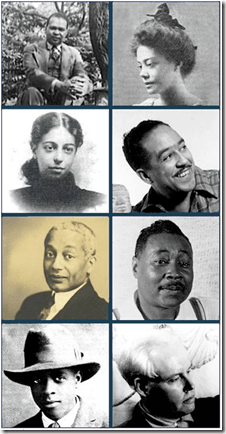
imageKnown also by the names Black Renaissance or New Negro Movement, the Harlem Renaissance represented a cultural movement among African Americans roughly between the end of World War I (1918) and the beginning of the Great Depression (1929). The names given to this movement reveal its essential features. Certainly the words “black” and “Negro” mean that this movement centered on African Americans, and the term “renaissance” indicates that something new was born or, more accurately, that a cultural spirit was reawakened in African American cultural life. Although most historians remember the Harlem Renaissance as a literary movement, in fact, African Americans during the 1920s also made great strides in musical and visual arts, as well as science. Finally, the focus on Harlem—an old Dutch-built neighborhood of New York City—indicates that this “renaissance” was something of an urban phenomenon. In fact, the exciting developments in African American cultural life of the 1920s were not limited to Harlem, but also had roots in other urban communities where black Americans migrated in great numbers: East St. Louis, Illinois; Chicago’s south side; and Washington, D.C.  The Harlem Renaissance included several important gay and lesbian writers.
The artists of the Harlem Renaissance forwarded two goals. Like the journalists and other “crusaders” of the Progressive era, black authors tried to point out the injustices of racism in American life. Second, newspaper editors, activists, authors, and other artists began to promote a more unified and positive culture among African Americans. Early efforts to publicize a more unified consciousness among African Americans included two publications in 1919: Robert Kerlin’s collection of editorial material in Voice of the Negro and Emmett Scott’s Letters from Negro Migrants. On the political front, leaders such as Marcus Garvey began to put forth plans for black economic self-sufficiency, political separatism, and the creation of a cross-national African consciousness.
image Several important developments during the World War I era gave rise to the Harlem Renaissance. First, black southerners since the turn of the century had been moving in large numbers to the North’s industrial cities. As a result, southern blacks who had been denied their political rights and had resorted to sharecropping as a means of livelihood came into contact with northern African Americans who were more often the descendants of free blacks and, therefore, had better access to education and employment. Additionally, black Americans moving to the cities had much to complain about. World War I, the so-called war to make the world safe for democracy, had been a bitter experience for most African Americans. The U.S. Army was rigidly segregated, race riots broke out in many American cities during or immediately after the war, and the North was residentially and economically segregated like the South, despite the absence of Jim Crow Laws.

Gays, Lesbians and The Harlem Renaissance

The culture of the Harlem Renaissance was one that was open to sexual exploration and gays and lesbians, both Black and White, found a community there. The jazz and blues clubs of Harlem felt like a welcoming place to gays and lesbians of different races. Author Arwyn Moore claims that many white gays and lesbians who frequented Harlem nightlife became a part of the Black culture: listening to the music, reading the literature and most importantly, relating to common prejudice and bigotry both experienced from the greater mainstream culture.

Rent Parties

In addition to the clubs of Harlem, private rent parties became a place where gays and lesbians could dance and socialize without fear of being arrested. Rent parties were private parties that people threw in their apartments to raise image rent. Rent parties became places for gays and lesbians to mingle in relative safety.

Out Blues Musicians

The Blues music that was popular at the time was also an attraction for gays and lesbians. Many of the lyrics spoke of gender-bending men and women, blurring of sexual boundaries and same-sex attraction. One of the most famous Blues singers of that time was Gladys Bentley who was notorious for wearing men’s clothing on stage and for her marriage to another woman.
Ma Rainey was another Black lesbian singer, her famous song begged listeners to “Prove it on Me.” Ma Rainey was said to have had a relationship with bisexual singer Bessie Smith.