Category Archives: Uncategorized
TGIF
BREAKING NEWS
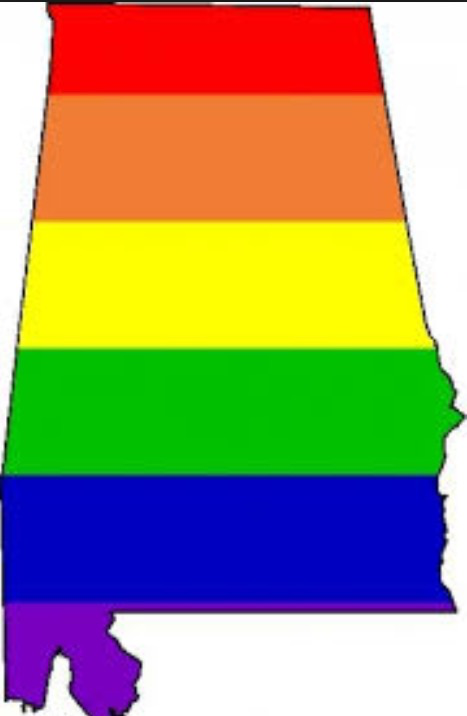
MONTGOMERY, AL (WSFA) – A federal judge has ruled that the State of Alabama’s “Sanctity of Marriage Amendment” and the “Alabama Marriage Protection Act” are unconstitutional because they violate the equal protection and due process clauses of the 14th Amendment.
The judge effectively declared Alabama’s ban on same-sex marriage unlawful.
“We are disappointed and are reviewing the Federal District Court’s decision. We expect to ask for a stay of the court’s judgment pending the outcome of the U.S. Supreme Court’s ruling which will ultimately decide this case,” said Alabama Attorney General Luther Strange’s spokesperson Mike Lewis in an emailed statement.
Gov. Robert Bentley’s office has also released a statement saying the governor is disappointment.
“The people of Alabama voted in a constitutional amendment to define marriage between a man and a woman. The Governor is disappointed with the ruling today, and we will review the decision to decide the next steps,” the governor’s spokesperson Jennifer Ardis said in an emailed statement.
Another powerful state politician, Alabama Speaker of the House Mike Hubbard (R-Auburn) is speaking out, promising an appeal issuing a statement that reads:
“It is outrageous when a single unelected and unaccountable federal judge can overturn the will of millions of Alabamians who stand in firm support of the Sanctity of Marriage Act. The Legislature will encourage a vigorous appeals process, and we will continue defending the Christian conservative values that make Alabama a special place to live.”
The Southern Poverty Law Center called the ruling a victory for families and children of same-sex couples in Alabama. David Dinielli, deputy legal director for the Southern Poverty Law Center’s LGBT Rights Project, released the following statement:
“This historic ruling is a giant step toward full equality for LGBT people in Alabama and does not harm anyone. It is a victory for Alabama families and the children of same-sex couples whose lives will have more stability and certainty now that they are afforded the same rights and privileges as other married couples.”
“Yet, more work remains on behalf of LGBT people. They still face discrimination in the Deep South, including formal discrimination enshrined in the law. It is still a felony in Alabama for LGBT people to have sex. Teachers in Alabama are still required to teach that homosexuality is immoral and illegal. And, of course, there is the private discrimination that LGBT people face every day, but the law fails to prevent.”
The ruling came after two Mobile women, Cari Searcy and Kimberly McKeand, filed a federal lawsuit to force the State of Alabama to recognize their out-of-state marriage in order for them to both become legal parents to their 8-year-old son. The suit said Alabama’s ban on same-sex marriage and its refusal to recognize legal, valid marriages from other states violated their constitutional rights.
Searcy and McKeand have been a couple for more than 14 years. They were married in California in 2008 but have lived in Mobile since 2011.
The Human Rights Campaign, which says it is America’s largest civil rights organization working for gay and transgender equality, praised the ruling by Judge Callie Granade, an appointee to the federal bench by President George W. Bush.
“Judge Granade’s ruling today affirms what we already know to be true – that all loving, committed Alabama couples should have the right to marry,” said HRC Legal Director Sarah Warbelow. “As the U.S. Supreme Court prepares to hear a landmark case on marriage equality, today’s ruling joins the dozens and dozens of others that have recognized that committed and loving gay and lesbian couples deserve equal treatment under the law.”
There is currently no stay on Judge Granade’s ruling, meaning gay and lesbian couples could begin applying for marriage licenses when county clerks offices open on Monday.
The Normal Heart
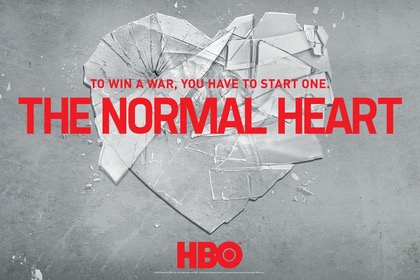
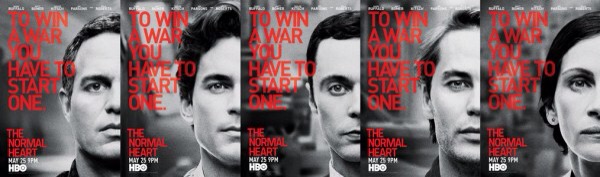
The Normal Heart is a 2014 American drama television film directed by Ryan Murphy and written by Larry Kramer, based on Kramer’s largely autobiographical 1985 play of same name. The film stars Mark Ruffalo, Jonathan Groff, Matt Bomer, Taylor Kitsch, Jim Parsons, Alfred Molina, Joe Mantello, and Julia Roberts.
I usually find that when a movie has an all-start cast, you can’t expect much from it because all of the actors compete for the spotlight. This movie wasn’t like that. It largely focuses on Mark Ruffalo’s character Ned Weeks, and the cast surrounding him make the movie sublime.
The film depicts the rise of the HIV-AIDS crisis in New York City between 1981 and 1984, as seen through the eyes of writer/activist Ned Weeks, the founder of a prominent HIV advocacy group. Weeks prefers public confrontations to the calmer, more private strategies favored by his associates, friends, and closeted lover Felix Turner (Bomer). Their differences of opinion lead to arguments that threaten to undermine their shared goals.
The play and film are based on true events and real people. After most performances of the 2011 revival of The Normal Heart, Kramer personally passed out a dramaturgical flyer detailing some of the real stories behind the play’s characters. Kramer wrote that the character “Bruce” was based on Paul Popham, the president of the GMHC from 1981 until 1985; “Tommy” was based on Rodger McFarlane, who was executive director of GMHC and a founding member of ACT UP and Broadway Cares; and “Emma’ was modeled after Dr. Linda Laubenstein, who treated some of the first New York cases of what was later known as AIDS. Like “Ned,” Kramer himself helped to found several AIDS-activism groups, including Gay Men’s Health Crisis (GMHC) and AIDS Coalition to Unleash Power (ACT UP), and indeed experienced personal conflict with his lawyer brother, Arthur.
This is a truly powerful movie and people need to see it. Kramer’s furious inveighing against a government that seemed content to let gay men die by the thousands has plenty of bite left in it nearly 30 years later. In many ways, The Normal Heart has become an entirely necessary historical document, giving full-bodied life and spirit to a piece of recent history that’s all too often forgotten in our progressive, gay marriage-sanctifying present. The horrors of the play’s generation must be remembered, not just because H.I.V.-infection rates among young people are troublingly on the rise in this country, but because these stories crucially remind us how we got where we are now, how far we’ve come and how far we’ve yet to go. Murphy gets out of the way of this message, filming from a respectable distance as Kramer’s words flare and burn. But this is also an intimate movie, close and textured, made all the more so by the fine cast.
I hope that lots of people watch this film, as lots of people seemed to watch HBO’s similarly themed masterpiece Angels in America ten years ago. Because it’s a good movie, and because it roars with the fury of many ghosts who didn’t have to be ghosts. If only more people had said something, done something. At least Larry Kramer and others like him did, and The Normal Heart is a fine accounting of that noble history.
HRH Update
Several people have requested updates on how my cat HRH is doing. The first of the year was a bit rough with her bladder infection and then an abscess but he has continued to improve. She is eating more and has gained enough weight that I can’t feel her ribs anymore. She’s also much more playful with me. She will grab at my ankles wanting me to rough house with her, but he is sixteen (roughly 84 cat years old) so I don’t rough house too much. I usually just scratch her belly which she acts like she doesn’t like, but really she can’t get enough of it. I know this because she will come back for more and then roll over on her back exposing her tummy for me to rub. Mostly though, she wants you to,rub her head. If anyone else is paying attention to HRH, they may only rub her head. I am the only one who she allows to hold her or pet her anywhere else.
I’m glad she’s eating though. I was worried about her, but we found some food that she likes and doesn’t upset her stomach too much. She’s becoming incontinent, but she does her best. We just have to have her a special potty to use, as she won’t use any other. Other than that, she’s in great health. She’s very spry and feisty, like the HRH before she got sick. She does sleep a little more and a bit more soundly these day, but when she’s awake, everyone knows it. She mostly sleeps by the food bowls, of which she has become the guardian. She lets the other cats eat only when it suits her.
If she is not in her spot guarding the food bowl, she is in one of three places. She may be drinking water; clean fresh water please. She may be eating from one of the bowls she guards. And thirdly, if someone is sitting in my chair, she will come sit beside them. If it’s me in the chair, she’s laying on my chest or up next to me. However, she does this only when the mood strikes her, which has been numerous times in the last couple of days. She even sat and yeowed (she’s part Siamese so she doesn’t meow like most cats) for me to pick her up and hold her. I always know she’s feeling good when she wants to socialize and be loving. When she’s sick, she wants to find a place to hide.
HRH is regal and commanding, and you had better bow to her wants and tastes. I’m glad to see her old attitude back. It means she is feeling better and doing well.
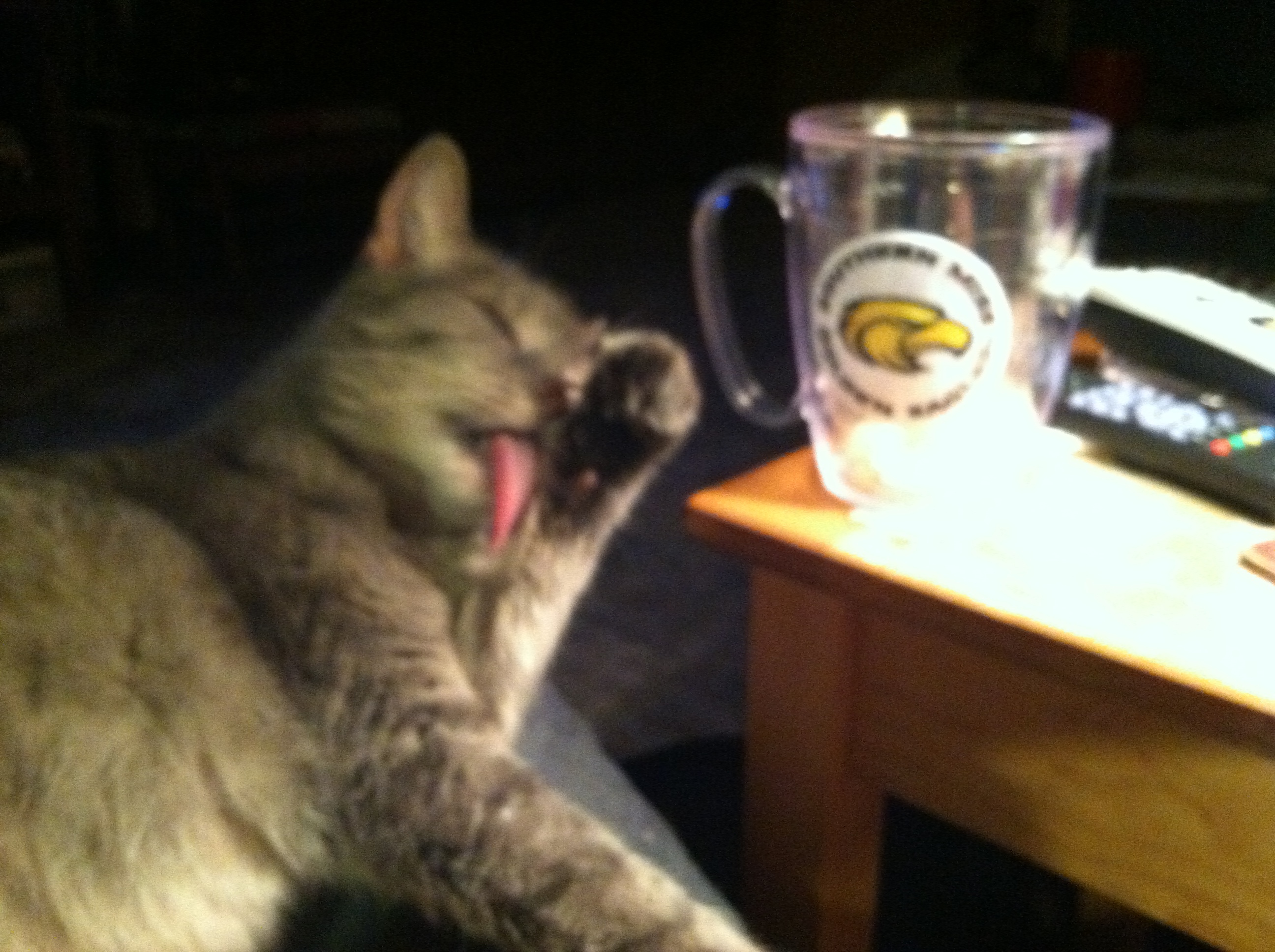
The above picture is not of her, or of me, but the picture below is of her. She’s licking her paw because she just drank the rest of my coffee. Coffee is something she can’t resist. She likes it black or with cream and sugar. It matters not to her.
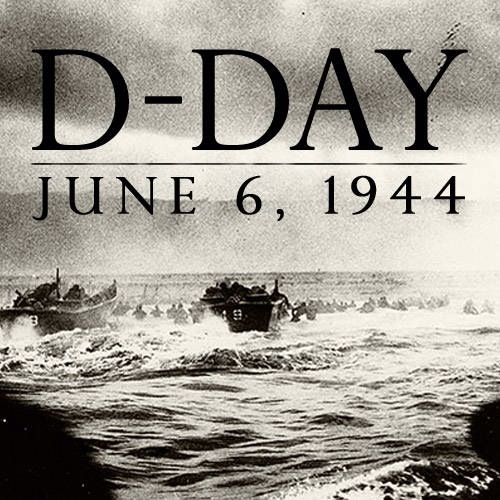
Remembering D-Day and the Men Who Served
Today marks the 70th anniversary of D-Day, the invasion of Normandy by U.S., British, Canadian, and other allies in World War II. The full Normandy campaign lasted through August and by the time it was over, it was clear that the Germans were pretty much done for.
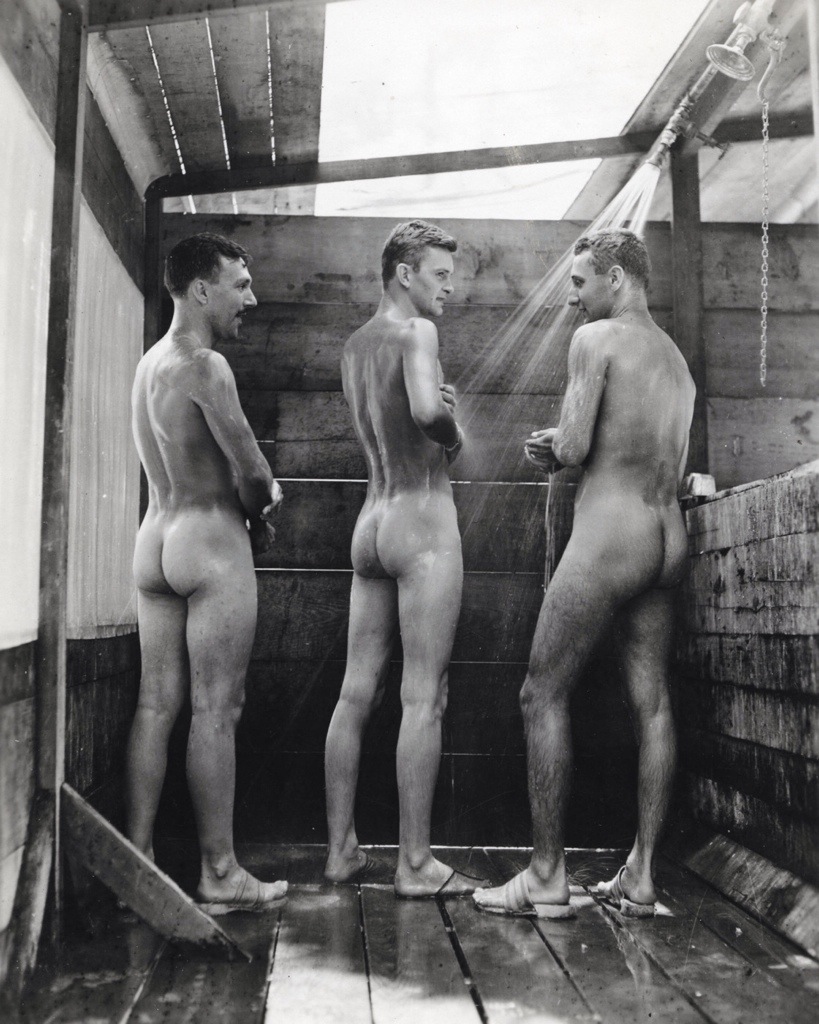
Regulations and anti-sodomy laws had limited gay service since the Revolutionary War, leading to dishonorable discharge, courts-martial, or imprisonment for men found having sex with other men. The massive manpower needs during World War II and the growing influence of psychiatry in America led the military to classify some homosexual troops as psychologically unfit for service. Still, among the sixteen million Americans who served in the Armed Forces during World War II were hundreds of thousands of gay and lesbian military personnel who proudly served.
In war battle, being gay makes no difference. As a married straight WWII vet of the Normandy Invasion said, “There were five gay guys in our unit on the beach that day. And I want you to know, the German bullets did not discriminate. We all took care of each other.”
In the year 1946, a gay GI who had recently been discharged wrote in a letter:
I can’t change. I have no desire to change, because it took me a long, long time to figure out how to enjoy life. For you’ll agree, I’m not going back to what I left.
The Stonewall Riots of 1969 are often credited with being a watershed moment that fundamentally altered the course of gay history. This, of course, is true. But it was not the watershed moment. Long before gay bar patrons rioted against the NYPD and gave momentum to the largest political mobilization of gays and lesbians in history, World War II was setting the stage for Stonewall. The above excerpt from the 1947 letter is but one example of a gay life that was profoundly changed by the war.
Gay men did not have an easy time in the military. If a man was caught having sex with another man, it was treated as a very serious crime. The guilty could be sent to the brigs, where guards enjoyed beating gay prisoners. They also faced discharge.
D-Day was a turning point in World War II, Allied troops had finally landed in Western Europe, the liberation of France was beginning, and by the time the invasion was over in August, Nazi Germany was well on its way to being defeated. The men of the Normandy Invasion were some of the most courageous to serve in World War II, though once across the English Channel, there was no turning back; however, if the war was to be own, this was the moment. Even more courageous were those gay soldiers who fought for freedoms that most would never know in their lifetime. The believed in the a American dream and the freedom it promised. Seventy years ago, those men couldn’t imagine how far America and much of the western world has come in accepting homosexuality. However, they still fought for that freedom. As Charles Rowland, a gay draftee from Arizona explained, “We were not about to be deprived the privilege of serving our country in a time of great national emergency by virtue of some stupid regulation about being gay.”
Thank you to all those gay men and women who have fought for the freedoms we enjoy today. For too long, they fought in silence, hiding who they were, so that we could have the freedoms we have today. Thankfully, they can now serve as out and proud LGB service members.
It was the third of June…
Ode to Billie Joe
Bobbie Gentry
It was the third of June,
another sleepy, dusty Delta day.
I was out choppin’ cotton
and my brother was balin’ hay.
And at dinner time we stopped,
and we walked back to the house to eat.
And mama hollered at the back door
“y’all remember to wipe your feet.”
And then she said she got some news this mornin’ from Choctaw Ridge
Today Billie Joe MacAllister jumped off the Tallahatchie Bridge.
Papa said to mama as he passed around the blackeyed peas,
“Well, Billie Joe never had a lick of sense,
pass the biscuits, please.”
“There’s five more acres in the lower forty I’ve got to plow.”
Mama said it was shame about Billy Joe, anyhow.
Seems like nothin’ ever comes to no good up on Choctaw Ridge,
And now Billie Joe MacAllister’s jumped off the Tallahatchie Bridge
And brother said he recollected when he and Tom and Billie Joe
Put a frog down my back at the Carroll County picture show.
And wasn’t I talkin’ to him after church last Sunday night?
“I’ll have another piece of apple pie, you know it don’t seem right.
I saw him at the sawmill yesterday on Choctaw Ridge,
And now you tell me Billie Joe’s jumped off the Tallahatchie Bridge.”
Mama said to me “Child, what’s happened to your appetite?
I’ve been cookin’ all morning and you haven’t touched a single bite.
That nice young preacher, Brother Taylor, dropped by today,
Said he’d be pleased to have dinner on Sunday. Oh, by the way,
He said he saw a girl that looked a lot like you up on Choctaw Ridge
And she and Billie Joe was throwing somethin’ off the Tallahatchie Bridge.”
A year has come ‘n’ gone since we heard the news ’bout Billie Joe.
Brother married Becky Thompson, they bought a store in Tupelo.
There was a virus going ’round, papa caught it and he died last spring,
And now mama doesn’t seem to wanna do much of anything.
And me, I spend a lot of time pickin’ flowers up on Choctaw Ridge,
And drop them into the muddy water off the Tallahatchie Bridge.
Facts we can deduce from the song:
1) The story takes place in Mississippi. Choctaw Ridge, Carroll County, Tupelo, and the Tallahatchie Bridge all exist in real life. The opening line suggests the speaker lives in the Delta region of the state, which is located in nothern Mississippi.
2) the speaker’s father does not care much for Bilie Joe, her mother is more sympathetic, and her brother was apparently a friend of his at one time.
3) the speaker apparently had some degree of sympathetic relationship with Billie Joe. She was talking to him at church and was seen with him on the bridge. When she finds out he is dead she loses her appetite (unlike the rest of the family) and later spends “a lot of time” throwing flowers off the bridge in what is clearly some sort of memorial tribute.
4) the family of the speaker is largely oblivious to the relationship she had with Billie Joe, and for some reason she has no interest in bringing it up.
Unresolved questions from the song:
1) What did the speaker and Billie Joe throw off the bridge, and at what time did this event occur? The fact that Brother Taylor visited the speaker’s house on the same day Billie Joe died does not necessarily mean he saw the girl and Billie Joe throwing the thing off the bridge on this day as well.
2) What degree of relationship did the speaker and Billie Joe have? Was it sexual? Ages are not given, but it is suggested that the speaker is at the very least a teenager. She lives with her parents, but is capable of doing hard labor in the field. Her brother is old enough to get married and move out of the house. The brother recalls putting a frog down his sister’s dress- a rather immature stunt- but this likely happened years ago and is being remembered out of nostalgia.
3) The key question- why did Billie Joe commit suicide, and to what degree was this related to:
-his relationship with the speaker
-talking to the speaker at church the Sunday prior
-he and the speaker throwing something off the bridge
-visiting the sawmill the day before
Themes
Regardless of the unanswered questions of the song’s plot, the song nevertheless contains several themes. The first is simply that of a “period piece” of Southern life in the early 20th Century.
The other theme is a darker one, about the indifference we often show towards the loss of human life. The speaker’s family talks about a young man’s suicide in the most nonchalant way possible. The line “Well, Billie Joe never had a lick of sense/ pass the biscuits, please” is a great example. Aside from the speaker, no one seems to know or care much about Billie Joe. His death is just a source of dinnertime gossip, like the weather.
Theories
1) The most common theory is that Billie Joe and the speaker were indeed involved in some degree of romantic / sexual relationship that was kept hidden from the speaker’s family because the father strongly disliked Billie Joe. This in turn is commonly interpreted as meaning the couple had an unplanned child at some point, and they threw the baby off the bridge together rather than deal with this manifestation of their illicit relationship. The guilt stemming from the murder of his own child later in turn caused Billie Joe to kill himself.
Some have gone even further and speculated that because the child was unwanted, it was either stillborn or aborted in some haphazard fashion, and then quietly “disposed” of off the bridge to hide the proof that the pregnancy had ever occurred. I’ve heard some point to the relevance of the “Child, what’s happened to your appetite” line as a subtle key to this. Loss of appetite commonly occurs after giving birth. But it also commonly occurs when someone is depressed.
2) Another theory is that Billie Joe and the speaker are different races. This is consistent with the song’s Southern theme and may explain the speaker’s motivation for keeping her relationship with Billie Joe hidden. The food being eaten at dinner may be intended to represent traditional black Southern cuisine, and the mother’s use of the word “child” to address her daughter is a rather distinctly African-American expression. The speaker similarly mentions picking cotton, which is likewise a chore that has been primarily associated with Southern blacks since the days of slavery. An inter-racial relationship during the period in which the song is set would clearly be a social taboo, and may have led the speaker to break up with Billie Joe, who proceeded to commit suicide. The unwanted child theory can be similarly strengthened by this premise, as a mixed-race baby would be even more socially unacceptable than an mixed race romance.
3) A third theory says that Billie Joe’s suicidal tendencies were well-known to the speaker. The thing thrown off the bridge was thus a gun, after she successfully convinced Billie Joe not to kill himself. But then later he jumped off the bridge anyway, proving the failure of her efforts.
Is there a “correct” answer?
It depends. There are two “official” sources you can cite.
1) According to the 1975 movie
In 1976 Warner Bros. made a movie inspired by the song, entitled simply Ode to Billy Joe. It starred Robby Benson as Billy Joe McAllister and Glynnis O’Connor as the speaker, who was given the name “Bobbie Lee Hartley.” The film’s tagline was “What the song didn’t tell you, the movie will” and thus purported to provide an authoritative conclusion to the mystery.
The movie has been criticized for taking too many artisitc liberties and introducing too much new information that is not even hinted at in the song. Wikipedia provides the following plot summary:
Set in the early 1950s, the film explores the budding relationship between budding relationship between Bobbie Lee Hartley [the song’s narrator character] and Billy Joe McAllister.
Hartley and McAllister struggle to form a relationship despite resistence from Hartley’s family, who contend she is too young to date. They develop the relationship, despite the odds in their way. One night at a party, however, McAllister gets drunk. In his inebriated state, he makes love to another man dressed in drag, though later he reveals he knew what he was doing. He bids an enigmatical goodbye to Hartley. Overcome with guilt, McAllister subsequently kills himself by jumping off the bridge spanning the Tallahatchie River in Mississippi.
[…]
The object thrown from the bridge is the narrator’s ragdoll; throughout the book and film she voices her concerns that she will always remain a child. The ragdoll being thrown from the bridge marks the point at which she begins moving towards adulthood.
The reference to the “book” refers to the 1976 movie novelization.
2) According to Bobby Gentry
Bobby Gentry has historically remained coy about the meaning of her song. According to her, the main theme of Billie Joe was simply death and dying, and the ways in which we can be indifferent and oblivious to the suffering of others.
In a 2002 interview with the Florida-based TCPalm.com website, Herman Raucher, the screenplay writer of the Billy Joe film, recalls his encounter with Gentry as he tried to figure out the song’s meaning:
INTERVIEWER: [You wrote] the screenplay for the Deep South, song-inspired film Ode to Billy Joe. How did that come about?
RAUCHER: There’s an actor and writer and producer and director named Max Baer, whose father was the world [heavyweight boxing] champion. And Max called me because Summer of ‘42 just knocked him out, and he said, I’ve got the rights to Ode to Billie Joe. Now, you have to understand that Ode to Billie Joe was, at that time, the largest selling record in musical history.
I said, ‘Max, what the hell do I know about Ode to Billie Joe?’
He says, ‘I want you to come out here and meet with Bobbie Gentry – I’ll pay your way out here.’
I said, OK. … Max and I go to meet her, and I ask her what does the song mean?
She said, ‘I made it up. I don’t know what it means.’
I said, ‘You don’t know why he jumped off the bridge?’
She said, ‘I have no idea.’
He proceeds to explain that since the song apparently lacked a “true” meaning, he simply made up his own storyline to explain the lyrics.
Bobbie Gentry is still alive, but has largely fallen from the public radar screen. She has never published an autobiography, so today it is difficult to determine if she has ever made any more authoritative statements on the meaning of “Billie Joe.” There is no reason to deny Raucher’s story. Many musicians, notably John Lennon and the Beatles, have frequently made similar statements indicating that their songs’ lyrics don’t have a firm meaning and it is instead up for the listener to determine their significance.
It does seem a bit odd to me that Herman Raucher would travel all the way to meet Gentry in person just so she could tell him the song has no meaning. Couldn’t a simple phone call have sufficed?
What do you think the song means? What happened on the third of June, that makes this song about more than “another sleepy, dusty Delta day”?
Changes
My life seems to be going through a lot of changes right now. I have a new potential boyfriend, actually, I’m pretty sure it’s more than just potential. I have only met a few people in my life that seems to complete me like he does.
There are three men in my life who mean the world to me and help to complete me. There is one man who I have been friends with for a few years now. He lives far away, but has been a life saver many times. He is a truly good man, who I love dearly, even if I don’t get to talk to him but about once a week now. The second man is one that I’ve known about seven or eight months. He’s cute, handsome, sexy, intelligent, kindhearted, sweet, and loving. He’s every man’s dream man, and someone already has his heart. I’m so proud of him, that my heart wants to burst with pride. I love him so much. The third is the new man in my life. Have you ever met that one person that seems to complete you? He makes me laugh, he loves my smile, and he puts me at ease. I’m pretty sure I’m falling in love. I’ve never met someone that I had this level of a connection with.
But things are changing in my life and the lives of these three men.
Dorothy Parker
As Dorothy Parker once said in response to a letter from her editor asking for more stories during her honeymoon:
I’ve been too fucking busy – or vice versa.
And I will just leave that as that for today, but I will tell you that I’m walking a bit funny.
Ugh!
Woke up 10 minutes late! Kitchen was flooded, the freezer seems to be leaking. I mopped it best I could but I will have to deal with that when I get home from school. I missed a spot on my chin shaving, maybe no one will notice. I hate being so rushed. I didn’t even get my cup of coffee.
The day has got to get better.