Backed by the Clayton-Hamilton Jazz Orchestra, the Canadian-born vocalist Diana Krall fills up the tempo of the song with holiday cheer. Her sound so intimate that you might swear the sexy singer is crooning exclusively for you at midnight on Christmas Eve. Krall excels with an approach mastered long ago: elegant delivery that gives extra polish to a very familiar global favorite. This segment takes you through a Diane Krall performance of “What Are You Doing New Years Eve”. Credits: http://www.dianakrall.com
I happen to love Diana Krall. I could listen to her husky, sensuous voice all day. I guess this post is a bit of a short cut for me, but I have been getting ready for a trip to New Orleans today and will be gone until Saturday. Don’t worry, I have scheduled posts for the time that I will be gone, as I don’t really know if I would have the time to post while I am in New Orleans.
So as the song says:
Maybe it’s much too early in the game
Ah, but I thought I’d ask you just the same
What are you doing New Year’s
New Year’s Eve?
I will be driving back from New Orleans some time on New Year’s Eve, so I will probably get home and ring in the New Year by myself. I have a bottle of champagne just waiting for me when I get back. I’d love to hear what you guys are doing for New Year’s Eve. Anything exciting?
There are so many things for which to be thankful, and I don’t know quite where to start.
I am thankful for all the friends that I have made as a blogger, though things have been hectic lately, and I haven’t had much of a chance to respond to comments like I would like, you guys make my day when you read my blog, leave comments, and send me emails. I am very thankful that I have made some wonderful friends while I have been blogging.
I am also thankful for having the opportunity to teach. Though my high school students may stress me out at times, and the job does not pay that much, I still love to teach. I am thankful for the rare occasions when the students show a little appreciation for what I am doing. Often it comes from their parents who tell me how much their kid talks about my class and how much they enjoy it, even though I don’t see the same thing out of their children, it’s nice to know that I can make a difference.
I am thankful for my friends that I have met since moving back and for the friends that I am able to keep in touch with from grad school. They are an important part of life and it’s nice to have someone to talk to about school, life, etc.
I am thankful for my family. With my grandfather’s passing over a week ago now, the importance of family becomes even more apparent. This Thanksgiving will be a little sad without him, since it will be the first I remember without him, but as a family we will pull through.
I am also thankful for the small group of close friends who I have been able to come out to since I moved back home and back in the closet. Those friends mean the world to me, because they get to see the real me. There is no hiding who I am. I can be me and that is a wonderful feeling. In rural America, there can be so few gay people, and it can be quite lonely. However, with a few who I can be open and honest with, it makes the loneliness a little easier.
I am also thankful that on the 30th of this month, I will have another birthday. Some people fret over being a year older, but I like being a year older a lot better than the alternative. I am thankful for my health and for the fact that I live in a country where each year I get older the GLBT community continues to gain the rights and struggles for equality that we deserve.
There is so much to be thankful for, but these are the big ones. For each of you…
Thank you for being a friend
Traveled down the road and back again
Your heart is true, your a pal and a confidant.
And if you threw a party
Invited everyone you ever knew
You would see, the biggest gift would be from me
And the card attached would say, thank you for being a friend.
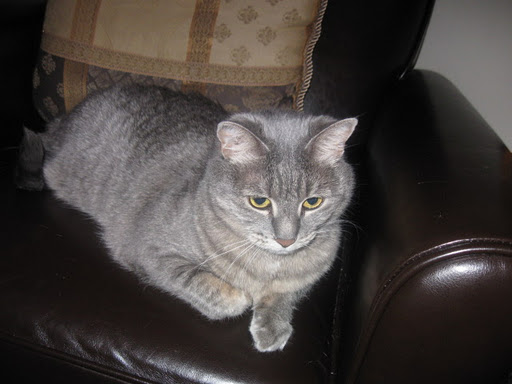
I have to also mention that I am thankful for my loyal companion, HRH, the Queen. She may be one of the moodiest cats that I have ever known, but she truly is a wonderful and loving companion.
A Very British Sex Scandal mixes drama with documentary testimony to tell the extraordinary story of the high society court case that scandalised society, electrified the nation and changed the course of British history.
In 1954, Lord Montagu of Beaulieu and his friend Peter Wildeblood were arrested after a concerted effort by the police to ensnare them for homosexual offences. Their subsequent trial and conviction were to mark a sea change in public opinion, which eventually led to the Wolfenden Committee’s landmark recommendations for the decriminalisation of homosexuality in Britain.
IF THE Montagu case of 1954 was the highest-profile gay trial since Oscar Wilde’s, then Peter Wildeblood’s Against the Law, the published account of one of its protagonists, is its De Profundis. And, like Wilde’s text, Wildeblood’s book appeared both apologetic – perhaps for the very existence of homosexuals; and at the same combative – for their human rights.
Wildeblood was born in Alassio, on the Italian Riviera, in 1923, son of a retired engineer with the Indian Public Works Department, then secretary of a local tennis club; and the daughter of an Argentinian sheep-rancher. His mother was considerably younger than his father, and Wildeblood later wondered if the fact had affected his development.
Brought up in London, “I was . . . a remarkably unattractive child, exceedingly thin and clumsy, with spots and a mop of carroty hair.” When, at boarding school, he was nearly hit by the departing Rolls-Royce of another parent, he heard the mother exclaim, “Who was that hideous small boy we nearly ran over?” At 14 he went to Radley, where he increasingly retreated into a romantic, isolated world.
Wildeblood won a scholarship to Oxford in 1941, but instead volunteered for the RAF, where he worked as a meteorologist. He enjoyed its camaraderie and the blurring of class barriers. Stationed in Rhodesia for three years, he had a number of heterosexual affairs, but returning to take up his place at Trinity College, Oxford, he gravitated towards a homosexual milieu in the theatre and arts. He met an old schoolfriend who told him most of the officers he had served with at a naval station in Ceylon had been “gay . . . I had not heard the expression before,” wrote Wildeblood, “but apparently it was an American euphemism for homosexual. He was, of course, gay himself, and took it for granted that I was, too.”
Wildeblood now began an affair with a foreign prince – “I would not dream of embarrassing him by giving any clues to his identity” – mixing with cabinet ministers and brothel mistresses alike.
After Oxford Wildeblood drifted into journalism, working for the Daily Mail’s regional office in Leeds, then in Fleet Street itself. In Against the Law, published in 1955, Wildeblood portrays himself as a post-war product with a distaste for class distinctions: his first meeting with Lord Montagu of Beaulieu, then working in PR, stresses the peer’s lack of social pretences – “He was one of the most completely unsnobbish people I had ever met.” But it was class distinction that would, ironically, prove their downfall.
Wildeblood had also met Edward McNally “on a rainy night in Piccadilly Circus”. A 23-year-old corporal in the RAF, he was “weak . . . effeminate and – worst of all – he was one of those people whom I have described as an upside-down snob”, wrote Wildeblood – after the event. McNally complained of the privileges his “betters” had enjoyed, at his expense. “He annoyed me intensely, but at the same time I felt sorry for him.” It was not a good basis for the passionate relationship which developed between them In the summer of 1953, Wildeblood arranged to holiday in a beach hut near Beaulieu owned by Montagu. McNally asked if an RAF friend, John Reynolds, could come, too. In London, the four of them, including Montagu, went to see Dial M For Murder at the theatre, destined for supper afterwards at Wildeblood’s, calling at Montagu’s Mount Street flat for a bottle of cider – not champagne, as was alleged in court, “typical of the false veil of sinful glamour subsequently thrown over the affair”, as Wildeblood wrote (although, as Patrick Higgins notes in his recent book Heterosexual Dictatorship, Wildeblood and Montagu were very much part of “fashionable London”).
The four reconvened at the soon-to-be infamous beach hut, along with others staying at Beaulieu that weekend, including Michael Pitt-Rivers, a Dorset landowner. “The party which followed has achieved more notoriety than any other since the days of Nero, but I feel bound to confess that it was, in fact, extremely dull,” wrote Wildeblood, although the airman attested to dancing men and abandoned behaviour. Some weeks later, in August 1953 Montagu and Kenneth Hume, an assistant film director, were arrested and charged with offences against two Boy Scouts whilst bathing near Beaulieu.
The new Commissioner of Police at Scotland Yard, Commander E. A. Cole, encouraged by the Home Secretary Sir David Maxwell Fyfe’s call for “a new drive against male vice”, was effecting a clampdown on homosexual offences. Although Montagu was acquitted of the serious charge, a hung jury prompted a retrial. The Director of Public Prosecutions and the police involved appeared determined to secure a conviction; Wildeblood’s relationships – revealed by an RAF investigation into the airmen’s private lives – would provide them with the catalyst.
At 8am on 9 January 1954, Montagu, Wildeblood and Pitt-Rivers were simultaneously arrested in Hampshire, Dorset and London. Two police officers arrived at Wildeblood’s Canonbury house, searched it without a warrant, and charged him – five hours later – with homosexual offences. The three men were also charged with conspiracy to incite acts of gross indecency – the first time this charge had been used since the Wilde trials (as Patrick Higgins notes, “The lawyer who drew up the charges possibly had been studying the Victorian case from the many accounts which appeared in the early 1950s”). Kenneth Tynan, a friend from Oxford, stood bail for Wildeblood.
In the eight-day trial at Winchester McNally and Reynolds turned Queen’s Evidence against the three accused. Wildeblood’s letters to McNally were read out, with their embarrassing endearments. As he later commented, “If my interest in McNally had been merely physical, I should never have gone to prison. It was the letters which I had written to him, expressing a deep emotional attachment, which turned the scales against me.” Higgins, however, finds Wildeblood’s account “extremely misleading”; the case did not rest solely on the much-vilified airmen and their evidence: “The existence of the letters and the nature of the association between men of such diverse backgrounds were what ultimately secured the conviction.” Class, as much as sexual prejudice, was their downfall.
On 24 March 1954, Wildeblood was found guilty of conspiring to incite acts of gross indecency. He was sentenced to 18 months’ imprisonment. His name was splashed across headlines by reporters he knew, his face in photographs by photographers he knew; “I had ousted the Mau Mau, McCarthy and even a pair of Siamese twins from the front page.” Wildeblood complained that they used only one photograph, which made him look deathly white – ironically, 45 years later, exactly the same photograph would be used in his obituaries.
The notion of a 1950s gay witch-hunt inspired by the MacCarthy purges in America has since been doubted. Higgins demonstrates in Heterosexual Dictatorship that Wildeblood and his “conspirators” were in fact victims of a generally increased awareness of homosexuality, and an appetite for its sensational exploitation in the press; the McCarthyite witch-hunt was a myth in which Wildeblood was complicit; there was no evidence of a “set-up”, merely an effort to vindicate the Director of Public Prosecution’s decision to prosecute Montagu. Even as they were gaoled, movements were afoot to reform the law (as well as disquiet about the manner in which the police had prosecuted the case). In prison, Wildeblood received smuggled accounts copied from newspapers on to lavatory paper (his sometimes hilarious account of prison life occasionally resembles an out-take from the television sitcom Porridge). On his release – he was met by the Earl of Longford (who had been visiting him in prison) and his daughter Antonia in one car, and Patrick Thursfield, Wildeblood’s loyal college friend in another – Wildeblood gave evidence to the Wolfenden Committee on Homosexual Offences. Wolfenden and other committee members were hostile to Wildeblood, whose testimony they found bitter and unreliable; other prominent gay men thought likewise, and were keen to make representations to the committee to balance Wildeblood’s “self-hating” stance.
But it was Wildeblood who received the publicity and, it must be remembered, made a personal stand. When Against the Law appeared in 1955, its account of his experiences, not only at the hands of the law and the British establishment, but the appalling conditions in Wormwood Scrubs, encouraged a campaign for prison, as well as homosexual, reform. C.H. Rolph wrote in the New Statesman that it was “the noblest, and wittiest, and most appalling prison book of them all”. To Wildeblood, “it was merely part of the story which had been implicit in me from the day when I was born”.
Having been sacked by the Daily Mail, Wildeblood opened a drinking club in Berwick Street, Soho, and wrote a fictionalised biography, A Way of Life, published in 1956, followed by two novels, The Main Chance (1957) and West End People (1958), which was made into a musical. In 1959 he co-operated with Peter Greenwell – later to become Noel Coward’s accompanist – in a gangland musical, The Crooked Mile, produced in Cambridge and London. Greenwell recalls that it had “universally good notices . . . Peter and I got on terribly well . . . I remember it as one of the happiest times of my life.”
Their second collaboration, House of Cards, was less favourably received, although Greenwell notes that it became “one of Andrew Lloyd Webber’s favourite musicals”, and one of its numbers, “If I Ever Fall in Love”, was recorded by Webber’s then wife, Sarah Brightman.
The critical reception disillusioned Wildeblood, and in 1969 he joined Granada as a television producer. A third Wildeblood-Greenwell musical, The People’s Jack, based on the life of John Wilkes, was televised in 1969; a series, Rogue’s Gallery, appeared in 1968, followed by Six Shades of Black, six black comedies written by Wildeblood for which Greenwell also composed music, as he did for Victoria Regina, an adaptation of Laurence Housman starring Patricia Routledge as the Queen.
As late as 1993 Wildeblood wrote to Greenwell suggesting they collaborate again. Greenwell held his work in high esteem. “I really think his facility for lyric writing was second only to Noel Coward. After Against the Law people expected his writing to be terribly deep, but it wasn’t, it was very light and amusing.” Wildeblood was appointed executive producer of plays at LWT in 1969, but in the early 1970s, increasingly disenchanted with England, he moved to Canada to work for the CBC in Toronto. He spent the rest of his life there, moving to Vancouver and occasionally travelling: encountering Wildeblood in the 1980s, Hugo Vickers was impressed by a “nice, civilised, straight” man amongst the sometimes shrill cafe society of Tangiers. In June 1994 he was paralysed by a stroke, but bravely learnt to access a computer using his chin. Wildeblood’s legacy, still debated, is clear to such friends as Edward Montagu and Patrick Thursfield, who thinks the current generation owes much to “Peter’s coming clean . . . Against the Law was about facing it, accepting it, and having it permanently with you, but getting rid of the nightmare.” Thursfield felt that the case “remained very much a part of his life, but, after Against the Law was published, he expected not to have to explain it all. He remains the person to whom a lot of that change was due.”
“I had chosen to be myself,” wrote Wildeblood in Against the Law, which, by coincidence, was republished only days before its author’s death as a mark of its historical importance, “and I must go on to the end; there must be no abdication, no regret . . . In a world of hypocrites, I would at least be honest.”
by Philip Hoare
Peter Wildeblood, journalist, writer and film producer: born Alassio, Italy 19 May 1923; died Victoria, British Columbia 13 November 1999.
I saw this on BosGuy and thought it was really cool. This is footage from the 2011 SOS March. Matt Damon spoke. Matt Damon did interviews. Matt Damon defended teachers against a [expletive] cameraman!
One of the comments on this video says:
And yes, they do. Please tell me why I would take a job that requires me to work weekends, before and after my scheduled job, and work during the summer when I’m suppose to be off, totally to probably 80+ hours of work per week…just to make 40k a year?
I completely agree with what the commenter says, except I must add as someone who teachers at a private school: I wish I made 40k a year!
As a personal aside, you might be wondering why I work at a private school that pays just over half of what public school teachers make. The answer is quite simple actually. It has nothing to do with the fact that private school children are smarter or better behaved, the truth is, they are not. The reason I teach at a private school is that they have different rules when it comes to teaching credentials. In the State of Alabama, in order to be able to teach in a public school one must have a degree in education. There are rare exceptions to this rule, such as emergency hiring and certification, but you have to find a school system to do this. History is not usually a discipline in high demand. All of my degrees are in History (BA, MA, soon to be PhD). I was told that if I wanted to teach in the Alabama public school system that I would have to return to school and get a second master’s degree in education. Credentials for teaching history in Alabama middle and high school only required four additional history courses above the core requirements. To me this is ridiculous. How do you get a good enough education in history so that you can teach it with only four classes? The majority of classes are education pedagogy related courses. The thing I don’t understand is that I can teach history to college history education majors, but I am not allowed to teach history to high school students. To me this is stupid.
I love to teach, and that is the reason that I do it. The college job market is extremely tough at this point, even though they keep saying that many professors are retiring, some colleges and universities due to budget restraints are not hiring to replace those professors. So I got a job teaching history at a private school. I may complain about the pay, but at least I am doing what I love, even if the students can drive me crazy at times and I put in as much time working outside the classroom as I do in the classroom.
To say that this video is a little odd would be an understatement; however, I think that the message is well worth it. I’m not a Lady Gaga fanatic by any means, though I do like her songs. This song, from her album by the same title, seems to be written for us, take the line “Don’t be a drag, just be a queen.” I love that. Then again, I may just be a little odd as well. On Saturday night, I saw Lady Gaga on The Graham Norton Show on BBCAmerica, and though she dresses outlandishly and has some weird videos, she appeared to actually be a very nice simple person at heart. Something I think we should all aspire to be. I was actually quite impressed with her. I had seen her on other shows and thought she was just too outlandish, but this changed my mind about her as a person (grant it, I don’t know her from Adam’s house cat, but she seemed nice).
Kitty Empire of The Observer writes of the album’s music, “Born This Way runs big, timeless American themes – freedom, self-actualisation, the romance of the road, the Boss, even Neil Young – through the pointy prism of decadent European dance music.” Dan Martin of NME views the album’s sound as a departure from her last two albums and a reflection of Gaga’s fanbase, stating “she wants to weld physically to her synthesisers as if to create one all-powerful dreadnought of self-empowerment. For the most part this is one relentless torrent of heavy-metal-rave-pop. At the very least it’s a triumph in sound engineering.” The song “Born This Way” is about how everybody is equal, regardless of the color of their skin, their sexuality or their creed, and that every single person can fulfil their dream. The song, which has been compared with Madonna’s “Express Yourself”, was written by Gaga and Jeppe Laursen and was produced by Lady Gaga, Jeppe Laursen, Fernando Garibay and DJ White Shadow. The “Government Hooker” producer, DJ White Shadow, called it a thumping and sexy track. He said to MTV News: “To me, that song is my favorite song, and it’s just a beast. I don’t even know how to clarify it. [Born This Way] is not a pop baby book; it’s a pop masterpiece of composition. If there was no category of pop composition, you wouldn’t call it pop composition.” He also revealed that they were in this studio in Vegas, and he was playing some “hip-hop stuff” and they [DJ Shadow and Vince] were talking about quicker songs, so Shadow sped it up and played it for Vince. (http://en.wikipedia.org/wiki/Born_This_Way)
And you know what, I do believe we are born this way; we are born to be gay. Would any of us chosen to live the often difficult life of being gay, if we were not “born this way.” I love men, so don’t get me wrong, but life would have been a whole lot easier if I had been born straight, or if (heaven forbid, I love my penis) that I had been born a woman. I wasn’t; I was born gay. Nothing could change that and nothing will. Whether I ever find the man who I will live the rest of my life with, I don’t know. I hope, but that is for the future is not ours to see. Que sera, sera.
I had actually planned on starting a series of posts on religion and coming out for today, but the posts are not yet where I want them to be, so I decided to hold off and maybe start them next Sunday. So stay tuned. I know that some of you are not religious. You have questioned me about this before and to some extent criticized me for my Christianity. I won’t be apologetic about it. I do hope that all of you will read these coming posts and that we can have a genuine discussion. It has been an interesting journey of research and reflection that I want to share with you. More on that later.
I know there are at least a few dads out there who read my blog, maybe even two gay dads out there raising sons and/or daughters, and I want to wish you a very Happy Father’s Day. Just like mothers, fathers can drive us crazy. Most of us may not have been as close to our fathers as maybe we should have been or should be, but all of us have a father somewhere. Besides wishing you fathers out there a Happy Father’s Day, I also wanted to tell you about my father.
We are very different in so many ways. He is very outdoorsy: he hunts, he fishes, and constantly works outdoors. I was always a book worm, who liked books better than sports. I’ve learned to like the outdoors: I walk nature trails, I like to hike, and I even like to fish occasionally. Whereas my father worked outside all his life, I prefer to work inside, research, writing, teaching, etc. There are a lot of other differences as well. We can generally have a conversation for about 15-20 minutes before we get into some type of argument. My father has never felt I was right about anything. I can be agreeing with him, and he will fuss at me for agreeing with him. No matter what I say, he will say the opposite. The other day, I made a remark about a house being painted white (it used to be gray), he argued with me that the house was painted gray, just a lighter shade. Everyone else I know says the house is white, but he still says that it is gray. It’s that sort of thing that drives me crazy. Needless to day, we barely get along. I love him nonetheless, I just don’t like him sometimes. He can be very cruel and frustrating.
To switch gears a little bit, I want to tell you also how great my father can be, without me ever knowing it. This is part of the reason that I forgive so much of the misery he causes me. When my parents found out I was gay, it was a very traumatic experience for all concerned. My mother had suspected for quite a while and was being very nosy. She checked my email. She didn’t like some of the emails that she saw. Most of them, if not all, were fairly innocent, but there were some like an ad from Showtime about “Queer as Folk” and maybe another one from gay.com. I was over at my grandmother’s checking on her, when my mother called me and confronted me about it. I was tired of denying it. All of my friends knew, so why shouldn’t she. I knew she wouldn’t like it. She had confronted me several years before about it, and I denied it then. I wasn’t ready, and to make sure that I never was, my mother told me, “If I would rather have a dick up my ass, then be part of this family, then I should go ahead and leave. They would have nothing more to do with me.” When this time came around, we got into a huge argument. I yelled, she yelled, and I left. I was still dependent on them for some things, but I could live without them. My mother went to bed and cried for the next two weeks. BTW, this all happened two days before Christmas, while I was home on Christmas break. When my father got home, he talked to my mother about what was wrong. She told him. She tells him everything. This was one of the times when he sided with me.
He told my mother, that I was there child. She could not stop loving me, just because she did not agree with my lifestyle. He would continue to love me, and she would have to do the same. No matter what his children did, they would still love them (it may have helped that my sister married a complete and total jackass, who doesn’t physically abuse her, but abuses her mentally). Then he came and talked with me. He told me that he didn’t care what I told my mother, but to tell her something or she would die in that bed in there (you don’t know my mother, but she would have). Then he told me what surprised me the most, “I should have taught you how to fight the urges. I am sorry that I failed you.” It is the only time my father ever apologized to me for anything. I never asked about the urges, but I am pretty sure I know what he was talking about. He knew exactly how I felt. He had been there himself, but he had chosen a different path. Maybe that is why they still believe it is a choice. But I see the misery in him almost everyday. I went to my parents and told them both that I was celibate and would remain that way, and I had never acted on my sexuality (yes it was a lie, but it was one I think was and still is for the better). They made me promise that I would not tell anyone else in the family, and I have agreed to that. Our family has become a “Don’t ask, don’t tell, don’t discuss” Zone. It is not my preference but it is what I must deal with for the time being. If I ever find a man to live my life with, I will deal with the other consequences then. I don’t think I could hide from my family the love of my life (if he ever comes along).
They still consider my being gay a lifestyle choice, I never will. I would have never chosen this myself. I would have chosen to live a more open life, but that is mostly not possible where I live now, and especially not with my job. But I know what makes me happy, and after a lot of prayer and meditation, God told me that love is what matters most in this world. I came to understand that if I lived a lie and married a woman, I would make her and my life miserable (somewhat like my father has). If I was going to be alone, then I would be alone. At least I wouldn’t be hurting someone else. I realize that some people had more pressures to get married and have a family and come out later in life. I do not fault them for that, it was a different time and different circumstances. But in this day and age, I felt I could not lie to myself or anyone else and spend a large portion of my life as a lie.
Dolly lends her vocals for a live version of Holly Dunn’s timeless classic song, “Daddy’s Hands.” This song reminds me a lot of my Daddy for many reasons and has been one of my favorite songs for a long time. Holly Dunn is also one of my all-time favorite country singers, too bad she had retired from country music. She’s now an artists in the Southwest.
Reba McEntire singing “The Greatest Man.” This is a truly great song and also describes my relationship between me and my Daddy, although I don’t know if he thinks I “hung the moon.” My mother always says he brags about me to everyone, but I also remember him telling me once when I made a 99 (out of 100) on my report card, “Can’t you do better than that.” He was kidding with me, but it didn’t feel like it at the time, especially since some of my grades on that report card were above 100. Also, my Daddy is still alive, but he is one of the greatest men I have ever known. I hope this post proves that.
Some of you may have read much of this post before. I not only used it for my Father’s Day post last year on my other blog, but I also used much of this text in one of my coming out posts. I still think that it is a fitting tribute to my father, and I plan to use it each Father’s Day for as long as this blog is published.
On this day in 1873, San Francisco businessman Levi Strauss and Reno, Nevada, tailor Jacob Davis are given a patent to create work pants reinforced with metal rivets, marking the birth of one of the world’s most famous garments: blue jeans.
And they have been helping to make men look hot for the last 138 years.
Guys and Dolls was on TCM the other night. I admit it, I love most musicals. Guys and Dolls is no exception. I particularly love this song. Truth be told, sometimes we should sit down and stop “rocking the boat.” Life can’t always be fair, but we have to make do with what we have sometimes. However, there are certain things worth fighting for which calls for “rocking the boat.” If we all are to treat others fairly and truthfully, we may rock the boat a little, but the world will be a better place.
Elizabeth Taylor, the legendary actress famed for her beauty, her jet-set lifestyle, her charitable endeavors and her many marriages, died this morning. She was 79.
Taylor died “peacefully today in Cedars-Sinai Hospital in Los Angeles,” said a statement from her publicist. She was hospitalized six weeks ago with congestive heart failure, “a condition with which she had struggled for many years. Though she had recently suffered a number of complications, her condition had stabilized and it was hoped that she would be able to return home. Sadly, this was not to be.”
Taylor starred in Tennessee Williams’ classic, Cat on a Hot Tin Roof as Maggie the Cat in late February 1958. Not only is Tennessee Williams one of my favorite playwrights, this is one of my favorite plays. When Taylor made the movie, she was straight from a trip around the world, she was happily married to Mike Todd and was the mother of three very small children under the age of 5. It looked as though she was going to retire from her contractual obligations at MGM Studio’s and work exclusively for Mike Todd. Life seemed perfect. Too perfect. Three weeks after production began, Mike Todd was tragically killed in a plane crash and Elizabeth Taylor’s world fell apart. His death caused such a tear in her life that it would take four years to mend. Elizabeth Taylor’s performance in Cat on a Hot Tin Roof is one of her finest. She garnered her second Academy Award nomination. She literally threw herself into her work as detraction from her tragedy. Her role boiled with subdued and expressed emotion.
Cat on a Hot Tin Roof was not the only Tennessee Williams play that Taylor made into a movie. She also acted in Suddenly Last Summer. Both plays deal with gay men and the trials and tribulations they dealt with during William’s lifetime. Williams himself was gay and often, homosexuality was a subtest of his plays. Paul Newman’s character in Cat on a Hot Tin Roof never recovered from the love he had for a boyhood friend, which frustrates Taylor’s character Maggie. In Suddenly, Last Summer, Taylor played Catharine Holly, a young woman who seems to go insane after her cousin Sebastian dies on a trip to Europe under mysterious circumstances. Sebastian’s mother, Violet Venable, trying to cloud the truth about her son’s homosexuality and death, threatens to lobotomize Catharine for her incoherent utterances relating to Sebastian’s demise. Finally, under the influence of a truth serum, Catharine tells the gruesome story of Sebastian’s death by cannibalism at the hand of local boys whose sexual favors he sought, using Catharine as a device to attract the young men (as he had earlier used his mother). The clip below features Taylor and Montgomery Clift, who happened to be Taylor’s best gay friend and a marvelous actor.
After her acting career faded, she devoted herself to charity. In 1985, she organized a benefit dinner to raise money for her friend Rock Hudson, who was dying of AIDS. The project eventually led to the American Foundation for AIDS Research (amFAR); in 1991, she began the Elizabeth Taylor HIV/AIDS Foundation. “The Elizabeth Taylor AIDS Foundation” funds programs and organization that give direct care to the population of millions affected with HIV/AIDS,whether it is direct care or related/ associated services. So many people are now living longer with AIDS/HIV due to advances in viral medication technology, but the impact of living a life with AIDS is far reaching. AIDS affects all of us, in one way or another. Generations of young people are not conscious of the 1980’s. The face of AIDS has changed since the time when those who were ill were visibly stigmatized, akin to being lepers. Now, those with HIV/AIDS live life among the general population attempting to cope with the disease. Sometimes, silently. Emotionally, the impact is just the same as those first diagnosed. Fear. The only solution is to rid the world of this disease, therefore opening a technological highway aimed to ignite the remedy to so many other diseases as well.









 Joe
Joe





 The Closet Professor