After five days at home, I have to go back to the museum today. Friday and yesterday, I worked from home, so technically, I went back to work yesterday. However, this will be the first day back since last Thursday. This Thursday and Friday, I will be the only one at the museum. We have two work study students who might be in, I never know their schedules. Because we are a university museum, we don’t get a lot of visitors in the summer, so it’s entirely possible that I could literally be the only person in the museum on Thursday and Friday. Honestly, I don’t mind being there by myself. I can be more relaxed and even do some reading without being disturbed. I may do some filing that needs done, and I have a class to finish preparing for. Otherwise, there is nothing pressing that has to be done.
You are a nobody until another man leaves a note under your wiper: I like your hair, clothes, car—call me! Late May, I brush pink Crepe Myrtle blossoms from the hood of my car. Again spring factors into our fever. Would this affair leave any room for error? What if I only want him to hum me a lullaby. To rest in the nets of our own preferences. I think of women I’ve loved who, near the end, made love to me solely for the endorphins. Praise be to those bodies lit with magic. I pulse my wipers, sweep away pollen from the windshield glass to allow the radar detector to detect. In the prim light of spring I drive home alone along the river’s tight curves where it bends like handwritten words. On the radio, a foreign love song some men sing to rise.
About the Poet
Christopher Salerno was born on June 13, 1975, in Somerville, New Jersey. He received an MA from East Carolina University and an MFA from Bennington College.
Salerno is the author of Sun & Urn (University of Georgia Press, 2017), winner of the Georgia Poetry Prize; ATM (Georgetown Review Press, 2014), winner of the Georgetown Review Poetry Prize; Minimum Heroic (Mississippi Review Press, 2010), winner of the Mississippi Review Poetry Prize; and Whirligig (Spuyten Duyvil, 2006).
In the judge’s citation for the Georgetown Review Poetry Prize, D. A. Powell writes, “Salerno rifles through our empty wallets to show how much we’re missing. These poems are mystical transactions of body and soul, as dark as Faust and as illuminating.”
Salerno has also received a fellowship from the New Jersey State Council on the Arts. He currently serves as an editor at Saturnalia Books and teaches at William Paterson University. He lives in Caldwell, New Jersey.
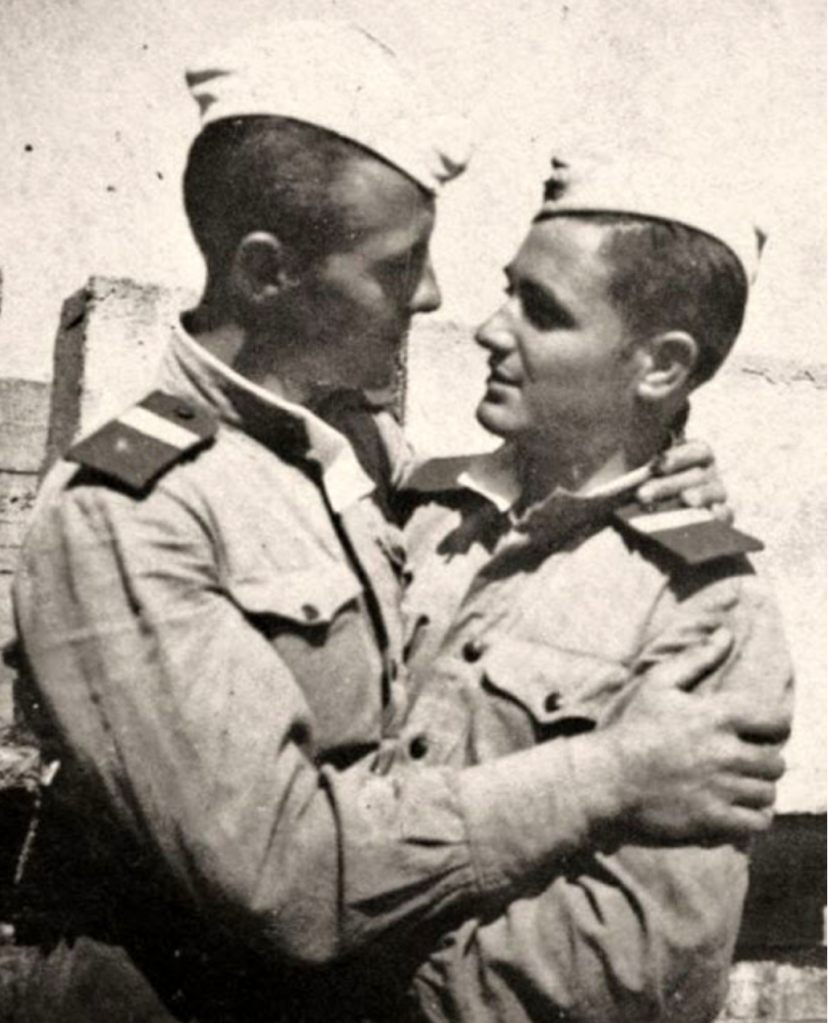
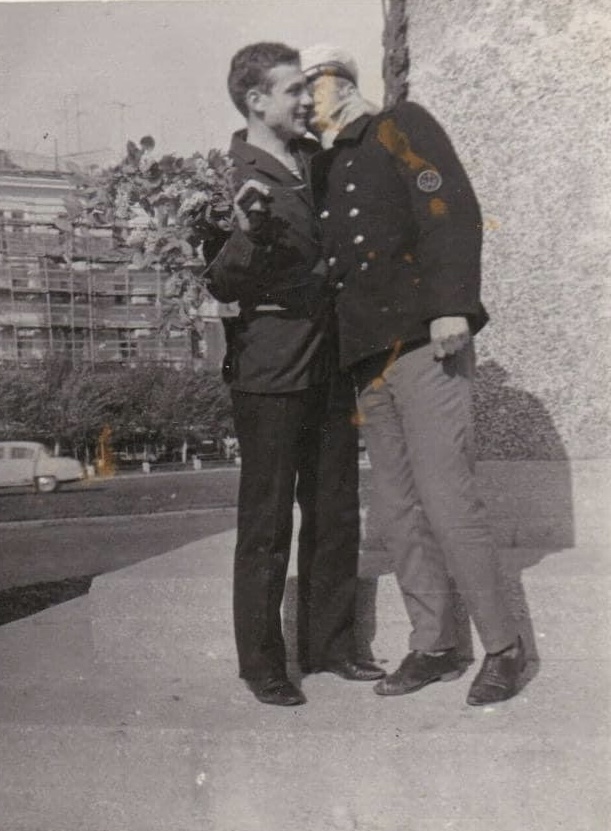
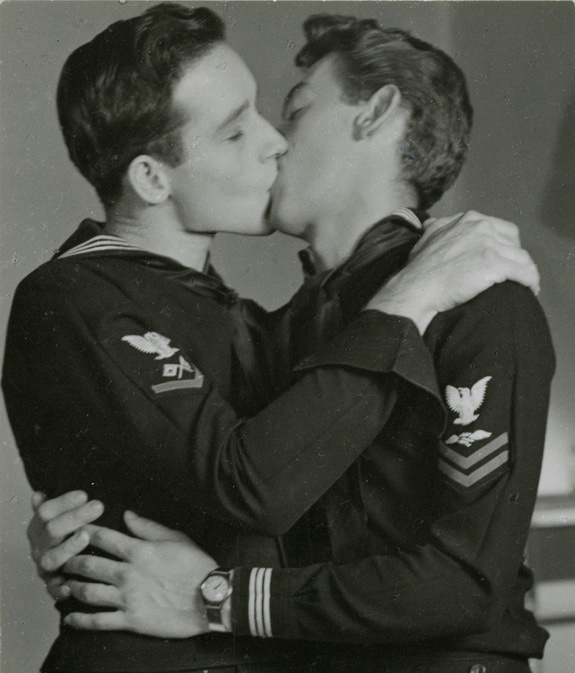
For many of us, Memorial Day weekend is about cookouts, sales, watching fireworks, and fellowshipping with family and friends. However, this weekend is supposed to be about honoring those who made the ultimate sacrifice. They gave their lives serving in one of the branches of the U.S. Armed Forces. As a military historian working at a military college, I am very much aware of the sacrifices made every day by military personnel. Historically, LGBTQ+ soldiers have sacrificed even more. For most of the history of the U.S. military, LGBTQ+ soldiers had to be closeted because being “out” wasn’t acceptable. Being outed could have cost them their military career. Many LGBTQ+ soldiers kept their mouths shut and their business to themselves to protect themselves from harm and protect the nation.
In 1982, the U.S. military enacted a policy explicitly banning gay men and lesbians from their ranks. Before that, however, same-sex relations were criminalized and a cause for discharge. And in the early 1940s, it was classified as a mental illness, disqualifying gay men and lesbians from service. In 1993, the “don’t ask, don’t tell” policy (DADT) went into effect, allowing closeted LGBTQ+ soldiers to serve in the military. Under the policy, service members would not be asked about their sexual orientation but would be discharged for disclosing it.
Many LGBTQ+ soldiers were outed as gay or lesbian by fellow soldiers and not allowed to serve. Some soldiers were killed by their fellow comrades while on active duty. If you saw the 2003 film Soldier’s Girl, you are aware of U.S. Army infantry soldier PFC Barry Winchell who was murdered on July 6, 1999, by a fellow soldier for dating a transgender woman, Calpernia Addams. The murder became a point of reference in the ongoing DADT debate. Eighteen years after DADT was enacted, Congress repealed the policy, allowing openly gay, lesbian, and bisexual people to serve in the military.
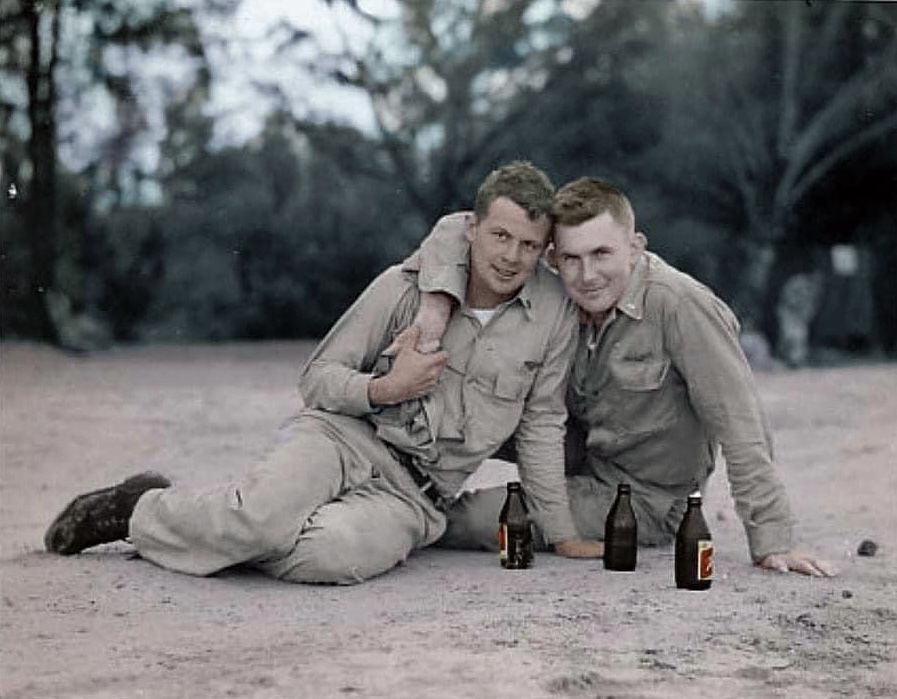
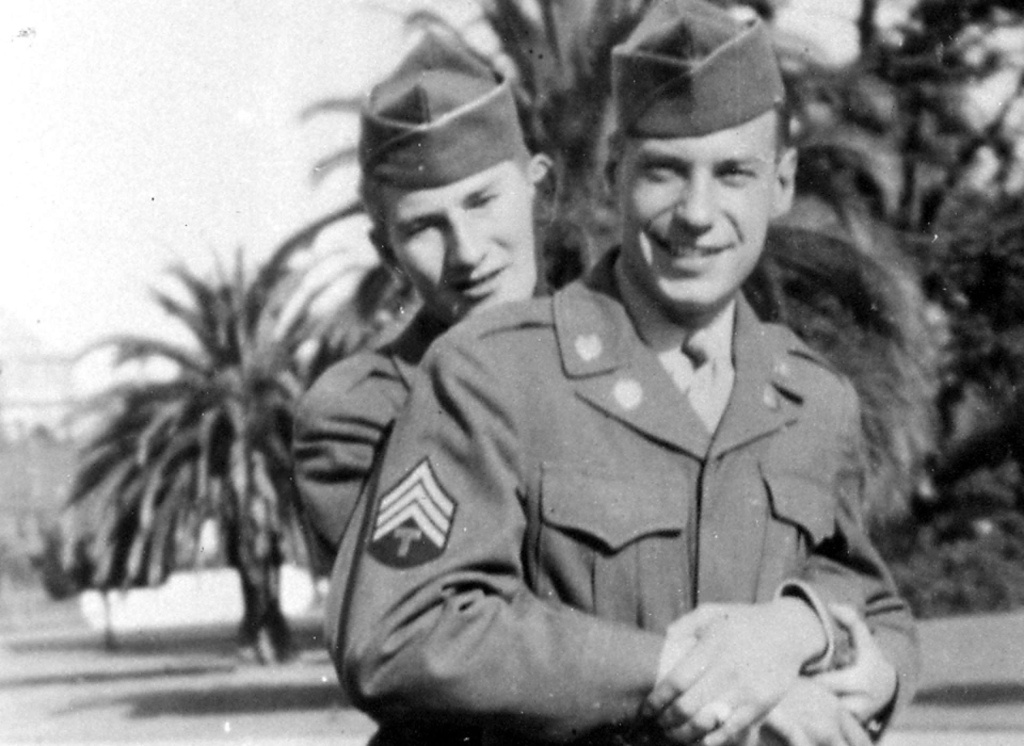
Another barrier was lifted in 2013 when spousal and family benefits were extended to same sex married partners in the military. After ending temporarily in 2016, the ban on transgender individuals was again rescinded in 2021, allowing transgender individuals to enlist and serve in the armed forces. It’s been a long journey, but LGBTQ+ soldiers have always been part of the American military. In an era before gay marriage or open pride, military men fell in love, formed passionate friendships, and had same-sex encounters. Due to social and official discrimination, most of the stories of these LGBTQ+ soldiers have gone untold. One famous example was Baron Friedrich von Steuben, a Prussian military man hired by George Washington to whip the Continental Army into shape during the darkest days of the Revolutionary War. He was known for his bravery and the discipline and grit he brought to the American troops. Historians also believe he was gay—and served as an openly gay man in the military when sex between men was punished as a crime.
So, if you have never considered the LGBTQ+ service members who lost their lives to serve a country that didn’t respect them, you should. We shouldn’t take our freedom for granted. It comes with a price tag, and we all need to remember this. As we celebrate another Memorial Day weekend, please note this isn’t just another time to party. Today is a day set aside to remember those who have sacrificed their lives so that we may live and be free, fight against discrimination, and love who we want. These brave, unsung heroes sacrificed the truth of themselves. Let us never forget them.
Be safe, be conscious, be proud, and remember our fallen LGBTQ+ service members who died in times when being “out” wasn’t allowed. Thankfully, things seemed to have changed drastically in the U.S. military. LGBTQ+ service members are able to serve openly and without harassment. While acceptance of LGBTQ+ service members is a relatively new development in the military’s long history, the Department of Defense is committed to maintaining a strong force that reflects the nation’s diversity.
So then, my beloved brethren, let every man be swift to hear, slow to speak, slow to wrath; for the wrath of man does not produce the righteousness of God.
—James 1:19-20
Growing up, anyone outside of my family would have said I was a very polite and quiet kid. However, when it came to my parents, especially my dad, I had a bad habit of talking back. We both wanted the last word, and I often didn’t know when to shut up. My grandmama gave me the best advice on how to deal with my father. She said, “Your daddy is just like his daddy. You just have to keep your mouth shut, and eventually, he will shut up. Then you can go about your day.” To this day, my father and I barely get along. I’ve never been the son he wanted, and he says I “annoy him.” Last time I was home at Christmas, he actually said, “I was dreading you coming home because you usually annoy me, but I haven’t been annoyed this time until now.” It was all because I said I would not watch Fox News. He took this as me saying he could not watch Fox News. I did not; I just meant I’d go elsewhere. However, when it comes to me, my father is a man who is slow to hear (if he does at all), swift to speak, and swift to wrath.
I know that I get my temper from my dad. It’s one of the reasons I never wanted children. I did not want to be the kind of father my father and grandfather were, and I knew I had their temper at times. Over the years, I have learned to control my temper, but most people who know me know that I can be pushed just so far before that temper comes out. I wish I could suppress my temper at all times, so I try to “be swift to hear, slow to speak, slow to wrath.” Do I always succeed? No, but I do try my best.
Following the verse above, James goes on to say in James 1:21-27:
Therefore lay aside all filthiness and overflow of wickedness, and receive with meekness the implanted word, which is able to save your souls.
But be doers of the word, and not hearers only, deceiving yourselves. For if anyone is a hearer of the word and not a doer, he is like a man observing his natural face in a mirror; or he observes himself, goes away, and immediately forgets what kind of man he was. But he who looks into the perfect law of liberty and continues in it and is not a forgetful hearer but a doer of the work, this one will be blessed in what he does.
If anyone among you thinks he is religious and does not bridle his tongue but deceives his own heart, this one’s religion is useless. Pure and undefiled religion before God and the Father is this: to visit orphans and widows in their trouble, and to keep oneself unspotted from the world.
Too many Christians today are not “doers of the word.” Sadly, they hear what they want to hear and ignore the parts of the Bible they disagree with. They rely on bad translations and put forward a belief that is an anathema to Christ’s teachings. I have always believed that we should live by example, meaning to guide others through your behavior instead of your words. Your intention is to inspire others to copy your behavior. Luke 6:31 says, “And just as you want men to do to you, you also do to them likewise.” The opposite of leading by example is to say one thing and do another, i.e., being a hypocrite. My father always lived by the saying “do as I say, not as I do,” but this is not how we are supposed to live.
We can study the Bible all we want, but if we fail to apply the lessons that God teaches us through His word, then we are only hearers and not doers. First Timothy 4:12 tells us, “Let no one despise your youth, but be an example to the believers in word, in conduct, in love, in spirit, in faith, in purity.” Could you, in good conscience, encourage someone to be to follow Christ’s teachings if you yourself are not? We must live in such a way that we are beyond reproach. Titus 2:6–8 says, “Likewise, exhort [encourage’ the young men to be sober-minded, in all things showing yourself to be a pattern of good works; in doctrine showing integrity, reverence, incorruptibility, sound speech that cannot be condemned, that one who is an opponent may be ashamed, having nothing evil to say of you.” Live by example, then those who are not following the Word of God cannot fault you. They may try, but you have to remember what is important. It is how God will judge you, not how man will judge you.
In Matthew 7:1-5, Jesus says, “7 “Judge not, that you be not judged. For with what judgment you judge, you will be judged; and with the measure you use, it will be measured back to you. And why do you look at the speck in your brother’s eye, but do not consider the plank in your own eye? Or how can you say to your brother, ‘Let me remove the speck from your eye;’ and look, a plank is in your own eye? Hypocrite! First remove the plank from your own eye, and then you will see clearly to remove the speck from your brother’s eye.” Jesus is telling us that we cannot criticize or judge others for things we ourselves do not follow.
When it comes to living by example, there’s no one who’s ever done it better than Jesus Himself. He is the ultimate example, because He built His entire ministry around living by example. At the end of the day, if we have not modelled our behavior to other people on that of Christ, then we are failing to follow Christ’s example. To do that, we need to practice humility and selflessness above all. Hebrews 10:24 says, “And let us consider one another in order to stir up love and good works.” Living by example isn’t always easy. If it were, then we wouldn’t need to rely on God’s strength to do it. Isaiah 41:10 says, “Fear not, for I am with you; be not dismayed, for I am your God. I will strengthen you, yes, I will help you, I will uphold you with My righteous right hand.” If you’re at that point in your life where you’re discouraged and unsure if you can press on and continue living by example, remember that God will strengthen us, help us, and support us.
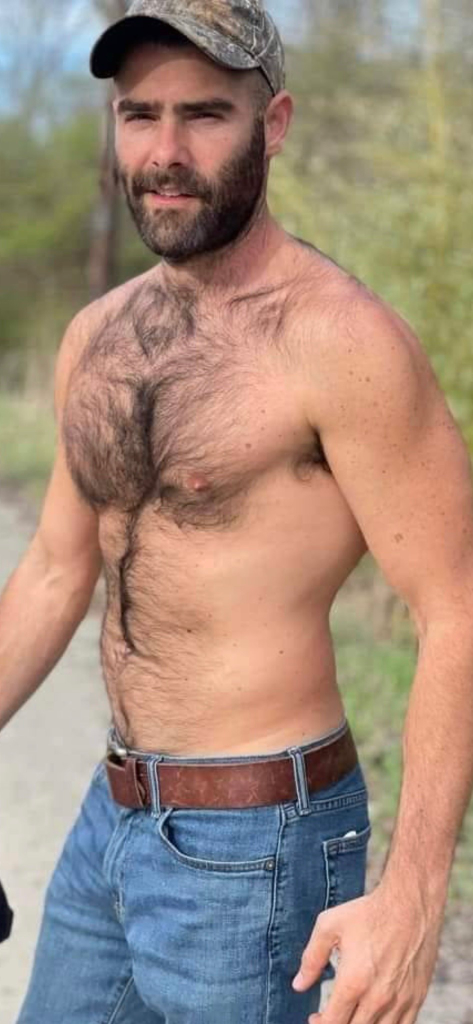
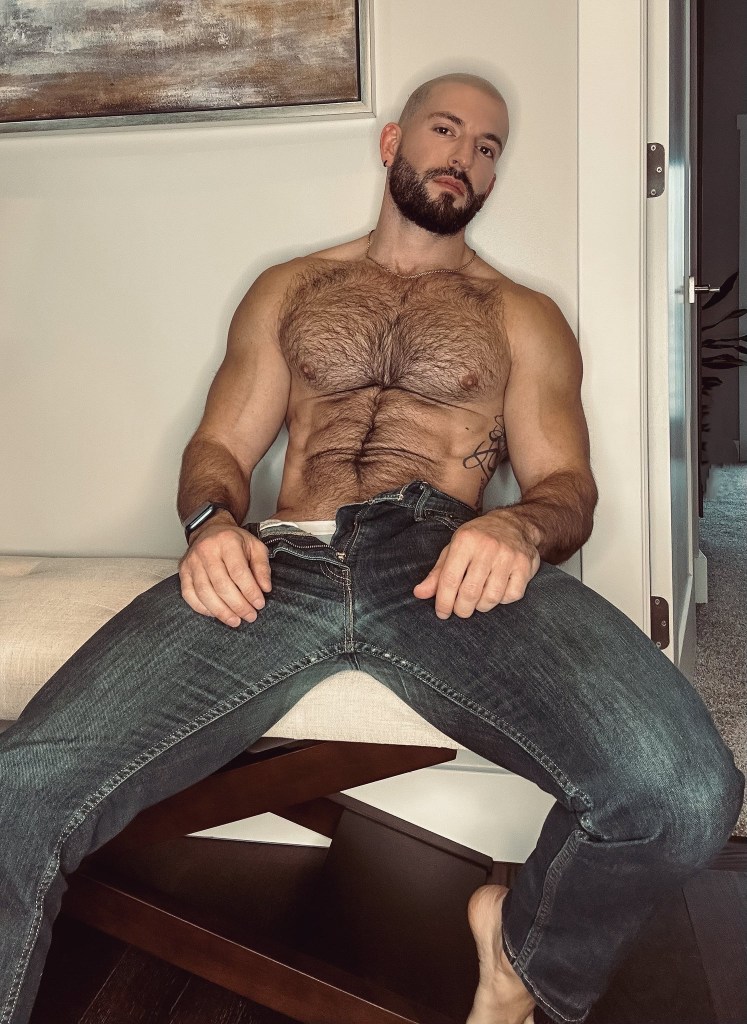
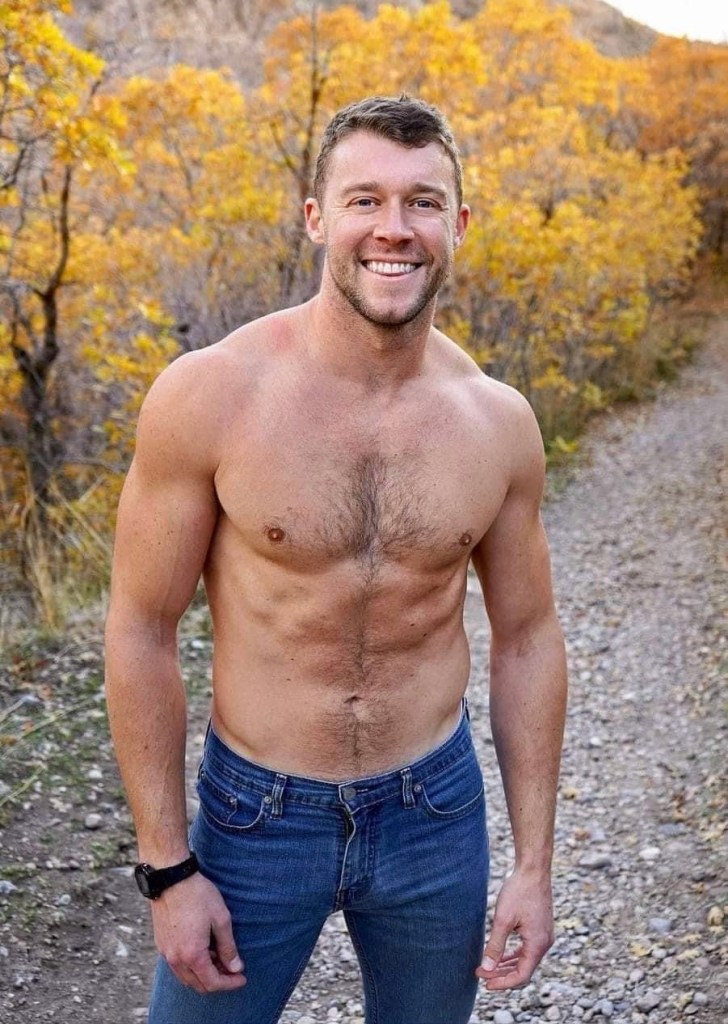
Don’t we all love a man in a perfectly fitted pair of jeans? I’m my opinion, what makes it even better is if he has hair on his chest. There is just something so masculine about a shirtless guy with a hairy chest in a pair of tight fitting jeans.
Dolly Parton once sang, “Why’d you come in here lookin’ like that / In your high heel boots and your painted on jeans / All decked out like a cowboy’s dream.” Ok, so she actually sang “cowgirl’s dream” but I like my version better.😂
















 Joe
Joe





 The Closet Professor