


TGIF

Friday couldn’t come soon enough this week. Although, it’s supposed to be cloudy today and tomorrow, Sunday should be a nice day. If Sunday does turn out to be nice, and I am feeling well, i.e., no migraine, maybe I can go for an early morning hike on Sunday. Even though tomorrow will be cloudy, if I wake up energized, I might take that hike tomorrow. The high temperature will be a bit cooler tomorrow than Sunday, but the Sunday morning temperature is expected to be lower than on Saturday. Because of all the rain and flooding we got last summer, I was not able to take some occasional hikes because the trails were damaged during the flooding, but hopefully, the trails will now be in good condition. I’ll definitely be careful, and if anything doesn’t look right, I’ll turn around.
I hope everyone has a wonderful weekend!

Discovery

I watched Star Trek: Discovery this morning when I got up, and considering where I work, this was a very interesting episode. However, because I watched the episode, I didn’t have much time to write a post today. So, enjoy your Isabella pic of the week. I took this one the other day.

Isabella: “Why are you disturbing me?”

Halfway

I’m taking a vacation day Friday, so my work week is halfway done. I was home sick yesterday due to a migraine (we have a weather front moving through). I still have a bit of one today, but it’s not as bad as yesterday. So, I’m going to work today. As long as my office isn’t too hot and there are a minimum of strong smells, I should be ok. I have some work to do, although nothing that I would consider of great importance. I really wish I could stay home another day, but I think it will be good to get out of my apartment. I hope everyone is having a good week.
A bonus pic of the guy above:


Sonnet 116
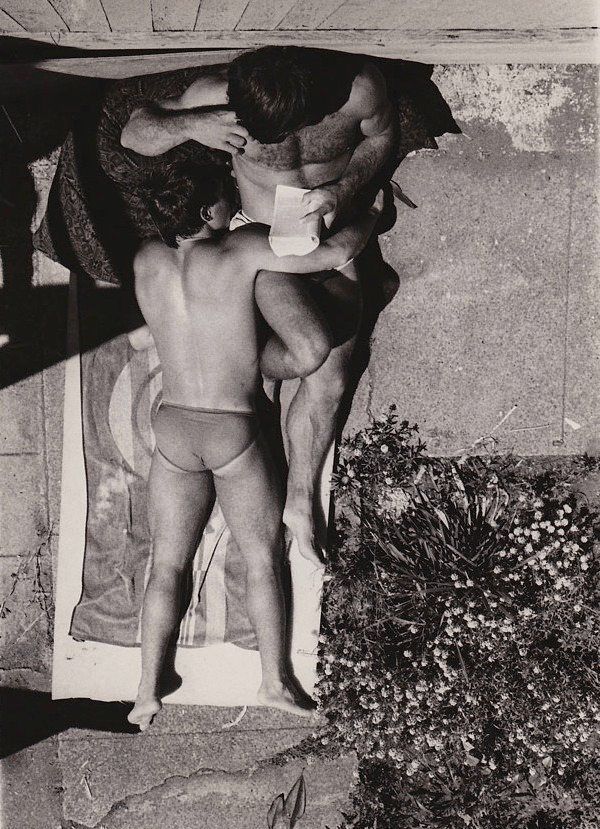
Sonnet 116
By William Shakespeare
Let me not to the marriage of true minds
Admit impediments; love is not love
Which alters when it alteration finds,
Or bends with the remover to remove.
O no, it is an ever-fixèd mark
That looks on tempests and is never shaken;
It is the star to every wand’ring bark
Whose worth’s unknown, although his height be taken.
Love’s not time’s fool, though rosy lips and cheeks
Within his bending sickle’s compass come.
Love alters not with his brief hours and weeks,
But bears it out even to the edge of doom:
If this be error and upon me proved,
I never writ, nor no man ever loved.
About the Poem
Along with Sonnets 18 (“Shall I compare thee to a summer’s day?”) and 130 (“My mistress’ eyes are nothing like the sun”), Sonnet 116 is one of the most famous sonnets. Traditionally, this sonnet has been almost universally read as a sonnet of praise or triumph to ideal and eternal love, with which all readers could easily identify, adding their own dream of perfection to what they found within it, modern criticism makes it possible to look beneath the idealism and to see some hints of a world which is perhaps slightly more disturbed than the poet pretends. In the first place it is important to see that the sonnet belongs in the sequence of Shakespeare’s sonnets. Sonnet 116 is sandwiched between three sonnets which discuss the philosophical question of how love deceives a person’s eyes, mind, and judgement. Sonnet 116 is then followed by four others which attempt to excuse the poet’s own unfaithfulness and betrayal of the beloved.
Most scholars thought agree that Sonnet 116 is about love in its most ideal form. The poet praises the glories of lovers who have come to each other freely and enter into a relationship based on trust and understanding. The first four lines reveal the poet’s pleasure in love that is constant and strong and will not “alter when it alteration finds.” The following lines proclaim that true love is indeed an “ever-fix’d mark” which will survive any crisis. In lines 7-8, the poet claims that we may be able to measure love to some degree but does not mean we fully understand it. Love’s actual worth cannot be known and remains a mystery. The remaining lines of the third quatrain (9-12), reaffirm the perfect nature of love that is unshakeable throughout time and remains so “ev’n to the edge of doom,” i.e., death. In the final couplet, the poet declares that, if he is mistaken about the constant, unmovable nature of perfect love, then he must take back all his writings on love, truth, and faith. Moreover, he adds that, if he has in fact judged love inappropriately, no man has ever really loved, in the ideal sense that the poet professes.


Authors
Recent Comments
noisilycool3bc985058… on Pic of the Day Joe on Pic of the Day noisilycool3bc985058… on Pic of the Day iameverywhere1 on Pic of the Day noisilycool3bc985058… on Pic of the Day Top Posts & Pages




Amazon Associate

As an Amazon Associate I earn from qualifying purchases. So, if you click on a link that takes you to Amazon.com, I may earn a commission.
Trust me, it isn’t much, but every little bit helps.

 Joe
Joe


 The Closet Professor