

We hurry on, nor passing note

We hurry on, nor passing note
By Digby Mackworth Dolben
We hurry on, nor passing note
The rounded hedges white with May;
For golden clouds before us float
To lead our dazzled sight astray.
We say, ‘they shall indeed be sweet
‘The summer days that are to be’—
The ages murmur at our feet
The everlasting mystery.
We seek for Love to make our own,
But clasp him not for all our care
Of outspread arms; we gain alone
The flicker of his yellow hair
Caught now and then through glancing vine,
How rare, how fair, we dare not tell;
We know those sunny locks entwine
With ruddy-fruited asphodel.
A little life, a little love,
Young men rejoicing in their youth,
A doubtful twilight from above,
A glimpse of Beauty and of Truth,—
And then, no doubt, spring-loveliness
Expressed in hawthorns white and red,
The sprouting of the meadow grass,
But churchyard weeds about our head.
About the Poet
During the 19th century the gay British poet Digby Mackworth Dolben was little known. He owes his poetic reputation to his cousin, Robert Bridges, Poet Laureate of the United Kingdom from 1913 to 1930, who edited a partial edition of his verse, Poems, in 1911. Bridges guaranteed Dolben’s reputation with Three Friends: Memoirs of Digby Mackworth Dolben, Richard Watson Dixon, Henry Bradley (1932), as well as the careful editing of his poetry. Bridges said that the poems Dolben left behind were equal to “anything that was ever written by any English poet at his age.” Hopkins’ infatuation for Dolben and Dolben’s tragic death feature in Simon Edge’s 2017 novel The Hopkins Conundrum.

Dolben was born February 8, 1848, in Guernsey and brought up at Finedon Hall in Northamptonshire. He was educated at Cheam School and Eton College. At Eton, his distant cousin Bridges was his senior and took him under his wing. Dolben caused considerable scandal at school by his exhibitionist behavior. He chronicled his romantic attachment to another pupil a year older than he was, Martin Le Marchant Gosselin, by writing love poetry. He also defied his strict Protestant upbringing by joining group of studetns of the Oxford Movement, a movement of high church members of the Church of England which began in the 1830s and eventually developed into Anglo-Catholicism. He then claimed allegiance to the Order of St Benedict, affecting a monk’s habit. He was considering a conversion to Roman Catholicism. On June 28, 1867, Dolben drowned in the River Welland when bathing with the ten-year-old son of his tutor, Rev. C. E. Prichard, Rector of South Luffenham in Rutland. Dolben was then aged 19 and preparing to go up to Oxford.
According to Simon Edge, the English poet and Jesuit priest Gerard Manley Hopkins was “so captivated by a brief meeting [with Dolben] that he spent the rest of his life mourning him.” In a letter to Bridges after Dolben’s death, Hopkins said “there can very seldom have happened the loss of so much beauty (in body and mind and life) and of the promise of still more as there has been in his case.” Hopkins also asked Bridges whether Dolben’s family had considered publishing his poems. Fortunately, the independently wealthy Bridges later published books of poems by both Dolben and Hopkins, or their poetry might have been lost to the world forever. Dolben’s poems were published in a single volume by Bridges in 1911; the Oxford Dictionary of National Biography says that his work stands “among the best of the poetry of the Oxford Movement.” Dolben’s death, it adds, “was the end of a life of exceptional poetic promise.”
In his biography of Dolben, Bridges identifies Dolben’s ardent affection for another of his Eton classmates, a particularly attractive (if in Bridges’s estimation somewhat vacuous) member of their high church circle. Bridges calls this an “idolization”, but infatuation is a better term; the poems are plainly homoerotic. While editing the book Bridges refused the suggestion put forth by mutual friends that he rewrite Dolben’s poems to read as though they had been written for a girl: but he did agree to suppress the identity of Gosselin, the seemingly oblivious young man who had so enamored Dolben. Gosselin, the British Minister to Lisbon and a knight, had himself died a few years before Bridges began his memoir. (His widow requested the suppression after denying access to his diary.) Bridges does not ignore Dolben’s sexuality. However, he is never direct, and his discussion of his sexuality is hesitant, extremely guarded without any direct or conclusive statement.

In Your Love
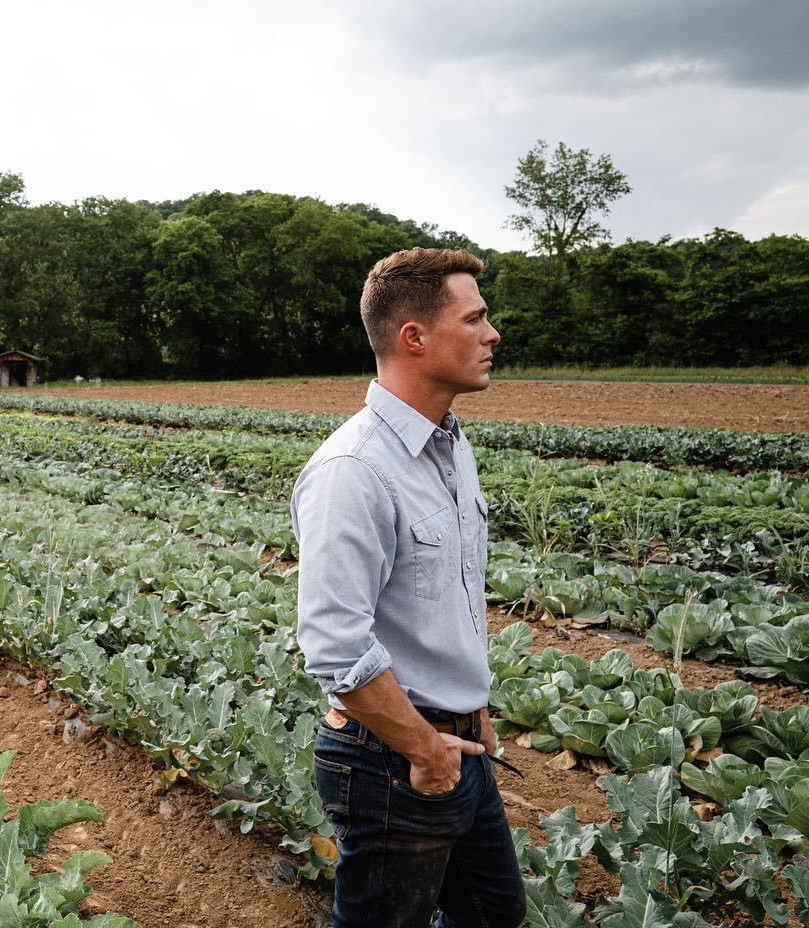
I saw on Colton Haynes’ Instagram a post about a music video he had done for the new Tyler Childers song, “In Your Love.” I no longer keep up to date with country music, so I was not familiar with Tyler Childers or his music. Wikipedia describes his music as “a mix of neotraditional country, bluegrass, and folk.” I didn’t know what to expect when I searched for the song to watch the music video. I certainly wasn’t expecting a video set in 1950s Appalachia chronicling the romance between two male coal miners. I was also not expecting how much it pulled at my heartstrings. I was in tears by the end, so be forewarned. I hope you will watch it anyway.
Last week, Jason Aldean’s release of a disgusting video of fearmongering and aggression dominated the conversation. Childers release is the antithesis to that with a moving, cinematic clip for his new song “In Your Love.” Just under five minutes in length, the video has the ability to emotionally wreck you as it watches the men fall in love, grapple with the violent reactions of their co-workers, and ultimately launch a new life together on a country farm. It features a romantic and ultimately heartbreaking love story between two men: “Arrow” star Colton Haynes and “You’s” James Scully.
The storyline comes from Silas House, the Poet Laureate of Kentucky, who wrote the video’s story from an idea he had with his husband, Jason Kyle Howard. A statement from House about the video, directed by Bryan Schlam and starring Colton Haynes and James Scully, echoes the desire for representation in country music that many still find themselves denied. “As a gay teenager who loved country music, I could have never imagined seeing myself in a video. That visibility matters,” House said. “Tyler and I both felt the attention to detail about rural life was very important, so we made sure that the house and the people looked realistic for the time period instead of the stereotypes of country people that have become so ingrained in the public consciousness… We wanted to tell as complex a story as we could in four minutes, not only about a gay couple but also about rural people. We wanted to show their joy and their sorrow—all the things that make up a complex life. Too often, simplistic notions are pushed about both rural and LGBTQ people, so we did everything we could to make this story as rich and layered as possible.”
Choices
Cast all your anxiety on him because he cares for you.
—1 Peter 5:7
The Bible gives us some guidance on making decisions, and God provides profound wisdom for making choices in our life. Remember the advice of scripture to rely on the guidance of God when facing big decisions. Proverbs 3:5-6 advises us, “Trust in the Lord with all your heart, and lean not on your own understanding; in all your ways acknowledge Him, and He shall direct your paths.” Likewise, Philippians 4:6-7 tells us, “Be anxious for nothing, but in everything by prayer and supplication, with thanksgiving, let your requests be made known to God; and the peace of God, which surpasses all understanding, will guard your hearts and minds through Christ Jesus.”
When I pray, I often ask God to guide me on the path that He has chosen for me. I think there are times when I should have listened to what God was trying to tell me, but I failed to do so, and it did not turn out well. Other times, I have felt a great certainty in my decisions, and I believe that God is pointing me in the right direction. I can only trust in God that he will not lead me astray and will help guide me in this life so that I may find my true purpose.
On Friday, I mentioned that I was taking a quick trip down and back from Boston. I did so because I had a job interview, but I wonder if this is the right job for me. While I would love to live in Boston, I am not sure I am ready to move. I have a job with responsibilities I really like doing. I have a doctor who, for the first time in my 45 years, I feel comfortable discussing anything with, and I like him. In fact, I don’t dread having to go see him. I trust him to do what is best for my health. Likewise, I have a neurologist who is working with me to provide the best treatment for my migraines. While I know I could find a migraine specialist in Boston, I feel like my doctor was like finding a golden needle in a haystack. I honestly wonder if I could find gold again.
I like my current job a lot, but there have been issues with who I work with and who I work for. Besides that, Vermont may be a very LGBTQ+-friendly state, but there aren’t a lot of gay men. It seems that lesbians and transgender individuals (and more trans women than trans men) are the majority, and for as LGBTQ+ friendly as Vermont is, there are still a lot of closeted gay men. It makes it difficult to find a long-term romantic partner. It’s hard to meet men here because there are so few.
The Friday interview was just the first interview in the process. I thought it went really well, but one never knows what the other candidates’ resumes look like. The director I talked to said she would finish the first round of interviews, and then she and her senior staff will look over the resumes together before deciding who to bring back for a second round of interviews. It’s still early in the process. I’m also not sure this really is the job for me, the job I’d want to move away from Vermont for. The pay is not as great as I’d live, but it is more than I am making now. However, Boston is more expensive than Vermont, and I’d need that extra salary. I’m just not sure it’s enough. It would be a step up in my career. I would be going from being a curator to being one of the museum’s directors. Plus, I’d be working at not only one of the most historic places in Boston but in the whole United States, and I’d be doing real historical work on the foundation of American democracy.
I’ve applied for other jobs in or near Boston, and this isn’t the first one that I had an interview for. That first interview was for a job that paid significantly more, and I do think I’d be able to live comfortably in Boston for that salary. However, I have not heard back from them since that first interview. So, while I know I am worrying about something that may not ever become a choice, I don’t want the choice to be given to me without having given it due consideration. Whatever I decide, I know I can trust in the Lord to point me in the right direction.


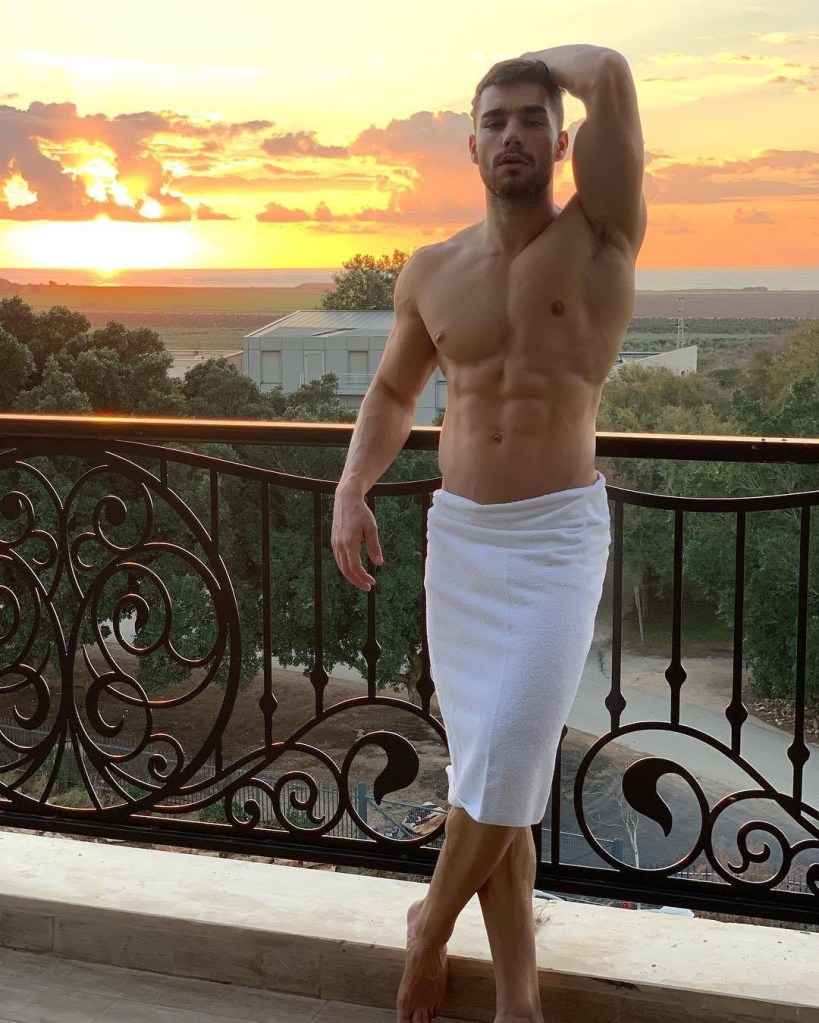


Quick Trip

I have to make a quick trip down to Boston and back today. It’s a three hour drive down there. I have a meeting to attend, then I’ll be driving back. I may stay and have dinner just to try and avoid Friday rush hour traffic out of Boston. It’s supposed to be a beautiful, sunny day for a drive. I much prefer driving on sunny weather than in rain. With a sunny day also comes heat. It’s supposed to be 90 degrees in Boston today, whereas here in Vermont, it’s supposed to be 83 degrees. No matter what, it’s going to be hot, and it’s going to feel hotter because of the humidity. Weather, travel time, etc…I hope this will be a productive meeting.


Authors
Recent Comments
Steve Davis on The Gift of Love iameverywhere1 on Pic of the Day noisilycool3bc985058… on Pic of the Day noisilycool3bc985058… on Moment of Zen: A Room with a… Joe on Ah, Montreal… Top Posts & Pages




Amazon Associate

As an Amazon Associate I earn from qualifying purchases. So, if you click on a link that takes you to Amazon.com, I may earn a commission.
Trust me, it isn’t much, but every little bit helps.

 Joe
Joe


 The Closet Professor