Follow Jesus, Not Man

Then Jesus spoke to the multitudes and to His disciples, saying: “The scribes and the Pharisees sit in Moses’ seat. Therefore whatever they tell you to observe, that observe and do, but do not do according to their works; for they say, and do not do. For they bind heavy burdens, hard to bear, and lay them on men’s shoulders; but they themselves will not move them with one of their fingers. But all their works they do to be seen by men. They make their phylacteries broad and enlarge the borders of their garments. They love the [b]best places at feasts, the best seats in the synagogues, greetings in the marketplaces, and to be called by men, ‘Rabbi, Rabbi.’”

—Matthew 23:1-7

Jesus should stand as our example of how to live our lives, and we should not put words into Jesus’ mouth that we do not know what he said. By the time Jesus was born, there were four different Jewish sects: the Pharisees, the Sadducees, the Essenes, and the Zealots. Each had its issues. The Pharisees put more emphasis on their moral laws than those of God. The Sadducees based their life not on the Pharisees’ teachings but on the Temple and saw their ultimate authority as that of their Roman overseers. The third sect, the Essenes, actually left Jerusalem to live an ascetic life in an effort to be closer to God. Then there were the Zealots who completely opposed Roman rule and actively fought against it. It is the Pharisees that I want to talk about today because the Christianity of today is too much like that advocated by the Pharisees.

The Pharisees believed they were the ultimate religious people among the Jews during Christ’s life on earth. Determined not to break any of God’s laws, they had, over time, devised an intricate system of oral tradition to keep them from breaking the Mosaic law. One would think with such a desire to obey God that, they would have recognized the perfect obedience of Jesus and affirmed and followed Him. The essential problem lay in their different understanding of the nature of God. For the Pharisees, God is primarily the one who makes demands. For them, the Scriptures of the Old Testament were a set of rules that must be kept at all costs. For Jesus, as well as the Old Testament believers, God is a merciful God, not a vengeful one. Psalm 145:8 says, “The Lord is gracious and full of compassion, slow to anger and great in mercy.”

The main cause of the Pharisees’ antagonism toward Jesus, however, lay in His ignoring of their hundreds of elaborate but petty rules that they had devised for interpreting the law of God. Not only did they devise these hundreds of man-made rules, but they also elevated them to the level of Scripture so that to break one of their rules was to violate the law of God itself. And yet these rules not only obscured the true intent of God’s law but also, in some cases, actually violated it. In other words, they added rules that were not in the scriptures. Many Christian denominations do this today. They decide their own morality and claim it is biblical when in truth, they are going against the Word of God. All that the Pharisees did was designed to make them appear to be the holiest of Jews.

Since all Scripture is profitable for us, there is a present-day lesson for us to learn from Jesus’ clash with the Pharisees. We need to be careful that we do not add our own man-made rules to the Scriptures. Some convictions that we hold dearly may be derived more from our particular Christian culture than derived from Scripture, and we need to learn to discern the differences. It is okay to have cultural convictions as long as they do not harm others, but we should be careful that we do not elevate them to the same authority as Scripture. So much judgmentalism among Christians today occurs because we do this. But that is basically what the Pharisees were doing. So, we have to guard against the modern-day Pharisees and bring Christianity back to where it belongs as a loving and charitable religion.


Pic of the Day


Moment of Zen: A Well (un)Dressed Man

I love seeing a well dressed man in a suit or tuxedo, but there’s something even better.

A well undressed man.


Pic of the Day


Pic of the Day


Twitter Shock

WARNING: Links in this post are NSFW.

I was scrolling through my Twitter feed and came across a picture of a really handsome guy with a gorgeous body covered with the perfect amount of silky dark fur. It was the guy in the picture above. His name is Bruno Duarte Vincent (Twitter: @lobo_carreira or Instagram: @belowdeckbruno). He was apparently on the Bravo show Below Deck. However, none of that’s the point of telling you about Bruno. The point is the first picture I came across, which was not the one above. It was one of Bruno lying on a bed, naked. When I first looked at the picture, I thought, “This would be a great picture to use on my blog. His arm is covering anything that would be too inappropriate.” Then, I took a closer look. It was not his arm; it was his penis. 😳 So obviously, I could not post that picture, but you can easily go to his Twitter and find it. I just had to laugh when I thought of how I could mistake his penis for his arm. My only defense is that I only glanced at the picture at first and was not wearing my reading glasses.


Pic of the Day

I’d give him a ride, in more ways that one. 😈


Hump Day

As I sit here drinking a cup of tea and watching the premiere of the third season of The Mandalorian, I don’t really have much to say. We got several inches of snow yesterday. The snow is always beautiful when it first falls. That rarely lasts very long. I have a class to teach today, but otherwise, it’s just another work day. I hope all of y’all have a great Wednesday and get over the hump of this week.


Pic of the Day


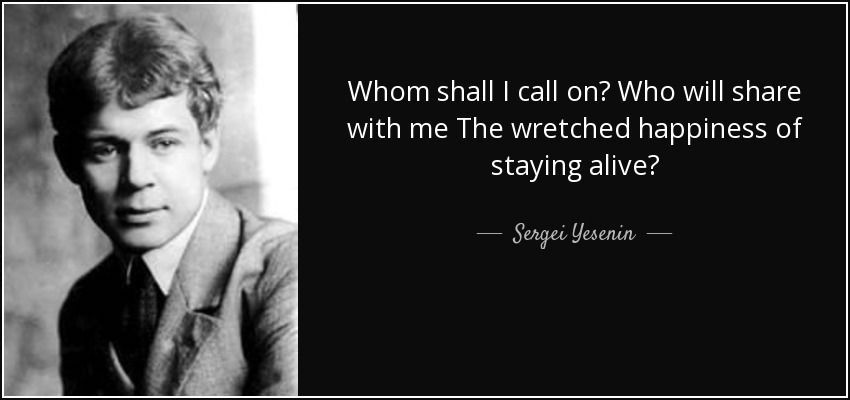
Who am I? What am I? Just a dreamer…

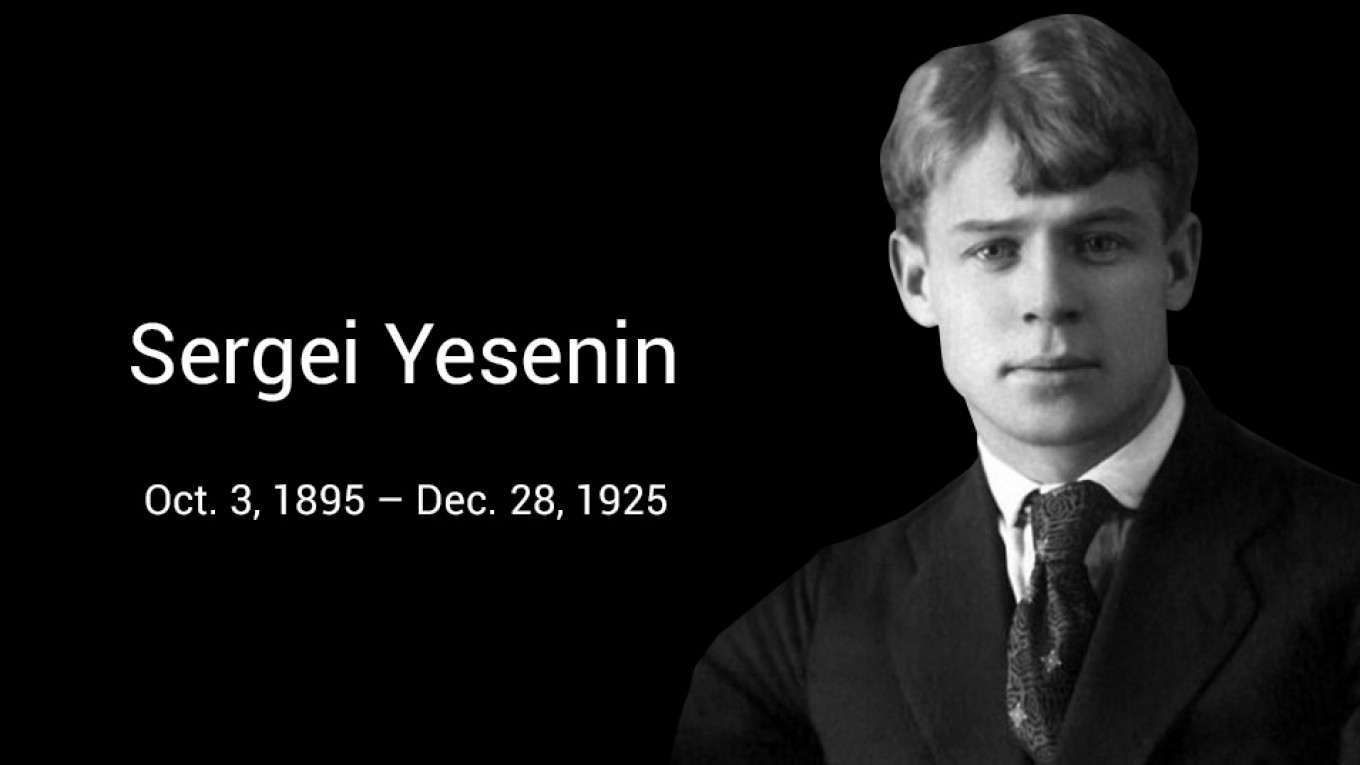
Sergei Yesenin

Who am I? What am I? Just a dreamer…
By Sergei Yesenin (Sergey Esenin)

Translated by Anton Yakovlev

Who am I? What am I? Just a dreamer
Looking for a ring of happiness in the dark,
Living this life as if by happenstance,
Just like others on earth.

And I’m only kissing you out of habit,
Because I’ve kissed many,
And speaking words of love
As though I’m lighting matches.

“Dear”, “darling”, “forever”,
But always one thing on my mind:
If you wake up the passion in a person,
You surely won’t find truth.

This is why my soul has no trouble
Desiring, demanding fire —
You, my walking birch,
Were created for many and for me.

But, always looking for the one
And languishing in callous captivity,
I’m not at all jealous of you,
Not cursing you in the least.

Who am I? What am I? Just a dreamer
Who has lost the blue of his eyes in the dark,
And I only love you by happenstance,
Just like others on earth.

Сергей Есенин Кто я? Что я? Только лишь мечтатель…

Кто я? Что я? Только лишь мечтатель,
Перстень счастья ищущий во мгле,
Эту жизнь живу я словно кстати,
Заодно с другими на земле.

И с тобой целуюсь по привычке,
Потому что многих целовал,
И, как будто зажигая спички,
Говорю любовные слова.

«Дорогая», «милая», «навеки»,
А в уме всегда одно и то ж,
Если тронуть страсти в человеке,
То, конечно, правды не найдешь.

Оттого душе моей не жестко
Ни желать, ни требовать огня,
Ты, моя ходячая березка,
Создана для многих и меня.

Но, всегда ища себе родную
И томясь в неласковом плену,
Я тебя нисколько не ревную,
Я тебя нисколько не кляну.

Кто я? Что я? Только лишь мечтатель,
Синь очей утративший во мгле,
И тебя любил я только кстати,
Заодно с другими на земле.

Sergei Yesenin (1895-1925) grew up in a peasant family in the village of Konstantinovo, Ryazan Province but spent most of his adult life in Petrograd (previously St. Petersburg, later Leningrad, now St. Petersburg again). Yesenin called himself “the last poet of the village,” both in the sense of his peasant origins and of being the last among his contemporaries whose poems were mainly concerned with country life. In writing, sometimes nostalgically, always sympathetically, and often with an almost mystical devotion to rural Russia, Yesenin succeeded in cultivating a national identity and mythology so strong and cohesive that his work would forever imprint itself into Russian culture, with the poet becoming a beloved and somewhat mythical figure — a fame that persisted even under Stalin when the poet’s work was blacklisted and when praising or even reading it constituted a risk to one’s very survival. A founding member of the short-lived but influential Imaginist movement (related to the Western Imagism and standing in contrast to Futurism), Yesenin was a star whose public performances were attended by hundreds or thousands of adoring fans across the country. He jousted with fellow poet Vladimir Mayakovsky and was known for publicity stunts. His iconic status continues to this day; it is virtually impossible to find a Russian person who has never heard Sergei Yesenin’s name, and only marginally easier to find someone who doesn’t know at least one of his poems by heart though I suspect many people in the United States have never heard of him. 

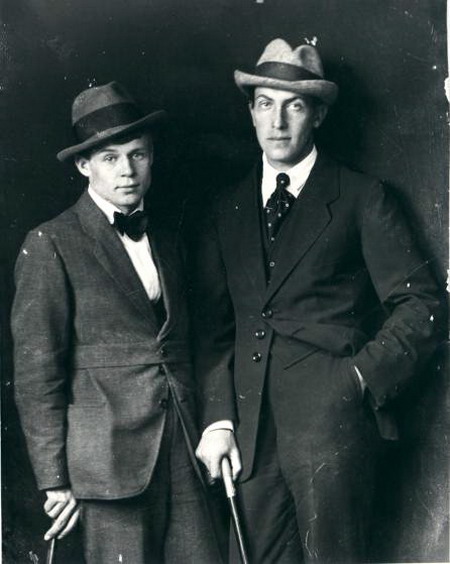
Yesenin (left) with Anatoly Marienhof in 1915

Despite being married to four different women, most notably Isadora Duncan (with whom he shared no common language), Yesenin, loved men. His poetry was loved for its simplicity and clarity, bridging both high and low culture, including his poems of love to the various men in his life. During WWI, he had a relationship with the poet Leonid Kannegisser (later the assassin of Moisei Uritsky of the secret police), while during the Bolshevik Revolution of 1917, gay writers continued writing, but gay-positive work was not encouraged under the Soviet regime (after 1933, when Stalin recriminalized homosexuality, no gay-themed works were published.) By the mid-1920s, Sergei entered into a three-year relationship with another fellow poet Anatoly Marienhof, to whom many poems are dedicated, inspired by, or written about. Sergei was a rebellious writer, suffering through bouts of alcoholism, violent behavior, depression, and plagued by his inner demons when he hung himself in a Leningrad hotel at the age of 30. Perhaps it was his failed marriages, the disillusionment that he must have felt when the revolution that he supported failed to live up to his expectations, or that he was a gay man who had simply yielded to the pressures of the world and no longer wanted to fight. Whatever his reasons, we will never know.

In the poem above, I think he is questioning his sexuality or maybe coming to terms with it since this poem was written in 1925, the year he died. When he writes, “And I’m only kissing you out of habit,” I suspect he is talking about one of his wives. He later writes, “But always one thing on my mind: / If you wake up the passion in a person, / You surely won’t find truth.” Here he seems to be saying that if she awakens his sexuality/passion, then she won’t see the truth of his homosexuality. To me, this is a sad poem. In the fifth stanza, he says he writes that he is “always looking for the one,” but he is “in callous captivity” of a world that does not accept a person being gay. The last stanza seems to be saying that he “has lost the blue of his eyes in the dark,” and maybe that is a foretelling of his suicide in the same year.