

Question of the Day

If you have Twitter and you follow many gay men, then you have probably seen the image below. It’s obviously all in good fun, but I have to say, there is some accuracy there. I’m not going to say which one I fit under, but it is remarkably accurate for me. I wear a variety of styles of underwear, but one of these is my preferred choice. I’m not asking you to tell what underwear you prefer, but I’d love to know in the comments how accurate it is. I’m also going to put an anonymous poll at the bottom, just to see where everyone falls, if you don’t mind clicking on the underwear that you often wear.


Also, here’s a fun video from The Underwear Expert explaining the different types of underwear. I’m sure there is nothing new to any of you in this video, but Jared North is a hottie and fun to watch.

Fall Leaves Fall

Fall Leaves Fall
By Emily Brontë – 1818-1848
Fall, leaves, fall; die, flowers, away;
Lengthen night and shorten day;
Every leaf speaks bliss to me,
Fluttering from the autumn tree.
–
I shall smile when wreaths of snow
Blossom where the rose should grow;
I shall sing when night’s decay
Ushers in a drearier day.
About the Poem
Here in Vermont, the height of fall foliage has passed and “stick season” is encroaching on us. I chose this poem today because most of the fall leaves have fallen here. The higher elevations of central Vermont have some trees hanging on to their foliage, contrasting with the dark green evergreens, and the soft gray hillsides where the leaves have fallen. The most foliage color right now is found in the rolling hills of the Champlain Valley, including the Lake Champlain Islands and the Burlington area, and in the valleys of southern Vermont.
Nature is surely the most noticeable themes in “Fall, Leaves, Fall.” For the narrator of the piece, presumably a voice for Brontë’s consciousness, the transition from the autumnal equinox to the winter solstice is one of the best times of the year, when the days grow increasingly shorter, and the nights grow longer. In each line of the two quatrains, Brontë’s word choice emphasizes her own emotional connection to the season, and its own unique beauty, even as she describes such occurrences as the death of leaves and other plants due to increasing cold.
It is likely that “Fall, Leaves, Fall” constitutes one of few existing commentaries on who Emily Brontë was as a person. In her life, friends and family described her as a shy individual, but most of what is known about her come from the posthumous commentaries of her older sister, Charlotte Brontë, whose neutrality cannot be assured. It is understandable to think that her elder sister would want to paint her in a positive light, especially as her novels and poems slowly cemented themselves within the history of English literature. In “Fall, Leaves, Fall,” Emily Brontë seems to be free to discuss herself, and depict herself as a quiet individual who sees life, beauty, and bliss in things that a great many people do not. Even if all she wishes to say is that she loves fall and winter more than summer and spring, it is something worth saying, especially for someone who can express it so well in such a short poem.
About the Poet
Emily Brontë was born in Thornton, England, on July 30, 1818. She and her five siblings grew up in Haworth, where their father, the Rev. Patrick Brontë, was the church curate. Their mother died in 1821, and in 1824, Emily and three of her sisters were sent to the Clergy Daughters’ School in Lancashire. When her two oldest sisters died of tuberculosis, Emily returned to Haworth with her sister Charlotte.
After leaving school, Emily continued her studies with her two surviving sisters, Charlotte and Anne, and their brother, Branwell. With access to their father’s library, the Brontë siblings read and wrote extensively, producing a family magazine that featured their stories and poems.
In 1837, Emily became a teacher at the Law Hill School, but she left the position after several months. After teaching for a brief period at the Pension Héger in Brussels, she returned permanently to Haworth in 1842.
In 1846, Emily, Charlotte, and Anne self-published a collection of poetry under the pseudonyms Currer, Ellis, and Acton Bell. While The Poems of Currer, Ellis, and Acton Bell (Aylott and Jones, 1846) reached a very limited audience, the three sisters each went on to publish novels soon after. In 1847, Emily published her sole work of fiction, Wuthering Heights (Thomas Cautley Newby), which is widely regarded as one of the great novels of the English language.
Emily Brontë died of tuberculosis on December 19, 1848. The Complete Poems of Emily Jane Brontë (Hodder and Stoughton), a posthumous collection of over 200 poems, was published in 1923.


Stop and Smell the Roses
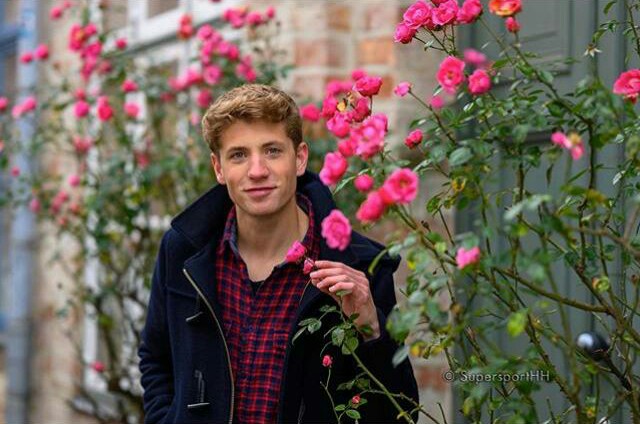
That I may proclaim with the voice of thanksgiving, and tell of all Your wondrous works.
—Psalm 26:7
“Stop and smell the roses” is an idiom that means to relax; to take time out of your busy schedule to enjoy or appreciate the beauty of life. Whether you think of “stopping to smell the roses” as a metaphor, or an actual act of admiring roses, the benefit is the same. Slow down and appreciate the world surrounding you is the message.
Origins of the phrase are not clear. Although the quote, “Stop and smell the roses,” is often attributed to golfer Walter Hagen in the 1956 book “The Walter Hagen Story” but he didn’t mention roses. The quote: “You’re only here for a short visit. Don’t hurry. Don’t worry. And be sure to smell the flowers along the way.” Some people argue that this passage was soon paraphrased as stop and smell the roses, but this can’t be easily verified.
While this expression refers to roses, it can be anything rather small or even commonplace. These things may seem small but they can give us great joy. The difference in well-being, happiness, sense of elevation, and level of connectedness to other people, can be significantly higher for those who spend time noticing and savoring these moments of clarity and relaxation.
The expression “stop and smell the roses” is not just about flowers or nature, but an encouragement to be mindful, take time for your self and live life with deeper gratefulness for the world around us. It is a reminder to us all to slow down and take notice of the world around us, and to be present in every moment. It means consciously directing your mind to be aware and attentive to the present moment to be able to experience and enjoy more your surroundings.
“Stopping to smell the roses” is a pleasant experience that slows us down, but sometimes there are unpleasant experiences that force us to slow down. Think of those unpleasant moments like a speed bump in the road. While speed bumps can be annoying, they force us to be cautionary and become aware of our surroundings. Don’t let your days be like driving on freeways, fast and thoughtless. The next time you go over a speed bump, soak in your surroundings and find one thing that you can appreciate for the day.



Moment of Zen: Briefs

There is just something about a guy in white briefs that gets my blood flowing.





Pic of the Day
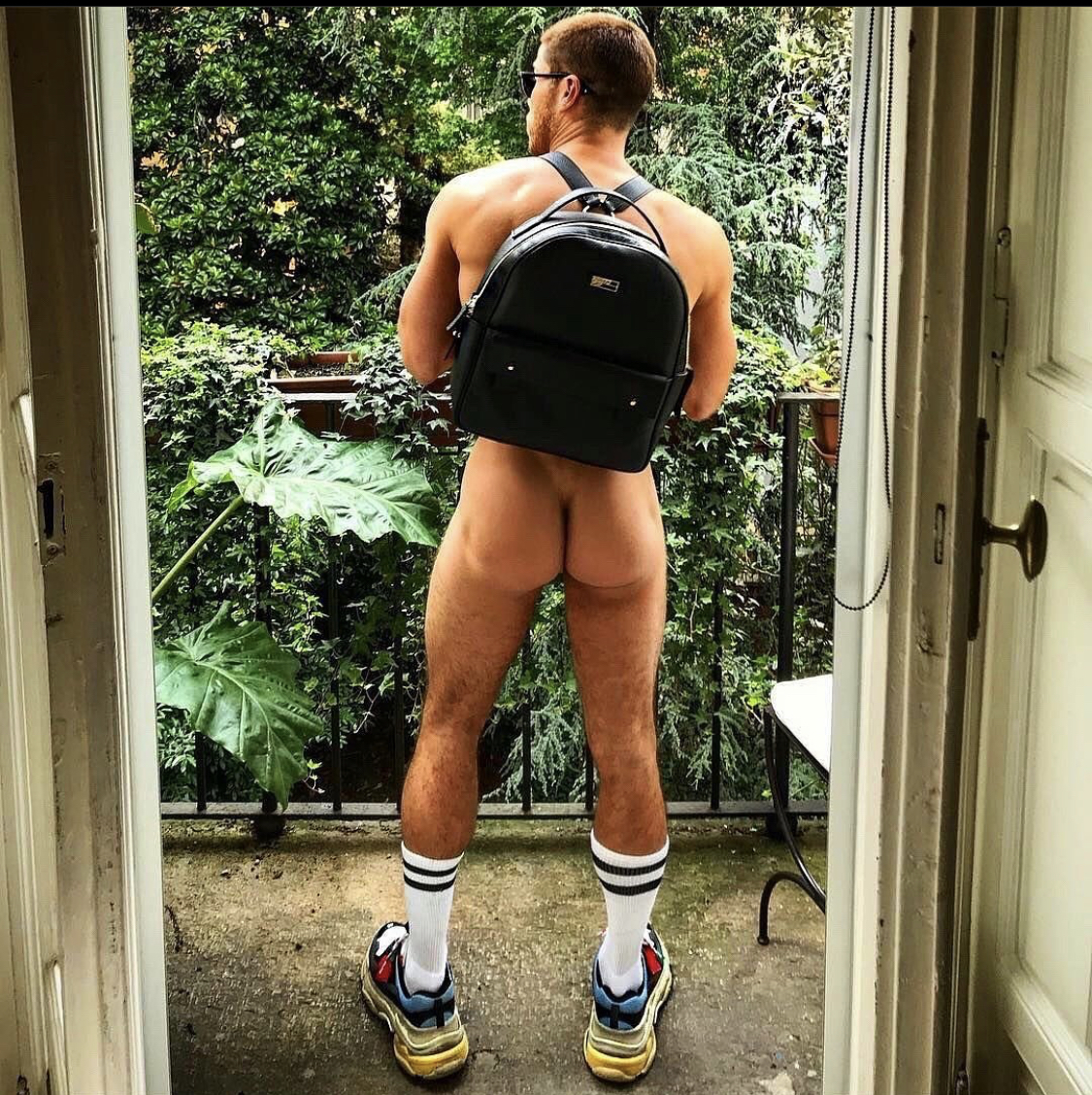
This pic is dedicated to the cute guy from Grindr who says he knows me but refuses to tell me who he is and won’t show his face when we chat on Grindr. For some reason he says he’s had a thing for me for several years. He came by to see me yesterday. Yes, I know who he is, even though he’s been trying to conceal it. For some reason he’s being shy towards me. I kind of understand why he’s being shy and is keeping his cards close. After yesterday, I’m pretty sure he knows that I know. We’ll see what happens next. 👀


Authors
Recent Comments
noisilycool3bc985058… on Pic of the Day Joe on Pic of the Day noisilycool3bc985058… on Pic of the Day iameverywhere1 on Pic of the Day noisilycool3bc985058… on Pic of the Day Top Posts & Pages




Amazon Associate

As an Amazon Associate I earn from qualifying purchases. So, if you click on a link that takes you to Amazon.com, I may earn a commission.
Trust me, it isn’t much, but every little bit helps.

 Joe
Joe


 The Closet Professor