This is the way that autumn came to the trees: it stripped them down to the skin, left their ebony bodies naked. It shook out their hearts, the yellow leaves, scattered them over the ground. Anyone could trample them out of shape undisturbed by a single moan of protest.
The birds that herald dreams were exiled from their song, each voice torn out of its throat. They dropped into the dust even before the hunter strung his bow.
Oh, God of May have mercy. Bless these withered bodies with the passion of your resurrection; make their dead veins flow with blood again.
Give some tree the gift of green again. Let one bird sing.
About the Poet
Faiz Ahmed Faiz was born on February 13, 1911, in Sialkot, India, which is now part of Pakistan. Faiz’s early poems had been conventional, light-hearted treatises on love and beauty, but later, he began to expand into politics, community, and the thematic interconnectedness he felt was fundamental in both life and poetry. He received a bachelor’s degree in Arabic, followed by a two master’s degree, one in English and the other in Arabic. After graduating in 1935, Faiz began a teaching career. During his years teaching, he married Alys George, a British expatriate and convert to Islam, with whom he had two daughters. In 1942, he left teaching to join the British Indian Army, for which he received a British Empire Medal for his service during World War II. After the partition of India in 1947, Faiz resigned from the army and became the editor of The Pakistan Times, a socialist English-language newspaper.
On March 9, 1951, Faiz was arrested with a group of army officers under the Safety Act and charged with the failed coup attempt that became known as the Rawalpindi Conspiracy Case. He was sentenced to death and spent four years in prison before being released. Two of his poetry collections, Dast-e Saba and Zindan Namah, focus on life in prison, which he considered an opportunity to see the world in a new way. While living in Pakistan after his release, Faiz was appointed to the National Council of the Arts by Zulfikar Ali Bhutto’s government, and his poems, which had previously been translated into Russian, earned him the Lenin Peace Prize in 1963.
In 1964, Faiz settled in Karachi and was appointed principal of Abdullah Haroon College, while also working as an editor and writer for several distinguished magazines and newspapers. He worked in an honorary capacity for the Department of Information during the 1965 war between India and Pakistan and wrote stark poems of outrage over the bloodshed between Pakistan, India, and what later became Bangladesh. However, when Bhutto was overthrown by Zia Ul-Haq, Faiz was forced into exile in Beirut, Lebanon. There he edited the magazine Lotus and continued to write poems in Urdu. He remained in exile until 1982. He died in Lahore, Pakistan in 1984, shortly after receiving a nomination for the Nobel Prize.
Throughout his tumultuous life, Faiz continually wrote and published, becoming the best-selling modern Urdu poet in both India and Pakistan. While his work is written in fairly strict diction, his poems maintain a casual, conversational tone, creating tension between the elite and the common, somewhat in the tradition of Ghalib, the renowned 19th century Urdu poet. Faiz is especially celebrated for his poems in traditional Urdu forms, such as the ghazal, and his remarkable ability to expand the conventional thematic expectations to include political and social issues.
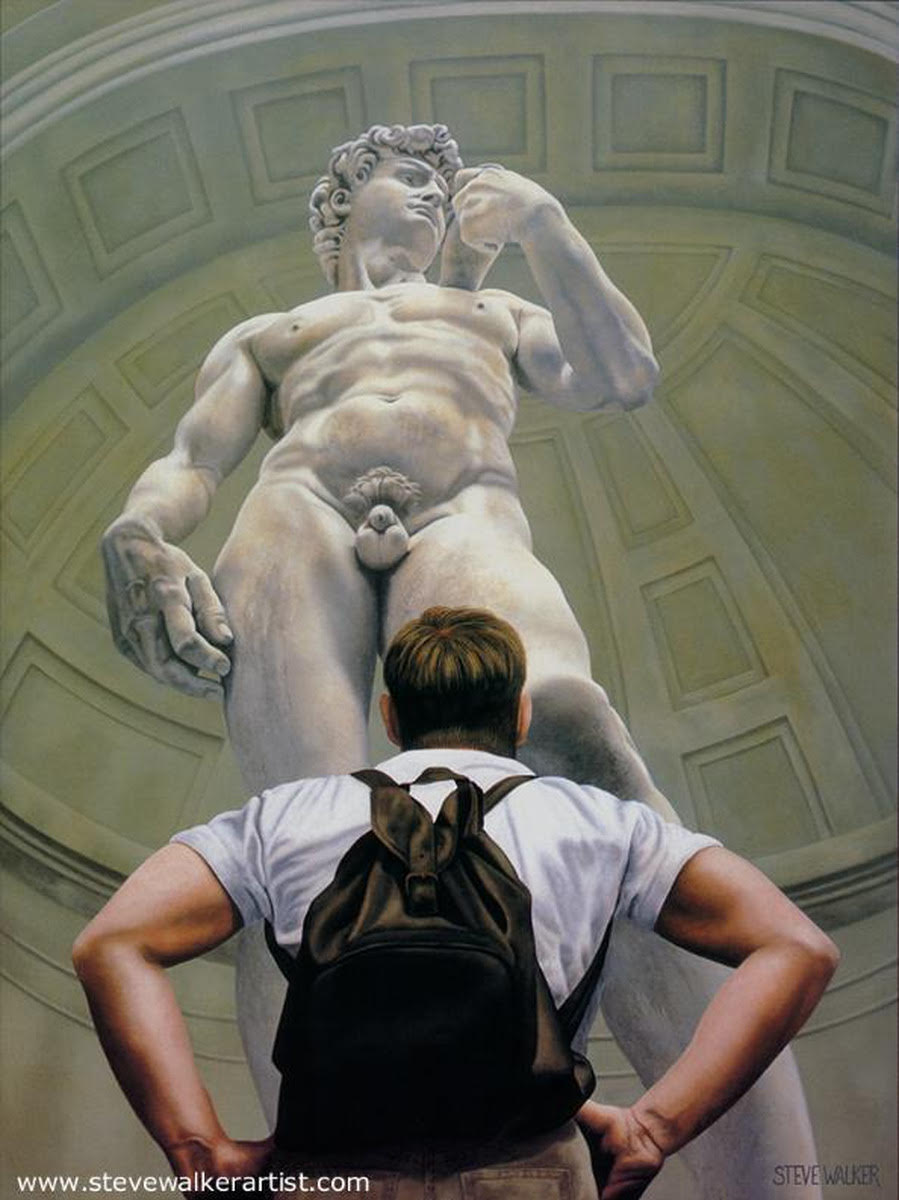
Since the beginning of this blog, I have used the 2001 painting “David and Me” by Canadian artist Steve Walker as my profile picture and my avatar. Someday, I may change it to an actually picture of me, but for now it remains. I chose it for what I think is a very good reason. Back in 2006, I spent a month in Italy conducting research for my dissertation. I remember standing in front of and looking up at the remarkable statue of David by Michelangelo much like the guy in the picture, though I don’t think I was wearing a backpack at the time. It was a truly awesome experience. Each time I look at images of the painting I am transported back to that day in the Galleria dell’Accademia in Florence. Of course, back then I did have a head full of brown hair with a similar hairstyle. Today, there is much less hair and what I do have left is now nearly completely gray. I don’t have the muscle definition I had back then, and there’s a more weight on my body. The painting has always had a special place in my heart, and I wish I owned an actual print of the image.
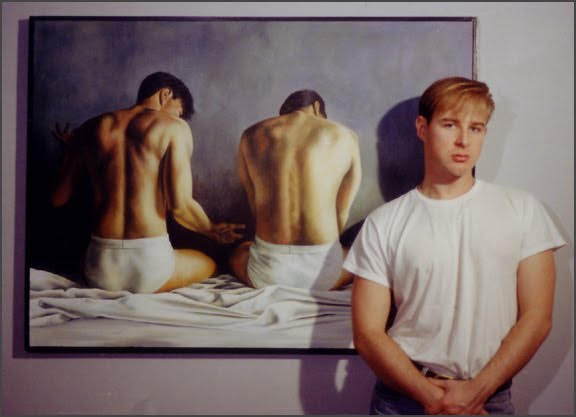
Walker passed away at his home in Costa Rica on Jan 4,2012, at age 50. He was best known for his haunting and poignant acrylic portraits of beautiful young men (solo and in pairs), often done in muted shades. “Some colors are very exciting to me,” he once told James Lyman, a Massachusetts gallery owner and Walker’s art executor and trustee. “While others are quite offensive. Painting flesh is very exciting to me because of the huge variations possible within a very small color range.”
According to friends, Walker was strongly influenced by Renaissance Italian artist Caravaggio – especially in his use of shadow to show the contours of the young male form. For his subjects, he chose to paint gay men, depicting the struggles and joys the gay community lived through in his lifetime, from the fight for sexual liberation to the devastation brought about by HIV and AIDS. Walker believed his subjects were universal, touching on themes of love, hate, pain, joy, beauty, loneliness, attraction, hope, despair, life, and death.
As a homosexual, I have been moved, educated, and inspired by works that deal with a heterosexual context. Why would I assume that a heterosexual would be incapable of appreciating work that speaks to common themes in life, as seen through my eyes as a gay man? If the heterosexual population is unable to do this, then the loss is theirs, not mine
—Steve Walker
Walker was an entirely self-taught artist and sold his first painting, Blue Boy in 1990. He painted a second in 1991, called Morning, of two young men in bed after sex. Walker’s paintings were mostly large because he believed that a large image was more appealing and has more impact than a smaller one. As with many artists, Walker was painting the sadness that was in his life. Two of Walker’s partners had died over the years, and his close friend Marlene Anderson says he was lonely. His paintings are about gay life, and the focus of them often depicted sadness and loneliness to reflect the reality that much of anyone’s life is sad and lonely. Walker told a firend that it is rare to find success as an artist, and Walker was happy his work would be his lasting legacy.
I strive to make people stop, if only a moment, think and actually feel something. My paintings contain as many questions as answers. I hope that in its silence, the body of my work has given a voice to my life, the lives of others, and in doing so, the dignity of all people.
—Steve Walker
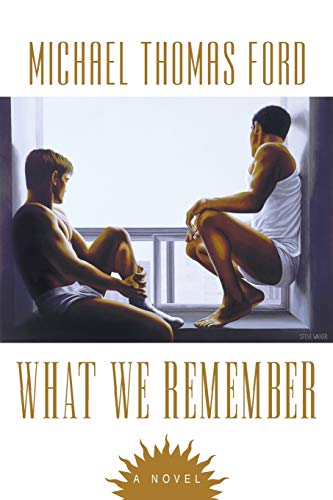
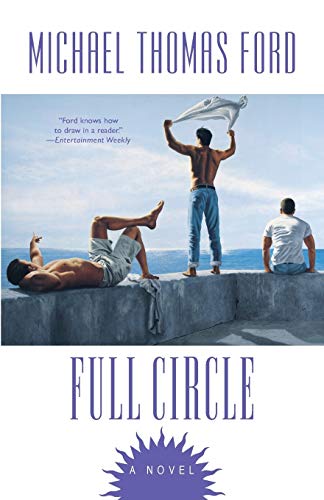
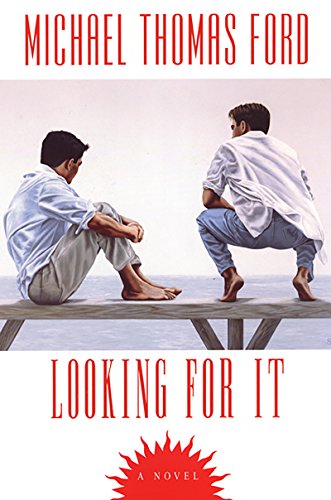
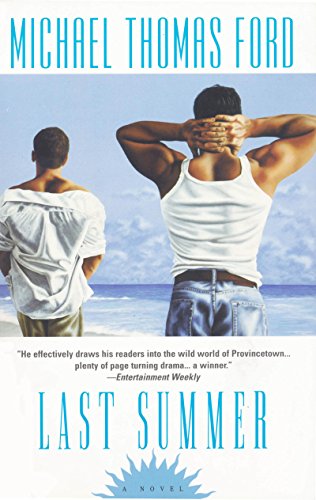
In his lifetime, Walter’s work was exhibited in Toronto, Montreal, Los Angeles, Fort Lauderdale, Provincetown, and Pasadena. Much of the gay community loved Walker’s work and many pieces were sold for several thousand dollars. His art appear on the covers of gay novels, such as American writer Felice Picano’s 1995 epic Like People in History and the late Gordon Anderson’s novel of 1970s Toronto, The Toronto You Are Leaving. His paintings also grace the covers of six books by Michael Thomas Ford: Last Summer, Looking For It, Full Circle, Changing Tides, What We Remember, and The Road Home. Ford describes the book on his website mirroring what has been said about Walker’s art:
Much of my fiction is about what it’s like living as a gay man at this time in history. These six novels look at different aspects of the gay experience. Although they share a cover style, they are not a series, and may be read in any order. Many people ask who the cover artist is. It’s Steve Walker. Steve died in 2012, but his wonderful artwork capturing the lives of gay men remains to remind us of his talent.
“Beware of false prophets, who come to you in sheep’s clothing, but inwardly they are ravenous wolves. You will know them by their fruits. Do men gather grapes from thornbushes or figs from thistles? Even so, every good tree bears good fruit, but a bad tree bears bad fruit. A good tree cannot bear bad fruit, nor can a bad tree bear good fruit. Every tree that does not bear good fruit is cut down and thrown into the fire. Therefore by their fruits you will know them.”
—Matthew 7:15-20
As I said in a post last week, “I think sometimes people who grew up like I did in a religious family where sex was a dirty thing and gay sex was unthinkable, we often feel ashamed of exploring our sexuality.” When it comes to sex, many of us have been told what we should and shouldn’t do, especially when it comes to sex. If I’d done everything that I was told not to do, I’d have lived a boring life. As it is, I wish I had become more accepting of my sexuality earlier in life, but now that I have, I am not going to have someone else’s morality imposed on me, when I know they don’t even understand the Bible verses that “shaped” their morality. For those of us seeking to figure out sex within an LGBTQ-affirming Christianity, it can be tempting to look outside of ourselves for the answers. However, I believe religion is a deeply personal belief and experience. It is the group think that has nearly destroyed Christianity. Too many people are giving up on religion instead of searching their soul and looking for answers from God, not from someone telling you what God is saying.
Likewise, developing a sexual ethic that works for you and is in alignment with your personal faith is also a deeply personal experience. That doesn’t mean that it exists in a vacuum, or that you can’t (or shouldn’t) consult others — trusted friends, spiritual leaders, mentors, or the Bible— but what it does mean is that ultimately, the responsibility lies within you. There is a saying, often attributed to Ralph Waldo Emerson, that says, “What lies behind us, and what lies before us are tiny matters, compared to what lies within us.” While the quote likely did not originate with Emerson, there is a lot of wisdom in those words. We must look within to decide what our personal faith and values are, and those include our sexual ethic.
For me personally, I try to follow the Golden Rule: “Therefore, whatever you want men to do to you, do also to them, for this is the Law and the Prophets.” (Matthew 7:12) My ideal sexual partner would be someone who is: honest, thoughtful, caring, and communicative. He doesn’t have to want a relationship as long as we both go into the encounter realizing this. There also has to be some chemistry between us. If there is no chemistry, I will be honest that I am not interested. I do care about others and I try my best to be thoughtful, that goes for whether it’s during an encounter or letting someone down easily. Most men are not known for being communicative, and I may fail on this at times, but it’s not because I am “ghosting” someone, but usually, it is a result of my fear that I am bothering someone or that I might interrupt them when they are doing something. So, I am not the best at follow-up, and I know I need to work on this. However, if I am messaged or texted, I will respond as soon as I can, which is more often than not immediately as long as I see the message.
If you want to develop a sexual ethic that resonates with you, there are a few things we can all do. The first thing we need to do is take stock of our values. Take some time to think about the values that matter to you. If you are not comfortable with something, then don’t agree to it; however, if you are uncomfortable about something like not communicating, then maybe that’s something you can work on. Usually, our personal values should be how we respect and treat others and what is going to make us happiest in a relationship. That could be a one-night experience or something that is more long-term.
Second, think back on the sexual and romantic experiences you’ve had and get in touch with what felt good and what didn’t. We usually have a variety of sexual and romantic experiences so think about everything from holding hands and kissing to penetrative sex (if you’ve had it). And don’t just limit yourself to “traditionally sexual” experiences. You can also meditate on times when your boundaries have been respected or transgressed. When you’ve felt safe and when you’ve felt vulnerable. Try to notice when your desires match or mismatch with your actions or the expectations or people around you. Maybe you don’t experience sexual attraction to anyone and feel pressured to have sex. This step isn’t about coming up with a list of “dos” and “don’ts” (those are often context-specific and shift over time). Instead, this is about picking up on patterns.
Third, we should step outside of ourselves and use each of our experiences to realize our shared values. As we look at our past experiences, we need to look beyond the specifics (“We were drunk,” “there were lots of candles and rose petals”, “we did this thing,” or “we didn’t do that”) and look at how we felt: safe, seen, understood, respected, violated, disregarded, taken advantage of, excited, scared, etc. We should decide if our experience were a positive experience or a negative experience. Not all of our experiences will be completely positive or negative, but there may have been some of both in an encounter or relationship.
Next, we need to articulate to ourselves what our ethics are. So far, we have gotten in touch with our values, reflected on our experiences, and stepped outside of ourselves, and tapped into something bigger. That’s the hard part. Now, we need to put it all together. I don’t mean you need to create a sexual rulebook. It’s nothing that formal, and quite honestly, it may change from time to time according to our continued experiences. Merriam-Webster defines ethics as “a set of moral principles; a theory or system of moral values.” That’s what we’re creating here: a set of moral principles. What’s right and wrong. What’s helpful or harmful. What’s ethical and what’s not. When we create a sexual ethic, it’s not a list of what we want or don’t want to do, and it isn’t going to tell you what you’ll do in any given situation. Instead, it’s a framework that you can refer make to when you need to make sexual choices.
In addition, we need to release judgments. Our sexual ethics are the summary of what we value, how we see the world, what’s right, and what’s wrong. Sometimes we are called to make decisions about what’s right and what’s wrong, and sometimes we are called to celebrate differences. It’s important that we distinguish between “judging something as right or wrong” and “judging something as different than me.” It’s possible for someone who shares my sexual ethics to make completely different sexual choices. You may decide that celibacy is right for you, while you may also be like me and comfortable with casual sex or you may want to only have sexual encounters while in a relationship. Just because we have different sexual ethics does not make them wrong and we should not judge others for their sexual ethics as long as they do not harm others. Release judgment against people who are making different decisions than you would make, even if you don’t understand them, as long as they are acting ethically.
Finally, think of your sexual ethic like the United States Constitution: it’s a foundational document, it’s what we base our decisions on, it should withstand (and transcend) the whims of the moment, but also sometimes you need to change it and that’s OK. Sex is messy. And so is life. You’re going to hit some bumps along the way. You’re going to have an experience that shakes you up or meet a person that challenges everything you thought you knew. My sexual ethic today looks completely different than the one I had 10 years ago and even more different than the one I had just 5 years before that. Our preferences change usually because we broaden our horizons. Don’t feel guilty because you tried something or did something you thought you’d never do, but again, the main caveat is “do no harm.”
My friend and I from Wednesday night did not repeat our “roll in the hay” again last night, and we won’t tonight. Maybe this weekend before he leaves town. We’ll see. Tonight, I am going to the HUMP Film Festival in Burlington. HUMP! is a festival of short erotic films made by real people for real people curated by Dan Savage. The filmmakers and stars make films to show hot and sexy, creative and kinky, ultimate turn-ons and craziest fantasies. Some of them can be a bit wild. I won tickets to it a few years ago, and some friends and I went and had a lot of fun, so we decided to go again this year.
The short films show a cornucopia of body types, shapes, ages, colors, sexualities, genders, kinks, and fetishes—all united by a shared spirit of sex-positivity. HUMP! can shock you. HUMP! can make you laugh. HUMP! can turn you on. HUMP! Film Festival “has been successfully disrupting the way America sees, makes, and shares porn since 2005.” Needless to say, it’s an interesting experience. There are showings all around the country. Have any of y’all ever attended the HUMP! Film Festival? If so, what did you think?

















 Joe
Joe





 The Closet Professor