But of God

But as many as received Him, to them He gave the right to become children of God, to those who believe in His name: who were born, not of blood, nor of the will of the flesh, nor of the will of man, but of God.

— John 1:12-13

This week, the 11th Circuit struck down a Florida evangelical Christian ministry’s claim that it was discriminated against and defamed after the Southern Poverty Law Center (SPLC) labeled it a hate group, causing Amazon to deny its application to fundraise through the online retailing giant’s charitable website. A unanimous three-judge panel of the Atlanta-based appeals court upheld an Alabama federal judge’s September 2019 decision to dismiss the lawsuit brought by Fort Lauderdale-based Coral Ridge Ministries Media (also known as D. James Kennedy Ministries) against Amazon, the AmazonSmile Foundation and the SPLC.

D. James Kennedy Ministries, formerly Coral Ridge Ministries, has actively campaigned against same-sex marriage and has a history of maligning the entire LGBTQ+ community. Over the years, Kennedy emphasized anti-gay rhetoric, particularly in his TV ministry. In an especially nasty 1989 edition of a newsletter, Kennedy ran photographs of children along with the tagline, ‘Sex With Children? Homosexuals Say Yes!’

Groups like D. James Kennedy Ministries have advocated that lawmakers across the country to propose or have passed a record number of bills this year that would impact the rights of transgender people. Groups like D. James Kennedy Ministries actively seek to demonize LGBTQ+ individuals, drive them back into the closet, and spread hate. They cherry-pick the Bible and take verses out of context to spread their messages of hate.

For many LGBTQ+ individuals we are treated like Jesus is described as being treated in the Gospel of John. In John 1:10, it says of Jesus, “He was in the world, and the world was made through Him, and the world did not know Him. He came to His own, and His own did not receive Him.” The Jews saw all that Jesus did and heard all that He said. They witnessed His many miracles and followed Him wherever He went. They became His disciples and were astonished by the gracious things He said and all that He did – but most did not believe the Truth, and Jesus was crucified. Similarly, LGBTQ+ Christians are part of the wider Christian community, but many non-LGBTQ+ Christians do now want to know us. They shun us from the Christian community and tell us we are going to hell. But that is not what God says.

The next two verses tells us that God does not see the world that way. John 1:12-13 says, “But as many as received Him, to them He gave the right to become children of God, to those who believe in His name: who were born, not of blood, nor of the will of the flesh, nor of the will of man, but of God.” These verses tell us that if we take Jesus in our hearts and believe in Jesus as our Lord and Savior, then we are born of God. We are the children of God. We all have an earthly mother and father, but when we choose to follow the teachings of Jesus, then we are children of God. We are not bound to the hatred espoused by men who claim they speak of Jesus. We are not of hatred little men, but of God.

John 1:17 even tells us, “For the law was given through Moses, but grace and truth came through Jesus Christ.” The truth of God’s love and his acceptance doesn’t come from earthly authorities, but God’s grace and truth comes through Jesus Christ. John 14:6 says, “Jesus said to him, ‘I am the way, the truth, and the life. No one comes to the Father except through Me.’” Jesus doesn’t say, “No one comes to the Father except through leaders of megachurches or of hate-filled ministries.” Jesus says, “No one comes to the Father except through Me.” It is only those who love that are truly following Jesus’s teachings. First John 4:8 says, “Anyone who does not love does not know God, because God is love.” It is as simple as that: Anyone who spreads love know God; anyone who spreads hate does not know God.

We are here on this Earth to know God and to love God. We cannot do that if we spread hate. God is very clear on the subject. Jesus spelled this out clearly in Matthew 22:37-40, “’You shall love the Lord your God with all your heart, with all your soul, and with all your mind.’ This is the first and great commandment. And the second is like it: ‘You shall love your neighbor as yourself.’ On these two commandments hang all the Law and the Prophets.”



Pic of the Day


Moment of Zen: Cooking


Pic of the Day


Pic of the Day


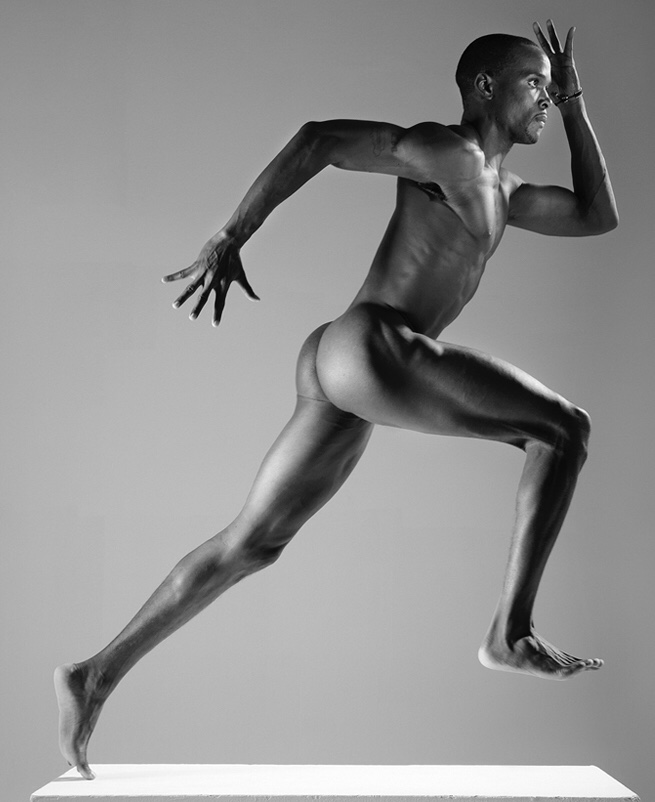
Nudity and the Ancient Olympics

If the modern Olympic Games ran true to the strict customs of ancient Greece, they might well today have been called the “Naked Games”. From the early 8th century BC, Olympic athletes competed in the nude. There are indisputable records going back to Athenian philosopher Plato in the 5th century BC and even Homer’s Iliad, as well as many explicit drawings that confirm it was common practice for all male track and field athletes to take part naked. This included the often-dangerous sports of discus throwing, wrestling, boxing, and horse racing without protective clothing. 

There was a version of protection used by the Ancient Greeks, but one that would be odd to us today to be considered much protection. To protect the penis during wrestling matches and other contact sports, the men would tie a string known as a kynodesme around the tip of their foreskin enclosing their glans, thus keeping the glans safe. The kynodesme could then either be attached to a waist band to expose the scrotum or tied to the base of the penis so that the penis appeared to curl upwards.

The only exception to the nudity rule seems to have been for charioteers, who wore long white tunics. The words gymnastics and gymnasium are based on the Greek adjective gymnos, which means lightly-clad or naked. For non-charioteers, the only adornment on the athletes’ bronzed, muscular torsos would have been the gleam of olive oil with which they ritually anointed themselves.

Some historians have believed that the reason for competing nude was to make sure that women did not compete. According to one legend, it was discovered that a woman had competed and won, so it was decreed that athletes would compete nude from that point on to make sure that only men competed in the Olympics. It was also said that this was done to make sure that non-Greeks, particularly Jews or others who practiced circumcision, could not compete. Only a man who was uncircumcised was allowed to compete.

According to Dionysius of Halicarnassus, a writer in the 1st century BCE, Greek athletes did not compete in the nude until the 15th Olympiad in 720 BCE, more than 2700 years ago. That was more than half a century after the birth of the first Olympic Games, which originated in Olympia, in southern Greece, in 776 BCE. A Spartan runner named Acanthus was said to have set the fashion by appearing without the customary loincloth. Two hundred years later, the origin of this practice of nudity was attributed to another sprinter, Osippus, who won the one-stade footrace (about 200 yards) at the Olympics of 720 BCE. It was said he realized that a naked man could run faster than one impeded by a loincloth.

In the 7th century CE, more than 1300 years later, writer Isidore of Seville suggested that during a race in Athens, one of the runners had the bad luck to trip over his own loincloth when it slipped down. A magistrate in charge of the games ordered a new ruling that athletes should compete in the nude. The historian Thucydides, who lived at the end of the 5th century BCE, wrote that it was the “Spartans who were the first to play games naked, to take off their clothes openly and to rub themselves down with olive oil after their exercise. In ancient times even at the Olympic Games the athletes used to wear coverings for their loins and indeed this practice was still in existence not very many years ago.”

Women were not completely excluded from the Olympics. While married women were not allowed to participate in, or to watch, the ancient Olympic Games, unmarried women could attend the competition, and the priestess of Demeter, goddess of fertility, was given a privileged position next to the Stadium altar. During the classic period in Greece (500–323 BCE), women were allowed to participate in sporting events in Sparta, and there were two other events for sportswomen from other parts of Greece, Athens and Delos.

The closest thing to a women’s version of the Ancient Olympics were the Heraean Games, a separate festival honoring the Greek goddess Hera, which was held to demonstrate the athleticism of young, unmarried women. The athletes, with their hair hanging freely and dressed in special tunics that cut just above the knee and bared their right shoulder and breast, competed in footraces. The track shortened to about one-sixth the length of the men’s track in the Olympic Stadium. It’s uncertain if men were barred from these all-female races. Little is known about this festival other than what was written by Pausanias, a 2nd century CE Greek traveler. He mentions it in his description of the Temple of Hera in the Sanctuary of Zeus and says that it was organized and supervised by a committee of sixteen women from the cities of Elis. The festival took place every four years, when a new peplos, a body-length garment established as typical attire for women in ancient Greece, was woven and presented to Hera inside her temple.

It wasn’t that women were discouraged from sports in general; physical fitness was highly valued by women in Greece. A few women have been documented driving chariots, owning horses that won Olympic competitions, swimming, juggling, performing acrobatics, and potentially even wrestling. Spartan women were well-known for promoting physical education, believing good fitness assisted in healthy childbirth. By the first century CE, female athletic competitions were common under the Roman Empire. The first woman recorded to have won an event in the Olympics was Kyniska (or Cynisca) of Sparta, the daughter of Eurypontid king, Archidamus II, and the full sister of King Agesilaus (399–360 BCE). She won the four-horse chariot race in 396 and again in 392.


Pic of the Day


Migraines

I have been out sick from work for the past two days because of a major migraine. The new medicine for the trigeminal neuralgia (TN) has been helping with that pain. My neurologist doubled the dosage because the smaller dose was helping, but I was still having some nerve pain. The higher dose seems to be working but is also making me very drowsy. I felt a little drowsy with the smaller dose, but nothing like this. I’ll see how it goes at work today when I will be more active.

While the TN seems to have gotten better, I do still get migraines occasionally, and when I do, they are doozies. This one actually started on Sunday. I hope today is headache free, or at least mostly so. I have to be at work today because I have two important meetings. One has been rescheduled twice, and another has been rescheduled once. I can’t reschedule again. So, we’ll see how today goes.


Pic of the Day


The World’s Wanderers

The World’s Wanderers
By Percy Bysshe Shelley – 1792-1822

I
Tell me, thou star, whose wings of light
Speed thee in thy fiery flight,
In what cavern of the night
  Will thy pinions close now?

II
Tell me, moon, thou pale and grey
Pilgrim of heaven’s homeless way,
In what depth of night or day
  Seekest thou repose now?

III
Weary wind, who wanderest
Like the world’s rejected guest,
Hast thou still some secret nest
  On the tree or billow?