Gay Christian Pride

I am acting with great boldness toward you; I have great pride in you; I am filled with comfort. In all our affliction, I am overflowing with joy.

-2 Corinthians 7:4

For those of us who were raised in a strict Christian environment, we had to learn not to hate ourselves and to accept who we are and our sexuality. Some Christians are opposed to the concept of LGBTQ+ pride. They feel LGBTQ+ people should be ashamed of who we are, and any public celebration of LGBTQ+ sexuality is wrong. Those who reject us are those who are straying from the teachings of Jesus. I still believe in the teachings of Christ and believe that God created me just the way I am. I learned to accept myself and be proud of who I am. I am proud to be both gay and Christian.

Christians who know church history can identify with persecution. During the early years of the Christian church, Christians were put in prison and killed for their faith. The civil authorities in the Roman Empire were persecuting people for being Christian. Both Christianity and the LGBTQ+ community share a history of discrimination and persecution. Unfortunately, discrimination and persecution of LGBTQ+ people continue today, largely led by people claiming to be Christian. Some Christians do not understand how much they have in common with the LGBTQ+ community. Instead of working closely together to ensure their mutual human rights are respected, many Christians actively work to keep LGBTQ+ people from having the same rights other members of society enjoy.

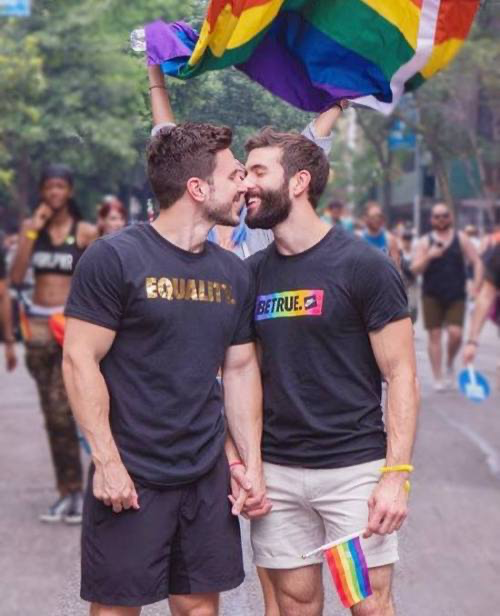
The LGBTQ+ community celebrates Pride Month each year in the month of June to honor the 1969 Stonewall Riots in Manhattan. The Stonewall Riots were a tipping point for the Gay Liberation Movement in the United States. In the United States the last Sunday in June was initially celebrated as “Gay Pride Day,” but the actual day was flexible. In major cities across the nation the “day” soon grew to encompass a month-long series of events. Today, celebrations include pride parades, picnics, parties, workshops, symposia and concerts, and Pride Month events attract millions of participants around the world. Memorials are held during this month for those members of the community who have been lost to hate crimes or HIV/AIDS. The purpose of the commemorative month is to recognize the impact that LGBTQ+ individuals have had on history locally, nationally, and internationally.

LGBTQ+ pride promotes the self-affirmation, dignity, equality, and increased visibility of LGBTQ+ people. Pride, as opposed to shame and social stigma, is the predominant outlook that bolsters most LGBTQ+ rights movements. Ranging from solemn to carnivalesque, pride events are typically held during the month of June. Some pride events include LGBT pride parades and marches, rallies, commemorations, community days, dance parties, and festivals. Pride may be considered one of the seven deadly sins, but there is nothing wrong with LGBTQ+ people having self-affirmation, dignity, equality, and increased visibility. In fact, God expects us to have pride, a pride that is justifiable and reasonable, because it is based on what God has done for humanity.

God chose humanity before the world was created. Ephesians 1:4, we are told, “Even as he chose us in him before the foundation of the world, that we should be holy and blameless before him.” God did not wait to see how things would go before choosing humanity. According to Ephesians we were chosen before the world was around, before we had a chance to do anything that would make God favor us. We did not have to act loving, do impressive humanitarian work, wear designer clothes, or make love to the right person to earn God’s love. God’s love for us is not a new, fickle love. His love for all of us, no matter our sexuality, is as old as time. God loved us, just the way we are. We can take pride in the fact that God sought us out and chose us before the world was created. In 2 Corinthians 7:4, we are told that God as “great pride” in us.

Isaiah Chapter 44 says God formed us in the womb. It does not say, “God created heterosexual people in the womb,” but it says that God, “formed you from the womb and will help you.” (Isaiah 44:2) We are not an accident in God’s eyes. We are not defective like some Christians would have us believe. God formed us in the womb and made us who we are. Galatians 1:15 states the Paul was chosen before he was born, “But when he who had set me apart before I was born, and who called me by his grace.”. Just like Paul, we were chosen to be an LGBTQ+ Christian (if that’s how you identify) before we were born. We can have pride, because God chose us and picked us to be on children.

Genesis tells humans, again, no matter their sexuality, were created in God’s image. Anything made in the image of God is valuable. We can have pride because we are a valuable masterpiece. God did not make a mistake when he created us with the varying sexualities that exist in this world. Romans 5:8-9 says, “But God shows his love for us in that while we were still sinners, Christ died for us. Since, therefore, we have now been justified by his blood, much more shall we be saved by him from the wrath of God.” In Greek, the word justify carries the meaning to vindicate, approve, and honor. LGBTQ+ Christians are vindicated, approved, and honored by God, no matter our sexuality, because of Christ’s death on the cross. And nobody, gay or straight, has the right or the authority to put down or condemn people God has vindicated, approved, and honored.

LGBTQ+ Christians have the same reasons to have pride as straight Christians. Gay and straight Christians are equally called before the world was created, are equally formed in the womb by God and are equally redeemed by God. LGBTQ+ Christians can and should have pride in who they are by creation, by birth, and in Christ. To advocate that LGBTQ+ Christians should not have pride is to advocate that LGBTQ+ people feel and express no gratitude to God. When LGBTQ+ Christians are denied LGBTQ+ pride, they are asked to deny their Creator’s role in their creation and birth. It denies Christ’s role in our salvation.

Some LGBTQ+ people find pride to be one time of the year when they do not feel alone, isolated, cut-off, rejected, hated, and despised. Pride helps LGBTQ+ people feel they are not a tiny, powerless minority group. Through pride, many LGBTQ+ people find a sense of belonging, a sense of being worthwhile. Society has long taught LGBTQ+ people to hate themselves. By celebrating pride, the LGBTQ+ community can start the long process of overcoming self-hate. Standing side-by-side with God, LGBTQ+ Christians are accepted, loved, connected, and made powerful by God.

LGBTQ+ Christians can find meaning in pride. God wants LGBTQ+ people to stop hating and fearing themselves, because those who live secret lives of pain are not able to fully celebrate their identity in Christ. Through LGBTQ+ pride, God calls LGBTQ+ Christians to live as though the world waits for them, waits for them to passionately praise God, to love as faithfully as God loves and to celebrate life, as they walk hand-in-hand with Christ into eternity.
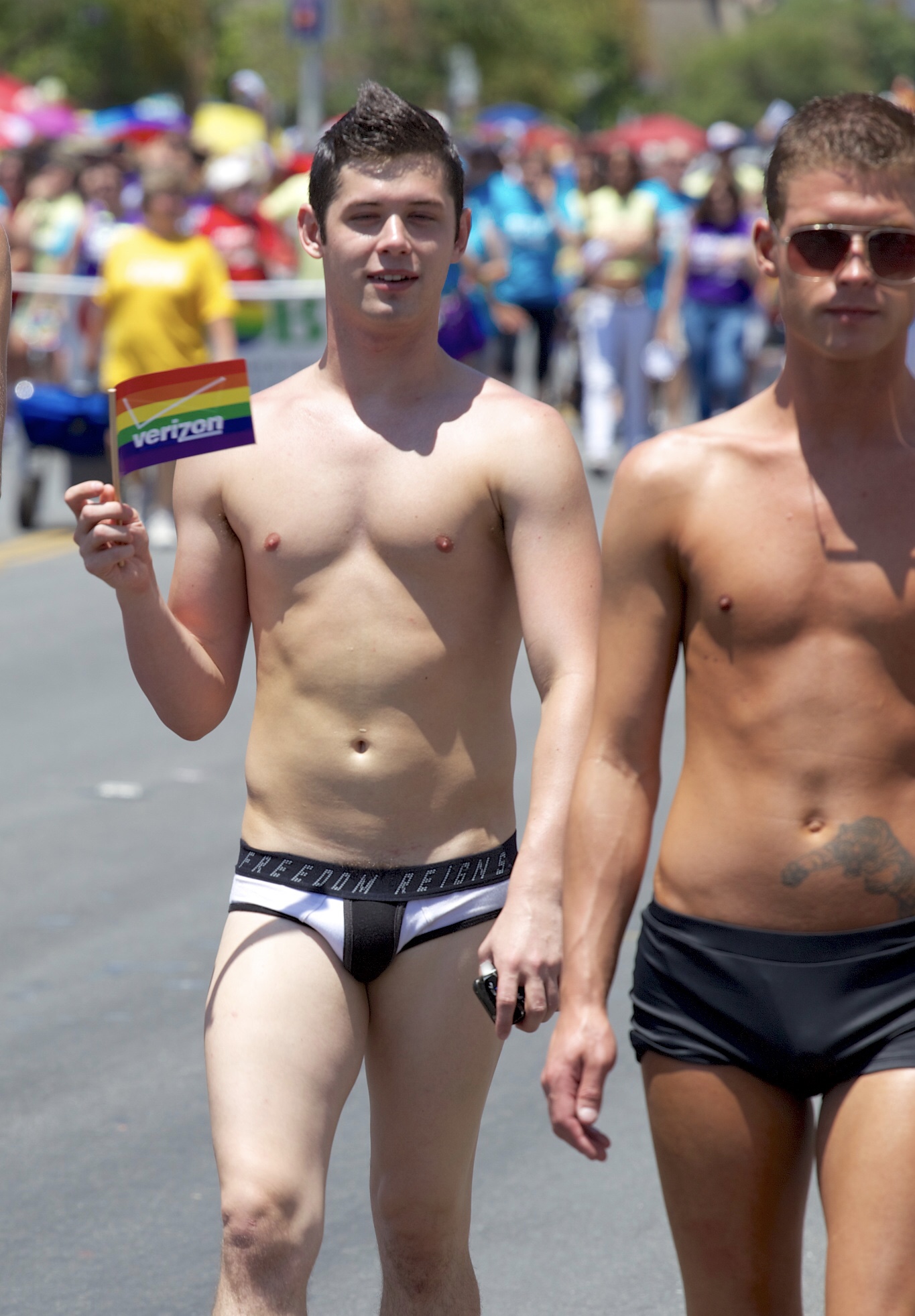
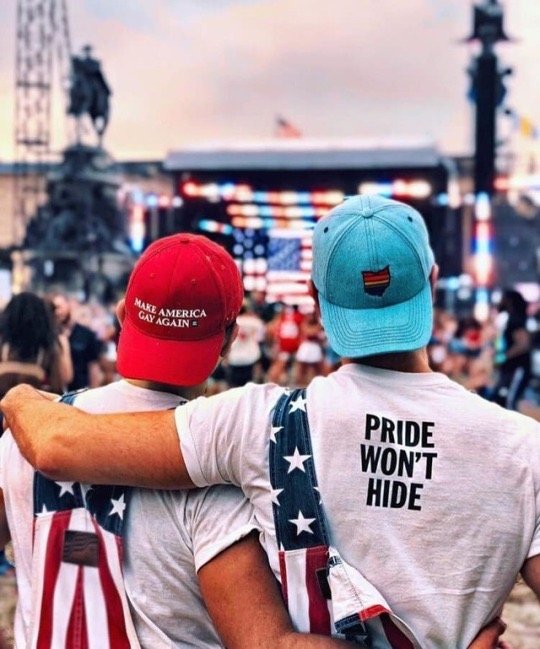
Pic of the Day


Moment of Zen: Pride

PRIDE WONT (AND CANT) HIDE


Pic of the Day


Pic of the Day


Clothes Make a Man

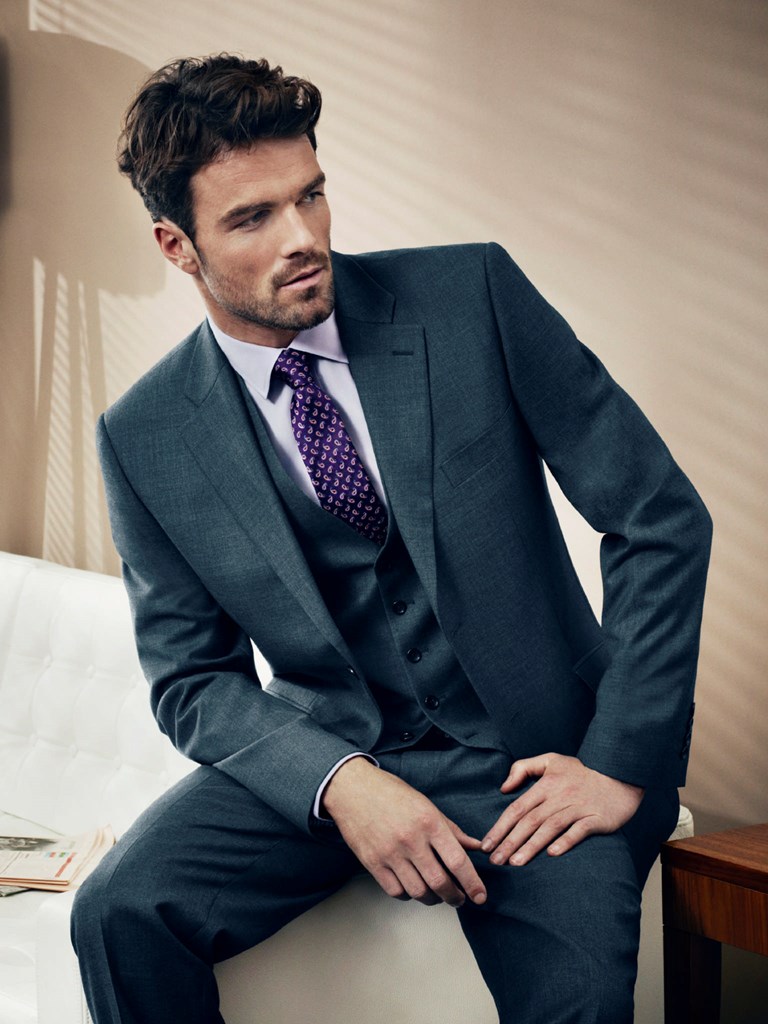
Shakespeare wrote, “For the apparel oft proclaims the man.” The quote is from a longer speech by Polonius in Act I, Scene 3, of Hamlet. Polonius’s son, Laertes, is about to depart for Paris, and Polonius has some dear parting words for his son. It’s really just a lot of long-winded advice: listen more than you talk, don’t borrow or lend money, don’t be gaudily dressed, and be true to yourself. Shakespeare might have written the idea (apparel oft proclaims the man), but Mark Twain is credited with the much more familiar phrase. Twain wrote, “Clothes make a man.” Although, Twain added, “Naked people have little or no influence on society.” For modern audiences, it’s easy to forget about issues of class in Shakespeare’s famous play. Yet Hamlet is very much concerned with what’s appropriate for certain classes to do. Here, Polonius says that appearances count for a lot. It’s how you can tell someone’s rank and status, and that was important in Shakespeare’s time.

But is it in ours? Do clothes still “proclaim” or “make” us? We might not think so. We don’t have sumptuary laws (laws imposed by rulers to curb the expenditure of the people) anymore, and we aren’t as interested in social class like they were in Shakespeare’s time. If you think we aren’t, think again. We might not have the social ranks, but we certainly invest a lot in what people wear. Designer labels and celebrity stylists make sure we’re always in the know about what’s expensive and what’s not. Advertisements for designer brands always show beautiful people wearing their clothes in an attempt to make us think we will feel just as glamourous in the same clothes. Do you think Abercrombie & Fitch would have become as popular as they did a decade or so ago if it had not been for their suggestive advertisements and their focus on young, fit, and sexy models? Their brand went so far as to only hire people who looked like their models to work in their stores. They called them “brand representatives.” The problem was when their CEO came under fire for proclaiming that his brand is only suitable for “the good-looking, cool kids,” and that there are people who do not belong in his clothes – namely overweight people. A&F has has never regained their previous popularity after these remarks became public.

Perceptions of clothing are actually more far reaching than you might think. Doctors, firefighters, and police officers all wear specific uniforms, so we know exactly who they are in a crowd. Kids with diabetes use medical bracelets to alert people. And a lot of people can find at least one team jersey in their closet to show off their team spirit. So, there you have it. We can tell someone’s job, wealth, favorite team, and even sickness just by looking at him. It turns out clothes do make the man—and woman—even today. Clothes also have a psychological effect on us. It’s been well-established—in the scientific literature and real life—that what we wear affects how others perceive us. Women who wear more masculine clothes to an interview (such as a dress suit) are more likely to be hired. People dressed conservatively are perceived as self-controlled and reliable, while those wearing more daring clothing are viewed as more attractive and individualistic. We’ve recognized these distinctions since childhood—we learn what’s appropriate to wear to school, to interviews, to parties. Even those confined to uniform convey their own unique style in an attempt to change how they are perceived by others. There is a growing field in psychology known as “embodied cognition”—the idea that we think with not only our brains, but with our physical experiences. Including, it seems, the clothes we’re wearing.

Just the other day, I was discussing with my boss what he and I will wear for the opening reception of our new exhibit Friday night. Usually, we each wear a suit, but since it will be outside, we were trying to decide if we should be less formal. I still haven’t decided, but I will probably wear a shirt and tie, and have a suit jacket with me, just in case. I just need to go through my shirts and see what still fits well enough for me to wear a tie. Since I have lost some weight, some of my shirts are way too loose on me, but the determining factor will be how they fit in the neck. I have always had a thick neck, so finding a dress shirt I can wear a tie with can be a challenge at times.

Museum receptions aside, I often dress in clothes that make me feel good. I don’t have a body that looks great in everything, but I wear what makes me feel confident and good. My personal rules for fashion extend to undergarments, shoes, and accessories. Most of the time, no one will ever see what underwear I have on, but they make me feel sexy, whether I actually look sexy in them or not. It’s how they make me feel that is important. The lawyer I used to work for told me that she always wore nice shoes when she’d be in court because women on a jury often noticed another woman’s shoes. That is probably sexist today, but when she went to law school in the 1970s, she was one of only two women in the University of Alabama Law School. She was used to being judged differently from male lawyers. So, I follow her advice and I like to wear a nice pair of shoes that will match my outfit. I don’t mind paying a little extra for a pair of shoes that look good, but they also have to be comfortable.

Maybe it’s shallow of me to care so much about my outward appearance, but I was always taught to take PRIDE in the way I look. Obviously, if I was very strict with myself about this, I would not have a weight problem, but that is a whole other issue. What do you think your sense of fashion says about you? Do you feel better wearing certain clothes? Do you put comfort ahead of fashion?


Pic of the Day


Spread Kindness

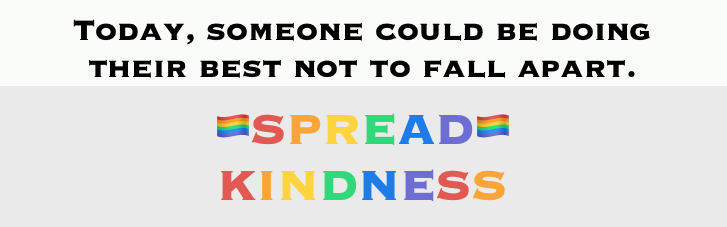
I was in Starbucks waiting on a mobile order the other day, and I saw a sign on the wall that said:

Shortly after I first moved to Vermont, a very close friend died in a terrible car wreck. I was not able to handle it well. The death hit me extremely hard. If you go back in time on the blog to December 2015 and early 2016, you’d probably be able to tell some of the pain I was going through. I bring this up because I decided that along with antidepressants, I needed to see a therapist to try and work through my grief. While I found the therapy to do more harm than good due to the therapist I saw, the therapist did make an interesting point that I think is largely true. I have a lot of hidden pain. This hidden pain came in several different forms. I was closeted most of my life. I hid who I really was from most people in my life. I suffered from depression and anxiety for many years and did not seek help when I should have. I essentially hid the pain associated with my headaches because I feared people would not take my headaches seriously. (More women suffer from migraines than men, so men who have migraines often hide their pain because they feel it makes them weak.) I also often hid my feelings. I didn’t want people to know how sad I was all the time. So, I hid a lot of who I was from the world around me for fear of being judged for who I was. 

I was one of those people who was doing their best not to fall apart on a daily basis. I am also not the only one who hides their pain. I do try my best to be a kind person to those around me. I put on a happy face, even when I don’t always feel like doing so. I always have, and I probably always will. I want to make other people feel better. Wouldn’t we all like the world to be a better place? We live in a time when LGBTQ+ rights (particularly trans rights) are constantly being attacked and threatened. We have made many gains, but the fight is far from over. Voting rights are being attacked because Republicans want to make it harder for more liberal-minded people to vote. Many religious organizations are pushing for exemption from anti-discrimination laws to legally discriminate against those who don’t follow their narrow beliefs. We cannot stop the fight if we want to make the world a better place. 

Mahatma Gandhi said, “You must be the change you wish to see in the world.” The change Gandhi referred to can be significant changes like civil rights, but it can also be small changes like opening the door for someone, giving a helping hand when you see someone with their hands full, paying someone a compliment, reaching an item off a high shelf for someone, giving up your seat to someone who needs it more, or something as simple as smiling. There are so many little things we can do for those around us to spread a little kindness. I urge you today to send an encouraging text, make a phone call to say, “I’m thinking of you,” smile at a stranger, or do any number of small acts of kindness. You never know when that small act of kindness can keep someone from falling apart. Let your kindness be contagious.

June is Gay Pride Month, and kindness should be a part of who we are. The LGBTQ+ community has faced many hardships. Instead of treating others the way we were treated, we should treat others the way we want to be treated. Pride has always been an event for the diverse LGBTQ+ community and their allies to joyously declare their presence. Let that presence include kindness and acceptance. Pride had its roots in a rebellion against the policing of our lives. Being LGBTQ+ once meant we had a mental illness, and the simple act of wearing the clothes of another gender was illegal. The Stonewall Riots in late June 1969 proved to be a turning point for the LGBTQ+ community, but there is still more to be done. We cannot rest on our laurels. Pride celebrations are a festive “unity in diversity” that is a hallmark of Pride that continually evolves and responds to contemporary challenges. Most of us have struggled with coming out and coming to terms with our sexuality. We often hide parts of ourselves. Pride Month is a time when we can all say, “We’re here, we’re queer, get used to it!”


Pic of the Day


i love you to the moon &

i love you to the moon &
by Chen Chen

not back, let’s not come back, let’s go by the speed of
queer zest & stay up
there & get ourselves a little
moon cottage (so pretty), then start a moon garden

with lots of moon veggies (so healthy), i mean
i was already moonlighting
as an online moonologist
most weekends, so this is the immensely

logical next step, are you
packing your bags yet, don’t forget your
sailor moon jean jacket, let’s wear
our sailor moon jean jackets while twirling in that lighter,

queerer moon gravity, let’s love each other
(so good) on the moon, let’s love
the moon
on the moon

About the Poem

“I love the moon. I love love. And I’m always thinking about these idiomatic expressions which become cliched over time, but when you really think about them, they’re mysterious—enigmatic expressions. I wanted to give back to this piece of language some of its giddy mystery. To say ‘I love you’ is at once everyday and extraordinary, like the glorious fact of the moon.”—Chen Chen

About the Poet

Chen Chen’s second book of poetry, Your Emergency Contact Has Experienced an Emergency, is forthcoming from BOA Editions in Sept. 2022. His debut, When I Grow Up I Want to Be a List of Further Possibilities (BOA Editions, 2017), was longlisted for the National Book Award and won the Thom Gunn Award for Gay Poetry, among other honors. Upon receiving the Thom Gunn Award, he said, “”I am honored and astounded to receive this award for a book that I wrote really because I needed it—poems that refuse to separate sexuality and race, that are political and restless and just, a whole lot of gaysian feelings. I did not anticipate such a beautiful response from readers and it’s the greatest gift, seeing how LGBTQ readers in particular have responded. To be recognized specifically by an award named after one of the most visionary gay poets—I am deeply moved.”

Chen is also the author of four chapbooks and the forthcoming book of essays, In Cahoots with the Rabbit God (Noemi Press, 2023). His work appears/is forthcoming in many publications, including Poem-a-Day and three editions of The Best American Poetry (2015, 2019, & 2021). He has received a Pushcart Prize and fellowships from Kundiman and the National Endowment for the Arts. He teaches at Brandeis University as the Jacob Ziskind Poet-in-Residence and serves on the poetry faculty for the low-residency MFA programs at New England College and Stonecoast. With a brilliant team, he edits the journal, Underblong.

Chen Chen was born in Xiamen, China, and grew up in Massachusetts. He lives in Waltham, MA with his partner, Jeff Gilbert and their pug, Mr. Rupert Giles.

🏳️‍🌈 LGBT POETS FOR PRIDE MONTH 🏳️‍🌈