

The Raven

The Raven (excerpt)
by Edgar Allan Poe
(For the full poem, click read more below.)
Once upon a midnight dreary, while I pondered, weak and weary,
Over many a quaint and curious volume of forgotten lore—
While I nodded, nearly napping, suddenly there came a tapping,
As of someone gently rapping, rapping at my chamber door.
“’Tis some visitor,” I muttered, “tapping at my chamber door—
Only this and nothing more.”
“Once Upon a Midnight Dreary”
There’s no poem more synonymous with Halloween than Edgar Allan Poe’s “The Raven.” Even if you’ve never read the whole thing, you probably know the rhythm of its most famous lines:
Once upon a midnight dreary, while I pondered, weak and weary…
It’s a poem that practically sounds haunted. Poe’s mastery of meter—specifically trochaic octameter—creates that heartbeat of dread, the steady pulse of something inevitable drawing closer. It’s hypnotic, musical, and just a little bit claustrophobic, which is exactly what makes it unforgettable.
First published in 1845, “The Raven” cemented Poe’s reputation as a master of the macabre. It’s a simple enough story: a grieving man, alone at night, haunted by memories of his lost love Lenore, and visited by a mysterious talking raven whose only word is “Nevermore.” But that single refrain becomes a psychological echo chamber. The poem isn’t just about a bird—it’s about despair, loss, and the way grief has of turning every question we ask into the same hopeless answer.
The imagery is classic Gothic: midnight shadows, rustling curtains, lamplight, and a chamber filled with memory. The bird itself feels almost supernatural, perched high above the door like a prophet of doom—or perhaps the physical embodiment of the narrator’s own unraveling mind.
So why has “The Raven” endured for nearly two centuries as the quintessential spooky poem? Because it captures the feeling that true horror doesn’t come from monsters or ghosts—it comes from our own thoughts in the dark. The fear that we’ll never escape our sorrow. The whisper that maybe hope really is gone forever.
And yet, there’s a strange beauty in it too. Poe’s language is lush and musical, the kind of poetry that demands to be read aloud by candlelight on a chilly October night. Every “tapping,” every “Nevermore,” pulls us deeper into the darkness until we almost welcome it.
The Voice of Vincent Price
For me—and I suspect for many others—the poem truly comes alive through Vincent Price’s iconic reading. That smooth, sinister voice, tinged with both elegance and dread, feels as though it was made for Poe’s words. Price doesn’t just recite the poem; he inhabits it. Every syllable trembles with tension and theatrical flair. You can hear the madness building, the grief curdling into obsession, until that final “Nevermore” echoes like a spell being cast.
It’s impossible for me to read “The Raven” without hearing Price’s voice in my mind—a voice that turns the poem from literature into pure atmosphere. His performance reminds us that Halloween isn’t only about visuals; it’s about sound—the creak of the floorboard, the rustle of wings, the trembling cadence of a haunted heart.
Maybe that’s why, year after year, we return to “The Raven.” It reminds us that Halloween isn’t just about fright—it’s about fascination. The allure of the unknown. The comfort of knowing that even in our deepest gloom, someone else—perhaps Poe himself—has been there before.
And my soul from out that shadow that lies floating on the floor
Shall be lifted—nevermore.
Happy Halloween, everyone—and if you’ve never listened to Vincent Price read “The Raven,” treat yourself. There’s no better way to spend an October night.
About the Poet
Edgar Allan Poe (1809–1849) was an American writer, poet, editor, and literary critic best known for his tales of mystery and the macabre. Born in Boston and orphaned at a young age, Poe led a turbulent life marked by poverty, loss, and artistic brilliance. He is often credited with pioneering the modern detective story, influencing early science fiction, and perfecting the Gothic short story. His poems—especially “The Raven” and “Annabel Lee”—combine musical rhythm with haunting emotion, exploring love, death, and madness. Though he died at only forty, Poe’s legacy continues to cast a long and ghostly shadow over American literature—and Halloween wouldn’t be the same without him.

Monday Again? Already?

It’s Monday. Mondays suck! There’s really no other way to put it. The alarm went off way too early, the weekend flew by, and no amount of coffee seems to be enough to get me going.
It rained off and on most of the weekend, and I had a migraine the entire time, so it honestly feels like I didn’t even have a weekend. The migraine’s still hanging on this morning, and I’m seriously contemplating calling in sick—but I hate doing that on a Monday. It always feels like people assume you’re just trying to extend your weekend.
Some folks say Mondays are a fresh start, but let’s be honest—they’re more like a rude interruption. Mondays always seem to bring more emails, more meetings, and more “urgent” things that could have waited until Tuesday.
Still, we push through. We show up, we get the work done (somehow), and we count down the hours until we can go home again.
Here’s to surviving another Monday—may the boss be mercifully distracted, the day be short, and and the week get better from here.
I hope everyone has a wonderful and stress free week!

Melody in Your Heart
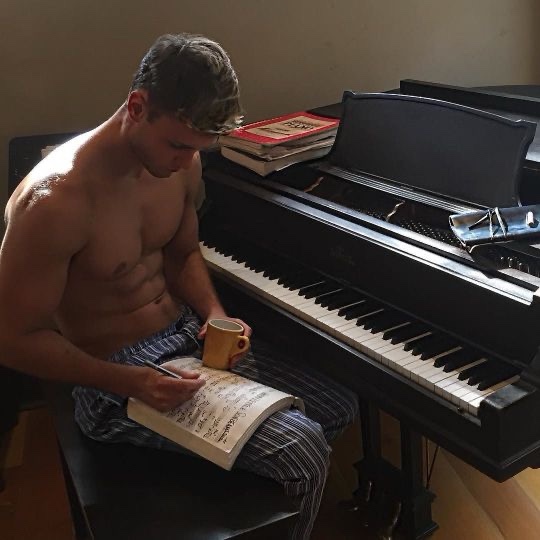
“Speaking to yourselves in psalms and hymns and spiritual songs, singing and making melody in your heart to the Lord;
Giving thanks always for all things unto God and the Father in the name of our Lord Jesus Christ.”
–Ephesians 5:19–20
I’ve known this verse by heart since childhood. In the Church of Christ where I grew up, Ephesians 5:19 wasn’t just a favorite scripture—it was a foundational one. The Church of Christ bases its practice of a cappella worship on this passage, interpreting Paul’s instruction to “sing and make melody in your heart” as a call to pure vocal praise without the accompaniment of instruments. The voice itself is the instrument God gave us, and the melody is meant to come from within.
As a teenager, I was our congregation’s song leader. I wasn’t particularly good at it, but with only thirteen members in attendance on most Sundays, I was the best we had after our older song leader, Mr. Wayne, could no longer lead because of emphysema. In a small rural congregation like ours, everyone had a role. The preacher usually led the first prayer, and my daddy always gave the closing one. I helped him pass the Lord’s Supper and the collection plate.
Our service never changed much: two songs while seated, then the prayer, followed by one song seated and a second song standing before the sermon. After the sermon came the invitation song, then communion and the closing song—usually just the first verse—before the final prayer. It was a rhythm as familiar as breathing.
I still remember my favorite hymns from Songs of the Church:
Amazing Grace, Rock of Ages, Send the Light, How Great Thou Art, Old Rugged Cross, Blessed Assurance, Precious Memories, and I’ll Fly Away.
For invitationals, we sang God is Calling the Prodigal, Jesus Is Tenderly Calling, Nothing but the Blood, or Softly and Tenderly.
Our closing songs were nearly always I Know That My Redeemer Lives or Unclouded Day.
I even found an old index card tucked in my songbook recently, one of my services carefully written out:
- 109 – Jesus Loves Me (we started using that once younger people joined)
- 168 – Heavenly Sunlight
- 471 – Shall We Gather at the River?
- Prayer
- 119 – Farther Along
- 536 – The Old Rugged Cross
- Sermon
- 696 – There’s a Fountain Free
- Announcements (It was Mr. Wayne’s birthday that week.)
- Lord’s Supper
- Lord, bless this bread which represents Christ’s body the we may betake of it in a way that is pleasing to Thee. Amen.
- Lord, bless this fruit of the vine which represents Christ’s blood the we may betake of it in a way that is pleasing to Thee. Amen.
- Collection
- 218 – I Know That My Redeemer Lives
- Dismissal
There were no altos, tenors, or basses in our little church—just us singing from our hearts. The sound may not have been polished, but it was pure. Each voice rose in faith, carrying more sincerity than skill, and that, I believe, is exactly what Paul meant when he told the Ephesians to make melody in their hearts to the Lord.
When I reflect on Ephesians 5:19–20 today, I see more than just a theological argument about instruments. I see the heart of worship itself: that gratitude and melody begin within us. Paul isn’t prescribing what kind of music pleases God; he’s describing why we sing—to give thanks, to speak to one another in faith, and to let joy and hope find expression.
Whether accompanied by an organ or sung a cappella in a little white-clapboard church, true worship comes from a heart that overflows with gratitude. The melody Paul speaks of isn’t confined to vocal cords; it’s the harmony of a thankful soul resonating with God’s love.
And sometimes, when I’m alone and humming What a Friend We Have in Jesus or In the Morning of Joy, two songs that have gotten me through some of my toughest times, I still feel that same peace I knew standing before thirteen faithful souls, leading songs in that small country church where my faith was first formed.
At the end of every service, my daddy always gave the closing prayer. His words never changed much, but they carried deep comfort and familiarity. It was his way of sending us back into the world—asking God’s protection until we gathered again the next Sunday.
Prayer:
Lord, dismiss us as we leave Thy house, bless the ones not with us that they may be with us the next Lord’s Day. Guide, guard, and direct us. In Christ’s name we pray. Amen.










Work-from-Home Relief

Finally, after what feels like weeks, I actually get to work from home. Fridays are supposed to be my regular WFH day, but lately, work responsibilities keep pulling me back to campus. Today, though, I have no in-person meetings (actually, no meetings at all), no special events, and no professors bringing their classes to the museum. For once, I can just relax a little.
And if the fucking annoying emails that filled my inbox yesterday make me want to scream, I can at least do it into a pillow—so I don’t disturb my neighbors.
I rarely get to take real vacation time because something always seems to pop up, and when I do, someone inevitably finds something “urgent” that needs to be done. If it’s not an emergency, it’s someone being bitchy or difficult. What makes it even more frustrating is that my boss constantly tells me I have to use up my vacation time before the end of the fiscal year, since I can’t carry any of it over or try to take it all at once at the end. Easier said than done when work refuses to slow down long enough for me to actually take a day off.
Speaking of which, the possible plans I mentioned yesterday for my vacation day ended up falling through. So instead of doing anything exciting, I mostly just tried to rest and recover from the week.
In two weeks, I’ll be heading to a conference that I normally enjoy, but this year I’m dreading it. I have to go with someone who has become increasingly unpleasant and seems determined to make me look bad in front of others. Yesterday, they fired off one of their classic snide emails—trying to throw me under the bus for something that was actually our boss’s doing. It’s not the first time. I’m documenting everything, but I’m just tired of the drama.
I’ll have my Kindle to keep me occupied on the two-hour drive, which I’ll be spending as a passenger this year since they’ve decided they want to drive. On one hand, that’s fine—driving tends to aggravate my sciatic nerve these days. On the other hand, they’re a terrible driver, so it’ll be a long ride either way.
Honestly, work just sucks right now. I’ve got a few job applications out there and a few more to submit this weekend. Maybe it’s time for a change.
For now, though, I’m grateful for a quiet Friday at home—no meetings, no events, no people to deal with face-to-face. Just me, my coffee, and the sweet sound of not having to pretend everything’s fine for a day.
I hope everyone has a wonderful and relaxing weekend!


Authors
Recent Comments
noisilycool3bc985058… on A Quiet Thursday noisilycool3bc985058… on The Winter War The Winter War | The… on The Broken Dawn iameverywhere1 on Pic of the Day George Robb on If— Top Posts & Pages



Amazon Associate

As an Amazon Associate I earn from qualifying purchases. So, if you click on a link that takes you to Amazon.com, I may earn a commission.
Trust me, it isn’t much, but every little bit helps.

 Joe
Joe


 The Closet Professor