

The Day of Infamy
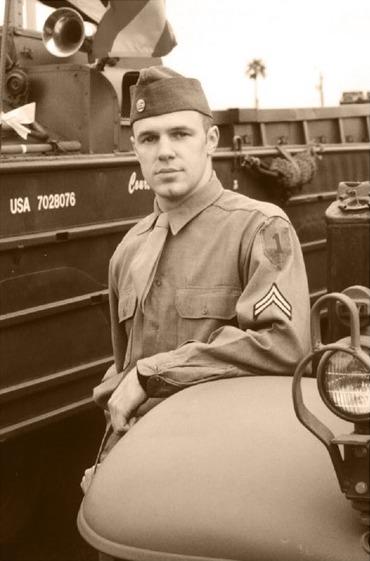
It began as an ordinary December day. Most Americans were doing what Americans do on a Sunday afternoon. They had gone to church, had Sunday dinner, and were spending the afternoon with their families, not girding for battle. That changed abruptly on December 7, 1941, when the first Associated Press report came over the radio at 2:22 p.m. Eastern Standard Time of a “bombing in Hawaii,” the news was electrifying. My grandparents were returning from the hospital, where their baby girl had just died of pneumonia, and they turned on the radio just as they were announcing the bombing of Pearl Harbor. Not only had Grandmama just lost her baby but also, she realized that she could soon lose her husband to the imminent war. Granddaddy fought in World War II, serving in the Army Corps of Engineers. Luckily, he safely returned home to my Grandmama, and they had two more children: my father and my aunt.
Pearl Harbor marked a watershed in the nation’s history. What came after would be very different from what came before. It was the war that changed the world. “The Day of Infamy” thrust us into a conflict more than four years long that altered nearly every aspect of American life, large and small—from rationing gas and sugar, the harnessing of atomic power, and the new role of women in the workplace. The United States united again to defend our democracy as they had in the First World War some twenty-four years earlier. For more than 400,000, it would be the ultimate sacrifice, which is why it is so important to remember the anniversary of Pearl Harbor.
The Japanese bombing began at 7:55 a.m. Hawaiian time and lasted little more than an hour. It devastated the American military base on the island of Oahu in the Hawaiian Islands. Nearly all the ships of the U.S. Pacific Fleet were anchored there side by side, and most were damaged or destroyed; half the bombers at the Army’s Hickam Field were destroyed. The battleship USS Arizona sank, and 1,177 sailors and Marines went down with the ship, which became their tomb. In all, the attack claimed more than 3,000 casualties—2,403 killed and 1,178 wounded. Luckily for the U.S. Navy, the aircraft carriers in the Pacific Fleet were out on maneuvers. These carriers would be vital in the Pacific War against the Japanese. On the same day as the attack on Pearl Harbor, the Japanese also attacked Malaya, Hong Kong, Guam, the Philippine Islands, Wake Island, and Midway Island.
President Franklin D. Roosevelt called a Joint Session of the U.S. Congress for the next day. The address is one of the most famous of all American political speeches. The speech was less than eight minutes long, and he opened the speech with these unforgettable words: “Yesterday, December 7, 1941—a date which will live in infamy—the United States of America was suddenly and deliberately attacked by naval and air forces of the Empire of Japan.” The speech had an immediate and long-lasting impact. Thirty-three minutes after he finished speaking, Congress declared war on Japan, with only one Representative, Jeannette Rankin, voting against the declaration. A lifelong pacifist, Rankin had also voted against the declaration of war in 1917. Each time it cost Rankin, who was the first woman to be elected to federal office, any hope of reelection. The speech was broadcast live by radio and attracted the largest audience in U.S. radio history, with over 81 percent of American homes tuning in to hear the President. The response was overwhelmingly positive, both within and outside of Congress.
During the war, 671,801 service members would be wounded, and 419,400 Americans would die during the war. As many as 85 million were killed during the war from all belligerents. Let us not forget those deaths.

Justice and Equality

There is neither Jew nor Greek, there is neither slave nor free, there is no male and female, for you are all one in Christ Jesus.
—Galatians 3:28
Frederick Douglass said, “Where justice is denied, where poverty is enforced, where ignorance prevails, and where any one class is made to feel that society is an organized conspiracy to oppress, rob and degrade them, neither persons nor property will be safe.” God sent Jesus to this earth to save us from sin. We can do that by following the teachings of Jesus and bring social justice to the world. Justice in the eyes of God is characterized by profound generosity, universal equality, life-changing advocacy, and social responsibility.
The first aspect of justice in the Bible is profound generosity. While capitalism says that your money belongs to you, and socialism says your money belongs to the State, the Bible says that all your money belongs to God, who then entrusts it to you. Paul quotes David in 1 Chronicles 29:14, in which David says to God, “But who am I, and what is my people, that we should be able thus to offer willingly? For all things come from you, and of your own have we given you.” In Luke 16:1-16, Jesus relates the Parable of the Unjust Steward. A steward was the manager of an estate under its owner, making him both a master and yet a servant. In the parable, the steward, who is about to be fired, ingratiates himself with his master’s debtors by paying some of their debts. With this parable, Jesus calls on us to be wise stewards of our wealth. So our wealth belongs to us and yet does not belong to us. Ultimately, it belongs to God, and we should be charitable in as much as we can to honor God.
A second element of justice in the Bible is universal equality. Biblical justice requires that every person be treated according to the same standards and with the same respect, regardless of class, race, ethnicity, nationality, gender, or other perceived social category. Leviticus 19:15 says: “You shall do no injustice in court. You shall not be partial to the poor or defer to the great, but in righteousness shall you judge your neighbor.” Deuteronomy 16:19 says: “You shall not pervert justice. You shall not show partiality, and you shall not accept a bribe, for a bribe blinds the eyes of the wise and subverts the cause of the righteous.” Jesus shocked the social sensibilities of his day by receiving and treating all classes of people with equal love and respect. The Jews saw Samaritans as racial inferiors, yet twice Jesus places Samaritans on the same spiritual level as the Jews. Jesus touched off a riot when he declared that God loved Gentiles as much as Jews. Jesus reached out to lepers who were social outcasts, touching them and defying the contemporary social prohibitions. Many people forget these lessons from Jesus. He did not see distinctions between people but saw what we all have in common: humanity. I have always believed that at the core of our humanity is universal love, but some forget this.
A third component of justice in the Bible is significant, life-changing advocacy for the less fortunate and the oppressed. Psalm 41:1 says, “Blessed is the one who considers the poor! In the day of trouble the Lord delivers him.” The word translated “considers” means believers are to pay close attention to the weak and the poor, seeking to understand the causes of their condition and to spend significant time and energy helping to change their life situation. Proverbs 29:7 tells us, “A righteous man knows the rights of the poor; a wicked man does not understand such knowledge.” While we are to treat all equally and not show partiality to any, we should have a special concern for the poor, the weak, and the powerless. Proverbs 31:8-9 says, “Open your mouth for the mute, for the rights of all who are destitute. Open your mouth, judge righteously, defend the rights of the poor and needy.”
A fourth measure of justice in the Bible is social responsibility. We have a Christian duty to serve each other. First Peter 4:10 says, “As each has received a gift, use it to serve one another, as good stewards of God’s varied grace.” Service is the embodiment of Christian love toward others. We also have a Christian duty to encourage one another. First Thessalonians 5:11 says, “Therefore encourage one another and build one another up, just as you are doing.” It is easy in this world to become discouraged because of work, relationships, and finances, but we can encourage people to rise up and overcome any obstacle they may encounter if they believe in themselves. Therefore, our Christian duty is to help them believe, overcome, and stay faithful in a discouraging world.
Furthermore, we have a Christian duty to help carry burdens for others. Galatians 6:2 says, “Bear one another’s burdens, and so fulfill the law of Christ.” Nobody should have to walk alone and carry all of their burdens alone. We need to help others and share in and lighten the heavy load many carry on their shoulders. Lastly, we have a Christian duty to pray for each other. James 5:16 says, “Therefore, confess your sins to one another and pray for one another, that you may be healed. The prayer of a righteous person has great power as it is working.” The heavy loads we carry just don’t stay in the natural world, but also belong in the spiritual. We must pray for each other. Sometimes when we are tired and burdened, we just don’t feel like praying. Therefore, we as Christians must pray on behalf of others.
One of the many reasons for the decline in church attendance and religion in the United States is that increasingly Christians are seen as highly partisan foot-soldiers for political movements and misplaced piety. We have seen this in the cult-like support of Trumpism by evangelicals. Partisanship in religion causes both divisiveness within the church and loss of credibility in the world at large. Many Christians publicly disown and attack other believers who believe in Christ’s social justice because they vote for the “wrong” candidates or love the “wrong” person. They seem to feel a more common bond with people of the same politics than of the same faith. When the church as a whole is no longer seen as speaking to questions that transcend politics, and when it is no longer united by a common faith that transcends politics, then the world sees strong evidence that Nietzsche, Freud, and Marx were right, that religion is just a cover for people wanting to get their way in the world. In 1 Corinthians 6:1-8, Paul insists that Christians must not let legal or political differences supersede their oneness in Christ. We are all one in the eyes of God, and we should recognize that fact.

Moment of Zen: Snow

We might be getting our first big snowfall of the season today. I love snow as long as I don’t have to go out and shovel the snow from my deck and clean the snow off my car. Since I have no place to go this weekend, I shouldn’t have to do either.

This Is What You Shall Do

“This is what you shall do; Love the earth and sun and the animals, despise riches, give alms to every one that asks, stand up for the stupid and crazy, devote your income and labor to others, hate tyrants, argue not concerning God, have patience and indulgence toward the people, take off your hat to nothing known or unknown or to any man or number of men, go freely with powerful uneducated persons and with the young and with the mothers of families, read these leaves in the open air every season of every year of your life, re-examine all you have been told at school or church or in any book, dismiss whatever insults your own soul, and your very flesh shall be a great poem and have the richest fluency not only in its words but in the silent lines of its lips and face and between the lashes of your eyes and in every motion and joint of your body.”
—“Preface” to Leaves of Grass, Walt Whitman
On July 4, 1855, Walt Whitman published the first edition of Leaves of Grass. This first edition consisted of 12 poems and was published anonymously. It contained a preface, which Whitman left out of subsequent editions. Whitman set much of the type himself and paid for its printing. Over his lifetime, he published eight more editions, adding poems each time. He was continually revising Leaves of Grass. There were 122 new poems in the third edition alone (1860-61), and the final “death-bed edition,” published in 1891, contained almost 400. The first edition received several glowing — and anonymous — reviews in New York newspapers. Whitman wrote most of the reviews himself. The praise was generous: “An American bard at last!” One legitimate mention by popular columnist Fanny Fern called the collection daring and fresh. Praise for the work was not universal, however. Many called it filth, and poet John Greenleaf Whittier threw his copy into the fire. Writing in The Atlantic, Thomas Wentworth Higginson said of Whitman’s book: “It is no discredit to Walt Whitman that he wrote Leaves of Grass, only that he did not burn it afterwards.”
Leaves of Grass has its genesis in an essay by Ralph Waldo Emerson called “The Poet” (1844), which expressed the need for the United States to have its own new and unique poet to write about the new country’s virtues and vices. Reading the essay, Whitman consciously set out to answer Emerson’s call as he began working on the first edition of Leaves of Grass. However, Whitman downplayed Emerson’s influence, stating, “I was simmering, simmering, simmering; Emerson brought me to a boil.” Whitman sent a copy of the first edition of Leaves of Grass to Emerson. In a letter to Whitman, Emerson wrote, “I find it the most extraordinary piece of wit and wisdom America has yet contributed.” He went on, “I am very happy in reading it, as great power makes us happy.” Emerson’s positive response to the first edition inspired Whitman to quickly produce a much-expanded second edition in 1856, which saw the book grow from a meager 95 pages to 384 pages with a cover price of a dollar. This edition included a phrase from Emerson’s letter, printed in gold leaf on the spine of the book, “I greet you at the beginning of a great career. R.W. Emerson.” Emerson later took offense that this letter was made public without his permission and became more critical of the work. Emerson once said, “Without ambition one starts nothing. Without work one finishes nothing. The prize will not be sent to you. You have to win it.” Whitman certainly had ambition, and Emerson should have recognized his own advice in Whiteman’s use of Emerson’s quote on the second edition’s spine.
While Whitman is not my favorite American poet, I am a great admirer of Emerson. The 1841 essay “Self-Reliance” by Emerson is one of my favorite literary works. It contains the most comprehensive statement of one of Emerson’s recurrent themes: the need for each individual to avoid conformity and false consistency and follow your instincts and ideas. It is the source of one of Emerson’s most famous quotes: “A foolish consistency is the hobgoblin of little minds, adored by little statesmen and philosophers and divines.” Emerson emphasizes the importance of individualism and its effect on an individual’s satisfaction in life. He stresses that anyone is capable of achieving happiness, simply if they change their mindset. Emerson focuses on seemingly insignificant details explaining how life is “learning and forgetting and learning again.”
I think Emerson’s influence on Whitman is apparent in that Whitman often lived his life in his way. As a humanist, Whitman was a part of the transition between transcendentalism (Emerson) and realism (Mark Twain), incorporating both views in his works. Whitman is among the most influential poets in the American canon, often called the father of free verse. His work was controversial in its time, particularly Leaves of Grass, which was described as obscene for its overt sensuality. Whitman’s own life came under scrutiny for his presumed homosexuality. Yet, Whitman became one of America’s most influential poets. Critics have called him the first “poet of democracy” in the United States, a title meant to reflect his ability to write in a singularly American character. Whitman also believed in his own greatness and considered himself a messiah-like figure in poetry. Whitman became one of America’s most influential poets.

I Just Don’t Know

I had to go into the museum yesterday to give a virtual tour of the current exhibit. While I was there, I had an idea for what I wanted to write about in today’s post. Then I got distracted, as I often when I am at the museum, and when I finally had time to sit down and write my post for today, I couldn’t for the life of me remember what I wanted to write about. It was completely lost. It’s like when you walk into a room, and thou think, “Why the hell did I come in here?” Last night as I wrote this, I thought, “What the hell was I going to write about?” Just like when you forget what you walked into a room for, sometimes it comes back to you, then other times it’s lost in the ether. I still don’t know what I wanted to write about. Maybe it will come to me today, and I can write about it for tomorrow’s post, but for now, I just don’t know what it was.
By the way, I added an answer key to yesterday’s post question about if any of you could spot the Star Trek ornaments. I don’t think anyone could see them, or if they did, they didn’t comment. So, I added an answer key.


Authors
Recent Comments
noisilycool3bc985058… on Moment of Zen: A Room with a… Joe on Ah, Montreal… Joe on Ah, Montreal… iameverywhere1 on Ah, Montreal… noisilycool3bc985058… on Ah, Montreal… Top Posts & Pages



Amazon Associate

As an Amazon Associate I earn from qualifying purchases. So, if you click on a link that takes you to Amazon.com, I may earn a commission.
Trust me, it isn’t much, but every little bit helps.

 Joe
Joe


 The Closet Professor