

Always

Always
by Pablo Neruda
I am not jealous
of what came before me.
Come with a man
on your shoulders,
come with a hundred men in your hair,
come with a thousand men between your breasts and your feet,
come like a river
full of drowned men
which flows down to the wild sea,
to the eternal surf, to Time!
Bring them all
to where I am waiting for you;
we shall always be alone,
we shall always be you and I
alone on earth
to start our life!
[original Spanish text]
Antes de mí
no tengo celos.
Ven con un hombre
a la espalda,
ven con cien hombres en tu cabellera,
ven con mil hombres entre tu pecho y tus pies,
ven como un río
lleno de ahogados
que encuentra el mar furioso,
la espuma eterna, el tiempo!
Tráelos todos
adonde yo te espero:
siempre estaremos solos,
siempre estaremos tú y yo
solos sobre la tierra
para comenzar la vida!

Silly (Horrible) Little Men
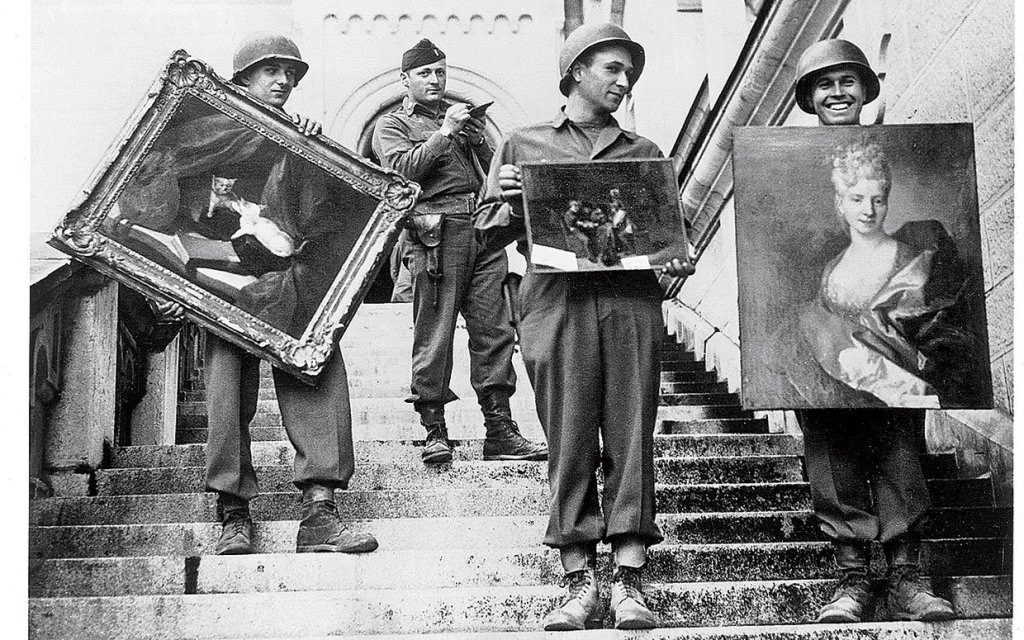
I’ve been listening to the book, The Monuments Men by Robert M. Edsel whenever I drive anywhere. On Thursday, I will be teaching a class on the history of the Monuments Men, and I wanted to know as much as possible about the subject. I hope it goes well as it will be the first class I’ve taught as a webinar. If you don’t know who the Monuments Men were, they were part of the Monuments, Fine Arts, and Archives (MFAA) program under the Civil Affairs and Military Government Sections of the Allied armies established in 1943 to help protect cultural property in war zones during and after World War II. The group of approximately 400 service members and civilians worked with military forces to safeguard historic and cultural monuments from war damage, and as the conflict came to a close, to find and return works of art and other items of cultural importance stolen by the Nazis or hidden for safekeeping.

One of the things that really struck me in this book is the description of the greed and opulence of the Nazis and their collaborators. Edsel points out that Hermann Göring, though being the main “collector” of art and items of cultural importance, was mediocre at best in his taste. He just wasn’t well-educated enough in art to know good art from bad art. Furthermore, it was more about the prestige of owning things that drove Göring not any artistic value. Göring, like many fascists, was garish: he owned dozens of uniforms each more grand than the last; he kept a pocket full of rubies at all times so he could jingle them like change; he had homes decorated with the most expensive things he could find most of which he confiscated illegally; and the list goes on. Göring was almost cartoonish in his appearance. It doesn’t seem real that someone could have such poor taste and at the same time feel his possessions and clothing were the height of taste. The same thing is also often said of the nouveau riche which has become a derogatory term for people who have recently acquired wealth, typically those perceived as ostentatious or lacking in good taste. The nouveau riche and the opulence of the fascists seem somewhat ridiculous to us these days, and they would be thought of as just that—ridiculous and cartoonish—if it had not been for the horrendous things they did with their power.
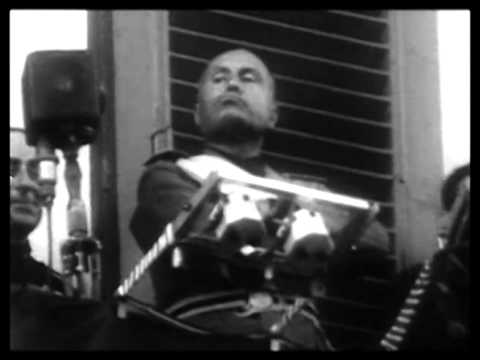
The ridiculousness of the fascists goes beyond just their ostentatious possessions. There are their actions in public. Think of Benito Mussolini in full military regalia with his chest puffed out, arms crossed, and his chin up. Hitler studied oratory delivery, hand gestures, and body language to make his speeches more hypnotic and mesmerizing. Both overemphasized their gestures. Hitler took lessons with the hypnotic clairvoyant and magician, Erik Jan Hanussen, and learned speaking and mass psychology from him. Looking back at the 1920s and 1930s, history shows us the rise—and fall—of charismatic leaders and/or demagogues: Mussolini, Hitler, V.I. Lenin, Leon Trotsky, Ataturk, and Mao Tse-tung. Even good guys like Franklin D. Roosevelt, Winston Churchill, and Huey Long used their personal charisma to get where they wanted to be. The exception to these charismatic leaders was Spain’s fascist dictator Francisco Franco. Franco was one of the few dictators in modern times who was a professional soldier who fought for power to the very top. Hitler, Mussolini and Antonio Salazar (of Portugal) had to win over or neutralize the national armed forces to come out on top. Lenin, Trotsky, Stalin, Mao, and Ho Chi Minh were primarily civilians who politicized the military for their own strategic ends. These other men bent their followers to their own will; Franco became everything to everyone.
Looking at the dictators from the 20th century, I wonder if the historians in the 22nd century will look upon Donald Trump and think he was just a silly, horrible man with power. Will they see him as charismatic? Inhumane? Dangerous? Will they mock him for his garish and ostentatious lifestyle? Will they recognize his diminished intelligence? His disdain for intelligence? His lack of action on important issues? His disastrous actions to harm others (immigrants, LGBTQ+, women’s rights, the most vulnerable in American society, etc.)? I read an article by a historian the other day who said he believed Trump was not one of the worst presidents, but the worst president—even worse than James Buchanan whose actions, or lack thereof, led to the Civil War. Will Trump’s successors be able to undo his harm? If they do, will it make historians look at Trump differently? A friend of mine commented on Saturday that when the ludicrous things a politician—referring to Trump— says and does become common place, people forget it’s not normal; they begin to normalize that behavior.
Saturday, June 20th, was Trump’s first rally since the start of the worst of the pandemic when quarantines, social distancing, and the wearing of masks were implemented. Trump chose Tulsa where a race massacre took place on May 31st, and June 1st, 1921. During the riots, mobs of white residents attacked the black residents and businesses of Tulsa’s Greenwood District. One must wonder what Trump and his campaign were thinking when they chose a rally there amid widespread protests against racial discrimination and police brutality. (And remember, the rally was originally scheduled for June 19th, or Juneteenth.) I’m pretty sure I know why, and I think it was calculated, but I will leave that for you to decide.
Like Lenin, Mussolini, Hitler, and Mao, Trump thrives on the adoration of crowds. His followers are so fanatical, they are convinced they will be saved by God from the virus; that by supporting Trump, they are doing God’s work; and if Trump didn’t see the need to wear a mask, they don’t either. It may take days or weeks before we know the full extent of the outbreak that is likely to occur because of Trump’s rally. The questions are: How will Trump explain the outbreak caused by his rally? Will he just ignore any ill effects from the rally? Will his supporters ever come to the realization they put their life and the lives of loved ones in harm’s way in order to see a megalomaniac speak? The answers to all of these questions are probably predictable.
My greatest fear is that when Trump loses the election, he won’t accept it and won’t leave the White House. He’s already setting up the scene to call the election fraudulent with his cries against mail-in votes, etc. He will use every tactic he has to resist the inevitable. But one question remains, will he burn the country down in the process like a modern-day Nero burning Rome to keep himself in power? I’m afraid he will. Trump and the Republicans have done more to harm the sacred institutions of the American government than anyone else in American history. Just as he uses the charismatic tactics of fascists to advocate his position and power, he will try to use tactics of dictators to stay in office. All of this could end badly for Trump: Hitler shot himself; Mussolini was captured and publicly hanged; Göring took a cyanide capsule; Trotsky was assassinated. How will it end for Trump?


Trust in God

God is our refuge and strength, a very present help in trouble….Be still, and know that I am God: I will be exalted among the heathen, I will be exalted in the earth. (KJV) (Psalm 46:1, 10)
The world is in chaos right now with the coronavirus pandemic and the myriad of ill-conceived responses to it. It’s particularly chaotic in the United States where our president (I almost wrote leader, but he is no leader), is doing everything in his power to make the world more chaotic. When we need strength and courage the most, we only have weak and cowardly. While the president’s campaign had claimed that more than a million people had sought tickets to attend the rally at the 19,000-seat BOK Center, the venue was still half empty by the time Trump landed in Tulsa. The crowd for the rally was much smaller than expected. COVID-19 has not been kind to Tulsa lately. At a second, outdoor venue where Trump was set to declare a “great American comeback” was so sparsely attended that he and Vice President Mike Pence both canceled appearances there. Maybe his followers are running like scared rats on a sinking ship.
Trump’s supporters have a religious fervor to them akin to the snake handling churches of my home state of Alabama. One man at the Tulsa rally said, “If it is God’s will that I get coronavirus that is the will of the Almighty. I will not live in fear.” This idea has been repeated by many who refuse to wear masks or social distance and choose to gather in crowds. What these people don’t understand is that God wants to you protect yourself and others. They equate Trump’s lack of morality, if they chose to believe he has a lack of morality, with various deeply flawed biblical figures: David, Saul, Solomon, and even the Persian King Cyrus. I won’t go into the whys of this strange belief because they are too ludicrous to even contemplate for long.
The fact is, the world has gone mad, and we need our faith to help right this ship. So, what can we do at a time like this? When we find ourselves in trouble, where do we turn? Do we call our parents, best friend, or sibling? If they aren’t available, then where do we turn? In the moment you can turn to God, who knows you, loves you, and has made you who you are. He will come to comfort us and rescue us when we encounter trouble. He is always ready for us to pray to Him whenever our hearts cry out to Him. Pause, breathe, and meditate on the truth that no matter how chaotic our world feels, we serve a powerful God. Simple truth can bring us the most comfort in a confusing world. This is the truth; God is still in control and working on our behalf. We just need to trust God and keep calm and carry on.


Moment of Zen: Watermelon Sugar

Being from the South, I love a good watermelon, and this song has been stuck in my head since I first heard it. I find it quite catchy. I decided to show the video of the song with just the lyrics instead of the official music video. Quite honestly, I am not a fan of Harry Styles’ looks, especially him in this video, and considering that this song is rumored to be about performing oral sex on a woman (Ew!), the video just really turned me off. I couldn’t even watch the whole thing. Styles tries to eat a slice of watermelon seductively, and it just comes off as gross, and the video consists of him eating watermelon and singing the song while being surrounded by big breasted women. While I don’t like him, I do like the song, and men can be attractive while eating watermelon. Styles just isn’t.


Past Tense
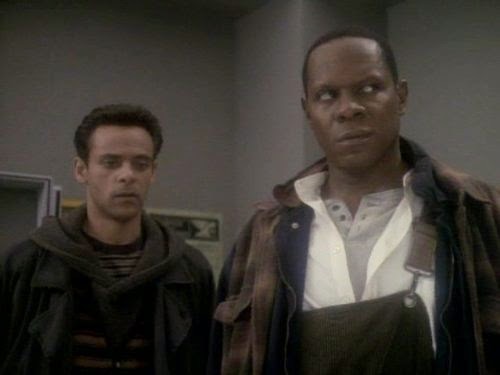
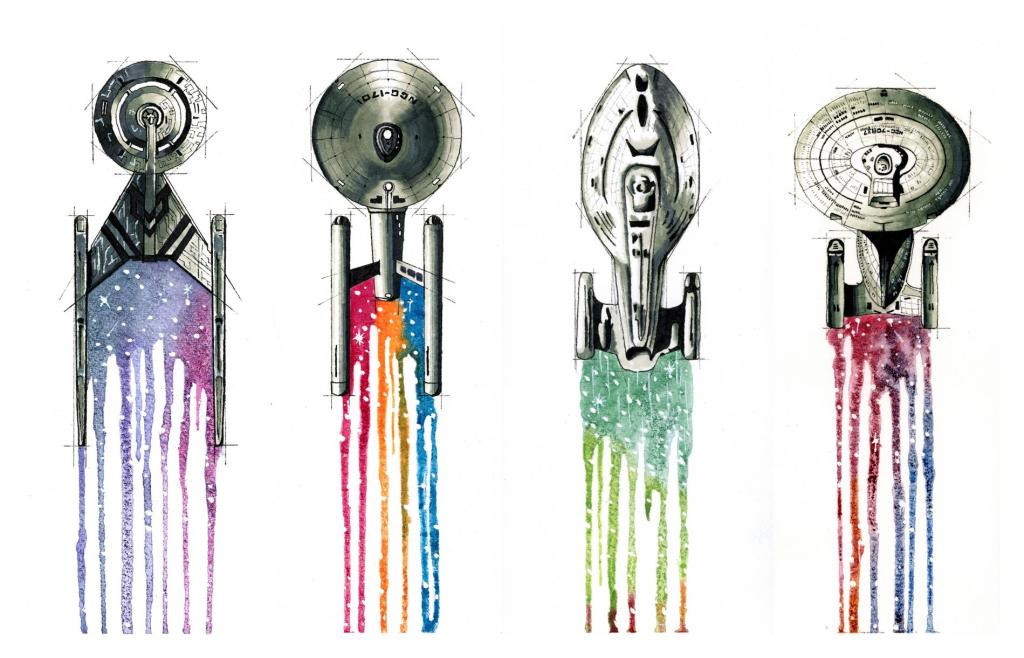
“Star Trek” is a sci-fi universe with a positive outlook on Earth’s future. The United Federation of Planets uses its Starfleet armada of spaceships for humanitarian and peacekeeping missions. Many of the storylines are allegories of contemporary culture. I will repeat what I said yesterday: from the very beginning, Star Trek has held a firm belief represented by the symbol representing IDIC: infinite diversity in infinite combinations. I agree with the idea that Star Trek can teach us so much about what humanity can become. However, Star Trek often had to deal with the problems of the past to create this future Star Trek universe. As was well-established in the Star Trek universe originally envisioned by Gene Roddenberry, society had to go through Hell before reaching a state of utopia, and the episode “Past Tense” from Star Trek: Deep Space Nine is part of an examination of that Hell.
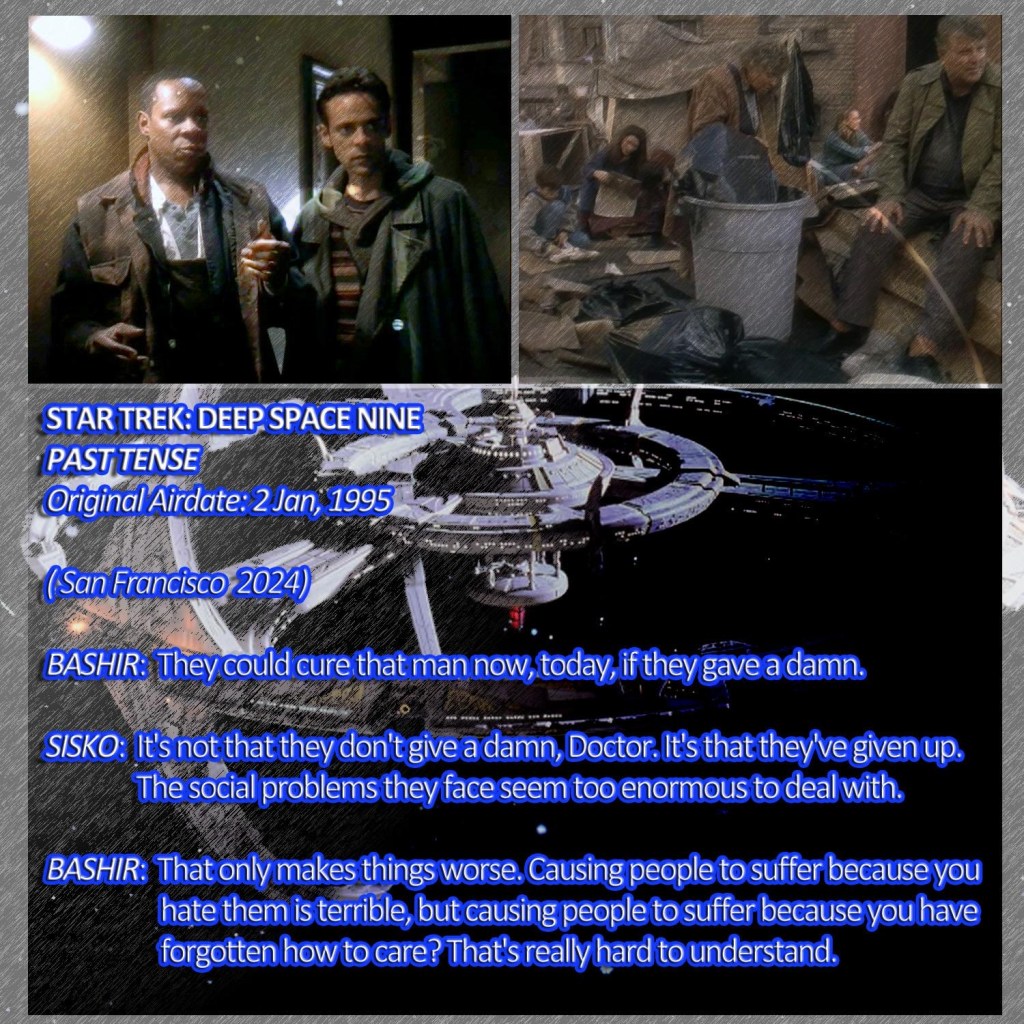
“Past Tense” shows what the United States was like in the 2020s through the lens of the 1990s. The year is 2024. Sisko, Bashir, and Dax find themselves trapped 300 years in the past confronting one of the darkest hours in Earth’s history. The time period is best explained by Sisko who teaches Bashir about 21st century history and the Sanctuary Districts:
Sisko: By the early 2020s, there was a place like this in every major city in the United States.
Bashir: Why are these people in here? Are they criminals?
Sisko: No, people with criminal records weren’t allowed in the Sanctuary Districts.
Bashir: Then what did they do to deserve this?
Sisko: Nothing. They’re just people without jobs or places to live.
Bashir: So, they get put in here?
Sisko: Welcome to the 21st century, Doctor.
Bashir comments to Sisko, “21st century history isn’t one of my strong points. Too depressing.” Bashir would definitely be horrified at the way the United States government and other governments around the world have dealt with COVID-19. But back to the episode, the conditions of the Sanctuary Districts lead to an event known in the Star Trek universe as the Bell Riots. As Sisko explains to Bashir, “The Sanctuary residents will take over the District. Some of the guards will be taken hostage. The government will send in troops to restore order. Hundreds of Sanctuary residents will be killed.” The dialog between Sisko and Bashir continues:
Sisko: I sympathize, Doctor, but if it will make you feel any better, the Riots will be one of the watershed events of the 21st century. Gabriel Bell will see to that.
Bashir: Bell?
Sisko: The man they named the Riots after. He is one of the Sanctuary residents who will be guarding the hostages. The government troops will storm this place based on rumors that the hostages have been killed. It turns out that the hostages were never harmed, because of Gabriel Bell. In the end, Bell sacrifices his own life to save them. He’ll become a national hero. Outrage over his death, and the death of other residents, will change public opinion about the Sanctuaries. They’ll be torn down and the United States will finally begin correcting the social problems it has struggled with for over a hundred years.
The riots over the death of George Floyd and others killed by police may be the start of a change in American history like the Bell Riots were in 2024. We can only hope. In 1995, when this episode aired, who would have predicted that only a few years before the fictional Bell Riots, the United States would see nationwide protests on racial injustice?
Ira Steven Behr, executive producer of Star Trek: Deep Space Nine and one of the story creators for “Past Tense,” was inspired to come up with the idea for the Sanctuary Districts through his real-life experience in the early 1990s. In an interview for a Season 3 DVD special feature about “Past Tense,” Behr said:
I was down in Santa Monica one day, and there [were] all these homeless people there, and it was a beautiful day, the ocean, sky, sun, and homeless people everywhere. And all these tourists, and people up and about, and they were walking past these homeless people as if they were part of the scenery. It was like some artist had done some interesting rendition of juxtaposition between nature and urban decay right there in front of me. And the fact was that nobody seemed to care, at all. And I said, ‘There has to be something about that, where does that go? How far do you take that?’ And that evolved into the idea for concentration camps essentially for the homeless.

Behr also stated there is a subtle examination of racism in this episode. When Dax is discovered, she is treated like royalty and taken in by a wealthy San Francisco businessman, but when Sisko and Bashir are found, they are treated like criminals. Of this situation, Behr said, “The simple fact is, a beautiful white woman is always going to get much better treatment than two brown-skinned men.” We see the contrast between the life of the wealthy San Franciscans Dax meets, and the discarded people of the Sanctuary Districts whom Sisko and Bashir encounter.
At the end of the second part of “Past Tense,” Bashir asks Sisko, “You know, Commander, having seen a little of the 21st century, there is one thing I don’t understand: how could they have let things get so bad?” Sisko replies, “That’s a good question. I wish I had an answer.” And, it is a good question. We may not have Sanctuary Districts, but we still have massive inequality. There are serious problems in the United States which our current president has made worse. Trump has highlighted inequalities and injustices in the U.S., at least for some of us. Alternatively, Trump supporters relish the inequalities, because for them, it means someone is less fortunate than they are. It’s the same reason that poor white men who owned no slaves fought for the Confederacy during the Civil War. As long as there were slaves, they weren’t the lowest social class. It was a similar situation in the Civil Rights Movement. Poor whites favored discrimination and segregation because it put them above black people. The same is true today with Trump’s followers—many of whom would rather suffer from the damage done by Trump to the nation’s economy, healthcare status, and many other issues rather than to allow equality in America.
When the episode aired, it received some criticism for being too preachy, liberal, and “soapbox like” something which disappointed Behr, who felt the show had important things to say, and treated a serious situation in a realistic manner; “We’re not going to solve anything with two hours of TV. The homeless are still there. The problem hasn’t gone away. But maybe just one person saw this and started to see the problem in a different way.” The real 2020s may not have Sanctuary Districts, but there are segregated sections to every city; whether they segregate the rich from the poor or blacks from whites or whatever the dividing line is, we still live in a society segregated by race, income status, and a host of other perceived differences. We continue to have homeless and displaced persons. We need to do better.
I will say this though, through most of the Star Trek universe, LGBTQ+ issues were rarely, and never directly, dealt with. Yes, Commander Riker of The Next Generation did fall in love with a nonbinary individual, and Jadzia Dax did have a same-sex kiss, and there were a few other instances, but none dealt with LGBTQ+ individuals. When Voyager and Enterprise premiered, rumors circulated there would be an LGBTQ+ individual on the crew of those ships; it never materialized. It wasn’t until Discovery that we see fully-fledged LGBTQ+ individuals in the marriage of Paul Stamets and Dr. Hugh Culber, plus the character of Jett Reno. I also recognize in Star Trek Beyond Sulu is seen, ever so briefly, in a same-sex relationship which was done as a homage to George Takei, the original Sulu. The Star Trek universe is becoming more inclusive of the LGBTQ+ community, but it’s been a long time coming.


Authors
Recent Comments
Steve Davis on The Gift of Love iameverywhere1 on Pic of the Day noisilycool3bc985058… on Pic of the Day noisilycool3bc985058… on Moment of Zen: A Room with a… Joe on Ah, Montreal… Top Posts & Pages




Amazon Associate

As an Amazon Associate I earn from qualifying purchases. So, if you click on a link that takes you to Amazon.com, I may earn a commission.
Trust me, it isn’t much, but every little bit helps.

 Joe
Joe


 The Closet Professor