
Where?
I’ve written a fair number of serious posts in the past week or so mainly because a lot of serious events have been happening. I’ve tried to remain silent on politics and just be mostly a lighthearted blog, but I’ve realized I cannot be silent anymore. Today, however, I want to be a little bit lighter, but I need your help. Many of us dream of living someplace other than where we currently are while some people are exactly where they want to be. They cannot imagine living anywhere else.
I used to think I wanted to live in the mountains until I moved to Vermont. That dream had been to live somewhere in the Great Smokey Mountains. I never dreamed it would be in the Green Mountains of Vermont. Some people want to live on the beach. I’m not one of them although I enjoy visiting there occasionally. If I had to choose a beach, it would be one on the Gulf Coast somewhere along the Florida panhandle between the Alabama-Florida border and Panama City Beach. Unfortunately, it’s just too damn hot down there, and the sand constantly gets stuck in places where sand should never be. Also, that area is known as the “Redneck Riviera;” the politics are far too conservative for me. I love the emerald beaches and sugary white sand, but to visit only.
Another dream was to live in Florence, Italy, but I’ve realized now how tough it is living so far from my family. Instead, I will settle for wishing I could visit Florence, or Italy in general, on a regular basis. I’ve been to Florence twice, and it’s still one of my favorite places. Some people claim it’s too touristy, but I loved it. First, the city is beautiful. The art museums can’t be beat except maybe for some in Rome or in Paris. Second, the food is fantastic and always so fresh. Then there are the streets where you can almost get lost except you can usually see the Duomo from anywhere and can navigate your way back to the cathedral and get your bearings. I loved getting a gelato to cool off then walking into a store and buying a bottle of wine. They give you a glass so you can wander around the city at night enjoying the street performers and various forms of entertainment that are seemingly everywhere. My only issue was I was alone and didn’t have anyone with whom to enjoy my time there.
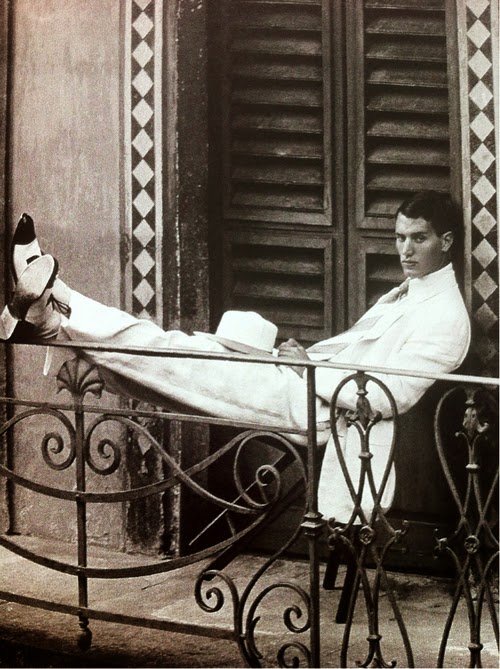
My one constant dream, though, has been to live in a relatively quiet area of the New Orleans French Quarter. The picture above reminds me of Tennessee Williams sitting on his balcony in the French Quarter watching the people pass by and dreaming of new and entertaining stories to tell. New Orleans has its characters, and the food is to die for—so tasty but also so rich you’d be happy if you died after eating one of their sublime meals. I know New Orleans has its drawbacks. The smell when you first arrive is off-putting, but eventually, you don’t notice it. Then there are the masses of drunk tourists, the rampant crime that is prevalent in the city, and the bright lights and noise of Bourbon Street. But…I love the Gay District that begins at the intersection of Bourbon and St. Ann; Bourbon Pub, Oz, and Good Friends are always so much fun. Also, there is my favorite straight bar, Pat O’Brien’s, where they make one of my favorite drinks, a hurricane. And always, there is the wonderful jazz music wafting down the streets. In many ways, it’s like the easygoing feel of a European city; the culture and history are unique and awe-inspiring.
Perhaps one day, I could live in New Orleans and travel to Florence during the craziness that is Mardi Gras. That would be ideal. Plus, from New Orleans, I’d be close enough to visit a favorite Florida beach, and at other times, I could drive up to the Great Smokey Mountains. These are my dream places.
So, here is where I want your help: If you could live anywhere in the world and not worry about money or working and just be carefree and enjoy life, where would you go? Where are your dream places? And why?
I don’t often get a lot of comments, but I know a good number of people visit my blog each day. I would love for you to comment on this post. Maybe you’ve lurked around my blog and not commented for whatever reason. Please comment now. Perhaps you comment regularly then by all means please comment now. Or this could be your first time here so why not comment now? I really love getting to know my readers, so tell me, where would you love to live?

Guard Your Heart

Keep thy heart with all diligence; for out of it are the issues of life. (KJV) ( Proverbs 4:23 )
Joy can be hard to come by. Sometimes even just getting through our daily routines can become overwhelming. Our focus can easily get pushed towards the stressful, ugly and no good things of this world. God warns that we need to take steps to guard where we place our focus. Joy comes when we make a point to meditate on the good and beautiful things God has made. Take steps to nurture your heart today.
Moment of Zen: Openings

I’m happy to see things in Vermont are improving. Our number of new COVID-19 cases has slowed considerably, and the governor is beginning to slowly allow things to reopen.

2020: The Worst Year?
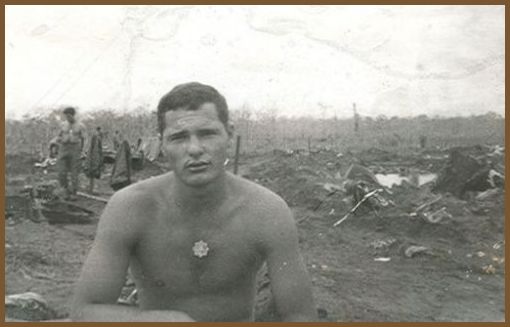
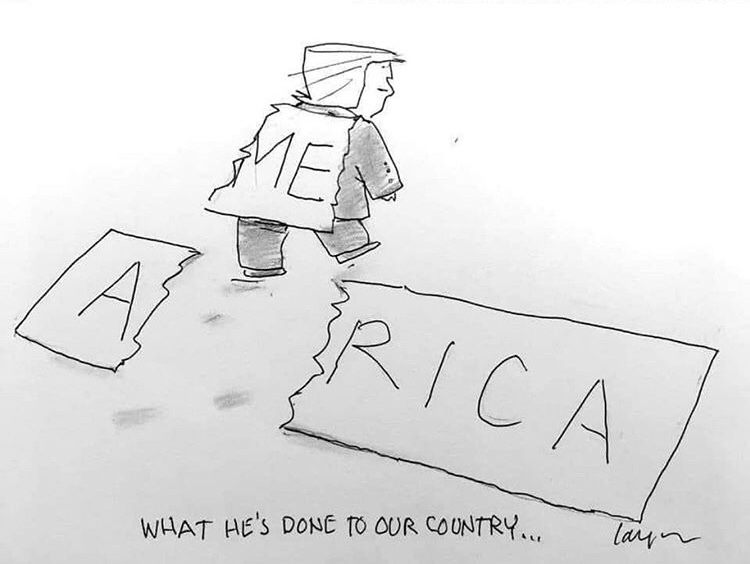
Some historians claim the most traumatic year in modern American history was 1968, but that 2020 is shaping up as the second worst with Trump having no bottom to how low he will go. With seven months left in 2020, the comparison of these two years provides little comfort, and several reasons for concern.
When I taught World or American History, I always said there were certain pivotal years: 1066, 1492, 1776, 1968, 1969, and others. I did not teach date memorization, but there are years and dates that need to be remembered. The year 1968 belongs on that list as an unbelievably anno horribilis while most of the other dates mark positive historical events. In the case of 1969, a lot of events just happened: Stonewall, the Moon Landing, Ted Kennedy and the Chappaquiddick incident, the Summer of Love, the Manson Murders, Woodstock, Hurricane Camille, the list goes on…
How could any year be worse than the current one in which more Americans are out of work than in the Great Depression, and more people are needlessly dying than in several of America’s wars combined? How could the domestic order seem more frayed and failing than it has in the past week with the filmed record of a white, Minneapolis police officer calmly killing a black man as other officers just as calmly looked on? This led naturally to protests which in turn led to looting and destruction. In many cities, police and troopers, kitted out as if for Baghdad circa 2003, widened the violence and hastened the decay with strong-arm tactics sure to generate new protests.
Most of the objects of police roundups have been civilians. But in a rapidly expanding list of cities—first Minneapolis, then Louisville, Seattle, Detroit, and elsewhere—reporters appeared to be singled out by police as targets. The arrest of CNN’s Omar Jimenez on live television was just one of many to come. Againin Minneapolis, Minnesota State Patrol members approached a group of a dozen reporters all bearing credentials and yelling to identify themselves as press, and “fired tear gas […] at point-blank range.” In Louisville, Kaitlin Rust, a reporter for an NBC affiliate, yelled on camera, “I’m getting shot!” as her cameraman, James Dobson, filmed an officer taking careful aim and firing a pepper-ball gun directly at them. In Detroit, the reporter JC Reindl, of the Free Press, was pepper-sprayed in the face even as he held up his press badge. The examples keep piling up.
One man can be blamed for these abuses of the press: Donald Trump. From the beginning of his presidency, he referred to the press as “the enemy of the people.” It’s a vile term with a dangerous history. During the French Revolution, December 1793, Robespierre stated, “The revolutionary government…owes nothing to the Enemies of the People but death.” During the Russian Revolution, Nazi Germany, Communist China, and many other times in history, the phrase has been used to place people beyond the pale. It is at its vilest and most dangerous when used by people in power while attacks are ongoing. Those are the exact circumstances under which Trump uses it. In his appalling 2017 inaugural address, he spoke about “American carnage.” Thus, he prophetically began his time in office by profaning the setting from which all his predecessors had invoked American potential and American hope. Under his auspices, we’ve seen a new kind of carnage; it’s all bad, and it’s all getting worse.
So how does it compare with the distant past of 1968? There is no objective comparison of suffering or confusion. Fear, loss, dislocation, and despair are real enough to people who encounter them no matter what happened to someone else at some other time.
In 1968, these terrible and/or shocking events occurred:
• On average, nearly 50 American servicemen died in combat in Vietnam every day—plus many more Vietnamese.
• Prague Spring began on January 5 and ended disastrously with the Warsaw Pact invasion of Czechoslovakia in August.
• Starting on January 31 – The Tet Offensive began as Vietnam celebrated the Tet Holiday, and dragged on until September causing Walter Cronkite to report that “the bloody experience of Vietnam is [likely] to end in a stalemate” and prompted President Johnson to proclaim, “If I’ve lost Cronkite, I’ve lost Middle America.”
• February 1 – A Viet Cong prisoner was executed on a Saigon street by a South Vietnamese National Police Chief. The event was photographed by Associated Press photographer, Eddie Adams; the photo made headlines around the world. It swayed U.S. public opinion against the war. If you’ve seen the photograph, you’ll never forget it.
• February 8 – Orangeburg Massacre in South Carolina wherethree college students were killed by highway patrolmen.
• March 16 – My Lai Massacre where a company of American soldiers brutally killed most of the people—men, women, children, infants—in the village of My Lai, South Vietnam.
• March 31 – Johnson announced he would not run for re-election as he uttered these two simple sentences:
[…] I do not believe that I should devote an hour or a day of my time to any personal partisan causes or to any duties other than the awesome duties of this office—the presidency of your country. Accordingly, I shall not seek, and I will not accept, the nomination of my party for another term as your president.
• April 4 – Martin Luther King Jr. is assassinated in Memphis, Tennessee causing riots to erupt in major American cities that lasted for several days afterward.
• June 5 – U.S. presidential candidate Robert F. Kennedy is assassinated in Los Angeles.
• July-September – The H3N2 influenza known colloquially as the Hong Kong flu garnered little interest at the time, but estimated number of deaths was one million worldwide,with about 100,000 in the United States. Most of the deaths were people 65 and older. It is similar to COVID-19.
• August 28 – 1968 Democratic National Convention in Chicago where police clash with anti-war protesters
• The “most intrusive ever” case of foreign interference in a U.S. election occurred although it was covered up at the time. {In brief: Richard Nixon’s campaign had back-channel connections with the South Vietnamese government andurged it to go slow in negotiations to end the war in hopes of better terms if they helped Nixon win.}
Try to approximate the surprise of Johnson’s announcement to end his presidential re-election bid. Imagine listening to a standard Trump rant-speech, and hearing something like Johnson’s words. Imagine, also, a leader like Johnson who had spent his entire life thinking about wielding power—and who decided, in the nation’s interest, to give it up.
In some ways, the comparison between 1968 and 2020 might make Americans feel better, or at least consoled, that things have been terrible before. But here are two implications that cut the other way.
First, everyone contending for power in American politics in 1968 was competent. They all had governing experience. And most of them—even, arguably, George Wallace who had been governor of Alabama and running as a segregationist—recognized that a leader’s duty was supposed to include representing the American public as a whole. Each of them had, as all powerful figures do, his vanities and excesses and blind spots, plus, of course, points of corruption. Wallace, in his flagrant and pugnacious way, and Nixon, with his smarm, preyed upon American prejudices and resentments. But all of them recognized what they were expected to say. For Johnson, this was obvious. For Humphrey, whose breakthrough in politics was as a young, firebrand, pro-civil-rights mayor of, yes, Minneapolis in the 1940s, this was the pain of being lumbered with defense of the Vietnam War visible every day.
Nixon’s breakthrough had been as a GOP dirty-tricks hit manduring the McCarthy Era. But—and this is the contrast with today—he had a broader range in his register. If you read his 1968 acceptance speech at the Republican convention, and contrast it with Donald Trump’s “I alone can fix it” monstrosity from the 2016 RNC convention, you will see the difference. Trump knows only how to talk about himself, and his critics. Nixon knew how to at least feign a bring us together message. For instance, after the police killing of George Floyd in Minneapolis, it was Trump himself who tweeted about “thugs” and “when the looting starts, the shooting starts.” Nixon would not say things so crudely while in the public eye; he was, however, known to be quite crude in private. In 1968, the political players at least seemed competent. There was no chance that the White House would end up in the hands of a clown.
Second, is a similarity between 1968 and the present. Nixon knew that the specter of disorder—especially disorderly conduct by Black Americans, face-to-face with police—was one of his strongest weapons. He said as much in his convention speech:
As we look at America, we see cities enveloped in smoke and flame. We hear sirens in the night … We see Americans hating each other; fighting each other; killing each other at home. And as we see and hear these things, millions of Americans cry out in anguish. Did we come all this way for this? Did American boys die in Normandy, and Korea, and in Valley Forge for this?
When people feel afraid, they want someone who claims to be strong. Law-and-order candidates rise when confidence in regular order ebbs. Richard Nixon had much more going for him in 1968 than Donald Trump does in 2020—most of all that Nixon, not being the incumbent, could campaign on everything that was wrong with the country; while Trump, as the incumbent, must defend his management and record which includes record unemployment and an economy in chaos. But protests and fear of disorder—especially fear of angry Black people in disorder—drew people to Nixon as the law-and-order candidate in 1968, and he clearly knew that.
Conversely, Donald Trump could not put that point as carefully as Nixon. But he must sense that backlash against disorder from people he has classified as the other and the enemy, is his main—indeed, his only—electoral hope. Trump promised in hisinaugural address that “American carnage stops right here, right now.” Now, he appears to be trying to make it worse.

No Time
I ended up talking on the phone most of last night with one friend and then another. In the midst of all of that another friend was texting me. I was just a busy little social butterfly last night, and when I finally got a chance to settle down and write my post, it was past time for bed. I’ll try to have more of a “real” post tomorrow.
By the way, don’t think that I am complaining about being on the phone with my friends. I love all of them dearly and would never take for granted a chance to talk to them because honestly, you never know what tomorrow will bring.


Authors
Recent Comments
Steve Davis on The Gift of Love iameverywhere1 on Pic of the Day noisilycool3bc985058… on Pic of the Day noisilycool3bc985058… on Moment of Zen: A Room with a… Joe on Ah, Montreal… Top Posts & Pages



Amazon Associate

As an Amazon Associate I earn from qualifying purchases. So, if you click on a link that takes you to Amazon.com, I may earn a commission.
Trust me, it isn’t much, but every little bit helps.

 Joe
Joe


 The Closet Professor