
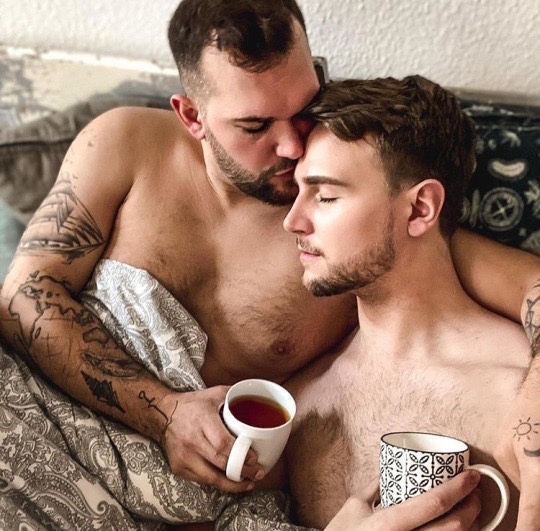
🌈 Rooted in Love, Growing in Grace
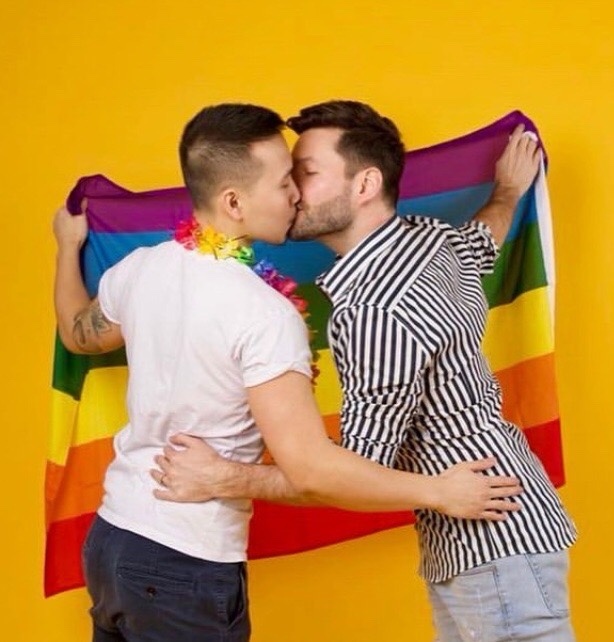
“You shall love the Lord your God with all your heart, and with all your soul, and with all your mind…And you shall love your neighbor as yourself.”
— Matthew 22:37, 39
“Build houses and live in them; plant gardens and eat what they produce…But seek the welfare of the city where I have sent you… and pray to the Lord on its behalf,
for in its welfare, you will find your welfare.”
— Jeremiah 29:5, 7
As we move deeper into Pride Month, our celebration continues—not just as a public witness, but as a deeply spiritual journey. This week, we turn inward to examine what it means to love ourselves as God commands—and what it looks like to thrive right where we are, even if the place we find ourselves is far from perfect.
To live openly as an LGBTQ+ Christian is already an act of courage. But to thrive—to truly love ourselves, and to build a life of meaning wherever we are—that’s holy work. And it’s not always easy.
Many of us have been told to leave certain parts of ourselves behind to belong. Others have been asked to move—emotionally, spiritually, or physically—to fit the mold of someone else’s expectations. But God’s Word reminds us: we are meant to love others as we love ourselves, and that means our own well-being matters. Our flourishing matters. Our joy matters.
This kind of love isn’t narcissistic—it’s necessary. Because when you believe you are beloved, you can begin to love others from a place of wholeness, not performance. When you root yourself in grace, you can begin to grow even in unfamiliar or uncomfortable ground.
In Jeremiah 29, God speaks to a displaced people in exile—not to promise a quick rescue, but to offer purpose in the waiting. “Build houses. Plant gardens. Raise families. Seek the good of the place where you are.” God doesn’t say, Just survive. God says, Live. Thrive. Invest. Pray. Root yourself in this moment.
So many LGBTQ+ Christians know what it’s like to feel out of place—in our families, churches, towns, or even within ourselves. And yet, even there, God is saying: Your life still matters here. You can still grow something beautiful in this soil. We don’t need the perfect setting to bloom. We need the assurance that God is with us in every setting.
Jesus reminds us that the greatest commandment has three directions:
- Love God.
- Love your neighbor.
- Love yourself.
So many of us have learned to prioritize others, sometimes to our own harm. But this week is your invitation to remember: your wellness is not selfish. Your joy is not indulgent. Your rest, your healing, your wholeness—they glorify God.
Pride is not only about being visible to the world—it’s about being present to ourselves. It’s about knowing we are worthy of care, kindness, rest, and joy. It’s about believing that God’s image is reflected in us, even when others try to deny it.
Self-love, especially for LGBTQ+ people of faith, is a form of resistance against shame. But more than that, it’s a sacred rhythm: love God, love neighbor, love self. All three are part of the same holy breath. This week let’s not only celebrate who you are but care for ourselves as someone deeply loved by God. Build something real. Plant something hopeful. We should. rest in the knowledge that our lives have meaning right now, not just in some imagined better place.
We should build a life where love takes root in us, flows through us, and blesses the world around us. God’s love is rooted grace. He loves us fully and completely. God teaches us how to love ourselves in ways that honor Him—with gentleness, patience, and truth. When we feel out of place, God helps us remember that we are still present and active in this soil. He gives us courage to plant seeds of hope, to build something real, and to live boldly as a reflection of God’s enduring love.
We were made to flourish—not just in safe spaces, but in the very places where the world said we couldn’t. We were made to love—not just others, but the radiant reflection of God that lives in us. So go and build. Go and plant. Go and love. Even here, we can grow. Even now, we are already enough.
🌈🏳️🌈🏳️⚧️

Moment of Zen: Summertime ☀️
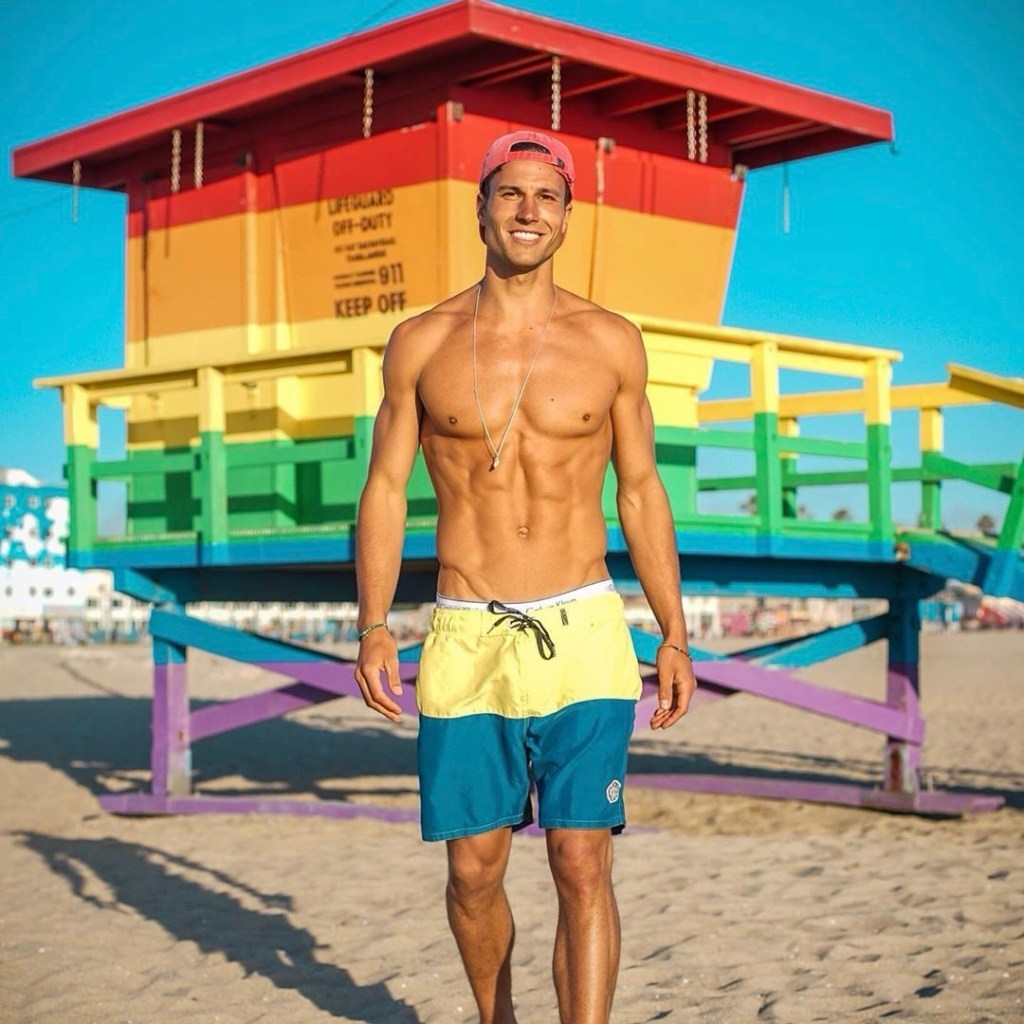
Summer officially began yesterday. While I doubt I’ll be going anywhere this season—certainly not to the beach—I do hope some of you have plans to get out, soak up some sunshine, and enjoy a bit of summer fun. Whether it’s a vacation, a day trip, or simply relaxing in your own backyard, make the most of the season! And if you’re facing a heatwave like many of us, please be careful, stay cool, and remember to drink plenty of fluids.




Pride in Every Stroke: Gay Art Since 1970
When the first Pride parade marched through New York City in June 1970—commemorating the one-year anniversary of the Stonewall uprising—it marked not only a political turning point but also an artistic awakening. No longer confined to coded symbolism or covert expression, gay pride began to blaze through the art world in bold, unflinching forms. Over the next six decades, LGBTQ+ artists harnessed the power of visibility to challenge oppression, celebrate desire, mourn loss, and imagine futures beyond shame.
The 1970s: Visibility and Liberation
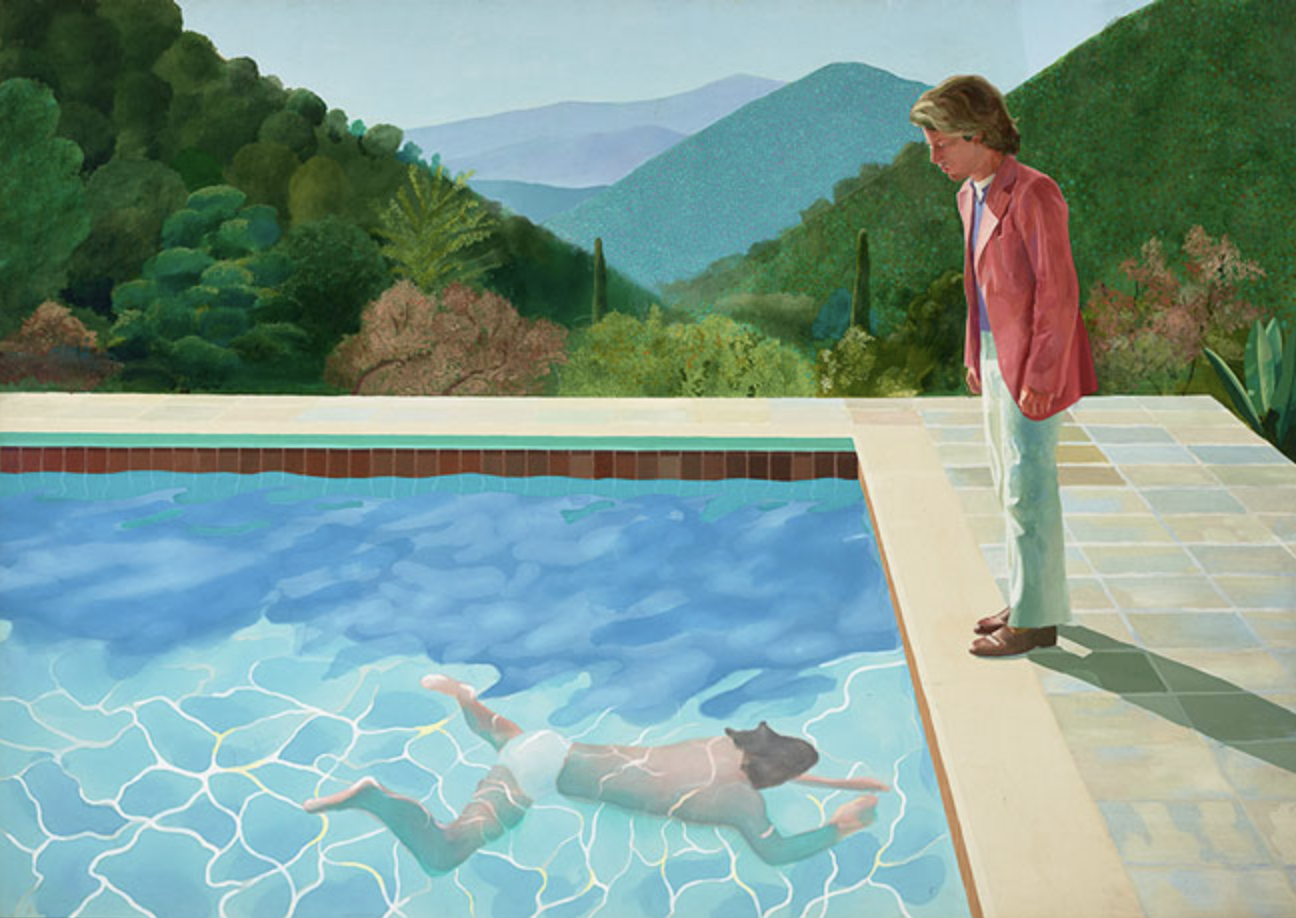

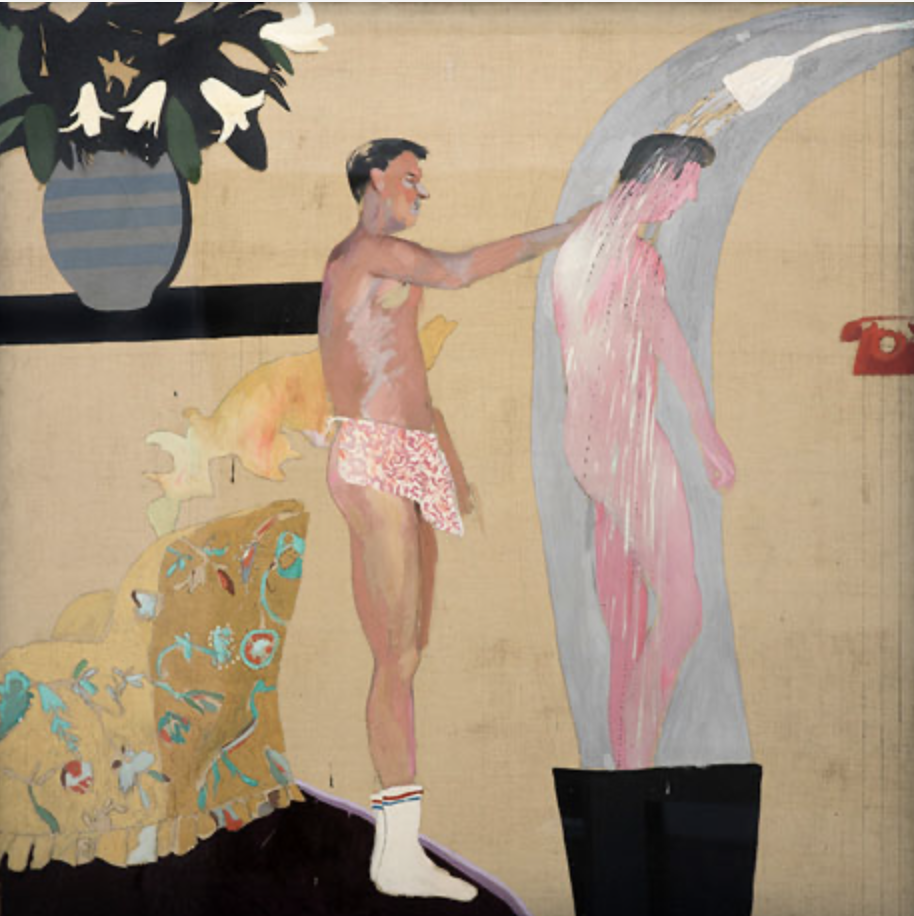
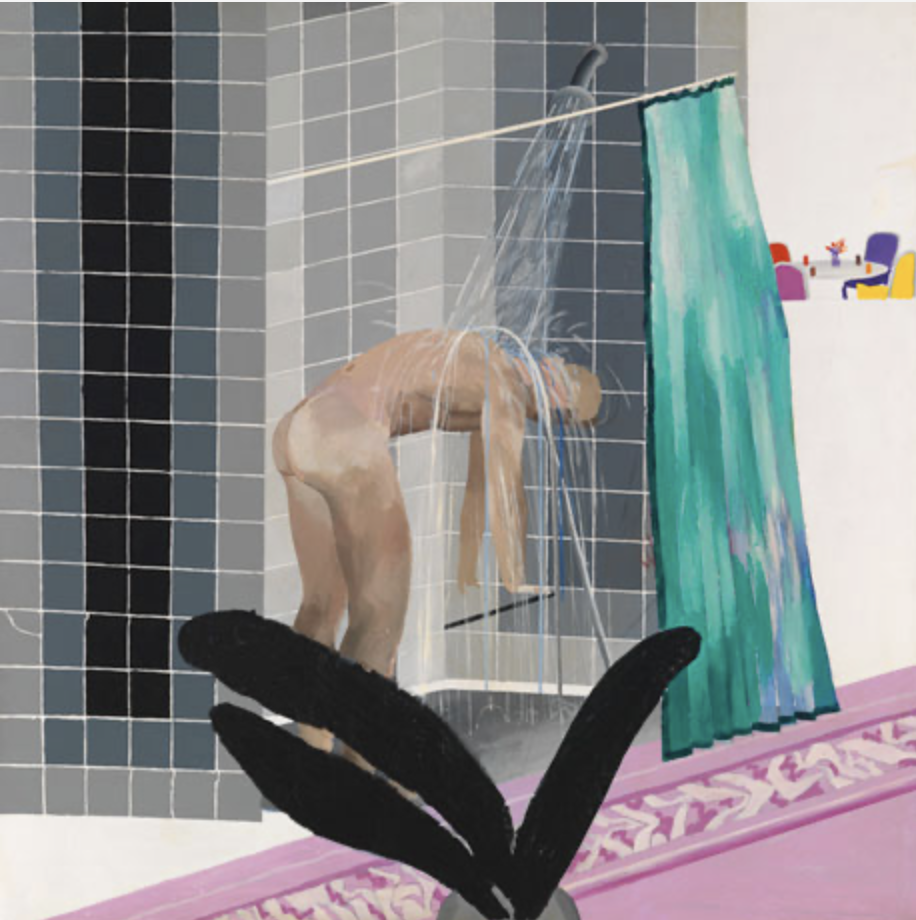
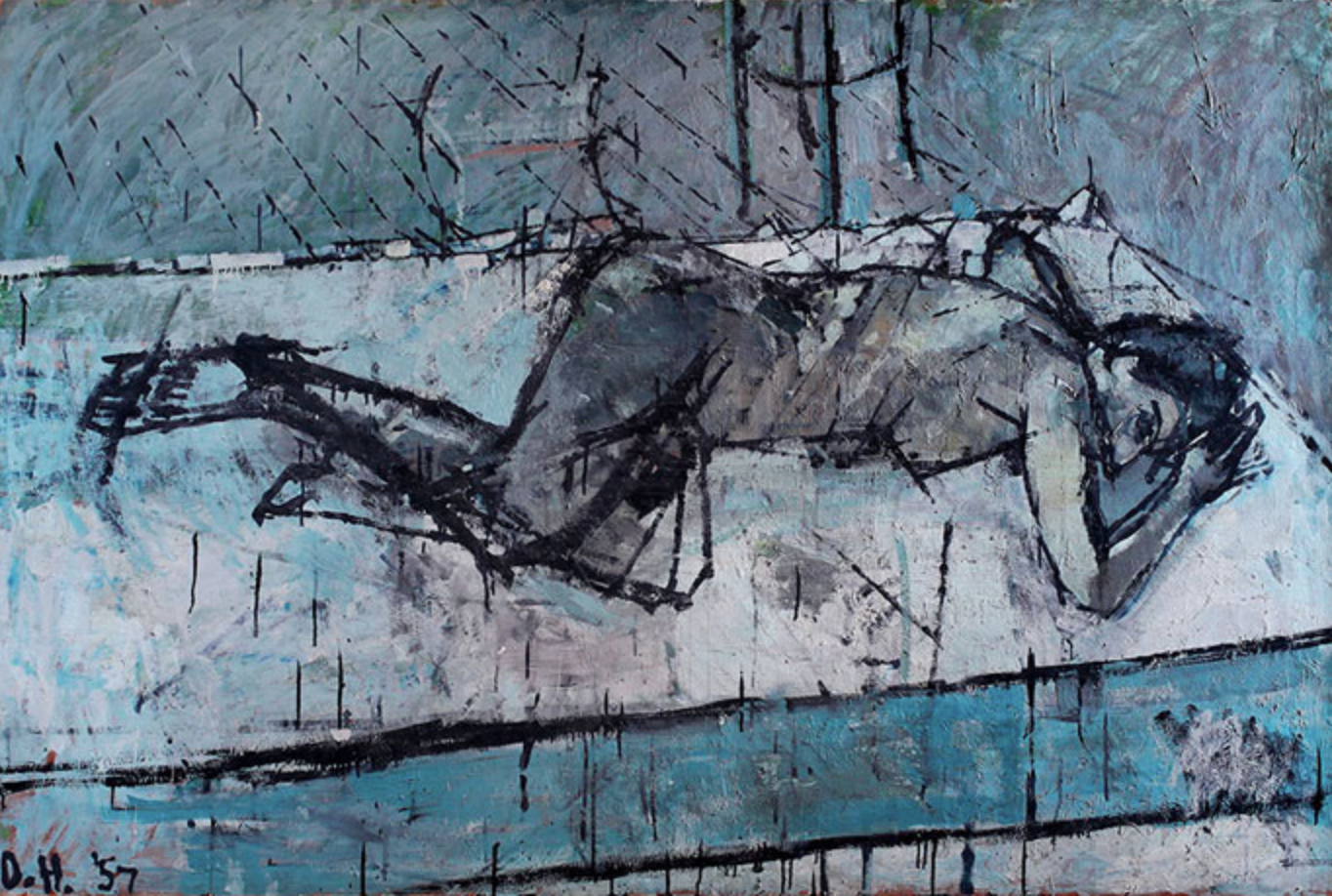
Hockney is known for his vibrant use of color, innovative techniques, and significant contributions to the Pop Art movement. He infused his work with subtle but powerful depictions of gay male intimacy. His 1971 painting Portrait of an Artist (Pool with Two Figures) captured not just a sunlit pool but a relationship dynamic—gaze, distance, vulnerability. It remains one of the most iconic queer paintings of the 20th century. Educated at the Royal College of Art in London, Hockney became celebrated for his depictions of California life, especially his swimming pool series such as Peter Getting Out of Nick’s Pool (1966). His artistic practice spans painting, drawing, printmaking, photography, stage design, and digital art, including pioneering work with iPad drawing apps. Openly gay, Hockney’s works often explore themes of intimacy, domestic life, and sexuality, and his expansive career has solidified him as one of the most influential artists of the 20th and 21st centuries.
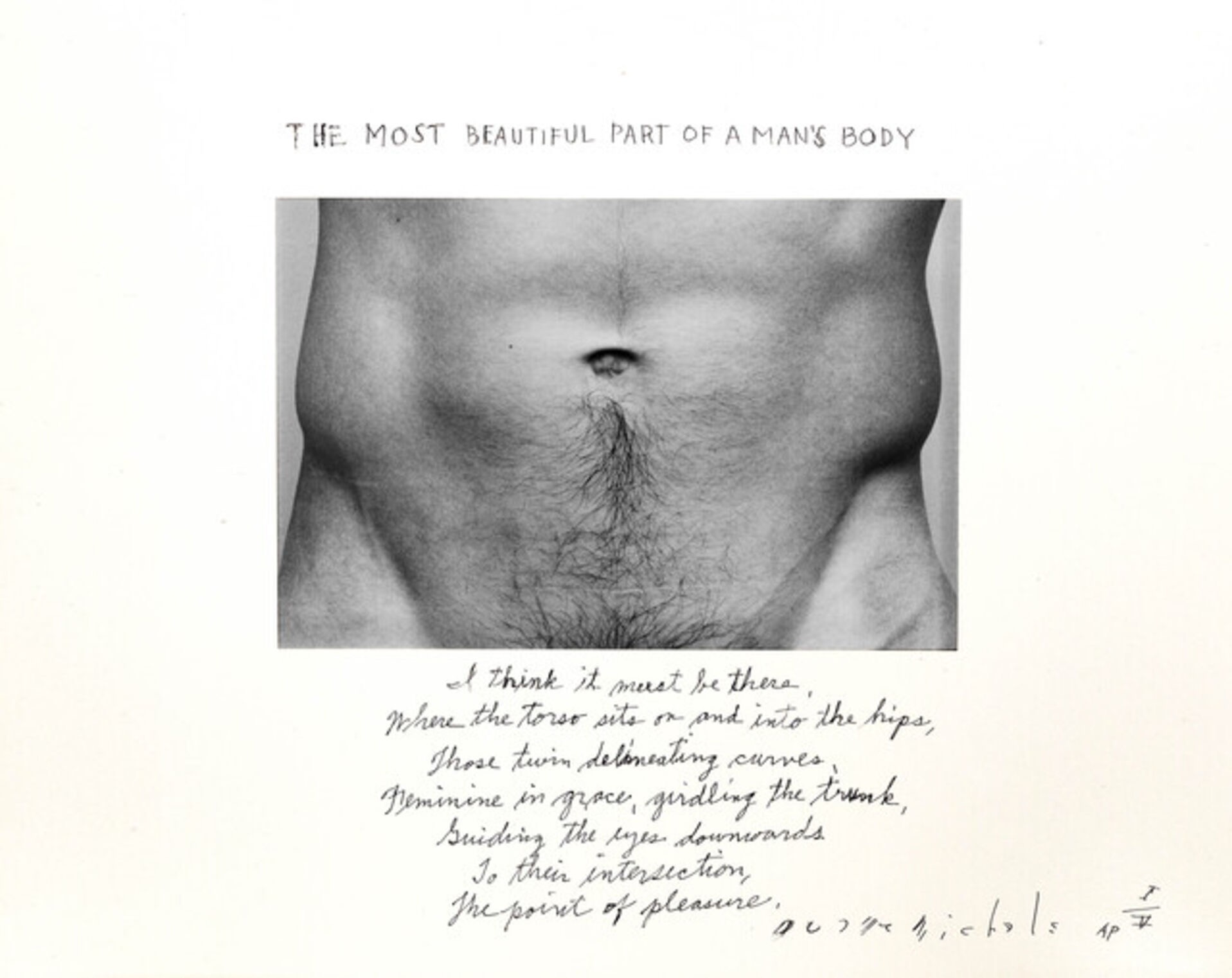
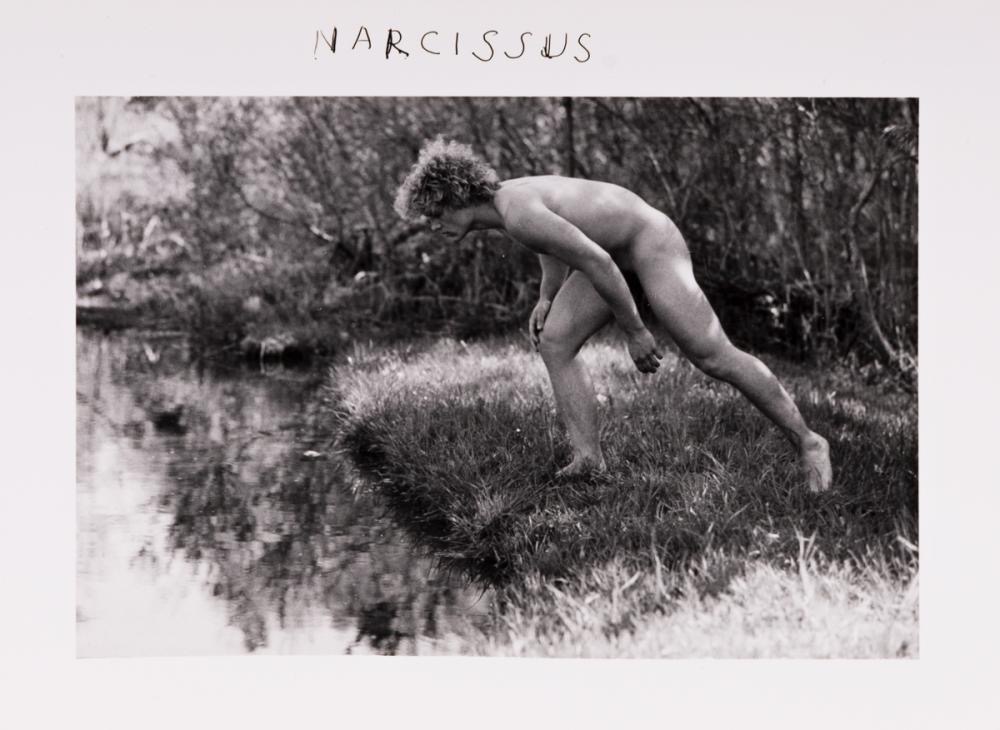
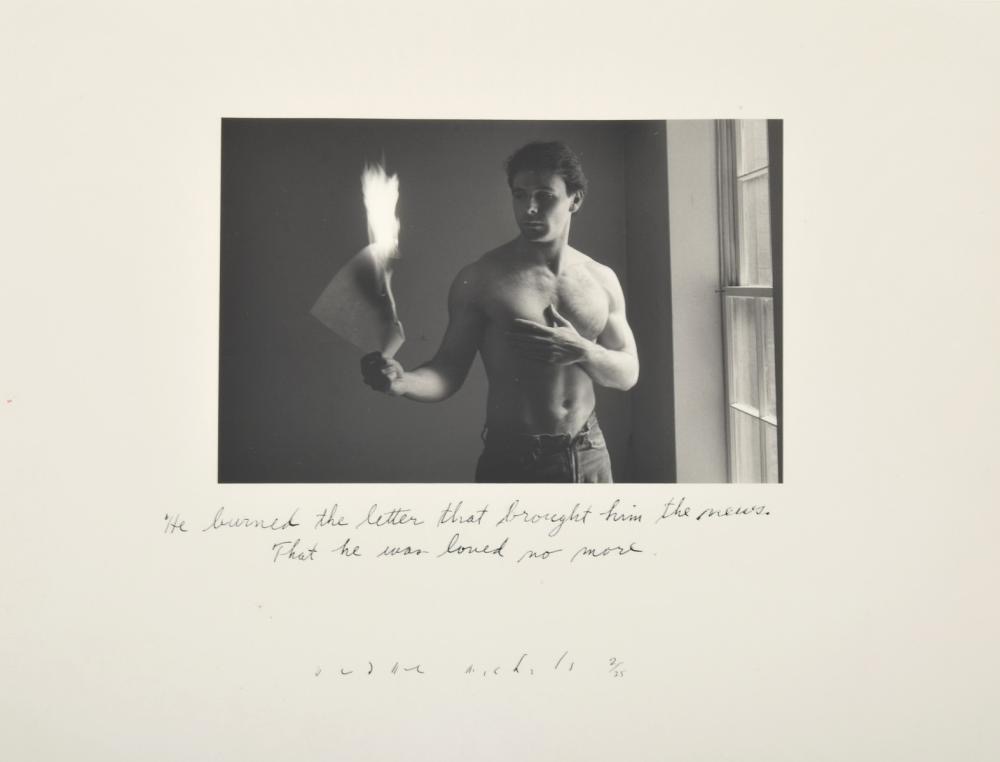
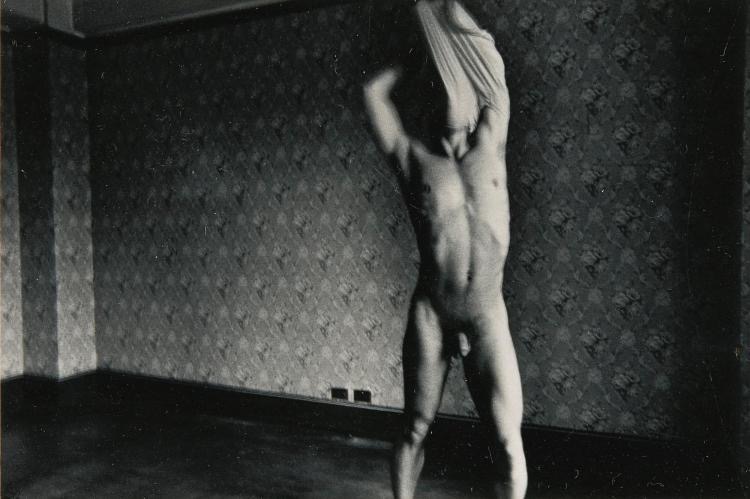
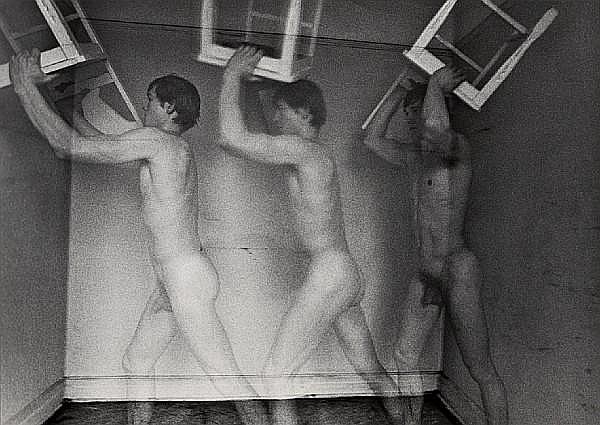
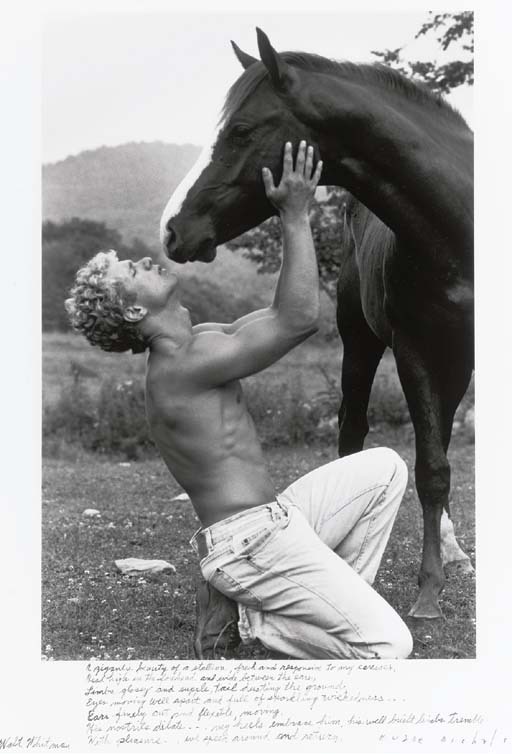
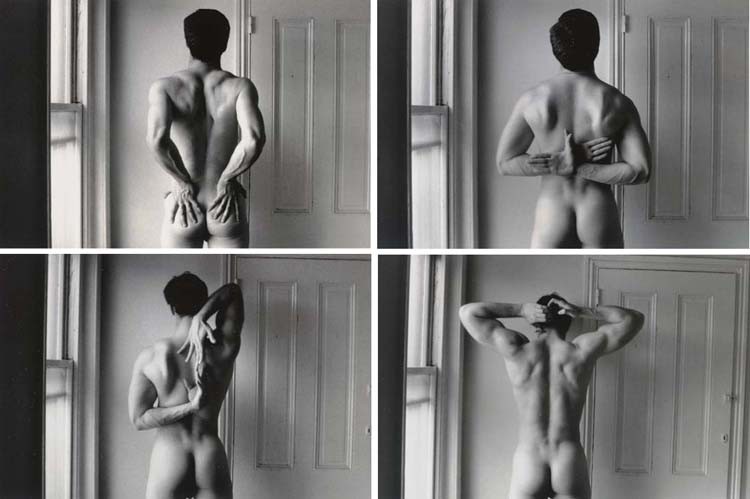

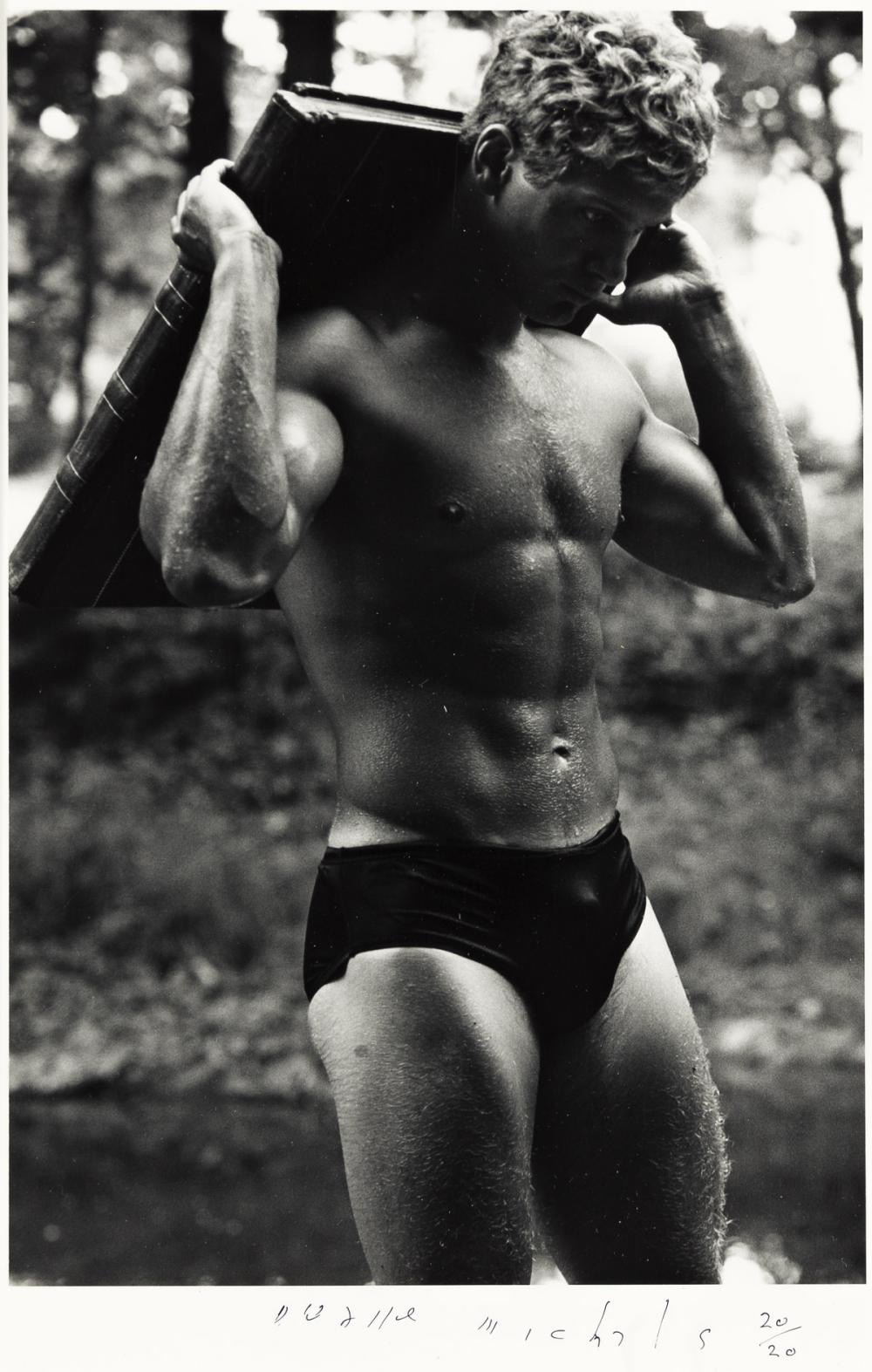
Duane Michals (1932- ) is an influential American photographer renowned for his innovative use of photographic sequences and handwritten narratives that create intimate and poetic visual storytelling. Often blending dream-like imagery with deeply personal themes, Michals pushed beyond traditional documentary photography, favoring staged scenes to explore metaphysical questions, mortality, and human emotion. He used photographic sequences to tell poetic, often erotic, visual stories—like his haunting piece The Most Beautiful Part of a Man’s Body (1974), which explored vulnerability and sensuality through layered narrative. Michals’ pioneering approach profoundly impacted contemporary photography, emphasizing that imagery could embody not only what is seen, but also what is felt, imagined, or deeply desired.
The 1980s–90s: Art in the Shadow of AIDS
As the AIDS crisis devastated the LGBTQ+ community, artists responded with fury, grief, and resilience.
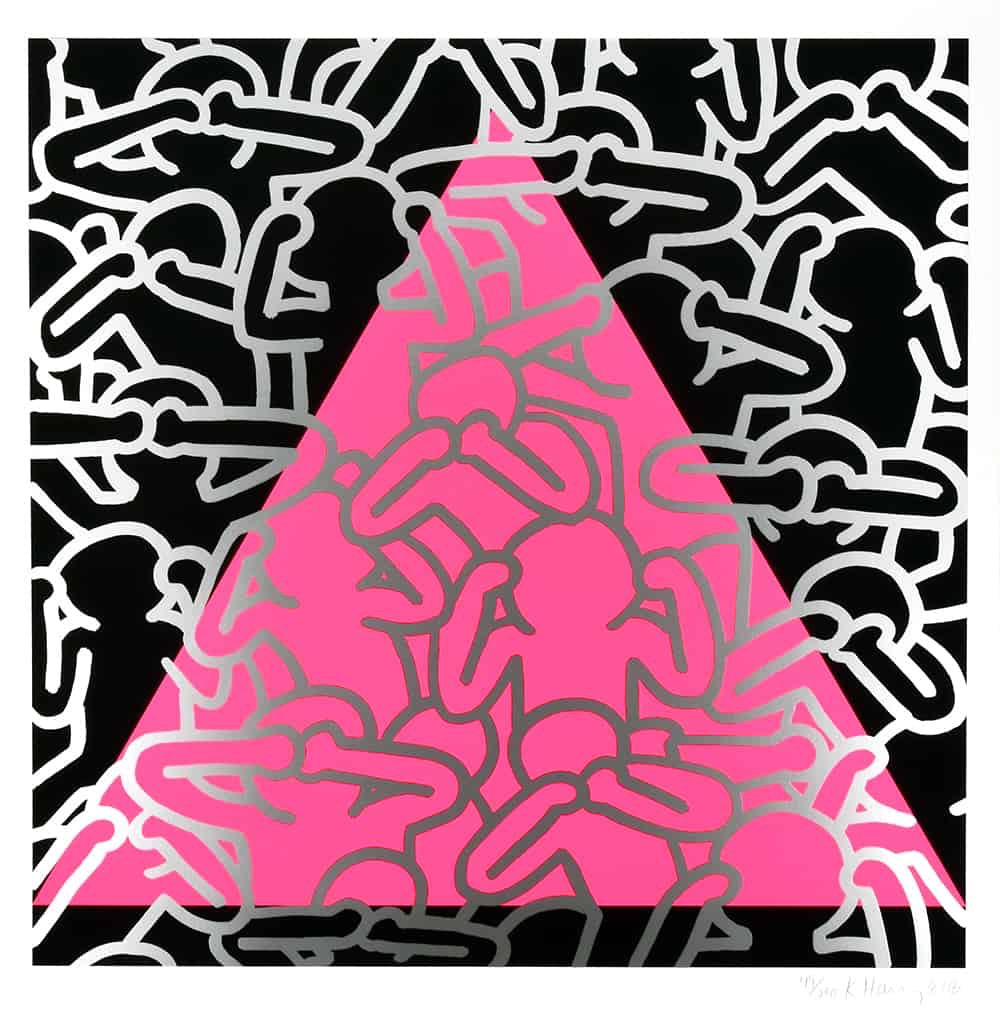
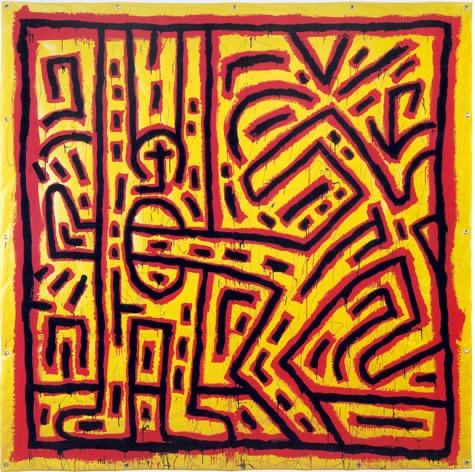
Keith Haring (1958-1990) was a groundbreaking American artist whose bold, neon-outlined figures transformed urban spaces and gallery walls into vibrant canvases filled with queer joy and political urgency. Rising to prominence in the 1980s New York art scene, Haring used accessible imagery and public spaces—including subways and street murals—to communicate powerful messages on sexuality, AIDS awareness, and social justice. His iconic Silence = Death imagery became a rallying cry against apathy and inaction, galvanizing activism during the AIDS epidemic and amplifying voices within the LGBTQ+ community. Haring’s energetic style and activist spirit continue to resonate, ensuring his legacy as an artist who merged exuberant creativity with fearless advocacy.
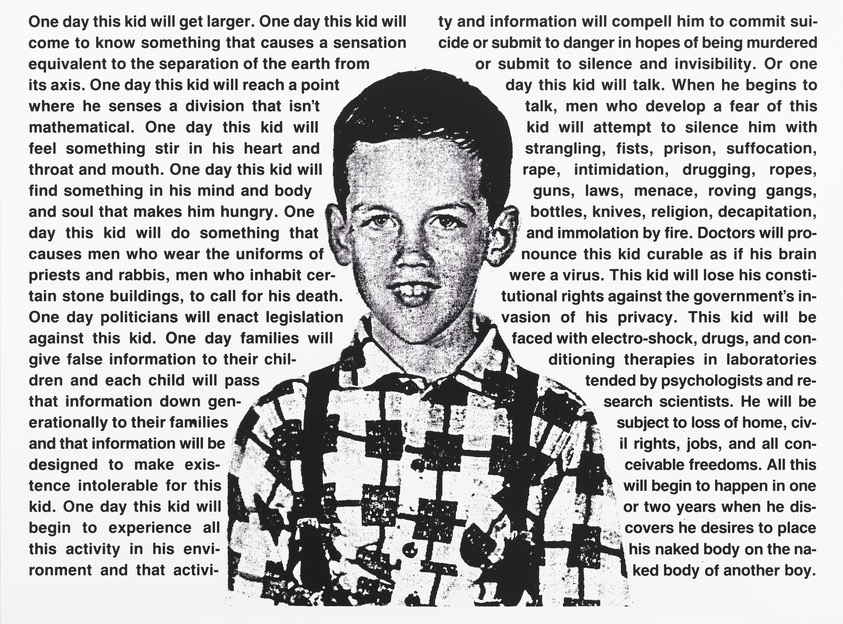
David Wojnarowicz (1954-1992) was a fiercely confrontational American artist, writer, and activist whose work channeled the raw power of queer rage into searing critiques of homophobia, censorship, and government inaction during the AIDS crisis. Emerging from New York’s East Village art scene in the 1980s, Wojnarowicz worked across media—painting, photography, film, and text—to expose the violence and vulnerability of queer existence. His iconic piece Untitled (One day this kid…) (1990) juxtaposes a childhood photo of himself with a prophetic, damning text that lays bare the grim realities faced by queer youth in a hostile world. Unapologetically political and deeply personal, Wojnarowicz’s art remains a visceral reminder of both the pain and defiance at the heart of queer survival.
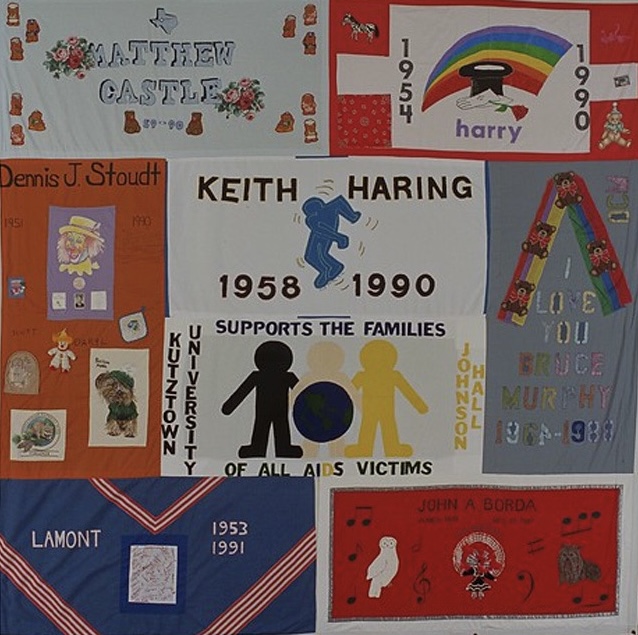
The NAMES Project AIDS Memorial Quilt, begun in 1987, now contains over 50,000 panels. It is both a work of art and a massive, tangible act of remembrance and protest.
2000s–Present: Intersectionality and Expanding the Frame
In recent decades, Pride in art has become more expansive, intersectional, and experimental.
Zanele Muholi, a South African visual activist, documents Black LGBTQ+ life through dramatic portraiture. Their series Faces and Phases offers a powerful visual archive of queer resilience. Mickalene Thomas reclaims the Black female body in rhinestone-studded paintings and photographic tableaux. Her work unapologetically fuses queerness, glamour, and political assertion. See Le déjeuner sur l’herbe: Les Trois Femmes Noires (2010), a reimagining of Manet’s painting through a queer, Black feminist lens. Cassils, a transgender performance artist, uses their body in durational, often physically intense works. In Becoming an Image, they strike a clay block in darkness while a camera flash records the violence—a metaphor for queer visibility and embodiment. Juliana Huxtable, a Black trans artist, poet, and performer, combines Afrofuturism, photography, and digital media to challenge fixed identities. Her self-portraits—gender-fluid, mythic, fierce—embody queer futurity.
More Artists to Explore
- Robert Mapplethorpe – his black-and-white male nudes remain some of the most iconic (and controversial) queer images in American photography.
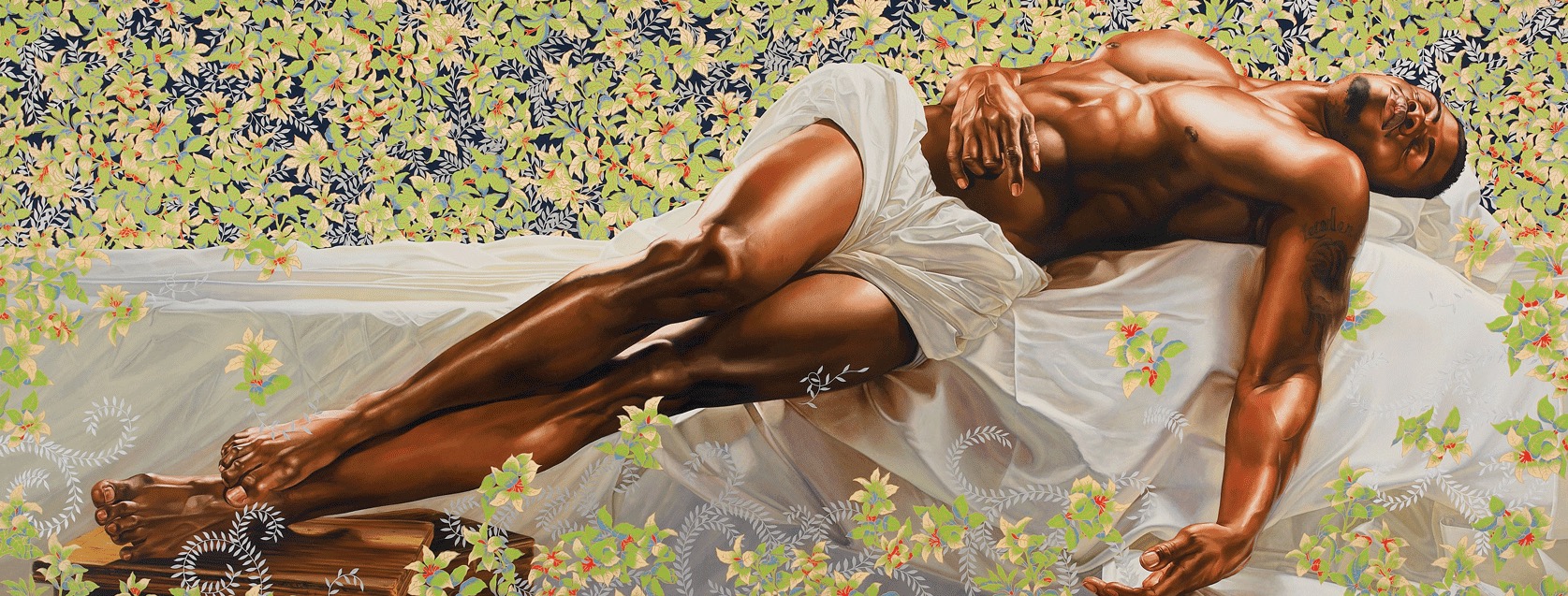
- Kehinde Wiley – while not exclusively queer-themed, his work often presents Black men in romantic or intimate poses, reclaiming both history and homoerotic aesthetic.
- Hunter Reynolds – an AIDS activist and visual artist whose performance pieces and memorial works carry immense emotional and historical weight.
- Gilbert Baker – not only an artist, but the designer of the rainbow flag itself, one of the most enduring symbols of queer pride.
Pride as Resistance and Renewal
From murals to fashion, fine art to graffiti, queer art since 1970 has told the story of a people who refused to be erased. Pride in art has been about more than beauty—it has been about survival, protest, celebration, and memory.
As Pride Month continues, remember that the movement is not only political—it is also creative. And in every painting, photograph, poem, and performance, LGBTQ+ artists have asked the world to see them not just as survivors—but as visionaries.
They Know This Will Kill Kids. They Did It Anyway.
Out of all the cruel, calculated, and heartless things the Trump administration has done over the years, I honestly think this one might be the lowest. And it makes me the angriest. I’m talking about their decision — part of the Republican budget plan from the start — to end an LGBTQ+ suicide prevention hotline by cutting federal support for it.
And let’s be clear: this wasn’t accidental. The Trevor Project, one of the most important and effective crisis intervention services for LGBTQ+ youth, was deliberately targeted in this budget process. The decision to defund this life-saving hotline wasn’t about fiscal responsibility — it was about ideology. About sending a message that these kids don’t matter, don’t deserve support, and should simply disappear from public life.
The timing wasn’t accidental either. It’s one more in a long string of attacks on the LGBTQ+ community that the Trump administration has launched just since the beginning of June. Pride Month — when queer and trans people are supposed to celebrate visibility, survival, and progress — has instead been marked by this administration using every opportunity to roll back protections, erase visibility, and push hateful rhetoric. This move to kill the hotline is cold and calculating — a deliberate choice to cause harm and inflict fear on a vulnerable community during a month meant to honor their dignity.
And for all the Republican talk of being so-called “pro-life”? This is just one more example of how hollow — and frankly how deadly — that slogan really is. They take away social welfare programs that leave children hungry. They gut protections for working families. And now they strip away suicide prevention services for the LGBTQ+ youth most at risk. Let’s be clear: “pro-life” means nothing to them. Their actions reveal the truth — they are pro-death when it comes to the most vulnerable. They are doing everything in their power to remove support and safety nets for those who need them most.
There is also a strong argument that this decision is not only morally and ethically indefensible — it may well violate civil rights laws and open the door to future legal challenges. When the government deliberately strips away access to life-saving services from a marginalized group — one that faces disproportionate rates of harassment, discrimination, and suicide — that can amount to deliberate indifference under civil rights standards. It can also create a chilling effect, reinforcing a climate of exclusion and hostility. Federal agencies are supposed to administer their programs without discrimination, and courts have recognized that targeting specific groups in ways that increase harm may violate constitutional protections under the Equal Protection Clause — or even Title VI or Title IX in certain contexts. This is not just political cruelty — it could, and should, be the subject of serious legal scrutiny.
Let that sink in for a moment. A hotline dedicated to saving lives — to answering desperate calls from LGBTQ+ youth in crisis — is being deliberately shut down. Not because of lack of need. Not because it wasn’t effective. But because this administration is ideologically hostile to those kids’ very existence.
And I do mean kids. Many of the young people who reach out to The Trevor Project and similar hotlines are teenagers — sometimes as young as 11 or 12 — grappling with feelings of isolation, rejection, bullying, abuse. They turn to these hotlines because they have nowhere else to go. And for the government of the United States to turn its back on them — to deliberately erase the “TQ” from its language, to send the message that they don’t exist or don’t matter — is unconscionable.
This isn’t “just politics.” This isn’t about religious differences. This is literally about life and death. Children will die because of this decision. That’s not hyperbole. The statistics on suicide among LGBTQ+ youth are heartbreaking — and undeniable. Cutting off a lifeline will only make it worse.
As someone who grew up in a deeply conservative and homophobic family, I know firsthand how much something like The Trevor Project could have meant. Back in 1994, as a scared teenager who had been taught that my feelings for other boys were sinful — that they would send me to hell — I didn’t understand my own sexuality. I was still in denial, confused, and terrified. But those around me had already convinced me that what I was feeling was evil.
One night, overwhelmed, I swallowed a handful of pills. Thankfully, all they did was make me sick — but at the time, I had no one to turn to. There was no hotline, no safe space, no adult I trusted enough to confide in. I survived, but many don’t. And I can’t help but think how different things might have been if I’d had a resource like The Trevor Project back then. I wish I could do more.
And even if you don’t personally “agree” with LGBTQ+ identity — even if you’re unsure or uncomfortable — how can anyone with a shred of compassion justify abandoning children in crisis? You don’t have to understand every aspect of someone’s identity to care whether they live or die. You don’t have to condone or celebrate LGBTQ+ lives to believe that kids deserve help and hope when they reach out.
I find myself asking: What God do these people believe in? Because it sure as hell isn’t the Christian God I was taught about. The God I believe in calls us to love our neighbor, to comfort the brokenhearted, to bind up the wounded — not to throw them away.
This news honestly makes me want to cry. Not in a performative way. In a gut-wrenching, soul-heavy way. Because I know the reality: young queer kids will be sitting in their rooms, alone, afraid, maybe thinking about ending their lives — and now they’ll have one less place to turn.
How could anyone do this? How could anyone look at a struggling 14-year-old trans kid, or a scared gay teen in a conservative household, and say: We are going to take away your helpline. We are going to pretend you don’t exist. We are going to make it harder for you to survive.
And how can Christians in good conscience support this? Jesus didn’t teach us to abandon vulnerable kids. He taught us to welcome them, to love them, to protect them.
Out of everything this administration has done — all the lies, the corruption, the cruelty — this hits me the hardest. Because these are children. And they deserve better.
And if it makes you angry too — good. Let it. But don’t let it stop there. Speak out. Write. Donate. Support the hotlines that do still exist. Vote.
Most importantly: You can help The Trevor Project continue its life-saving work by donating here: https://www.thetrevorproject.org/donate/. Without government support, they will rely even more on our generosity to keep the hotline going for those who need it most.
Because lives are on the line. And I, for one, refuse to look away.

Nine Years Ago
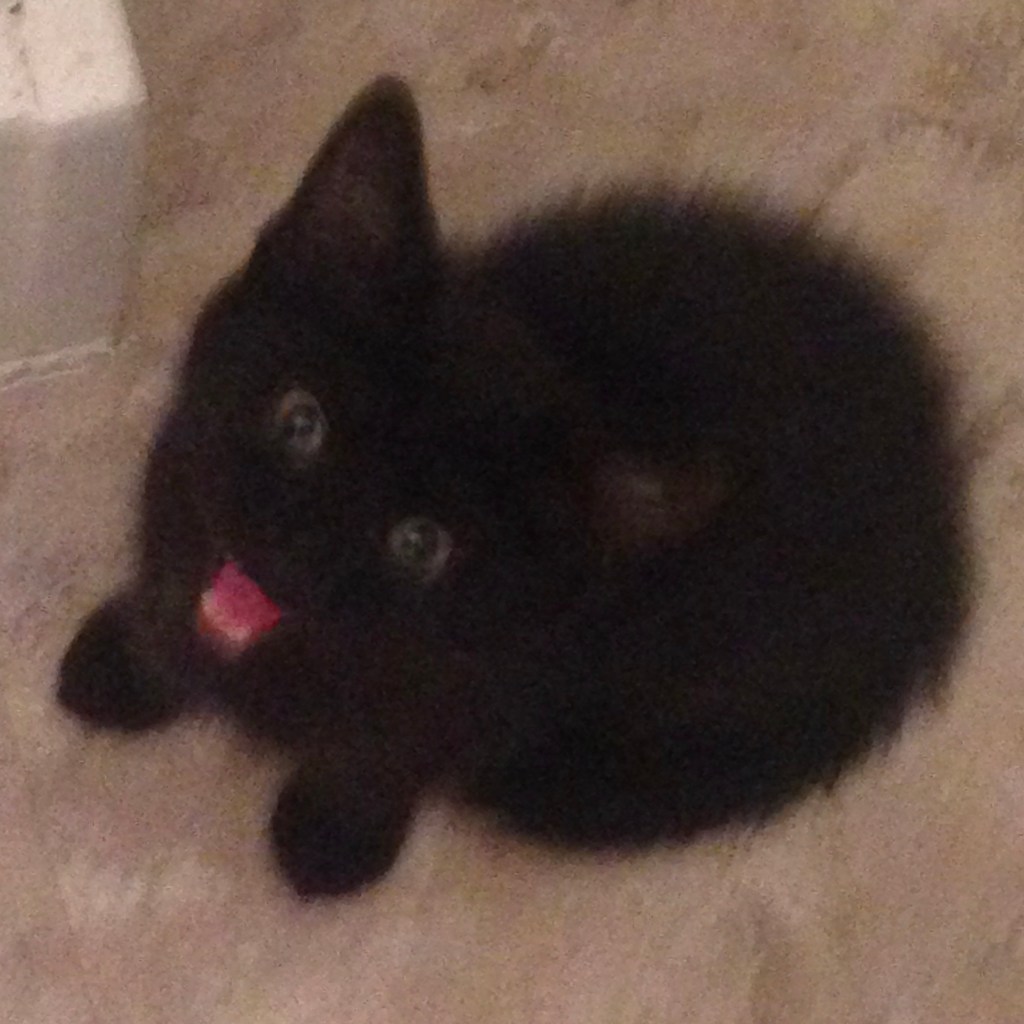
Nine years ago today, I walked into the local humane society and met a tiny, frightened black kitten they had named Bridget. She was crouched low and hiding under a chair, wide-eyed and unsure of the world. I knew immediately that “Bridget” wasn’t her name. My cats have always been named after queens, and while Bridget may be a fine name, there’s never been a Queen Bridget. Elizabeth was out—my sister’s name. And I could never reuse Victoria (aka HRH if you were reading this blog all those years ago), the name of my beloved cat who had passed.
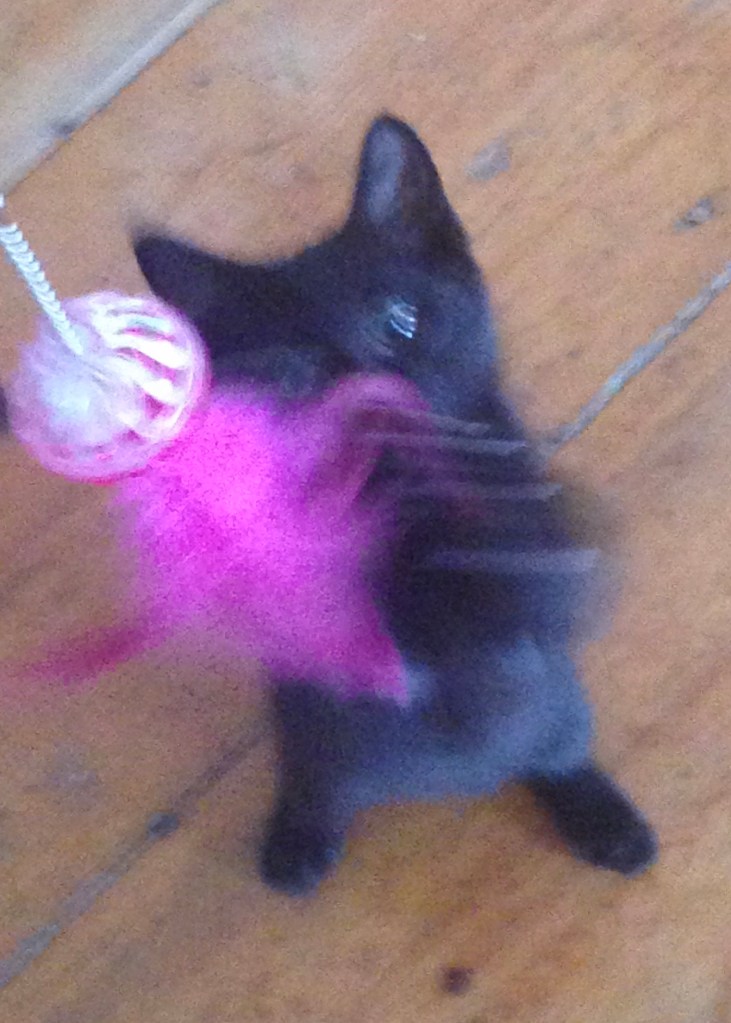
But Queen Isabella of Spain? That felt right. Regal, bold, and destined for her own kind of adventure. So “Bridget” became Isabella, and Isabella became mine.
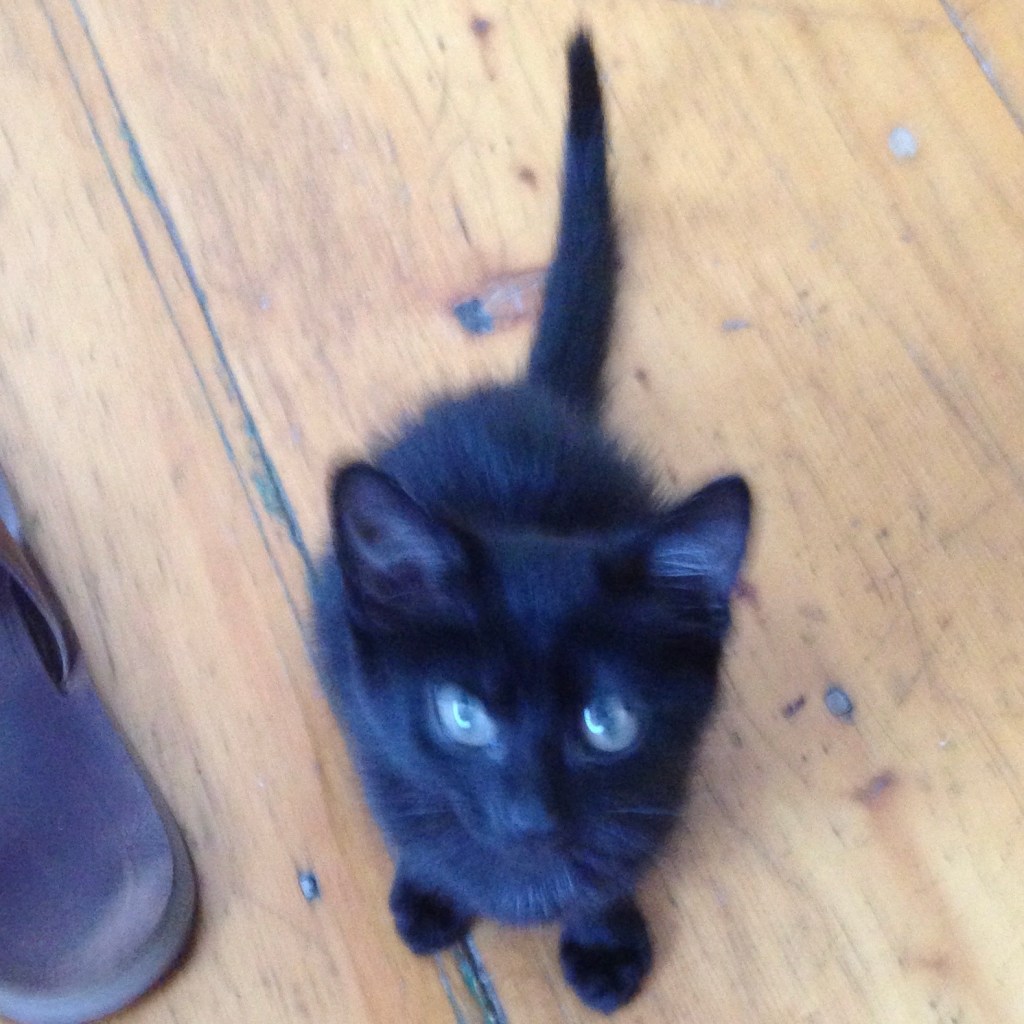
At the time, I was navigating one of the loneliest periods of my life. A dear friend had died the year before, and I was living 1,200 miles from home, trying to find my footing again here in Vermont. What I didn’t know then was how much this tiny creature would help me heal.
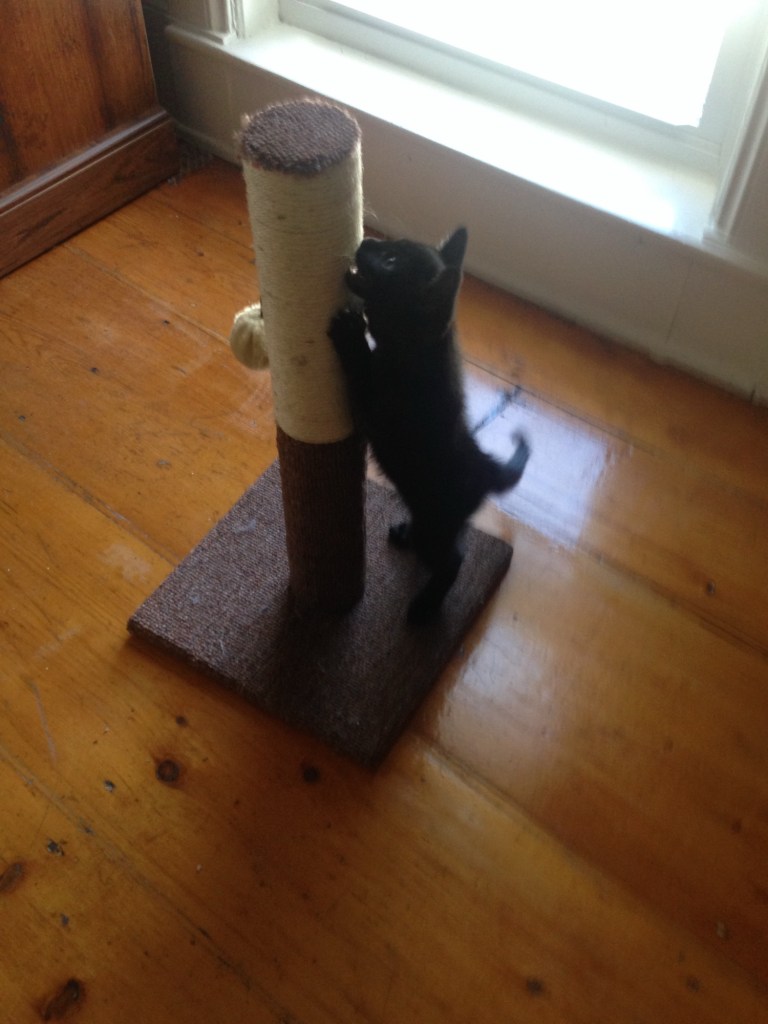
That first week, Isabella mostly hid under the bed. She cried when I left the room. She was timid and unsure. But even in those early days, something began to shift. By the second day, she was climbing onto the bed on her own. By the third, she was letting me pet her. A few days more, and she was confidently dragging toys into her bed and meowing nonstop when I dared to be in another room.
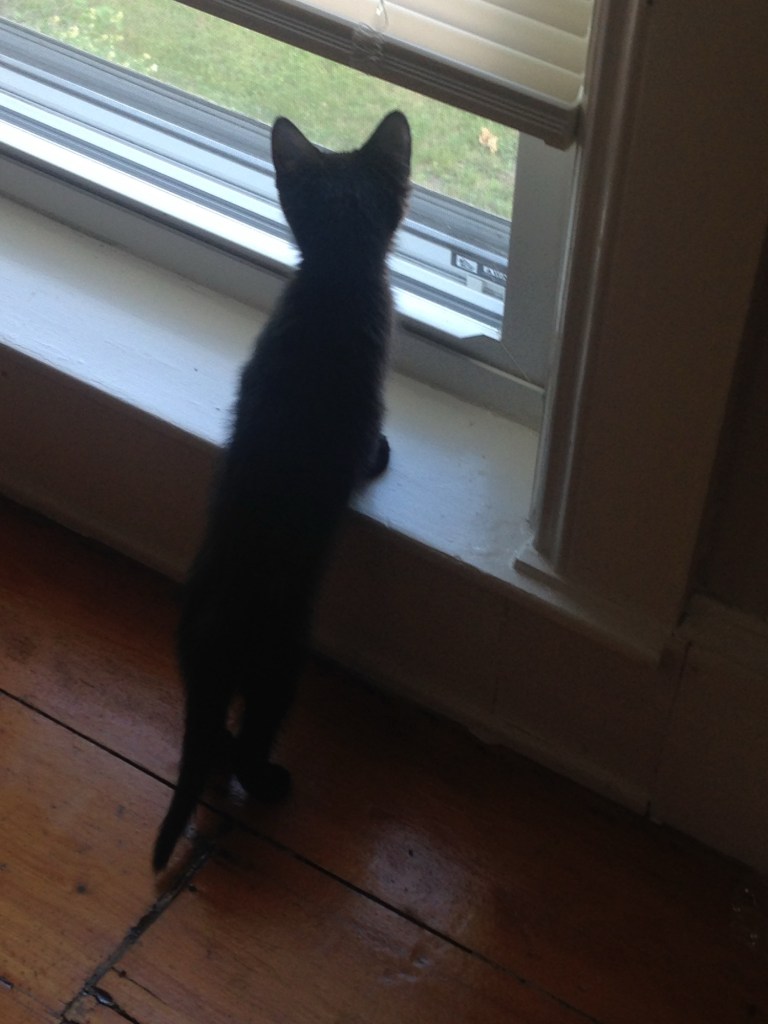
She was skittish, yes—but she was also vibrant and curious, funny and affectionate. She claimed her favorite sleeping spot on a neck massager under the bed, only to sneak onto my chest in the middle of the night. She was a chatterbox, a cuddler, a clown. And most of all, she became the best antidepressant I could have asked for.
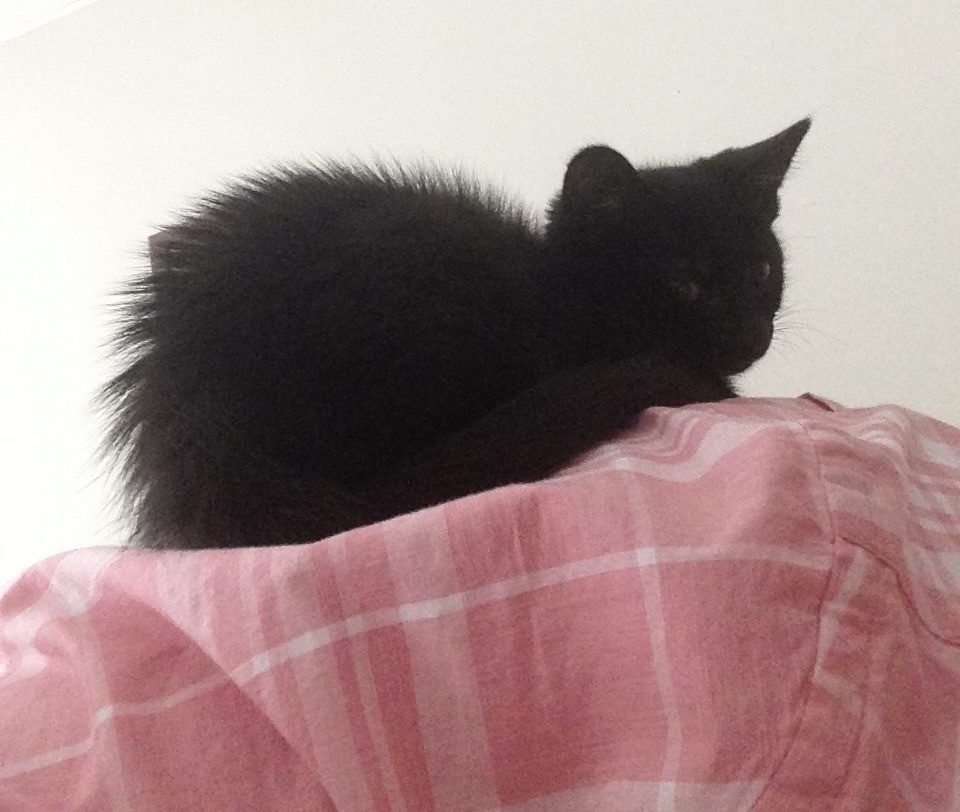
Isabella gave me something I didn’t realize I needed: the daily rhythm of care, companionship, and connection. She reminded me to laugh. To be present. To love again. In those earliest days, when my world still felt uncertain and dim, she brought joy back into the corners of my life.

Today, Isabella is no longer that tiny black fluffball with the wide eyes. She’s older, wiser, still chatty when she wants to complain, still cuddly in her own way—and still the queen of this castle. For nine years, she has been my companion, my comfort, and my fiercely affectionate shadow.
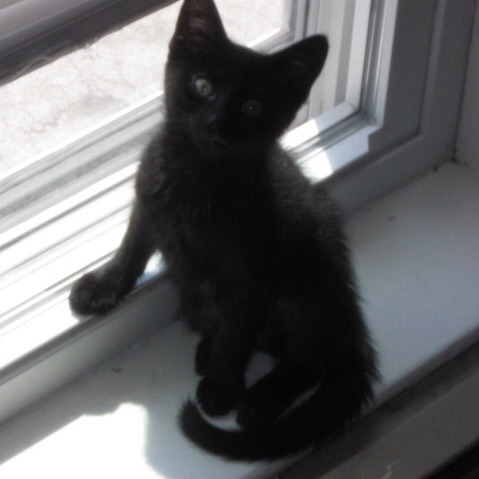
Happy Adoption Day, Isabella! You saved me as much as I saved you.
—
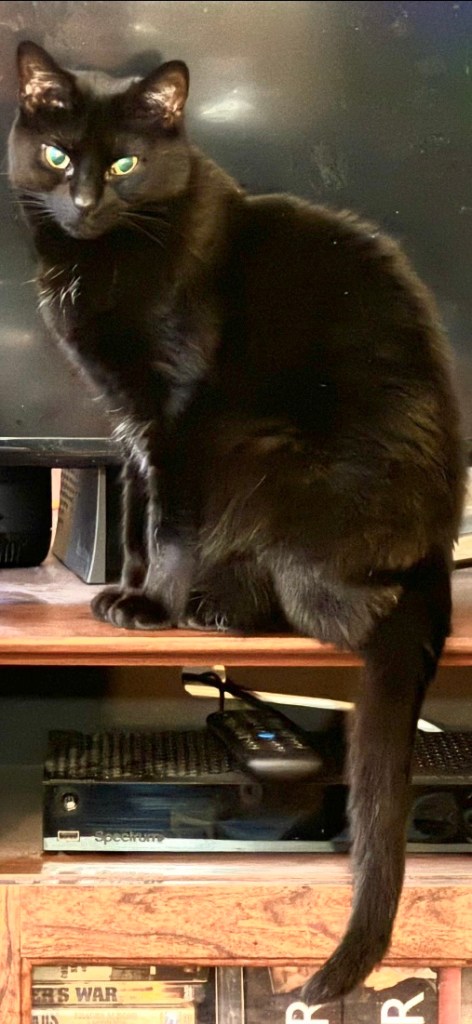
To see Isabella’s journey over the years, visit the archive of blog posts about her here:



Authors
Recent Comments
Michael Edwin Simond… on Drawn to Form: The Academic Nu… vandycolt on Moment of Zen: Fun in the… noisilycool3bc985058… on A Quiet Thursday noisilycool3bc985058… on The Winter War The Winter War | The… on The Broken Dawn Top Posts & Pages




Amazon Associate

As an Amazon Associate I earn from qualifying purchases. So, if you click on a link that takes you to Amazon.com, I may earn a commission.
Trust me, it isn’t much, but every little bit helps.

 Joe
Joe


 The Closet Professor