Our Real Work

Our Real Work
By Wendell Berry

It may be that when we no longer know what to do
we have come to our real work,
and that when we no longer know which way to go
we have come to our real journey.
The mind that is not baffled is not employed.
The impeded stream is the one that sings.

About the Poem

Last night, I asked my friend Casey what his favorite poem is, and he sent me this poem. I was not overly familiar with Wendell Berry, but I thought this poem was just so beautiful. Casey said, “Wendell Berry holds a special place in my heart, because he is an agrarian and his vision of agriculture as taking care of God’s land is beautiful.” The beauty of nature and the belief that God created something as beautiful as the Earth we live on, is truly a wonder in itself.

Berry’s poem “Our Real Work” reflects his deep philosophical and ecological concerns, as well as his belief in the power of humility, intuition, and a deeper connection with life and nature. The poem suggests that uncertainty is not a sign of failure or inadequacy but rather a threshold to deeper meaning and purpose. When we are lost or confused, we may be closer to discovering our true selves and the work we are meant to do. This counters a cultural obsession with certainty, productivity, and control.

Berry contrasts superficial busyness with “our real work” and “our real journey.” These phrases imply a calling beyond societal expectations or material goals. It is only when we lose the sense of direction imposed by external forces that we can connect with something more authentic and profound. The line “The impeded stream is the one that sings” encapsulates the idea that resistance or difficulty can produce beauty, depth, and creativity. Without challenges, life and the mind become stagnant. Struggle is essential to growth, much like obstacles in a stream create its melody. The poem’s emphasis on bafflement and challenge suggests that meaningful engagement requires more than logical thinking. Berry calls for a holistic approach, engaging intuition, creativity, and openness to mystery.

As a farmer and environmentalist, Berry often draws from natural imagery to express his ideas. The stream becomes a metaphor for the human condition, with its impediments giving rise to its “song”—a symbol of life’s beauty and richness born of struggle. “Our Real Work” encourages readers to embrace uncertainty, trust in the process of struggle, and find fulfillment not in achieving clear outcomes but in engaging with life authentically. It suggests that by letting go of the need for control, we can align with a deeper, more intuitive sense of purpose.

About the Poet

Wendell Berry is an acclaimed American poet, essayist, novelist, environmental activist, and farmer. Berry was born on August 5, 1934, in Henry County, Kentucky. He earned his bachelor’s and master’s degrees in English from the University of Kentucky. As a poet, he is celebrated for his eloquent and thoughtful exploration of themes like community, nature, sustainability, and the human connection to the land. He has been a prominent voice in contemporary literature, offering insights into both the beauty and fragility of life, while advocating for ecological responsibility and local living.

After some time teaching and writing in various locations, Berry returned to Kentucky in the mid-1960s, settling on a farm in Port Royal. This return to the land became central to his life and work. Berry is a fierce advocate for sustainable agriculture, criticizing industrial farming practices and highlighting the importance of caring for the earth. His writings celebrate the values of rural living and interconnected, self-sustaining communities. Berry often critiques consumerism, technological dependence, and the alienation of individuals from nature and one another. As a devout Christian, Berry’s work often explores moral and spiritual questions, urging readers to live responsibly and ethically, and as a farmer himself, he writes with intimate knowledge of the joys and challenges of working with the earth.

Wendell Berry remains a significant and influential figure in literature and environmental thought. His work speaks to the interconnectedness of humanity and the natural world, offering a powerful critique of industrialized modern life while providing a vision of harmony, responsibility, and hope.


Pic of the Day


Baby, It’s Cold Outside

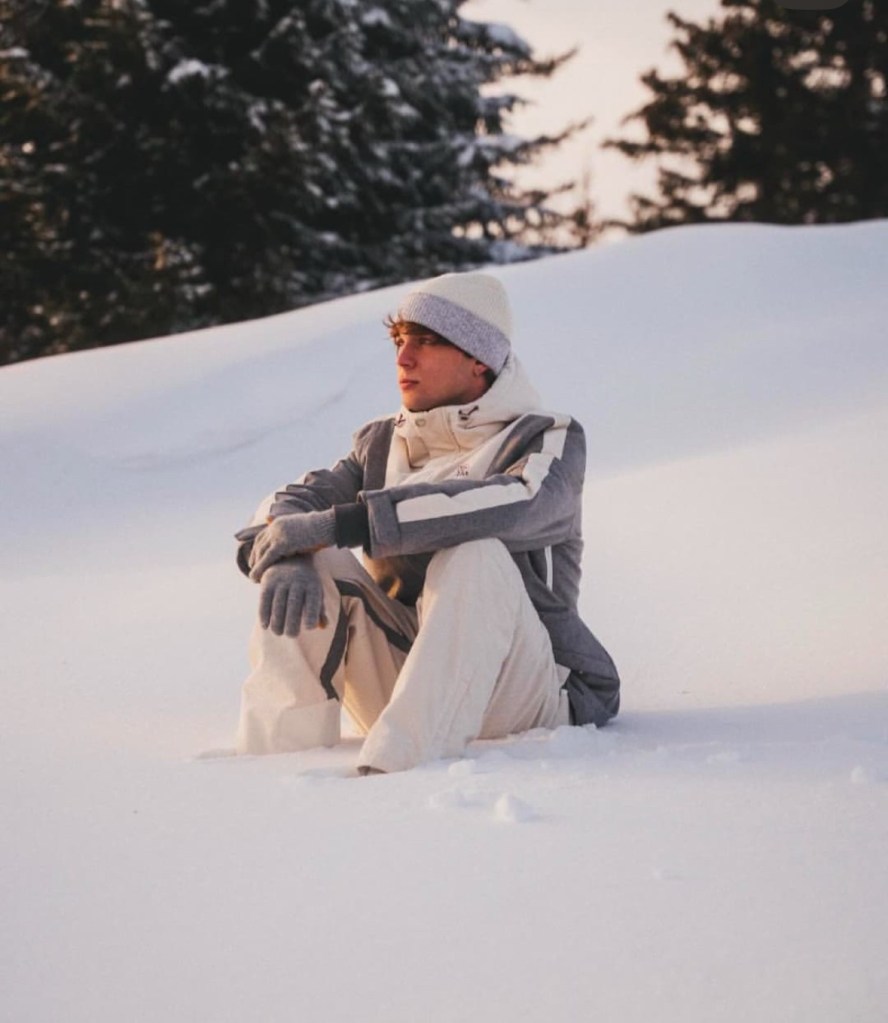
At the moment, it is 5º F this morning. Yesterday, my weather app showed the high today was supposed to only be 8º F; however, this morning, my weather app says that the high should be 17º F. Needless to say, it’s cold outside. The temperatures are forecasted to be cold all week, with windchill temperatures below 0º F. At least we will get some sun today. The weatherman just said that mountain snow is expected Wednesday, Thursday, and Friday. As a rule, I’m not usually affected by mountain snow, but we might get 2-4” of snow on Wednesday. Regardless, snow has not stopped falling for days now. Most of the time, it has been very light snow, but snow nonetheless. I wish I did not have to leave my apartment today, but I have to go to work. 

Wherever you are, I hope you stay warm and safe today and have a wonderful week ahead!


Pic of the Day


Epiphanies

Then, being divinely warned in a dream that they should not return to Herod, they departed for their own country another way.

—Matthew 2:12

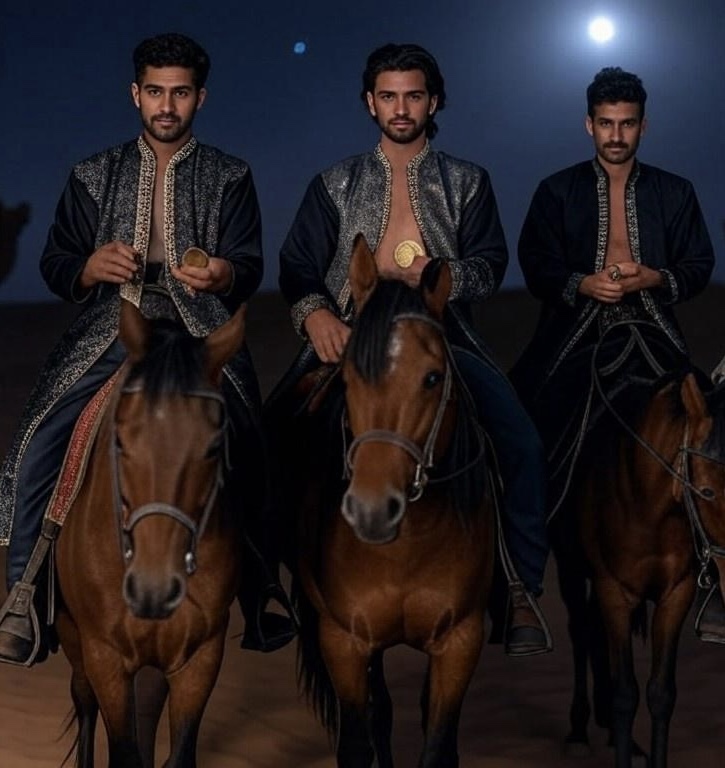
The story of the Magi is a central part of the nativity narrative in the Gospel of Matthew (Matthew 2:1–12). It recounts how a group of wise men from the East traveled to visit the infant Jesus after his birth. The term “Magi” refers to a priestly class or group of wise men from Persia or the broader region of the East. Historically, the Magi were part of the Zoroastrian priesthood, renowned for their expertise in astrology, dream interpretation, astronomy, medicine, and religious rituals. They were scholars, philosophers, and advisors who held significant influence in royal courts, interpreting celestial phenomena as signs of divine activity. 

The Magi mentioned in the Bible followed a special star, often referred to as the “Star of Bethlehem,” which guided them westward to Judea. Upon arriving in Jerusalem, they inquired about the newborn “king of the Jews.” This disturbed King Herod, who consulted his advisors. They pointed to prophecies indicating that the Messiah would be born in Bethlehem. Herod secretly met with the Magi, asking them to report back once they found the child, claiming he wished to worship him. In truth, Herod intended to eliminate this perceived threat to his throne. 

Guided by the star, the Magi found Jesus and worshiped him, offering gifts of gold, frankincense, and myrrh. These gifts carried deep symbolism: gold for His kingship, frankincense for His divinity, and myrrh, a burial spice, foreshadowing Christ’s suffering and death. Warned in a dream not to return to Herod, the Magi departed for their country by another route, forever changed by their encounter with Jesus. 

The story of the Magi emphasizes the recognition of Jesus as the Messiah by both Jews and Gentiles, represented by these wise men from afar. It signifies the universal nature of Christ’s mission. The details of their visit remind us that transformational experiences often lead us to change our path. 

As gay Christians, many of us have had moments of epiphany in our lives. For some, it is the realization and acceptance of our sexuality. Perhaps, you have also come to understand that your identity is not a curse but a gift from God. Tim Cook, the CEO of Apple, beautifully expressed this sentiment: “I’m proud to be gay, and I consider being gay among the greatest gifts God has given me.” 

Growing up in a non-affirming church can make this realization even more profound. For many, the Churches of Christ have not been welcoming to LGBTQ+ individuals. I vividly remember one sermon following the Obergefell v. Hodges decision that legalized gay marriage in the United States. My minister, who had often preached on love as the greatest Christian virtue, suddenly turned to condemnation. Using Old Testament verses, he argued that the laws of the Jews had not been overridden by the New Covenant brought by Jesus, a belief diametrically opposed by the doctrine of the Churches of Christ. 

This sermon became a turning point for me. It reminded me of the moment in Matthew 21:12-17 when Jesus cleansed the temple, overturning the tables of those who distorted God’s Word. It was another epiphany in my life—a moment when “something like scales fell from my eyes” (Acts 9:18). I realized that my identity as a gay man would never be fully embraced in that church. Yet, this did not weaken my faith. Instead, it strengthened my belief that one can be both LGBTQ+ and Christian. 

The Bible does not preach hate. Jesus, who surely was aware of homosexuality, never once condemned it. Instead, he consistently taught love, honesty, and humility, condemning hatred, greed, and hypocrisy. That sermon did not drive me away from my faith; it pushed me to recommit to living a life guided by Christ’s example. 

What are the moments that have transformed you? When have you experienced epiphanies about your faith, identity, relationships, or purpose? Like the Magi, we are often called to take a different path after these moments of revelation. These experiences are holy; they guide us closer to the truth. 

Take a moment to reflect on your epiphanies. Name them, honor them, and recognize their sacredness. In John 14:6, Jesus said, “I am the way, the truth, and the life. No one comes to the Father except through Me.” Let us continue to seek and follow Him, trusting that God will always guide us to the truth. As Jesus told the Jews in John 8:31-32, “To the Jews who had believed him, Jesus said, ‘If you hold to my teaching, you are really my disciples. Then you will know the truth, and the truth will set you free.’”


Pic of the Day


Moment of Zen: Mark Ciccarelli

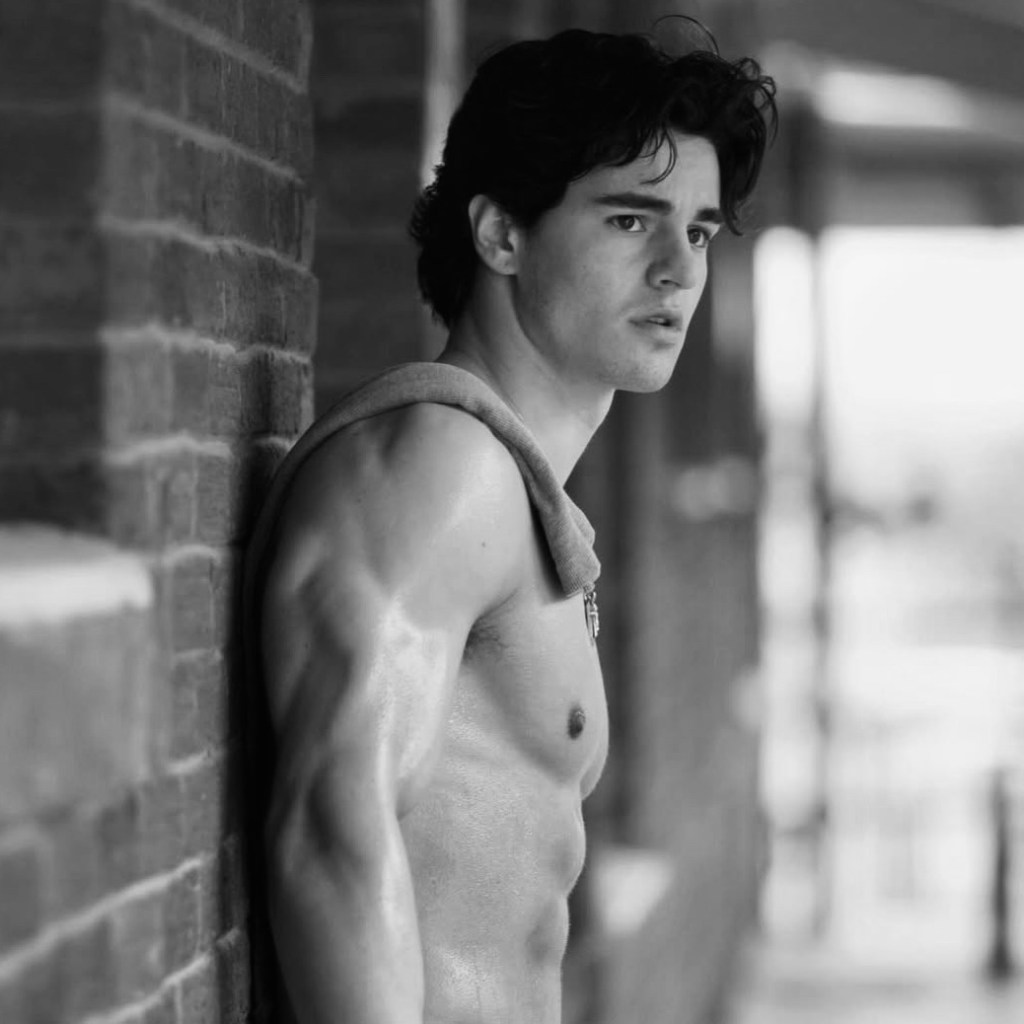
I don’t know a lot about Mark Ciccarelli. He’s an actor based in Los Angeles, CA and a former division II football player, who is presently exploring opportunities in film, television, and print. I came across his Instagram (@Mark_Ciccarelli), and I thought he was hot. So, he’s my Moment of Zen this week.


Pic of the Day


WFH Friday

Thank goodness, I am working from home today. We got more snow last night, and I really don’t want to get out in it. Plus, I went to bed early last night because of a bad migraine. I was actually on the couch watching Jeopardy, and I fell asleep before seeing Final Jeopardy. I love watching Jeopardy, so for me to fall asleep during it, it should be a sign that I was really feeling awful. I still have the same migraine this morning.

I have a few work things I need to do today, but it’s mainly to answer some emails. However, I also need to complete some final preparations for my class that starts next week. I am both excited and anxious about my class. I have taught World History, American History, and Art History, but I have never taught a college class that I have designed myself, and especially one without a textbook. No textbook exists for what I am teaching. I have created classes from scratch for high school classes but not for college and especially not for a mix of undergraduate and graduate students. It’s a subject I know a lot about, and probably one of the few experts today on this particular subject, but it’s all rests on me. It’s a new experience and while I know my subject, I think most of us can agree that a fair amount of anxiety goes with all new experiences.

One last thing, my visit with my doctor went well yesterday. There were several things I wanted to discuss with him, and it all went well. There was a new medicine I was hoping to talk to him about for my sleep apnea, and he actually brought it up first. I have trouble with waking up with a headache due to my CPAP, so I would love to be able to sleep without it. Also, I have had shoulder pain for several months. He told me it was a rotator cuff injury, but not a tear, so it won’t need surgery (this was my biggest fear), just physical therapy and a possible injection if PT is not enough. We also discussed my mother’s dementia. He understood what I was going through because he is going through a similar situation with his own mother. All in all, it was a good visit. My A1C, heart, and lungs are all good. I did not have a comprehensive metabolic panel done, but that will be done at my next visit in four months.

I forgot to add this to yesterday’s post, but here’s your Isabella pic of the week:


Pic of the Day