Tonight’s pic of the day begins my annual 12 Days of Christmas posts. This year, I plan to post for the 12 days before Christmas, like I normally do as a Christmas countdown, but I will also post pics for the actual twelve days of Christmas that fall between Christmas Day and the Epiphany.
I’m planning on a pretty relaxing and chill (and chilly) weekend. I have a get together at a friend’s house tomorrow night, but otherwise, I’ll be spending time with Isabella and keeping warm. We are expecting sunny weather this weekend but also lows in the single digits and highs in the 20s. I honestly don’t mind the cold as long as there isn’t a lot of wind, and it looks like this weekend won’t be too windy.
Well, that’s about it for today. I don’t have much to say really. It’s a work from home day, so my chill weekend will start early. Have a great weekend everyone!
George Eliot is quoted as saying, “It is never too late to be what you might have been,” and I feel like that describes my life in a way. All through high school and most of college, I aspired to be a lawyer; however, after working for a lawyer for a couple of years, I realized that I did not really want to go into law. I eventually decided that I’d rather be a teacher. I had always thought that maybe I could teach adjunct or teach in some way if I became a lawyer, but I finally came to the decision that I’d be happier as a teacher. That decision led me to go to graduate school because I wanted to teach history in college, and while I did teach college classes, that never became a full-time reality. I ended up teaching high school for five years, five stressful and painful years. When I left my job as a teacher, I realized that I wanted to work in museums. I was in my late thirties and decided to make another career change. My job search led me to finding a job in Vermont, somewhere I had never considered living. However, I have found that I love my job, and I love Vermont. I not only get to teach and work in a museum, but I also became a professor, which I never thought would be possible when I abandoned my PhD. I especially never thought I would ever get the chance to teach about my research, but I will be doing just that next semester.
We have the possibility of personal growth and transformation at any stage on our life. We just have to seize the opportunity when it presents itself. The sentiment encourages people to recognize that their past choices or circumstances do not have to define their future. It conveys a message of hope and empowerment, suggesting that individuals always have the opportunity to change, pursue their passions, or fulfill untapped potential. The above quote form George Eliot challenges the idea that there’s a fixed timeline for achieving one’s goals or becoming the person one aspires to be. They imply that the capacity for reinvention and progress is boundless, provided one has the will and determination to take action. This perspective aligns with her broader literary themes of human resilience, moral growth, and the importance of striving for a meaningful life despite difficulties or setbacks.
Alexander Graham Bell is often given credit for the quote, “When one door closes, fortune will usually open another.” The quote actually comes from Fernando de Rojas (c. 1465–1541), a Spanish author best known for writing La Celestina, one of the most significant works of Spanish literature and a precursor to the Spanish Golden Age. It doesn’t really matter who said it first, since it has been said many times, but it’s true. When I had to leave my PhD program because I could not longer afford to continue, I was devastated and thought I’d never be the professor I had aspired to be. When I lost my job teaching high school (I was replaced by a coach), I was devastated and thought my teaching career was over. When I found out my original position at my museum was ending, I didn’t know what I was going to do. However, it eventually led to my current position and my appointment as a professor at my university.
We never know where our lives will lead us or what path our lives will take. Sometimes, it is a bumpy, uneven path, sometimes we may veer off the path and get lost in the woods, but if we allow ourselves to get back on the path, we will eventually reach our destination. When you are feeling lost, know that the path is still there, you just have to find it again.
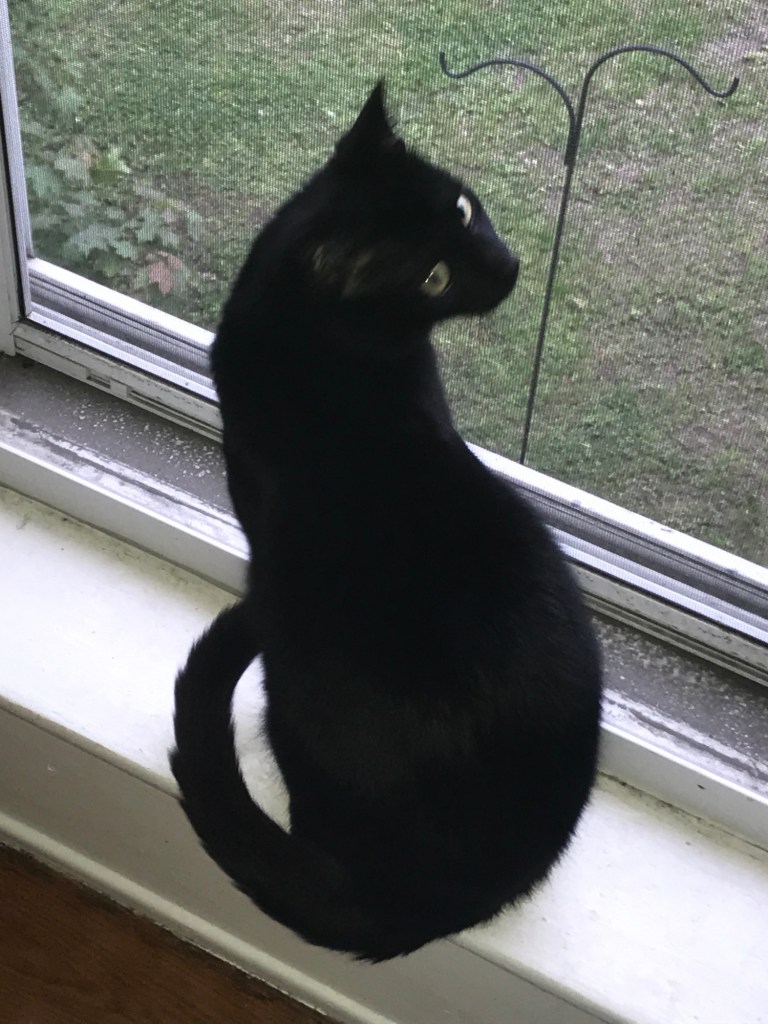
Since it is Thursday, here is your Isabella pic of the week:
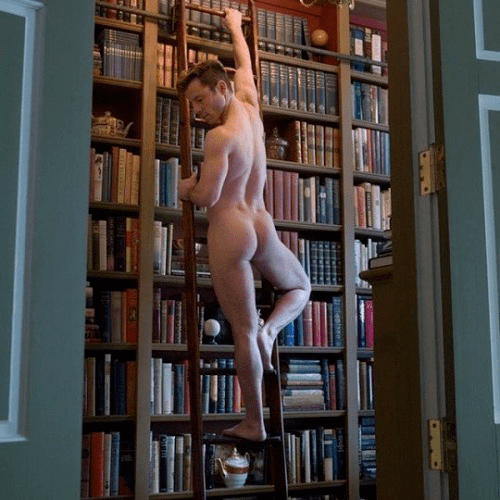
How is it possible that it is only Wednesday? Monday dragged on, and while Tuesday went by fairly quickly, I was busy all day. This week has felt like it is dragging very slowly, like Friday is an eternity away. Yesterday did not feel like a Tuesday at all, and now I have to face Wednesday. I was hunched over my computer all day at work yesterday (obviously with clothes on and not like the model above) preparing for a class, and though I got up a few times for this or that, I felt absolutely exhausted by the time I got home. It was one of those tirednesses that take over your whole body. By the time I got inside my apartment, my body was screaming to get out of my work clothes and lay down and not ever move again. Obviously, I did move again because I eventually had to heat up my dinner. It wasn’t really any better last night when I went to bed or, for that matter, this morning when I woke up. I have a busy day of stuff today as well. Maybe today will fly by quickly. Then, I’ll do it all again tomorrow.
If only I were independently wealthy, then I could be on a warm beach somewhere, or if I had to be somewhere cold, a nice chalet in the Alps. Maybe I’d be in an apartment in Florence overlooking a piazza or in Venice looking out the window overlooking the Grand Canal. Whatever it would be, I’d be enjoying a good book and putting all my worries aside, at least for a little while. I guy can dream, can’t he?
Sitting under the mistletoe (Pale-green, fairy mistletoe), One last candle burning low, All the sleepy dancers gone, Just one candle burning on, Shadows lurking everywhere:
Some one came, and kissed me there. Tired I was; my head would go Nodding under the mistletoe (Pale-green, fairy mistletoe), No footsteps came, no voice, but only, Just as I sat there, sleepy, lonely, Stooped in the still and shadowy air Lips unseen—and kissed me there.
About This Poem
Walter de la Mare’s poem “Mistletoe” is a beautifully atmospheric work that combines themes of nature, mystery, and enchantment. “Mistletoe” evokes a sense of quiet wonder as it explores the magical, dreamlike quality of a wintry night. The poem intertwines elements of the natural world, the spiritual, and the fantastical. The central theme revolves around transformation and the mystical interplay between the visible and invisible worlds.
De la Mare excels in creating vivid and haunting imagery. The titular mistletoe, often associated with folklore, magic, and romance, becomes a symbol of mystery and enchantment. The poem’s setting—likely a winter night—heightens its mystical atmosphere. De la Mare uses sensory details to envelop the reader in a dreamlike world, where reality and imagination blur. For example, the quietness and coldness of the environment emphasize solitude and stillness, drawing the reader into a reflective, almost meditative state.
While the poem seems simple on the surface, it carries a profound exploration of the human response to nature’s beauty and the unknown. The mistletoe, often suspended in air and shadow, can be seen as a metaphor for fleeting moments of magic or insight that hover just beyond our grasp. In essence, Mistletoe invites readers to reflect on the wonder of life and the thin veil between the mundane and the magical, suggesting that there’s always more to the world than what meets the eye.
About the Poet
Walter de la Mare (1873–1956) was a renowned English poet, short story writer, and novelist, best known for his imaginative and often haunting works that explore themes of childhood, dreams, mystery, and the supernatural. His lyrical style and evocative imagery have made him one of the most distinctive voices in 20th-century English literature.
He was born on April 25, 1873, in Charlton, Kent, England. He was the son of a civil servant and spent his early years surrounded by books, fostering a love for literature and storytelling. Before becoming a full-time writer, de la Mare worked as a clerk at the Anglo-American Oil Company, a job he held for nearly two decades. During this time, he wrote prolifically, often under the pseudonym “Walter Ramal.”
His first major collection, Songs of Childhood (1902), brought him recognition, but he gained wider fame with The Listeners (1912), which contains his iconic poem of the same name. De la Mare’s literary career spanned over five decades, during which he wrote numerous poems, novels, short stories, and children’s books. He was awarded the Order of Merit in 1953 and passed away on June 22, 1956, at the age of 83.
De la Mare often explored the imaginative and perceptive world of children, celebrating their sense of wonder and connection to the mysterious. Many of his works are infused with an eerie, dreamlike quality, blending the real and the fantastical. His poems frequently celebrate the beauty and mystery of the natural world, often imbuing it with spiritual or mystical significance. Known for his musicality, de la Mare’s work is characterized by its rhythm, alliteration, and vivid imagery.
Walter de la Mare’s works continue to be appreciated for their ability to capture the magic and mystery of human experience. His poetry and stories often transcend age, appealing to both adults and children alike. His unique voice, blending simplicity with profound insight, secures his place as one of the most enduring writers in English literature.
No doubt about it, Mondays suck! Y’all have heard me say this before, but I feel this way every Monday that I have to go to work. It’s not like I don’t wake up on the weekends at the same time as I do on weekdays. Isabella doesn’t recognize whether it is a weekend or weekday; she wants to be fed. I went to bed early last night. I fell asleep while reading sometime between 7:00 pm and 7:30 pm, and when I woke up, I decided that I just needed to go back to sleep. I tried to stay up a little while longer, but I was asleep again by 9:00 pm. I mention this for two reasons: 1) when I go to bed early, it messes up Isabella’s internal clock, and she tries to wake me up earlier than usual, and 2) I woke up not feeling like I had slept longer than usual. I could have probably ignored Isabella a bit longer, but I could not ignore my bladder.
The good news is that I don’t really have to deal with people today, unless we get visitors to the museum who actually need me for something. My coworkers will not be at work today because one coworker, who is always off on Mondays, had other commitments that could not bear change and the other had something urgent come up that called her away from the office. I don’t mind being there by myself. There will be people in the library but they rarely bother me. It’s our last week with students on campus, so everyone will be busy with final exams making it even quieter. They will be back after winter break. It should be a peaceful day. I can get work done that interruptions would have been an annoyance, and I can be more relaxed, meaning I can read a book. I actually have two books that are part of work that I need to read and a few journal articles to read that I will probably assign to my class next semester, so it might not be reading for pleasure like I’d prefer, but we’ll see how that goes.












 Joe
Joe





 The Closet Professor