

✨ Once upon a time, there was a reindeer who sparkled a little differently… 🌈✨
This is a fairy tale about joy that refuses to be dimmed, about glitter that outshines greed, and about choosing celebration when the world insists on silence. It’s a story for anyone who has ever been told to tone it down, stand in line, or make themselves smaller—and decided instead to shine.
Glitzen the Glitter-Nosed Reindeer is a tale of hope, courage, and unapologetic fabulousness. A reminder that being yourself is an act of bravery, that joy is powerful, and that light always finds a way back.
Pull up close.
The bells are ringing.
The glitter is flying.
And Christmas—real Christmas—is about to begin.
Glitzen the Glitter-Nosed Reindeer

Early one May at the North Pole, one of Santa’s reindeer gave birth to a little reindeer. When the newborn stood for the first time, he promptly tipped forward—straight into a pile of glitter meant for Santa’s toy shop. Laughter rippled through the stable as the little fellow wobbled back onto his shaky legs, his nose completely covered in sparkle.
His mother smiled and decided then and there to name him Glitzen—a portmanteau of her father Blitzen’s name and the glitter he had tumbled into. As Glitzen grew, everyone noticed that his nose never stopped shimmering. It seemed he could never quite rid himself of that glitter from his very first encounter with the world.
The young buck reindeer laughed at him and called him names. Glitzen knew he was different. Instead of playing reindeer games with the other bucks, he preferred to prance and dance with the does. He felt far more comfortable in their company, and they never mocked him or made him feel small. Glitzen always seemed to know exactly how to make the does—and everything around them—more fabulous.
He had a natural instinct for fashion and decorating, an eye for sparkle and balance. The bucks wanted nothing to do with him. His parents loved him dearly, though his father was often a little embarrassed by his son. His mother, however, understood. She loved Glitzen’s confidence and admired how he remained true to himself, even when the other reindeer bullied him.
One year, the world beyond the North Pole grew especially dark.
Across the Earth, a cruel and crooked dictator had risen to power. He ruled by fear, lies, and greed, demanding that the world worship him and his avarice above all else. He renamed cities, buildings, and institutions after himself, insisting his name be spoken everywhere, carved into stone and stamped in gold. Vast, glittering monstrosities were built in his honor—towering, hollow things—constructed by draining money, food, and comfort from ordinary people who could scarcely afford to lose any more.
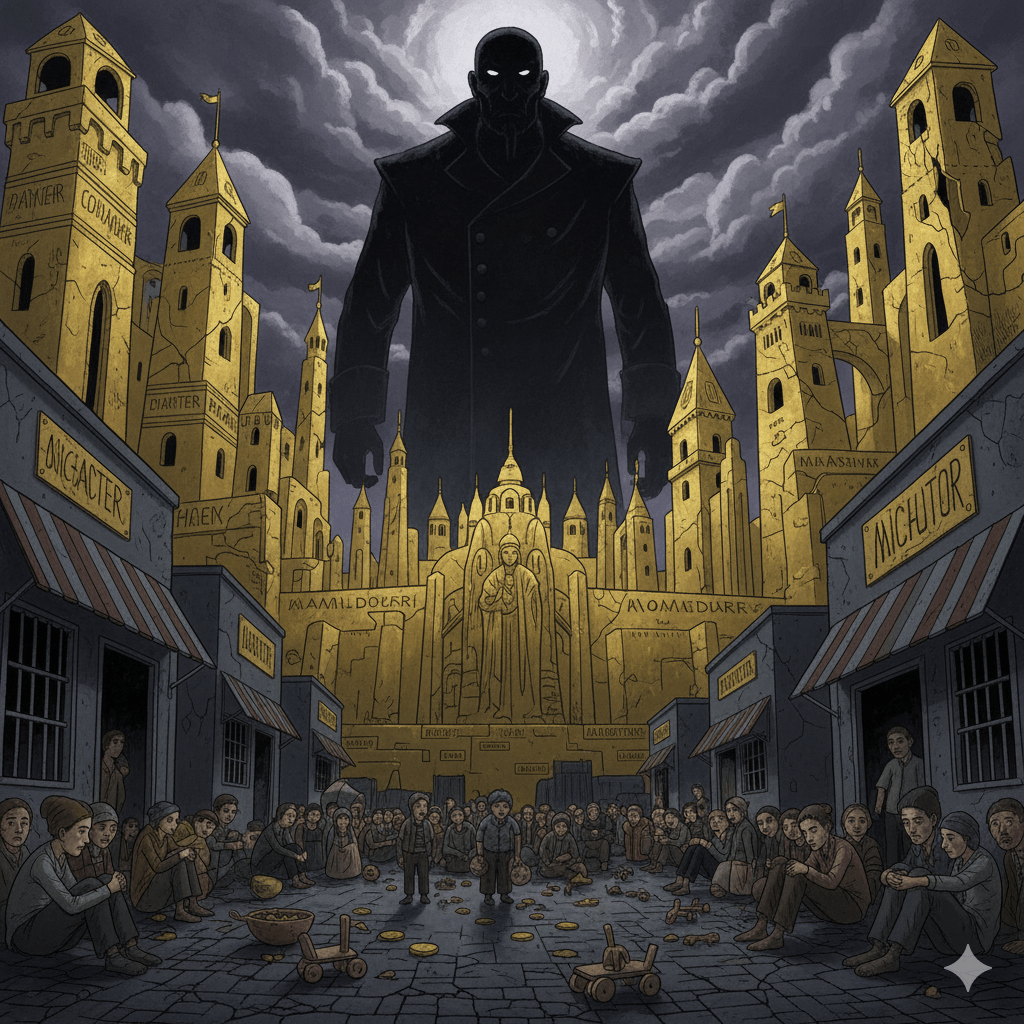
Music was silenced. Color was discouraged. Celebration was mocked as weakness. People were told to fall in line, to stop dreaming, to stop being themselves. Hope, the dictator declared, was dangerous unless it served him.
And as the world grew heavier under his shadow, Santa’s Village felt it too.
The elves lost their spark. Toys no longer shimmered. Wrapped packages looked dull and lifeless, as though joy itself had been taxed away and locked behind gilded gates. Santa was deeply troubled, but he understood—everything at the North Pole drew its energy from the world beyond. When the world was oppressed, the North Pole dimmed.
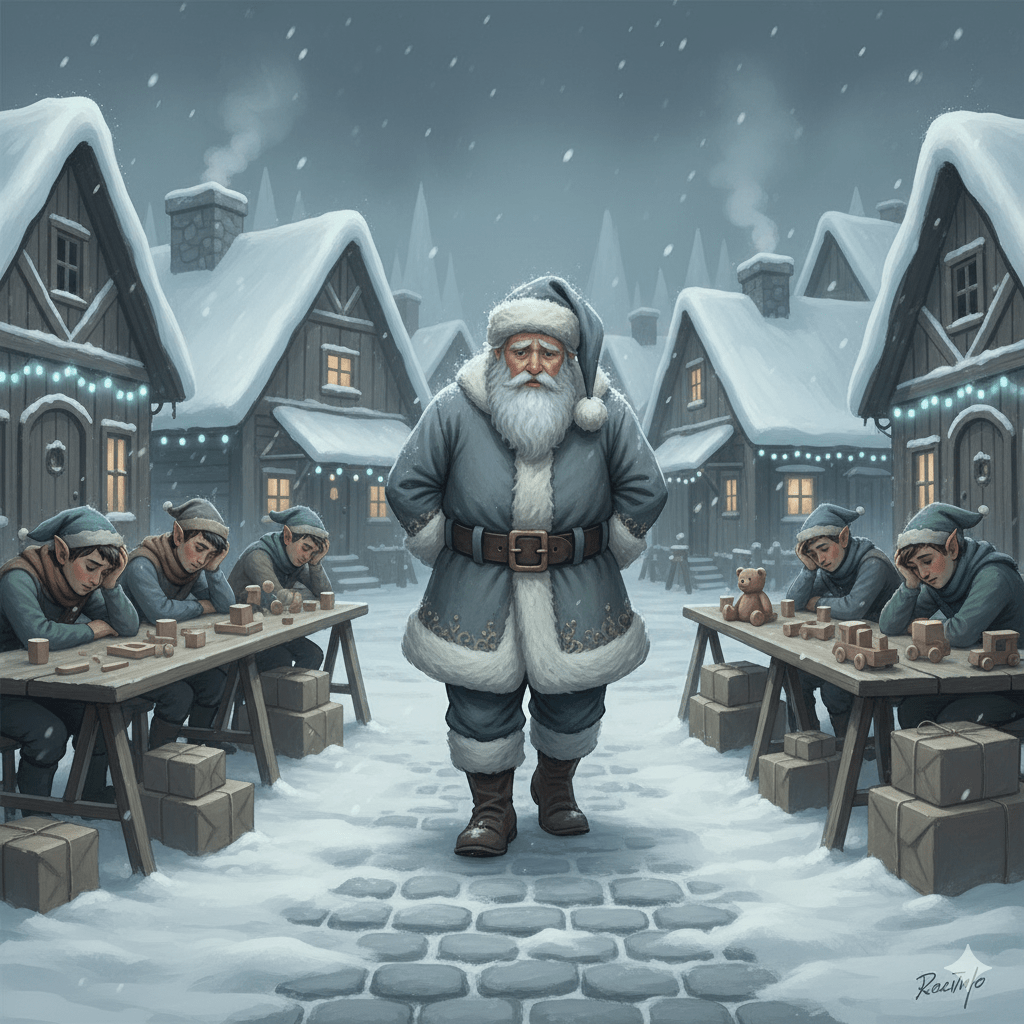
Santa himself felt blue, though he tried not to show it. Hoping to lift spirits and restore even a little cheer, he decided to walk through the Village.
As he wandered, Santa noticed the reindeer weren’t playing at all—just standing about with lowered heads. The elves worked without enthusiasm, and it showed in every toy they made. Then, suddenly, Santa heard laughter. Singing. Bells.
He stopped in his tracks.
Following the sound, Santa entered the reindeer barn and was greeted by a truly fabulous sight. A group of young reindeer were dancing and singing, led by a buck with glitter on his nose and a string of lights woven through his antlers. Bells jingled as he moved, creating the most wondrous music, and everyone present was clearly delighted.

Laughing, Santa asked, “Everyone outside and in the toy shop is so gloomy—what happened in here to make things so festive?”
The reindeer laughed and pointed to Glitzen.
“Glitzen, my boy,” Santa said kindly, “how are you able to be so cheerful when the world feels so heavy?”
Glitzen looked up and replied,
“Santa, tyrants hate joy. They hate glitter. They hate people being themselves. They want us to worship their gold and their names instead of one another. But someone has to remind the world that they don’t get to take our light away. A little sparkle, some lights, and a few bells can help people remember who they are. I just wanted to remind everyone that we need a little Christmas right now.”
Then Glitzen began to sing:
Haul out the holly
Put up the tree before my spirit falls again
Fill up the stocking
I may be rushing things, but deck the halls again now.
For we need a little Christmas, right this very minute
Candles in the window, carols at the spinet
Yes, we need a little Christmas, right this very minute
Hasn’t snowed a single flurry, but Santa dear we’re in a hurry.
Santa joined in singing:
I need to climb down the chimney
Turn on the brightest string of lights I’ve ever seen
Slice up the fruit cake
It’s time we’ve hung some tinsel on the evergreen bough.
Before anyone quite realized what was happening, the cheer inside the barn spilled out across the North Pole. Soon, everyone joined in:
For I’ve grown a little leaner, grown a little colder
Grown a little sadder, grown a little older
And I need a little angel sitting on my shoulder
Need a little Christmas now
For we need a little music, need a little laughter
Need a little singing ringing through the rafter
And we need a little snappy, happy ever after
We need a little Christmas now.
When the song finally faded, Santa smiled and said,
“Yes—we do need a little Christmas now. Glitzen, thank you for reminding us that joy is an act of courage. Now we need to share it with the world. Can you help me?”
“I’ll do anything I can, Santa,” Glitzen replied.
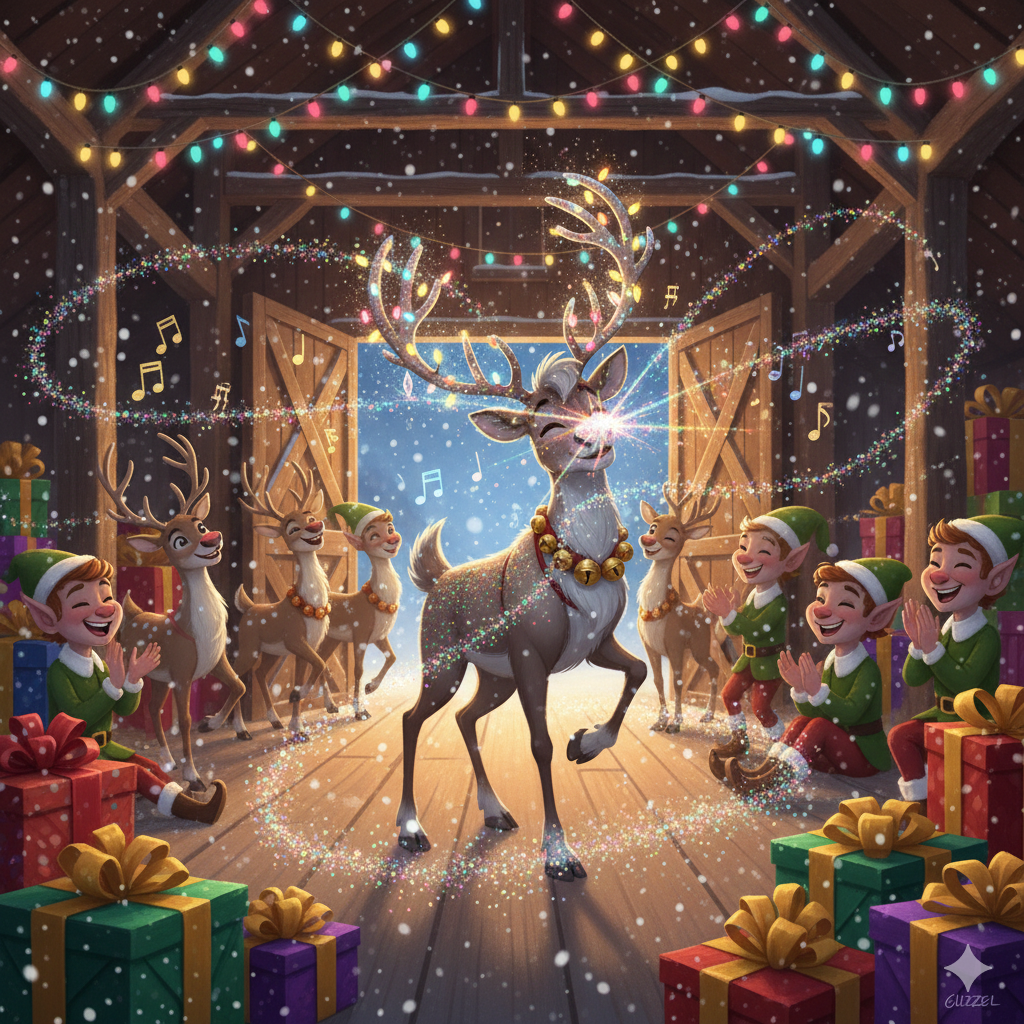
“First, help the elves and reindeer rediscover the Christmas spirit,” Santa said. “Then, on Christmas Eve, when I deliver presents, I need you to spread that spirit everywhere. Some people are frightened. Some are silenced. Some are told they must be less than who they are so others can feel powerful. But they need to know that joy, love, and glitter still belong to them. We can’t let cruelty win.”
Glitzen nodded eagerly. He and the does set to work at once, covering the Village in glitter and tinsel while singing Christmas songs. Soon, all the reindeer—including the bucks who had once teased him—joined in. The elves found their spark again. Toys gleamed, and the packages wrapped under Glitzen’s direction were among the most fabulous ever to leave the North Pole.
On Christmas Eve, Glitzen led Santa’s sleigh, flying proudly at the very front. As they soared across the world, glitter and light rained down upon cities and villages alike. And something remarkable happened.
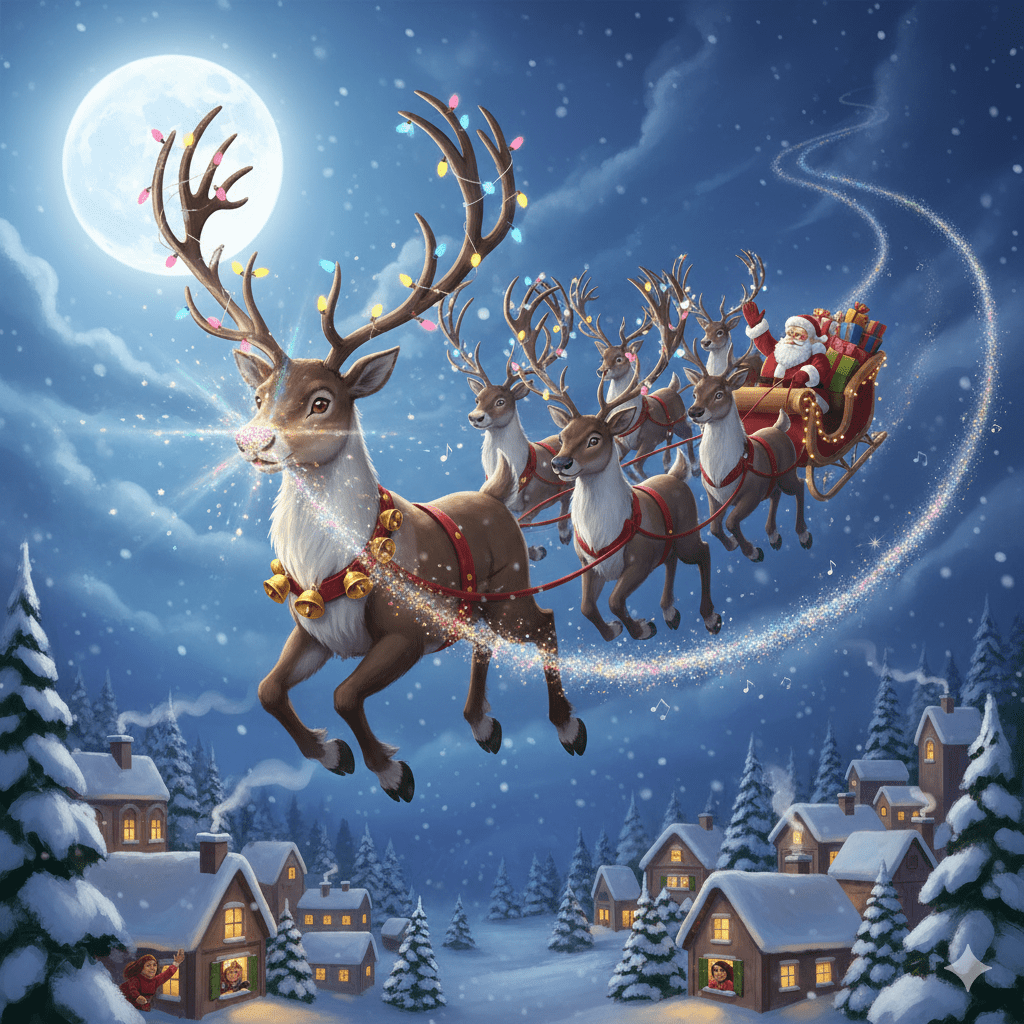
As joy spread, fear loosened its grip. As people sang, the dictator’s lies rang hollow. The great golden monstrosities—symbols of greed and stolen comfort—began to crumble. Some were torn down by the people themselves. Others were melted, their gold redistributed to those who had been robbed of food, warmth, and dignity.
By morning, the dictator’s regime had collapsed. His name vanished from buildings and streets. His statues were gone. His power dissolved like frost in the sun.
People once again expressed themselves freely. Color returned. Music filled the air. Love was no longer hidden. And as a new year dawned, joy and happiness returned to the land.
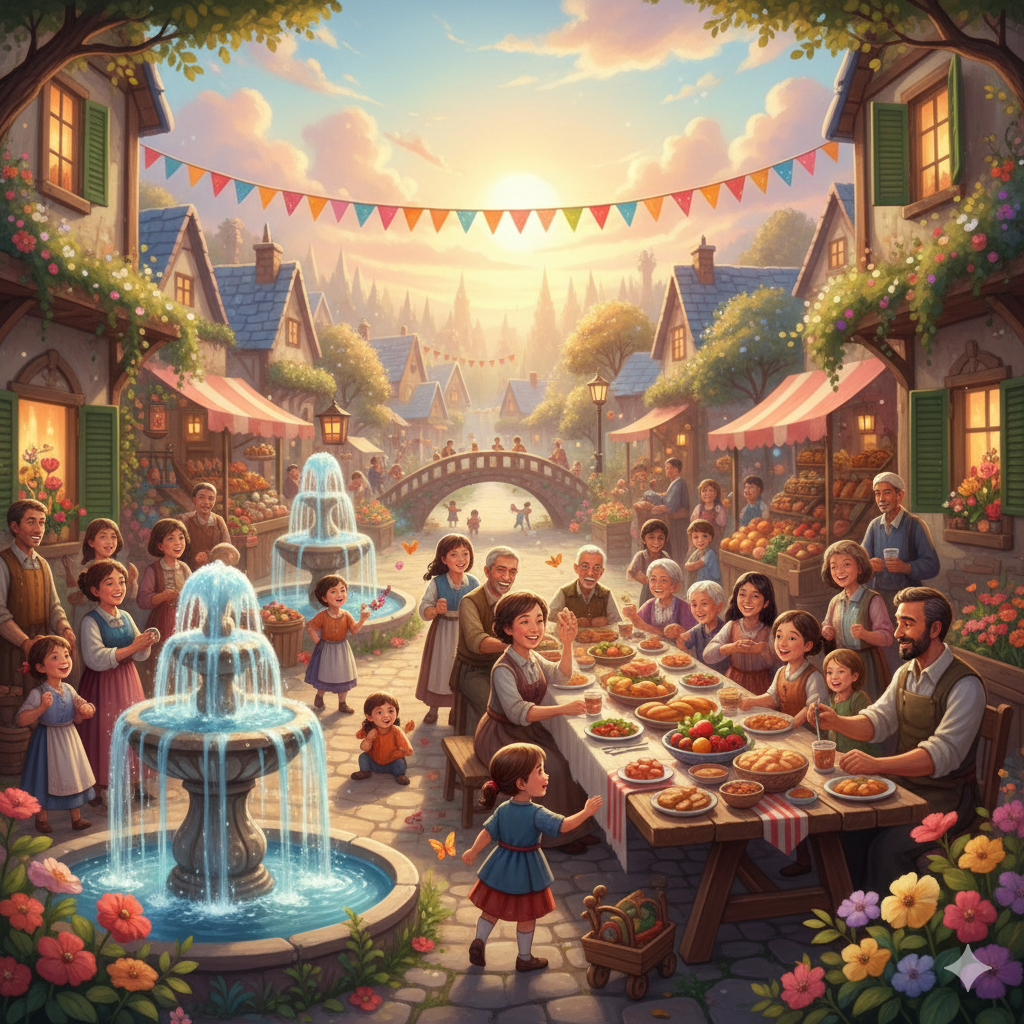
The spirit of Christmas ruled the world again.
Santa and all the reindeer congratulated Glitzen—not only for being the most fabulous reindeer of all, but for reminding everyone that joy is powerful, truth is radiant, and glitter can change the world.
Merry Christmas, everyone!
May your holiday be fabulous—and if you wake up with a bit of glitter scattered about, perhaps Glitzen has visited your home this year.

Postscript
I know this is a silly story, and I first shared it several years ago. It was originally written during the gloom of Christmas 2020, when the pandemic swept across the world, creating isolation, fear, and deep sadness. That year, many of us felt cut off—from our families, our communities, and from joy itself.
But just as the pandemic eventually ended, we must believe that evil, too, will be crushed. Prosperity will be returned to the people. Cruelty will not have the final word.
This too shall pass.
In a time when LGBTQ+ identities are being crushed under the weight of fear and repression, when our glitter is mocked and our joy is treated as dangerous, we must remember Glitzen. Our fabulousness is not weakness—it is resistance. And when we let it shine, the world becomes brighter.
Christmas is proof that light returns.
Always.



 Joe
Joe





 The Closet Professor