
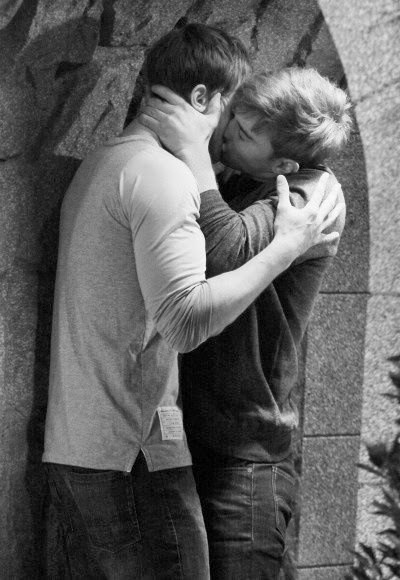
How Do I Love Thee? (Sonnet 43)
Elizabeth Barrett BrowningHow do I love thee? Let me count the ways.
I love thee to the depth and breadth and height
My soul can reach, when feeling out of sight
For the ends of being and ideal grace.
I love thee to the level of every day’s
Most quiet need, by sun and candle-light.
I love thee freely, as men strive for right.
I love thee purely, as they turn from praise.
I love thee with the passion put to use
In my old griefs, and with my childhood’s faith.
I love thee with a love I seemed to lose
With my lost saints. I love thee with the breath,
Smiles, tears, of all my life; and, if God choose,
I shall but love thee better after death.
Though I usually only post poems on Tuesday, but what is more appropriate for Valentine’s Day than this beautiful love sonnet. It’s one of my favorite poems and was first published by Elizabeth Barrett Browning in her book Sonnets from the Portuguese (1850). Most critics agree that Barrett Browning wrote the sonnets, not as an abstract literary exercise, but as a personal declaration of love to her husband, Robert Browning (who was also an important Victorian poet). Perhaps the intimate origin of the sonnets is what led Barrett Browning to create an imaginary foreign origin for them. But whatever the original motives behind their composition and presentation, many of the sonnets immediately became famous, establishing Barrett Browning as an important poet through the 19th and 20th centuries. Phrases from Barrett Browning’s sonnets, especially “How do I love thee?,” have entered everyday conversation, becoming standard figures of speech even for people who have never read her poetry.
I wanted to post this poem for all those that I love, including my wonderful readers. I think that my favorite part of this poem is “if God choose, I shall but love thee better after death.” How wonderful is that line. We know that all things will be greater in heaven than on earth, so to be able to love better after death, implies to me that the love in life is as great a love as can be imagined. Only in heaven could it be greater. That’s a powerful statement of love. I have family and friends that I love with all of my heart, and I hope that one day I will find that love in a romantic way. If you have found that love, I admire you and am jealous. If you haven’t, then I hope that you too will find it someday.
For those like me who are single on Valentine’s Day, it can seem so lonely, but there is one thing I have learned over the years: you must love yourself. Before you can truly love someone else, you have to first love yourself. If there are things about yourself that you don’t love, you will never allow yourself to be loved in the way we all deserve to be loved. So love yourself, and allow yourself to be loved, too. So to ultimately answer Browning’s question, “How do I love thee?” I must love myself first so that I can love you more.
Happy Valentine’s Day!



 Joe
Joe





 The Closet Professor
February 14th, 2014 at 8:35 am
This is one of my favorites! Thanks for sharing it 🙂
February 14th, 2014 at 8:52 pm
I absolutely love it. Happy Valentine’s Day!
February 14th, 2014 at 8:47 am
I’m not a Valentine’s person, but I am very romantic … I like Elizabeth BB’s sonnets, and enjoy teaching them to tenth graders. New York 15 year olds freak out over the ‘love thee better after death.’ One amazingly intelligent boy, who clearly lost his marbles over this image said in horror, “You mean, like zombies?” They have been raised in a strange world … far stranger than Alabama, in many ways.
February 14th, 2014 at 8:58 pm
I’m not really big on Valentine’s Day, mainly because I’m perpetually single. However, speaking of EBB, did you know there is a group of “nuns” in Florence who run the English Cemetery and the library there where EBB is buried. They are lovely women, one of whom was a former professor and EBB expert. I did some research there for my dissertation. It’s a lovely little cemetery to visit.
By the way, those in high school often live in a different world from us, and they see things in ways that I could never have fathomed. Sometimes, they have an interpretation that I never considered and can be surprisingly profound, but at other times, their interpretation is just too out there.
February 15th, 2014 at 5:06 am
What a wonderful comment, prof … and your last paragraph is SO true. It’s why working with adolescent demands compassion … they’re falling in love for the first time, discovering emotions good and bad for the first time. It’s a fascinating, difficult time.
February 14th, 2014 at 1:02 pm
I appreciate reading your blog, especially for your perspectives on being at the same time Christian and gay. You might be interested in my blog at http://bitheway50.blogspot.com where I am writing a fictionalized story of my life. Thanks again for your thoughtful posts.
February 14th, 2014 at 8:59 pm
Thanks, and I will most certainly check it out.