Monthly Archives: March 2014

Libido

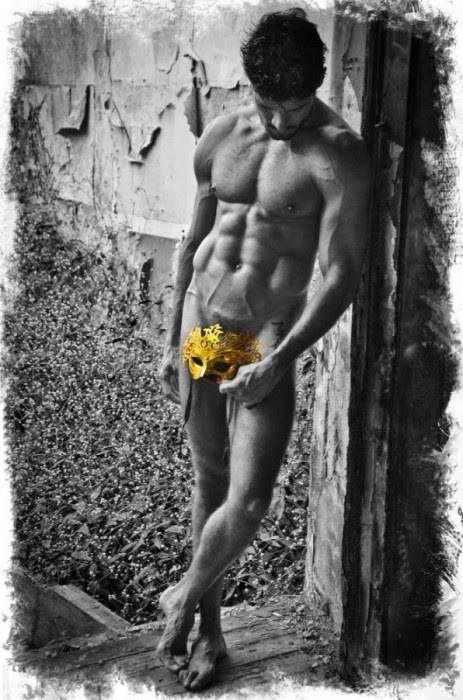
20140310-232209.jpg

Libido
Rupert Brooke

How should I know? The enormous wheels of will
Drove me cold-eyed on tired and sleepless feet.
Night was void arms and you a phantom still,
And day your far light swaying down the street.
As never fool for love, I starved for you;
My throat was dry and my eyes hot to see.
Your mouth so lying was most heaven in view,
And your remembered smell most agony.

Love wakens love! I felt your hot wrist shiver
And suddenly the mad victory I planned
Flashed real, in your burning bending head…
My conqueror’s blood was cool as a deep river
In shadow; and my heart beneath your hand
Quieter than a dead man on a bed.

Rupert Brooke was a poet who died far too young. His most famous work, the sonnet sequence 1914 and Other Poems, appeared in 1915. Later that year, after taking part in the Antwerp Expedition, he died of blood poisoning from a mosquito bite while en route to Gallipoli with the Navy. He was buried on the island of Skyros in the Aegean Sea.

Following his death at age 28, Brooke, who was already famous, became a symbol in England of the tragic loss of talented youth during the war. He was born in England in 1887, combined literary talent with legendary good looks, entered Cambridge in 1913, wrote a few dozen exquisite poems, joined the Royal Navy to go off to the Great War in 1914 and died in the Aegean seven months later. The artist/soldier is a kind of hero that has not been present in cultures on either side of the Atlantic in decades, but World War I vaunted and cut down many. Brooke, Wilfred Owen, Isaac Rosenberg, Alan Seeger: all dead, all in their prime.

While an undergraduate he attracted the amorous attentions of both men and women, but it was not until 1909, at the age of twenty-two, that he had his first sexual encounter. It was with a man. He described his seduction of Denham Russell-Smith (a former fellow student at Rugby) in some detail. (“My right hand got hold of the left half of his bottom, clutched it, and pressed his body into me. The smell of sweat began to be noticeable. At length we took to rolling to and fro over each other, in the excitement.”)

James Strachey, brother of Lytton Strachey of the Bloomsbury Group, fell deeply in love with Brooke, and while the poet did not return the intensity of feeling, he did hold Strachey in high regard. Strachey is probably Brooke’s most famous admirer. The two men exchanged correspondence for the last decade of Brooke’s life.

And though Brooke remains famous primarily for his war poems, he wrote a number of love poems as well. The sonnet above, “Libido,” is his most elegant; its theme is a burning bed–inspired midnight visit to a sleeping paramour. There is little more beautiful than the image of a milky Adonis leaving his tangled sheets to slip into his lover’s bedroom and wake him with a kiss, until we recall Brooke’s fate, and know that only the embracing arms of war awaited him on his final night. The passion of the poem does, however, show how passionate Brooke was as does his above description of his passionate evening with Russell-Smith.


Was Norman Rockwell Gay?

20140309-230617.jpg

Without thinking too much about it in specific terms, I was showing the America I knew and observed to others who might not have noticed.
Norman Rockwell

Born in New York City in 1894, Norman Rockwell always wanted to be an artist. Rockwell found success early. He painted his first commission of four Christmas cards before his sixteenth birthday. While still in his teens, he was hired as art director of Boys’ Life, the official publication of the Boy Scouts of America, and began a successful freelance career illustrating a variety of young people’s publications.

At age 21, Rockwell’s family moved to New Rochelle, New York, where Rockwell set up a studio with the cartoonist Clyde Forsythe and produced work for such magazines as Life, Literary Digest, and Country Gentleman. In 1916, the 22-year-old Rockwell painted his first cover for The Saturday Evening Post, the magazine considered by Rockwell to be the “greatest show window in America.” Over the next 47 years, another 321 Rockwell covers would appear on the cover of the Post. Also in 1916, Rockwell married Irene O’Connor; they divorced in 1930.

The 1930s and 1940s are generally considered to be the most fruitful decades of Rockwell’s career. In 1930 he married Mary Barstow, a schoolteacher, and the couple had three sons, Jarvis, Thomas, and Peter. The family moved to Arlington, Vermont, in 1939, and Rockwell’s work began to reflect small-town American life.

In 1943, inspired by President Franklin Roosevelt’s address to Congress, Rockwell painted the Four Freedoms paintings. They were reproduced in four consecutive issues of The Saturday Evening Post with essays by contemporary writers. Rockwell’s interpretations of Freedom of Speech, Freedom to Worship, Freedom from Want, and Freedom from Fear proved to be enormously popular. The works toured the United States in an exhibition that was jointly sponsored by the Post and the U.S. Treasury Department and, through the sale of war bonds, raised more than $130 million for the war effort.

Although the Four Freedoms series was a great success, 1943 also brought Rockwell an enormous loss. A fire destroyed his Arlington studio as well as numerous paintings and his collection of historical costumes and props.

In 1953, the Rockwell family moved from Arlington, Vermont, to Stockbridge, Massachusetts. Six years later, Mary Barstow Rockwell died unexpectedly. In collaboration with his son Thomas, Rockwell published his autobiography, My Adventures as an Illustrator, in 1960. The Saturday Evening Post carried excerpts from the best-selling book in eight consecutive issues, with Rockwell’s Triple Self-Portrait on the cover of the first.

In 1961, Rockwell married Molly Punderson, a retired teacher. Two years later, he ended his 47-year association with The Saturday Evening Post and began to work for Look magazine. During his 10-year association with Look, Rockwell painted pictures illustrating some of his deepest concerns and interests, including civil rights, America’s war on poverty, and the exploration of space.

So much has been written about Rockwell, including his own autobiography, that his life would seem to be a closed case. But he receives a fascinating rethinking in Deborah Solomon’s American Mirror: The Life and Art of Norman Rockwell, in which she makes a case for his homoerotic desires.

Although she can’t conclusively prove that Rockwell had sex with men, she makes an argument that he “demonstrated an intense need for emotional and physical closeness with men” and that his unhappy marriages were attempts at “passing” and “controlling his homoerotic desires.” Rockwell also had a close bond with the openly gay artist J.C. Leyendecker and his gay brother, Frank, also an artist, and counted himself as the “one true friend” the brothers had. As Solomon states, “it was both an artistic apprenticeship and an unclassifiable romantic crush.” According to Solomon, Rockwell went on to have close relationships with his studio assistants (even sleeping in the same bed with one on an extended camping trip) and created his own version of idealized boyhood beauty.

While digging into his back story, Solomon offers sensitive close readings of some of his well-known works that smack of homoeroticism but have been cherished (and sanitized) for their depiction of all-American values. For example, when she points out that in the beloved portrait of a young boy seated next to a police officer at a diner counter, “The Runaway,” the cop can be seen as a “figure of tantalizing masculinity, a muscle man in a skin-tight uniform and boots,” it’s almost as if we’re seeing a proto-Tom of Finland emerge before our eyes. In this analysis, it’s not only a painting that represents a desire for both independence and security, it shows the tenderness between men (of any age) and encapsulates the complicated life and desires of an artist many have written off as a proselytizer of an American dream that didn’t include them. According to Solomon, Rockwell was constantly yearning for another ideal, of youthful male beauty, that always seemed to lie beyond reach.

I’m all for taking a close look into history and uncovering evidence that a historical figure may have been gay; however, this is one instance where I tend to think that Solomon is making a bit of a stretch. I personally have never viewed Norman Rockwell’s work as homoerotic, but as idealistic Americana. I certainly see no traces of a Tom of Finland police officer in the doughy 1950s officer of “The Runaway.” I will admit that I have not read Deborah Solomon’s book nor have I had the chance to evaluate the evidence, but it seems like pure speculation to me. American Mirror has produced a fair amount of controversy, so I do not think I am alone in finding fault with Solomon’s assumptions.

Patrick Toner, a professor at Wake Forest University, wrote:

In her new biography, however, Deborah Solomon presents a Rockwell we might not be inclined to love so much. Her most shocking claim is that he was sexually attracted to young boys. Almost equally shocking, but more subtle, is her suggestion that Rockwell’s self-absorption had a body count—his behavior led directly or indirectly to at least three ugly deaths.

There is no reason to go along with Solomon about these things. As I’ll show, her arguments—such as they are—are deeply flawed, and she has a pronounced tendency to either distort or ignore evidence to the contrary of her claims. As her interpretation of Rockwell himself is irremediably flawed, so is her interpretation of his art. Hers is a book without merit.

Toner continues by stating:

Her evidence for Rockwell’s pedophilia consists of three intertwined claims: First, he paints a lot of boys. Second, he forms strong relationships with some of the boys who serve as models for these paintings. Third, some of these paintings are sexually suggestive. Solomon thinks that pedophilia serves as the best unifying explanation for these claims. I doubt even that, but even if it were the case, there are problems with all three.

Toner’s review of American Mirror is quite long but interesting. From what I have read, it seems as if Solomon had a particular agenda, probably for publicity, in writing her Rockwell biography. It seems that sensationalism is what sells biographies these days, and Solomon has certainly written what seems to be a sensational book. The fact is, if Norman Rockwell was homosexual, there seems no way of proving it except through speculation. I doubt it would surprise many people if one of America’s greatest artists was gay, because let’s face it, most of history’s great artists were. However, I think Rockwell would have probably painted a new version of the picture below to answer the questions of his sexuality:

20140309-230655.jpg

In “The Gossips,” a Saturday Evening Post cover from March 6, 1948, it seems Rockwell had a neighbor who started a disagreeable rumor about him. What can one do about a nasty gossip? Well, if you are a famous illustrator, you can paint a cover about it. It started with just a couple of people, then it just grew, leaving Rockwell in need of more models. The result, said the editors, is that we see “almost the entire adult population of Arlington, Vermont.” As he worked on the project, the artist worried that his friends and neighbors might be offended, so he included his wife and himself. Mary Rockwell is second and third in the third row, spreading the rumor via rotary phone. In the gray felt hat in the bottom row is, of course, the artist himself (you can click on the image for a close-up). You’ll notice the lady at the end is the one at the beginning who started the rumor, and our friend Rockwell appears to be giving her a piece of his mind. Apparently, the neighbor who started the rumor in real life never spoke to Rockwell again. I have a feeling it was no great loss.


Health and Healing

20140308-175355.jpg

Bless the LORD, O my soul,
and all that is within me,
bless his holy name!
Bless the LORD, O my soul,
and forget not all his benefits,
who forgives all your iniquity,
who heals all your diseases,
who redeems your life from the pit,
who crowns you with steadfast love and mercy,
who satisfies you with good
so that your youth is renewed like the eagle’s.

Psalms 103:1-5

Good health is something we take for granted—until we start to lose it. When our health takes a downturn, we quickly begin to question our habits and diet. God has designed the human body so that it is a finely tuned instrument that is the most resilient on earth. It can endure fractures and adhesions, constant pain and great stretches of tedium.

However, it is a fragile instrument because it is not built to handle excess, whether in the form of nourishment, fuel or additives. Unlike machines, it chokes on poisons when ingested in unending doses and mistaken for fuel. Though it has moving, feeling and thinking parts, they can be misused. God has provided us with an “owner’s manual” that tells us how to operate the human body. That manual is the Bible, a book that contains instructions for proper maintenance. Although it isn’t a medical text, it is God’s Word, and in its pages He reveals many basic principles for good physical, mental, and spiritual health.

A major part of the Bible’s health instruction dates back to the time of Moses. Yet in our day, many researchers and medical doctors are stunned at the accuracy and effectiveness of its many provisions. The Wycliffe Bible Encyclopedia tells us that the laws given by God to Moses contain remarkable rules pertaining to public health which concerns us even today: water and food contamination, sewage disposal, infectious diseases and health education. These issues were all dealt with in the Mosaic health laws. Many of these same laws are found in most basic law codes of the ancient world. Some of them were forgotten by Christians until the late Middle Ages. Some no longer apply because of modern medicine, technology, and nutritional practices.

The Bible gives us the foundational key to physical and mental health. That key is simply this: “My son, do not forget my teaching, but keep my commands in your heart, for they will prolong your life many years and bring you prosperity . . . This will bring health to your body and nourishment to your bones” (Proverbs 3:1-2, 8). It should not surprise us that obedience to God’s commandments and other laws would promote health. When we obey them, we operate in accordance with His instructions. As our Creator, He knows what’s best for us: “Now all has been heard; here is the conclusion of the matter: Fear God and keep his commandments, for this is the whole duty of man” (Ecclesiastes 12:13). He commands us to treat our body as a temple and that we should take care of ourselves. We should not consume things that will harm us, and we should especially not consume things in excess which might cause us harm.

Some biblical statements about health are specific, such as: “If you listen carefully to the voice of the LORD your God and do what is right in his eyes, if you pay attention to his commands and keep all his decrees, I will not bring on you any of the diseases I brought on the Egyptians, for I am the LORD, who heals you” (Exodus 15:26). The ancient Egyptians suffered from the kinds of diseases that have ravaged mankind throughout history. Autopsies on Egyptian mummies have revealed evidence of cancer, arteriosclerosis, arthritis, tuberculosis, gallstones, bladder stones, parasitic diseases and smallpox. They suffered many diseases because they did not understand the health principles God gave to Moses.

The Good News is that Jesus died for our sins, we should not fear God’s punishment while on earth. He will not bring forth diseases as a means of punishment, as some have claimed. In the Middle Ages, people claimed that the Black Death was a punishment from God. Since the early 1980s, people have claimed that HIV/AIDS is a punishment from God. These same people claim that earthquake, tornadoes, hurricanes, and other natural disasters are punishments from God. They are not. Jesus came to earth to bring us a new covenant, and to absolve us of our sins. If we believe, are baptized in the newness of life, allow our sins to be washed away, and follow God’s teachings of love and acceptance, then we shall walk with God and provide a healthy and honorable view of ourselves as Christians. We can live a life in God’s example.

The biblical instructions regarding health, maintenance, and recovery from illness involve application of cause-and-effect principles—based on true science—that were given thousands of years before scientists developed the technology that enabled them to discover germs, bacteria, viruses, genes and the like. Modern medical science has discovered many principles of good health, but they originated with God who designed and created the miracle that is the human body.

What the Bible says about health is that those who follow God will generally be healthy. That does not necessarily mean that those who don’t follow God will always be sick. Nor does it mean that God’s people will be absolutely free of disease. The Bible says, “I pray that you may enjoy good health and that all may go well with you, even as your soul is getting along well” (3 John 1:2). Obviously, God is more interested in our spiritual health than our physical well-being, but He does want us to be physically healthy as well. On the other hand, disease is a result of Adam’s sin, and even the most righteous may suffer. After all, Job was righteous, but God allowed him to suffer disease and hardship as a test of his faith.

It was not until the modern era that men obtained detailed knowledge of human physiology and medicine. Yet the Creator God, who is sometimes called the Great Physician, knows everything about us, and He’s provided the necessary keys to good health. The choice to obey the Lord and reap the resulting benefits is ours to make.


Moment of Zen: Sunshine

20140307-231110.jpg

With my bronchitis, I’ve been mostly relegated to being inside, but we have had some sunny days. One of my favorite things is to lay on a couch with the sun streaming in a large picture window while enjoying a nice afternoon nap. The picture above radiates warmth, comfort, and peacefulness to me.


Resting

20140306-224958.jpg

The doctor told me that I needed plenty of rest to get over my bronchitis. With the medicine he gave me, I guess he wanted to make sure of that. The two cough syrups he gave me (each covers different symptoms) have been very successful at making me sleep. So it looks as if I will, hopefully, just sleep off this cold.


It’s Bronchitis

20140305-213255.jpg

I went to the doctor, and his diagnosis was that I have bronchitis. He gave me antibiotics and cough syrup He said get plenty of rest, so I won’t be back at school until Monday. At least it’s at the end of the week, so I have some extra time to recover.


It’s Cold and Sinus Time

20140305-070346.jpg

This is the night-time sniffling, sneezing, coughing, aching, stuffy head, fever, so-I-can-go-to-bed-early last night post.


Mardi Gras Madness

Mardi Gras Madness
By Mary Beth Magee

“T’row me som’pin, mistah!” yells the crowd along the curb,
And the riders throw them something as if they could be heard.
The roar of human masses drowns out single voice or thought.
Only beads, doubloons and trinkets can appease the crowd’s onslaught.
As purple, green and golden hues shade everything in sight,
The distant roar of motorcycles nearing sounds so right.
Horses step in rhythm, cadence clopping as they pass.
At a float’s approach the crowds surge toward the street, en masse.
Last fling before the austere days of Lent, we celebrate
With parties, food and bright parades to make the grayness wait.
A pretty string of beads to keep, a blazoned cup to hold,
A treasured doubloon to collect become Mardi Gras gold.
At midnight, Carnival will end, like Cinderella’s ball
And costumes put away in attics, closets in the hall
Remind us of the fun and laughs we shared with loved ones dear.
And we start counting down the days to Mardi Gras, next year.

Mary Beth Magee

Mary Beth draws on her curiosity and love of research to explore the world around her and write about it. New Orleans native, she now lives in northern CA, by way of Chicagoland. She first saw her name in print as a juvenile book reviewer her hometown paper and hasn’t stopped writing since. Her checkered past includes stints as a telephone operator, substitute school teacher, cosmetic sales, home health aide, government contractor, kitchen help in a deli, real estate sales, office manager and corporate trainer. She holds a Bachelor of Science degree in Psychology, focusing on adult learning. Over the years, her writings covered news and feature articles, book and movie reviews, training materials, greeting cards, short fiction, poetry, and church bulletins.
Laissez les bons temps rouler!


8 Surprising Historical Facts That Will Change Your Concept Of Time Forever

TK TK gifs

You probably should know these things didn’t happen anywhere near when you thought they did…

Not everyone can be a world history master, especially when we tend to learn about it in specifically segmented classes like “European History” or “American Revolutionary History.” Maybe you have an exceptional grasp on the global historical timeline. But for those of us who don’t, the list below, inspired by a recent Reddit thread called “What are two events that took place in the same time in history but don’t seem like they would have?” puts key historical moments into some much-needed context.

1. Betty White is older than sliced bread.
450403199
Sliced bread was introduced in 1928 by inventor Otto Frederick Rohwedder. Before this moment, bread was sold in whole loaves as bakers didn’t trust sliced bread could stay fresh. Betty White was born in 1922 and spent her early years not eating sliced bread. But White recently celebrated her 92nd birthday, which means she’s been able to experience the first “greatest invention” much longer than most of us.

2. Harvard University was founded before calculus was invented.
171088313
Established in 1636, Harvard is the oldest institution of higher education in the U.S. The “New College,” as it was originally called, had no calculus classes because it didn’t exist yet. The invention of calculus would come in the late 17th century with Gottfried Leibniz’s 1684 publication of “Nova Methodus,” and in part with Isaac Newton’s “Principia” in 1687, followed by additional explanations and reformulations by subsequent mathematicians. Also, European physicist, mathematician and astronomer Galileo was still alive during Harvard’s early years — he died in 1642.

3. The last time the Chicago Cubs won a World Series, the Ottoman Empire still existed.
mehmed vi
The Chicago Cubs haven’t won a World Series since 1908. This was back when there were still teams such as the Brooklyn Superbas and the Boston Doves. The Ottoman Empire, which was founded in the 13th century, also existed back then. Mehmed VI was the last sultan of the empire and his reign ended in 1922 when the sultanate was abolished and the Turkish government took governing control over the new republic — 14 years after the Cubs last won the World Series.

4. The Pyramids of Giza were built in the time of wooly mammoths.
170303393
From what we can tell, the last of the wooly mammoth died out around 1700 B.C. on Russia’s Wrangel Island. In Egypt, the Pyramids of Giza were built around 4,000 years ago, although there have been claims that they’re even older. This also means that Cleopatra’s time on Earth is actually closer to us in history than to the construction of the pyramids.

5. The fax machine was invented the same year as the Oregon trail migration.
86498696
The first fax machine was invented in 1843 by a Scottish mechanic named Alexander Bain. This early model used a combination of synchronized pendulums, electric probes and electrochemically sensitive paper to scan documents, and then send the information over a series of wires to be reproduced. The “Great Migration” on the Oregon trail began the same year, when a wagon train of about 1,000 migrants attempted to travel west, but probably died of dysentery along the way.

6. The jewelry store Tiffany & Co. was founded before Italy was a country.
tiffany
While Rome was officially a holdout for a number of years after, in 1861 General Giuseppe Garibaldi led a successful campaign to gather the various city-states and bring them under one nation. Charles Lewis Tiffany and John B. Young founded Tiffany & Young in 1837 and then became Tiffany & Co. in 1853. This means Audrey Hepburn could have gotten “breakfast at Tiffany’s” before she could have had her Italian “Roman Holiday.
Similarly, Macy’s was founded in 1858, also before Italy became the nation we know it as today.

7. France was still using the guillotine when “Star Wars” came out.
the starry night van gogh
The last time the guillotine was used as a form of execution in France was in 1977. The guillotine lasted for about two centuries. The first “Star Wars” film was also released in 1977 a few months before the execution.
Another mind-blow French historical fact: The Eiffel Tower was completed in 1889, which is the same year Nintendo was founded and that Van Gogh painted “The Starry Night.”

8. Two of President John Tyler’s grandsons are still alive.
harrison tyler
John Tyler was America’s 10th President, serving from 1841 to 1845, but somehow two of his grandsons are still alive. Mental Floss first reported on this fact in 2012, but since then Snopes has verified their identities, while New York Magazine even interviewed one of the grandsons. As of last year, both Lyon Gardiner Tyler Jr. and Harrison Tyler were still only in their 80s.


Testimonial

20140228-220622.jpg

That which was from the beginning, which we have heard, which we have seen with our eyes, which we looked upon and have touched with our hands, concerning the word of life— the life was made manifest, and we have seen it, and testify to it and proclaim to you the eternal life, which was with the Father and was made manifest to us— that which we have seen and heard we proclaim also to you, so that you too may have fellowship with us; and indeed our fellowship is with the Father and with his Son Jesus Christ. And we are writing these things so that our joy may be complete. This is the message we have heard from him and proclaim to you, that God is light, and in him is no darkness at all.
1 John 1:1-10

I want to tell you a little about my faith and to explain to those who read my blog why I write my Sunday devotionals. First and foremost, I am a Christian. I am also a gay man. Furthermore, I am a teacher. Those are three things that I am, though I am many more things and much more, but fundamentally, I am a Christian gay man, who is a teacher. These descriptions are a core of my being, and I have no desire to change them.

Each Sunday, I write a religious post. I started those posts as an exploration of myself as a member of the churches of Christ and decided to continue writing one each Sunday as a personal devotional for myself, and for anyone who desired to read them. Many of my regular readers tell me how much they enjoy those posts. Others, however, have criticized me for them. Criticism, I can deal with, no problem. I do my research and I meditate and ponder my devotionals before posting them. I am firm in my faith, and I enjoy a good discussion/debate. However, what I am uncomfortable with is those who belittle my faith. Questioning the existence of God is one thing, even disagreeing with someone about what they believe is okay, but there is no reason to belittle someone for his or her faith.

I am not perfect, and neither is anyone else. As Romans 3:22-25 states “For there is no distinction: for all have sinned and fall short of the glory of God, and are justified by his grace as a gift, through the redemption that is in Christ Jesus, whom God put forward as a propitiation by his blood, to be received by faith. This was to show God’s righteousness, because in his divine forbearance he had passed over former sins.“

I was raised in the Church of Christ. My congregation is a small country church where the number of attendees has been anywhere from 12-25 people. It is also a loving church and each member is like a member of my family. They, however, do not know that I am gay, except for my parents who do know. Homosexuality is not something that comes up in the sermons at my church. My minister tends to preach about loving kindness and how to be a better Christian through our daily lives. Because of this loving environment, I have a strong faith in Christianity.

Some people in the LGBT community may judge me for my belief in Christianity. Many have questioned me on my blog about this very issue. Some have even belittled me about my belief in God. It seems that many gay people feel abandoned by God because of the hatred that many people who call themselves Christians espouse. That kind of hatred was never part of the Christianity that I grew up around. I was taught to take God’s word as a whole and not to pick out individual verses to condemn someone. I was taught that the Bible should be studied closely and that various translations of the Bible can be flawed. Therefore, if a word or words trouble you, then you should look closer at the meaning and context of those words. Therefore, I studied the texts that people use to condemn homosexuality, and came to a different conclusion. Go back to my posts about the Church of Christ and you will see what I mean.

I try to live my life by treating others as I want to be treated. Am I always successful? No, but I do try. I have my flaws. If you looked at my life, would you think of me as a typical Christian? No, you wouldn’t. First of all, I am gay, which means that I’ve had sex with men (though, I do think you can be gay and celibate, if you chose). Personally, I been celibate for a while, but that is really not by choice. Do I think that God approves of me having sex with men? No, I don’t think he does, but it does not have to do with my sexual partner’s gender, but because it is premarital sex, fornication, if you prefer. However, I am weak of the flesh. I also don’t always take perfect care of my body. I drink alcohol, sometimes eat too much, and don’t exercise enough. I take pleasures when I can, but I also do so in moderation, which I think is the key. I’m not perfect, but God still loves me. So, I try my best to be a good person, so that I can feel worthy of God’s love.

If you do not agree with my Sunday devotionals or you don’t believe in God, then I ask one, two, and/or three things of you: (1) please do not use the comment section to belittle my faith it only makes me very sad and, honestly, hurts my feelings; (2) try to take the broader moral message from the post instead of the religious God-centered message; and (3) if you like my other posts but know you do not enjoy or want to read my devotionals, then please just skip reading my blog on Sundays and read it the other six days of the week. I am not trying to push my faith on to anyone. My Sunday devotionals are personal to me, and many others enjoy reading them.

All I ask is that you to do is to adhere to the Golden Rule or the ethic of reciprocity which is found in the scriptures of nearly every religion and is often regarded as the most concise and general principle of ethics. One should treat others as one would like others to treat oneself.

One final note, and this is a bit of an aside, I personally cannot fathom a strict adherence to atheism. I look around me each and every day and see the wonders of God’s creation. If you strictly adhere to evolution, then you admit, in my opinion at least, that we are all a cosmic accident. For me, there is too much perfection and love and beauty for all of this to be an accident. I wholeheartedly believe that God has guided the creation of the universe, and that he guides us each and everyday. He is with us always, and that thought brings me the greatest comfort of my life.