

Monthly Archives: May 2021
Benefits of Being Fully Vaccinated

I debated whether or not I wanted to write a blog post about this particular subject, but then I decided, why not? Before the pandemic, I had met a guy that I got along with very well. We had a lot of the same interests in science fiction and enjoyed each other’s company. We would occasionally get together for a bit of fun (if you know what I mean), and sometimes, we’d watch a movie, usually we did more than just watch a movie. It was always a lot of fun. I have not been able to see him since the pandemic began. He has some health problems that didn’t allow him to even take the slimmest chance of getting COVID. We have talked a few times over the course of the pandemic, and we always said we would get together again when all of this was over or when we were both fully vaccinated.
Last week, he texted me to tell me that he was fully vaccinated, and I was able to tell him that I too was fully vaccinated. He suggested that we get together last night. Of course, I am writing this before I went over there, but I am anticipating we will have a fun time catching up and maybe even making up for lost time. It feels like things are beginning to get back to normal as more and more people are getting vaccinated. There is light at the end of the tunnel and Vermont is thankfully leading the way.

Vermont leads the nation in vaccines with 52.7 percent of the state’s population being fully vaccinated. We have 69.7 percent of the state’s population with at least one dose of the vaccine. New England has done remarkably well, with only Rhode Island and New Hampshire having less than 50 percent of their populations fully vaccinated. Rhode Island is close with 49.9 percent, but New Hampshire appears to be a bit of an anomaly in New England with only 35.6 percent being fully vaccinated. Vermont, Maine, Connecticut, and Massachusetts are the top four states for vaccinations, respectively. Rhode Island is fifth, but New Hampshire is twenty-third. New Jersey, Hawaii, New Mexico, Maryland, and New York round out the top ten. All of the top ten are Democratic-leaning states.

In contrast, South Carolina, Idaho, Utah, Wyoming, Tennessee, Georgia, Louisiana, Arkansas, Alabama, and Mississippi make up the bottom ten states with Mississippi having the lowest vaccination rates. The fact is the U.S. vaccination map looks a lot like a map of how states vote in presidential elections, with most blue states vaccinating at levels well above the national average and GOP states bringing up the rear. Sadly, the politics of COVID-19 have been partisan from almost the onset of the pandemic, and polls consistently show that Republicans, particularly men, are more hesitant than Democrats to get vaccinated.

Clair de lune
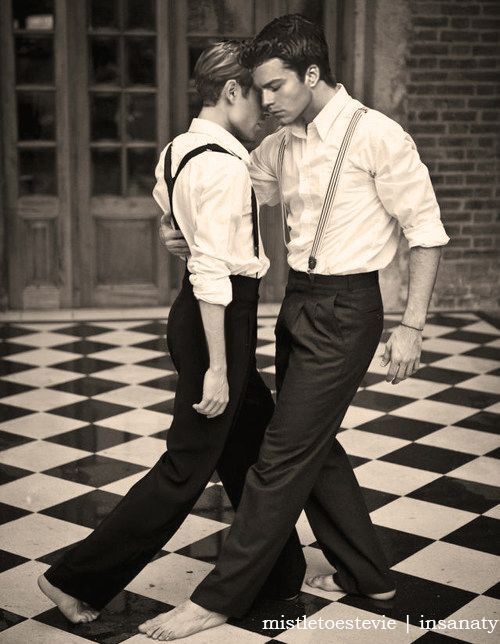
Clair de lune (English “Moonlight”)
By Paul Verlaine
Votre âme est un paysage choisi
Que vont charmant masques et bergamasques
Jouant du luth et dansant et quasi
Tristes sous leurs déguisements fantasques.
Tout en chantant sur le mode mineur
L’amour vainqueur et la vie opportune
Ils n’ont pas l’air de croire à leur bonheur
Et leur chanson se mêle au clair de lune,
Au calme clair de lune triste et beau,
Qui fait rêver les oiseaux dans les arbres
Et sangloter d’extase les jets d’eau,
Les grands jets d’eau sveltes parmi les marbres.
_________________
(English Translation)
Your soul is a chosen landscape
Where charming masquerades and dancers are promenading,
Playing the lute and dancing, and almost
Sad beneath their fantastic disguises.
While singing in a minor key
Of victorious love, and the pleasant life
They seem not to believe in their own happiness
And their song blends with the light of the moon,
With the sad and beautiful light of the moon,
Which sets the birds in the trees dreaming,
And makes the fountains sob with ecstasy,
The slender water streams among the marble statues.
_________________
“Clair de lune” (English “Moonlight”) is a poem written by French poet Paul Verlaine in 1869. It is the inspiration for the third and most famous movement of Claude Debussy’s 1890 Suite bergamasque. Debussy also made two settings of the poem for voice and piano accompaniment. The poem has also been set to music by Gabriel Fauré, Louis Vierne and Josef Szulc.
Paul-Marie Verlaine (30 March 1844 – 8 January 1896) was a French poet associated with the Symbolist movement and the Decadent movement. He is considered one of the greatest representatives of the fin de siècle (“end of century”) in international and French poetry.
Paul Verlaine was born in a town called Metz in northeastern France in 1844. He received his formal education from what is now the Lycee Condorcet and originally found a job in France’s civil service, despite the fact that he had been writing poetry from an early age; he published his first poem before his twentieth birthday.
Poet Charles Marie Rene Leconte de Lisle, who led the Parnassian movement, heavily influenced Verlaine in the beginning. The Parnassian movement was a style of poetry which utilized emotional detachment and a strict adherence to form. Verlaine was also influenced by the many people he socialized with, most of whom made up the intellectual and artistic elite of the day.
His first book of poetry, Poemes saturniens, was published in 1866. Four years later, Verlaine’s life underwent massive changes; he got married to Mathilde Maute de Fleurville and joined the French equivalent of the National Guard, though he later became a supporter of the Paris Commune, a group of anarchists and Marxists that took control of Paris from March to May. When a large number of Commune members (called Communards) were killed and imprisoned after the fall of their government, Verlaine escaped to Pas-de-Calais, returning in 1871.
In 1872, Verlaine began his first homosexual affair, though he had probably had homosexual experiences before then. He received a letter from the younger poet Arthur Rimbaud, and Verlaine’s reply was, “Come, dear great soul. We await you; we desire you.” Though Verlaine’s wife was pregnant at the time, Rimbaud came to stay with the older poet and his seventeen-year-old wife. Later that year, Verlaine and Rimbaud lived together in London, having abandoned Mathilde. Both poets frequently drank absinthe and used hashish, living in poverty and making a living by teaching and getting an allowance from Verlaine’s mother. The relationship grew very strained, and Verlaine shot his lover in the wrist during an alcoholic furor just days after the pair had split and subsequently reunited in Brussels.
Rimbaud originally refused to press charges, but Verlaine’s increasingly violent and odd behavior forced the younger man to seek protection. A judge sentenced Verlaine to two years in prison following testimony from Mathilde. Not even a last-second change of heart from Rimbaud could save Verlaine; the Symbolist poet spent two years in prison in the Belgian city of Mons. While there, Verlaine converted to Roman Catholicism, which spurred him to write further poems. Rimbaud mocked Verlaine’s conversion to Catholicism. Verlaine also managed to release another collection of poems while imprisoned, Romances sans paroles. Upon his release, Verlaine worked as a teacher in various cities in England. He returned once more to France to teach and fell in love with one of his students, Lucien Letinois. When Letinois died of typhus in the 1880’s, Verlaine was devastated and spiraled into drug and alcohol abuse.
Verlaine spent the rest of his days drinking absinthe in Parisian cafes and using drugs, though by this time the public’s love of his work allowed him to draw an income. His peers even voted to bestow the title “France’s Prince of Poets” upon Verlaine in 1894. two years later, Verlaine died from drugs and alcohol on 8 January 1896. He was 51. He was buried in the Cimetière des Batignolles.
Verlaine’s poetry was admired and recognized as ground-breaking and served as a source of inspiration to composers. Gabriel Fauré composed many mélodies, such as the song cycles Cinq mélodies “de Venise” and La bonne chanson, which were settings of Verlaine’s poems. As mentioned above, Claude Debussy set to music Clair de lune and six of the Fêtes galantes poems, forming part of the mélodie collection known as the Recueil Vasnier; he also made another setting ofClair de lune, and the poem inspired his Suite bergamasque. Reynaldo Hahn set several of Verlaine’s poems as did the Belgian-British composer Poldowski.Verlaine’s work was characterized by lurid content and common themes including sex, urban life, and fatality. He often used repeated sounds to evoke certain moods and emotions. Verlaine’s poem “Chanson d’Automne” was used during World War II by the BBC to signal to the French resistance that Operation Overlord was to begin. The 1995 film Total Eclipse was based on Verlaine’s relationship with Rimbaud; David Thewlis and Leonardo DiCaprio played Verlaine and Rimbaud, respectively.
This video of Clair de Lune contains moonlight paintings by the Victorian painter John Atkinson Grimshaw. In this recording, Stanley Black conducts his arrangement of Clair de Lune with the London Symphony.

Mount Washington and the Cog

Other than anywhere in the state of Maine (the only New England state I have not visited), I have wanted to visit Mount Washington in New Hampshire, which is called Agiocochook by some Native American tribes. Mount Washington is the highest peak in the Northeastern United States at 6,288.2 ft. and the most topographically prominent mountain east of the Mississippi River. The mountain is notorious for its erratic weather. On the afternoon of April 12, 1934, the Mount Washington Observatory recorded a windspeed of 231 mph at the summit, the world record from 1934 until 1996. Mount Washington still holds the record for the highest measured wind speed not associated with a tornado or tropical cyclone. The mountain is located in the Presidential Range of the White Mountains, in Coös, New Hampshire.
A few years ago, I read Jamie Fessenden’s Murder on the Mountain, a gay mystery novel that takes place on and around Mount Washington. Here is the publisher’s summary:
When Jesse Morales, a recent college grad who aspires to be a mystery writer, volunteers to work on the summit of Mount Washington for a week, he expects to work hard. What he doesn’t expect is to find a corpse in the fog, lying among the rocks, his head crushed. The dead man turns out to be a young tourist named Stuart Warren, who strayed from his friends while visiting the mountain.
Kyle Dubois, a widowed state police detective, is called to the scene in the middle of the night along with his partner, Wesley Roberts. Kyle and Jesse are instantly drawn to one another, except Jesse’s fascination with murder mysteries makes it difficult for Kyle to take the young man seriously. But Jesse finds a way to make himself invaluable to the detective by checking in to the hotel where the victim’s friends and family are staying and infiltrating their circle. Soon he is learning things that could very well solve the case–or get him killed.
Fessenden lives in New Hampshire, where several of his books take place. Murder on the Mountain is a mystery and gay romance, which is always fun. It is also my favorite of Fessenden’s books. I rarely read books more than once, but this one I have. It’s always enjoyable, and it got me interested in Mount Washington.
The Mount Washington Cog Railway, also known as the Cog, ascends the mountain’s western slope. The Cog is what attracted me to want to visit Mount Washington. I’ve always loved trains, and the Cog is a historic and interesting locomotive. Built by Sylvester Marsh between 1866 and 1869, the Cog is the world’s first mountain-climbing cog railway (rack-and-pinion railway). The railway is still in operation. It uses a Marsh rack system and both steam and biodiesel-powered locomotives to carry tourists to the top of the mountain.
The steam locomotive above is the Waumbek built by the Manchester Locomotive Works in 1908 and is still in operation. In the picture above, you’ll notice how the boiler is tilted to compensate for the steep mountain grade of the tracks going up the mountain. The boiler needed to be even, so they tilted the boiler to compensate. The original locomotive #1 Hero (nicknamed Peppersass) first reached the summit in 1869. While it was primarily designed to build the railway, Peppersass saw passenger service until it was retired in 1878. Until 2008, the Cog was a steam railroad. As more locomotives were added over time, the wood-fired engines gave way to coal when the railway began to operate biodiesel engines. These engines were more economical, easier to maintain, and environmentally friendlier. The biodiesel engines take anywhere from 18-22 gallons of biodiesel fuel to complete the nearly 7-mile round trip; by comparison, the steam locomotives consume 1000 gallons of water and a ton of coal to make the same trip.

Behave Like a Christian: Overcome Evil with Good

Let love be without hypocrisy. Abhor what is evil. Cling to what is good. Be kindly affectionate to one another with brotherly love, in honor giving preference to one another; not lagging in diligence, fervent in spirit, serving the Lord; rejoicing in hope, patient in tribulation, continuing steadfastly in prayer; distributing to the needs of the saints, given to hospitality.
Bless those who persecute you; bless and do not curse. Rejoice with those who rejoice, and weep with those who weep. Be of the same mind toward one another. Do not set your mind on high things, but associate with the humble. Do not be wise in your own opinion.
Repay no one evil for evil. Have regard for good things in the sight of all men. If it is possible, as much as depends on you, live peaceably with all men. Beloved, do not avenge yourselves, but rather give place to wrath; for it is written, “Vengeance is Mine, I will repay,” says the Lord. Therefore
“If your enemy is hungry, feed him;
If he is thirsty, give him a drink;
For in so doing you will heap coals of fire on his head.”Do not be overcome by evil, but overcome evil with good.
—Romans 12:9-21
This is the fourth and final part of my continuing series about the message contained within Romans 12:9–21, often labeled “Behave Like a Christian.” Last week, we looked at how we must love even in adversity and how we should remain humble and show humility. This week we will look at the final verses of this passage (Romans 12:17-21; the underlined verses above). This final section tells us how we must not sink to evil’s level by being a vigilante for God and taking revenge upon those who caused us harm. Instead, we must overcome evil by doing good to those who harm us.
In Romans 12:17, Paul wrote that Christians must not repay evil for evil. He expands on that idea to clarify what he is saying. Those who follow Christ are commanded never to seek vengeance themselves, to never “get even.” Whether the hurt comes from fellow believers or unbelievers, revenge is simply not an option for us. Paul gives us a reason for this command. After instructing us to sacrifice ourselves for the good of others, we might expect something similar. Instead, Paul writes that we should refuse to take revenge because God is the ultimate judge in the universe.
Paul quotes from Deuteronomy 32:35, “Vengeance is Mine.” The whole verse says, “Vengeance is Mine, and recompense; their foot shall slip in due time; for the day of their calamity is at hand, and the things to come hasten upon them.” A desire for justice for ourselves and those we care about is not entirely wrong. Paul simply wants us to trust God’s timing and power to deliver justice as He sees fit.
In Hinduism and Buddhism, this is called karma, which is the sum of a person’s actions in this and previous states of existence, viewed as deciding their fate in future existences. Karma means action, work, or deed. The term also refers to the spiritual principle of cause and effect, often descriptively called the principle of karma, wherein intent and actions of an individual (cause) influence the future of that individual (effect): good intent and good deeds contribute to good karma and happier rebirths, while bad intent and bad deeds contribute to bad karma and bad rebirths. Some might question my example of Hinduism and Buddhism to explain something in Christianity, but I believe in spirituality as well as Christianity. Brené Brown, a research professor at the University of Houston who has spent the past two decades studying courage, vulnerability, shame, and empathy, wrote in her book The Gifts of Imperfection: Let Go of Who You Think You’re Supposed to Be and Embrace Who You Are: “Spirituality is recognizing and celebrating that we are all inextricably connected to each other by a power greater than all of us, and that our connection to that power and to one another is grounded in love and compassion. Practicing spirituality brings a sense of perspective, meaning and purpose to our lives.”
Even in Christianity, there is a rebirth. Jesus says in Matthew 12:36-37, “But I say to you that for every idle word men may speak, they will give account of it in the day of judgment. For by your words you will be justified, and by your words you will be condemned.” In Romans 14:10, Paul tells us, “But why do you judge your brother? Or why do you show contempt for your brother? For we shall all stand before the judgment seat of Christ.” On the Day of Judgement, we will all be judged on how we treated others in this life. In Matthew 25:31-36, Jesus says:
“When the Son of Man comes in His glory, and all the holy angels with Him, then He will sit on the throne of His glory. All the nations will be gathered before Him, and He will separate them one from another, as a shepherd divides his sheep from the goats. And He will set the sheep on His right hand, but the goats on the left. Then the King will say to those on His right hand, ‘Come, you blessed of My Father, inherit the kingdom prepared for you from the foundation of the world: for I was hungry and you gave Me food; I was thirsty and you gave Me drink; I was a stranger and you took Me in; I was naked and you clothed Me; I was sick and you visited Me; I was in prison and you came to Me.’
For those who have mistreated their fellow man, Jesus tells them their fate in Matthew 25: 41-46:
“Then He will also say to those on the left hand, ‘Depart from Me, you cursed, into the everlasting fire prepared for the devil and his angels: for I was hungry and you gave Me no food; I was thirsty and you gave Me no drink; I was a stranger and you did not take Me in, naked and you did not clothe Me, sick and in prison and you did not visit Me.’
“Then they also will answer Him, saying, ‘Lord, when did we see You hungry or thirsty or a stranger or naked or sick or in prison, and did not minister to You?’ Then He will answer them, saying, ‘Assuredly, I say to you, inasmuch as you did not do it to one of the least of these, you did not do it to Me.’ And these will go away into everlasting punishment, but the righteous into eternal life.”
If we live with good intent and good deeds, then on the Day of Judgement, we will be told, “Well done, good and faithful servant; you were faithful over a few things, I will make you ruler over many things. Enter into the joy of your lord.” (Matthew 25:21) However, if we live a life of evil intent and evil deeds, God will tell us, “I never knew you; depart from Me, you who practice lawlessness!” (Matthew 7:23)
It’s not always easy to behave like a Christian at all times. Matthew 7:13-14 tells us, “Enter by the narrow gate; for wide is the gate and broad is the way that leads to destruction, and there are many who go in by it. Because narrow is the gate and difficult is the way which leads to life, and there are few who find it.” I believe though it is our intent that is most important. Some may claim their intent is with good intentions, but if they do not show God’s love in their intent, they are using God’s name under false pretenses. We must feel it in our hearts, minds, and souls and let our intent shine to others. Matthew 5:14 tells us, we “are the light of the world. A city that is set on a hill cannot be hidden.” Matthew 5:16 tells us to “Let your light so shine before men, that they may see your good works and glorify your Father in heaven.”

Moment of Zen: Stretching

No matter the circumstances, whether it’s first thing in the morning or before rigorous exercise, stretching usually feels good. Stretching keeps the muscles flexible, strong, and healthy, and we need that flexibility to maintain a range of motion in the joints.



Authors
Recent Comments
noisilycool3bc985058… on Pic of the Day iameverywhere1 on Not Quite as Planned iameverywhere1 on Pic of the Day noisilycool3bc985058… on Not Quite as Planned Joe on Pic of the Day Top Posts & Pages



Amazon Associate

As an Amazon Associate I earn from qualifying purchases. So, if you click on a link that takes you to Amazon.com, I may earn a commission.
Trust me, it isn’t much, but every little bit helps.

 Joe
Joe


 The Closet Professor