

Monthly Archives: February 2023

Weird Weather
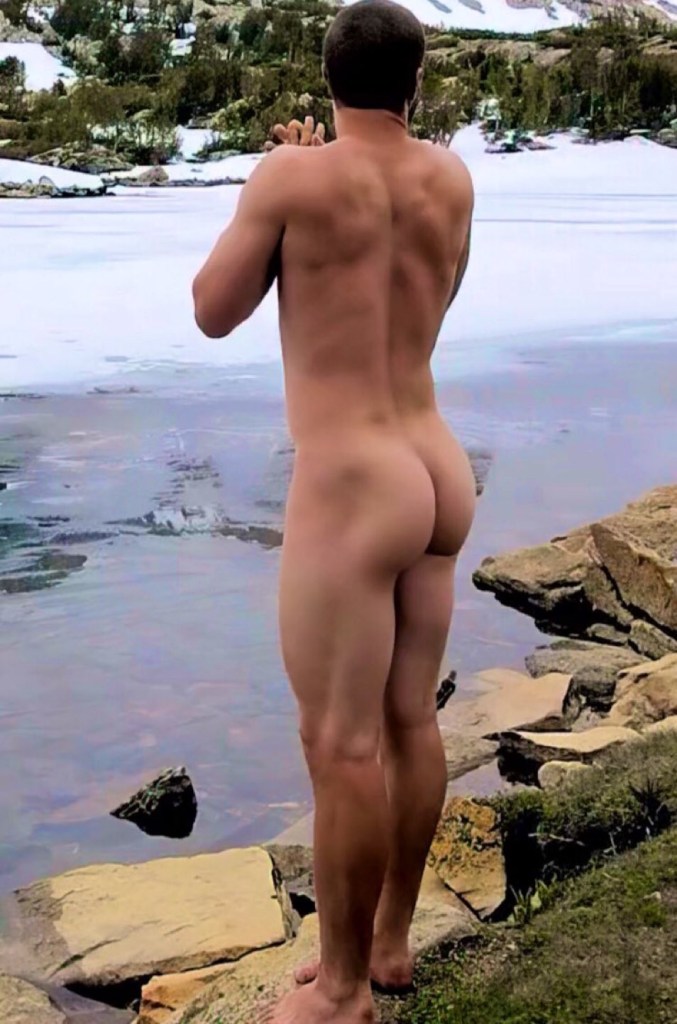
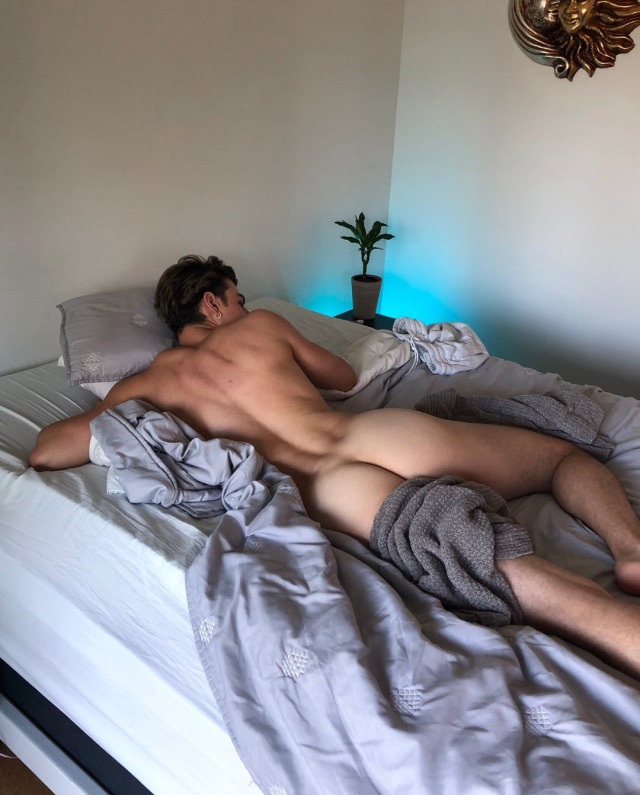
The caption I saw for the above picture said that it was Bear Grylls and apparently, it’s from his Twitter account. However, that’s not really what this post is about. If you can see past his really nice derrière., you’ll see he’s standing on rocks and green grass while the stream in front of him is half frozen and there is snow on the ground across the stream. Vermont is a bit like this right now. Yesterday, we got up to 49 degrees, and today, we are expecting a high of 46. While it will be colder next week, this isn’t the weather I’ve come to expect during February in Vermont. It’s basically mud season and people are already beginning to tap their maple trees. I was outside today without a coat. I don’t think that has ever happened in February since I moved up here.
This type of weather usually doesn’t come until April at the earliest, and more often than not, it isn’t like this until May. Everyone I know is afraid that the worst is yet to come. Not that they think it will continue to be warm, i.e., above freezing, but they think we will get slammed with lots of snow and bitterly cold temperatures before spring finally arrives for good. It’s strange because two weeks ago, we had windchills of -40 and -50 degrees. Vermont weather is always unpredictable, but usually you can count on not seeing grass from late-December until mid-April. It just hasn’t been that way this year. It’s been very mild, other than those two days at the beginning of February. The ski resorts are struggling because not only is there a lack of snow, but it’s barely cold enough on the mountains for the snow to remain.
Anyway, talking about the weird weather right now was a good excuse to post a picture of a naked Bear Grylls.

I Forgot

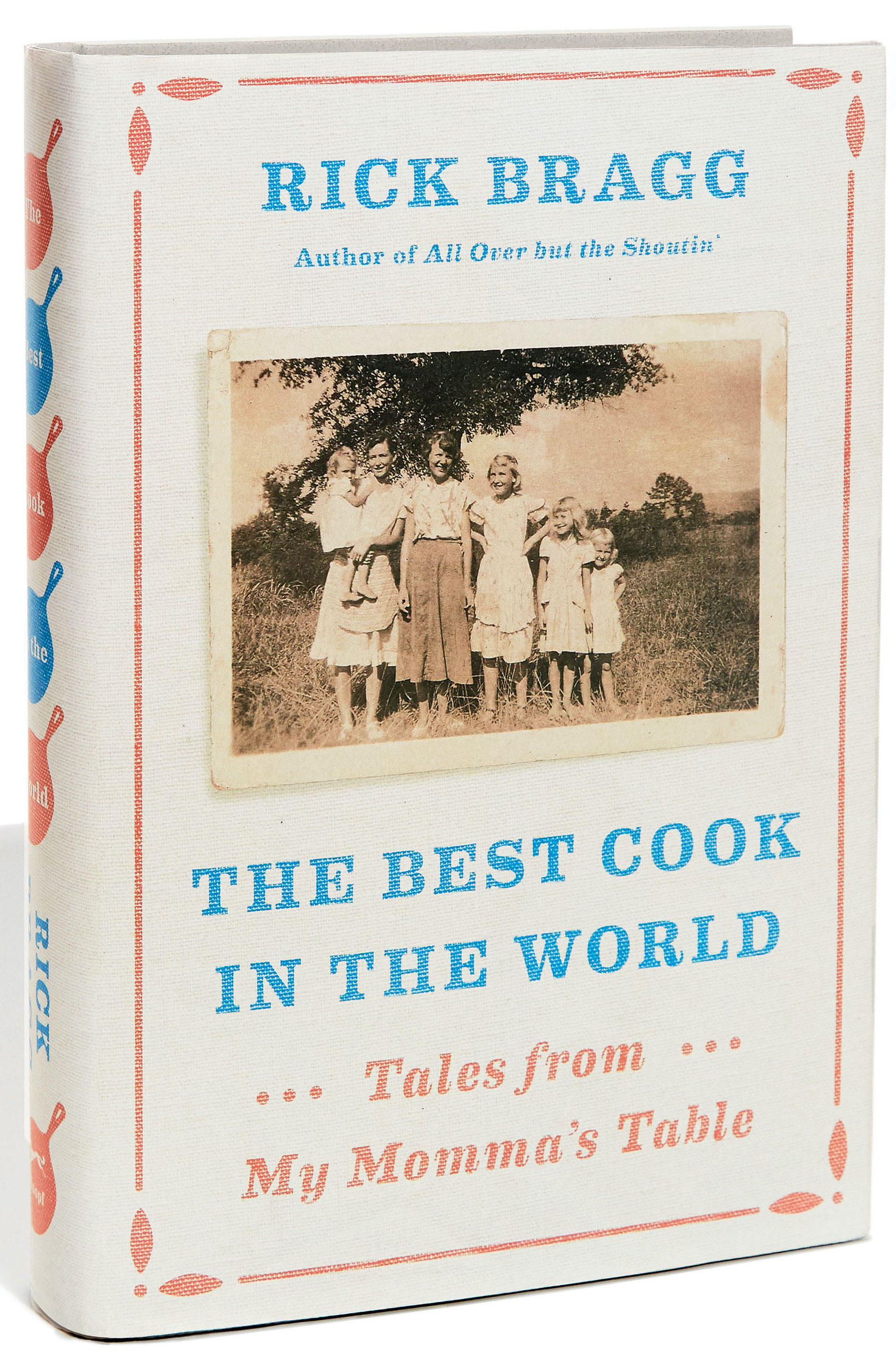
I forgot to write a post last night before I went to bed. Sorry. I don’t have a lot to say, but I will give a book recommendation. This morning on my way to work, I finished listening to The Best Cook in the World by Rick Bragg. Years ago, I had read his book All Over But the Shoutin’ and loved it. A friend of mine suggested that I would like The Best Cook in the World because I love southern cooking and had written and had published an essay about the recipes my grandmother handed down to me. If you have an interest in southern cooking, I think you’ll like this book. Because it reminded me of my grandmother’s cooking, there were parts of the book that brought tears to my eyes as I remembered her, and then, there were the stories of Bragg’s relatives that often had me laughing out loud until I cried. The book really is a masterpiece of southern folklore, stories, and recipes, and yes, the recipes are included in the book. You can buy the hardcover, Kindle, or paperback and have access to the recipes written down, or you can do like I did and listen to it on audiobook with Bragg reading it. In my opinion, it is well worth it. While some of the recipes are done a bit differently from the way I learned them, this book took place in the hill country of north Alabama and not in the Black Belt of south central Alabama where I grew up. I still got a lot of enjoyment out of it, and it brought back many memories of my childhood in Alabama watching my mother and grandmother cook.

How Do I Love Thee? (Sonnet 43)

How Do I Love Thee? (Sonnet 43)
By Elizabeth Barrett Browning – 1806-1861
How do I love thee? Let me count the ways.
I love thee to the depth and breadth and height
My soul can reach, when feeling out of sight
For the ends of being and ideal grace.
I love thee to the level of every day’s
Most quiet need, by sun and candle-light.
I love thee freely, as men strive for right.
I love thee purely, as they turn from praise.
I love thee with the passion put to use
In my old griefs, and with my childhood’s faith.
I love thee with a love I seemed to lose
With my lost saints. I love thee with the breath,
Smiles, tears, of all my life; and, if God choose,
I shall but love thee better after death.
Elizabeth Barrett Browning’s “Sonnet 43,” often referred to as “How do I love thee?”, is arguably the most famous love poem in history. EBB, as she is sometimes referred to, was born on March 6, 1806, at Coxhoe Hall, Durham, England. She was an English poet of the Romantic Movement.
When she was 14, Elizabeth developed a lung ailment that plagued her for the rest of her life. Doctors began treating her with morphine, which she would take until her death. While saddling a pony when she was fifteen, Elizabeth also suffered a spinal injury. Despite her ailments, her education continued to flourish. Throughout her teenage years, Elizabeth taught herself Hebrew so that she could read the Old Testament; her interests later turned to Greek studies. Due to her continually weakening health, she was forced to spend a year at the sea of Torquay accompanied by her brother Edward, whom she referred to as “Bro.” He drowned later that year while sailing at Torquay, and Elizabeth returned home emotionally broken, becoming an invalid and a recluse.
After the death of her brother, Elizabeth Barrett spent the next five years in her bedroom at her father’s home. She continued writing, however, and in 1844 produced a collection simply titled Poems. This volume gained the attention of poet Robert Browning, whose work Elizabeth had praised in one of her poems, and he wrote her a letter. Over the next twenty months, Elizabeth and Robert, who was six years her junior, exchanged 574 letters. In 1845 they met each other in person for the first time. Their correspondence, courtship, and marriage were carried out in secret, for fear of her father’s disapproval, for good reason.
Their romance was bitterly opposed by her tyrannical father, who did not want any of his children to marry. In 1846, the couple eloped. The couple moved to Pisa and then Florence, where they continued to write. They had a son, Robert “Pen” Browning, in 1849. Her father never spoke to her again. Elizabeth’s Sonnets from the Portuguese, dedicated to her husband and written in secret before her marriage, was published in 1850. Critics generally consider the Sonnets—one of the most widely known collections of love lyrics in English—to be her best work. It is in Sonnets, that “How Do I Love Thee?” first appeared. Admirers have compared her imagery to Shakespeare and her use of the Italian form to Petrarch.
She died in Florence on June 29, 1861, and was buried in the English Cemetery. Robert and Pen Browning soon moved to London. During his wife’s lifetime, Robert Browning was not known as much as a poet as the husband of Elizabeth Barrett Browning. It is not until after her death that Robert became known as a renowned poet in his own right.
Of all the poets I have featured on this blog, Browning is the only one whose grave I have visited. Though I went to the cemetery to research Americans in Florence, the cemetery is best known for the tomb of Elizabeth Barrett Browning, and people come from all over to pay homage to Browning and celebrate her work.
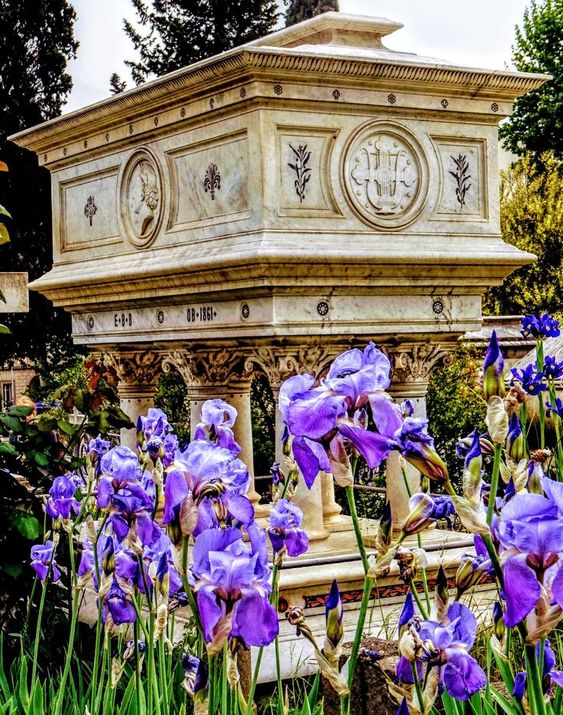
Grave of Elizabeth Barrett Browning at the English Cemetery, Florence, Italy
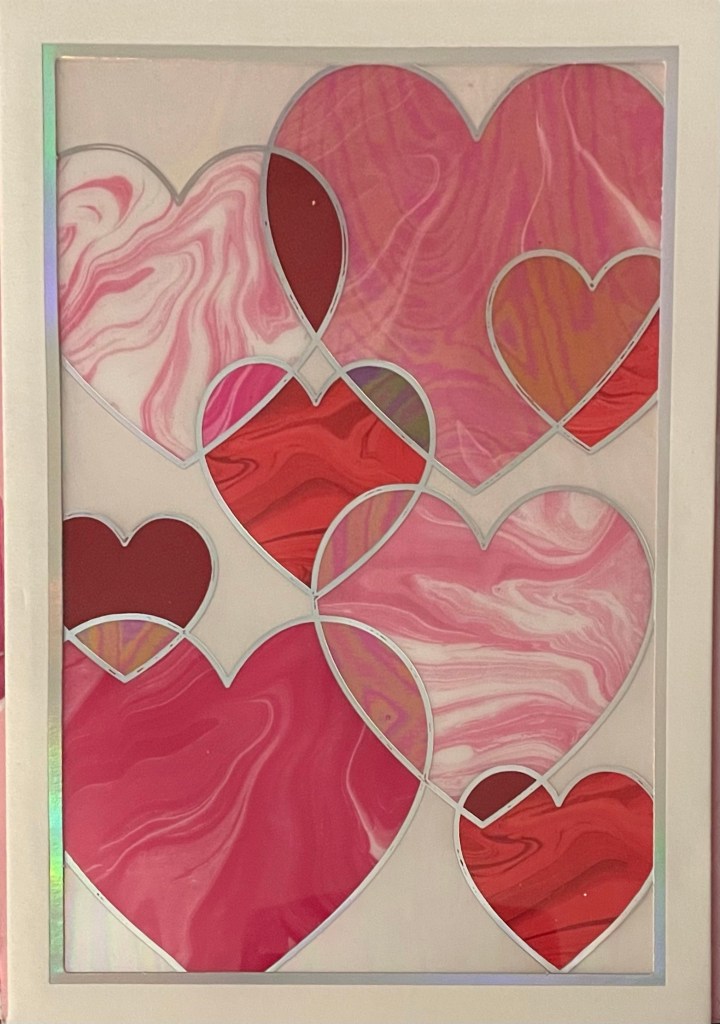
It wouldn’t be a real Valentine’s Day post without a picture of my card from Susan. Every year, they are always so beautiful and special.

Super Bowl?
- Did you watch the Super Bowl?
- How did you watch the game? Alone? At home? With friends? At a bar? Etc.
- Did you have any good Super Bowl snacks?
- Did your team win?
- What commercial was your favorite?
My answers:
- I watched the Super Bowl until halftime after I watched Rihanna’s halftime show. After that, I was feeling tired, and I wasn’t interested in the game, so I just went to bed.
- I watched it at home and alone.
- I didn’t have any snacks. I’ve been trying to eat better lately.
- If I had to choose a team, I’d probably have chosen Philadelphia, so no, my team did not win.
- A few of them, I couldn’t even tell you what they were advertising, and none of them particularly stood out for me. I probably missed some by turning off the game, but if there were really good ads, I’ll probably see them in the news or many, many times as I watch TV.



Authors
Recent Comments
noisilycool3bc985058… on Dr. McDreamy Joe on Dr. McDreamy poetrybeautiful3d840… on Dr. McDreamy Joe on Dr. McDreamy noisilycool3bc985058… on Dr. McDreamy Top Posts & Pages


Amazon Associate

As an Amazon Associate I earn from qualifying purchases. So, if you click on a link that takes you to Amazon.com, I may earn a commission.
Trust me, it isn’t much, but every little bit helps.

 Joe
Joe


 The Closet Professor