
Monthly Archives: January 2024
Phragmites
Phragmites
By Kyle Carrero Lopez
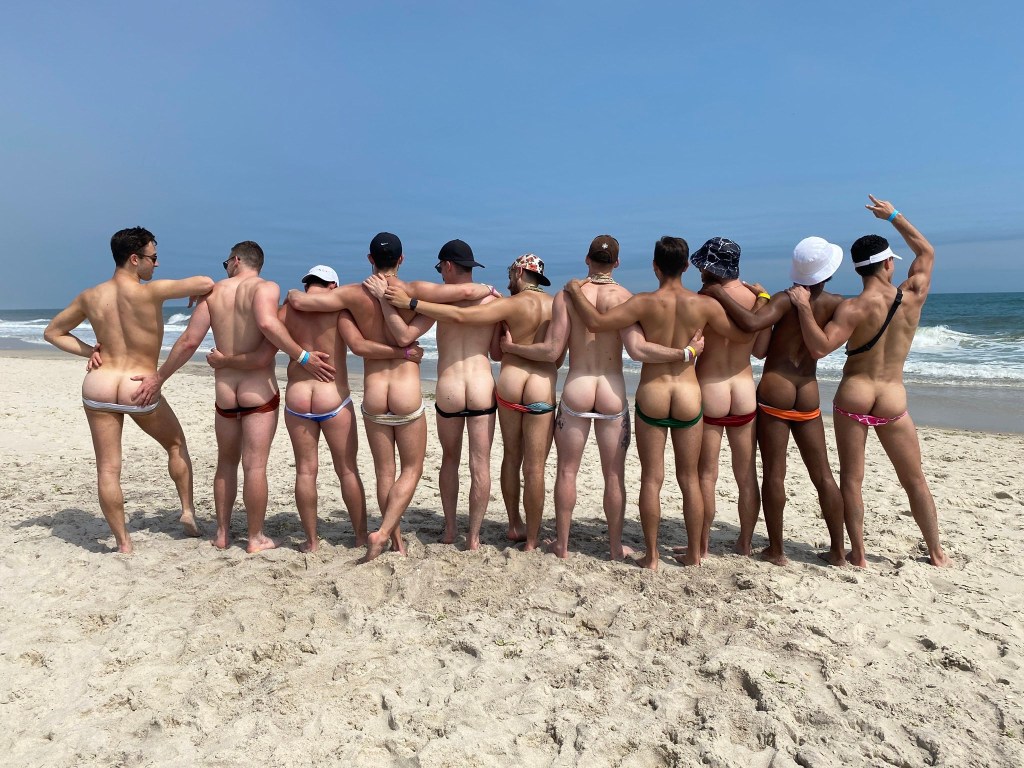
I’ve crashed a party with an infinity pool and several nude men:
a Fire Island home at the back of a walkway long enough to
outlast a pop song’s bridge and some chorus, flanked by
phragmites on either side, tall and same-faced, so all
but reed bulk hides out from the exterior. Myself
included, close to everyone here has a body of
one approximate build. What would it say if I
stay? Comfort’s not so comfy here, but I stay
and try to have a good time: periodic beach
guest, mainly through favors from men
whose wealth eclipses mine and most
of humankind. I know firsthand why
queers come to this place, obliterate
coherence, take, go, take, till
we’ve consumed enough
to leave.
Someone riding the stiffest
substance cocktail he can muster
GROANS he’s got to pee and can’t,
his functions stalled in the twist and now.
What he can still swing is a smile. Excess
soaks the sundecks and each redwood inch
of the mini villa with a sweet-hot stickiness.
There’s much more to take in, with nowhere to go.
About this Poem
“Cherry Grove and the Fire Island Pines—historic, adjoining gay communities on Fire Island—are beautiful, easy to reach from New York City, a blast if you’re with trusted friends, and a hotbed of race and class conflict. The ferries stop operating overnight, so you’re stuck once the last one leaves. One time, while discussing rental price-gouging in the Pines and suggesting that the safety Fire Island offers queer people should be accessible to all income levels, a gay man told me, ‘It’s Long Island, not insulin.’ I’m interested in what we willingly permit for the sake of our own enjoyment.” —Kyle Carrero Lopez
About the Poet
Kyle Carrero Lopez is the author of MUSCLE MEMORY ([PANK] Books, 2022), winner of the 2020 [PANK] Books Contest. He co-founded LEGACY, a Brooklyn-based production collective by and for Black queer artists. Lopez is a 2022 Tin House Scholar.
Back to the Grind

I am dreading today. I am returning to work in person for the first time in three weeks. I love my job, but I’ve gotten used to taking naps when I want to, and I have a feeling I’m going to miss that today. I only got about five hours of sleep last night. I wasn’t able to fall asleep until after midnight, and I had to get up at 5:30 am to feed Isabella, make my own breakfast, and get ready for work. Even though I’m drinking a strong cup of tea as I type this, I’m still not fully awake. I hope taking a shower will help wake me up because it’s going to be a long day of meetings and catching up. In other words, it’s going to be a very busy day.
1946
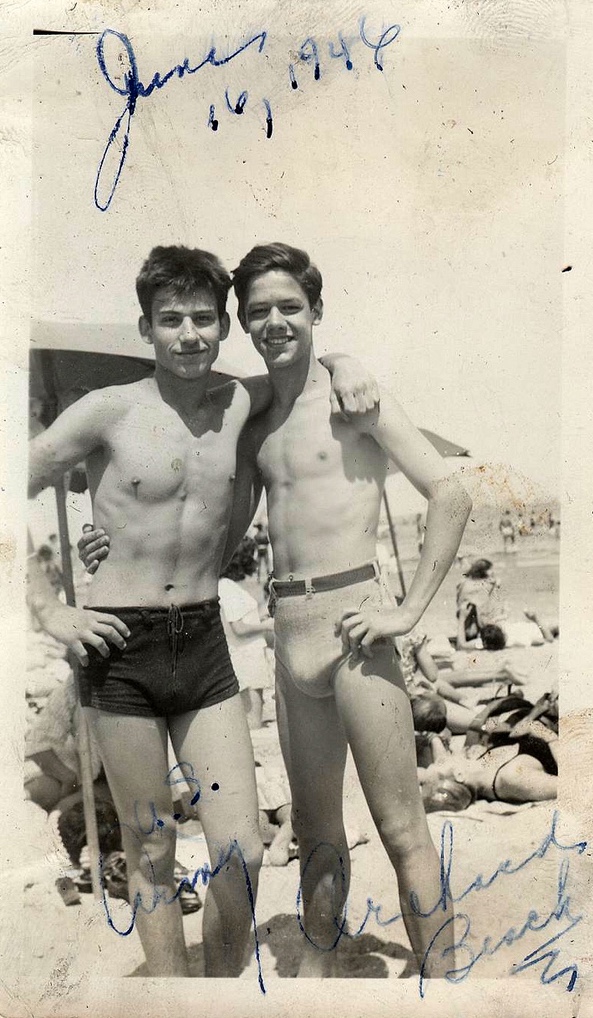
In the beginning was the Word, and the Word was with God, and the Word was God.
—John 1:1
Today’s post is going to be a little bit different because I want to recommend a movie to you, the documentary, 1946: The Mistranslation that Shifted Culture. In this documentary, researchers and scholars delve into the 1946 mistranslation of 1 Corinthians 6:9 and explore how it fueled the Christian anti-gay movement that still thrives today. Homophobia did not originate in 1946; the vast majority of religions have been attacking LGBTQ+ people since the beginning of time. In my opinion, religions need numbers to survive and to get those numbers they need more than proselytizing; they need procreation. For the most part, the LGBTQ+ community stands in the way of this. However, homophobia received a huge boost with a mistranslation of the biblical text.
1946: The Mistranslation that Shifted Culture hinges its premise on the fact that the word “homosexual” appeared for the first time in the Bible in 1946, in an apparent mistranslation of the ancient Greek words malakoi – defined as someone effeminate who gives themselves up to a soft, decadent, lazy and indolent way of living – and arsenokoitai – a compound word that roughly translates to “male bed.” While people could take it to mean man bedding man, within the context of the time, scholars believed that arsenokoitai alluded more to abusive, predatory behavior and pederasty than it does homosexuality.
The director and producer Sharon “Rocky” Roggio documents the journey of the Christian author Kathy Baldock and Ed Oxford, an advocate and gay man who grew up Southern Baptist, as they dug through archives at the Yale Sterling Memorial Library. There, they discovered correspondence between the head of the translation committee and a gay seminary student in which the committee head conceded with the student’s point about the mistranslation. In the next translation in 1971, the committee changed the translation from homosexual to “sexual perverts” – but by then the damage was done. Hundreds of millions of Bibles with the wrong translation had been published, and conservative religion and conservative politics soon banded together to push an anti-gay agenda.
The documentary first premiered in 2022 and has won numerous festival awards. It is available to rent online but sadly, only through today (1/14/2024). A dear friend who I’ve talked to many times about being Christian and gay told me about its availability, and I watched it Friday for the first time. As I heard Roggio’s story and Oxford’s story of how he began to research to understand what the Bible was actually saying about Christianity both parallel my own. Roggio melded this research with her own personal story. When she was a teenager, her pastor father discovered that she was a lesbian and responded with a letter full of Bible verses imploring her to repent and forsake her identity. Her story mirrors mine in a way. We are roughly the same age, and her father discovered she was gay and confirmed his suspicions by reading her diary. My mother discovered I was gay and confirmed her suspicions by reading my email. Like my mother, her father won’t listen and continues to cling to a small section of the Bible because it fuels their prejudices. Like me, Oxford delved into research to understand the Bible better, and I still look to the Bible to guide my values of Christ’s love.
With the documentary, Roggio filmed her father attending talks by Baldock and overall standing by his belief that the Bible condemns homosexuality as a sin. “I can’t compromise conviction,” he says in the film. “Prior to even knowing about the 1946 mistranslation, I was led to it because I knew I needed to use scripture to be able to have a conversation with my parents to affirm my reality and my identity,” Roggio said. That didn’t make it easy for her. “I knew what my dad was going to give us,” Roggio said. “I have been around for a while and I’ve been dealing with this for a while and I’ve put up enough armor to be able to go back and have those conversations. And it was extremely painful, just as I’m sure it was painful for my dad.”
The documentary goes beyond this very personal story of Roggio and her father by focusing on academia and research, featuring interviews with language experts and biblical scholars to provide context not just for the mistranslated verse, but also the other “clobber” verses that have been cited by the Christian right as a condemnation of homosexuality. They explore Sodom and Gomorrah, and the historical context behind the Leviticus verse denouncing when “a man lies with a male as with a woman;” scholars believe the verse is not alluding to homosexuality but to ritual pagan prostitution. “What we need to do is see that this is a text that is time-bound, that is determined by the culture in which it was written, and that our sense of God, our sense of the Holy Spirit, isn’t time-bound,” the Rev. Dr. Cheryl Anderson says in the documentary. “We have to ask ourselves again: what’s the word of God for this time and this place? We’re not used to doing that, but that’s the task because that is what the Bible does. It’s reinterpreting itself.”
Between the research, however, Roggio wove in the emotional repercussions for all members of the LGBTQ+ community – showing what it meant to feel as if they had been declared an abomination by sacred text and to grow up hearing that even God doesn’t love you. Oxford has a poignant moment in the film where he admits that even as outspoken as he has been on the topic of religion and sexuality, he has not been able to allow himself to experience intimacy with anyone. “I don’t get depressed about damaging theology anymore,” he says. “I have been damaged and I get depressed over how that affects me today, the here and the now.”
Because for gay Christians like Roggio, this mistranslation means everything. It means that “no one can dictate your relationship with God,” she said. “We’ve been told how we have to live as Christians, by putting away our identity, a part of ourselves. But you can totally be gay and Christian.” But the film’s findings also hold significance beyond Christianity. “Whether you’re Christian or not, or whether you’re religious or not, the Bible impacts you,” said Roggio. “It’s the most published book in the world, translated into multiple languages for millennia.”

Moment of Zen: Reading

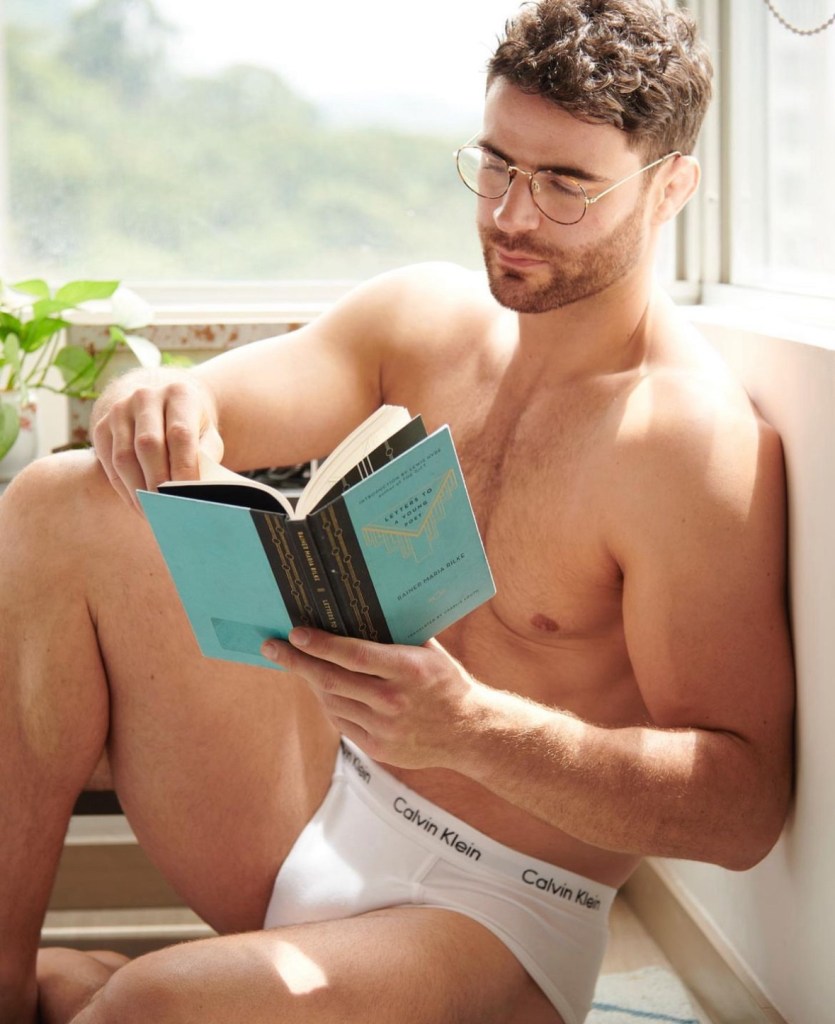
Since I’ve had Covid, there hasn’t been a lot to do except rest. I can’t go anywhere. One blessing is this week of sickness has been no migraines (until yesterday). I was migraine free for nearly seven days, which is the longest I’ve gone without a migraine in years. I love books, but I often end up listening to audiobooks because migraines can affect my vision and it’s difficult to actually read a book. With no headache for the last week and nowhere to go and nothing to see, I began to read. I’ve basically read a book a day, something that I haven’t done in so long that I can’t even remember when it was. I love books but I also love to read, and so, I’ve been catching up on reading. While all of these guys have physical books, I’ve been using my Kindle, but I have thoroughly enjoyed reading again.



TGIF

Today is another work from home day. I’m really glad I’m not expected to work in person until Monday. It should be a fairly easy day unless something changes. I’ll answer some emails, send a few, and then monitor any emails that come in. I have a little bit of research to do, but that shouldn’t be too bad. Monday will be a busy day. I have a few meetings and I have to prepare for a class I’ll be teaching on Thursday, but that is really just adapting a class I’ve taught numerous times before.
I hope everyone has a great weekend.


Authors
Recent Comments
Top Posts & Pages


Amazon Associate

As an Amazon Associate I earn from qualifying purchases. So, if you click on a link that takes you to Amazon.com, I may earn a commission.
Trust me, it isn’t much, but every little bit helps.

 Joe
Joe


 The Closet Professor