

Author Archives: Joe
About Joe

By Another Road
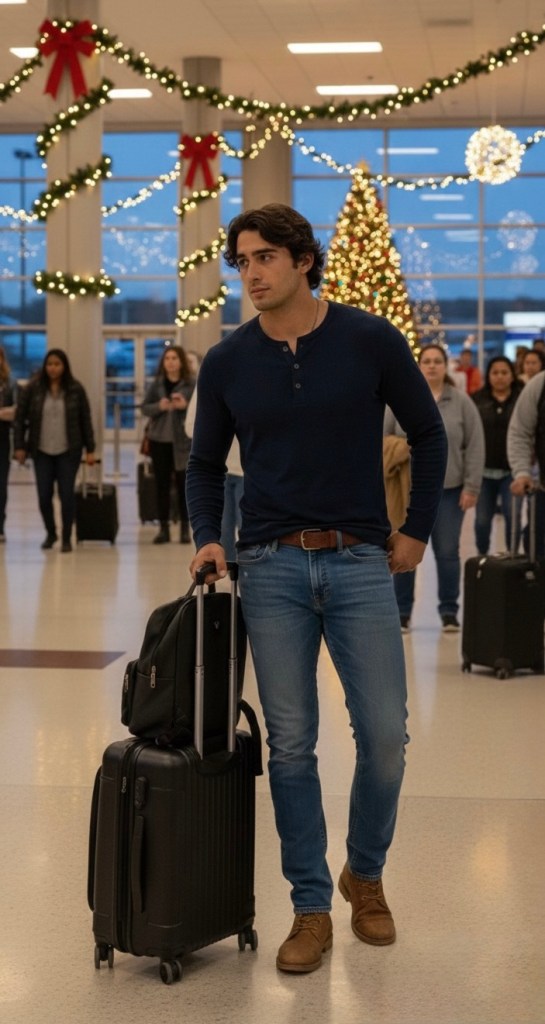
“Where is the child who has been born king of the Jews? For we observed his star at its rising, and have come to pay him homage.”
— Matthew 2:2
The story of the Magi is a story about travel—but not the easy kind.
They journey far from home, crossing borders and expectations, following a light only they seem willing to trust. They do not fully know where the road will lead. They only know that something sacred is calling them forward, and that staying where they are is no longer an option.
For many LGBTQ+ Christians, the days leading up to Christmas involve a similar kind of journey. We pack our bags and return to places we know well—homes filled with memory, affection, history, and love—but also with silence. With rules about what can be said, what must be edited, and which parts of ourselves are expected to remain unseen. We love our families, and yet the cost of that love can feel heavy when it requires us to step back into the closet, even temporarily.
The Magi understand something about that cost.
They arrive in Jerusalem first, assuming—reasonably—that a king would be found in a palace. Instead, they encounter confusion, fear, and hostility. Herod is threatened, not curious. What begins as a holy quest is suddenly shadowed by danger. Still, the Magi continue on, guided again by the star, which leads them not to power, but to vulnerability—a child, held by his mother, in an unremarkable house.
Matthew tells us that when they see the child, they are “overwhelmed with joy.” Not because everything is safe or resolved, but because they have found what they were seeking. They kneel. They offer gifts. They honor what is holy, even when it does not look the way the world expects holiness to look.
There is something deeply comforting in what happens next. Warned in a dream, the Magi return home “by another road.” They do not retrace their steps through Herod’s court. They do not place themselves back in harm’s way. Encountering Christ changes not only their destination, but their path.
For those of us traveling home this Christmas—especially to places where our fullness is not yet welcomed—this matters. Faith does not require us to be reckless with our hearts. Love does not demand that we erase ourselves entirely. Even Jesus later tells his followers to be wise as serpents and gentle as doves. There is holiness in discernment.
The Christmas story reminds us that God is present not only in moments of joyful arrival, but also in the quiet strength it takes to endure difficult visits with grace. The child the Magi worship is Emmanuel—God with us—not only in affirming spaces, but in living rooms where words are chosen carefully, and truths are held gently, sometimes painfully, in reserve.
If this season requires you to navigate family dynamics that are loving yet limiting, know this: your journey matters. Your star still shines. You are not betraying God by surviving with wisdom, nor are you failing in faith by protecting yourself. The Magi teach us that sometimes devotion looks like perseverance—and sometimes it looks like choosing a safer road home.
As you travel this Christmas, may you be guided by the quiet assurance that Christ meets you on every part of the journey. May you carry within you the knowledge that you are already seen, already known, already beloved—no matter how much or how little you are able to say aloud.
And when the time comes to return, may you do so changed, strengthened, and still following the light.

Moment of Zen: Christmas Morning

Coffee optional. Clothes apparently not required. This is exactly what I want Christmas morning to look like—and I can’t wait to unwtap these presents.
Merry Christmas, Happy Holidays. 🎄





Mustaches aren’t usually my thing—but every rule deserves at least one very good exception. Some guys make it undeniably hot. I’m not sure it’s the mustache that’s winning me over—but I’m not complaining.

The following aren’t Christmas pics, per se. They just say Christmas in all the right ways. No ornaments, no lights needed—just something that feels unmistakably seasonal.



There’s nothing remotely Christmas about this—no red, no green, not a single decoration. But Santa… please put him under my tree anyway. I promise I’ll enjoy unwrapping him Christmas morning.


When Dreams Drop Hints

I woke up this morning from a dream, or maybe it was two dreams, that stayed with me in a way dreams rarely do. I don’t usually remember them, and I almost never remember erotic ones—but lately? Apparently my subconscious has decided to be more generous and is saying I need to get laid. Whatever my subconscious is trying to tell me, it’s been kind of nice.
The first felt like memory filtered through imagination. I’d had a conversation the night before about first experiences and how complicated those early awakenings can be—how we often don’t yet have the language for what we’re feeling. In the dream, I was in a locker room, nearly empty, except for one other guy, quiet in that strange, echoing way such places get once everyone else has gone. Wood lockers. Warm air. That sense of being just a little out of time.
The other guy was handsome, relaxed, completely at ease in his own skin. At one point he was sitting above me, and when I looked up, I realized how close he was. I was looking at his dick sticking out of his boxers. Instead of looking away, neither of us did. The moment stretched—charged, unhurried. I remember being completely mesmerized, struck not just by how beautiful he was, but by the realization that I wanted to keep looking. As I looked, he started getting hard, until he was at full mast. Long pink perfection right in front of my eyes.
He asked, gently, if I wanted to suck him. I hesitated, that old reflex rising up—I’m not gay—the words coming out the way they once did, automatically. He just smiled and cupped my face, steady and kind, and said it was okay if I was, and it would stay between us. With hesitation, and a total lack of knowing how to do this, I took him in my mouth.
Naturally, that’s when Isabella chose to intervene, planting herself squarely on my chest to remind me that breakfast waits for no man.
I fed her, and when I fell back asleep, the dream shifted.
This time I was older—maybe in my 30s or early 40s—and walking hand in hand with a handsome man through Montréal’s Gay Village, down Rue Sainte-Catherine. It was clearly a date: romantic, unhurried, that delicious feeling of being chosen and choosing right back. The city buzzed around us, but we were wrapped up in our own little world.
As dreams tend to do, it skipped ahead—to a hotel room, to kissing, laughter, undressing, and then he was one top of me. I don’t think what happened next needs to be spelled out. Let’s just say it was a happy ending.
I woke again to a black cat sprawled on my chest, staring down at me with the firm belief that if I was awake, I should stay that way—preferably while she found a warm spot and went back to sleep.
Dreams are strange things. Sometimes they’re nonsense. Sometimes they’re memories rearranged. And sometimes—especially when they’ve been getting a little more frequent and a little more erotic—they might just be your subconscious tapping you on the shoulder and saying, Hey… you might want to do something about this.
I hope your weekend brings rest, good company, and maybe even a nice dream or two of your own.

One Thing at a Time

Everything seemed to go fine yesterday. I spent most of the day sleeping, which was probably exactly what my body needed. The endoscopy showed no esophageal varices, which was a huge relief. The doctor did take a few biopsies of some discoloration in my throat, but that was purely precautionary and nothing to worry about—most likely just irritation from acid reflux. Today I’m left with a sore throat, but that’s a small price to pay for peace of mind.
This afternoon I head to the dentist to get the permanent crown for the tooth I had worked on last month. After that, I’m officially away from the office until January 5. I’ll work from home tomorrow, but otherwise things are slowing down a bit.
The weekend will be spent packing and getting ready for my trip to Alabama. My plane leaves at the painfully early hour of 5:30 a.m. Monday morning, so Sunday night will be an early one. For now, I’m just taking things one step at a time and grateful that yesterday brought mostly good news.
I hope your week is treating you gently.

Keeping an Eye on Things
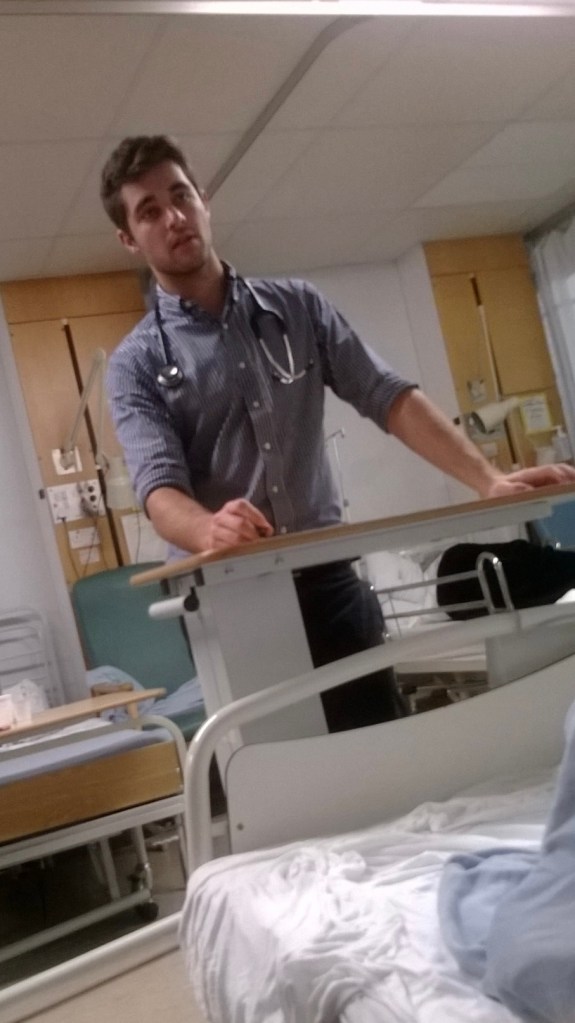
Today I’m having an endoscopy, which means I’m not working today. It’s one of those quiet, necessary pauses that comes with living with stage 4 liver disease.
The odd thing about this diagnosis is that, for now, there isn’t much to do. My liver is functioning well enough at the moment, and that may remain true for many years—ten, fifteen, maybe even twenty. If the day ever comes when it can’t do its job, the only cure currently available is a liver transplant. That’s still a long way off, and there’s hope that medical advances will offer new options before then. Doctors already know that some medications used for diabetes can slow the progression of liver disease, which is encouraging.
What is certain is that my doctors need to keep a close eye on things.
That means ultrasounds every six months and an endoscopy every year or two, depending on what they find. When the liver can’t handle blood flow as well as it should, pressure can build up elsewhere in the body, sometimes affecting the veins in the esophagus.
These are called esophageal varices. They often cause no symptoms, which is what makes them dangerous. I was told that many ruptures are fatal simply because the bleeding happens so quickly that help doesn’t arrive in time. That seriousness is exactly why monitoring matters—when varices are found early, they can often be treated with medication and careful follow-up.
So today is about prevention: checking in, staying ahead of potential problems, and taking care of myself. It’s not how I’d choose to spend my day, but it’s part of living thoughtfully and realistically with a chronic condition. For now, that’s enough.


Authors
Recent Comments
noisilycool3bc985058… on Pic of the Day vandycolt on Pic of the Day noisilycool3bc985058… on Pic of the Day furbirdsqueerly on A Nation’s Strength stupendousflower271b… on Pic of the Day Top Posts & Pages



 Joe
Joe


 The Closet Professor