Category Archives: Art

Symbols of Unity, Not Division

And suddenly there was with the angel a multitude of the heavenly host praising God and saying: โ€œGlory to God in the highest, And on earth peace, goodwill toward men!โ€

โ€”Luke 2:13-14

Many of you are probably not familiar with this news story, but a anti-LGBTQ+ group called Clean Up Alabama (CUA) has been fighting to get Prattville Pride, Prattville, Alabamaโ€™s LGBTQ+ organization, removed form the annual Prattville Christmas Parade. I used to work in Prattville back when I was in college, and I have always hated the place. CUA stated, โ€œThe Christmas parade is a celebration of Christmas, the birth of Jesus Christ the Messiah. It is NOT a time to celebrate someoneโ€™s sexual preferences.โ€ They obviously think the celebration of Christmas is a time to celebrate, not the message of Jesus Christ, but a message of hatefulness towards their fellow man (and women and non-binary, etc.). Letโ€™s, for a moment, overlook the fact that Christmas was chosen to be on December 25 because it coincided with the Roman pagan holiday of Saturnalia and teh Winter Solstice, not the actual birth of Christ, and instead look at what should be the meaning of the holiday and the actions and symbols used to celebrate the season. 

In Alabama, and my sister is one of them, they hate to say Happy Holidays instead of Merry Christmas or to use Xmas, because it highlights their Christian insecurities and takes the โ€œCHRIST out of Christmas.โ€ I wish they could all take my Art History class because they would find out that the X in Xmas is an old Christian tradition because it is part of the Chi Rho symbol. Early Christian art is filled with symbology to represent the meaning of the Christian faith.

Chi (X) and Rho (P) are the beginnings of the Greek word ฮงฮกฮ™ฮฃฮคฮŸฮฃ (Romanized: CHRISTOS). Before Emperor Constantine made Christianity legal in the Roman Empire, Christians were forced to hide their faith; however, they identified themselves with certain symbols: the cross and crucifix (the most commonly used symbols today), several different combinations of Greek letters (ichthys, Alpha and Omega, Chi Rho, IH monogram, IX monogram), the Good Shepherd, a dove, a peacock, or an anchor. Let us look at why these symbols were so important and meaningful to early Christians.

The ichthys (แผฐฯ‡ฮธฯฯ‚ in Greek, meaning โ€œfishโ€) is a symbol consisting of two intersecting arcs that resemble the profile of a fish. The ichthys was used by early Christians as a secret symbol during times of persecution under the Roman Empire. It allowed them to identify themselves to one another discreetly. The Greek word ichthys also served as an acronym for the phrase: แผธฮทฯƒฮฟแฟฆฯ‚ ฮงฯฮนฯƒฯ„แฝธฯ‚ ฮ˜ฮตฮฟแฟฆ ฮฅแผฑแฝธฯ‚ ฮฃฯ‰ฯ„ฮฎฯ (โ€œJesus Christ, Son of God, Saviorโ€). Therefore, the ichthys represents Jesus Christ and the Christian faith. The fish itself is also significant because of its frequent appearance in the Gospels. The ichthys symbol is also a reference to the Holy Eucharist, with which the miracle of the multiplication of the loaves and fishes had such intimate connection both in point of time and significance. (Matthew 15:32โ€“39 and Mark 8:1โ€“9) It is also significant because Jesus called Peter and Andrew, both fishermen, to be His disciples. Mark 1: 16โ€“18 says, โ€œAnd as He walked by the Sea of Galilee, He saw Simon and Andrew his brother casting a net into the sea; for they were fishermen. Then Jesus said to them, โ€˜Follow Me, and I will make you become fishers of men.โ€™ They immediately left their nets and followed Him.โ€

The Alpha and Omega since the earliest Christianity of the first and the last letters of the Greek alphabet, alpha (ฮฑ or ฮ‘) and omega (ฯ‰ or ฮฉ), derives from the statement said by Jesus in Revelation 22:13, โ€œI am the Alpha and the Omega, the Beginning and the End, the First and the Last.โ€ The first two letters of the name of Jesus in Greek (ฮ™ฮ—ฮฃฮŸฮฅฮฃ), iota (ฮ™) and eta (ฮ—), sometime superimposed one on the other was also a well known and very early way to represent Christ. Another early form of the monogram of Christ, found in early Christian ossuaries in Palaestina, was formed by superimposing the first (capital) letters of the Greek words for Jesus and Christ, i.e. iota ฮ™ and chi ฮง, so that this monogram means “Jesus (ฮ™ฮ—ฮฃฮŸฮฅฮฃ)Christ ฮงฮกฮ™ฮฃฮคฮŸฮฃ.”

The image of the Good Shepherd, often with a sheep on his shoulders, is the most common of the symbolic representations of Christ found in the Catacombs of Rome, and it is related to the Parable of the Lost Sheep (Matthew 18:12โ€“14 and Luke 15:3โ€“7). The dove as a Christian symbol is of very frequent occurrence in ancient ecclesiastical art. According to Matthew 3:16, โ€œWhen He had been baptized, Jesus came up immediately from the water; and behold, the heavens were opened to Him, and He saw the Spirit of God descending like a dove and alighting upon Him.โ€ For this reason, the dove became a symbol of the Holy Spirit, and in general it occurs often in connection with early representations of baptism. Ancient Greeks believed that the flesh of peafowl did not decay after death, and so the peacock became a symbol of immortality. Early Christianity adopted this symbolism, and thus many early Christian paintings and mosaics show the peacock. Christians also adopted the anchor as a symbol of hope in future existence because the anchor was regarded in ancient times as a symbol of safety. For Christians, Christ is the unfailing hope of all who believe in him: Saint Peter, Saint Paul, and several of the early Church Fathers speak in this sense. The Hebrews 6:19 says, โ€œThis hope we have as an anchor of the soul, both sure and steadfast, and which enters the Presence behind the veilโ€ connects the idea of hope with the symbol of the anchor.

Most Christians do not have a very good understanding of what the symbols they sometimes use mean, nor do they understand the significance of the early Christian symbols and the sacrifices that early Christians made to spread the Word of God. Too many Christians are spouting hate and wrapping it in theology, but they forget that we are all one in Christ. Galatians 3:28 says, โ€œThere is neither Jew nor Gentile, neither slave nor free, nor is there male and female, for you are all one in Christ Jesus.โ€

An Update on Prattville Pride and the Prattville Christmas Parade:

A few hours before the city of Prattvilleโ€™s annual Christmas parade was to start, a Trump-appointed federal judge ordered the city to allow an LGBTQ+ pride groupโ€™s float to be included. Prattville Pride called the order โ€œa powerful affirmation of the importance of visibility, representation, and inclusion for all members of our community,โ€ in a Facebook post.

In his order, U.S. District Judge R. Austin Huffaker of the Middle District of Alabama wrote: โ€œWhile there are areas of unprotected speech, such as incitement of violence, the City makes no argument and provides no evidence that Prattville Pride has engaged in any speech or behavior that would remotely fall into an unprotected speech category. It is undisputed that Prattville Pride has complied with the Cityโ€™s regulations.โ€

โ€œThe City removed Prattville Pride from the parade based on its belief that certain members of the public who oppose Prattville Pride, and what it stands for, would react in a disruptive way. But discrimination based on a messageโ€™s content โ€œcannot be tolerated under the First Amendment,โ€ the order continued.


Moment of Zen: Art


Coded

โ€œGentlemen with Golf Clubs,โ€ 1909, by J.C. Leyendecker

Joseph Christian Leyendecker’s life, career, and love is captured in a new film, Coded: The Hidden Love of J.C. Leyendecker, which I watched the other day on Paramount+. The documentary shows Leyendecker’s enduring influence on American culture and LGBTQ+ representation in advertising, as well as the relationship with his partner, Charles Beach, the muse for Leyendecker’s “Arrow Collar Man.”

Arrow Short Collars, American Advertisement, 1914, by J.C. Leyendecker

The use of men as sexy symbols in advertising would not have existed without the influence of Leyendeckerโ€™s art. The German-American artist received training in Paris under the French Art Nouveau movement and imported some of this โ€œModern Styleโ€ to United States. His ad illustrations, which leaned into sexualizing his handsome male subjects, made brands like Arrow shirts fly off the shelves while also defining the image of the early 20th-century American man. Many of his illustrations featured intimate gazes between two gentlemen. Often, if there were two gentlemen and a lady, the two men would be focused on each other and not the woman.

“The Oarsman,โ€ 1916, (Left) and โ€œMan on the Bag,โ€ 1912, (Right) by J. C. Leyendecker

Additionally, Leyendecker painted over 400 magazine covers in his career โ€” over 300 alone for The Saturday Evening Post โ€” essentially creating the design template still in use today. His stock took a plunge along with Wall Street following the Great Depression, when shrinking wallets also meant a return to social conservatism. The public turned away from Leyendecker’s eroticized male forms toward Norman Rockwell, a more traditional illustrator who was mentored by Leyendecker.

Advertisement for Cluett Dress Shirts, 1911, by J.C. Leyendecker

The image below of an Ivory Soap advertisement from 1900 is one of his early pieces before he met Charles Beach; however, it is a great example of the coded messages in many of his works. Can you spot the โ€œcodeโ€ in this image? Once you see it, youโ€™ll probably never not see it.

โ€œIvory Soap It Floats,โ€ Ivory Magazine, 1900, by J.C. Leyendecker

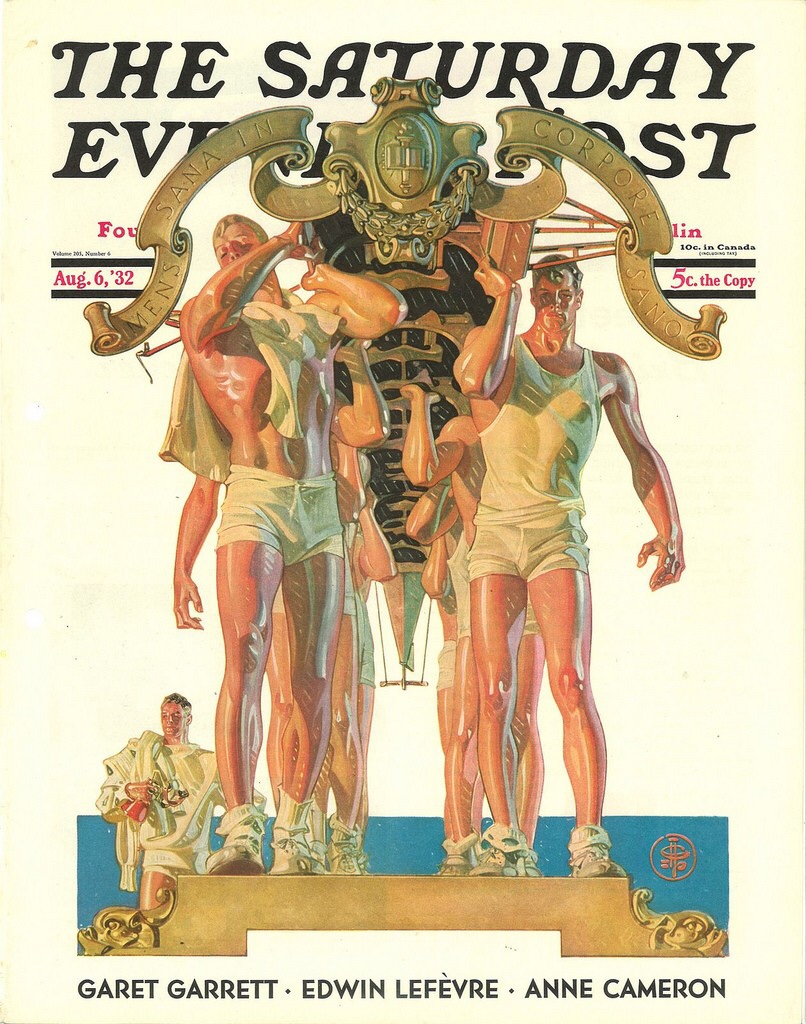
In honor of the (Winter) Olympics beginning this week, Iโ€™ll end with this 1932 edition of The Saturday Evening Post. Strangely, the conservative, anti-New Deal, and middle class family orientated publication had what is (to most modern eyes at least) a sexualized โ€˜gayโ€™ image of the U.S. Olympic Eight on its cover, painted by Leyendecker. This was not the only time that Leyendecker put semi-naked men on a pedestal as youโ€™ve seen in some of his other illustrations.


Remembering Steve Walker

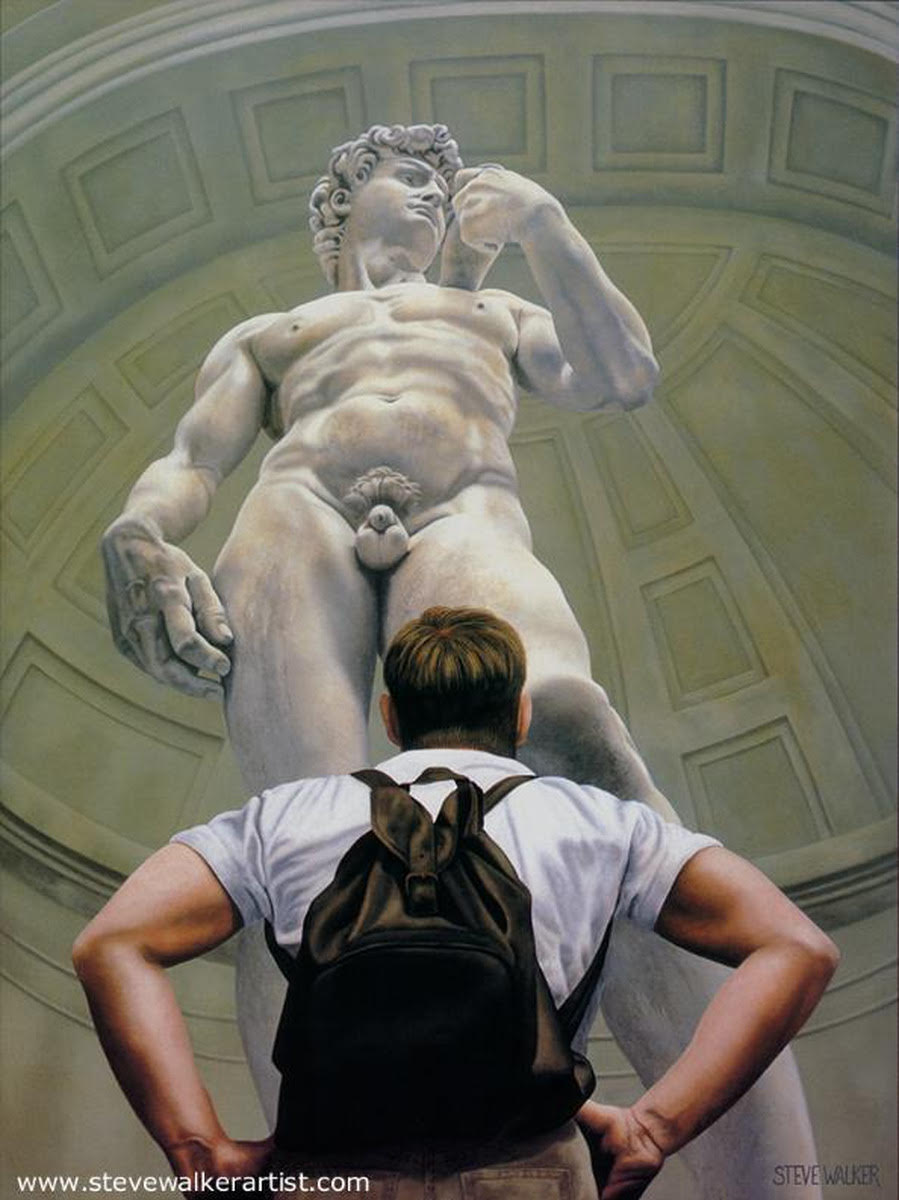
Since the beginning of this blog, I have used the 2001 painting โ€œDavid and Meโ€ by Canadian artist Steve Walker as my profile picture and my avatar. Someday, I may change it to an actually picture of me, but for now it remains. I chose it for what I think is a very good reason. Back in 2006, I spent a month in Italy conducting research for my dissertation. I remember standing in front of and looking up at the remarkable statue of David by Michelangelo much like the guy in the picture, though I donโ€™t think I was wearing a backpack at the time. It was a truly awesome experience. Each time I look at images of the painting I am transported back to that day in the Galleria dell’Accademia in Florence. Of course, back then I did have a head full of brown hair with a similar hairstyle. Today, there is much less hair and what I do have left is now nearly completely gray. I donโ€™t have the muscle definition I had back then, and thereโ€™s a more weight on my body. The painting has always had a special place in my heart, and I wish I owned an actual print of the image.

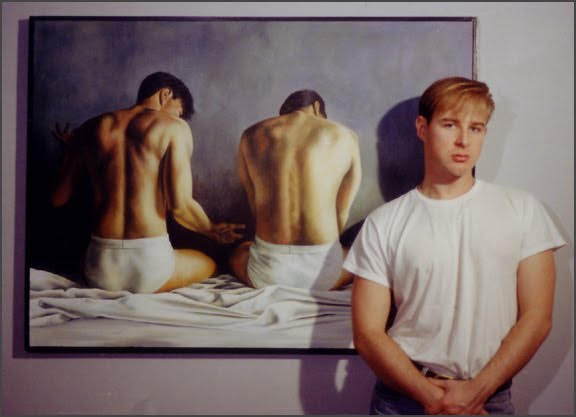
Walker passed away at his home in Costa Rica on Jan 4,2012, at age 50. He was best known for his haunting and poignant acrylic portraits of beautiful young men (solo and in pairs), often done in muted shades. โ€œSome colors are very exciting to me,โ€ he once told James Lyman, a Massachusetts gallery owner and Walkerโ€™s art executor and trustee. โ€œWhile others are quite offensive. Painting flesh is very exciting to me because of the huge variations possible within a very small color range.โ€

According to friends, Walker was strongly influenced by Renaissance Italian artist Caravaggio โ€“ especially in his use of shadow to show the contours of the young male form. For his subjects, he chose to paint gay men, depicting the struggles and joys the gay community lived through in his lifetime, from the fight for sexual liberation to the devastation brought about by HIV and AIDS. Walker believed his subjects were universal, touching on themes of love, hate, pain, joy, beauty, loneliness, attraction, hope, despair, life, and death.

As a homosexual, I have been moved, educated, and inspired by works that deal with a heterosexual context. Why would I assume that a heterosexual would be incapable of appreciating work that speaks to common themes in life, as seen through my eyes as a gay man? If the heterosexual population is unable to do this, then the loss is theirs, not mine

โ€”Steve Walker

Walker was an entirely self-taught artist and sold his first painting, Blue Boy in 1990. He painted a second in 1991, called Morning, of two young men in bed after sex. Walkerโ€™s paintings were mostly large because he believed that a large image was more appealing and has more impact than a smaller one. As with many artists, Walker was painting the sadness that was in his life. Two of Walkerโ€™s partners had died over the years, and his close friend Marlene Anderson says he was lonely. His paintings are about gay life, and the focus of them often depicted sadness and loneliness to reflect the reality that much of anyoneโ€™s life is sad and lonely. Walker told a firend that it is rare to find success as an artist, and Walker was happy his work would be his lasting legacy.

I strive to make people stop, if only a moment, think and actually feel something. My paintings contain as many questions as answers. I hope that in its silence, the body of my work has given a voice to my life, the lives of others, and in doing so, the dignity of all people.

โ€”Steve Walker

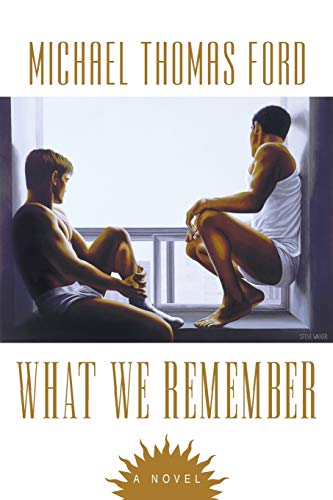
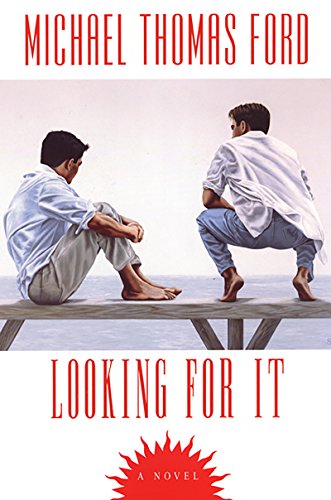
In his lifetime, Walterโ€™s work was exhibited in Toronto, Montreal, Los Angeles, Fort Lauderdale, Provincetown, and Pasadena. Much of the gay community loved Walkerโ€™s work and many pieces were sold for several thousand dollars. His art appear on the covers of gay novels, such as American writer Felice Picanoโ€™s 1995 epic Like People in History and the late Gordon Andersonโ€™s novel of 1970s Toronto, The Toronto You Are Leaving. His paintings also grace the covers of six books by Michael Thomas Ford: Last SummerLooking For ItFull CircleChanging TidesWhat We Remember, and The Road Home. Ford describes the book on his website mirroring what has been said about Walkerโ€™s art:

Much of my fiction is about what it’s like living as a gay man at this time in history. These six novels look at different aspects of the gay experience. Although they share a cover style, they are not a series, and may be read in any order. Many people ask who the cover artist is. It’s Steve Walker. Steve died in 2012, but his wonderful artwork capturing the lives of gay men remains to remind us of his talent.


Moment of Zen: LGBTQ+ Art, Material Culture & History

A signed copy of the Bruce Weber photograph above, titled Tara and her pal Chris, San Onofre, CA, just sold at Swann Auction Galleries for $4,500. Bruce Weber (born March 29, 1946) is a fashion photographer. He is most widely known for his ad campaigns for Calvin Klein, Ralph Lauren, Pirelli, Abercrombie & Fitch, Revlon, and Gianni Versace, as well as his work for Vogue, GQ, Vanity Fair, Elle, Life, Interview, and Rolling Stone magazines.

The auction โ€œLGBTQ+ Art, Material Culture & Historyโ€ was the galleryโ€™s third annual auction dedicated to the art, material culture, and history of the LGBTQ+ community. The auction brought to market both familiar artists as well as fresh, unusual, and infrequently seen material. Among the art highlights are several original works by Tom of Finland, including two preparatory drawings and a completed, color pencil work, โ€œHomeโ€”Secured.โ€ It also included four oil paintings by Hugh Steersโ€”two canvases and two works on paper. Other art and photography included are works by Andy Warhol, Keith Haring, David Wojnarowicz, Nan Goldin, Patrick Angus, Lowell Nesbit, Robert Bliss, Nicole Eisenman, Robert Loughlin, Paul Cadmus, Jean Cocteau, Avel de Knight, Pavel Tchelitchew, Duncan Grant and others.


Boston MFA


The Boston Museum of Fine Arts is amazing. They had a Botticelli exhibit that was truly out of this world. The Venus above is an example of what was there. We also went to the American gallery where they had an exhibit of John Singer Seargent. Wow, that was some beautiful art, such as the nude below.


Homosexuality in Japan’s Edo Period

image
Japanโ€™s Edo period, stretching from the 17th to 19th century, was characterized by economic growth and a rigid social order, both of which worked together to bolster a before unrealized interest in art, culture, entertainment and, yes, sex.

While most marriages at the time were arranged โ€” and between a man and a woman โ€” sex between two men was not at all uncommon, though often kept out of public view. For the most part, such erotic encounters were allocated to three spheres: red-light style pleasure districts, kabuki theater, and shunga, or erotic art.

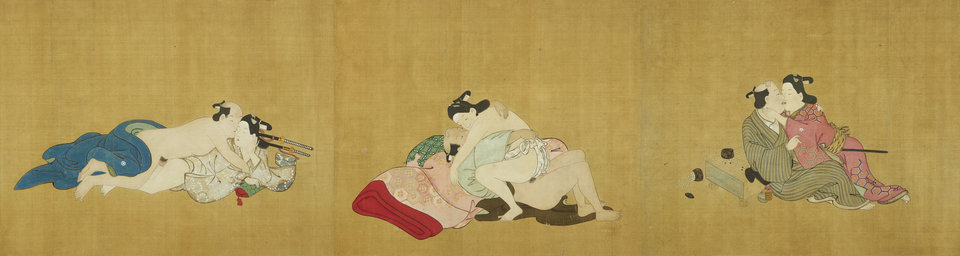
Artistic representations of erotic encounters between two men, known as nanshoku, are harder to find in the annals of shunga prints than images of sexually skilled octopi. However, a wildly rare shunga handscroll by artist Miyagawa Choshun, which has been shielded from public view since the 1970s, depicting man-on-man loving, has been recently rediscovered by Bonhams auction house.

โ€œIn the strictly regulated society of Edo period Japan, it was not unusual for people to yearn for circumstances and opportunities not afforded them by birth,โ€ Bonhamsโ€™ Director of Japanese Art Jeff Olson said in a press statement. โ€œFor most, costly visits to the pleasure quarters were out of reach, so illustrated erotica was the next best thing.โ€

While most shunga prints frame the genitals front and center, nanshoku works focus more on the tender romance of the relationship. Think of them as the soft-core alternative to hardcore porn. The pairings normally consist of an older man and a younger partner, dressed in an ornate kimono and traditional womanโ€™s hairstyle. Artistic depictions often muse on the luxurious details of the young loverโ€™s garments and appearance.

Choshunโ€™s striking handscrolls are at once minimalist in their color-blocked elegance and grandiose in their detailed renderings of kimonos and tricky-looking sexual positions. The lovers are rendered in a gold-tinted, floating world, swallowed up by the fantasy of their own desires.

This article is from the Huffington Post, though slightly edited. To see more of these depictions of Japanese gay erotica (though I’ll be honest, they don’t look too gay to me), you can feast your eyes on these delightfully rare, 17th-century Japanese gay erotica at http://www.huffingtonpost.com/entry/feast-your-eyes-on-these-rare-17th-century-handscrolls-of-japanese-gay-erotica_us_56ec35bfe4b03a640a6a53d5


William Etty: Artist and Callipygian Enthusiast


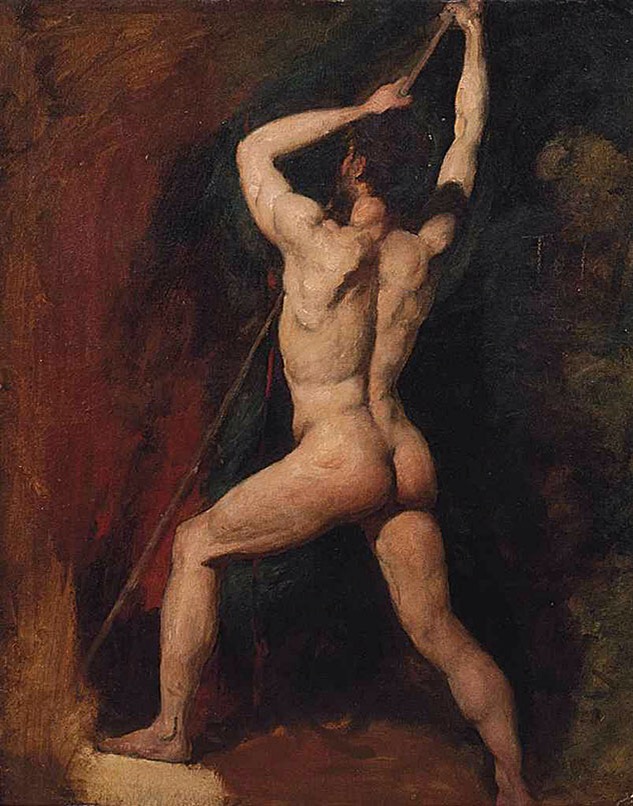
William Etty (1787-1849) is probably the most controversial artists of whom you have probably never heard.  A high-minded bachelor whose private life has defied all attempts to unearth smut, Etty was acclaimed in his day but eventually sidelined because of his defiance of moralizing, often hypocritical, critics. He was a shy man and remained a bachelor all his life, which at the time was practically a statement. There is no way to confirm Etty’s sexual orientation since he’s long dead and lived in a time when no one really identified as gay. However, the paintings may speak for themselves. He was a successful Royal Academy artist, but his work fell out of favor after his death. But while he was an active painter he was both admired and condemned for his detailed renderings of the naked human body.

Critics felt he focused too much on the female buttocks, but if you Google Image search for his work, you find a surprisingly large number of male nudes, many with a focus on the male buttocks as well. Seems none of his contemporaries were interested in commenting on that, but it’s obvious that Etty’s was a butt man, no matter his orientation.

Whereas his contemporaries, like J.M.W. Turner changed how people saw art, Etty wanted to change what people saw. Etty broke the rules of decorum by painting humanly realistic nudes rather than idealized gods and goddesses. Most of the criticism questioned the appropriateness of Ettyโ€™s female nudes, while the male nudes quite often found praise as โ€œheroic.โ€ Tragically, the critics got personal in their comments, essentially charging Etty with deliberately trying to corrupt the viewing public. 

โ€œHe is a laborious draughtsman, and a beautiful colourist,โ€ one critic began innocently enough, โ€œbut he [Etty] has not taste or chastity of mind enough to venture on the naked truth [โ€ฆ] we fear that Mr. E will never turn from his wicked ways, and make himself fit for decent company.โ€ โ€œ[T]he spectator can see in [Ettyโ€™s female nudes] nothing beyond the portrait of some poor girl who was necessitated to sacrifice the feelings of her sex for bread,โ€ another critic accused. โ€œNudity is all that the artist has to show us, and when unassociated with anything like incident or sentiment, the spectacle is offensive.โ€ Etty defended himself as an innocent lover of natureโ€™s greatest creationโ€”the human form. Even after evoking the Biblical phrase that โ€œto the pure of heart all things are pure,โ€ Ettyโ€™s explanations fell on deaf ears.


The Powers That Be

20140731-233314-84794652.jpg
We finally arrived in Dallas yesterday. Let me tell you that first of all, it’s a long drive from Alabama to Dallas, even when it’s split into two days. Once in Dallas, we checked into our hotel, which was far nicer than we expected, then we headed to the Dallas Museum of Art. The DMA has live jazz every Thursday and is open until 9 pm.

20140731-233400-84840452.jpg
Saxophonist and composer Ron Jones led an ensemble of players performing his original compositions and other arrangements of jazz standards. So along with seeing the amazing exhibits at the DMA, we were able to enjoy live music as we walked through the museum.

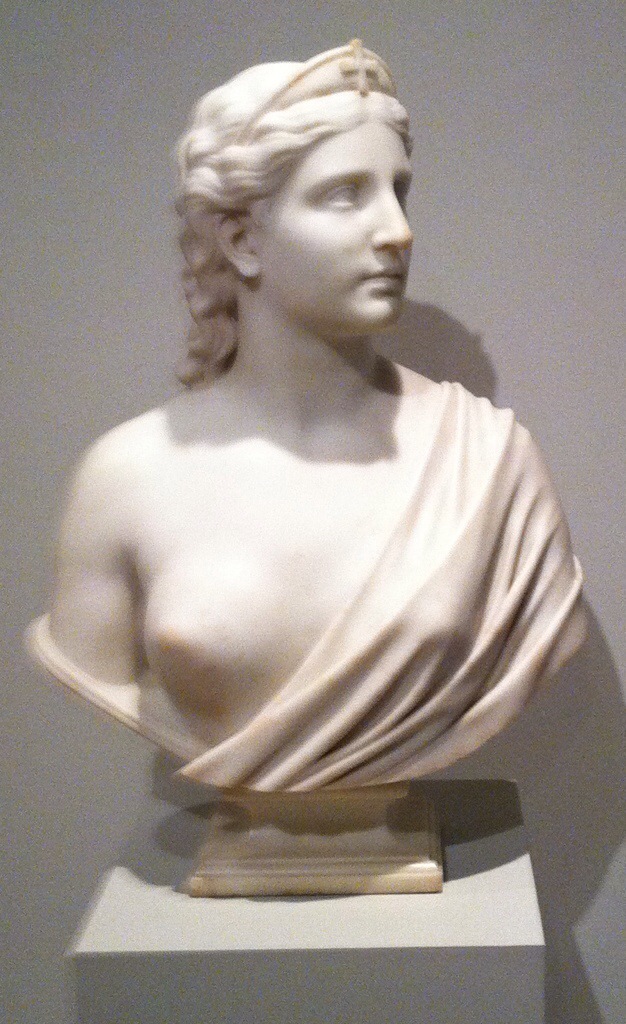
The highlight if my visit to the DMA was seeing the two busts sculptured by Hiram Powers. Powers is a subject of research for me, and I made a pilgrimage to his grave in Florence, Italy, while conducting research at the small English Cemetery of Florence and it’s library.

Hiram Powers epitomized the mid-nineteenth century American artist who, possessing extraordinary technical skill, worked in the predominant neoclassical style. Aided by a wealthy patron, Powers was sent to Washington, D.C. where he sculpted portraits of many government officials, including John Marshall, Daniel Webster, and Andrew Jackson. Later he moved to Italy, where he settled in Florence and established a studio with the assistance of another American sculptor, Horatio Greenough.

20140731-233446-84886589.jpg

Powers’ two most famous sculptures age Greek Slave and Fisher Boy. He produced numerous busts in his lifetime, two of which are on display at the DMA: Faith and America.

20140731-233538-84938237.jpg

20140731-233536-84936894.jpg

Powersโ€™ talent for reproducing a likeness led to a straightforward naturalism that was to remain the basis of his style. Although he later turned to more โ€œidealizedโ€ or allegorical works such as “Faith,” “America,” and โ€œEve Disconsolate,โ€ Powersโ€™ naturalistic approach to his subject matter was perfectly suited to the aesthetic of the time.

20140731-233704-85024996.jpg

The bust, โ€œEve Disconsolate,โ€ has an interesting story to it. All but maybe four busts by Hiram Powers have a known home such as “Faith” and “America” at the DMA. However, “Eve” had been lost for about 100 years. No one knew where her bust had gone. In 1998, the City of Birmingham, Alabama began to renovate the Alabama Theater located downtown. In the process of restoring the grand theater to its former glory, they were cleaning the bust of the “Lady of the Theater” as she was called. When someone looked at the back of the bust they realized that carved into the back was “H POWERS” and someone recognized the name. It was then that they realized this was “Eve Disconsolate,” one of the missing busts of Hiram Powers. They chose to move the bust from the Alabama Theater where it had been largely neglected since the 1930s to the Birmingham Museum of Art where it resides today.

“I see art as the vehicle of nature and the artist as the collector of natureโ€™s truths and beauties.” Hiram Powers, 1850, in Richard P. Wunder, Hiram Powers.


Artists

20140413-232142.jpg

I have come to believe that a great teacher is a great artist and that there are as few as there are any other great artists. Teaching might even be the greatest of the arts since the medium is the human mind and spirit.
John Steinbeck

20140413-232153.jpg