Category Archives: Art

St. Sebastian in Art

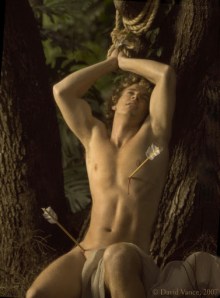
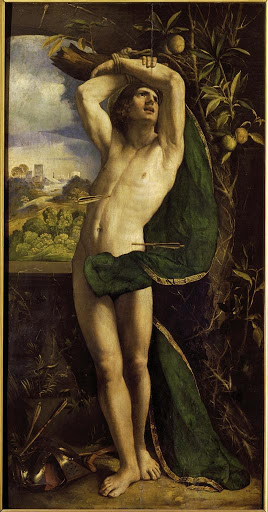
To continue our look at St. Sebastian, I wanted to look at his depiction in art. Can a Christian saint be a gay icon? Apparently he can. Sebastian was a Christian martyr who died during the persecutions of the Roman Emperor Diocletian in 288. According to legend, he was born in Gaul (present-day France) and went to Rome to serve in the army. When officials learned that he was a Christian seeking converts, they ordered his execution by archers. Left for dead, he was nursed back to health by a Christian widow. He presented himself before the emperor, who condemned him to death by beating. His body was thrown into a sewer but was afterward found and buried. In Renaissance art he was often depicted as a handsome youth pierced by arrows.

The earliest representation of Sebastian is a mosaic in the Basilica of Sant’Apollinare Nuovo (Ravenna, Italy) dated between 527 and 565. The right lateral wall of the basilica contains large mosaics representing a procession of 26 martyrs, led by Saint Martin and including Sebastian. The martyrs are represented in Byzantine style, lacking any individuality, and have all identical expressions.

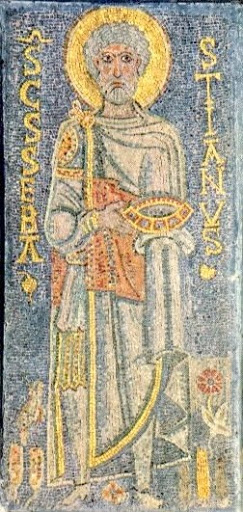
Another early representation is in a mosaic in the Church of San Pietro in Vincoli (Rome, Italy), probably made in the year 682. It shows a grown, bearded man in court dress but contains no trace of an arrow. The archers and arrows begin to appear by 1000, and ever since have been far more commonly shown than the actual moment of his death by clubbing, so that there is a popular misperception that this is how he died.
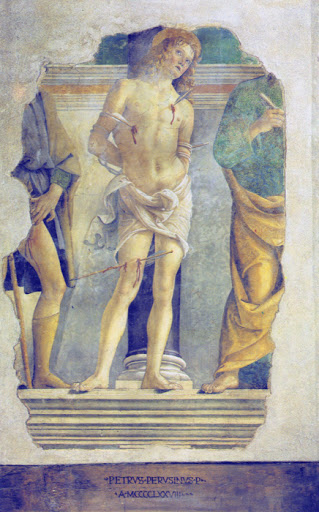
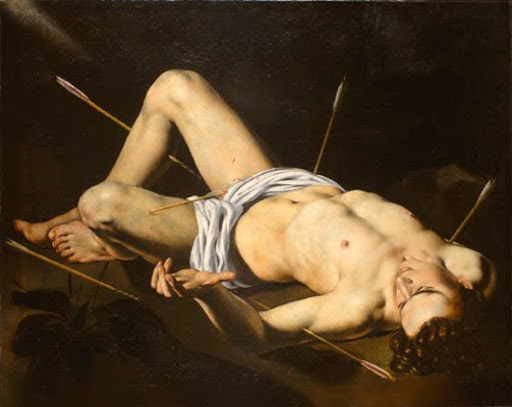
As protector of potential plague victims (a connection popularized by the Golden Legend) and soldiers, Sebastian naturally occupied a very important place in the popular medieval mind, and hence was among the most frequently depicted of all saints by Late Gothic and Renaissance artists, in the period after the Black Death. The opportunity to show a semi-nude male, often in a contorted pose, also made Sebastian a favourite subject. His shooting with arrows was the subject of the largest engraving by the Master of the Playing Cards in the 1430s, when there were few other current subjects with male nudes other than Christ. Sebastian appears in many other prints and paintings, although this was also due to his popularity with the faithful. Among many others, Botticelli, Perugino, Titian, Pollaiuolo, Giovanni Bellini, Guido Reni (who painted the subject seven times), Mantegna (three times), Hans Memling, Gerrit van Honthorst, Luca Signorelli, El Greco, Honoré Daumier, John Singer Sargent and Louise Bourgeois all painted Saint Sebastians.

The saint is ordinarily depicted as a handsome youth pierced by arrows. There were predella scenes, when required, often of his arrest, confrontation with the Emperor, and final beheading. The illustration in the infobox is the Saint Sebastian of Il Sodoma, at the Pitti Palace, Florence.

A mainly 17th-century subject, though found in predella scenes as early as the 15th century, was St Sebastian tended by St Irene, painted by Georges de La Tour, Trophime Bigot (four times), Jusepe de Ribera, Hendrick ter Brugghen and others. This may have been a deliberate attempt by the Church to get away from the single nude subject, which is already recorded in Vasari as sometimes arousing inappropriate thoughts among female churchgoers. The Baroque artists usually treated it as a nocturnal chiaroscuro scene, illuminated by a single candle, torch or lantern, in the style fashionable in the first half of the 17th century.
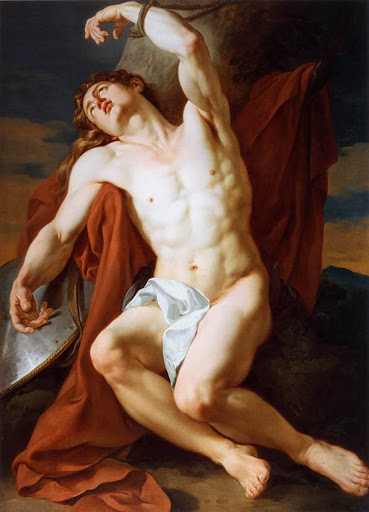
There exist several cycles depicting the life of Saint Sebastian. Among them, the frescos in the “Basilica di San Sebastiano” of Acireale (Italy) with paintings by Pietro Paolo Vasta.

Egon Schiele, an Austrian Expressionist artist, painted a self-portrait as Saint Sebastian in 1915. During Salvador Dalí’s “Lorca (Federico García Lorca) Period”, he painted Sebastian several times, most notably in his “Neo-Cubist Academy”. For reasons unknown, the left vein of Sebastian is always exposed.

In 1911, the Italian playwright Gabriele d’Annunzio in conjunction with Claude Debussy produced a mystery play on the subject. The American composer Gian Carlo Menotti composed a ballet score for a Ballets Russes production which was first given in 1944.

In his novella Death in Venice, Thomas Mann hails the “Sebastian-Figure” as the supreme emblem of Apollonian beauty, that is, the artistry of differentiated forms, beauty as measured by discipline, proportion, and luminous distinctions. This allusion to Saint Sebastian’s suffering, associated with the writerly professionalism of the novella’s protagonist, Gustav Aschenbach, provides a model for the “heroism born of weakness”, which characterizes poise amidst agonizing torment and plain acceptance of one’s fate as, beyond mere patience and passivity, a stylized achievement and artistic triumph.
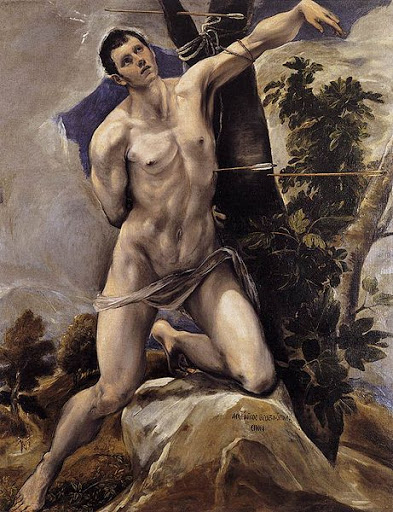
In 1976, the British director Derek Jarman made a film, Sebastiane, which caused controversy in its treatment of the martyr as a homosexual icon. However, as several critics have noted, this has been a subtext of the imagery since the Renaissance.

Renaissance artists had access to history that we currently do not. There was obviously some reason why they chose to depict him as a beautiful young man. Since Sebastian was a Gaul, it could have been influenced by the beauty of The Dying Gaul, one of my all time favorite statues. The warrior is depicted as a beautiful man, but there is obviously love and lust for his beauty that the sculptor saw. It is also likely that Renaissance artists may have known some historical gossip about Sebastian, or the loving relationships that existed between the early brothers and sisters in Christ. Who knows why they depicted him as a beautiful young man, but they have left behind a question for history and the beauty of man.  Since many of the Renaissance artists were homosexuals, St. Sebastian allowed them to depict a beautiful naked (or nearly naked) young man, very similar to those young models they often used.

dyinggaul


The Missing Text of the Gospel of St. Mark

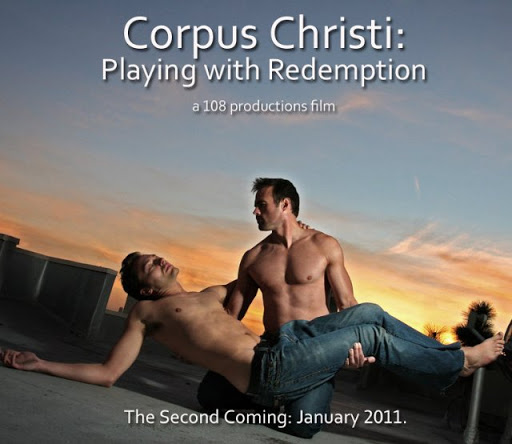
More recently, but in a somewhat similar vein to Kirkup’s poem, the American playwright, Terrence McNally had the 1998 scheduled run of his new play, Corpus Christi, cancelled by the prestigious Manhattan Theatre Club in New York, following threats to kill the staff, burn down the theatre, and “exterminate” McNally. The reason for these threats was that McNally’s play told the story of a young gay man called Joshua and his sexual adventures with his 12 disciples. The Catholic League for Religious and Civil Rights in New York vowed to “wage a war” against any attempt to stage the play. While top playwrights, such as Tony Kushner, Edward Albee and Athol Fugard, urged the theatre to reverse its cancellation, accusing them of “capitulation to right-wing extremists and religious zealots”.

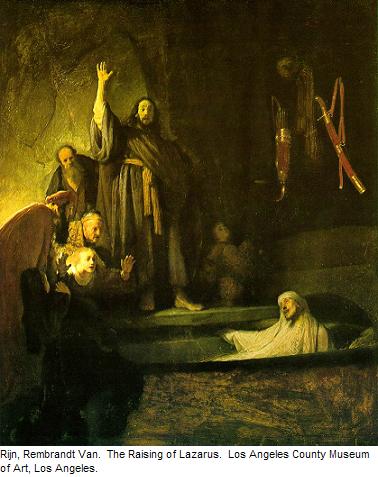
The homosexual associations being made with Jesus are not simply the work of gay artists seeking to appropriate conventional religious themes for the sake of blasphemy or controversy, but may actually be based in fact. In 1958, Professor Morton Smith of Columbia University uncovered a letter at the Mar Saba monastery, which mentioned a suppressed extract from the gospel of Mark. The letter was between Bishop Clement of Alexandria (one of the founding fathers of the early church), and a correspondent called Theodore, who wrote complaining about the Carpocratians, a Gnostic sect. The Carpocratians were using a passage from Mark’s gospel to justify their beliefs and practices, which were not shared by Clement and Theodore. In his reply to Theodore, Clement congratulated him on his opposition to the Carpocratians, and then wrote a dissertation on the passage in question, quoting the passage in its entirety. What is remarkable is that this passage does not appear in the canonical New Testament today, but was obviously current at the time. It is from Mark chapter 10 (between verses 34 and 35), and tells the story of the raising of Lazarus:

And the youth, looking upon him (Jesus), loved him and beseeched that he might remain with him. And going out of the tomb, they went into the house of the youth, for he was rich. And after six days, Jesus instructed him and, at evening, the youth came to him wearing a linen cloth over his naked body. And he remained with him that night, for Jesus taught him the mystery of the Kingdom of God.

The expurgated text seems to suggest that the raising of Lazarus, rather than being a literal raising from the dead, was the kind of mystery school initiation that was common throughout the ancient world; something that the biblical scholar Barbara Thiering has emphasised in her recent work. What is also clear, and may have been obvious to the Carpocratians also, is that there seems to have been a homosexual element to the ritual, with the half-naked youth who loved Jesus being shown the mystery of the Kingdom of God during the final night of his instruction. If these inferences can be so readily made from the passage in Mark, it is somewhat understandable that the founding fathers of the Church would feel no guilt over removing it from the canon in order to preserve the image of Jesus that was in concordance with their particular ideas.

Source: Torture By Roses, “Sebastian~Salome” (pdf).


The Love That Dares To Speak Its Name

“The Love that Dares to Speak its Name” is a controversial poem by James Kirkup.  In fact, some might find the poem to be quite offensive, but after reading it and researching about it, I found it fascinating, even if it is blasphemous.  Maybe intellectual curiosity sometimes kills the cat, but I decided to write about it anyway.  It is written from the viewpoint of a Roman centurion who is graphically described having sex with Jesus after his crucifixion, and also claims that Jesus had had sex with numerous disciples, guards, and even Pontius Pilate.  If the poem was not about Jesus Christ and the centurion, Longinus, I would truly consider the poem beautiful and erotic in an odd necrophilia sort of way that is also quite disturbing.  Maybe it is either way, or maybe I have been reading too much Edgar Allen Poe in the high school English class that I am currently teaching.

The poem was at the centre of the Whitehouse v. Lemon trial for blasphemous libel, where the editor of Gay News—which first published in the poem in 1976—was convicted and given a suspended prison sentence.  In later years, Britain’s Royal Crown Prosecution Service attempted to charge the Lesbian and Gay Christian Movement with a similar charge of blasphemous libel after a complaint by religious conservatives over a hypertext link on their web site to text of “The Love that Dares to Speak its Name” by James Kirkup.

The Love That Dares To Speak Its Name
By James Kirkup

As they took him from the cross
I, the centurion, took him in my arms-
the tough lean body
of a man no longer young,
beardless, breathless,
but well hung.


He was still warm.
While they prepared the tomb
I kept guard over him.
His mother and the Magdalen
had gone to fetch clean linen
to shroud his nakedness.


I was alone with him.
For the last time
I kissed his mouth. My tongue
found his, bitter with death.
I licked his wound-
the blood was harsh
For the last time
I laid my lips around the tip
of that great cock, the instrument
of our salvation, our eternal joy.
The shaft, still throbbed, anointed
with death’s final ejaculation


I knew he’d had it off with other men-
with Herod’s guards, with Pontius Pilate,
With John the Baptist, with Paul of Tarsus
with foxy Judas, a great kisser, with
the rest of the Twelve, together and apart.
He loved all men, body, soul and spirit. – even me.


So now I took off my uniform, and, naked,
lay together with him in his desolation,
caressing every shadow of his cooling flesh,
hugging him and trying to warm him back to life.
Slowly the fire in his thighs went out,
while I grew hotter with unearthly love.


It was the only way I knew to speak our love’s proud name,
to tell him of my long devotion, my desire, my dread-
something we had never talked about. My spear, wet with blood,
his dear, broken body all open wounds,
and in each wound his side, his back,
his mouth – I came and came and came


as if each coming was my last.
And then the miracle possessed us.
I felt him enter into me, and fiercely spend
his spirit’s finbal seed within my hole, my soul,
pulse upon pulse, unto the ends of the earth-
he crucified me with him into kingdom come.


-This is the passionate and blissful crucifixion
same-sex lovers suffer, patiently and gladly.
They inflict these loving injuries of joy and grace
one upon the other, till they dies of lust and pain
within the horny paradise of one another’s limbs,
with one voice cry to heaven in a last divine release.


Then lie long together, peacefully entwined, with hope
of resurrection, as we did, on that green hill far away.
But before we rose again, they came and took him from me.
They knew not what we had done, but felt
no shame or anger. Rather they were glad for us,
and blessed us, as would he, who loved all men.


And after three long, lonely days, like years,
in which I roamed the gardens of my grief
seeking for him, my one friend who had gone from me,
he rose from sleep, at dawn, and showed himself to me before
all others. And took me to him with
the love that now forever dares to speak its name.

Further Reading:


St. Sebastian: The Patron Saint of Homosexuals

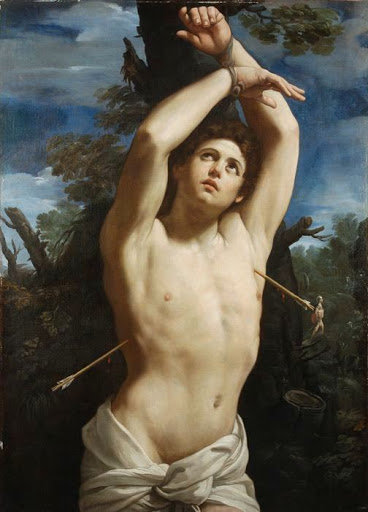
Saint Sebastian by Guido Reni (c. 1616)

There is hardly anything unusual or particularly compelling about a gay icon who is young, beautiful, white, shirtless, and baby-faced. But what if this same boyish icon had emerged from a key historical antagonist of same-sex desire: the teachings of Christianity?

The case of Saint Sebastian, who was martyred in 287, animates several complex questions about the evolution of a gay idol, not the least of which is his so-called appropriation from the hallowed pages of Church history and martyrology to the visual, literary, and filmic works of numerous gay artists.

Although he has had various embodiments throughout history–plague saint in the Middle Ages, shimmering youth of Apollonian beauty throughout the Renaissance, “decadent” androgyne in the late nineteenth century–Sebastian has long been known as the homosexual’s saint.

Precisely when and how this role evolved may be related to details of St. Sebastian’s life, the earliest reference to which can be found in the Martyrology of 354 A.D., which refers to him as a young nobleman from either Milan or Narbonne, whose official capacity was commander of a company of archers of the imperial bodyguard.

According to the Church’s official Acta Sanctorum, Sebastian, serving under the emperors Diocletian and Maximian, came to the rescue of Christian soldiers, Marcellinus and Mark, and thereby confessed his own Christianity. Diocletian insisted that Sebastian be shot to death by his fellow archers; these orders were followed, and Sebastian was left for dead.

What is often neglected in later accounts is that Sebastian survived this initial attack after having been nursed by a “pious woman,” St Irene of Rome. Diocletian was required to order a second execution, and this time Sebastian was beaten to death by soldiers in the Hippodrome.

School of Nicolas Regnier, Saint Sebastian, 17th century

These details–based on accounts written centuries after Sebastian’s death and therefore largely apocryphal–may have helped form Sebastian’s subsequent reputation as a homosexual martyr since his story constitutes a kind of “coming out” tale followed by his survival of an execution that may be read symbolically as a penetration.

Renaissance representations of Saint Sebastian–mostly paintings of a tender, loin-clothed youth writhing in the ecstasy of the arrows that pierce him–are perhaps ground zero for his appointment as the patron saint of gay sensuality.

And for seemingly obvious reasons. Sebastian’s supple, near-naked body; the wink-wink symbolism of the penetrating arrows; his thrown-back head expressing a mixture of pleasure and pain; and his inviting gaze all readily contribute to his homoerotic appeal. But Sebastian’s entry into gay cultures in the first place most certainly involves his origins as an emblem of Christian godliness and martyrdom.

Same-sex desire is often, on many levels, about the crossing of lines, the overturning of sacred norms, the pleasure of the forbidden. Both the story of Sebastian and his subsequent role in modern gay cultures epitomize this subversive impulse: Sebastian revels in the pleasure of his own martyrdom as gay men revel in gazing upon an off-limits emblem of Christian holiness. By all accounts, Sebastian is a very good “bad object choice.”

Possibly his role as a plague saint may have generated associations between Sebastian and what, in a nineteenth-century medical context, was represented as a disease, homosexuality.

The question of whether Sebastian himself was gay is largely moot. While some historical records suggest a notable affection between the saint and his male superiors, after almost two thousand years Sebastian’s sexuality is not only greatly speculative, but also rather inconsequential.

However, while it is doubtful that a buried homosexual existence could justify his current camp popularity, it seems equally doubtful that his homoerotic associations can be explained away as the superficial afterthoughts, revisions, or cross-readings of a willful contemporary gay purview.

Saint Sebastian is not just represented in the visual arts during the Renaissance, but also in the written arts as well. In Shakespeare’s Twelfth Night (1600), for example, the character of Sebastian, saved from a shipwreck by Antonio, is the intense focus of Antonio’s love: “And to his image, which methought did promise / Most venerable worth, did I devotion.”

Mosaic of St. Sebastian, ca. 682 in San Pietro in Vincoli

Sebastian has been reinvented numerous times in history, from the middle-aged man in the mosaic at the Church of San Pietro in Vincoli, not far from San Sebastiano Fuori le Mura, where the martyr’s punctured remains have lain since the year 287 AD. Here, in a niche to the left, is the seventh-century mosaic of a middle-aged man, bearded and in Byzantine court dress. Perhaps Sebastian’s oddest reinvention came in Thomas Mann’s Nobel Prize acceptance speech. “Grace in suffering – that is the heroism symbolised by St Sebastian,” said Mann; then, warming to his theme, he added: “The image may be bold, but I am tempted to claim this heroism for the German mind and German art.” The date was 1929. A decade later, German gays such as Mann were being rounded up and tortured in the Nazi concentration camps.

All of which is to say that the secret of Sebastian’s success may lie in his ability to be all things to all men. Along with the famous arrows, the symbol of his martyrdom is the rope that binds his hands; yet the shape-shifting Sebastian just won’t be tied down. The novelist and political activist Susan Sontag pointed out that his face never registers the agonies of his body, that his beauty and his pain are eternally divorced from each other. This made him proof against plague in 1348, and, in these ungodly times, it still does.

Sources:


Les regrets de Joachim du Bellay

Les regrets de Joachim du Bellay

Sonnet CV (Originally French)

De voir mignon du Roy un courtisan honneste,
Voir un pauvre cadet l’ordre au col soustenir,
Un petit compagnon aux estat parvenir,
Ce n’est chose (Morel) digne d’en faire feste.


Mais voir un estaffier, un enfant, une beste.
In forfant, un poltron Cardinal devenir,
Et pour avoir bien sceu un singe entretenir
Un Ganymide avoir le rouge sur la teste:


S’estre veu par les mains d’un soldat Espagnol
Bien hault sur un eschelle avoir la corde au col
Celuy, que par le nom de Sainct-Père lon nomme:


Un bélistre en trois jours aux princes s’égaller,
Et puis le voir de là en trois jours dévaller:
Ces miracles (Morel) ne se font point qu’à Rome.

The Regrets of Joachim du Bellay

Sonnet 105 (English Translation)

Seeing King’s darling as an honest courtier,
Watch a poor junior order to support to the collar,
A little companion to achieve status,
This is something, my dear Morel, worthy of making a feast.

Yet seeing a footman, a child, a beast,
A rascal, a coward made a Cardinal
For having taken care of a monkey well,
A Ganymede wearing the red hat on his head

Is to be seen through the hands of a Spanish soldier
Although a high ladder to have the rope to the neck
The one, by the name of the Holy Father’s common names:

A scoundrel in three days for the princes are equal,
And then view there over three days to unwrap:
These are miracles, my dear Morel, that take place in Rome alone.

I searched the internet to the best of my ability to find an English translation of this poem and never found more than a few lines translated.  So with my limited ability at translating French and the use of Google Translate with some further help from various French-English Dictionaries, the English Translation above is my best attempt at a translation, though I am afraid I am not poetic enough to translate it in the style of a Petrarchan Sonnet in which it was originally written.  If anyone knows of a better English translation, please let me know.

Du Bellay

With that caveat at the beginning you may be wondering why I even posted this poem today.  For me, the answer is quite interesting.  The poem was written by the poet Joachim du Bellay, who lived in Rome while in the retinue of his relative Cardinal Jean du Bellay.  This sonnet is one of the two sonnets in his series Les regrets (1558) which expressed his scandalized opinion of Julius III during what became known as The Innocenzo Scandal.

The Innocenzo Scandal

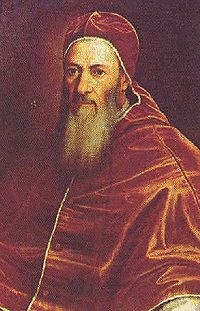
Julius III

Pope Julius III (1550-1555) was born in Rome, September 10, 1487 as Giovanni Maria Ciocchi del Monte, he took the name Julius and studied law at Perugia and Siena. After taking holy orders, he became chamberlain to Pope Julius II.  Although an outstanding canonists, his careless homosexuality, especially as he got older, created a scandal for the papacy. In his sixties, he picked up a 14-year-old boy on the streets of Parma. The boy, ironically named Innocenzo was described as being stunningly beautiful, and Julius was so enraptured with him that he forced his brother to adopt Innocenzo.

In February of 1550 Cardinal Del Monte was elected pope as Julius III, and immediately made the 17 year old Innocenzo a Cardinal. Attempts to give the boy an education which could have prepared him for ecclesiastic office had already proven useless – “a few social graces, a few bits of knowledge, perhaps about the glories of the Classical world, and Innocenzo’s formal education was over.” Nevertheless, Julius issued a Papal Bull declaring Innocenzo legitimate – a necessary move given that persons of illegitimate birth were not eligible for membership of the College of Cardinals – and named him Cardinal Nephew, effectively in charge of all papal correspondence. But the role of secretary to the papacy proved manifestly beyond Innocenzo’s abilities, and so, in order to find a way for his favourite to retain the appearance of power without having any real responsibility, Julius upgraded a hitherto minor position, that of secretary intimus, which, as Cardinal Secretary of State, was eventually to become the highest of Vatican offices. Innocenzo, although relieved of all real duties, continued to be showered with benefices and high offices, much to the disgust of his fellow cardinals. As Cardinal he was given the titular church of San Callisto, in 1562.

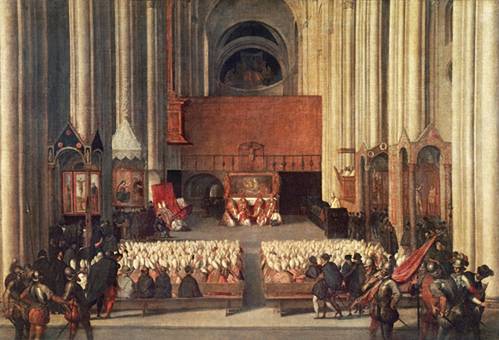
Council of Trent

Cardinals who were more sensitive to the need to reform the mores of the Church in order to combat the Protestant Reformation protested in vain against Innocenzo’s elevation. Rumors also circulated around European courts. Gossip called the boy Julius’s “Ganymede.” The relationship became a staple of anti-papal polemics for over a century: it was said that Julius, awaiting Innocenzo’s arrival in Rome to receive his cardinal’s hat, showed the impatience of a lover awaiting a mistress, and that he boasted of the boy’s prowess. The Venetian ambassador, Matteo Dandolo, wrote that Cardinal Del Monte “was a little scoundrel”, and that the Pope “took him [Innocenzo] into his bedroom and into his own bed as if he were his own son or grandson”. Onofrio Panvinio wrote that Julius was “excessively given to intemperance in a life of luxuriousness and to his libido,” and, more explicitly characterized him as “puerorum amoribus implicitus” (‘entangled in love for boys’). One more mocking rumor made the rounds in Rome, saying that Innocenzo had been made a cardinal as a reward for his being the keeper of the pope’s monkey.

Remember that this scandal took place in one of the most tumultuous periods of the Roman Catholic Church. It occurred in the midst of the Wars of Religion that resulted from the Protestant Reformation.  As a Cardinal, Julius III, had served as the first president of the Council of Trent, which was the core movement in the Catholic Counter-Reformation.


If Sometimes in the Haunts of Men

If Sometimes in the Haunts of Men

If sometimes in the haunts of men 
    Thine image from my breast may fade,
The lonely hour presents again
    The semblance of thy gentle shade:
And now that sad and silent hour
    Thus much of thee can still restore,
And sorrow unobserved may pour
    The plaint she dare not speak before.

Oh, pardon that in crowds awhile
    I waste one thought I owe to thee,
And self-condemn’d, appear to smile,
    Unfaithful to thy memory:
Nor deem that memory less dear,
    That then I seem not to repine;
I would not fools should overhear
    One sigh that should be wholly thine.

If not the goblet pass unquaff’d,
    It is not drain’d to banish care;
The cup must hold a deadlier draught,
    That brings a Lethe for despair.
And could Oblivion set my soul
    From all her troubled visions free,
I’d dash to earth the sweetest bowl
    That drown’d a single thought of thee.
6a00d8341cc27e53ef01157144f88f970c-600wi
For wert thou vanish’d from my mind,
    Where could my vacant bosom turn?
And who could then remain behind
    To honour thine abandon’d Urn?
No, no–it is my sorrow’s pride
    That last dear duty to fulfil:
Though all the world forget beside,
    ‘Tis meet that I remember still.

Thomas Eakins - ArcadiaFor well I know, that such had been
    Thy gentle care for him, who now
Unmourn’d shall quit this mortal scene,
    Where none regarded him, but thou:
And, oh! I feel in that was given
    A blessing never meant for me;
Thou wert too like a dream of Heaven
    For earthly Love to merit thee.
                                                                               -Lord Byron (1812)


George Gordon Noel Byron, 6th Baron Byron, was born 22 January 1788 in London and died 19 April 1824 in Missolonghi, Greece.  He was among the most famous of the English ‘Romantic’ poets; his contemporaries included Percy Shelley and John Keats.  He was also a satirist whose poetry and personality captured the imagination of Europe.  His major works include Childe Harold’s Pilgrimage (1812-18) and Don Juan (1819-24).  He died of fever and exposure while engaged in the Greek struggle for independence.

The images accompanying the poem above are by Thomas Eakins.  To read more about Eakins, click “More” below.


Thomas Eakins

“I never knew of but one artist, and this is Tom Eakins, who could resist the temptation to see what they think ought to be rather than what is.” – Walt Whitman

610_eakins_about
Thomas Eakins


When Thomas Eakins died in 1916, he left behind a body of work unprecedented in American art for its depth, strength, perception, character, and commitment to realism. Yet during his life, Eakins sold less than thirty paintings. Rejected by the public and the art establishment of his day, it was only after his death that a new generation of scholars and critics recognized Eakins as one of America’s greatest painters.

Born in 1844, Thomas Eakins lived most of his life in his home city of Philadelphia. After graduating high school he attended the Pennsylvania Academy of Fine Arts. He simultaneously took anatomy courses at Jefferson Medical College, in the hopes of creating more realistic pictures and gaining further insight into the human figure. In 1866 he left Philadelphia for Paris and later Spain, where he studied art and found the works of painters Diego Velásquez and Jusepe de Ribera. Along with Rembrant, these painters would be his greatest influences. A year later he returned to Philadelphia, never to go abroad again.

Throughout the 1870s Eakins painted the interior and exterior life of everyday America. He was concerned with the functioning of the physical world, as well as the inner lives of the people he painted. His paintings were both realistic and expressive. His attention to light, landscape, and the human form made Eakins stand far above his contemporaries. Among the most famous paintings of the time are his group portraits made at medical schools. Striking in their honesty and strict attention paid to the details of the human body, they shocked many in and out of the art world.
In the 1880s, Eakins’ interest in realism brought him in contact with the photographer Edward Muybridge. The two collaborated on photographing the movement of animals and humans. Though few painters took it seriously, Eakins believed the new photographic technology was a tool to better represent the physical world. Throughout much of the 1880s, Eakins brought these interests to students at the Pennsylvania Academy, encouraging them to study anatomy and work from live nude models. In 1886 his insistence on the use of nude models saw a great deal of criticism. Frustrated with the criticism, he eventually resigned.
Though he continued to teach at a number of different colleges, it wasn’t until long after his death that Eakins’ innovations in art education were recognized and adopted throughout the country. By the 1890s he had moved from his earlier outdoor works like “Max Schmitt in a Single Scull,” (1871), a perfectly rendered quiet picture of a rower on the Schuylkill River, to portraiture. In the many portraits completed over the last thirty years of his life, Eakins retained his passionate adherence to realist representation. Unlike most other portrait painters of the time, Eakins had little concern for flattering his subjects , and instead demanded from himself the most precise objective images. The results were thorough and telling portraits that seemed to carry with them the souls of their subjects.

During the final years of his life, Eakins began to receive a bit of the recognition he deserved. On June 25, 1916 he died in the Philadelphia home in which he was born. Against social demands for propriety and respectability, Eakins refused to compromise and painted his subjects as they really were, and not as they wished to be seen. His paintings reflected the passing of time, the awareness of mortality, and the nobility of everyday life. His courageous persistence in advocating his personal vision changed the nature of art education and provided future generations with a deeper view of the time in which he lived.


Taking a Break

Taking a bit of a break today, so get your cup of coffee and join me.  Truth be told, I sort of came up blank with an idea for a post today, so I just thought I would add this hot picture from Marlen Boro (NSFW).

If you want to know more about Marlen Boro or the model above, click “read more” below.

So here is a little about the photographer.

Marlen Boro was born during the magical seventies and in a magical land called North Dakota.  He remained in this land throughout his youth, enjoying a wholesome, idyllic childhood shaped by conservative Lutheranism, regular family meals with his parents and brothers, and hefty doses of Disney musicals.  When he was 10, his father gave him his own camera.  He enthusiastically embraced photography, a practice that complemented a more general enchantment with the arts.
Upon graduating from high school, Marlen left North Dakota for rural Ohio, where he spent four glorious years studying political philosophy at Kenyon College.  During his time at this liberal bastion for the liberal arts, he enjoyed a brief flirtation with communism, but abandoned it when he realized that he really didn’t like to share.
Marlen eventually settled in Minneapolis, Minnesota after a stint in Ann Arbor, Michigan, where he earned his J.D.  After a number of years practicing corporate law at prestigious firms, he began to question some of the priorities he had absorbed in law school.  At the same time, he began to experience a resurgence of his love for art and photography.  As his collection of cameras and equipment grew, his commitment to the stressful lifestyle of a full-time corporate attorney waned.  Today, though he still practices law (primarily as an advisor to other photographers), photography is his main focus.
Marlen’s photography reflects his lifelong quirky sense of humor and impossible-to-squelch delight in the world.  He is masterful at bringing out not only sultry shadows and the astonishing beauty of the male body, but also genuine smiles, infectious smirks, spontaneous grins, and other moments of unguarded authenticity.  He encourages his clients to be simultaneously sexual and playful.  Unapologetic about being gay, Marlen encourages his clients, whether gay or straight, to find joy in themselves and their sexuality.  Marlen’s imaginative, playful approach to photography sometimes manifests itself in coats of glitter, in stretched pairs of ladies’ underwear, or dime-store bunny ears.
In short, Marlen combines top-notch photography skills with a lighthearted, playful attitude, and the result is an interwoven web of whimsy, confidence and eroticism.

In the photo at the first of the post, Boro states the he had been able to convince the model, Shawn, to stop shaving his chest.  Here he is with his chest shaved:

Which do you prefer?  I like both, but the one at the top of the post makes him look older and more mature.

If you’ve read this whole thing, then you know that I was having a hard time coming up with a topic today.  It’s not my usual post, but I hope you enjoyed it anyway.


Friday Funny

This just makes me giggle.

To see what this painting is really all about, Click “Read More” below.


Les Glaneuses (The Gleaners) by François Millet, 1857

Introduction

In this depiction of the rural life of nineteenth century France, we see three female figures gathering the leftovers after the harvest. This practice – known as gleaning – was traditionally part of the natural cycle of the agricultural calendar undertaken by the poor, and was regarded as a right to unwanted leftovers. Although the practice of agricultural gleaning has gradually died away due to a number of historical factors (including industrialisation and the organisation of social welfare for the poor), there are nonetheless still people in the present day that we might understand to be gleaners.
The Painting

When The Gleaners was first exhibited in 1857 it met with mixed reviews within the art world. Some commentators attacked its depiction of the rural poor, which on the one hand served as an unwelcome reminder of the marginalized poor (who were taken to be a threat to society), and on the other hand were consider the kind of grotesques who had no place within the artistic realm. The comments of one critic named Paul de Saint Victor might be taken to illustrate such an attitude:
His three gleaners have gigantic pretensions, they pose as the Three Fates of Poverty … their ugliness and their grossness unrelieved. (in Griselda Pollock, Millet, London 1977, p.17)
Part of the shock value of Millet’s painting was undoubtedly due to the fact that in the past gleaning had usually been represented in art through the Old Testament tale of Ruth the gleaner, in which Ruth is characterised as a modest and virtuous example of the way to God, and not – as it was now – a statement on rural poverty. 

Divan of Hafiz

Hafiz i-Shirazi

hafezKhwāja Šamsu d-Dīn Muḥammad Hāfez-e Šhīrāzī, known by his pen name Hāfez (1325/26–1389/90) was a Persian lyric poet. His collected works composed of series of Persian poetry (Divan) are to be found in the homes of most Iranians, who learn his poems by heart and use them as proverbs and sayings to this day. His life and poems have been the subject of much analysis, commentary and interpretation, influencing post-Fourteenth Century Persian writing more than any other author
Despite his profound effect on Persian life and culture and his enduring popularity and influence, few details of his life are known. Accounts of his early life rely upon traditional anecdotes. Early tazkiras (biographical sketches) mentioning Hafez are generally considered unreliable. The preface of his Divān, in which his early life is discussed, was written by an unknown contemporary of Hafez whose name may have been Moḥammad Golandām.
Modern scholars generally agree that Hafez was born either in 1315 or 1317; following an account by Jami 1390 is considered the year in which he died. Hafez was supported by patronage from several successive local regimes: Shah Abu Ishaq, who came to power while Hafez was in his teens; Timur Lang (Tamerlane) at the end of his life; and even the strict ruler Shah Mubariz ud-Din Muhammad (Mubariz Muzaffar).

Ghazl No. 10 from the Divan of Hafiz

Divan_von_HafizHis mop of hair tangled, sweating, laughing and drunk,
Shirt torn, singing poems, flask in hand,
His eyes spoiling for a fight, his lips mouthing “Alas!”
Last night at midnight he came and sat by my pillow.
He bent his head to my ear and said, sadly,
“O, my ancient lover, are you sleeping?”

The seeker to whom they give such a cup at dawn
Is an infidel to love if he will not worship the wine.
O hermit, go and do not quibble with those who drink the dregs,
For on the eve of creation this was all they gave to us.
What he poured in our cup we drank,
Whether the mead of Heaven, or the wine of drunkenness.

The cup’s smile and the wine boy’s knotted curl
Have broken many vows of chastity, like that of Hafiz.

A variation on the interpretation of E.T. Gray, Jr.
in The Green Sea of Heaven, White Cloud Press, 1995.
http://www.gay-art-history.org/gay-history/gay-literature/gay-poetry/hafiz-i-shirazi-wine-boy-ghazal/Hafiz.htm


Homoerotic Poetry of Michelangelo Buonarroti

ts36.
My lover stole my heart, just over there
– so gently! – and stole much more, my life as well.
And there, all promise, first his fine eyes fell
on me, and there his turnabout meant no.
He manacled me there; there let me go;
There I bemoaned my luck; with anguished eye
watched, from this very rock, his last goodbye
as he took myself from me, bound who knows where.


72.
If, through our eyes, the heart’s seen in the face,
more evidence who needs, clearly to show
the fire within? Let that do, my lord, that glow
as warrant to make bold to ask your favor.

Perhaps your soul, loyal, less like to waver
than I imagine, assays my honest flameCreation-Michelangelo
and, pitying, finds it true – no cause for blame.
“Ask and it shall be given,” in that case.
O day of bliss, if such can be assured!
Let the clock-hands end their circling; in accord
sun cease his ancient roundabout endeavor,
so I might have, certain-sure, – though not procured
by my own worth – my long desired sweet lord,
in my unworthy but eager arms, forever.


83.
What in your handsome face I see, my lord,
michelangelo-ignudi
I’m hard put to find words for, here below.
Often it lofts my soul to God, although
wearing, that soul, the body like a shroud.
And if the stupid, balefully staring crowd
mocks others for feelings after its own fashion,
no matter. I’m no less thankful for a passion
pulsing with love – faith, honor in accord.
There’s a Fountain of Mercy brought our souls to being
which all Earth’s beauty must in part resemble
(lesser things, less) for an eye alert to truth.
No other hint of heaven’s here for our seeing,
hence, he that a love for you sets all a-tremble
already hovers in heaven, transcending death.