
 Since it was founded in 1781, New Orleans has marched to the beat of its own drum. For two centuries, those in control of the Louisiana state government have tried in vain to impose their prejudices on a city that is French, Spanish, Creole, African, Catholic, pagan and very gay (in both senses of the word). If nothing else, New Orleans knows how to throw a party, from the world-famous Mardi Gras to other, more specialized celebrations.
One of these celebrations began quite inauspiciously in August of 1972, by a group of friends living in a ramshackle cottage house at 2110 Barracks Street in the Treme section of New Orleans, just outside of the French Quarter.  It was in desperate need of repair, and the rent was $100 per month. At any given time the residents numbered anywhere from six to ten, and it was still sometimes difficult to come up with the rent.
The large bathroom became a natural gathering place in the house. It had no shower, only a clawfoot tub, but it also had a sofa. With from six to ten residents, and one bathtub, everyone became close friends. While one soaked in the tub, another would recline on the couch and read A Streetcar Named Desire
 And so it was, on a sultry August afternoon in 1972, that this band of friends decided to plan an amusement. According to author James T. Spears, writing in Rebels, Rubyfruit and Rhinestones: Queering Space in the Stonewall South
The following year the group decided to throw another Southern Decadence Party.  They met at Matassa’s bar in the French Quarter to show off their costumes, then they walked back to “Belle Reve.” This first “parade” included only about 15 people impersonating such “decadent Southern” icons as Belle Watling, Mary Ann Mobley, Tallulah Bankhead, Helen Keller, and New Orleans’ own Ruthie the Duck Lady. This impromptu parade through the French Quarter and along Esplanade Avenue laid the groundwork for future events, and the group decided to repeat the party again the following year.
In 1974, the Southern Decadence visionaries named Frederick Wright as the first Grand Marshal, hoping to provide at least a modicum of order. For the next six years, the format of the celebration changed little. The founding group continued to appoint each year’s Grand Marshal by consensus. Some were gay, some were not. But all were members of the founding group.  By 1981, most of the original organizers had moved on with their lives. Many felt that the event had become so big that it was no longer the intimate party they had started nine years earlier. Of the original group, only Grand Marshal V Robert King was actively participating. He, along with some of his friends that hung out at the Golden Lantern bar, thought it was worth continuing and they took over the festivities. It was at this point that Southern Decadence became primarily a gay event. Other protocol changes made in 1981 included moving the starting point of the annual parade from Matassa’s to the Golden Lantern bar, and allowing Grand Marshals to personally name their own successors. Both of these traditions continue today. And in 1987, the Grand Marshal began to make a proclamation of the official theme, color and song.
  Because the 2005 celebration was cancelled due to Hurricane Katrina, Southern Decadence 2005 Grand Marshals Lisa Beaumann and Regina Adams reigned for both 2005 and 2006, making the very first time in Southern Decadence history that grand marshals
ruled for two years. And keeping with the unpredictability of Decadence, the Grand Marshals from 2008 reigned once again in 2009.
The rest, as they say, is history. What began as a little costume party is now a world-famous gay celebration. In the 39th year, it has mushroomed from a small gathering of friends to a Labor Day weekend tradition, attracting over 100,000 participants, predominantly gay and lesbian, and generating almost $100 million in tourist revenue. This annual economic impact ranks it among the city’s top five most significant tourist events. The mayor has even welcomed the event with an Official Proclamation.  Described by one reporter as “a happening of haberdashery fit for an LSD Alice in Wonderland,” Southern Decadence 2010 will be as outrageous as ever and live up to its reputation as New Orleans’ largest gay street fair. It all begins in earnest six weeks before Labor Day. However, the real party starts on the Wednesday before Labor Day, and the events are non-stop. It picks up steam daily as it nears Sunday’s big street parade, which rivals New Orleans’ gay Mardi Gras in scope, with the party lasting well into the day on Monday.
 If you’ve never been to Southern Decadence, and sadly I haven’t, here are some tips to know before you go. What follows are some thoughts gathered from locals that will help you get the most out of your experience.
Pass by the NO/AIDS Task Force’s information tables located on the St. Ann Street sidewalk in front of Hit Parade Gift and Clothing, at the corner of Bourbon and St. Ann Streets. You’ll find lots of community information and details of the weekend’s events. The literature racks inside of Hit Parade are another great source for all of the Southern Decadence information that you will need.
During Southern Decadence, some streets of the French Quarter do not allow parking – look for, and heed, no parking signs. Plan on doing a lot of walking. Comfortable shoes are a must. Always walk where it is well lit and there are a lot of people. New Orleans is a city of neighborhoods.  Like all large cities, the Big Easy does have some trouble spots. Always walk with others, never alone if possible. Don’t wander about the city. In New Orleans the neighborhoods can change, literally, when you cross a street. Always carry a map. If you’re drinking, don’t go stumbling about the French Quarter. Locals know that the people who encounter trouble are usually the ones who have been drinking.
And a bit of urban common sense is in order. When you walk the streets, don’t bring your wallet. Take the cash you need and possibly a credit card, along with some sort of identification, and put them in a pocket that no one can slip their hand into. Don’t wear expensive jewelry. Basically, don’t take anything with you that you would have a hard time replacing if it were lost.
If your car is impounded, it will cost you over $100 plus whatever else the city decides to tack on. Your car can be retrieved from the City Auto Pound, located in a dangerous area of the city, 400 N. Claiborne Ave., (504.565.7236). This will spoil a good time. Cabs are not difficult to get during Southern Decadence. If you are going to take a cab, try UNITED CABS: 504.522.9771 or 504.524.9606. Write these numbers down and put them in your wallet. This cab company can be trusted. United Cabs has a sound reputation with the New Orleans gay community.  People are allowed to drink on the streets in New Orleans — that large 24-oz Southern Decadence cup that you’ll see people walking with and drinking from likely contains several shots of alcohol! However, if your drink isn’t already in a plastic cup, please ask for one before leaving your favorite watering hole. Glass and cans are not allowed on the streets for safety reasons.
Most bars in New Orleans are open twenty-four hours a day. Pace yourself. Most important, it’s easy to get caught up in all the excitement and forget to eat. If you want to make it through the weekend, solid food is a necessity. Of course, New Orleans is world famous for its food and indulging is part of a complete New Orleans experience.
Clean bathrooms can be difficult to find during Southern Decadence. Most businesses close their facilities to everyone but paying customers. If your hotel is far from the action, take care of the more important business before you hit the streets. If you need to, plan on buying lunch or dinner and using the restaurant’s bathroom before you pay the check!  The French Quarter is an historic neighborhood. Please respect it. No matter how “bad” you have to go, do not urinate in the streets or on door steps or through iron gates. This is a good way to end up in central lock-up, and people who are arrested sit in jail until the courts re-open after Labor Day. It will cost you about $200. And it’s not polite. Listen to your body. Get in line before you really have to go. By the time you’re crossing your legs, you might be at the front of the line.
During Southern Decadence weekend, you’re guaranteed to get an eyeful of great costumes and fabulous bodies. Officially, public nudity is not allowed and there are obscenity laws on the books. Better judgment should be the rule of the day.
Southern Decadence is a BIG non-stop party. People drink and are having a good time. It’s easy to forget that there is a real world out there. Free condoms are available from the NO/AIDS Task Force station located near the Bourbon Pub / Parade. Don’t allow the party to overwhelm your better judgment. We want you to come again. Have fun and play safe!
Category Archives: Book Review
The History of Southern Decadence

Jim Grimsley
I was listening to NPR’s All Things Considered… today on my way to work, when I heard this segment about their summer reading suggestions:
by JUSTIN TORRES (The author of the forthcoming novel We the Animals. He is a graduate of the Iowa Writers’ Workshop and is now a Wallace Stegner Fellow at Stanford University.)
Justin Torres In 1995, when I was a sophomore in high school, an older, popular boy came out of the closet. He was taunted daily until he dropped out. I never saw him again.
Months later, a decidedly unpopular, more flamboyant boy was beaten in the schoolyard. I remember escorting him to the nurse’s office. I remember the look of disgust on the nurse’s face; I don’t know whether this disgust was directed at the act of savagery, or at the bleeding boy himself, and his arm around my shoulder. I also remember thinking that soon it would be my turn, and sure enough it was.
That same year, 1995, saw the publication of Dream Boy. In it, author Jim Grimsley confronts the violence of adolescent homophobia, but also, and maybe more importantly, he describes the emotional texture — the loneliness — of growing up queer, and the bravery and special intensity of finding love in a hostile environment. Grimsley demonstrates that two working-class boys loving each other, in the rural South, is an act as profound as it is simple.
I wish that back then someone had put this book in my hands. I didn’t come to Dream Boy until nearly a decade later, at the suggestion of author Dorothy Allison, who insisted that it wasn’t enough just to write the violence — that we need to write the tenderness as well. “Read Grimsley,” she said; he’s one who had gotten it right.
Dream Boy tells the story of Nathan and Roy. Nathan’s troubled family relocates to a new home on Roy’s family farm. Nathan is smart, shy and slight. Roy is two years older, strong and popular. He is pulled gravitationally toward Nathan. The first half of the book is written with devastating beauty; the language manages to be clear and precise while at the same time dreamy and incantatory.
The second half of Dream Boy takes us to a haunted house, and the book becomes a ghost story. This is a brilliant, unexpected turn, and Dream Boy is like no other book I’ve ever read. I won’t say too much more here, because you must read this book, but I will say that Grimsley realizes literature is not bound to the laws of the physical world, and he makes the most of this. And though he writes about those on the margins, he is an inventive, masterful writer deserving of a universal audience.
We find violence and tragedy here, and some have labeled this book Southern Gothic. But as novelist Flannery O’Connor said, “Those writers who speak for and with their age are able to do so with a great deal more ease and grace than those who speak counter to prevailing attitudes.”
She continued, “I once received a letter from an old lady in California who informed me that when the tired reader comes home at night, he wishes to read something that will lift up his heart. And it seems her heart had not been lifted up by anything of mine she had read. I think that if her heart had been in the right place, it would have been lifted up.”
There is something of a national conversation going on about sexuality and bullying among adolescents. Nothing I have heard can touch the beauty and eloquence of Dream Boy. No argument for compassion is as convincing, and if you’ve suffered or are suffering from bullying, no platitude is as salutary as reading and rereading this book.
So read Dream Boy, if your heart is in the right place.

This review reminded me of just how much I have always wanted to read this book. I hate to admit it, but I have only read one of Jim Grimsley’s books, Boulevard. Boulevard is about the transformation of a country boy from Pastel, Ala., into a latter-day Narcissus, circa 1978, when to be young, pretty and gay was almost heaven. Newell, a sweet-natured country bumpkin who has never bought a newspaper or used an umbrella, finds a room in the French Quarter. His fresh good looks attract the attention of Curtis, the manager of the restaurant where he finds a job as a busboy, but he’s fired when he rebuffs his boss’s advances. Luckily, he’s soon hired at a pornographic book store stocked with glossy, plastic shrink-wrapped magazines relating the photogenic adventures of phallically enlarged young men and with movies that are available for group showings in curtained booths. The magazines awaken Newell to his true sexual nature, but do little to prepare him for the new erotic events in his life. Other characters include Miss Sophie, nee Clarence Eldridge Dodd, New Orleans’ ugliest transsexual, who cleans the place, and the owner’s nephew, scary Jack, a sadist who eventually preys on Newell after Newell breaks up with Mark Duval, a Tulane grad student obsessed by the Marquis de Sade. Grimsley’s attempt to capture the carnival decadence of that time and place is smoothly done through naeve Newell’s gradual understanding of the environment he has entered.
I really enjoyed Boulevard, which I read several years ago when it first came out. I loved that the character was from Alabama and Grimsley’s descriptions of New Orleans’s French Quarter are so rich and beautiful that you will fall in love with the city over and over again. After reading Boulevard, I had planned to read more of Grimsley’s books, but for some reason, I never got around to reading any more. I hope you will check out either of these books. I know I will be reading Dream Boy as soon as I can get my hands on it.
Click “read more” below for a short biography of Jim Grimsley.

Born to a troubled rural family in Pollocksville, North Carolina, Grimsley said of his childhood that “for us in the South, the family is a field where craziness grows like weeds”.
After moving to Atlanta he would spend nearly twenty years as a secretary at Atlanta’s Grady Memorial Hospital before joining the creative-writing faculty at Emory University. During those years, Grimsley wrote prolifically, with fourteen of his plays produced between 1983 and 1993.
Jim Grimsley is a playwright and novelist. Jim’s first novel, Winter Birds, was published by Algonquin Books in 1994. The novel won the 1995 Sue Kaufman Prize for First Fiction from the American Academy of Arts and Letters, and received a special citation from the Ernest Hemingway Foundation. Jim’s second novel, Dream Boy, won the American Library Association GLBT Award for Literature (the Stonewall Prize) and was a Lambda finalist. His third novel, My Drowning, was released in January 1997 by Algonquin Books and for it he was named Georgia Author of the Year. His fourth novel, Comfort & Joy, was published in October, 1999, and was a Lambda finalist. A fantasy novel, Kirith Kirin, was published by Meisha Merlin Books in 2000 and won the Lambda in the science fiction and horror category for 2001. He has published short fiction in The Ontario Review and Asimov’s and his stories have been anthologized in The Year’s Best Science Fiction, Volume 16, Men on Men 4, Men on Men 2000, and Best Stories From the South, year 2001. Boulevard, published in 2002 by Algonquin, was again a Lambda finalist in the literature category and won Jim his second Georgia Author of the Year designation. His novel, The Ordinary, a science fiction novel published in 2004 by Tor Books, won a Lambda in the science fiction/fantasy/horror category. His latest two novels are The Last Green Tree, published by Tor Books of New York in 2006, and Forgiveness, published by the University of Texas Press as part of the inaugural James. A. Michener Fiction Series. His new story collection, Jesus Is Sending You This Message, was published in September 2008 by Alyson Books.
Jim received the Lila Wallace/Reader’s Digest Writers Award for his body of work in 1997, and has twice been a finalist for the Rome Prize Fellowship in Literature from the American Academy of Arts and Letters (2003-2004). In 2005 he won an Academy Award in Literature from the American Academy of Arts and Letters.
He served as playwright in residence at About Face Theatre in Chicago under a National Theatre Artist Residency Program grant from Theate Communications Group/Pew Charitable Trust (1999-2004); he has been playwright in residence at 7Stages Theatre in Atlanta since 1986. In 1987 he received the George Oppenheimer/Newsday Award for Best New American Playwright for Mr. Universe. His collection of plays, Mr. Universe and Other Plays,was published by Algonquin Books in 1998, and was a Lambda finalist for drama.
His books have been translated into German, French, Spanish, Portuguese, Dutch, Hebrew, and Japanese.
Who Decides What’s Right or Wrong?

We all know the Bible appraises self-worth according to strict sets of laws and hierarchies: Go to Hell if you covet the neighbor’s house, kill the neighbor, or take off with the neighbor’s wife. It runs moral meanings smooth over broken fine lines that fall somewhere between fact and fiction and good and evil. God still hates figs and shrimp, right? It also often hides contradiction and its very own accommodating history under stories that once upon a time were not its own: Remember, Christmas and Easter grew from Pagan roots.
Unfortunately for us, the Bible and people’s interpretations of it can brew misguided thoughts about homosexuality. But it does deserve our attention. Its words read just like modern humans behave: We wake hand-in-hand with dissension; we evolve, yet still keep patterns of judgment close. And we all at some point in time ask, “Where did we come from? What’s the point?”
 In Adam’s Gift: A Memoir of a Pastor’s Calling to Defy the Church’s Persecution of Lesbians and Gays
 , straight-identifying Creech defends same-sex love against the Church’s dangerous distortion of homosexuality as sin. He digs deep into Biblical texts, mines credible sense from scripture and history, and writes passionately about his decision to reconcile his stance on gay rights and same-sex marriage even though these things ultimately led the Church to revoke his ordination credentials.
Does the Bible condemn homosexuality?
his in any way. First of all, the writers of the Bible had no understanding of the innate human trait of sexual orientation. Consequently, there were no words for homosexuality, bisexuality and heterosexuality. These words were coined in the late 1800s when the young science of psychology studied human sexuality and discovered that sexual orientation is an innate aspect of human personality. We’ve come to understand these three sexual orientations as equally normal, natural and healthy. There are a few references in the Bible to same-gender sexual acts, though all of them are condemned because of the context in which they are found: violent rape, idolatry, and promiscuity. There is, by the way, no condemnation in the Bible of same-gender loving relationships. However, because of the fear and prejudice against same-gender loving relationships, church leaders have used these condemnations of violence, idolatry and promiscuity to condemn same-gender loving relationships. If the logic used against homosexual sex acts was used in the context of condemned heterosexual sex acts, one could claim the Bible says “heterosexuality is a sin.” But, of course, no one does. 
Can you explain how the word “homosexual” is misused in Biblical texts?

Do you think Christianity will eventually embrace LGBT people in the future, however near or far?

Your memoir, Adam’s Gift, is about the United Methodist Church’s decision to revoke your ordination credentials after you performed same-sex commitment ceremonies. But what do you think the real gift was for you?

How do you think we can change the way other people less understanding think about LGBT people?
Machu Picchu
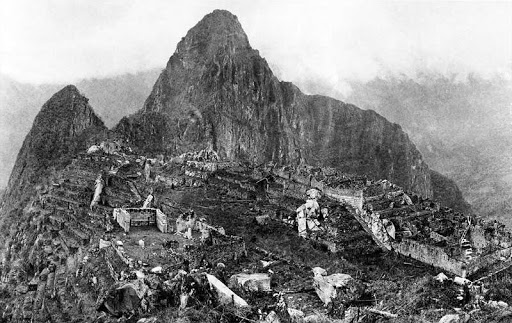
On July 24, 1911, that’s right 100 years ago today, Machu Picchu was found by an American historian, and this weekend many are celebrating the centennial of the “discovery” of the cloud city high in the Andes — one of the most remarkable archeological sites on the planet.
Now, of course, Peruvians say that the city was not discovered a century ago today, because they never lost it. But Americans give credit to Hiram Bingham III, who climbed the Andes and saw the remarkable city, surrounded by holy mountains and filled with houses, terraces and temples that with all our modern skills and machines would be impossible to build today.

Machu Picchu is a pre-Columbian 15th-century Inca site located 7,970 feet above sea level. It is situated on a mountain ridge above the Urubamba Valley in Peru, which is 50 miles northwest of Cusco and through which the Urubamba River flows. Most archaeologists believe that Machu Picchu was built as an estate for the Inca emperor Pachacuti (1438–1472). Often referred to as the “Lost City of the Incas”, it is perhaps the most familiar icon of the Inca World.
The Incas started building the “estate” around AD 1400, but abandoned it as an official site for the Inca rulers a century later at the time of the Spanish Conquest. Although known locally, it was unknown to the outside world before being brought to international attention in 1911 by the American historian Hiram Bingham. Since then, Machu Picchu has become an important tourist attraction. Most of the outlying buildings have been reconstructed in order to give tourists a better idea of what the structures originally looked like. By 1976, thirty percent of Machu Picchu had been restored. The restoration work continues to this day.

Since the site was never known to the Spanish during their conquest, it is highly significant as a relatively intact cultural site. Machu Picchu was declared a Peruvian Historical Sanctuary in 1981 and a UNESCO World Heritage Site in 1983. In 2007, Machu Picchu was voted one of the New Seven Wonders of the World in a worldwide Internet poll.
Machu Picchu was built in the classical Inca style, with polished dry-stone walls. Its three primary buildings are the Intihuatana, the Temple of the Sun, and the Room of the Three Windows. These are located in what is known by archaeologists as the Sacred District of Machu Picchu. In September 2007, Peru and Yale University almost reached an agreement regarding the return of artifacts which Yale has held since Hiram Bingham removed them from Machu Picchu in the early 20th century. In November 2010, a Yale University representative agreed to return the artifacts to a Peruvian university.

And if you want a fun read that centers around this wonderfully historic site (one which I hope to visit one day), you should check out William Maltese’s Beyond Machu. From the first chapter, Beyond Machu is jam-packed with mystery, adventure and intrigue. Dan Green, travel photographer and investigative reporter extraordinaire, has a chance meeting with the mysterious and sexy Sloane Hendriks that results in Dan leaving his comfortable world and being thrust into an unexpectedly dangerous trip to the ancient Incan city of Machu Picchu. Sloane is a man with a dark past, which could be fatal, but Dan believes Sloane is the ticket to a newspaper story that will expose hidden ruins, illicit archeological finds, and long-lost treasure – if they can stay alive long enough to find it.
Sloane and Dan are captivating characters whose connection to one another only increases as the tension mounts. From the heights of Machu Picchu to the dangers of the South American rain forest, the reader is taken on a chaotic journey that can lead only to death–or riches beyond anyone’s wildest dreams. It’s Indiana Jones meets Allan Quatermain with enough man/man romance to make your toes tingle.
A Bibliophile’s Top Five
Hi, I’m Joe, and I am a Bibliophile. I have been talking a lot about books this week, so I thought I would share with you my favorite five authors. I have loved books nearly all of my life. I had an older cousin who each year for Christmas would give all of the younger cousins a book. These books became some of my most treasured gifts. They are still on my bookshelf at my parent’s house. The books he gave me transported me to the world of he fairy tales of my youth: Jack’s beanstalk, Little Red Riding Hood’s forest, etc. They transported me to the fairy tells of Russia and the Ice Princess. And I remember falling in love with Scheherazade and her tales of Arabian Nights. Mark Twain took me on journeys with Huck Finn, Tom Sawyer, Prince Edward and the pauper boy, and the Connecticut Yankee who found himself at King Arthur’s Court.
Then there was the summer that I discovered Sidney Sheldon novels. I read every one of his books that summer. The remarkable thing is that I haven’t read one since. I think I got it out of my system, LOL, but what an adventure that had been. I think I was 12 or 13 that summer. Of course, being a southerner, then came the legal dramas of John Grisham. I fell in love with fast-paced thrillers and have since then.  Then I read the book that was THE book for me. My aunt had checked it out of the library and I read the first few pages and was hooked. I had to have that book. My aunt went to the bookstore and bought me an autographed copy. It is very much a treasured possession. You are probably asking what book it is? Have I got your curiosity up? Well the book was Mark Childress’s Crazy in Alabama


 I guess next on my list is the New Orleans writer Greg Herren. Herren also occasionally writes as Todd Gregory. In fact as I started writing this post, I was reading a book by Todd Gregory, Games Frat Boys Play


 Number three on my list would have to be Donna Leon, a American expatriate living in Venice, Italy who write about the fictional Venetian Commissario Guido Brunetti. Unlike Childress or Herrin, Leon’s books are a slower read, and I don’t mean that in a bad way. The books are intricate, somewhat slow paced, much like the Italian bureaucracy it describes. The are a delight to read, not only for the descriptions of Venice or or for Brunetti himself, but for the beauty of Leon’s writing. Donna Leon is winner of the CWA Macallan Silver Dagger for Fiction, among other awards, Leon was born in New Jersey and has lived in Venice for thirty years. Donna Leon is the ideal author for people who vaguely long for a ‘good mystery.’ That Leon is also a brilliant writer should only add to the consistently comforting appeal of her Venetian procedurals featuring Commissario Guido Brunneti. Leon allows her warmhearted detective to take what solace he can from the beauty of his city and the homely domestic rituals that give him the strength to go on
 My next author is another woman, which is Sarah Durant. Her books, The Birth of Venus


 The fifth and final author of my favorites list is not a fiction author at all, but a writer of non-fiction, Erik Larson. I picked up his book The Devil in the White City: Murder, Magic and Madness at the Fair That Changed America


By far this is not a total list of the authors I love. I must mention Nathaniel Hawthorne, Mark Twain, Ernest Hemingway, F. Scott Fitzgerald, Harper Lee, and many others. And of course for history, no author can as richly describe a point in time as Barbara Tuchman can, whose first few pages of her acclaimed book The Guns of August 
Johnny Murdoc: Writer | Cerebral + Raunchy
 I want to introduce you guys to a new (new for me) author I just found. His name is Johnny Murdoc. Murdoc writes erotic fiction and non-fiction. He’s 29 years old (30 this month–Happy Birthday, Johnny!) and lives in St. Louis, MO with his partner of 8 years. His interests include porn, comics, and copyright law. He likes bike rides and sci-fi movies. All of this makes him sound like my kind of guy, though truth be told, I always found copyright law (any corporate law, for that matter) to be quite boring.
His fiction is included in anthologies from Cleis Press and RavenousRomance.com, including Skater Boys and Best Gay Erotica 2011, and his erotic comic book Crash Course is published by Class Comics. His essays for SexIs span a range of topics from porn to politics. Johnny’s latest collection of stories is in his new book Blowjob 3, which you can find by clicking on title of the book. It contains both erotica and essays (as well as a photography section). It’s available in print and as an ebook. He also self-publishes the zine Blowjob.
I’ve read several of his essays for SexIs, and I immediately liked him because not only does he seem to have a level head on his shoulders but is also quite intelligent. I first came across Johnny’s work with his audio recording of him giving a live reading of a story called the “The Horror in Dunwich Hall.”

I hope you enjoyed listening to this as much as I did. I also hope that you will check out Johnny’s work, not only are his short stories highly erotic and fun to read, but his essays are thought provoking and enjoyable reads as well. So check him out at:
JOHNNY MURDOC
Honoré de Balzac
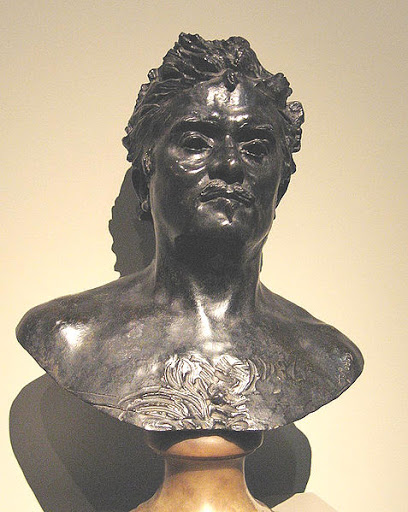
Honoré de Balzac (French pronunciation: [ɔnɔʁe də balzak]; 20 May 1799 – 18 August 1850) was a French novelist and playwright. His magnum opus was a sequence of short stories and novels collectively entitled La Comédie humaine
Due to his keen observation of detail and unfiltered representation of society, Balzac is regarded as one of the founders of realism in European literature. He is renowned for his multi-faceted characters, who are complex, morally ambiguous and fully human. His writing influenced many subsequent novelists such as Marcel Proust, Émile Zola, Charles Dickens, Edgar Allan Poe,Fyodor Dostoyevsky, Gustave Flaubert, Marie Corelli, Henry James, William Faulkner, Jack Kerouac, and Italo Calvino, and philosophers such as Friedrich Engels. Many of Balzac’s works have been made into or have inspired films, and they are a continuing source of inspiration for writers, filmmakers and critics.
An enthusiastic reader and independent thinker as a child, Balzac had trouble adapting to the teaching style of his grammar school. His willful nature caused trouble throughout his life and frustrated his ambitions to succeed in the world of business. When he finished school, Balzac was an apprentice in a Law office, but he turned his back on the study of Law after wearying of its inhumanity and banal routine. Before and during his career as a writer, he attempted to be a publisher, printer, businessman, critic, and politician; he failed in all of these efforts. La Comédie Humaine reflects his real-life difficulties, and includes scenes from his own experience.
Balzac suffered from health problems throughout his life, possibly due to his intense writing schedule. His relationship with his family was often strained by financial and personal drama, and he ended several friendships over critical reviews. In 1850 he married Ewelina Hańska, his longtime love; he died five months later.
Now you might be wondering, SO WHAT? Well, I bring up Honoré de Balzac because I am currently reading two books: The Greater Journey: Americans in Paris
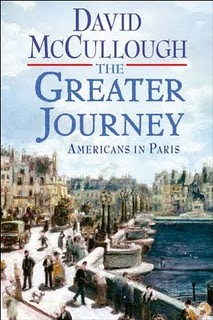
The Greater Journey: Americans in Paris
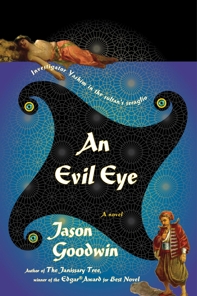
The other book I am reading, An Evil Eye: A Novel
Storm Heaven and Protest
About six weeks ago, a new reader of this blog wrote to me and asked if I had ever written a post about John Rechy. I replied that I had not, mainly because I had never read any of this work. If I am going to write about an author, I want to be familiar with his work. So I looked up some of Rechy’s essays, found them interesting and then ordered his most acclaimed book, City of Night

Finally, I could delve into John Rechy’s City of Night. I sat down with it and began to read, but at first I found it terribly difficult. Maybe it’s the way he writes “didnt” for “didn’t,” “hes” for “he’s,””youll” for “you’ll.” Things like that drive me crazy as a teacher. At first I thought it was a typographical error, but then I realized that many errors wasn’t possible for a publisher, especially with words capitalized here and there seemingly without rhyme or reason. Then I realized that this was Rechy’s style. He used this type of grammar to emphasize various points and follow the cadence of the speaker. I thought it would drive me crazy, and I almost put the book down to read later (which would probably mean never). Luckily, I continued to read.
“The City is of Night: perchance of Death, But certainly of Night…”
 City of Night is a novel about loneliness, about love and the ceaseless, furtive search for love. Set in the seamy, neon-lighted world of honky-tonk USA—Times Square in New York, Pershing Square in Los Angeles, Hollywood Boulevard, Chicago, and the French Quarter of New Orleans–and dealing with a little-known world of hidden sex and the hustlers, drag queens, and butch homosexuals who inhabited these worlds. One of the main reasons I originally continued reading the book was to get to the section about New Orleans, a city which I love dearly. I couldn’t bring myself to just skip to that part of the book, so I ventured on.
This book is a journey by a nameless narrator, through this clandestine world of furtive love.  His journey takes him through the major cities of the United States, and through the lives of an extraordinary collection of characters who dwell either in this world or on its fringes: Pete, the “youngman”—or male hustler–at 42nd Street, who like the other youngmen goes with men for money but with women to prove his masculinity intact; the bedridden Professor, author of many books, for whom the only book that matters is the scrapbook of the Angels he has collected through the years in many countries; Miss Destiny, the queen of them all, with his-her endless succession of faithless husbands; Sergeant Morgan, the terror of Pershing Square, the cop who cracks down hard on the gay scene but has tried more than once to make it with those he arrests; “Mom” the New Yorker whose fetish is cooking for the male hustlers he takes home and undresses; Skipper, A Very Beautiful Boy, once beloved of one of Hollywood’s top directors, who now carries his yellowed pictures and clippings in an often-renewed envelope; Lance O’Hara, not long ago the most sought-after star in the Hollywood heaven, now openly pursuing a youngman a decade or two his junior, and groveling to get him; Neil and his world of masquerade.
The most fascinating and interesting characters throughout the book were not the ones mentioned above but the characters of Chuck the Cowboy and Jeremy, though Sylvia is also a beautiful and tragic character worthy of a note. To be honest, I found most of the other character to be sad and/or creepy—for lack of a better word.  Chuck’s lackadaisical attitude about life was just so carefree, listless, lacking enthusiasm and determination and carelessly lazy. He is described as:
…sitting there complacently in the lazy afternoons, in the same spot, shoulders hunched, hands holding on the railing, balancing himself—long, lanky legs locked loosely under the bar by booted toes as if on a fence, on a ranch, sandy hair jutting out from a widehat over long sideburns—as he looks at the passing scene of Pershing Square with what I would usually think was amusement—but wonder, occasionally, Is it more like bewilderment?…
Chuck is one of those characters that is also lonely, like all of the characters in the book, but he has perfected the none caring attitude of the hustler and his masculine veneer. The story he tells of when he left home and the night out with his mother is one of the most enjoyable sections of the book. Probably, because I have known women like his mother. The mother who took on the role of mother and father in the family.
The New Orleans depicted in the last chapter of City of Night is not the Tennessee Williams version of New Orleans. In some ways it does have the seediness of A Streetcar Named Desire, but none of the false gentility of Blanche. It is purely a “city of the night” taking place in a Mardi Gras celebration of the past. Sylvia is one of the earliest New Orleans characters that we meet in this section of the book, and though she is a favorite character of mine, I will not say much about her. Her story needs to be read in its entirety, not summarized by me, and I hope that after reading this post, you will go out and read City of Night. The other New Orleans character is Jeremy, who appears at the end of the book and in a way opens up the book for better understanding. Once you have read the section on Jeremy, the book is a much more worthwhile read, but it still leaves you with a certain sadness.
Into the Night with John Rechy
 I wrote City of Night because they were my experiences hustling, and it began as a letter. I didn’t think of it as a book.” I did not read the introduction before reading the book, which is not normal for me. I usually delve into the introduction first, but in this case, and for what ever reason, I did not read the introduction first. I read the introduction after completing the book, and it made all the difference. I would suggest that for anyone. Read the book, then read the introduction. It made for a much more fascinating read this way. In his novels about hustling, preeminently City of Night and Numbers, John Rechy moves from the world of homosexual behavior into the world of gay identity. Rechy was born in El Paso, Texas, in 1934. His parents, Mexican aristocrats, fled to avoid persecution during the purges of Pancho Villa. Rechy studied journalism at Texas Western College and the New School for Social Research in New York before serving in Germany in the U.S. Army.
Afterward, Rechy relocated to New York and began a period of hustling and drifting that inspired much of his early writing. Rechy’s first novel, City of Night (1963), began as a letter to a friend about his experiences at Mardi Gras and was then reworked into a short story for Evergreen Review.  Rechy’s reputation as a gay writer rests primarily on City of Night, which documents the wanderings of a nameless male hustler from El Paso, to New York, Los Angeles, and New Orleans. This narrative is punctuated by recollections of the narrator’s childhood in El Paso. Originally, Rechy had chosen the title “Storm Heaven and Protest” (hence the title of this post) for his first novel, but his editor wisely suggested that the book take its name from the title of the intermittent chapters throughout the book that links the various characters together.
When John Rechy published his first novel, City of Night, he was still earning his living as a prostitute on the streets of Los Angeles. It made sense: he didn’t expect a book that dealt with underground gay life in America to make him much money, and it’s a foolish writer who gives up the day job (or in Rechy’s case, the night job) with the first flush of publication.
To Rechy’s astonishment, and despite the best efforts of homophobic critics, the book was a smash and money started rolling in. But Rechy still couldn’t leave the streets. “It caught me out completely,” says Rechy, now 77, and still living in Los Angeles. “I was bewildered. I did nothing at all to promote the book, even to the extent of denying that I wrote it. I felt that if I left the streets as soon as I had some success, I’d be betraying the world that I wrote about. And the truth is that I couldn’t give it up. I’d been hustling for so long that it was a habit.”
“It got ridiculous,” says Rechy. “People hit on me all the time, far more than I say in the book. Looking back, I can see it was my own fault – I projected a very sexual image,  and I shouldn’t have been surprised when people responded.” Ridiculous it may have been, but the masquerade continued well into Rechy’s thirties. “In the 1970s, when I was teaching at UCLA, I’d finish my evening classes, then change my clothes somewhat and go down to hustle on Santa Monica Boulevard. One night, a student saw me down there and said ‘Good evening, Professor Rechy. Are you out for an evening stroll?’.” I’m sure he was thinking what I think some of the time: “I can’t do anything or go anywhere without running into my students.” Only in the 1970s could a man be both a hustler and a professor. Really, can you imagine if a professor was a hustler in this age of internet technology? I can just imagine what his ratings on RateMyProfessor.com would be like: “Professor Rechy is a great professor, very interesting. And if you want to see him out of the classroom, just go to Pershing Square or Santa Monica Boulevard where for $20 you can having him for an evening.” Of course, he would also have plenty of chili peppers, and I am sure that the ratings would be high. I’ve gotten a little off subject.
Rechy kept writing throughout the 1970s and 1980s, detailing the ups and (mostly) downs of his compulsive sex life in Numbers, Rushes and the non-fiction polemic The Sexual Outlaw. But it was City of Night that made his name, and on which his reputation rests. It’s an American classic, with its loner hero, its juke joints and neon signs, its restless shifting from city to city, bed to bed; a hybrid of On the Road and Catcher in the Rye.
 He has lectured at Harvard, Yale, Duke, UCLA, USC, Occidental College, University of Northern Illinois, among other academic institutions. He was the keynote speaker at the 1999 Writers’ Conference at UCLA and at the 1990 Out/Write National Writers Conference at San Francisco. He has been a key participant at numerous other literary conferences, including the 1999 Los Angeles Times Book Festival, the Guadalajara International Book Fair, Miami Book Fair, and New Orleans Literary Festival.
He has written essays for The Nation, Los Angeles Times Books, Washington Post Book World, The Saturday Review, New York Times Book Review, San Francisco Chronicle, The Philadelphia Inquirer, Dallas Morning News, London Magazine, Evergreen Review, New York Magazine, The Advocate, Mother Jones, Premiere, and many other national publications.
Of Mexican-Scottish descent, he makes his home in Los Angeles, California, where he teaches literature and film courses, for writers, in the graduate division of the University of Southern California.
Important? Inspirational? YES! NO! MAYBE!…
City of Night is the first book of its kind. The homosexual subculture of the late 1950s and early 1960s was a dangerous time.  Homosexuality and homosexual sex were illegal in the United States and the life of a hustler was certainly not picnic in the park. While doing some research on John Rechy and City of Night, I came across a review written by Antonio W. Wilson of the book of Outlaw: The Lives And Careers Of John Rechy by Charles Casillo form the literary journal RALPH. Wilson was not a big fan of John Rechy and had never been able to get through City of Night for much the same reason as I almost put the book down myself, but as he states at the end of the review: “But there is another side to the John Rechy story. I showed this review to a friend of mine who had read him many years ago. This is what he had to say about that time of his life”:
John Rechy was very important to me back when I was coming out, at age 40. He opened up a world of possibilities — anonymous sex, T-rooms, hustlers, dirty book-store sex, cruising, rough trade and other goodies. I am proud to say that I went out and lived for a while on Rechy’s wild side.
- Night people are different from day ones. They break all the rules. They do endless self destructive things. To the world we were brought up in they are scum, losers, dangerous. They make up a kind of fraternity of night men like themselves — druggies, drug dealers, hustlers, bartenders, cops and robbers. Sexy boys from West Virginia who will soon be dead (and this was before AIDS) dead of something — OD, knife fight, car crash. Once you are accepted in the fraternity it is a very, very seductive life. Harsh; no social pretense.
Bibliography:
- “A Substantial Artist” and “City of Night” from JohnRechy.com.
- Bredbeck, Gregory W. “Rechy, John” Ed. Claude J. Summers. glbtq: An Encyclopedia of Gay, Lesbian, Bisexual, Transgender, and Queer Culture. 2002 www.glbtq.com/literature/rechy_j.html.
- “John Rechy” Wikipedia.
- Savage, Jon. “John Rechy’s City Of Night and Stonewall @ 40”
- Smith, Rupert. “Midnight cowboy: John Rechy recalls 40 yeas of hustle” Independent.co.uk. 27 April 2008.
- Wilson, Antonio W. Review of Outlaw: The Lives And Careers Of John Rechy by Charles Casillo. R A L P H: The Review of Arts, Literature, Philosophy and the Humanities, Volume XXXIV, Number 4: Mid-Spring 2003. (http://www.ralphmag.org/BY/john-rechy.html).
Mardi Gras Mambo
 Since today is Mardi Gras, I thought I would do a special post for today. Here is a book from one of my favorite authors, Greg Herren. If you love mystery novels, you should love Greg Herren’s Scotty Bradley Mysteries or his other series of mysteries about gay New Orleans private eye Chanse MacLeod. The Scotty Bradley books are a bit wild, whereas the Chanse MacLeod books are a bit more sober. Both are great reads. And be sure to check out Greg’s blog, Queer and Loathing in America.
From Publishers Weekly
Herren serves up an entertaining gumbo of New Age spirituality, clairvoyance, international intrigue and hometown boosterism in his third New Orleans gay noir featuring PI and former go-go dancer Scotty Bradley (after 2004’s Jackson Square Jazz
Mardi Gras is the elaborate series of outdoor pageants and indoor tableau balls held annually during the winter social season in the United States, especially in New Orleans and Mobile. The carnival culminates on Fat or Shrove Tuesday, the day before Ash Wednesday, the first day of Lent.  Rooted in European pre-Lenten revelries, the carnival tradition in the United States began in the colonial period and developed in tandem with racial policies and practices and survives as an extravagant spectacle of excess, decadence, and burlesque. The pageants, each sponsored by one of the many exclusive carnival organizations, are based upon themes drawn from mythology, history, or fiction and are often satiric of contemporary social issues.
Read more: http://www.answers.com/topic/mardi-gras#ixzz1FyFGgxUr
"The Platonic Blow" – W. H. Auden
How Dirty Is That Auden Poem That Was Too Dirty for the ‘Times Book Review’?

Courtesy of Scribner
The highlight of the March 17, 2008 New York Times Book Review is Dan Chiasson’s highly entertaining review of The Best American Erotic Poems
So how dirty is it, really?
It is really, really, really, really dirty. Like a Penthouse Forum letter, except in lively verse, and with no women. It’s sort of great, and also sort of cheesy and awful, and also occasionally hilarious. (“‘Shall I rim you?’ I whispered. He shifted his limbs in assent.”) We feel compelled to reprint the entire thing, just because we never had any idea that W.H. Auden wrote an unbelievably filthy poem about an anonymous blow job.
According to the editor’s note, Auden wrote the poem in 1948, and copies were circulated among friends and fans for years, before Ed Sanders (of the Fugs) printed an unauthorized version in 1965. Auden publicly denied authorship, which is why we can reprint this without permission and with impunity (as does the anthology, which doesn’t include Auden’s poem on its copyright page). Enjoy!
The Platonic Blow
by W. H. Auden
It was a spring day, a day for a lay, when the air
Smelled like a locker-room, a day to blow or get blown;
Returning from lunch I turned my corner and there
On a near-by stoop I saw him standing alone.
I glanced as I advanced. The clean white T-shirt outlined
A forceful torso, the light-blue denims divulged
Much. I observed the snug curves where they hugged the behind,
I watched the crotch where the cloth intriguingly bulged.
Our eyes met. I felt sick. My knees turned weak.
I couldn’t move. I didn’t know what to say.
In a blur I heard words, myself like a stranger speak
“Will you come to my room?” Then a husky voice, “O.K.”
I produced some beer and we talked. Like a little boy
He told me his story. Present address: next door.
Half Polish, half Irish. The youngest. From Illinois.
Profession: mechanic. Name: Bud. Age: twenty-four.
He put down his glass and stretched his bare arms along
The back of my sofa. The afternoon sunlight struck
The blond hairs on the wrist near my head. His chin was strong.
His mouth sucky. I could hardly believe my luck.
And here he was sitting beside me, legs apart.
I could bear it no longer. I touched the inside of his thigh.
His reply was to move closer. I trembled, my heart
Thumped and jumped as my fingers went to his fly.
I opened a gap in the flap. I went in there.
I sought for a slit in the gripper shorts that had charge
Of the basket I asked for. I came to warm flesh then to hair.
I went on. I found what I hoped. I groped. It was large.
He responded to my fondling in a charming, disarming way:
Without a word he unbuckled his belt while I felt.
And lolled back, stretching his legs. His pants fell away.
Carefully drawing it out, I beheld what I held.
The circumcised head was a work of mastercraft
With perfectly beveled rim of unusual weight
And the friendliest red. Even relaxed, the shaft
Was of noble dimensions with the wrinkles that indicate
Singular powers of extension. For a second or two,
It lay there inert, then suddenly stirred in my hand,
Then paused as if frightened or doubtful of what to do.
And then with a violent jerk began to expand.
By soundless bounds it extended and distended, by quick
Great leaps it rose, it flushed, it rushed to its full size.
Nearly nine inches long and three inches thick,
A royal column, ineffably solemn and wise.
I tested its length and strength with a manual squeeze.
I bunched my fingers and twirled them about the knob.
I stroked it from top to bottom. I got on my knees.
I lowered my head. I opened my mouth for the job.
But he pushed me gently away. He bent down. He unlaced
His shoes. He removed his socks. Stood up. Shed
His pants altogether. Muscles in arms and waist
Rippled as he whipped his T-shirt over his head.
I scanned his tan, enjoyed the contrast of brown
Trunk against white shorts taut around small
Hips. With a dig and a wriggle he peeled them down.
I tore off my clothes. He faced me, smiling. I saw all.
The gorgeous organ stood stiffly and straightly out
With a slight flare upwards. At each beat of his heart it threw
An odd little nod my way. From the slot of the spout
Exuded a drop of transparent viscous goo.
The lair of hair was fair, the grove of a young man,
A tangle of curls and whorls, luxuriant but couth.
Except for a spur of golden hairs that fan
To the neat navel, the rest of the belly was smooth.
Well hung, slung from the fork of the muscular legs,
The firm vase of his sperm, like a bulging pear,
Cradling its handsome glands, two herculean eggs,
Swung as he came towards me, shameless, bare.
We aligned mouths. We entwined. All act was clutch,
All fact contact, the attack and the interlock
Of tongues, the charms of arms. I shook at the touch
Of his fresh flesh, I rocked at the shock of his cock.
Straddling my legs a little I inserted his divine
Person between and closed on it tight as I could.
The upright warmth of his belly lay all along mine.
Nude, glued together for a minute, we stood.
I stroked the lobes of his ears, the back of his head
And the broad shoulders. I took bold hold of the compact
Globes of his bottom. We tottered. He fell on the bed.
Lips parted, eyes closed, he lay there, ripe for the act.
Mad to be had, to be felt and smelled. My lips
Explored the adorable masculine tits. My eyes
Assessed the chest. I caressed the athletic hips
And the slim limbs. I approved the grooves of the thighs.
I hugged, I snuggled into an armpit. I sniffed
The subtle whiff of its tuft. I lapped up the taste
Of its hot hollow. My fingers began to drift
On a trek of inspection, a leisurely tour of the waist.
Downward in narrowing circles they playfully strayed.
Encroached on his privates like poachers, approached the prick,
But teasingly swerved, retreated from meeting. It betrayed
Its pleading need by a pretty imploring kick.
“Shall I rim you?” I whispered. He shifted his limbs in assent.
Turned on his side and opened his legs, let me pass
To the dark parts behind. I kissed as I went
The great thick cord that ran back from his balls to his arse.
Prying the buttocks aside, I nosed my way in
Down the shaggy slopes. I came to the puckered goal.
It was quick to my licking. He pressed his crotch to my chin.
His thighs squirmed as my tongue wormed in his hole.
His sensations yearned for consummation. He untucked
His legs and lay panting, hot as a teen-age boy.
Naked, enlarged, charged, aching to get sucked,
Clawing the sheet, all his pores open to joy.
I inspected his erection. I surveyed his parts with a stare
From scrotum level. Sighting along the underside
Of his cock, I looked through the forest of pubic hair
To the range of the chest beyond rising lofty and wide.
I admired the texture, the delicate wrinkles and the neat
Sutures of the capacious bag. I adored the grace
Of the male genitalia. I raised the delicious meat
Up to my mouth, brought the face of its hard-on to my face.
Slipping my lips round the Byzantine dome of the head,
With the tip of my tongue I caressed the sensitive groove.
He thrilled to the trill. “That’s lovely!” he hoarsely said.
“Go on! Go on!” Very slowly I started to move.
Gently, intently, I slid to the massive base
Of his tower of power, paused there a moment down
In the warm moist thicket, then began to retrace
Inch by inch the smooth way to the throbbing crown.
Indwelling excitements swelled at delights to come
As I descended and ascended those thick distended walls.
I grasped his root between left forefinger and thumb
And with my right hand tickled his heavy voluminous balls.
I plunged with a rhythmical lunge steady and slow,
And at every stroke made a corkscrew roll with my tongue.
His soul reeled in the feeling. He whimpered “Oh!”
As I tongued and squeezed and rolled and tickled and swung.
Then I pressed on the spot where the groin is joined to the cock,
Slipped a finger into his arse and massaged him from inside.
The secret sluices of his juices began to unlock.
He melted into what he felt. “O Jesus!” he cried.
Waves of immeasurable pleasures mounted his member in quick
Spasms. I lay still in the notch of his crotch inhaling his sweat.
His ring convulsed round my finger. Into me, rich and thick,
His hot spunk spouted in gouts, spurted in jet after jet.
http://nymag.com/daily/entertainment/2008/03/how_dirty_is_that_auden_poem_t.html
As you know, I generally add pictures to poems, but due to the explicit eroticism of “The Platonic Blow” also known as“A Day for a Lay,” I have decided to do a companion post of pictures on my other blog.


Authors
Recent Comments
furbirdsqueerly on Pic of the Day Joe on Pic of the Day noisilycool3bc985058… on Pic of the Day vandycolt on Moment of Zen: Reading noisilycool3bc985058… on Pic of the Day Top Posts & Pages




Amazon Associate

As an Amazon Associate I earn from qualifying purchases. So, if you click on a link that takes you to Amazon.com, I may earn a commission.
Trust me, it isn’t much, but every little bit helps.

 Joe
Joe


 The Closet Professor