 Since it was founded in 1781, New Orleans has marched to the beat of its own drum. For two centuries, those in control of the Louisiana state government have tried in vain to impose their prejudices on a city that is French, Spanish, Creole, African, Catholic, pagan and very gay (in both senses of the word). If nothing else, New Orleans knows how to throw a party, from the world-famous Mardi Gras to other, more specialized celebrations.
One of these celebrations began quite inauspiciously in August of 1972, by a group of friends living in a ramshackle cottage house at 2110 Barracks Street in the Treme section of New Orleans, just outside of the French Quarter.  It was in desperate need of repair, and the rent was $100 per month. At any given time the residents numbered anywhere from six to ten, and it was still sometimes difficult to come up with the rent.
The large bathroom became a natural gathering place in the house. It had no shower, only a clawfoot tub, but it also had a sofa. With from six to ten residents, and one bathtub, everyone became close friends. While one soaked in the tub, another would recline on the couch and read A Streetcar Named Desire aloud. The Tennessee Williams play inspired the residents to fondly name the house “Belle Reve” in honor of Blanche DuBois’ Mississippi plantation.
 And so it was, on a sultry August afternoon in 1972, that this band of friends decided to plan an amusement. According to author James T. Spears, writing in Rebels, Rubyfruit and Rhinestones: Queering Space in the Stonewall South
 , this “motley crew of outcasts” began Southern Decadence as a going away party for a friend named Michael Evers, and to shut up a new “Belle Reve” tenant (from New York) who kept complaining about the New Orleans heat. As a riff on the “Belle Reve” theme, the group named the event a “Southern Decadence Party: Come As Your Favorite Southern Decadent,” requiring all participants to dress in costume as their favorite “decadent Southern” character. According to Spears, “The party began late that Sunday afternoon, with the expectation that the next day (Labor Day) would allow for recovery. Forty or fifty people drank, smoked, and carried on near the big fig tree … even though Maureen (the New Yorker) still complained about the heat.”
The following year the group decided to throw another Southern Decadence Party.  They met at Matassa’s bar in the French Quarter to show off their costumes, then they walked back to “Belle Reve.” This first “parade” included only about 15 people impersonating such “decadent Southern” icons as Belle Watling, Mary Ann Mobley, Tallulah Bankhead, Helen Keller, and New Orleans’ own Ruthie the Duck Lady. This impromptu parade through the French Quarter and along Esplanade Avenue laid the groundwork for future events, and the group decided to repeat the party again the following year.
In 1974, the Southern Decadence visionaries named Frederick Wright as the first Grand Marshal, hoping to provide at least a modicum of order. For the next six years, the format of the celebration changed little. The founding group continued to appoint each year’s Grand Marshal by consensus. Some were gay, some were not. But all were members of the founding group.
 By 1981, most of the original organizers had moved on with their lives. Many felt that the event had become so big that it was no longer the intimate party they had started nine years earlier. Of the original group, only Grand Marshal V Robert King was actively participating. He, along with some of his friends that hung out at the Golden Lantern bar, thought it was worth continuing and they took over the festivities. It was at this point that Southern Decadence became primarily a gay event. Other protocol changes made in 1981 included moving the starting point of the annual parade from Matassa’s to the Golden Lantern bar, and allowing Grand Marshals to personally name their own successors. Both of these traditions continue today. And in 1987, the Grand Marshal began to make a proclamation of the official theme, color and song.
 Because the 2005 celebration was cancelled due to Hurricane Katrina, Southern Decadence 2005 Grand Marshals Lisa Beaumann and Regina Adams reigned for both 2005 and 2006, making the very first time in Southern Decadence history that grand marshals
ruled for two years. And keeping with the unpredictability of Decadence, the Grand Marshals from 2008 reigned once again in 2009.
The rest, as they say, is history. What began as a little costume party is now a world-famous gay celebration. In the 39th year, it has mushroomed from a small gathering of friends to a Labor Day weekend tradition, attracting over 100,000 participants, predominantly gay and lesbian, and generating almost $100 million in tourist revenue. This annual economic impact ranks it among the city’s top five most significant tourist events. The mayor has even welcomed the event with an Official Proclamation.
 Described by one reporter as “a happening of haberdashery fit for an LSD Alice in Wonderland,” Southern Decadence 2010 will be as outrageous as ever and live up to its reputation as New Orleans’ largest gay street fair. It all begins in earnest six weeks before Labor Day. However, the real party starts on the Wednesday before Labor Day, and the events are non-stop. It picks up steam daily as it nears Sunday’s big street parade, which rivals New Orleans’ gay Mardi Gras in scope, with the party lasting well into the day on Monday.
 If you’ve never been to Southern Decadence, and sadly I haven’t, here are some tips to know before you go. What follows are some thoughts gathered from locals that will help you get the most out of your experience.
Pass by the NO/AIDS Task Force’s information tables located on the St. Ann Street sidewalk in front of Hit Parade Gift and Clothing, at the corner of Bourbon and St. Ann Streets. You’ll find lots of community information and details of the weekend’s events. The literature racks inside of Hit Parade are another great source for all of the Southern Decadence information that you will need.
During Southern Decadence, some streets of the French Quarter do not allow parking – look for, and heed, no parking signs. Plan on doing a lot of walking. Comfortable shoes are a must. Always walk where it is well lit and there are a lot of people. New Orleans is a city of neighborhoods.  Like all large cities, the Big Easy does have some trouble spots. Always walk with others, never alone if possible. Don’t wander about the city. In New Orleans the neighborhoods can change, literally, when you cross a street. Always carry a map. If you’re drinking, don’t go stumbling about the French Quarter. Locals know that the people who encounter trouble are usually the ones who have been drinking.
And a bit of urban common sense is in order. When you walk the streets, don’t bring your wallet. Take the cash you need and possibly a credit card, along with some sort of identification, and put them in a pocket that no one can slip their hand into. Don’t wear expensive jewelry. Basically, don’t take anything with you that you would have a hard time replacing if it were lost.
If your car is impounded, it will cost you over $100 plus whatever else the city decides to tack on. Your car can be retrieved from the City Auto Pound, located in a dangerous area of the city, 400 N. Claiborne Ave., (504.565.7236). This will spoil a good time. Cabs are not difficult to get during Southern Decadence. If you are going to take a cab, try UNITED CABS: 504.522.9771 or 504.524.9606. Write these numbers down and put them in your wallet. This cab company can be trusted. United Cabs has a sound reputation with the New Orleans gay community.
 People are allowed to drink on the streets in New Orleans — that large 24-oz Southern Decadence cup that you’ll see people walking with and drinking from likely contains several shots of alcohol! However, if your drink isn’t already in a plastic cup, please ask for one before leaving your favorite watering hole. Glass and cans are not allowed on the streets for safety reasons.
Most bars in New Orleans are open twenty-four hours a day. Pace yourself. Most important, it’s easy to get caught up in all the excitement and forget to eat. If you want to make it through the weekend, solid food is a necessity. Of course, New Orleans is world famous for its food and indulging is part of a complete New Orleans experience.
Clean bathrooms can be difficult to find during Southern Decadence. Most businesses close their facilities to everyone but paying customers. If your hotel is far from the action, take care of the more important business before you hit the streets. If you need to, plan on buying lunch or dinner and using the restaurant’s bathroom before you pay the check!
 The French Quarter is an historic neighborhood. Please respect it. No matter how “bad” you have to go, do not urinate in the streets or on door steps or through iron gates. This is a good way to end up in central lock-up, and people who are arrested sit in jail until the courts re-open after Labor Day. It will cost you about $200. And it’s not polite. Listen to your body. Get in line before you really have to go. By the time you’re crossing your legs, you might be at the front of the line.
During Southern Decadence weekend, you’re guaranteed to get an eyeful of great costumes and fabulous bodies. Officially, public nudity is not allowed and there are obscenity laws on the books. Better judgment should be the rule of the day.
Southern Decadence is a BIG non-stop party. People drink and are having a good time. It’s easy to forget that there is a real world out there. Free condoms are available from the NO/AIDS Task Force station located near the Bourbon Pub / Parade. Don’t allow the party to overwhelm your better judgment. We want you to come again. Have fun and play safe!


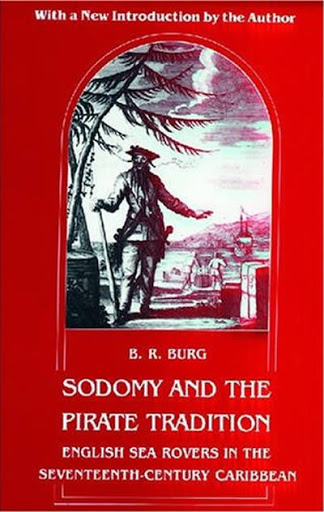
 , historian B. R. Burg investigates the social and sexual world of these sea rovers, a tightly bound brotherhood of men engaged in almost constant warfare. What, he asks, did these men, often on the high seas for years at a time, do for sexual fulfillment? Buccaneer sexuality differed widely from that of other all- male institutions such as prisons, for it existed not within a regimented structure of rule, regulations, and oppressive supervision, but instead operated in a society in which widespread toleration of homosexuality was the norm and conditions encouraged its practice.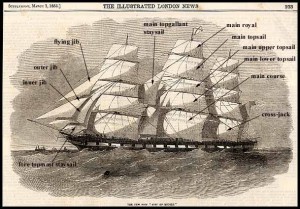



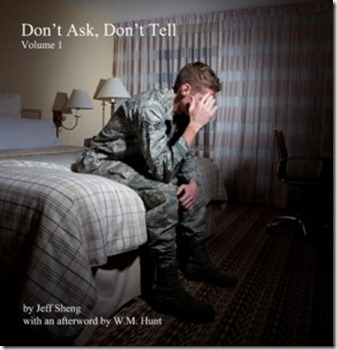
 ” exhibit, two years in the making, conveys the stories of the gay and bisexual men and women who serve in the U.S. military. And because his subjects are forced to keep their sexual orientations under wraps in order to serve, Shen’s photos are portraits without faces.




 (1928) and
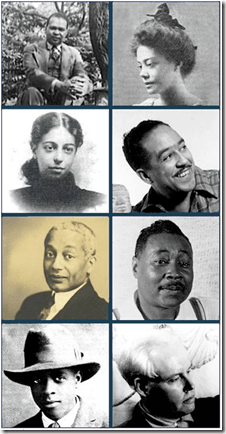 Known also by the names Black Renaissance or New Negro Movement, the Harlem Renaissance represented a cultural movement among African Americans roughly between the end of World War I (1918) and the beginning of the Great Depression (1929). The names given to this movement reveal its essential features. Certainly the words “black” and “Negro” mean that this movement centered on African Americans, and the term “renaissance” indicates that something new was born or, more accurately, that a cultural spirit was reawakened in African American cultural life. Although most historians remember the Harlem Renaissance as a literary movement, in fact, African Americans during the 1920s also made great strides in musical and visual arts, as well as science. Finally, the focus on Harlem—an old Dutch-built neighborhood of New York City—indicates that this “renaissance” was something of an urban phenomenon. In fact, the exciting developments in African American cultural life of the 1920s were not limited to Harlem, but also had roots in other urban communities where black Americans migrated in great numbers: East St. Louis, Illinois; Chicago’s south side; and Washington, D.C. The Harlem Renaissance included several important gay and lesbian writers.

 , a book about a gay bullfighter who was deeply closeted during the reign of Generalissimo Francisco
 , the ground-breaking novel about a gay athlete, created another gay sports figure in


 by C. A. Tripp.


 tells the story of the talented eunuch slave Taita, his life in Egypt, the flight of Taita along with the Eygptian populace from the Hyksos invasion, and their eventual return. The novel can be grouped together with Wilbur Smith’s other books on Ancient Egypt. It was first published in 1994. This historical novel centers around the little-known facts behind the Hyksos invasion of Egypt, circa 1780 B.C. Containing all the standard elements of great adventure–intrigue, romance, greed, cruelty and furious action–the yarn is spun by the clever eunuch Taita, who reports on events with an irony akin to a 20th-century sensibility. Taita is the slave of Egypt’s scheming Grand Vizier Lord Intef, whose daughter Lostris is in love with Tanus, a young army officer whose father’s demise was brought about by Intef’s greed. Knowing of his daughter’s love, Intef devises a plan for her to become the bride of Pharaoh Mamose. These maneuvers set the stage for the story of two warring Nile kingdoms, the arrival of the Hyksos and the ultimate exodus of the Egyptian court, now ruled by Queen Lostris. Taita is a curious creation. He is clever and wise, but we don’t know how he became so learned or what his country of origin is. The brilliant slave invented a system for calculating the rise and ebb of the Nile, is extremely knowledgeable in the ways of healing, improves upon the wheel and trains horses (both of which were brought to Egypt by the invading Hyksos). He is also clever enough to manipulate the Pharaoh into believing that he is the father of Prince Regent Memnon, the offspring of a forbidden tryst between Lostris and Tanus. Somehow, this doesn’t ring true.
 , first published in 1995, is the second of the ‘Egyptian’ series of novels by Smith and follows the exploits of the adventurer Nicholas Quenton-Harper and Dr. Royan Al Simma. The tomb of Tanus which is the focus of the book refers to another novel by the author, River God. It is set in modern times. A search for the 4000-year-old tomb of an Egyptian pharaoh along the Nile’s headwaters in Ethiopia is the focus of this intoxicating sequel to River God. A heady mix of exotic adventure, romance and Egyptology, it pairs blueblood, devil-may-care Sir Nicholas Quenton-Harper, who recently has lost his wife and children in a tragic accident, and half-English, half-Egyptian archeologist Royan Al-Sima, herself recently bereaved, in a desperate race to unearth Pharaoh Mamose’s fabulous treasures. Their rival in this quest is Gotthold von Schiller, an old, crazed, murderous German collector of antiquities whose mistress, a porno actress, dresses up as an ancient Egyptian queen to titillate him. The major clue is the eponymous seventh scroll, key to the tomb’s location, written by ancient Egyptian scribe and eunuch Taita, who figured prominently in River God. As the novel opens, thugs hired by von Schiller steal the scroll, and thereafter the rival archeologist teams play a cat-and-mouse game with Taita across the millennia, avoiding lethal traps and deciphering red herrings, which will fool the reader too. The colorful cast includes alcoholic ex-KGB operative Boris Brusilov and ruthless Texan Jake Helm, von Schiller’s slavish sidekick. Fans of intricate adventure and Egyptian lore will be captivated by Smith’s capacious saga, which should serve to increase his audience in the States. This prolific and popular British writer-with 24 previous novels, he is a bestseller in England and elsewhere, to the tune of 65 million copies-is a master of the genre.
 , first published in 2001, is the third installment of this series of novels by Smith set to ancient Egypt and follows the fate of the Egyptian Kingdom through the eyes of Taita, the multi-talented and highly skilled eunuch slave of the previous two novels. Lengthy but seamlessly composed tracks a power struggle in ancient Egypt between false pharaohs and a true royal heir, evoking the cruel glories and terrible torments of the era. The kingdoms of Upper and Lower Egypt have been at war for 60 years. Upper Egypt is ruled by Tamose, Lower Egypt by Apepi, king of the Hyksos. Treachery and assassination eliminate both rulers, allowing two false pharaohs to unite in an orgy of tyranny and oppression. Tamose’s son, Prince Nefer, is his father’s rightful heir, but the false pharaoh, Lord Naja, denies Nefer’s birthright and plots to kill the young prince. Aided by the royal sorcerer, a warlock named Taita, Nefer escapes Naja’s plots. Nefer and Taita outwit assassins, evil magicians, pursuing armies and even the treachery of Nefer’s own sister, as they raise their own army in the lost desert city of Gallala. Taita’s magic spells and occult powers protect, teach and guide Nefer on his tortuous path to regain the throne and save the woman he loves, Princess Mintaka, daughter of slain King Apepi. However, as Nefer’s strength grows, so does that of his enemies, and it will take all of Nefer’s courage and Taita’s mystical powers to prevail when the chariot armies of evil sweep across the desert wasteland to the gates of Gallala. This is a very bloody and violent yarn, set in an age when merciless combat, torture, rape and sacrifice were common. Though timorous readers may wish to steer clear, those willing to brave the blood and gore will be carried away by the sweep and pace of Smith’s tale.
 , first published in 2007, is the fourth and last of the Egyptian novels. If you read the first three novels in Smith’s ancient Egyptian series and enjoyed them as much as I did, you will welcome the fourth book in the saga, which picks up where Warlock (2001) left off. The powerful magus Taita and his loyal ally, Col. Meren Cambyses, have returned to Egypt after a journey of many years only to find the country beset by a series of plagues that include giant flesh-eating toads and river water turned to blood. Pharaoh Nefer Seti asks the pair to find—and eliminate—the source of his country’s torment, a mission that sends Taita and Meren on a perilous quest in which they must contend with fierce creatures both natural and supernatural. Once again Smith deftly blends history, fantasy and mythology, but newcomers should be prepared for grisly deaths and mutilations.


 Joe
Joe





 The Closet Professor