Category Archives: History

Sughaim Sine

IMG_3867.JPG

Ancient Celtic culture is typically lauded for such things as storytelling, mysticism and warrior fierceness. Mistakenly, however it’s not been broadly known for its eroticism. Something we know to be a historical oversight at the least.

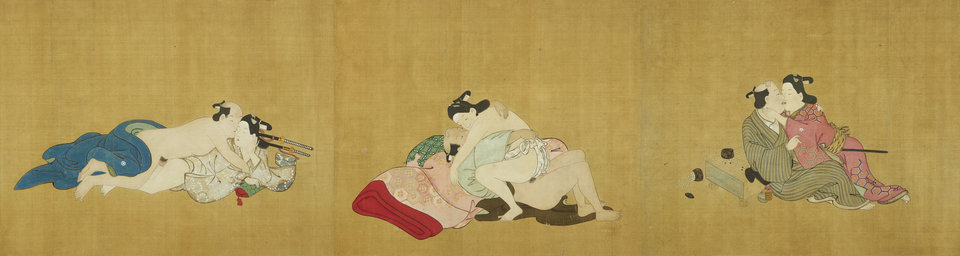
It wasn’t always like this. In ancient times, the Celts were widely renowned as much for their erotic energy and prowess, multiple love affairs/sexual liaisons and androphilic activities, as for their warlike habits. It is known that male warriors were often part of ‘sodalities’ or groups of “special friends”. They engaged freely and openly in same-sex relationships and participated in a variety of acts for pleasure and bonding. Ancient Greeks such as Aristotle and Strabo mention Celtic homosexuality as one of the few good things about what they considered a barbarian culture. Diodorus Siculus chronicled his impressions writing —

They are accustomed to sleep on the ground on animal skins and roll around with male bed-mates on both sides. Heedless of their own dignity, they abandon without qualm the bloom of their bodies to others. And the most incredible thing is that they do not think this is shameful. But when they proposition someone, they consider it dishonorable if he does not accept the offer!…

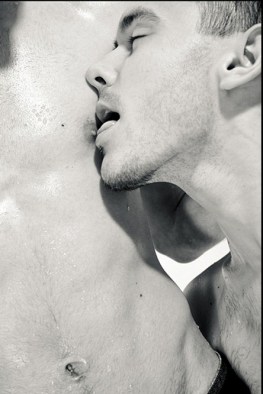
A particularly succulent example of this fluidity is perhaps exemplified in the adjunctive early Irish practice of homosocial nipple-sucking or what today can be called “sughaim sine”. This typically male act stood for many things in the pagan culture of the times. In one aspect, it was used as a way to pledge loyalty, devotion and submission for a king. Among common men, it was an expression of friendship, greeting, reconciliation, affection, fealty, protection and not surprisingly, as some sources suggest, sexual stimulation and pleasure.

While Ireland was still a pagan culture, Christianity was taking hold in Europe and North Africa. Christian philosophy increasingly taught that all sexual ways were physically harmful and that sexual abstention was the wisest course. But the tradition of “special friends” and the importance of love, physicality, affection and sexual expression did not die out. It was an essential part of the culture. An old Celtic saying holds, “A person without a soul friend is like a body without a head.”

Though Irish monasteries in the Dark Ages between the years of 600 and 1200 CE tried to control the sexuality of both the clerics and the converted, the privileges and benefits of soul friendship could not be destroyed. The delectable habit of men sucking on each other’s nipples to affirm friendship (particularly after a quarrel) seemed indelible and was slow to change.

There are a number of references or implications regarding the practice but detailed information is spare. The most notable account is in an oft omitted passage of St. Patrick’s ‘Confessions’ wherein he says —-

On the day I arrived the ship weighed anchor, I explained that I had the wherewithal to sail with them. And that day, furthermore, I refused for fear of God, to suck their nipples. (A Pagan custom of friendship) Nevertheless I hoped that some of them would come to faith in Jesus Christ (for they were heathen). This displeased the captain who answered sharply, with anger “Your wish to travel with us is quite futile”. And when I heard this, I left them in order to return to the shelter in which I had lodged, beginning to pray as I went. Before the prayer was finished, I heard one of them, who shouted out to me “Come quickly these men are calling you”. I returned to them immediately and they began to explain to me: “Come, we will accept you in good faith. Bind yourself to us in whatever way you wish” Because of this I was received among them and we set sail straight away…

Patrick was citing the prevalence of pagan practices and in doing so he was making the obvious point that the Ireland in which he had been a slave was largely un-Christianized. Since he does not explain the significance of the incident, its meaning is taken to have been evident to the readers of his day. This suggests therefore that the custom was widely accepted and well-known among Celts. By declining to participate, Patrick denies pagan practice and in turn gives us an idea of how deliciously unrestrained the Celtic/Pagan world may have been.

Archaeological bog discoveries in Ireland have corroborated the “sughaim sine” practice in another of its aspects. The subjects of ancient Irish king’s ritually and routinely demonstrated their submission by sucking on their ruler’s nipples – some believe perhaps in a nursing, group or perhaps erotically intended way. It is theorized that there may have been royal reception days when the king exposed his nipples for his “court” in order to facilitate sucking for a large group. In a potentially more macabre element, there appears to have been power games in the nipple hierarchy. Cutting off a royal descendant’s nipples made him ineligible for kingship. Not as subtle as poison, but undeniable evidence of his unsuitability for a kingly role. No nips, game over.

Perhaps the King’s nipples were most important when celebrating fertility compacts, in the festivals where the King was wedded to the Earth (Goddess). His kingly role required him to keep nature and society in equilibrium. A little nipple sucking would surely increase his self-esteem, stimulate him thereby enhancing his virility and help him on his way to essential potency. But if he failed to keep everything fertile he could be dispatched. Such is believed to possibly have been the case of the bog men.

IMG_3866.JPGThe practice is also referenced mythologically within the tale of King Fergus mac Leite. Lore says that the King, after returning to his own land, falls asleep on the coast near the sea. Small people appear who carry the king without his sword into the water. It might be inferred that they want to abduct him to their own ‘land’ under water. This ‘foreign’ invasion threatens the king and thereby the land. When his bare feet become wet and cold, however, he awakens in time and grabs three of them. In order to save themselves they offer a pact, which is introduced by a ritualistic exchange of words and is sealed by the mutual, prolonged sucking of nipples. Thanks to this agreement, the king receives a charm with which he can survive under water – a kind of ‘passport’ to travel in the ‘foreign’ lands under the waves and is forever nipple-bonded to the small men.

Finally, the nipple motif even reappears later after the Christian era is in full swing showing again the importance of “sugere mammillas” within the culture. There is reference of holy men suckling neophytes relatively late in Irish hagiography. This seems significant in a metaphorical sense as a spiritual act of imparting the perceived grace and teaching of Christ through the symbolic acts of nursing and bonding. This information relates to the role of saints of both genders. However, it is notable in that the nipplage of male saints is cited equally in their place as nurturers of the early Irish church meaning that the “nursing” of male breasts was acceptable. This suggests the continuance of the tradition, albeit in a post-pagan, Christianized and sanitized configuration.


Friend of Dorothy

IMG_3622

The Wizard of Oz has been a iconic movie for gay men since it was released. Judy Garland starred in the film and connections between Garland and LGBT people include the slang term Friend of Dorothy. In gay slang, a “Friend of Dorothy” (occasionally abbreviated FOD) is a term for a gay man.The phrase dates back to at least World War II, when homosexual acts were illegal in the United States. Stating that, or asking if, someone was a “friend of Dorothy” was a euphemism used for discussing sexual orientation without others knowing its meaning. A similar term “friend of Mrs. King” (i.e. Queen) was used in England, mostly in the first half of the 20th century.

Conventional wisdom is that Garland’s death and funeral, in June 1969, helped inspire the Stonewall riots, the flashpoint of the modern Gay Liberation movement. However, some observers of the riots contend that most of those involved “were not the type to moon over Judy Garland records or attend her concerts at Carnegie Hall. They were more preoccupied with where they were going to sleep and where their next meal would come from.” There was certainly an awareness and appreciation of Garland among Stonewall Inn patrons. Because the bar had no liquor license, it was passed off as a bottle club and patrons were required to sign in. Many used pseudonyms and “Judy Garland” was among the most popular. Regardless of the truth of the matter, the Garland/Stonewall connection has persisted and has been fictionalized in Stonewall, Nigel Finch’s feature film about the events leading up to the riots. Lead character Bostonia is shown watching Garland’s funeral on television and mourning, and later refusing to silence a jukebox playing a Garland song during a police raid, declaring “Judy stays.”

Time magazine would summarize decades later:

The uprising was inspirited by a potent cocktail of pent-up rage (raids of gay bars were brutal and routine), overwrought emotions (hours earlier, thousands had wept at the funeral of Judy Garland) and drugs. As a 17-year-old cross-dresser was being led into the paddy wagon and got a shove from a cop, she fought back. [She] hit the cop and was so stoned, she didn’t know what she was doing—or didn’t care.

Garland’s daughter Lorna Luft points to the connection with pride, saying that her mother was a “huge, huge advocate of human rights” and that Garland would have found the rioting appropriate.

The phrase “Friend of Dorothy” likely derives from Garland’s portrayal of Dorothy Gale in The Wizard of Oz and became a code phrase gay people used to identify each other. Dorothy’s journey from Kansas to Oz mirrored many gay men’s desires to escape the black-and-white limitations of small town life…for big, colorful cities filled with quirky, gender-bending characters who would welcome them.

Another possible origin is that the term is derived from Road To Oz (1909), a sequel to the original Wonderful Wizard of Oz. The book introduces readers to Polychrome who, upon meeting Dorothy’s traveling companions, exclaims “You have some queer friends, Dorothy” and she replies “The queerness doesn’t matter, so long as they’re friends.” More commonly it is stated that “Friend of Dorothy” refers to the film The Wizard of Oz because Judy Garland, who starred as the main character Dorothy, is a gay icon.

In the film, Dorothy immediately accepts those who are different, including the Cowardly Lion. The Lion identifies himself through song as a “sissy” and exhibits stereotypically “gay” (or at least effeminate) mannerisms. The Lion offers a coded example of Garland meeting and accepting a gay man without question. In the film, Dorothy is accepting of those who are different. For example the “gentle lion” living a lie, “I’m afraid there’s no denyin’, I’m just a dandy lion.” Dandy has long been slang for an effeminate man or one preoccupied with fashion, such as Yankee Doodle Dandy, who “stuck a feather in his hat and called it macaroni.” A macaroni was a man who returned from the Grand tour with overaffected Italian mannerisms often portrayed as effeminate and wearing makeup.

IMG_3737I find this little fact hilarious, though it is also quite tragic in terms of understanding the American military attitudes and understanding of gay men.  In the early 1980s, the Naval Investigative Service was investigating homosexuality in the Chicago area. Agents discovered that gay men sometimes referred to themselves as “friends of Dorothy.” Unaware of the historical meaning of the term, the NIS believed that a woman named Dorothy was at the center of a massive ring of homosexual military personnel. The NIS launched an enormous hunt for Dorothy, hoping to find her and convince her to reveal the names of gay service members. Of course, they never found Dorothy.


Starting in the late 1980s, on several cruise lines, gay and lesbian passengers began approaching ship staff, asking them to publicize gatherings in the daily cruise activity list. As the cruise lines were hesitant to announce such things so blatantly in their daily publications, they would list the gathering as a “Meeting of the Friends of Dorothy”. The use of this phrase likely comes from the cruise directors who were also familiar with and using the “Friends of Bill W.” phrase in their programs to tell members of Alcoholics Anonymous that there were support group meetings on the trip. Such meetings have expanded in popularity and frequency over the years. Now, many cruise lines will have multiple “FOD” events, sometimes as many as one each night.

Another connection is the rainbow flag, symbol of the LGBT communities which may have been inspired, in part, by Garland’s song “Over the Rainbow.” Garland’s performance of this song has been described as “the sound of the closet,” speaking to gay men whose image “they presented in their own public lives was often at odds with a truer sense of self that mainstream society would not condone.”


Leap Year

b9aa64792db427ba41bad060e30571e0.jpg

10 fun facts about leap year and leap day

Feb. 29, 2016

Our year just got one day longer. Today, Feb. 29 is leap day, the day inserted into the calendar every four years to keep our calendar operating smoothly. This extra day makes the year 366 days long, instead of 365 days like regular years. Curious about why we have one extra day stuck to the end of February every four years? Here are 10 fun facts about leap years and leap days. This information was found on Timeanddate.com, Mother Nature Network and the Old Farmer’s Almanac.

  1. Why add a leap day?: Leap days are needed to keep our calendar in alignment with the Earth’s revolutions around the Sun. It takes the Earth approximately 365.242189 days – or 365 days, 5 hours, 48 minutes, and 45 seconds – to circle once around the Sun. This called a tropical year. Without an extra day on February 29 nearly every four years, we would lose almost six hours every year. After only 100 years, our calendar would be off by approximately 24 days.
  2. Hail Caesar: Julius Caesar introduced the first leap year around 46 B.C., but his Julian calendar had only one rule: Any year evenly divisible by four would be a leap year. That created too many leap years, but the math wasn’t tweaked until Pope Gregory XIII introduced his Gregorian calendar more than 1,500 years later. There’s a leap year every year that is divisible by four, except for years that are both divisible by 100 and not divisible by 400. The year 2000 was a leap year, but the years 1700, 1800 and 1900 were not. The added rule about centuries (versus just every four years) was an additional fix to make up for the fact that an extra day every four years is too much of a correction, according to ScienceWorld.
  3. Leap months in other countries: A whole leap month is added to the Chinese calendar every three years. The leap month’s place in the Chinese calendar varies from year to year, and 2015 was a leap year in the Chinese calendar. A leap year in the Ethiopian calendar occurs when an extra day is added to the last month of the year every four years.
  4. Leap year traditions: It’s acceptable for a woman to propose to a man on Feb. 29. The custom has been attributed to St. Bridget, who is said to have complained to St. Patrick about women having to wait for men to propose marriage. Patrick supposedly gave women one day to propose.
  5. Leap year babies: People born on leap day are often called “leaplings” or “leapers.” Most of them celebrate their birthday on Feb. 28 or March 1 on non-leap years.
  6. Leap year capital: The twin cities of Anthony, Texas, and Anthony, New Mexico, are the self-proclaimed Leap Year Capital of the World. They hold a four-day leap year festival each leap year that includes a huge birthday party for all leap year babies.
  7. Famous leapers: If you were born on leap day, you share a birthday with composer Gioacchino Rossini, motivational speaker Tony Robbins, jazz musician Jimmy Dorsey, actors Dennis Farina and Antonio Sabato Jr., and rapper/actor Ja Rule.
  8. There’s a leap year club: The Honor Society of Leap Year Babies is a club for people born on Feb. 29. More than 10,000 people worldwide are members.
  9. And a leap year movie: Amy Adams and Matthew Goode starred in the 2010 romcom “Leap Year.” It’s about a woman who travels to to Ireland to ask her boyfriend to accept her wedding proposal on leap day, when tradition says that men cannot refuse a woman’s marriage proposal.
  10. Leap years in history: During leap years, George Armstrong Custer fought the Battle of the Little Bighorn (1876), the Titanic sank (1912), Benjamin Franklin proved that lightning is electricity (1752) and and gold was discovered in California (1848).

For Your Boy

  
This is a World War I poster that I came across that I absolutely love. This poster for the United War Work Campaign shows a man in military uniform pouring a cup of tea for a young soldier seated with a rifle across his lap and helmet at his feet. The “boy” is quite handsome, and he is looking admiringly at the other man. I’m sure that cup of coffee/tea from the YMCA tasted very good after being in combat.

On September 9, 1918, President Woodrow Wilson wrote to Raymond Fosdick, coordinator of the War Department’s Commission on Training Camp Activities. The end of the war was in sight, and it was estimated that the demobilization of nearly four million U.S. troops would require at least two years and a staggering sum for programs to maintain morale. Interestingly, the poster above is dated November 11-18, 1918. The war ended on November 11th, though I cannot find any reference to this poster being made to mark the end of the war. It seems to be a coincidence. The end was more than in sight when these dates occurred.

Wilson requested that aid organizations pool their resources on a massive single campaign to raise funds for soldier-morale programs “in order that the spirit of the country in this matter may be expressed without distinction of race or religious opinion in support of what is in reality a common service.” Seven organizations—the YMCA, YWCA, American Library Association, War Camp Community Service, National Catholic War Council (Knights of Columbus), Jewish Welfare Board, and Salvation Army—set out to raise $170 million during a one-week fundraising drive in November 1918. With a nearly $1 million operating budget, a National Publicity Committee was formed and chaired by Bruce Barton, a magazine editor who was an official with the YMCA. All media would be employed: print, outdoor advertising, leaflets, stickers, lapel pins, radio spots, motion-picture shorts.

The resulting United War Work Campaign was a resounding success, raising more than $203 million for soldier-aid programs. It was hailed in the press at the time as the largest fundraising event in history.

Here is another poster from the same campaign but this one features General Pershing:

  
The caption reads: Cabled from France August 21st, 1918, “A sense of obligation for the varied and useful service rendered to the army in France by the Y.M.C.A. prompts me to join in the appeal for its further financial support. I have opportunity to observe its operations, measure the quality of its personnel and mark its beneficial influence upon our troops, and I wish unreservedly to commend its work for the Army.” Pershing.


Election Day, November, 1884

image


Election Day, November, 1884
By Walt Whitman, 1819 – 1892

If I should need to name, O Western World, your powerfulest scene and show,
‘Twould not be you, Niagara—nor you, ye limitless prairies—nor your huge rifts of canyons, Colorado,
Nor you, Yosemite—nor Yellowstone, with all its spasmic geyser-loops ascending to the skies, appearing
and disappearing,
Nor Oregon’s white cones—nor Huron’s belt of mighty lakes—nor Mississippi’s stream:
—This seething hemisphere’s humanity, as now, I’d name—the still small voice vibrating—America’s
choosing day,
(The heart of it not in the chosen—the act itself the main, the quadriennial choosing,)
The stretch of North and South arous’d—sea-board and inland—Texas to Maine—the Prairie States—Vermont,
Virginia, California,
The final ballot-shower from East to West—the paradox and conflict,
The countless snow-flakes falling—(a swordless conflict,
Yet more than all Rome’s wars of old, or modern Napoleon’s:) the peaceful choice of all,
Or good or ill humanity—welcoming the darker odds, the dross:
—Foams and ferments the wine? it serves to purify—while the heart pants, life glows:
These stormy gusts and winds waft precious ships,
Swell’d Washington’s, Jefferson’s, Lincoln’s sails.

The United States presidential election of 1884 was the 25th quadrennial presidential election, held on Tuesday, November 4, 1884. It saw the first election of a Democrat as President of the United States since the election of 1856. The campaign was marred by exceptional political acrimony and personal invective.

New York Governor Grover Cleveland narrowly defeated Republican former United States Senator James G. Blaine of Maine to break the longest losing streak for any major party in American political history: six consecutive presidential elections.

The issue of personal character marked was paramount in the 1884 campaign. Blaine had been prevented from getting the Republican presidential nomination during the previous two elections because of the stigma of the “Mulligan letters”: in 1876, a Boston bookkeeper named James Mulligan had located some letters showing that Blaine had sold his influence in Congress to various businesses. One such letter ended with the phrase “burn this letter”, from which a popular chant of the Democrats arose – “Burn, burn, burn this letter!” In just one deal, he had received $110,150 (over $1.5 million in 2010 dollars) from the Little Rock and Fort Smith Railroad for securing a federal land grant, among other things. Democrats and anti-Blaine Republicans made unrestrained attacks on his integrity as a result. Their slogan was “Blaine, Blaine, James G. Blaine, the continental liar from the State of Maine.” Cleveland, on the other hand, was known as “Grover the Good” for his personal integrity; in the space of the three previous years he had become successively the mayor of Buffalo, New York, and then the governor of the state of New York, cleaning up large amounts of Tammany Hall’s graft.

Commentator Jeff Jacoby notes that, “Not since George Washington had a candidate for president been so renowned for his rectitude.” In July the Republicans found a refutation buried in Cleveland’s past. Aided by sermons from an opportunistic preacher named George H. Ball, they charged that Cleveland had fathered an illegitimate child while he was a lawyer in Buffalo. When confronted with the scandal, Cleveland’s immediately instructed his supporters to “Above all, tell the truth.” Cleveland admitted to paying child support in 1874 to Maria Crofts Halpin, the woman who claimed he fathered her child, named Oscar Folsom Cleveland. Halpin was involved with several men at the time, including Cleveland’s friend and law partner, Oscar Folsom, for whom the child was named. Cleveland did not know which man was the father; he assumed responsibility because he was the only bachelor among them. Shortly before election day, The Republican media published an affidavit from Halpin in which she stated that until she met Cleveland her “life was pure and spotless”, and “there is not, and never was, a doubt as to the paternity of our child, and the attempt of Grover Cleveland, or his friends, to couple the name of Oscar Folsom, or any one else, with that boy, for that purpose is simply infamous and false.” Republican cartoonists across the land had a field day.

Cleveland’s campaign decided that candor was the best approach to this scandal: it admitted that Cleveland had formed an “illicit connection” with the mother and that a child had been born and given the Cleveland surname. They also noted that there was no proof that Cleveland was the father, and claimed that, by assuming responsibility and finding a home for the child, he was merely doing his duty. Finally, they showed that the mother had not been forced into an asylum; her whereabouts were unknown. Blaine’s supporters condemned Cleveland in the strongest of terms, singing “Ma, Ma, Where’s my Pa?” (After Cleveland’s victory, Cleveland supporters would respond to the taunt with: “Gone to the White House, Ha, Ha, Ha.”) However, the Cleveland campaign’s damage control worked well enough and the race remained a tossup through Election Day. The greatest threat to the Republicans came from reformers called “Mugwumps” who were angrier at Blaine’s public corruption than at Cleveland’s private affairs.

In the final week of the campaign, the Blaine campaign suffered a catastrophe. At a Republican meeting attended by Blaine, a group of New York preachers castigated the Mugwumps. Their spokesman, Reverend Dr. Samuel Burchard, made this fatal statement: “We are Republicans, and don’t propose to leave our party and identify ourselves with the party whose antecedents have been rum, Romanism, and rebellion.” Blaine did not notice Burchard’s anti-Catholic slur, nor did the assembled newspaper reporters, but a Democratic operative did, and Cleveland’s campaign managers made sure that it was widely publicized. The statement energized the Irish and Catholic vote in New York City heavily against Blaine, costing him New York state and the election by the narrowest of margins. New York decided the election, awarding Governor Cleveland the state’s 36 electors by a margin of just 1,047 votes out of 1,171,312 cast.

The Election of 1884 is one of the most fascinating to me. The other is the election of 1912 when a Democrat won again for the first time since Cleveland’s second term, which by the way was nonconsecutive the only such candidate to do so in history. The 1912 election was a rare four-way contest. Incumbent President William Howard Taft was renominated by the Republican Party with the support of its conservative wing. After former President Theodore Roosevelt failed to receive the Republican nomination, he called his own convention and created the Progressive Party (nicknamed the “Bull Moose Party”). It nominated Roosevelt and ran candidates for other offices in major states. Democrat Woodrow Wilson was finally nominated on the 46th ballot of a contentious convention, thanks to the support of William Jennings Bryan, the three-time Democratic presidential candidate who still had a large and loyal following in 1912. Eugene V. Debs, running for a fourth time, was the nominee of the Socialist Party of America.

Wilson won the election, gaining a large majority in the Electoral College and winning 42% of the popular vote, while Roosevelt won 27%, Taft 23% and Debs 6%. Wilson became the only elected president from the Democratic Party between 1892 and 1932, and the second of only two Democrats to be elected president between 1860 and 1932. This was the last election in which a candidate who was not a Republican or Democrat came second in either the popular vote or the Electoral College, and the first election in which all 48 states of the contiguous United States participated.


Bucephalus


This blog post was written for three reason: 1) I like the three pictures in this post and wanted a way to use them (even if only one is black horse like Bucephalus), 2) Alexander the Great has always been a hero of mine since he was both a gay man and military genius and I’m a gay man and a military historian, and 3) I like this story.

Bucephalus was Alexander the Great’s horse and is considered by some to be the most famous horse in history. Alexander and Bucephalus’ initial meeting was unique but demonstrated the true character of one of the greatest generals in all of history. Initially, Bucephalus was brought to Macedonia and presented to King Phillip II (Alexander’s father) in 346 BCE by Philoneicus of Thessaly. With a price tag almost three times the norm (13 talents), the beautiful black horse stood taller than the normal Macedonian steed but was considered too wild and unmanageable, rearing up against anyone who came near him. Phillip ordered him led away.

Alexander sat in the audience with his mother Olympias watching the spectacle before him. As the attendants tried to lead Bucephalus away, Alexander rose calling them spineless. According to Plutarch’s biography of Alexander, the young prince said, “What as excellent horse do they lose for want of address and boldness to manage him.” At first Phillip ignored the challenge, but finally said to Alexander, “Do you reproach those who are older than yourself, as if you were better able to manage him than they.” Alexander, ignoring his father remark, repeated his challenge and said he would pay for the horse if he, Alexander, were unable to tame him.

  
Amid wild laughter, Alexander approached the horse he would name Bucephalus calmly. He had realized something the others had not — the horse was afraid of his own shadow. Turning Bucephalus toward the sun so his shadow was behind him and slowing taking the reins in his hand, Alexander mounted him. The laughter of the crowd turned to cheers as Alexander rode off. 

According to Plutarch, as Alexander returned to the arena with Bucephalus and dismounted, Phillip said, “O my son look thee out a kingdom equal to and worthy of thyself, for Macedonia is too little for thee.” Historians claim this taming of the wild Bucephalus was a turning point in the young prince’s life, demonstrating the confidence and determination he was to show in his conquest of Asia.

Bucephalus and Alexander were inseparable; only Alexander could ride him, and indeed he did, into every battle from the conquest of the Greek city-states and Thebes through Gaugamela and into India. After the final defeat of Darius, Bucephalus was kidnapped while Alexander was away on excursion. Upon returning and learning of the theft, Alexander promised to fell every tree, lay the countryside to waste, and slaughter every inhabitant in the region. The horse was soon returned along with a plea for mercy.
Although historians disagree on the cause of the horse’s death – some claim he died from battle wounds – most agree he died of old age after the Battle of Hydaspes River (326 BCE). While Plutarch spoke of both possible causes of death, he cites Onesicritus, a historian who accompanied Alexander on his conquests, as stating the horse died of old age. However Bucephalus died, in mourning, Alexander founded a city in his beloved horse’s memory and named it Bucephala.


Fascinating Picture 

  
While I know nothing about this picture for sure, I am pretty sure of a few things. First, these men are from the early 20th century, most likely close to the time of the First World War. There uniforms are the uniforms that the US Army used between 1902-1926 as their winter service uniforms, at least the darker color of the shirts suggest that it is winter uniform as opposed to the lighter colored summer uniform. By the looks of the pins on their collars, I would say that they are part of a New York National Guard unit, but the picture isn’t clear enough to tell me what units. Furthermore, they seem to be very close to one another, good friends or possibly more, though they could just be brothers. One thing for certain, they were very handsome men, especially the first one on the left.

I do wish I knew the story behind this photograph. What do you think the story is?


Kurt Marshall


Fifty years ago today, James Allen Rideout, Jr. was born in Waterville, Maine, about 200 miles away from where I currently live. Eighteen years later, he took on the name Kurt Marshall and began making gay pornographic movies. Marshall was in one of the most stunning and lusted after blondes to ever hit gay porn. In his gay porn career, he only made four movies: Sizing Up, The Other Side of Aspen II, Splash Shots, and Night Fall. Although he appeared in only those four films, the gay porn magazine Unzipped named him one of the top 100 gay porn stars of all time in 2006, author Leigh Rutledge listed him as the ninth most influential gay porn star of all time in 2000, and adult film magazine editor John Erich called him one of the “most beautiful” gay adult film stars of the 1980s. To say that Kurt Marshall was influential in gay porn would be an understatement, but he was a shooting star that burned brightly, and his light only shone for a short time.

You might ask why he was so influential to gay porn. In 1984, at the age of 18, he starred in his first film, Matt Sterling’s Sizing Up. His role was that of a star track and field athlete, which echoed his high school sports experiences. He graduated high school after lettering in swimming and track and field. A historian of gay erotic film called Sizing Up a “superior example of [a] gay porn video which make[s] gay men visible in places where they have mostly been invisible…” He made three films the following year, all for Falcon Studios, the highly influential The Other Side of Aspen II, Splash Shots, and Night Flight. The Other Side of Aspen II was Falcon’s first film which was shot entirely on video. Adult Video News (AVN) later rated the film as the ninth most innovative and influential gay porn film of all time in 2005. His second film, Splash Shots, was credited with making sex around the swimming pool a gay porn cliché.

Marshall was an advocate for gay rights, once telling an interviewer for Stallion Magazine in 1986, “I think to be gay is to be blessed. We have so much freedom, so many choices. This isn’t our moment to party or to think we’re going to stay young forever…maybe it’s our time to find someone to be safe with…to be happy with…” He was never sorry for what his porn career or for who he was, and went on to say, “One can only judge something with one’s own eyes – something’s only bad when it has a bad influence on you. If something turns out good, you can’t look back and think that it was wrong…” Like so many gay men of the 1980s, we all probably wish he could have found “someone to be safe with.”

Sadly Marshall succumbed to the problem that many gay porn actors of the past and today face. Marshall was an admitted drug user, mostly cocaine, which is probably why he was reported to be difficult to work with on shoots. He was sometimes called a “diva” but with those looks, I can understand why. As a gay porn actor of the 1980s and before the use of condoms (though most studios today are also forgoing condoms again, a trend that began long before PrEP). Marshall met the fate of most of the “pre-condom classic” porn actors, he tested positive for HIV in 1986. He came out to his family that same year and entered a drug rehabilitation program. He moved to San Diego, California in 1987, but returned to Los Angeles later that same year, and worked in the construction industry. He died on October 10, 1988, at Hollywood Presbyterian Medical Center. The official cause of death was kidney failure due to substance abuse and AIDS.

I honestly can’t watch a gay porn of the 1970s or 1980s without wondering if those men survived the AIDS epidemic. Most of them did not. Gay porn has once again turned to condomless sex, but many now forgo the classic “money shot” for the far more risky “cream pie” shot. Even with the amount of STD screenings and testing gay porn studios do, the actors are still taking risks, and while PrEP (Pre-Exposure Prophylaxis) is being touted as a prevention option for people who are at high risk of getting HIV, it is still not considered 100 percent. I will not be a hypocrite and say that I don’t enjoy watching condomless sex, but I also understand the risks of not using a condom. Many young people don’t. They did not live through the 1980s and 1990s, when nearly everyone knew someone who had died of AIDS. HIV is still a virus; it is still incurable; and it is still deadly. While people may live longer with advances that come with understanding the virus more effectively, the quality of life on HIV medications is still often difficult. I urge my younger readers especially to please use a condom. If you are going to forgo the condom, I hope that you are in a committed relationship and you have both been tested. I want us all to have long healthy, productive, and happy lives.


Historical Rewrites 

  
I haven’t mentioned politics too much on this blog lately, mainly because the Republican candidates are a scary bunch of clowns that seem like they are almost making a remake of Stephen King’s It. The Democratic candidates really don’t give us much of a choice, Bernie Sanders (even if he is my new Senator), doesn’t stand a chance in a national election, which leaves Hillary Clinton as the only real choice. I have to admit, I have never been a big fan of Hillary Clinton, but I will support her for President.

On Friday night, Hillary Clinton was interviewed by MSNBC’s Rachel Maddow, and I watched it. In that interview, Hillary really disappointed me. She did something that as a historian I find deplorable. She rewrote history to fit her current agenda.

“I think what my husband believed — and there was certainly evidence to support it — is that there was enough political momentum to amend the Constitution of the United States of America and that there had to be some way to stop that,” said Hillary Clinton. “In a lot of ways, DOMA was a line that was drawn that was to prevent going further.”

In comments the next day at the annual Jefferson-Jackson dinner in Iowa, Sanders called this a “rewrite” of history and said it was “not the case” that something worse was coming down the pike. Those who were in the trenches at the time agree.

Evan Wolfson, founder and president of Freedom to Marry, said, “It is not accurate to explain DOMA as motivated by an attempt to forestall a constitutional amendment. There was no such serious effort in 1996.” At the time, Wolfson was an attorney with Lambda Legal Defense and Education Fund.

“It’s ridiculous. There was no threat in the immediate vicinity of 1996 of a constitutional amendment. It came four years later,” said Elizabeth Birch, who was executive director of the Human Rights Campaign from 1995 to 2004. “It may be that she needs to revisit the facts of what happened.” Birch took Bill Clinton to task in 2013, clearly refuting this “defensive action” claim, and pointed to the radio ads. Now really, if DOMA was a “defensive action” taken for our own good, why was Clinton using it for his own good in radio ads in the South? At the time he signed DOMA, Clinton did call the bill “gay-baiting” and didn’t believe it was necessary. But he said he agreed with the substance of it: “I have long opposed governmental recognition of same-gender marriages, and this legislation is consistent with that position.”

Clinton’s campaign, on Monday, didn’t retreat from her underlying point, though offered a more forward-looking statement. “Whatever the context that led to the passage of DOMA nearly two decades ago, Hillary Clinton believes the law was discriminatory and both she and President Clinton urged that it be overturned,” said spokesman Brian Fallon. “As President, Hillary Clinton will continue to fight to secure full and equal rights for LGBT Americans who, despite all our progress, can still get married on a Saturday and fired on a Monday just because of who they are and who they love.”

Meanwhile, Richard Socarides, Bill Clinton’s former aide on gay rights issues, argued that “there is no question that President Clinton believed that one of the reasons he was willing to sign a bill that he did not like was because he thought he would prevent greater damage.”

This is a clear rewrite of history. Clinton actually announced he would sign DOMA in May 1996, several weeks before it passed the House. The news sparked angry protest among gay rights allies. A co-chair of the president’s re-election campaign in Washington state quit. But others in the Democratic Party viewed it as crass, albeit excusable, pragmatism.

Former Rep. Barney Frank (D-Mass.) told HuffPost in May of this year that Republicans had settled on gay marriage as a wedge issue in the 1996 elections and that Clinton “gave in” on DOMA to take it out of play. “They were the major villains,” Frank said of congressional Republicans. “He went along with them.”

This assessment is shared by Socarides, who said that Republicans were “hoping that Clinton would veto [DOMA] on constitutional grounds and that they could then say he was secretly for gay marriage even though he had articulated the opposite position.”

But that take is complicated by an October 1996 radio ad in which Clinton’s campaign highlighted his signature on the legislation.

Well before the bill reached Clinton’s desk, it was abundantly clear that a veto of the measure would be unsustainable. The president wasn’t the only one to make this calculation. A month before DOMA passed the House, The New York Times reported on a fissure within the gay rights movement: One camp was committed to fighting DOMA, and the other argued for focusing on amendments to make it more palatable since it would pass anyway.

In June, DOMA passed the House by a 342-67 vote margin. In September, the Senate passed the bill by an 85-14 margin (it was noted that 20 of those senators had been divorced). That meant each chamber had a supermajority to override any veto. On Sept. 21, 1996, Clinton signed the bill in the dark of night and avoided having it recorded on camera. 

Bill Clonton was convinced that lawmakers pushing DOMA were perfectly willing to trample on gay rights if it meant they’d have a better campaign landscape. But at the time, he was also personally opposed to expanding marriage rights to same-sex couples. The day after DOMA cleared the House, White House press secretary Mike McCurry referred to it as “gay baiting pure and simple,” but also said Clinton would sign it if it didn’t change radically before it reached his desk because “he believes frankly that the underlying position in the bill is right.”

Some who criticized Hillary Clinton for her explanation of the ’96 vote also praised her for having a strong record on LGBT rights during her own career, but I wish that Clinton would simply admit that DOMA was a mistake and not try to create alternate rationalizations for its passage. Hillary needs to say that the Clinton administration was wrong on DOMA in 1996. It was not good in any way in terms of constitutional law, and it certainly hurt a lot of Americans. She needs to admit the mistake and just say it. Own it. Stop this revisionist history.

A friend of mine reminded me that now is a different time, and everyone’s evolved and understands what the cultural and political reality was then, and what it is now. The Clintons may not have been leaders in gay rights back in the 1990s, but they are now. That doesn’t mean that she can rewrite history. Hillary Clinton should simply say this: “Yes, after the fact, years later, some Democrats used DOMA to forestall a constitutional amendment when it came up — saying that we don’t need an amendment because we have DOMA — but no, a possible amendment was not something that was a rationale for signing DOMA in 1996. My husband did think DOMA was the result of GOP gay-baiting and unnecessary. But he agreed on the substance of it, as did the majority of Americans and the vast majority of Democrats. And we were all wrong. We evolved, as has our current president and the American public. And I’m glad to see DOMA gone.”

A politician gets a lot more respect from me when they are honest, own their mistakes, and resist spinning their mistakes to rewrite history.


Queer as a $10 Bill?

image

You’ve probably all heard the phrase “Queer as a $3 bill,” which was originally “Queer as a Clockwork Orange.” Though originally it was meant as a way to claim something was strange, it has taken on more meaning today as someone who is homosexual. But maybe the phrase would be more accurate as “Queer as a $10 bill.”  Most people think of Founding Father Alexander Hamilton as the face on the $10 bill (which now has a pinkish hue to it), but would he have been better suited for the $3 bill? There’s some evidence in his letters that he may have been bisexual. Come to think if it, if he was bisexual, maybe he belongs on the $2 bill. Sorry, it’s late as I write this, and I can be a bit silly late at night.

Hamilton married Elizabeth Schuyler in 1780 and fathered a total of eight children, but some historians believe Hamilton had a romantic relationship with fellow solider and aristocrat John Laurens while both men were aide-de-camps to George Washington during the Revolutionary War. Washington’s concern for his male colleagues clearly extended to their personal lives. This was especially true of Hamilton, who he brought with him to Valley Forge, giving Hamilton a cabin to share with his then-lover, John Laurens, to whom Hamilton had written passionate love letters which are discussed below.

Maj. Gen. Frederich Wilhelm von Steuben, the Prussian military genius Washington enlisted to help him strategize at Valley Forge, was a known homosexual (he’d been expelled from the court of Frederick the Great for sodomy) and came to the Continental Army with his young French assistant, Pierre Etienne Duponceau, who was presumed to be his lover and shared a bed with von Steuben at Valley Forge. Since von Steuben’s English was limited, but his French was perfect, Washington assigned his own secretary and one of his aides-de-camp to von Steuben, Lt. Col. Alexander Hamilton and Lt. Col. John Laurens, who shared a cabin at Valley Forge at Washington’s bequest. Washington, who had to have known the nature of their relationship due to his own closeness with Hamilton, situated the two together at Valley Forge and then connected them with von Steuben and Duponceau–a gay foursome working directly with the leader of the Continental Army.

The evidence of Hamilton’s and Laurens’ relationship is found in a series letters written by Hamilton to Laurens shortly after Laurens left Washington’s military family for South Carolina, where he worked to recruit African American troops to fight against the British.

In a letter dated April 1779, Hamilton begins:

Cold in my professions, warm in my friendships, I wish, my Dear Laurens, it might be in my power, by action rather than words to convince you that I love you. I shall only tell you that ’til you bade us Adieu, I hardly knew the value you had taught my heart to set upon you. Indeed, my friend, it was not well done. You know the opinion I entertain of mankind, and how much it is my desire to preserve myself free from particular attachments, and to keep my happiness independent of the caprice of others. You should not have taken advantage of my sensibility to steal into my affections without my consent.

Though most people in the 18th century wrote with a very flowery language that to modern ears may sound gay, but was actually innocent. However, sometimes things are exactly what they appear to be and this doesn’t seem like mere flowery language.

The letter continues:

But as you have done it, and as we are generally indulgent to those we love, I shall not scruple to pardon the fraud you have committed, on condition that for my sake, if not for your own, you will always continue to merit the partiality, which you have artfully instilled into me.

At the time, romantic relationships between members of the same sex were considered taboo, and sodomy was a punishable offense in all 13 colonies and men were subject to imprisonment, castration, and even death. Which raises the question of what sort of “fraud” Hamilton might be referring to.

In another letter, dated September 1779, Hamilton describes himself as a “jealous lover” after Laurens failed to respond to any of his missives:

Like a jealous lover, when I thought you slighted my caresses, my affection was alarmed and my vanity piqued. I had almost resolved to lavish no more of them upon you and to reject you as an inconstant and an ungrateful ____.

At that point, the handwriting becomes illegible, leaving it up to the reader’s imagination what the Founding Father may have written.

Later in the letter, Hamilton talks about his new fiancé, Elizabeth Schuyler, in language that makes her sound more like a beard than a wife:

Next fall completes my doom. I give up my liberty to Miss Schuyler. She is a good hearted girl who I am sure will never play the termagant; though not a genius she has good sense enough to be agreeable, and though not a beauty, she has fine black eyes – is rather handsome and has every other requisite of the exterior to make a lover happy. And believe me, I am lover in earnest, though I do not speak of the perfections of my Mistress in the enthusiasm of Chivalry.

One year later, in a letter dated September 1780, Hamilton again wrote to Laurens about his wife:

In spite of Schuyler’s black eyes, I have still a part for the public and another for you; so your impatience to have me married is misplaced; a strange cure by the way, as if after matrimony I was to be less devoted that I am now. Let me tell you, that I intend to restore the empire of Hymen and that Cupid is to be his prime Minister.

He signed the letter:

Adieu, be happy, and let friendship between us be more than a name.

It’s been reported that after his death, Hamilton’s family crossed out sections of the letters. Their reasons for doing so are unknown, though some speculate it was because the notes contained suggestive language that might have confirmed a romantic relationship between the two men.

Interestingly, in his 2003 essay “Slavery and Liberty in the American Revolution,” historian Gregory D. Massey notes that of all the surviving letters written by Hamilton, the only other ones that show the same level of sentiment are those penned to his wife.

Of course, we’ll probably never know for sure. But one thing is for certain: Whatever feelings Hamilton had towards Laurens were unique, as evidenced in a letter he sent to General Greene in 1782 after Laurens was killed in the Battle of the Combahee River:

I feel the deepest affliction at the news we have just received of the loss of our dear and inestimable friend Laurens. His career of virtue is at an end…. I feel the loss of a friend I truly and most tenderly loved, and one of a very small number.