Category Archives: History

Happy Independence Day!

20140703-214211-78131167.jpg

We hold these truths to be self-evident, that all men are created equal, that they are endowed by their Creator with certain unalienable Rights, that among these are Life, Liberty and the pursuit of Happiness.–That to secure these rights, Governments are instituted among Men, deriving their just powers from the consent of the governed, –That whenever any Form of Government becomes destructive of these ends, it is the Right of the People to alter or to abolish it, and to institute new Government, laying its foundation on such principles and organizing its powers in such form, as to them shall seem most likely to effect their Safety and Happiness. Prudence, indeed, will dictate that Governments long established should not be changed for light and transient causes; and accordingly all experience hath shewn, that mankind are more disposed to suffer, while evils are sufferable, than to right themselves by abolishing the forms to which they are accustomed. But when a long train of abuses and usurpations, pursuing invariably the same Object evinces a design to reduce them under absolute Despotism, it is their right, it is their duty, to throw off such Government, and to provide new Guards for their future security.–Such has been the patient sufferance of these Colonies; and such is now the necessity which constrains them to alter their former Systems of Government. The history of the present King of Great Britain is a history of repeated injuries and usurpations, all having in direct object the establishment of an absolute Tyranny over these States. To prove this, let Facts be submitted to a candid world.
The Declaration of Independence is arguably one of the most influential documents in American History. Other countries and organizations have adopted its tone and manner in their own documents and declarations. For example, France wrote its ‘Declaration of the Rights of Man’ and the Women’s Rights movement wrote its ‘Declaration of Sentiments’. However, the Declaration of Independence was actually not technically necessary in proclaiming independence from Great Britain.

A resolution of independence passed the Philadelphia Convention on July 2. This was all that was needed to break away from Britain. The colonists had been fighting Great Britain for 14 months while proclaiming their allegiance to the crown. Now they were breaking away. Obviously, they wanted to make clear exactly why they decided to take this action. Hence, they presented the world with the ‘Declaration of Independence’ drafted by thirty-three year old Thomas Jefferson.

The text of the Declaration has been compared to a ‘Lawyer’s Brief’. It presents a long list of grievances against King George III including such items as taxation without representation, maintaining a standing army in peacetime, dissolving houses of representatives, and hiring “large armies of foreign mercenaries.” The analogy is that Jefferson is an attorney presenting his case before the world court. Not everything that Jefferson wrote was exactly correct. However, it is important to remember that he was writing a persuasive essay, not a historical text. The formal break from Great Britain was complete with the adoption of this document on July 4, 1776.

Jefferson wrote the Declaration in a way that was meant to be read aloud. The first two paragraphs are some of the most powerful words ever written. Each year when I teach about the Declaration in my Civics, Government, and history classes, I make sure that it is read aloud so that the students get the full effect. The most popular way to do this is to play the following video: http://youtu.be/jYyttEu_NLU. My students tend to pay more attention to the famous actors who read the Declaration of Independence.

HAPPY INDEPENDENCE DAY, MY FELLOW AMERICANS!

My nephew was born yesterday, and he and his mother are doing great. I’m a very proud uncle times two, and I’m so happy that my niece is so excited about her baby brother.


Two Anniversaries: 45 Years Ago and 100 Years Ago

20140628-220150-79310276.jpg

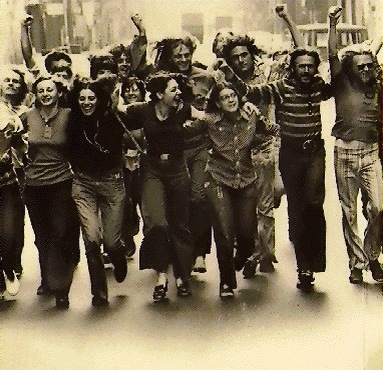
Forty-five years ago today, in a small tavern in New York City, history was made. The Stonewall Riots not only sparked a movement, but changed history and, eventually, helped millions of people embrace their true identity.
In 2014, marriage equality is sweeping the nation, gay men and women can proudly and openly serve their country and we are leading the charge.

There was a time when LGBT people were forced to hide in the shadows, their way of life criminalized – marriage wasn’t even a consideration. Police would raid gay bars (if they weren’t getting paid off by the owners) and arrest people on the spot if they didn’t have identification, or if they were in drag.

But in 1969, came the biggest moment in the history of the LGBT Civil Rights Movement: the Stonewall Riots in New York City.

On Saturday, June 28, police raided the Stonewall Inn in New York City’s Greenwich Village. This was routine at the time, but this raid would be like no other before. As police they were lining bar-goers up for inspection, all hell broke loose.

“When they came in the door, they were pushing and shoving people,” said Tree, a bartender at the Stonewall Inn who was there when the riots happened. “They actually pushed this guy with a mustache — who turned out to be a lesbian with a mustache — and it took two cops to pull her off the cops.

“[Storme DeLarverie, who recently died at 94] was arrested with a few other people, he continued. “When the cops came in, my friends Fred, Charlie and I kicked the plywood wall out this door. There were like 30 of us out here. Within a few hours, it was 3, 4, 500 people. The cops were afraid to leave the building.”

“We broke the window, broke the wall behind the window, we pulled a parking meter out of the ground and used it as a battering ram to knock the doors in,” he said, pointing at the Stonewall’s now open doors, which wafted a bit of air conditioning and bar smell out on Christopher Street. “But when you start a bar on fire — with the police in it — that’s when the riot squad did come. Because we lit the garbage cans on fire and threw them through the windows.”

The riots became national news the next day, and what was just one night of chaos turned into an organized movement with LGBT groups popping up around the city, and soon, around the country.

“To me, Stonewall is an act from people who were tired of being pushed into the shadows of society, taking a stand for their human dignity,” said Susanna Aaron, a volunteer working for Stonewall’s 45th anniversary. “There was a moment of fury which was these riots at this bar but this community turned it into a real political movement with very clear goals.”

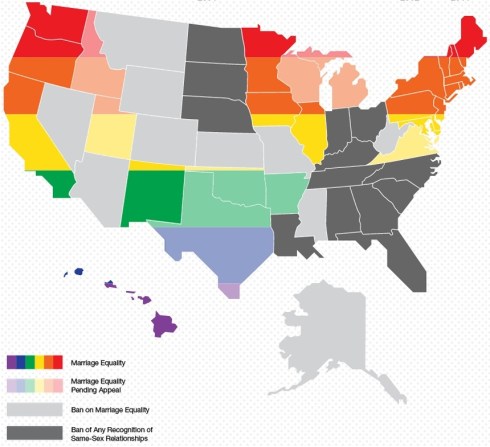
Today, when states are reexamining their gay marriage bans (Indiana just overturned theirs on Wednesday), the Stonewall Riots’ significance in the fight toward equality is recognized even more strongly.
20140628-220235-79355582.jpg

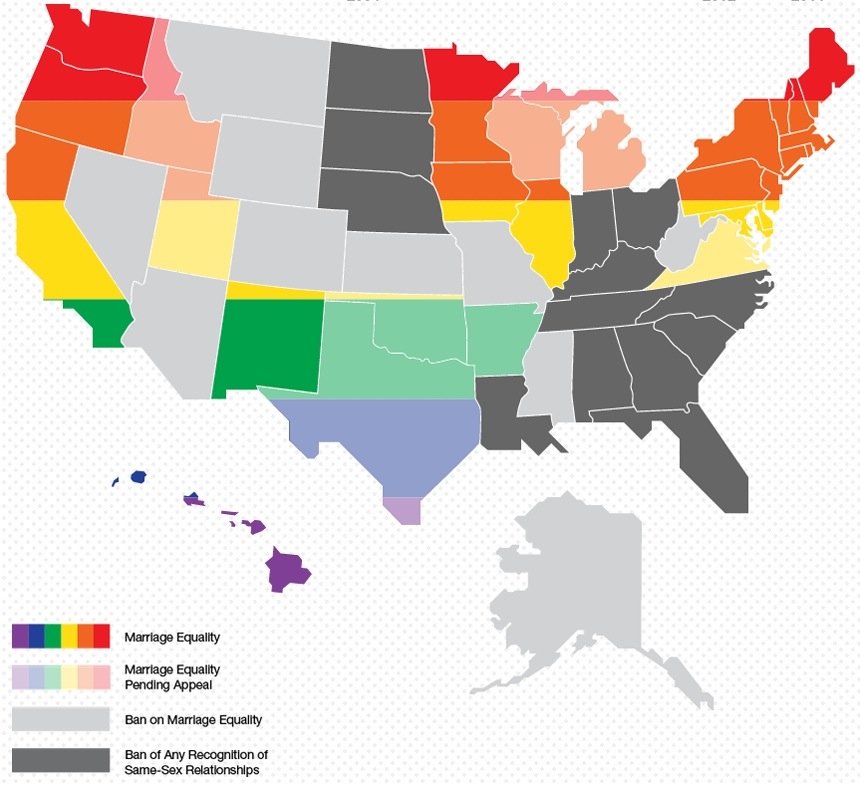
Now, after 45 years, 19 states out of the 50 have legal gay marriage — not even half of the U.S. Will it take another 45 years to unify the country? Some think it’ll be five, but for others the completion of gay marriage is not about time, but a question of being vigilant.

For LGBT Americans, the Stonewall Riots began our march toward equality, but 100 years ago today, the world changed. It’s innocence was lost, never to return.
20140628-220302-79382509.jpg

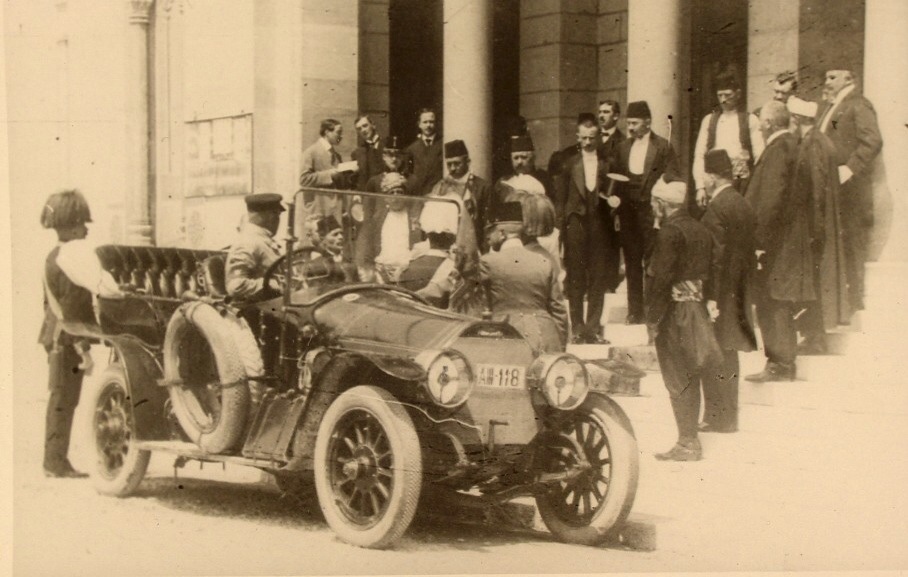
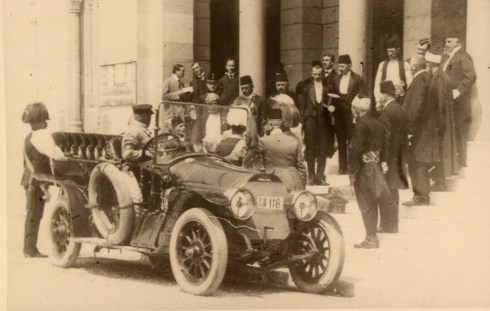
One hundred years ago today in Sarajevo, a Serb nationalist shot to death at point-blank range Archduke Franz Ferdinand, the heir to the throne of the Austro-Hungarian Empire, and his wife Sophie. Their deaths triggered the chain of events that led a month later to the start of World War I — the Great War, a horrifying, bloody four-year conflict that killed some 14 million people, collapsed empires and redrew large parts of the world’s map.

The most fascinating thing to me is that it almost didn’t happen. The main attempt on the archduke’s life had been botched. It wasn’t until a wrong turn on the way to visit the hospital and those injured in the first botched attempt that Gavrilo Princip, the archduke’s killer, walked out of a deli to find the archduke’s retinue stopped in front of the store. He had believed the plan had failed, but took the opportunity to shoot the archduke and his wife. Had the archduke’s car not made a wrong turn, had Princip been delayed in e deli a few more minutes, or had the archduke not been sewn into his uniform (apparently he’d gained a little weight and the sewed on uniform had kept doctors from being able to save him)…the world could have been a vastly different place today.

In Sarajevo, the assassination is being marked with commemorations, concerts and exhibitions. The fault lines of a century ago remain all too real, with the country’s ethnically divided politics still a cauldron of animosities. “Sarajevo is now a symbol of a century of wars in Europe but we are here to talk about peace and reconciliation,” said Joseph Zimet, the head of the organization planning the commemoration.

On the eve of the centennial, Bosnian Serbs unveiled a statue to Princip who is considered a Serbian hero and freedom-fighter. A century after the assassination, the rest of the world would likely consider him — and the underground, radical nationalist network he was operating within — a state-sponsored terrorist. The Austrians back then certainly did, and looked at Belgrade, capital of the young nation of Serbia, as the source of the conspiracy.

What happened next, as Winston Churchill put it, was a “drama never surpassed.” Ferdinand’s death presented leading statesmen in Europe’s great powers both a crisis and an opportunity and led to a dizzying series of diplomatic maneuvers, secret negotiations and political escalations that underlay the explosive opening of World War I. A web of alliances between Europe’s competing empires — a “concert” — led to Russia coming in on the side of the Serbs, Germany countering Russia, and Britain, France and the waning Ottoman Empire also entering the fray.

Sean McMeekin, a professor at Koc University in Istanbul, chronicles the weeks that followed Ferdinand’s murder in “July 1914,” a riveting account published this year of how the war started. McMeekin and a whole tradition of World War I historians argue that even after Ferdinand’s assassination, war was not a fait accompli. Indeed, in Europe and across the pond in the United States, many learning of the archduke’s death were less concerned with the drumbeats of war than the question of Austrian succession.

As we mark the war’s centennial, there will be time yet to explore its legacy and effects. What McMeekin and other historians emphasize, though, was that the war was the creation of a coterie of political elites, each fueled by their own lust for greater power.

No one was guiltless in the build-up. This year, in Britain, there’s already been an animated debate about how to remember World War I. Conservative Education Secretary Michael Gove lambasted “leftist” historians and commentators who cast it as a “misbegotten shambles,” a series of catastrophic mistakes by mustachioed monarchs and cabinet ministers. Instead, Gove argued it was a “just war” against the “ruthless Social Darwinism” of the Germans.

This is a view not shared by many. Germany was punished most in the war’s aftermath, with its Kaiser Wilhelm II — an ambitious expansionist — made out to be the chief villain. But they were hardly alone in their imperial delusions, with the French, the British and most importantly the Russians — whose Czarist leadership still harbored plans to conquer Istanbul, that ancient Rome of the east — all guilty of fanning the flames.

But it’s curious to imagine what would have happened had the archduke survived the assassination. A relative liberal, he had “an almost religious aversion to the idea of war with Serbia,” writes McMeekin, no matter his contempt for the Serbs.

But there were always larger forces in play. An imperialistic arms race in Europe had been building up in the years before. Ethnic nationalism in the margins of fraying empires asked difficult questions of the delicate “concert” of power that was in place on the continent. A reckoning, many argue, was inevitable.

In my opinion the assassination of Franz Ferdinand marks the beginning of the Modern World. We are still dealing with the repercussions of the fall of the Austo-Hungarian and Ottoman Empires. The old imperialistic empires that remained would linger through World War II and be nearly completely gone by the time of the Stonewall Riots in 1969, but we must still deal with the problems of countries that were raped of resources by European (and American) imperialists. The fallout of World War I and the subsequent Paris Peace Conference, particularly the Treaty of Verailles, has had a long lasting effect on the world, and nearly every problem in the world today can be traced back to the events set off by the assassination of Franz Ferdinand.

Rupert Brooke’s First Time with a Man

20140325-210256.jpg

A few weeks ago, I posted the poem “Libido” by Rupert Brooke and mentioned a letter he wrote that described his first sexual experience. It took me a while to find the full letter, but I wanted to post it and a little bit more about Brooke’s sexuality. I hope you enjoy. I have italicized the steamiest portion of the letter.

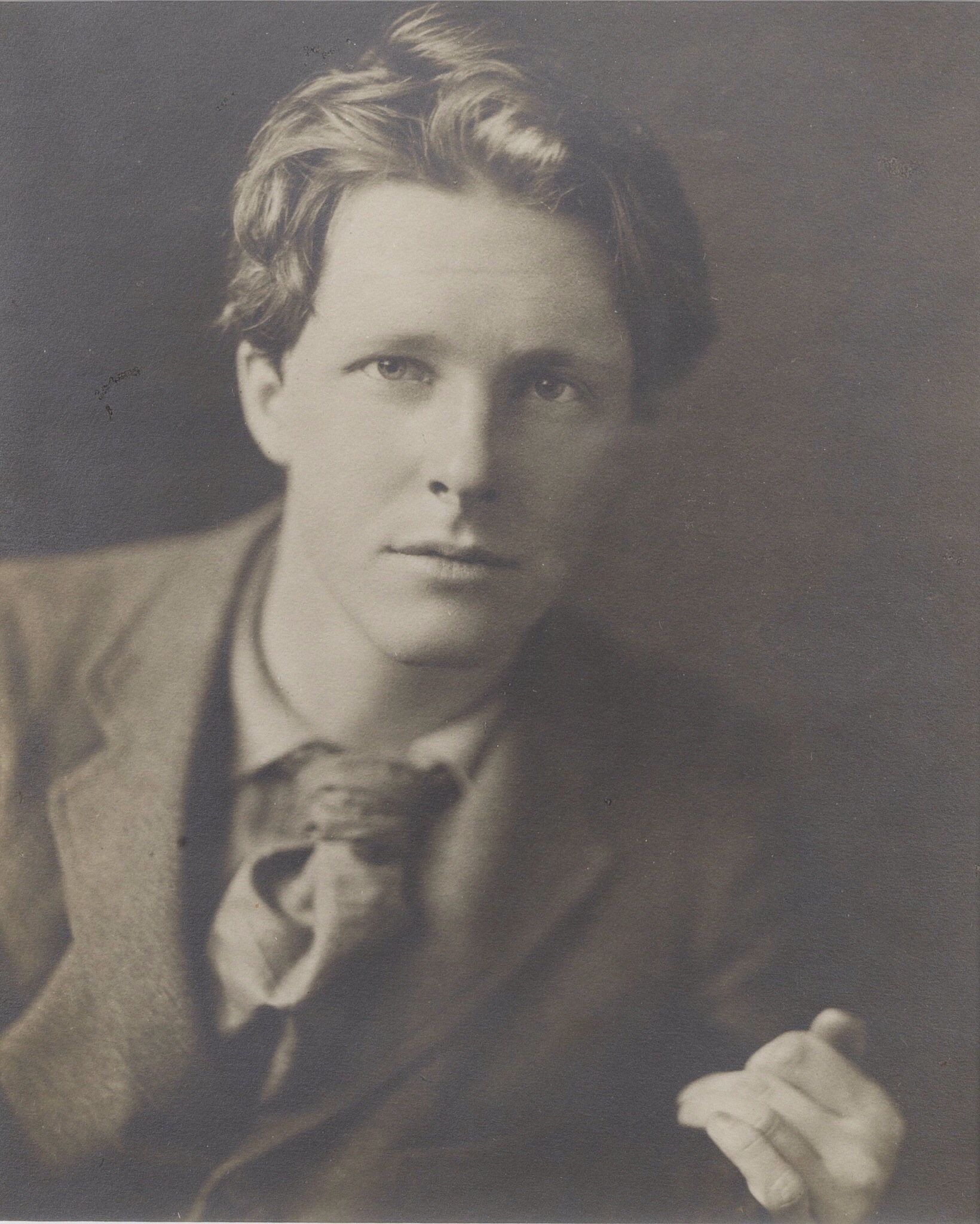
Henry James met Rupert Brooke (1887–1915) in Cambridge in 1909, when Brooke acknowledged “I pulled my fresh, boyish stunt” and bewitched the novelist. James’s last published writing, in response to Brooke’s death in the Great War, and shortly before his own, celebrated Brooke’s “wondrous, heroic legend.” Brooke’s war poems were already famous even before he died at Skyros in April 1915, of an infection rather than in battle. Winston Churchill consolidated the icon: “Joyous, fearless, deeply instructed, with classic symmetry of mind and body, he was all that one would wish England’s noblest sons to be in days when no sacrifice but the most precious is acceptable, and the most precious is that which is most freely proffered.” His war poetry was popularized precisely because its rosy images denied the realities of war, and ironically drew many young men to join up and go to their own deaths. He was widely celebrated as a golden-haired Apollo – his photograph at age twenty-five is the first modern icon of beauty – and was desired by everyone, male and female, who came within the Bloomsbury magic circle. The following letter describes the weekend of October 29, 1909 when he decided to lose his virginity, with a friend of the same age from Rugby school, Denham Russell-Smith (the more attractive younger brother of his closer friend Hugh Denham-Smith). But Brooke, as he later described himself, was one-half outright heterosexual, one-quarter outright homosexual and one-quarter sentimental homosexual (i.e. his idealized homoerotic longing for young men is a longing for his own youth at public school). In the same year that he bedded Russell-Smith, he was determined to marry Noel Oliver, who resisted his advances. By 1911 he was in a passionate relationship with Ka Cox, who herself was having an affair with Henry Lamb, the bisexual “wife” of Lytton Strachey, and he also had a brief fling with Arthur Hobhouse, former boyfriend of both Maynard Keynes and Lytton Strachey. The first half of his Poems published in 1911, are implicitly homosexual and explicitly neo-pagan. The Bloomsberries prided themselves on their freedom from conventions, but Brooke felt trapped by the double standards of society, and could not live out his hidden desires without guilt. Sexual confusion drove him to a nervous breakdown in 1912 and six weeks of psychiatric care. It was during his convalescence that he wrote this letter to James Strachey, Lytton’s brother, also gay, as a therapeutic exorcism of his sexual identity. He decided, in effect, that he was a golden boy with a rotten core, and he came to reject Bloomsbury out of shame, and to seek purification through death in war. He was commissioned in August 1914, and his “1914” sonnet sequence shows a desire for death as the only resolution to his inner conflict.

RUPERT BROOKE TO JAMES STRACHEY

10 July 1912

How things shelve back! History takes you to January 1912 – Archaeology to the end of 1910 – Anthropology to, perhaps, the autumn of 1909. –
The autumn of 1909! We had hugged & kissed & strained, Denham and I, on and off for years – ever since that quiet evening I rubbed him, in the dark, speechlessly, in the smaller of the two small dorms. An abortive affair, as I told you. But in the summer holidays of 1906 and 1907 he had often taken me out to the hammock, after dinner, to lie entwined there. – He had vaguely hoped, I fancy, – – – But I lay always thinking Charlie [Lascelles].
Denham was though, to my taste, attractive. So honestly and friendlily lascivious. Charm, not beauty, was his forte. He was not unlike Ka [Ka Cox, with whom Brooke had an affair], in the allurement of vitality and of physical magic – oh, but Ka has beauty too. – He was lustful, immoral, affectionate, and delightful. As romance faded in me, I began, all unacknowledgedly, to cherish a hope – – – But I was never in the slightest degree in love with him.
In the early autumn of 1909, then, I was glad to get him to come and stay with me, at the Orchard. I came back late that Saturday night. Nothing was formulated in my mind. I found him asleep in front of the fire, at 1.45. I took him up to his bed, – he was very like a child when he was sleepy – and lay down on it. We hugged, and my fingers wandered a little. His skin was always very smooth. I had, I remember, a vast erection. He dropped off to sleep in my arms. I stole away to my room: and lay in bed thinking – my head full of tiredness and my mouth of the taste of tea and whales, as usual. I decided, almost quite consciously, I would put the thing through the next night. You see, I didn’t at all know how he would take it. But I wanted to have some fun, and, still more, to see what it was like, and to do away with the shame (as I thought it was) of being a virgin. At length, I thought, I shall know something of all that James and Harry] Norton and Maynard [Keynes] and Lytton [Strachey] know and hold over me.
Of course, I said nothing.
Next evening, we talked long in front of the sitting room fire. My head was on his knees, after a bit. We discussed sodomy. He said he, finally, thought it was wrong . . . We got undressed there, as it was warm. Flesh is exciting, in firelight. You must remember that openly we were nothing to each other – less even than in 1906. About what one is with Bunny (who so resembles Denham). Oh, quite distant!
Again we went up to his room. He got into bed. I sat on it and talked. Then I lay on it. Then we put the light out and talked in the dark. I complained of the cold: and so got under the eiderdown. My brain was, I remember, almost all through, absolutely calm and indifferent, observing progress, and mapping out the next step. Of course, I planned the general scheme beforehand.
I was still cold. He wasn’t. “Of course not, you’re in bed!” “Well then, you get right in, too.” – I made him ask me – oh! without difficulty! I got right in. Our arms were round each other. “An adventure!” I kept thinking: and was horribly detached.
We stirred and pressed. The tides seemed to wax. At the right moment I, as planned, said “come into my room, it’s better there . . .” I suppose he knew what I meant. Anyhow he followed me. In the large bed it was cold; we clung together. Intentions became plain; but still nothing was said. I broke away a second, as the dance began, to slip my pyjamas. His was the woman’s part throughout. I had to make him take his off – do it for him. Then it was purely body to body – my first, you know! I was still a little frightened of his, at any sudden step, bolting; and he, I suppose, was shy. We kissed very little, as far as I can remember, face to face. And I only rarely handled his penis. Mine he touched once with his fingers; and that made me shiver so much that I think he was frightened. But with alternate stirrings, and still pressures, we mounted. My right hand got hold of the left half of his bottom, clutched it, and pressed his body into me. The smell of the sweat began to be noticeable. At length we took to rolling to and fro over each other, in the excitement. Quite calm things, I remember, were passing through my brain. “The Elizabethan joke `The Dance of the Sheets’ has, then, something in it.” “I hope his erection is all right” – and so on. I thought of him entirely in the third person. At length the waves grew more terrific; my control of the situation was over; I treated him with the utmost violence, to which he more quietly, but incessantly, responded. Half under him and half over, I came off. I think he came off at the same time, but of that I have never been sure. A silent moment: and then he slipped away to his room, carrying his pyjamas. We wished each other “Good-night.” It was between 4 and 5 in the morning. I lit a candle after he had gone. There was a dreadful mess on the bed. I wiped it clear as I could, and left the place exposed in the air, to dry. I sat on the lower part of the bed, a blanket round me, and stared at the wall, and thought. I thought of innumerable things, that this was all; that the boasted jump from virginity to Knowledge seemed a very tiny affair, after all; that I hoped Denham, for whom I felt great tenderness, was sleeping. My thoughts went backward and forward. I unexcitedly reviewed my whole life, and indeed the whole universe. I was tired, and rather pleased with myself, and a little bleak. About six it was grayly daylight; I blew the candle out and slept till 8. At 8 Denham had to bicycle in to breakfast [in Cambridge] with Mr Benians [his tutor], before catching his train. I bicycled with him, and turned off at the corner of –, is it Grange Road? –. We said scarcely anything to each other. I felt sad at the thought he was perhaps hurt and angry, and wouldn’t ever want to see me again. – He did, of course, and was exactly as ever. Only we never referred to it. But that night I looked with some awe at the room – fifty yards away to the West from the bed I’m writing in – in which I Began; in which I “copulated with” Denham; and I felt a curious private tie with Denham himself. So you’ll understand it was –p not with a shock, for I am far too dead for that, but with a sort of dreary wonder and dizzy discomfort – that I heard Mr Benians inform me, after we’d greeted, that Denham died at one o’clock on Wednesday morning, – just twenty-four hours ago now.

SOURCE: Paul Delany, The Neo-pagans: Friendship and Love in the Rupert Brooke Circle (London: Macmillan, 1987).


Was Norman Rockwell Gay?

20140309-230617.jpg

Without thinking too much about it in specific terms, I was showing the America I knew and observed to others who might not have noticed.
Norman Rockwell

Born in New York City in 1894, Norman Rockwell always wanted to be an artist. Rockwell found success early. He painted his first commission of four Christmas cards before his sixteenth birthday. While still in his teens, he was hired as art director of Boys’ Life, the official publication of the Boy Scouts of America, and began a successful freelance career illustrating a variety of young people’s publications.

At age 21, Rockwell’s family moved to New Rochelle, New York, where Rockwell set up a studio with the cartoonist Clyde Forsythe and produced work for such magazines as Life, Literary Digest, and Country Gentleman. In 1916, the 22-year-old Rockwell painted his first cover for The Saturday Evening Post, the magazine considered by Rockwell to be the “greatest show window in America.” Over the next 47 years, another 321 Rockwell covers would appear on the cover of the Post. Also in 1916, Rockwell married Irene O’Connor; they divorced in 1930.

The 1930s and 1940s are generally considered to be the most fruitful decades of Rockwell’s career. In 1930 he married Mary Barstow, a schoolteacher, and the couple had three sons, Jarvis, Thomas, and Peter. The family moved to Arlington, Vermont, in 1939, and Rockwell’s work began to reflect small-town American life.

In 1943, inspired by President Franklin Roosevelt’s address to Congress, Rockwell painted the Four Freedoms paintings. They were reproduced in four consecutive issues of The Saturday Evening Post with essays by contemporary writers. Rockwell’s interpretations of Freedom of Speech, Freedom to Worship, Freedom from Want, and Freedom from Fear proved to be enormously popular. The works toured the United States in an exhibition that was jointly sponsored by the Post and the U.S. Treasury Department and, through the sale of war bonds, raised more than $130 million for the war effort.

Although the Four Freedoms series was a great success, 1943 also brought Rockwell an enormous loss. A fire destroyed his Arlington studio as well as numerous paintings and his collection of historical costumes and props.

In 1953, the Rockwell family moved from Arlington, Vermont, to Stockbridge, Massachusetts. Six years later, Mary Barstow Rockwell died unexpectedly. In collaboration with his son Thomas, Rockwell published his autobiography, My Adventures as an Illustrator, in 1960. The Saturday Evening Post carried excerpts from the best-selling book in eight consecutive issues, with Rockwell’s Triple Self-Portrait on the cover of the first.

In 1961, Rockwell married Molly Punderson, a retired teacher. Two years later, he ended his 47-year association with The Saturday Evening Post and began to work for Look magazine. During his 10-year association with Look, Rockwell painted pictures illustrating some of his deepest concerns and interests, including civil rights, America’s war on poverty, and the exploration of space.

So much has been written about Rockwell, including his own autobiography, that his life would seem to be a closed case. But he receives a fascinating rethinking in Deborah Solomon’s American Mirror: The Life and Art of Norman Rockwell, in which she makes a case for his homoerotic desires.

Although she can’t conclusively prove that Rockwell had sex with men, she makes an argument that he “demonstrated an intense need for emotional and physical closeness with men” and that his unhappy marriages were attempts at “passing” and “controlling his homoerotic desires.” Rockwell also had a close bond with the openly gay artist J.C. Leyendecker and his gay brother, Frank, also an artist, and counted himself as the “one true friend” the brothers had. As Solomon states, “it was both an artistic apprenticeship and an unclassifiable romantic crush.” According to Solomon, Rockwell went on to have close relationships with his studio assistants (even sleeping in the same bed with one on an extended camping trip) and created his own version of idealized boyhood beauty.

While digging into his back story, Solomon offers sensitive close readings of some of his well-known works that smack of homoeroticism but have been cherished (and sanitized) for their depiction of all-American values. For example, when she points out that in the beloved portrait of a young boy seated next to a police officer at a diner counter, “The Runaway,” the cop can be seen as a “figure of tantalizing masculinity, a muscle man in a skin-tight uniform and boots,” it’s almost as if we’re seeing a proto-Tom of Finland emerge before our eyes. In this analysis, it’s not only a painting that represents a desire for both independence and security, it shows the tenderness between men (of any age) and encapsulates the complicated life and desires of an artist many have written off as a proselytizer of an American dream that didn’t include them. According to Solomon, Rockwell was constantly yearning for another ideal, of youthful male beauty, that always seemed to lie beyond reach.

I’m all for taking a close look into history and uncovering evidence that a historical figure may have been gay; however, this is one instance where I tend to think that Solomon is making a bit of a stretch. I personally have never viewed Norman Rockwell’s work as homoerotic, but as idealistic Americana. I certainly see no traces of a Tom of Finland police officer in the doughy 1950s officer of “The Runaway.” I will admit that I have not read Deborah Solomon’s book nor have I had the chance to evaluate the evidence, but it seems like pure speculation to me. American Mirror has produced a fair amount of controversy, so I do not think I am alone in finding fault with Solomon’s assumptions.

Patrick Toner, a professor at Wake Forest University, wrote:

In her new biography, however, Deborah Solomon presents a Rockwell we might not be inclined to love so much. Her most shocking claim is that he was sexually attracted to young boys. Almost equally shocking, but more subtle, is her suggestion that Rockwell’s self-absorption had a body count—his behavior led directly or indirectly to at least three ugly deaths.

There is no reason to go along with Solomon about these things. As I’ll show, her arguments—such as they are—are deeply flawed, and she has a pronounced tendency to either distort or ignore evidence to the contrary of her claims. As her interpretation of Rockwell himself is irremediably flawed, so is her interpretation of his art. Hers is a book without merit.

Toner continues by stating:

Her evidence for Rockwell’s pedophilia consists of three intertwined claims: First, he paints a lot of boys. Second, he forms strong relationships with some of the boys who serve as models for these paintings. Third, some of these paintings are sexually suggestive. Solomon thinks that pedophilia serves as the best unifying explanation for these claims. I doubt even that, but even if it were the case, there are problems with all three.

Toner’s review of American Mirror is quite long but interesting. From what I have read, it seems as if Solomon had a particular agenda, probably for publicity, in writing her Rockwell biography. It seems that sensationalism is what sells biographies these days, and Solomon has certainly written what seems to be a sensational book. The fact is, if Norman Rockwell was homosexual, there seems no way of proving it except through speculation. I doubt it would surprise many people if one of America’s greatest artists was gay, because let’s face it, most of history’s great artists were. However, I think Rockwell would have probably painted a new version of the picture below to answer the questions of his sexuality:

20140309-230655.jpg

In “The Gossips,” a Saturday Evening Post cover from March 6, 1948, it seems Rockwell had a neighbor who started a disagreeable rumor about him. What can one do about a nasty gossip? Well, if you are a famous illustrator, you can paint a cover about it. It started with just a couple of people, then it just grew, leaving Rockwell in need of more models. The result, said the editors, is that we see “almost the entire adult population of Arlington, Vermont.” As he worked on the project, the artist worried that his friends and neighbors might be offended, so he included his wife and himself. Mary Rockwell is second and third in the third row, spreading the rumor via rotary phone. In the gray felt hat in the bottom row is, of course, the artist himself (you can click on the image for a close-up). You’ll notice the lady at the end is the one at the beginning who started the rumor, and our friend Rockwell appears to be giving her a piece of his mind. Apparently, the neighbor who started the rumor in real life never spoke to Rockwell again. I have a feeling it was no great loss.


8 Surprising Historical Facts That Will Change Your Concept Of Time Forever

TK TK gifs

You probably should know these things didn’t happen anywhere near when you thought they did…

Not everyone can be a world history master, especially when we tend to learn about it in specifically segmented classes like “European History” or “American Revolutionary History.” Maybe you have an exceptional grasp on the global historical timeline. But for those of us who don’t, the list below, inspired by a recent Reddit thread called “What are two events that took place in the same time in history but don’t seem like they would have?” puts key historical moments into some much-needed context.

1. Betty White is older than sliced bread.
450403199
Sliced bread was introduced in 1928 by inventor Otto Frederick Rohwedder. Before this moment, bread was sold in whole loaves as bakers didn’t trust sliced bread could stay fresh. Betty White was born in 1922 and spent her early years not eating sliced bread. But White recently celebrated her 92nd birthday, which means she’s been able to experience the first “greatest invention” much longer than most of us.

2. Harvard University was founded before calculus was invented.
171088313
Established in 1636, Harvard is the oldest institution of higher education in the U.S. The “New College,” as it was originally called, had no calculus classes because it didn’t exist yet. The invention of calculus would come in the late 17th century with Gottfried Leibniz’s 1684 publication of “Nova Methodus,” and in part with Isaac Newton’s “Principia” in 1687, followed by additional explanations and reformulations by subsequent mathematicians. Also, European physicist, mathematician and astronomer Galileo was still alive during Harvard’s early years — he died in 1642.

3. The last time the Chicago Cubs won a World Series, the Ottoman Empire still existed.
mehmed vi
The Chicago Cubs haven’t won a World Series since 1908. This was back when there were still teams such as the Brooklyn Superbas and the Boston Doves. The Ottoman Empire, which was founded in the 13th century, also existed back then. Mehmed VI was the last sultan of the empire and his reign ended in 1922 when the sultanate was abolished and the Turkish government took governing control over the new republic — 14 years after the Cubs last won the World Series.

4. The Pyramids of Giza were built in the time of wooly mammoths.
170303393
From what we can tell, the last of the wooly mammoth died out around 1700 B.C. on Russia’s Wrangel Island. In Egypt, the Pyramids of Giza were built around 4,000 years ago, although there have been claims that they’re even older. This also means that Cleopatra’s time on Earth is actually closer to us in history than to the construction of the pyramids.

5. The fax machine was invented the same year as the Oregon trail migration.
86498696
The first fax machine was invented in 1843 by a Scottish mechanic named Alexander Bain. This early model used a combination of synchronized pendulums, electric probes and electrochemically sensitive paper to scan documents, and then send the information over a series of wires to be reproduced. The “Great Migration” on the Oregon trail began the same year, when a wagon train of about 1,000 migrants attempted to travel west, but probably died of dysentery along the way.

6. The jewelry store Tiffany & Co. was founded before Italy was a country.
tiffany
While Rome was officially a holdout for a number of years after, in 1861 General Giuseppe Garibaldi led a successful campaign to gather the various city-states and bring them under one nation. Charles Lewis Tiffany and John B. Young founded Tiffany & Young in 1837 and then became Tiffany & Co. in 1853. This means Audrey Hepburn could have gotten “breakfast at Tiffany’s” before she could have had her Italian “Roman Holiday.
Similarly, Macy’s was founded in 1858, also before Italy became the nation we know it as today.

7. France was still using the guillotine when “Star Wars” came out.
the starry night van gogh
The last time the guillotine was used as a form of execution in France was in 1977. The guillotine lasted for about two centuries. The first “Star Wars” film was also released in 1977 a few months before the execution.
Another mind-blow French historical fact: The Eiffel Tower was completed in 1889, which is the same year Nintendo was founded and that Van Gogh painted “The Starry Night.”

8. Two of President John Tyler’s grandsons are still alive.
harrison tyler
John Tyler was America’s 10th President, serving from 1841 to 1845, but somehow two of his grandsons are still alive. Mental Floss first reported on this fact in 2012, but since then Snopes has verified their identities, while New York Magazine even interviewed one of the grandsons. As of last year, both Lyon Gardiner Tyler Jr. and Harrison Tyler were still only in their 80s.


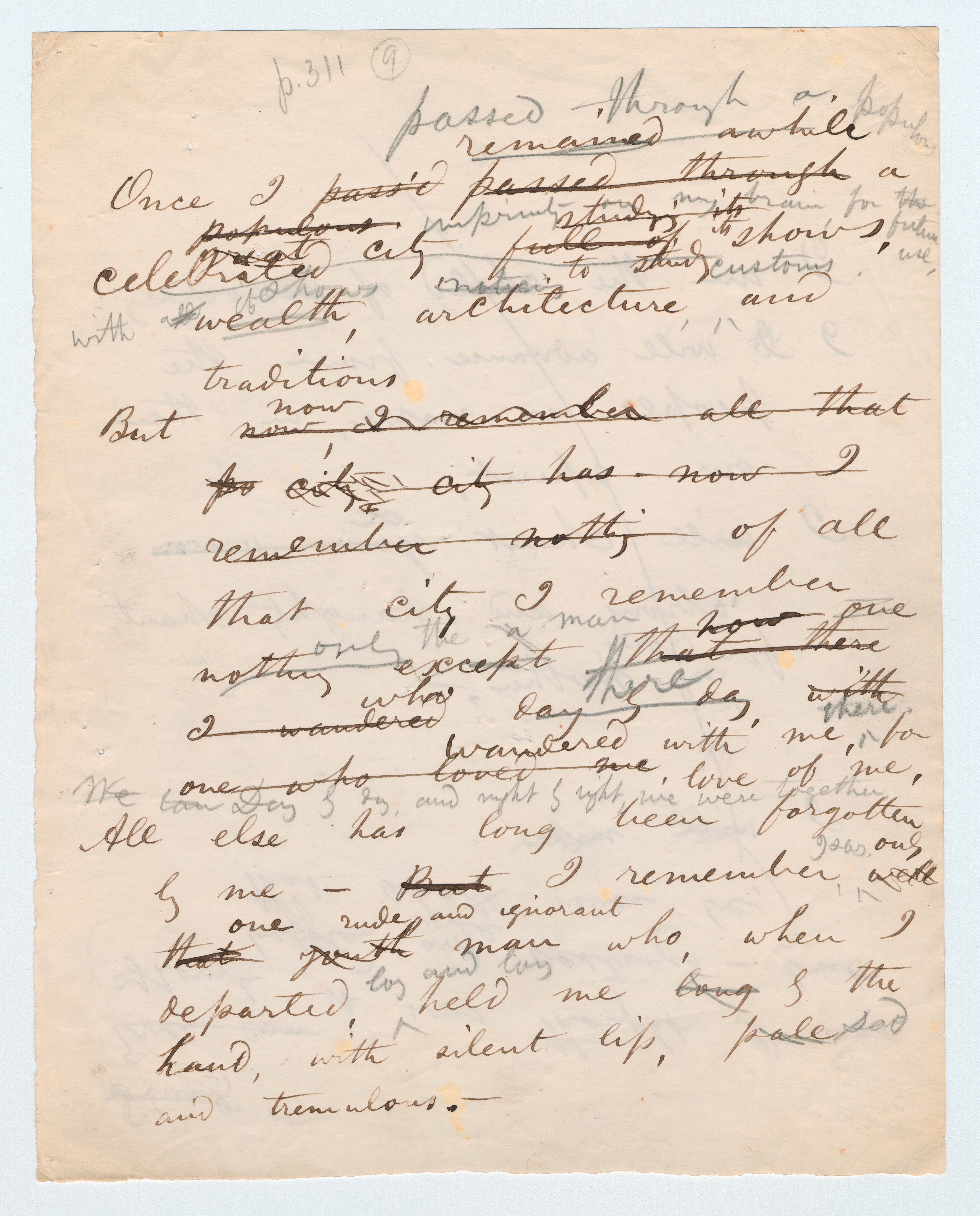
Once I Pass’d Through A Populous City

20140223-213511.jpg

Once I Pass’d Through a Populous City
by Walt Whitman
(1819-1892)

Once I pass’d through a populous city imprinting my brain for future
use with its shows, architecture, customs, traditions,
Yet now of all that city I remember only a man I casually met
there who detain’d me for love of me,
Day by day and night by night we were together–all else has long
been forgotten by me,
I remember I say only that man who passionately clung to me,
Again we wander, we love, we separate again,
Again he holds me by the hand, I must not go,
I see him close beside me with silent lips sad and tremulous.

There are many different ways in which I find poems that I want to post, but this one came to me in a rather shocking way: porn. I’ve discussed on this blog before that I enjoy watching porn, so it should not be too shocking that I was doing just that the other day on my day off. However, I didn’t really expect to be inspired to find a poem for a post in a porn video. The video in questions, in case you are wondering, is the CockyBoys video “A Thing of Beauty.” It’s a pretty hot video about a threesome, but I digress. At the beginning of the video, we see three guys enjoying a vacation, when they narrator begins to read “Once I Pass’d Through a Populous City” by Walt Whitman. So after watching the video, and well, I will be modest and not discuss the particulars of watching the video, I looked up the poem, and what I found was fairly shocking, but I will get to that in a moment.

If one were to expect a poem in a gay pornographic video, you probably would be surprised to hear one by Walt Whitman, whose sexuality is generally assumed to be homosexual or bisexual based on his poetry, though that has been at times disputed. His poetry depicts love and sexuality in a more earthy, individualistic way common in American culture before the medicalization of sexuality in the late 19th century. Though Leaves of Grass was often labeled pornographic or obscene, only one critic remarked on its author’s presumed sexual activity: in a November 1855 review, Rufus Wilmot Griswold suggested Whitman was guilty of “that horrible sin not to be mentioned among Christians”. Whitman had intense friendships with many men and boys throughout his life. Some biographers have claimed that he may not have actually engaged in sexual relationships with males, while others cite letters, journal entries and other sources which they claim as proof of the sexual nature of some of his relationships. Late in his life, when Whitman was asked outright if his “Calamus” poems were homosexual, he chose not to respond.

If you are at all familiar with Whitman’s poetry, then you are familiar with the homoeroticism that exists within.

Emory Holloway, in his Whitman: An Interpretation in Narrative (1926), provided the first scholarly biography of the poet, and his experience may stand as an example of the continuing controversy over Whitman. In his research, Holloway happened to run across the manuscript of a “Children of Adam” poem, “Once I Pass’d through a Populous City,” and discovered that it had originally been addressed to a man—and therefore “belonged” in the “Calamus” cluster. He was the first biographer to agonize over how to write about Whitman’s sexuality. A revealing footnote to Holloway’s biography is that he later became obsessed with demonstrating that Whitman was telling the truth in his claims to fatherhood in his letter to Symonds; his obsession led to his publication, after long years of research, of Free and Lonesome Heart: The Secret of Walt Whitman (1960), claiming discovery of “Whitman’s son.”

20140223-225719.jpg

Holloway’s discovery here lies the interesting part of “Once I Pass’d.” Originally, this poem was addressed not to a woman but to a man, as I have done above. Nearly every place that I looked for the text of the poem used the published version which used feminine forms.

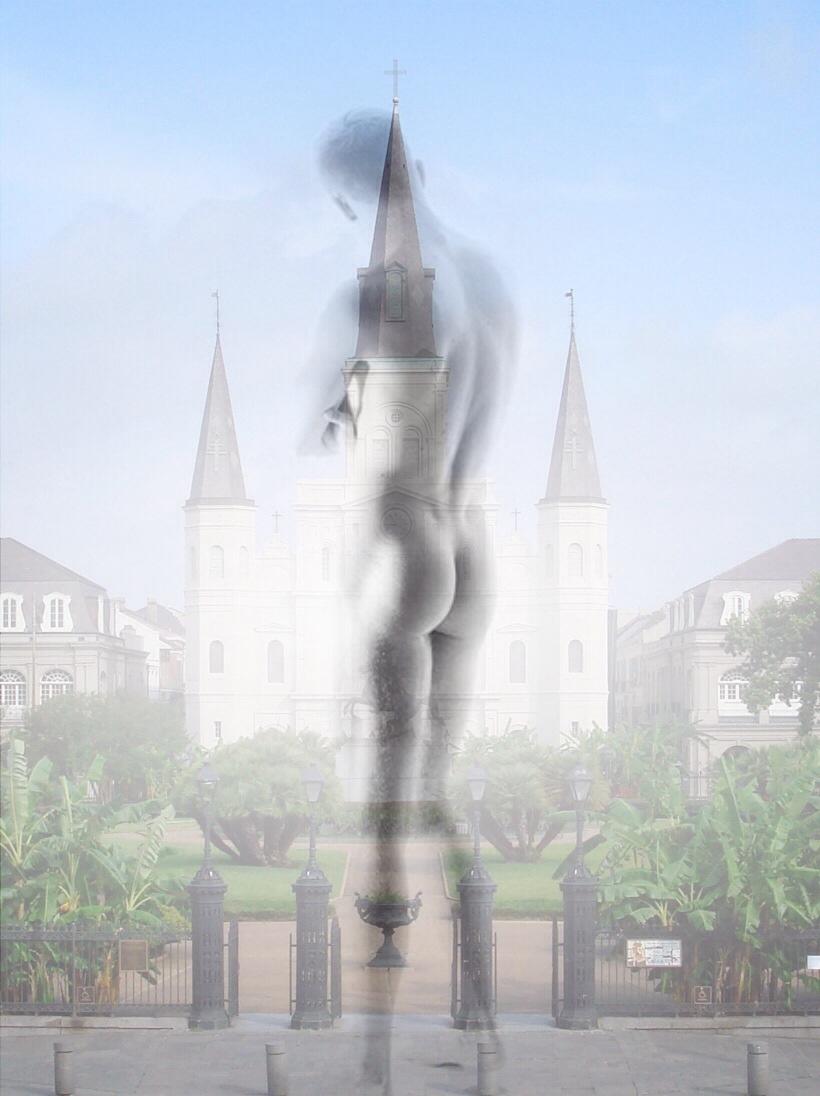
The original story behind the poem states that in 1848, at age 29, Whitman visited New Orleans, the populous city in the poem. There he met a man, who became the inspiration for the poem. Most scholars now reject the idea that Whitman was involved with a Creole woman of higher social rank than his own and that his sudden exit from New Orleans was due to complications deriving from this relationship. The theory of a New Orleans romance, started by Henry Bryan Binns in his A Life of Walt Whitman (1905), proposes to explain the mystery of Whitman’s letter to John Addington Symonds in which he discussed his life down South and mentioned six illegitimate children (for which there is no documented evidence). It is also used to explain the dramatic change in Whitman after the New Orleans trip, his sexual awakening, and the inspiration for the first edition of Leaves of Grass (1855). Some biographers think the lines “O Magnet-South! O glistening, perfumed South! My South! / O quick mettle, rich blood, impulse and love! good and evil! O all dear to me!” in “Longings for Home” (later “O Magnet-South”) suggest a New Orleans romance. Some quote the first five lines of “I Saw in Louisiana a Live-Oak Growing” as support for the idea. Basil De Selincourt asserts in his 1914 critical study of Whitman that “Out of the Cradle Endlessly Rocking” bemoans the death of one who was all but wife to him—the genteel New Orleans lady. Still others see further evidence in “Once I Pass’d through a Populous City,” in which Whitman penned, “Yet now of all that city I remember only a woman I casually met there who detain’d me for love of me . . . who passionately clung to me.” However, Whitman’s earlier manuscript, which read “the man” instead of “a woman,” is telling.

When Walt looked back on his New Orleans passion, he penned a poem, “Once I Pass’d Through a Populous City” that was branded “obscene” when it was published. But when it was published, it hid the truth. In 1925 Emory Holloway discovered the original hand-written manuscript of “Once I Pass’d Through A Populous City,” showing the poet had changed the gender before the poem was published. Only eight letters make the difference between the original and the published version. In my opinion, those eight letters tell a completely different story. It seems that there was a romance during the three months (from 25 February to 25 May in 1848) that Whitman spent in New Orleans, but not with a creole woman, but a man.

New Orleans has always had a long history of homosexuals, or at least fluid sexuality, so why would it be surprising that the young Whitman came into his sexual being in New Orleans, “A Populous City.”

Source of the Whitman’s original manuscript: Walt Whitman Poetry Manuscripts in the Papers of Walt Whitman, Clifton Waller Barrett Library of American Literature, Albert and Shirley Small Special Collections Library, University of Virginia


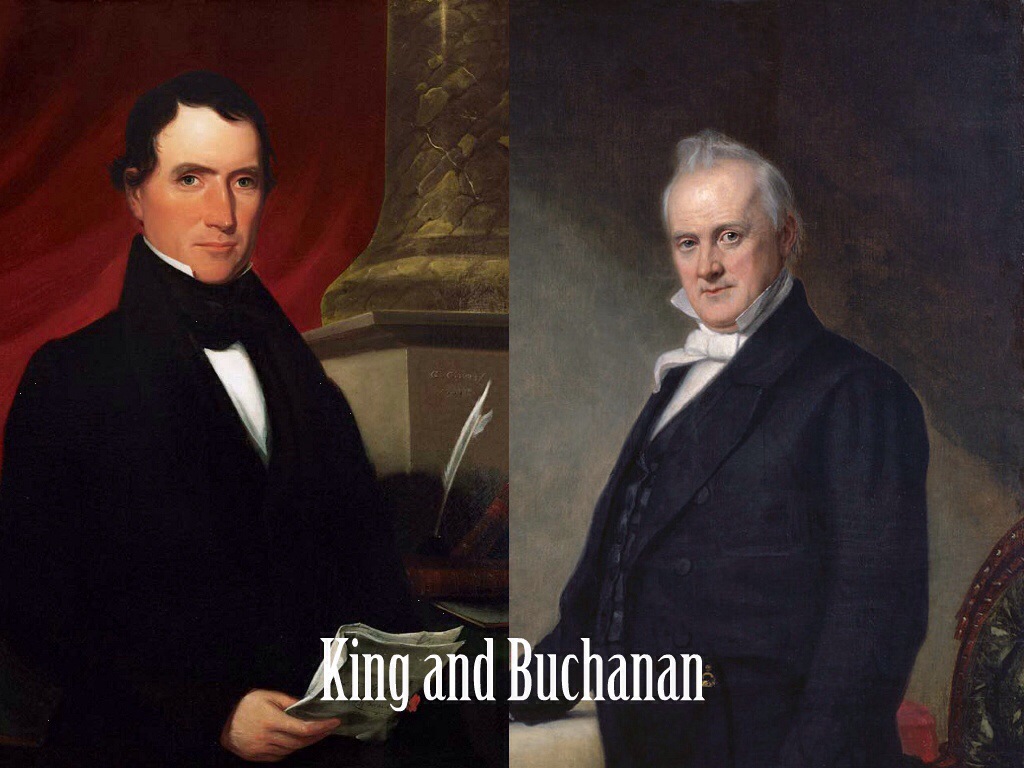
King and Buchanan: America’s Gay VP and President?

20140216-204129.jpg

In honor of Presidents’ Day, let’s discuss two men, a US president and vice-president who may have been gay. While Abraham Lincoln has stolen the limelight with rumors about his furtive sex life, some historians have proclaimed that America’s first gay president was really his predecessor, the now-obscure James Buchanan. (He was the 15th president, serving from 1857 to 1861). Buchanan is the only bachelor to ever have held America’s top office, and his private life raised many eyebrows while he was alive. There are some who think that, yes, there was a gay president. Historian James W. Loewen is one of those who thinks that both James Buchanan (15th President of the United States) and William Rufus King (13th Vice President of the United States) were not only gay but also lovers.

More than 150 years before America elected its first black president, Barack Obama, it most likely had its first gay president, James Buchanan (1791-1868). Buchanan, a Democrat from Lancaster County, Pa., was a lifelong bachelor (throughout American history this was often code for homosexual). He served as president from 1857-61, tumultuous years leading up to the Civil War. Loewen has done extensive research into Buchanan’s personal life, and he’s convinced Buchanan was gay. Loewen is the author of the acclaimed book Lies Across America which examines how historical sites inaccurately portray figures and events and Lies My Teacher Told Me which examines how history books have been marred by an embarrassing combination of blind patriotism, mindless optimism, sheer misinformation, and outright lies.

In 1819, Buchanan was engaged to Ann Caroline Coleman, the daughter of a wealthy iron manufacturing businessman and sister-in-law of Philadelphia judge Joseph Hemphill, one of Buchanan’s colleagues from the House of Representatives. Buchanan spent little time with her during the courtship: he was extremely busy with his law firm and political projects during the Panic of 1819, which took him away from Coleman for weeks at a time. Conflicting rumors abounded, suggesting that he was marrying her for her money, because his own family was less affluent, or that he was involved with other women. Buchanan never publicly spoke of his motives or feelings, but letters from Ann revealed she was paying heed to the rumors.

After Buchanan paid a visit to the wife of a friend, Ann broke off the engagement. She died soon afterward, on December 9, 1819. The records of a Dr. Chapman, who looked after her in her final hours, and who said just after her death that this was “the first instance he ever knew of hysteria producing death”, reveal that he theorized, despite the absence of any valid evidence, the woman’s demise was caused by an overdose of laudanum, a concentrated tincture of opium.

His fiancée’s death struck Buchanan a terrible blow. In a letter to her father, which was returned to him unopened, Buchanan wrote “It is now no time for explanation, but the time will come when you will discover that she, as well as I, have been much abused. God forgive the authors of it […] . I may sustain the shock of her death, but I feel that happiness has fled from me forever.” The Coleman family became bitter towards Buchanan and denied him a place at Ann’s funeral. Buchanan vowed he would never marry, though he continued to be flirtatious. Some pressed him to seek a wife; in response, Buchanan said, “Marry I could not, for my affections were buried in the grave.” He preserved Ann Coleman’s letters, keeping them with him throughout his life; at his request, they were burned upon his death.

“I’m sure that Buchanan was gay,” Loewen said. “There is clear evidence that he was gay. And since I haven’t seen any evidence that he was heterosexual, I don’t believe he was bisexual.” According to Loewen, Buchanan shared a residence with William Rufus King, a Democratic senator from Alabama, for several years in Washington, D.C. Loewen also said Buchanan was “fairly open” about his relationship with King, causing some colleagues to view the men as a couple. For example, Aaron Brown, a prominent Democrat, writing to Mrs. James K. Polk, referred to King as Buchanan’s “better half,” “his wife” and “Aunt Fancy … rigged out in her best clothes.” Brown may have been trying to slander King in this letter. He was a friend of the Polks and was James K. Polk’s law partner, but he was also an early proponent of secession after his years as Governor of Tennessee. Most accounts by historians of King’s political career portray him as a moderate southerner who supported slavery while emerging as a strong unionist. King voiced opposition calls by some of his fellow southerners for the South to secede from the United States during the tense decade prior to the Civil War. King was always considered a moderate Democrat who was a staunch Unionist, which probably led to some political disagreements between Brown and King.

William Rufus DeVane King, the 13th United States vice president, has the distinction of having served in that office for less time than any other vice president and for being the only U.S. official to be sworn in on foreign soil. He died of tuberculosis on April 18, 1853, just 25 days after being sworn into office while in Cuba on March 24, 1853. Some historians have speculated that King holds yet another distinction — the likely status of being the first gay U.S. vice president and possibly one of the first gay members of the U.S. House of Representatives and the U.S. Senate.

King (1786-1853) served in the House of Representatives from North Carolina for six years beginning in 1811 and later served in the Senate from the newly created state of Alabama from 1819-44, when he became U.S. minister to France. He returned to the Senate in 1848, where he served until he resigned after winning election in November 1852 as vice president on the ticket of Franklin Pierce.

When in 1844 King was appointed minister to France, he wrote Buchanan, “I am selfish enough to hope you will not be able to procure an associate who will cause you to feel no regret at our separation.” Loewen also said a letter Buchanan wrote to a friend after King went to France shows the depth of his feeling for King. “I am now solitary and alone, having no companion in the house with me,” Buchanan wrote. “I have gone a wooing to several gentlemen, but have not succeeded with any one of them. I feel that it is not good for man to be alone; and should not be astonished to find myself married to some old maid who can nurse me when I am sick provide good dinners for me when I am well, and not expect from me any very ardent or romantic affection.” Loewen said their relationship — though interrupted due to foreign-service obligations — ended only with King’s death in 1853.

Even though his vice presidency was short, fraught with illness, and uneventful, William King is remembered as a perceptive decision maker with the utmost integrity … and also, possibly, as the nation’s only gay Vice President! There is no direct evidence that William R. King was in any kind of relationship with President James Buchanan, who was also a bachelor. However, they were referred to as “Siamese twins” by many people in Congress (which was a slang for homosexuals in those days.) Also, King was the only unmarried vice president in history. King actually lived as Buchanan’s house companion for many, many years. Andrew Jackson invented the nicknames “Miss Nancy” and “Aunt Fancy” for King, while Aaron V. Brown referred to King as “Buchanan’s wife.” The only evidence that could have been salvaged were the numerous letters written back and forth between the two.

Some of the contemporary press also speculated about Buchanan’s and King’s relationship, but the two men’s nieces destroyed their uncles’ correspondence, leaving some questions about their relationship; but the length and intimacy of surviving letters illustrate “the affection of a special friendship”, and Buchanan wrote of his “communion” with his housemate. In May 1844, during one of King’s absences that resulted from King’s appointment as minister to France, Buchanan wrote to a Mrs. Roosevelt, “I am now ‘solitary and alone’, having no companion in the house with me. I have gone a wooing to several gentlemen, but have not succeeded with any one of them. I feel that it is not good for man to be alone, and [I] should not be astonished to find myself married to some old maid who can nurse me when I am sick, provide good dinners for me when I am well, and not expect from me any very ardent or romantic affection.”

Circumstances surrounding Buchanan’s and King’s close emotional ties have led to speculation that Buchanan was homosexual. Buchanan’s correspondence during this period with Thomas Kittera, however, mentions his romance with Mary K. Snyder. In Buchanan’s letter to Mrs. Francis Preston Blair, he declines an invitation and expresses an expectation of marriage. The only President to remain a bachelor, Buchanan turned to Harriet Lane, an orphaned niece, whom he had earlier adopted, to act as his official hostess.

Loewen said many historians rate Buchanan as one of the worst U.S. presidents. Buchanan was part of the pro-slavery wing of the Democratic Party, and corruption plagued his administration. But Loewen said those flaws shouldn’t discourage members of the LGBT community from acknowledging Buchanan’s status as a gay man. “If we only admit that really great people are gay, what kind of history is that?” Truthfully though, even the letters written by Buchanan do not really point to more than merely a great friendship and affection that was common between men of the nineteenth century, especially during a time when women were still seen as intellectual inferiors.

A lifelong bachelor, King lived for 15 years in the home of future U.S. president James Buchanan while the two served in the Senate. In a time when Congress was only in session part of the year, and senators often returned home when not in session, it would not have been that unusual for two senators to share a home. King’s relationship with Buchanan, who was from Pennsylvania, could have been a factor in Buchanan’s sympathy for the South.

From the research I have done about King, he seems to be a fairly boring and moderate politician, as most Vice Presidents in history have been. Like many men of his status, he traveled widely in Europe during his life, often as a diplomat. He also sent his nephews and nieces to Europe as well to round out their education. The only evidence I have seen is what Brown stated to Mrs. Polk in his letter and in the way that Buchanan pines for him in his letters.

Is this really enough evidence to be the proof that Loewen claims to have? I personally think that either man would be a wonderful addition to the list of LGBT historical figures, especially King, who I have long admired. What do you think?


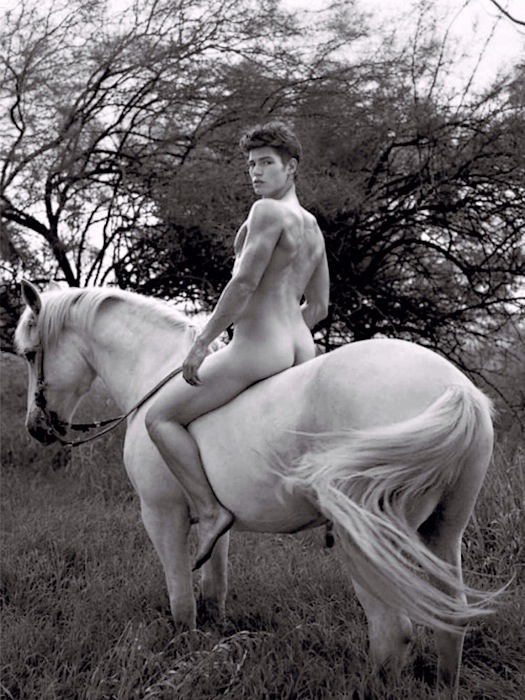
Moment of Zen: The Year of the Horse

20140131-225203.jpg

I want to dedicate today’s Moment of Zen to my dear friend “fan of casey.” He has been a long time loyal follower and a true friend. There are many times when I don’t know what I would do without his advice and generosity. He is also a Chinese-American, and so this post for the Chinese New Year is for him especially, but also for any other readers of Chinese descent who celebrate the Chinese New Year..

The 15-day celebration of Chinese new year started on Friday, with the first new moon of the calendar year. The day marks the end of the year of the snake and welcomes the start of the year of the horse. To bring you luck this new year, I’ve listed eight (a lucky number in China) things you possibly didn’t know about the year ahead.

1) The Chinese zodiac – or Shēngxiào – is a calendar system originating in the Han dynasty (206-220BC), which names each of the years in its 12-year cycle after an animal: the rat, ox, tiger, rabbit, dragon, snake, horse, goat, monkey, rooster, dog and pig, in that order. According to the system, the universe is made up of five elements – earth, water, fire, wood and metal – which interact with the 12 animals, resulting in the specific character of the year ahead.

2) People born in the year of the horse are said to be a bit like horses: animated, active and energetic – they love being in a crowd. They are quick to learn independence – foals can walk minutes after birth – and they have a straightforward and positive attitude towards life. They are known for their communication skills and are exceedingly witty.

3) If you were born in the year of the horse, you should be looking for potential partners who were born in the years of the tiger, goat or dog. Avoid those born in the year of the rat, ox, rabbit or horse. You won’t like them.

4) If none of this rings true, don’t worry. The animal signs of each year merely indicate how others see you or how you choose to present yourself. There are also animal signs for each month, known as inner animals, signs for each day, called true animals, and animals for each hour, or secret animals.

5) According to superstition, in your zodiac year you will offend Tai Sui, the god of age, and will experience bad luck for the whole year. To avoid this you should wear something red, which has been given to you by someone else. In general, the lucky colors of team horse are green, red and purple; the lucky numbers are three, four and nine, and the lucky flowers are giant taro and jasmine.

6) Raymond Lo, a feng shui and destiny consultant, says the year of the horse is a year in which people are likely to stand firm on their principles, making negotiation difficult. For example, 2002 (the last year of the horse) was the year of Roy Keane and Mick McCarthy’s legendary World Cup bustup, and 1990 was the year of the poll tax riots. German reunification also happened in 1990, but we’ll ignore that.

7) If you were born in the year of the horse, you’re in good company. Fellow members of the horse club include Genghis Khan, Mongol ruler; Franklin D Roosevelt, the 32nd president of the US; Louis Pasteur, a 19th-century scientist; Neil Armstrong, the first man on the moon; the American singer Aretha Franklin; and the model Cindy Crawford.

8) Years of the wooden horse are associated with warfare. The battle of Dien Bien Phu, which ended with the defeat of France by the Vietnamese, happened in 1954 and 1894 saw the start of the first Sino-Japanese war. “With such serious conflicts on historical record in the previous two yang wood horse years, I cannot rule out the possibility of war and fierce battle in 2014,” predicts Lo.

Kung hei fat choy! Happy Chinese new year!

20140131-225227.jpg


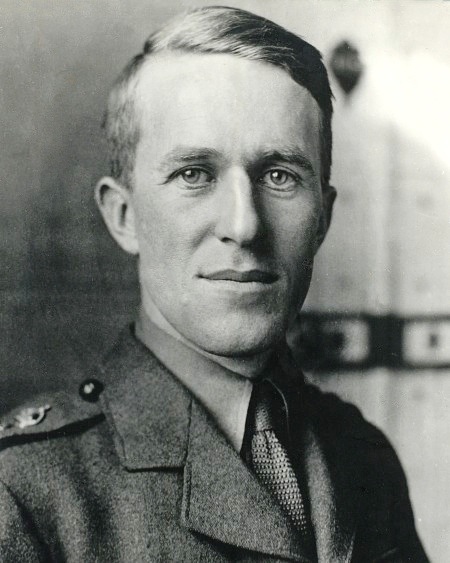
The Sexuality of T.E. Lawrence

20131229-231236.jpg

Last night I watched “Lawrence of Arabia” on Turner Classic Movies. As usual with a historical movie, I began to read more about Thomas Edward Lawrence. I have a special interest in the First World War, so this is not the first time that I have researched Lawrence. As I was refreshing my memory last night, I remembered that there have been questions about Lawrence’s sexuality. Often in recent years, the life and achievements of Lawrence have been somewhat overshadowed by controversial claims published in posthumous biographies concerning his sexual orientation, accusations that he had been a closet or self-repressed homosexual.

The claim was first made by author Richard Aldington 20 years after his death, controversial at the time because none of Lawrence’s friends or family supported it. In the wake of his being immortalized in the 1962 David Lean classic “Lawrence of Arabia” a host of other biographers rode Aldington’s coat tails, making the titillating claim that he had been both homosexual and sadomasochistic. Claims seemingly given credence by newspaper interviews with privates of the Tank Corps who confessed to having had flogged Lawrence at his solicitation between 1925 to 1934, combined they set the seal on the alleged secret life of Lawrence of Arabia.

However those making these claims only told half the story, deliberately neglecting or downplaying the effect his having been raped had on his thoughts and actions. In both Seven Pillars of Wisdom and a 1919 letter to a military colleague, Lawrence described an episode on November 20, 1917, in which, while reconnoitering Dera’a in disguise, he was captured by the Ottoman military, subjected to humiliating beatings and sexual assault at the instigation of Governor, or Bey. The precise nature of the sexual contact is not specified. There have been allegations that the episode was an invention of Lawrence’s and that the injuries Lawrence claims to have suffered were exaggerated. Although there is no independent testimony, the multiple consistent reports, and the absence of evidence for outright invention in Lawrence’s works, make the account believable to his biographers. At least three of Lawrence’s biographers (Malcolm Brown, John E. Mack, and Jeremy Wilson) have argued this episode had strong psychological effects on Lawrence which may explain some of his unconventional behavior in later life.

Rape in time of war is age old, most people are aware of the suffering of woman and girls during hostilities; however since ancient times it has been a weapon of war used against men. The word itself is derived from the Latin rapere meaning to steal, seize or carry away. In the military context it was a means of stealing a man’s honor, a victorious soldier emasculating a vanquished foe in the belief that by forcibly penetrating him he lost his manhood. This indignity was more often inflicted on members of the officer class in the belief it robbed them of their authority as a leader of men, sometimes resulting in the victims suicide. Gang rape was also considered a means of punishment in some cultures, the Romans, Persians, Ottomans and other societies practiced it.

The Ottoman Turks were infamous for inflicting it throughout the Great War on captured enemy troops, beating and gang raping enemy officers often as a matter of due course. Prisons and garrisons often had personnel who specialized in this abuse, although there was nothing homosexual about it. The Turkish soldiers perpetrating this war crime certainly never considered themselves gay, like male rapists in prison the act has nothing to do with the sexual orientation of the attacker or victim.

It was a remarkable manifestation of courage, perhaps cathartic release, that Lawrence detailed what happened to him in his book Seven Pillars of Wisdom in 1926. Then as now the fear of being labelled homosexual as a result of such disclosure was a legitimate fear, society having the tendency of blaming the victim of sexual assault rather than the perpetrator. Homosexuality was a taboo subject at that time, same sex rape was even more taboo. The suspicion Lawrence was homosexual is likely to have been a natural by-product of his shocking disclosure, some readers finding a homoerotic undertone to his retelling of events. Then as now few understood the incident in its historic context, the consensus being only homosexuals are victims of same sex rape, that a man can protect himself and if he’s raped it’s because he wanted to be.

If the 28 year old Lawrence was a virgin at the time of his assault, as many biographers believe, the experience would have had a profoundly negative affect on his concept of self and sexuality. Alas in his lifetime there were no counseling services available to men who had suffered sexual assault, they were expected to get on with their lives with a stiff upper lip. The post traumatic effects of same sex rape often last a lifetime, T.E. Lawrence manifested all the classic symptoms: workaholism, depression, anger, increased sense of vulnerability, destructive self-image, emotional distancing.

In the wake of the Great War he had difficulties with intimacy, withdrew from relationships or carried them out via mail, had problems trusting people and a defunct sex drive. Not that he ever had much interest in sex at earlier stages of his life, there is no concrete evidence of him having had an intimate relationship with anyone male or female, and he seems to have willingly chosen celibacy as many academics of his class and generation did. His family and friends attested to his sense of horror with regards to sexual subject matter in the years following the war.

Many heterosexual rape survivors question their sexual orientation, “it’s not uncommon for a victim to blame himself for the rape, believing that he in some way gave permission to the rapist. Recollection of involuntary physiological responses, erections or ejaculations, etc, during the event often make them question whether they deserved or wanted to be assaulted. There are certainly aspects of this post traumatic introspection in Seven Pillars of Wisdom, which many readers have mistaken as homo-erotic influences. In his description of the Dera’a beating, Lawrence wrote “a delicious warmth, probably sexual, was swelling through me.”

If he was homosexual, though most likely asexual, it wouldn’t add or subtract from his legacy, but in the interests of historical scholarship it’s important to view facts in their proper context. Although Lawrence lived in a period during which official opposition to homosexuality was strong, his writing on the subject was tolerant. In Seven Pillars, when discussing relationships between young male fighters in the war, he refers on one occasion to “the openness and honesty of perfect love” and on another to “friends quivering together in the yielding sand with intimate hot limbs in supreme embrace.” In a letter to Charlotte Shaw he wrote “I’ve seen lots of man-and-man loves: very lovely and fortunate some of them were.”

The fact is that no strong evidence one way or another has ever emerged about the sexuality of T.E. Lawrence. He left behind a tremendous legacy, one that was immortalized in the 1962 film, “Lawrence of Arabia.” It was also a legacy that he tried to escape. After the war Lawrence was so disillusioned that he refused medals about to be presented to him by the King, leaving the shocked George V (in his words) “holding the box in my hand.” He lived on the masochistic side of asceticism, denying himself the recognition he had earned. A many-sided genius whose accomplishments precluded the privacy he constantly sought, Lawrence became a mythic figure in his own lifetime even before he published his own version of his legend in Seven Pillars of Wisdom. By the manufacture of his myth, however solidly based, he created in his own person a characterization rivaling any in contemporary fiction.


The Codpiece

20131216-000443.jpg

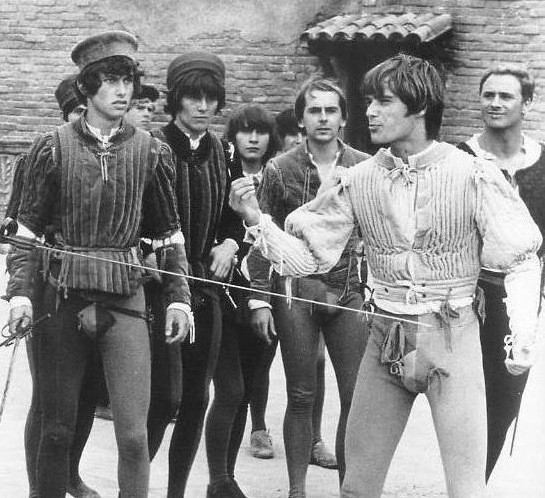
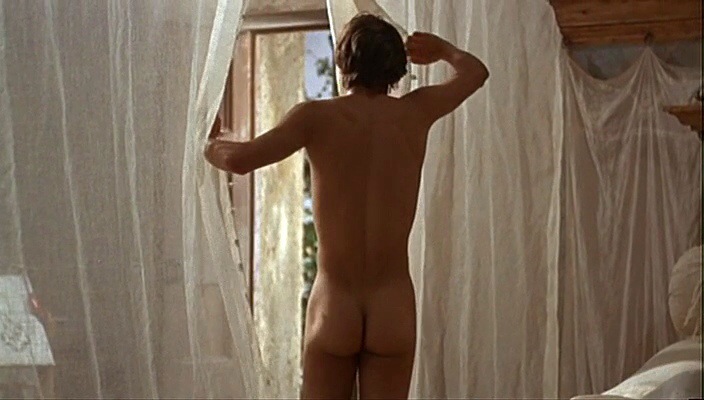
One look at Leonard Whiting’s Romeo in Frank Zifferelli’s 1968 version of Romeo and Juliet and I fell in love with the codpiece and Leonard Whiting. I will also admit that Whiting’s codpiece was not the only thing I liked about him, what gay boy sitting in English class watching Romeo and Juliet can forget seeing Romeo’s beautiful naked butt. However, this post is not about the beauty of Leonard Whiting, it’s about the history of the codpiece. If you are not familiar with this piece of Renaissance fashion, a codpiece (from Middle English: cod, meaning “scrotum”) is a covering flap or pouch that attaches to the front of the crotch of men’s trousers and usually accentuates the genital area. It was held closed by string ties, buttons, or other methods. It was an important item of European clothing in the 15th and 16th centuries

20131216-000525.jpg

One may well ask, if the button fly preceded the zipper, and the codpiece preceded the button fly, what preceded the codpiece? The answer is, quite literally, nothing. Leather leggings, the antecedents of Renaissance hosiery, were merely tubes of animal skins held on by strips of leather and connected together rather perfunctorily at the top. In fact, the crotch was most often left almost completely open, for ease of access during those “privy” functions. One was protected from exposure of one’s “person” by tunics which reached the knees or beyond.

However, with the rise of the merchant class at the beginning of the Renaissance, came “Fashion Trends”. Clothing for the poor remained functional, of course, but for the wealthy, changing one’s fashion to follow, or build on, a social trend became a way of displaying one’s wealth, and for men, one’s masculinity. With the use of the newly popular button, fashions became more fitted and tight to the body, (no need to cut a garment loose so that it could fit over one’s head). Thus, the popular look became long, elegant, and youthful.

To achieve this look to an even greater degree, the waistline of the tunic was dropped to the hips to make the body look longer, and the hemline was shortened to make the legs look longer. By 1360 men’s hems rose to mid-thigh. This was a shocking event indeed, considering that the basic design of men’s hosiery had not changed. When a man sat, or mounted a horse, one might have quite a “regimental” view of his state of affairs. The clergy, (those who were not themselves following the fashion), as well as other guardians of public morals, were up in arms. In Chaucer’s “Canterbury Tales” the Parson criticizes these short garments for their revealing nature:

Alas! some of them show the very boss of the penis and the horrible pushed-out testicles that look like the malady of hernia in the wrapping of their hose, and the buttocks of such persons look like the hinder parts of a she-ape in the full of the moon. And moreover, the hateful proud members that they show by the fantastic fashion of making one leg of their hose white and the other red, make it seem that half of their privy members are flayed. And if it be that they divide their hose in other colors, as white and black, or white and blue, or black and red, and so forth, then it seems, by the variation of color, that the half of their privy members are corrupted by the fire of Saint Anthony, or by cancer, or by other such misfortune.

During the years 1420-40 tunic hemlines reached the top of the thigh and “the occasional glimpse of the male sexual organs that had caused such an outcry in the fourteenth century was now replaced by the permanent exposure of that zone.”

The next fashion trend was to go about in one’s hose and shirt, (the shirt being what we think of as a doublet with a chemise worn underneath), sans the tunic. Measures had to be taken! (Please pardon the pun.) In 1482 Edward IV introduced a law which forbade persons below the rank of Lord to expose their private parts by short doublets. People ignored it. Finally the public outcry became too fierce, and, since men would certainly not be inconvenienced by simply sewing the crotch seam shut, the codpiece was invented.

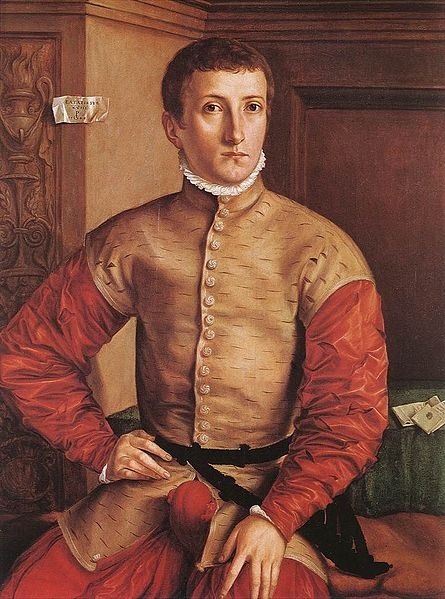
To begin with, it was simply a triangular piece of fabric tied at the three corners, or stitched at the bottom angle and tied at the top two angles, over the gap in the front of the hose. However, men quickly discovered, as they are wont to do, that what might have been revealed before as somewhat lacking in size and stature, could be easily artificially enhanced under the masque of this new fashion. Over the next century, the codpiece developed from a flat piece of fabric, to a pouch in which the “family jewels” rested in as protruding a manner as possible, to a padded pouch, to a very padded pouch, (some of them very oddly shaped), until finally the pouch idea was discarded altogether, along with any pretense to function, and large padded shapes of bizarre dimensions were tied onto either hose or shirt, the “items of value” simply residing behind these bombastic shapes.

20131216-000615.jpg

It has been assumed that the fashion of genital promotion was de rigeur, however, no thought appears to have been given to the possibility that the codpiece fashion developed because of necessity and not by whim. From 1495 onwards a pandemic of a new disease swept across Europe and was a great plague. The disease caused foul and large volumes of mixed pus and blood to be discharged from the genital organs and the swellings in the adjacent groin tissue. The mess would require bulky woolen wads and woven cloth bandages to be applied, distorting the whole of the genital area and the lower abdomen.

The new disease was syphilis, and in all probability was not a new disease; there are descriptions of illnesses involving the fundamental findings for the diagnosis of syphilis from ancient times, though it is most often assumed to have traveled back from the Americas with Columbus’s men.

Though syphilis may have added to the popularity of the codpiece, one need to only look to gay men’s fashion today to see how we still like to accentuate the penis. Whether it’s Andrew Christian or CN-2, underwear marketed mostly to gay men do their best to accentuate the crotch area.

20131216-000646.jpg