Category Archives: History

Naked Among the Gods

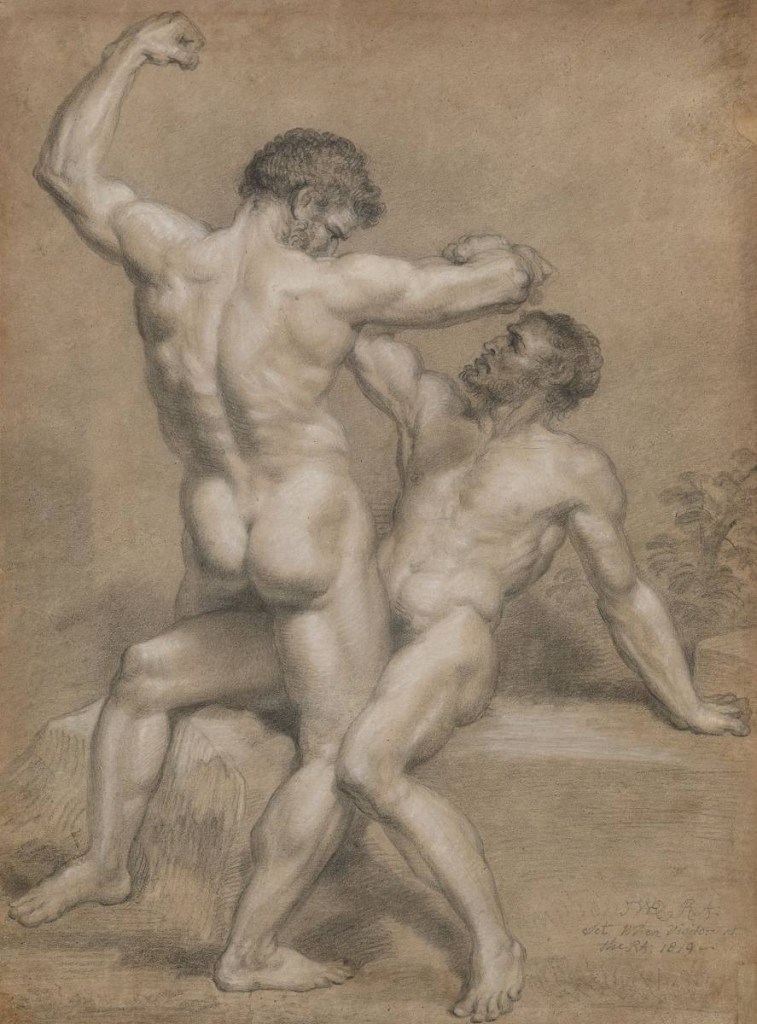
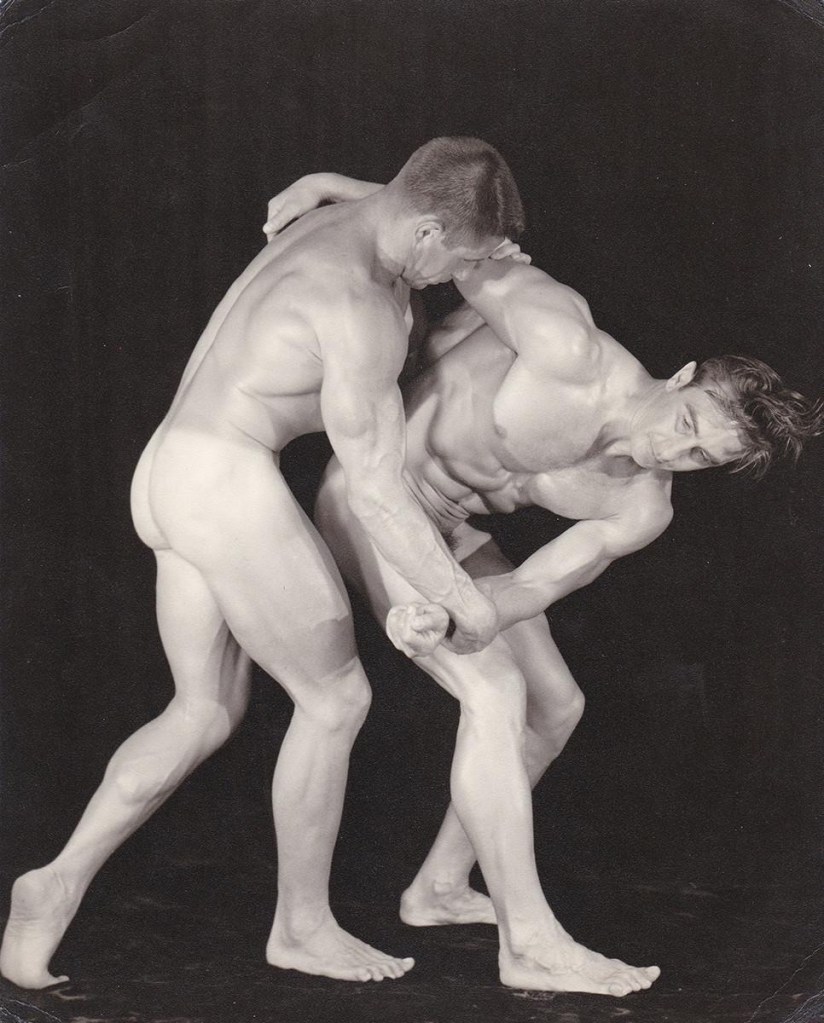
Two nude men wrestling
James Ward
1819

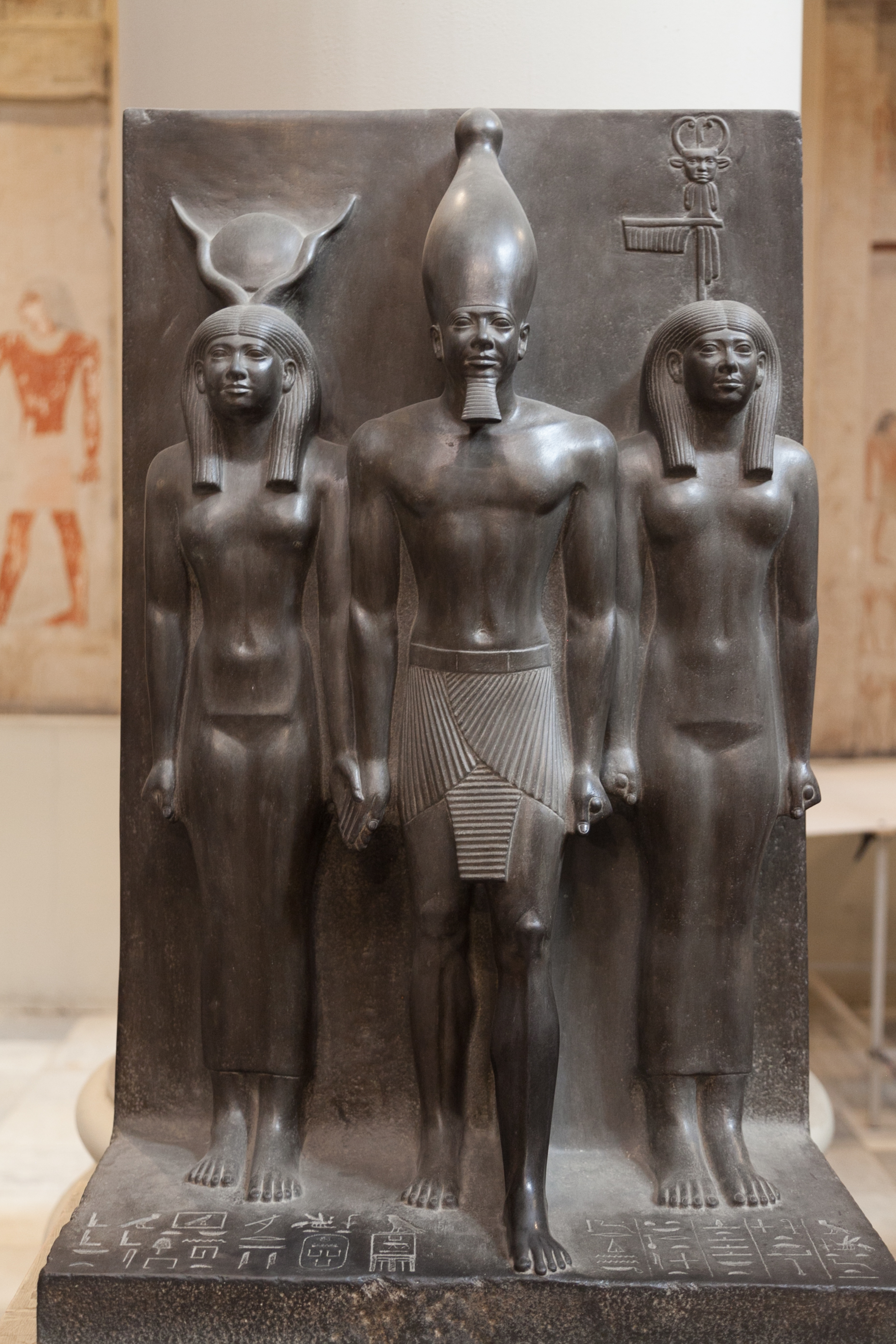
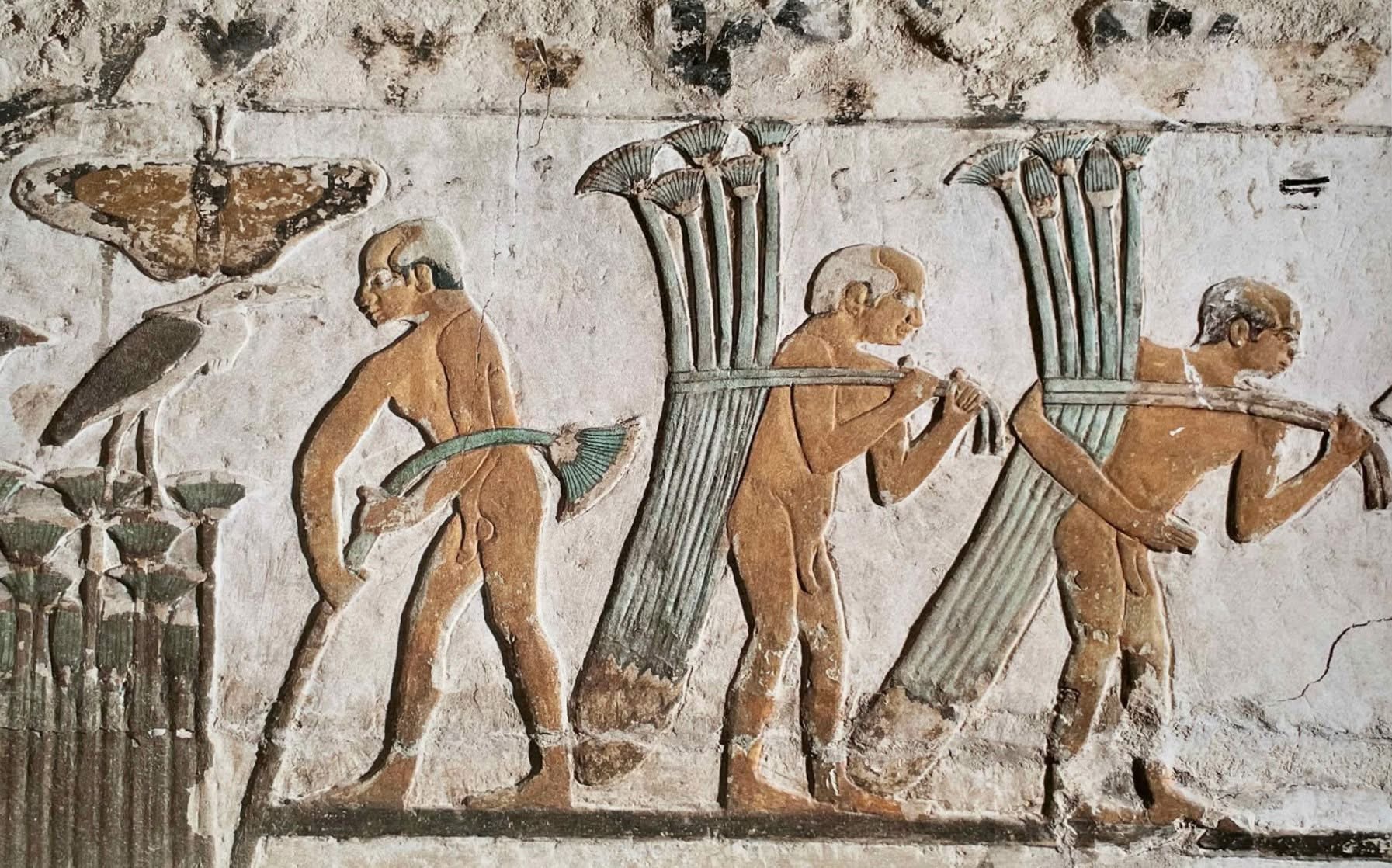
I’ve always been fascinated by how the Ancient Greeks embraced the naked body—especially the male form—not as something shameful, but as something worthy of admiration, celebration, and even reverence. To modern eyes, the sheer number of nude statues and painted vases from the ancient world might seem excessive or erotic (and sometimes, they are), but to the Greeks, nudity wasn’t just about sex. It was about excellence, identity, citizenship, and being fully human.

They didn’t just tolerate public nudity in certain settings—they expected it. Athletes competed fully nude in the Olympic Games, not as a rebellious act, but as a deeply held tradition. The word gymnasium itself comes from the Greek gymnos(γυμνός), meaning “naked.” Young men trained in the nude not just to strengthen their bodies, but to shape their minds and characters. The gymnasium was a civic and educational space where nudity signaled discipline, honesty, and a commitment to becoming the best version of oneself. Nudity wasn’t a distraction—it was part of the lesson.

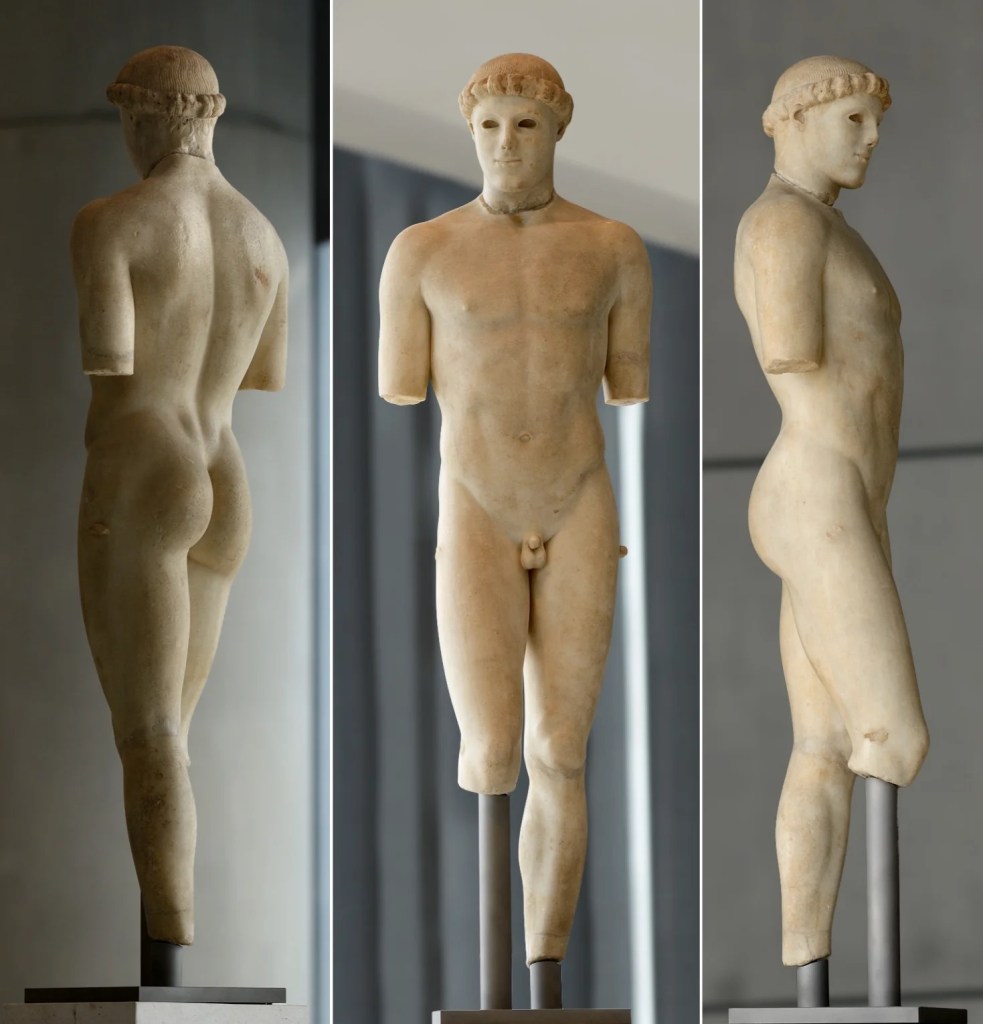
Kritios Boy

And that reverence for the human form found its most lasting legacy in art. One of the earliest and most striking examples is the Kritios Boy (c. 480 BCE), often seen as the turning point in Greek sculpture. Unlike the stiff, idealized youth of earlier kouros figures, the Kritios Boy is relaxed, confident, and lifelike. There’s no armor, no toga, no fig leaf—just a serene, nude adolescent standing in gentle contrapposto. He feels both real and ideal.

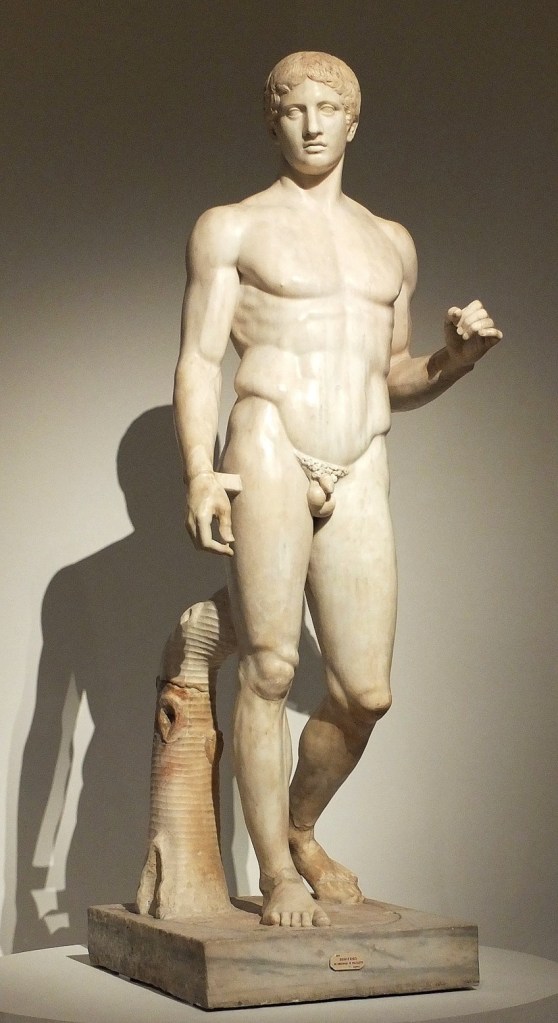
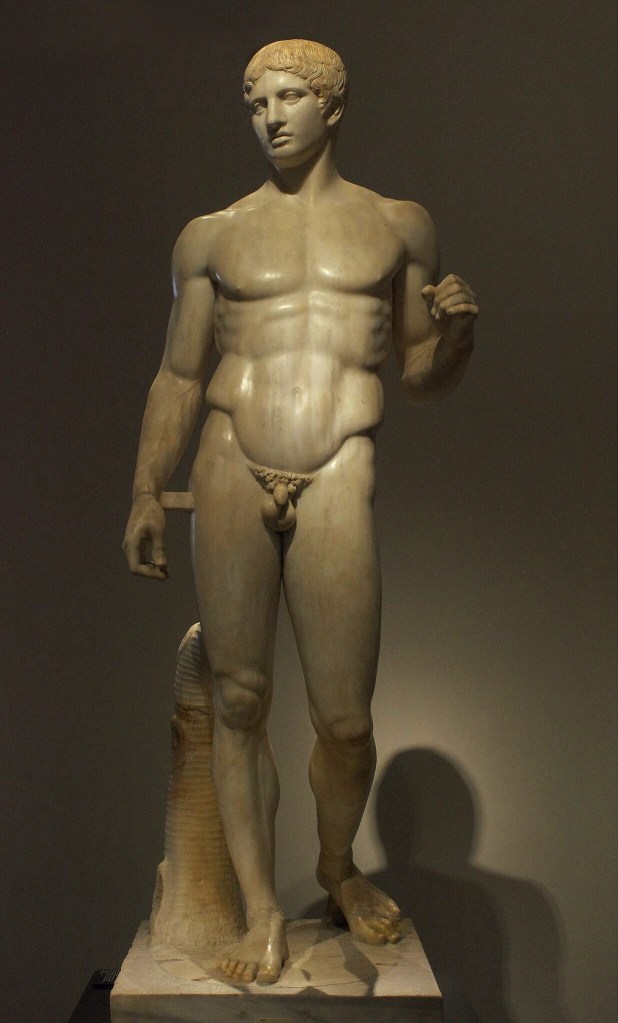
Polykleitos’s Doryphoros 

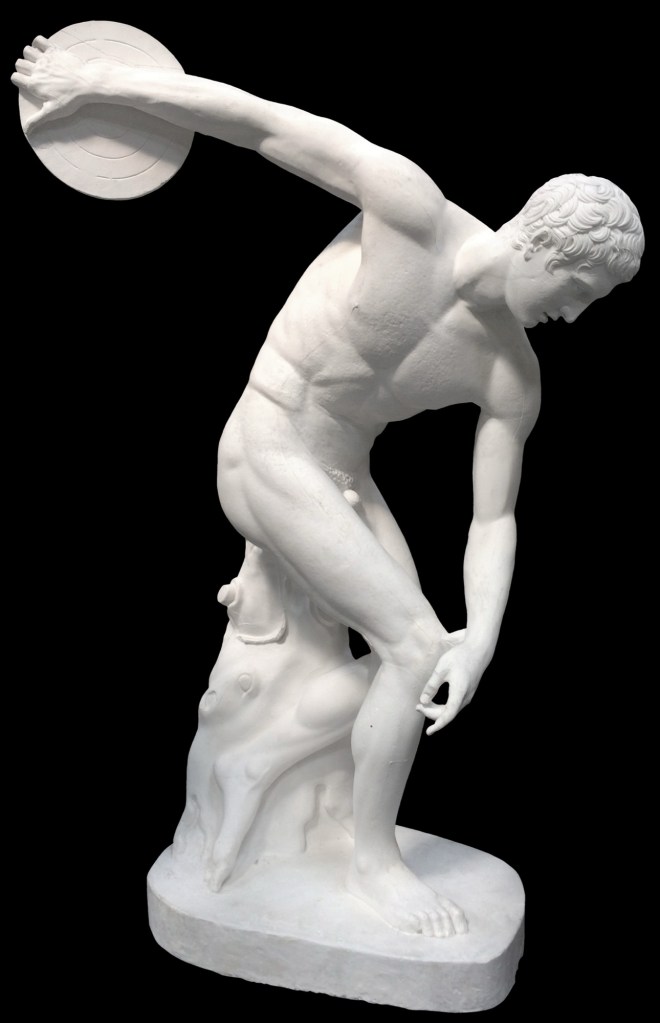
Another favorite of mine is Polykleitos’s Doryphoros (Spear Bearer), a statue designed to embody the perfect male proportions. Here again, the nudity isn’t incidental—it’s essential. You can’t demonstrate bodily harmony if the body is covered. Nudity, in this case, is a kind of visual philosophy. Then there’s the Discobolus (Discus Thrower) by Myron, which captures a man’s body in mid-motion, muscles taut, entirely nude, perfectly balanced between tension and grace. His nudity heightens the athletic drama and draws the viewer into that moment of perfection.


Myron’s Discobolus

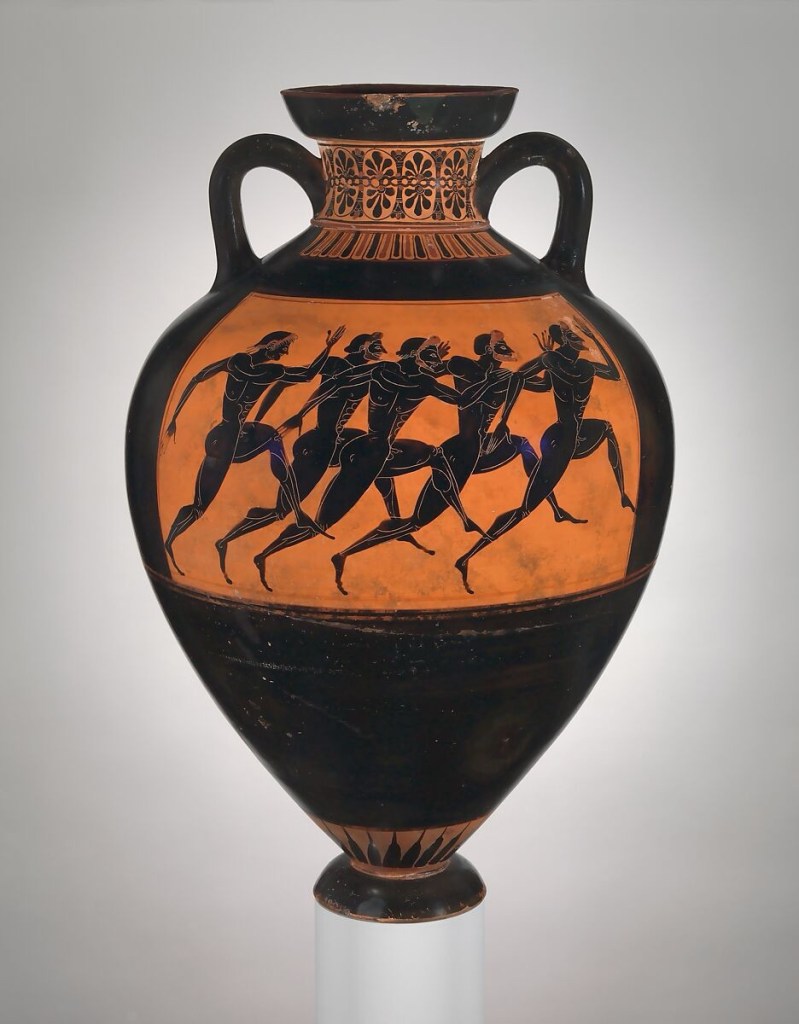
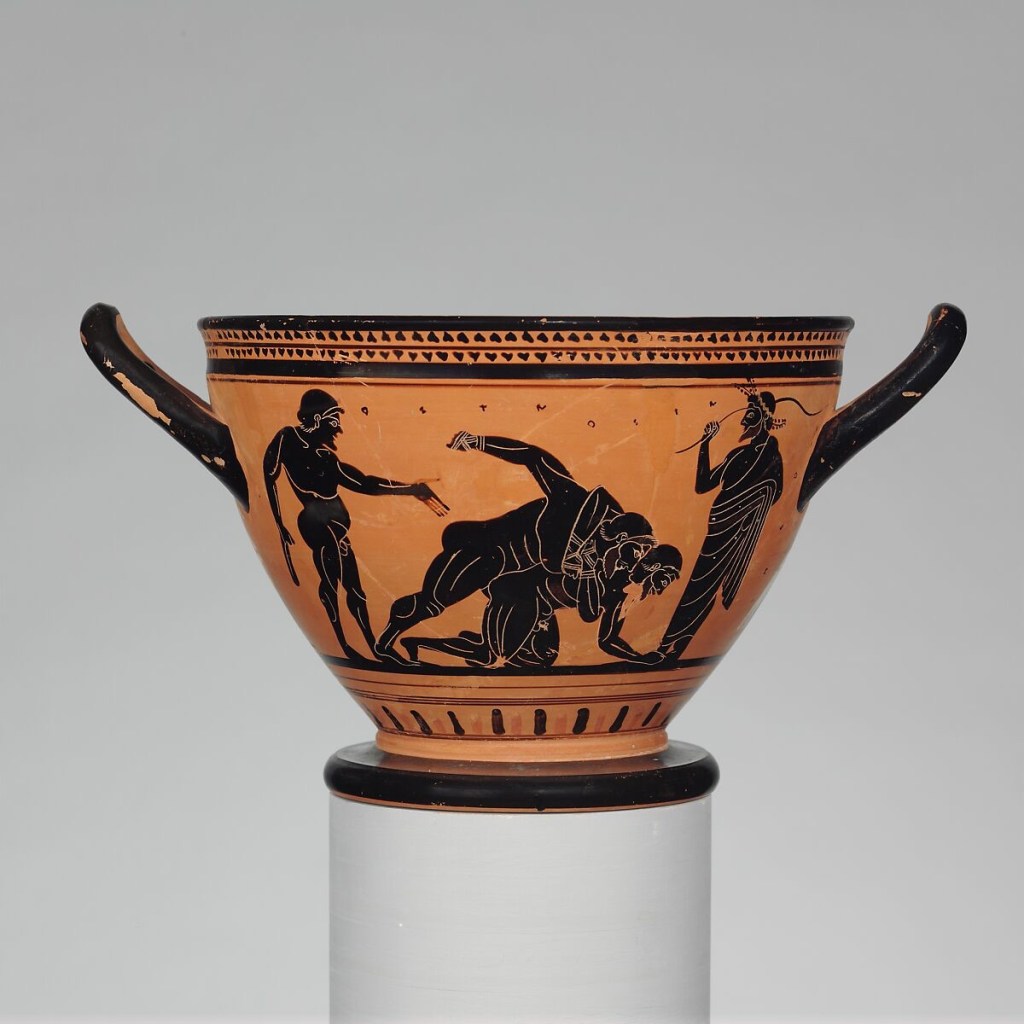
It wasn’t just in sculpture. The Greeks captured daily life, training scenes, and intimate gatherings on painted pottery, particularly in the red-figure vase tradition. These vases, often used for wine drinking at symposia, show men wrestling, bathing, reclining with lovers, and engaging in philosophical dialogue—always nude or mostly nude. One amphora I saw during a museum visit showed a trainer instructing a youth at the gymnasium, both fully exposed, their nudity treated as entirely normal, even expected. Another vase depicts two young men sharing a kiss in a quiet, domestic scene—tender, not titillating. These glimpses into Greek life are reminders that the naked body wasn’t always about arousal. Sometimes, it was about presence—being fully seen, fully known.

Terracotta Panathenaic prize amphora
Attributed to the Euphiletos Painter
ca. 530 BCE

This attitude feels almost alien in a country like ours. Here in America, nudity is still largely taboo, wrapped up in Puritanical baggage and frequently equated with obscenity or indecency. Even in Vermont, where public nudity is technically legal in most cases (as long as you’re not lewd or explicitly sexual), you rarely see anyone baring it all outside of a secluded swim spot or a clothing-optional festival. There’s something quietly telling about that—how the law might allow something, but cultural discomfort still keeps it hidden.

Terracotta skyphos (deep drinking cup)
Attributed to the Theseus Painter
ca. 500 BCE

And yet, I can’t help but wonder: what would it mean if we took a more Ancient Greek view of nudity—not as something to be feared or fetishized, but as something natural, honest, even virtuous?

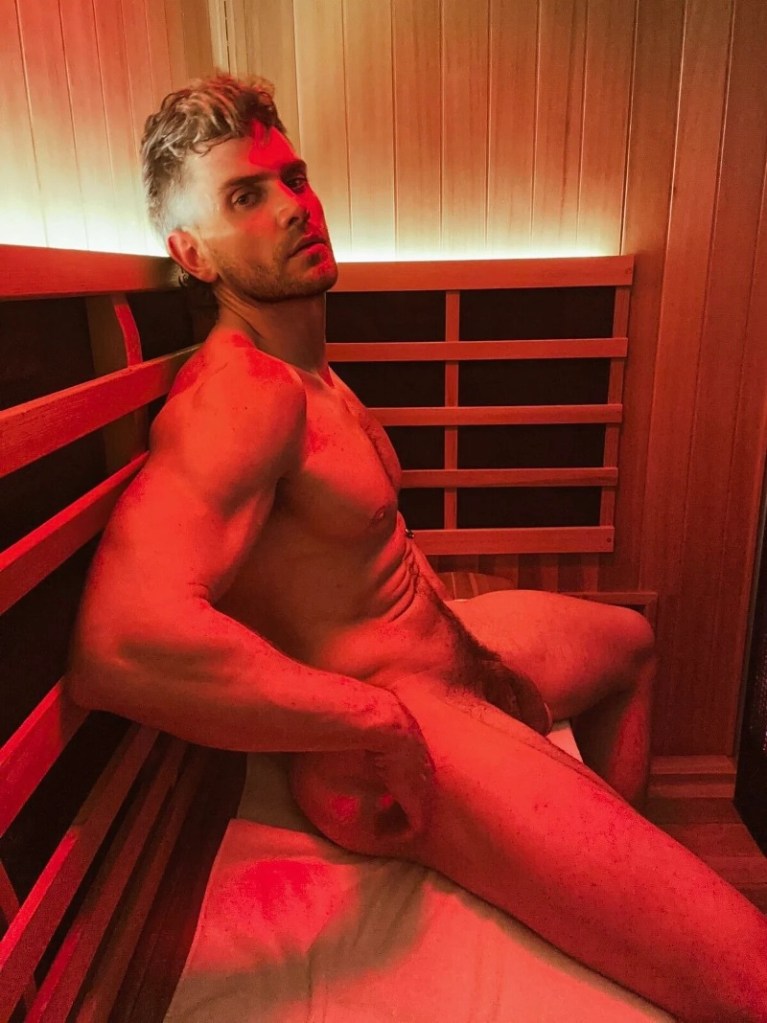
A few years ago, I attended a gay men’s retreat at Easton Mountain in upstate New York, and it gave me a real-world glimpse of what the Greeks might have understood intuitively. Nudity there wasn’t shocking or scandalous—it was completely natural. The pool was always full of naked bodies, sunlit and unselfconscious. I don’t think I ever saw a bathing suit near it. The sauna and hot tub were clothing-free zones by default, and during some of the workshops—body painting, liberation exercises, guided meditations—nudity was gently encouraged as a way to connect more honestly with ourselves and others. It wasn’t about showing off. It was about showing up. I left feeling more open, more grounded in my body, and more aware of how rare that kind of freedom really is.
It might mean raising a generation less ashamed of their bodies. It might mean allowing ourselves to admire beauty without reducing it to sex. It might mean being more comfortable in our own skin, literally and figuratively. While the Greeks didn’t extend this attitude equally—women were mostly excluded from these public displays of nudity—there’s something liberating in imagining a culture where both women and men could be nude in non-sexualized spaces without fear or judgment.
As a gay man, I think often about how visibility and embodiment intersect. For many of us, our relationship to our bodies has been shaped by shame, secrecy, and desires we were never meant to name. What if we had grown up seeing the male body—our bodies—as something to admire without guilt? What if nudity wasn’t something to hide or automatically sexualize, but something that simply was? Would we be more honest? Kinder to ourselves? More connected to one another? Might we even find ourselves a little closer to the divine—just as the Ancient Greeks did, in their reverence for the human form and their gods?


International Cat Day: A Tribute to My Faithful Companion

International Cat Day is celebrated every year on August 8th—a day set aside to honor our feline friends and raise awareness about the welfare of cats around the world. It was originally created in 2002 by the International Fund for Animal Welfare (IFAW) and is now promoted globally by a number of animal welfare organizations. The day encourages responsible pet ownership, support for shelters and rescue organizations, and, of course, a little extra love and attention for the cats who share our lives.

It’s also the perfect excuse (as if I ever need one) to shine the spotlight on Isabella. She’s been a part of my life since 2016, and in that time, she’s proven herself to be equal parts queen, comedian, and comforter. But during these past few weeks, as I’ve dealt with pain and limited mobility, she’s shown me just how deeply cats can sense when something isn’t right.

Normally, Isabella claims her favorite spot draped across my thigh, but lately, she’s been avoiding that area entirely. Instead, she’s taken to curling up on my chest, purring in a steady rhythm that feels like a balm to both body and spirit. She stays close, often stretched out nearby like a furry little sentinel, watching over me with her calm green eyes. Even when she’s sleeping in another room, she pads in at regular intervals to check on me—almost as if she’s clocking in for her nursing rounds.

Like Queen Alexandra making rounds during wartime or the Queen Mother comforting bomb victims during the Blitz, Isabella has stepped up in my time of need—furry crown and all.

Cats get an unfair reputation for being aloof, but Isabella is proof that they can be as loyal, attentive, and empathetic as any companion animal. On this International Cat Day, I’m grateful not just for her beauty or her quirks, but for the quiet, steady presence that has made these difficult days so much more bearable.

If you’re lucky enough to share your life with a cat, give them an extra scratch, treat, or cuddle today—they’ve probably done more for your well-being than you realize.

“Nurse Isabella reporting for duty. Vital signs: stable. Blanket: warm. Human: monitored.”


Finding a Rhythm Toward Recovery

I started physical therapy yesterday, and while I’m still dealing with quite a bit of pain, I’m hopeful for the first time in a while. The exercises they’ve given me seem to make a real difference—small movements, but with noticeable results. That feels like a very positive sign. I’m also finding that the medication I’m on is finally starting to help in a meaningful way.

For now, I’ve worked out a schedule that lets me stay productive during the day with only minimal pain, which is a huge relief. I’m not sleeping the mornings away anymore, but I am finally getting better rest at night. My routine still starts on the couch—it’s the only place I can reliably fall asleep—but once I’ve settled and my body has relaxed, I can shift to my bed and stay there through the night.

These little improvements give me hope that I’ll be able to return to work on Monday without too much trouble. One step at a time, but it’s progress—and I’ll take it.


Posing the Ideal: The Enduring Language of the Male Nude

From the marble gods of antiquity to the chiaroscuro of contemporary fine art photography, the male nude has long served as a canvas for ideals—beauty, heroism, eroticism, even vulnerability. While fashions shift and aesthetics evolve, certain poses recur again and again across centuries, connecting ancient sculptors with modern photographers, and Renaissance artists with queer creators exploring body and identity. These poses are not random; they are visual codes, passed down like a secret language. Below are ten of the most iconic, from the classical to the contemporary.

Contrapposto — The Classical Stand

Doryphoros (Spear Bearer) by Polykleitos (c. 440 BCE)

The contrapposto is perhaps the most recognizable pose in Western art. One leg bears weight while the other relaxes, creating a subtle S-curve in the spine and a naturalistic opposition of shoulders and hips. It suggests calm confidence, inner balance, and effortless beauty—a divine masculinity grounded in the human form. This pose remains a standard in fine art photography, particularly in black-and-white portraiture where tension and repose dance together in the frame.

The Heroic Nude

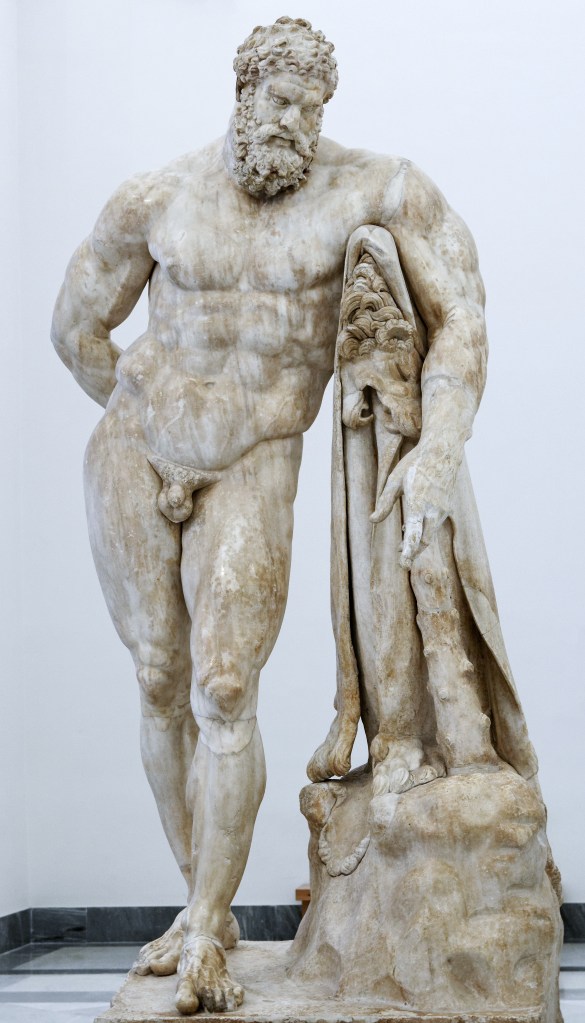
Farnese Hercules (Roman copy, 3rd century CE)

This pose stretches the body into exaggerated musculature—shoulders squared, stance wide, genitals often prominently displayed. In mythological sculptures and athletic statues, the heroic nude expressed power without armor, valor without shame. Modern echoes appear in Bruce Weber’s Calvin Klein ads or Tom of Finland’s hyper-masculine pinups, though with more erotic charge and often a wink of camp.

The Reclining Nude

Michelangelo’s Dying Slave (1513–16)

Lying down, one arm behind the head, the other draped or trailing—the reclining male body exudes sensuality. Unlike the upright hero, the reclining nude invites the viewer in. It’s a pose of leisure, of trust, of soft exposure. In contemporary photography, it appears in the work of Robert Mapplethorpe and Herb Ritts, sometimes erotic, sometimes contemplative, but always intimate.

The Standing Frontal Nude

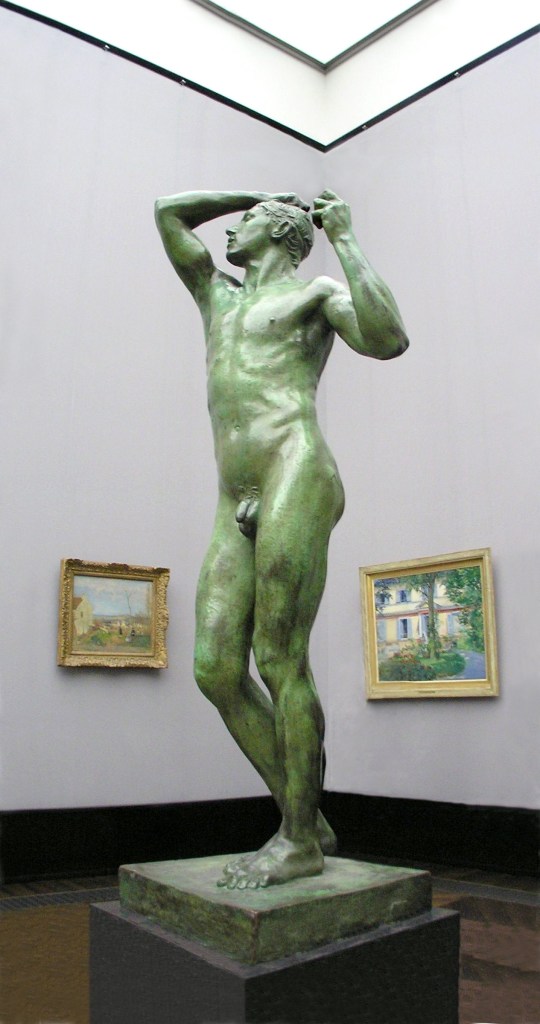
Auguste Rodin’s The Age of Bronze

The fully frontal male nude remains one of the boldest artistic statements. It can convey power, but also deep vulnerability. With no turn of the hip or modest shadow, the body is presented in full—often rigid, symmetrical, and deliberately confronting the viewer. In photography, artists like George Platt Lynes and John Dugdale have used this pose to explore identity and embodiment with quiet boldness.

The Crouching Nude

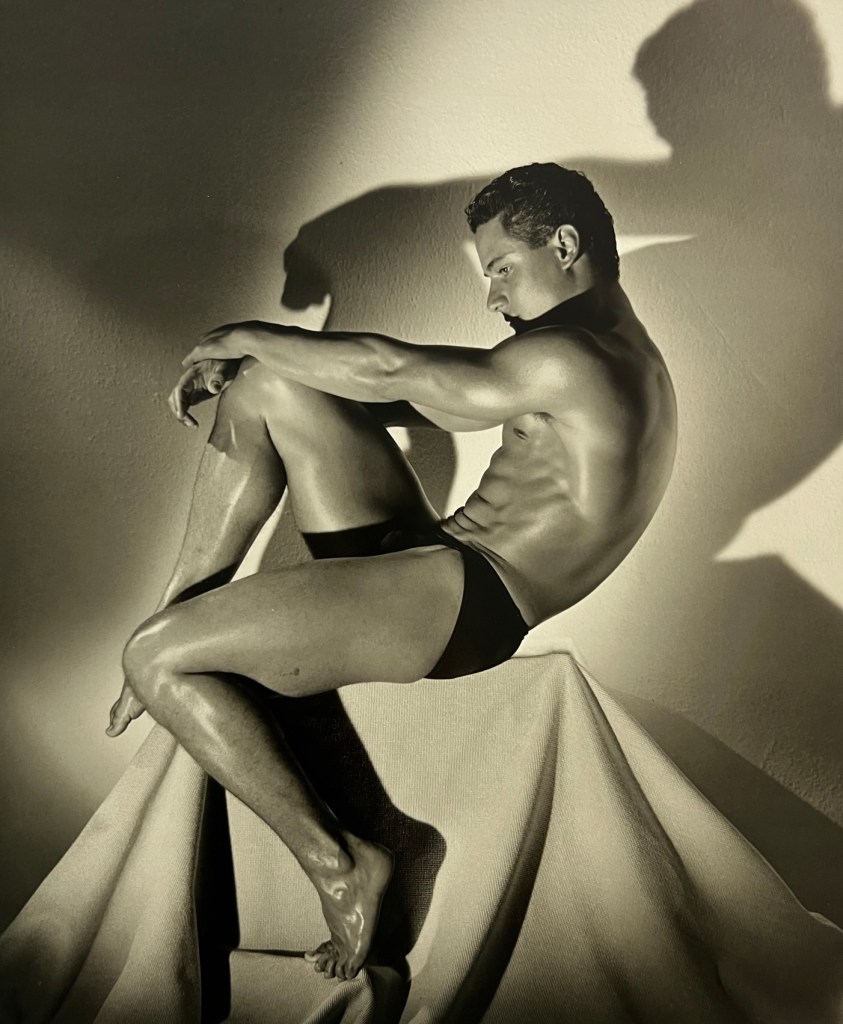
Herb Ritts’ photo of Olympian Greg Louganis

Though more common with female nudes, the crouching pose has become a staple in expressive male photography—knees drawn up, torso folded inward, arms wrapped across chest or thighs. It signals protection, introspection, or erotic containment. Contemporary artists like Omar Z. Robles or Ren Hang have used this pose to convey psychological intimacy, even fragility.

The Twisted Torso

Bernini’s David (1623)

Tension defines this pose—one limb pulled back, the torso twisted, spine coiled like a spring. It’s dynamic and dramatic, revealing musculature in full stretch and flex. In photographs, this pose dramatizes motion and often captures the male body mid-action—whether in dance, sport, or erotic tension. Think of dancer-turned-models in chiaroscuro-lit poses by photographers like Rick Day or Clive Barker.

The Averted Gaze

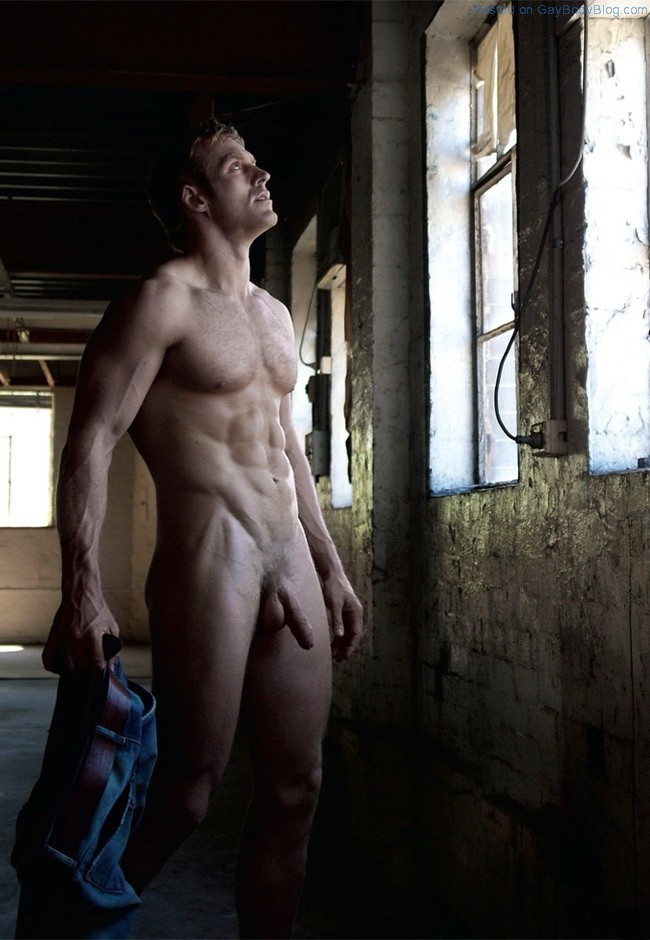
Untitled Photograph by Paul Freeman

This pose isn’t about the body so much as the gaze—or lack thereof. The male nude who looks away, whether shy, lost in thought, or caught in reverie, offers something emotionally elusive. In modern portraits, the averted gaze disarms the viewer: the nude isn’t performing for us, but existing despite us. It’s a favorite in modern queer portraiture, from artists like Duane Michals or Paul Freeman.

Arm Over Head — The Display of Strength and Vulnerability

Guido Reni’s Saint Sebastian

An arm raised behind the head lengthens the body, stretching the torso and exposing the armpit—an often-erotic gesture in male imagery. Saint Sebastian, often portrayed in this pose, became a queer icon through his sensual vulnerability. Today, this pose appears in both fitness photography and erotic art, especially where strength and submission intertwine.

Memento Mori — The Nude and Mortality

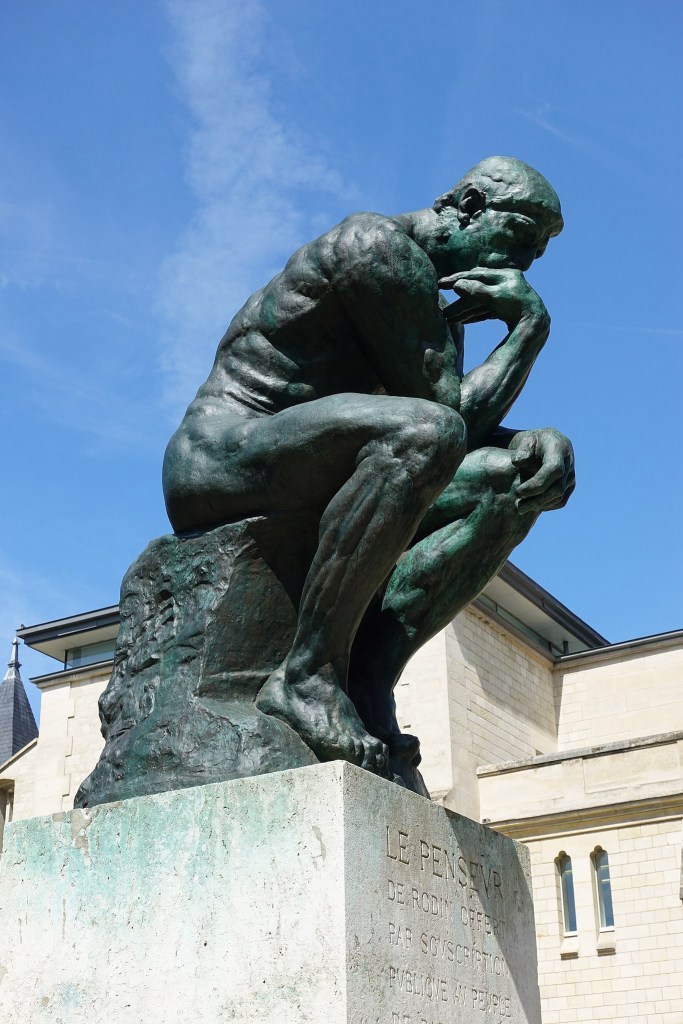
The Thinker by Rodin

This pose shows the male body entwined with symbols of death—a skull, a candle, a vacant stare. The man may be seated, leaning on one arm, lost in thought or grief. The erotic body meets existential dread. In contemporary queer art, this pose often reappears in AIDS-era photography—Peter Hujar and David Wojnarowicz come to mind—where the beauty of the body confronts its own impermanence.

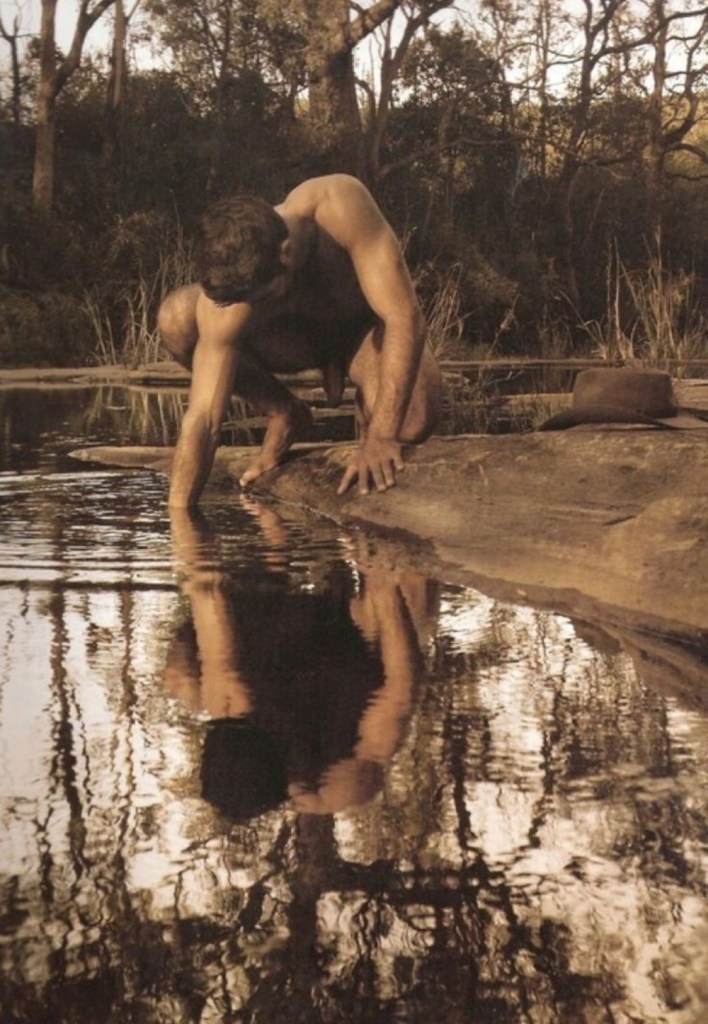
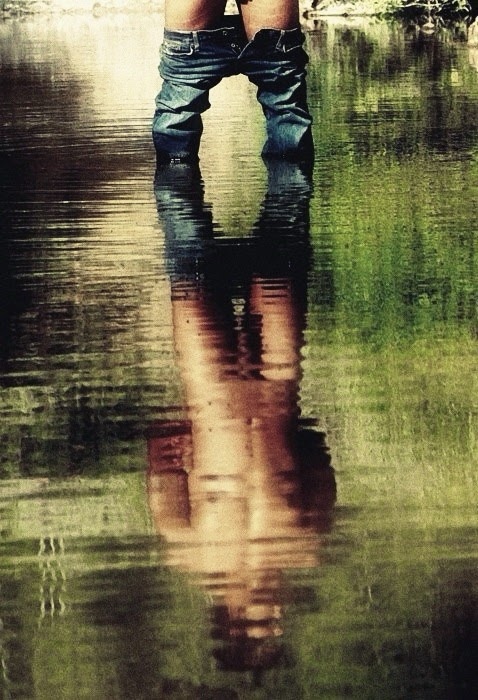
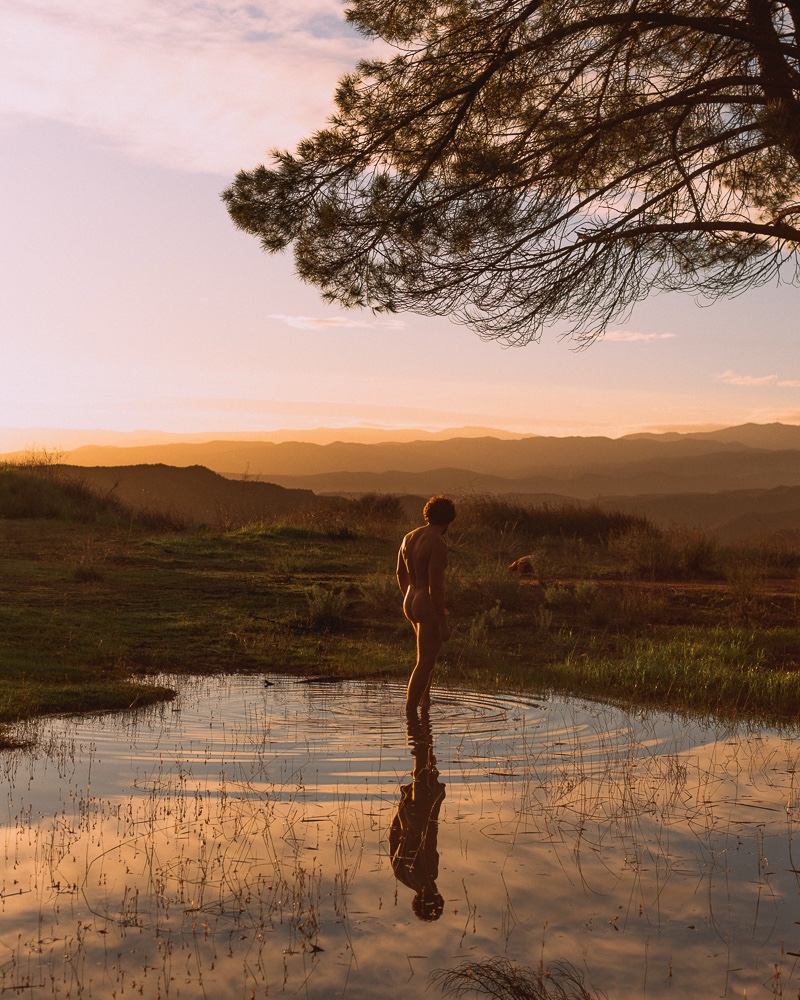
The Mirror Pose

The male nude gazing at his reflection—either literally or metaphorically—carries a rich history of both vanity and self-awareness. In modern work, this pose has become a commentary on queer desire, identity, and self-recognition. Whether through mirrored images, doubled exposures, or paired models, the mirrored pose flirts with the erotic and the existential: Who do we see when we look at ourselves?

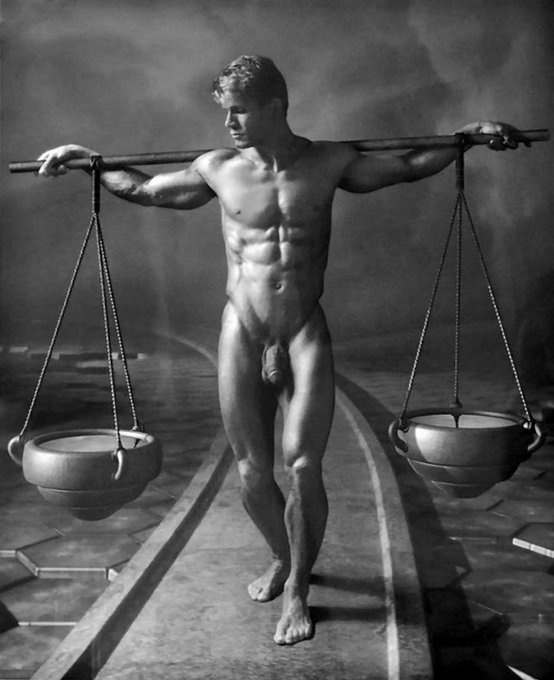
Nude Water Carrier by Mark Jenkins

These poses, repeated across millennia, aren’t just about aesthetics—they’re about how we’ve viewed the male body and the roles it plays: protector, object of desire, thinker, vessel of strength or sorrow. And in queer art especially, these poses become subversive. They reclaim what was once coded and hidden, turning vulnerability into power and eroticism into expression.

Whether sculpted in marble, captured in monochrome, or filtered through a digital lens, the male nude continues to speak a visual language of longing, beauty, and identity. It’s a language many of us have learned to read—and some of us are still learning to write with our own bodies.


The Art of the Gay Film: Where Does Porn End and Cinema Begin?

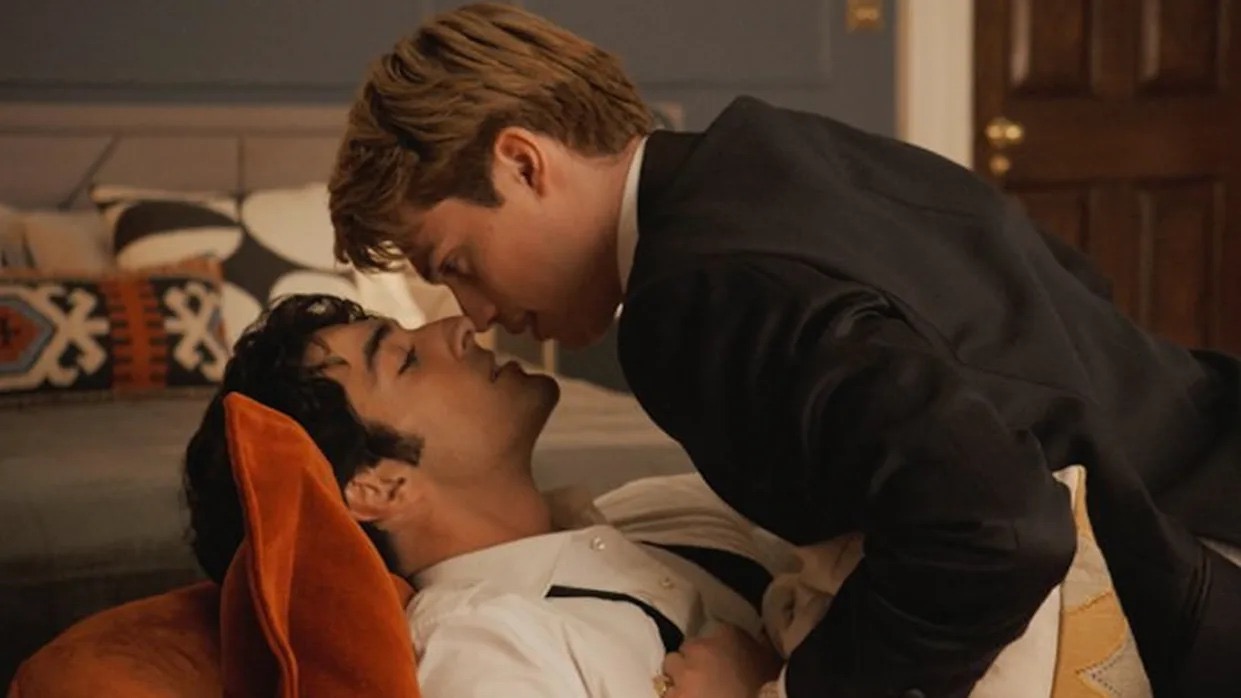
Red, White & Royal Blue

One of the oldest and most provocative questions in art history is what counts as art? That question becomes even more layered when we look at gay-themed films. Are they art? Are they pornography? Or something else entirely? 

Last week, in my post “Can Gay Porn Be Considered Art?”, I explored how even pornography can rise to the level of art when it’s created with intention, craft, and meaning. This week, I want to turn to films—particularly gay-themed ones—and ask: where do they fit on the spectrum between art and pornography? 

Let’s start at the beginning: Are films art? 

The answer from an art historical perspective is a resounding yes. Cinema, from its very birth, was hailed by some as the most modern and democratic art form—capable of bringing storytelling, image, sound, and emotion into a single, immersive experience. 

But when sex enters the frame, things get complicated—particularly for films with queer themes. 

Red, White & Royal Blue

Consider Red, White & Royal Blue, which generated considerable buzz in the gay community for its romantic and tender love scenes. The two leads engage in intercourse—though we see no frontal nudity or penetration, and most of the actual sexual act is in the facial expressions of the two main characters. The narrative focuses on their emotional and political stakes as much as their physical passion. 

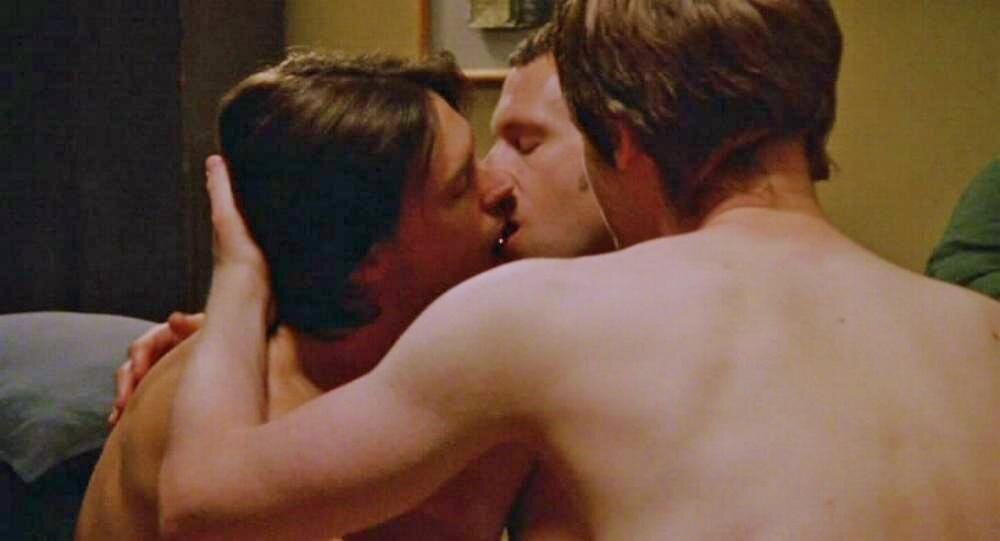
Shortbus

But compare that to Shortbus, the groundbreaking 2006 independent film featuring gay and straight characters exploring sexuality, intimacy, and loneliness. It famously includes unsimulated sex scenes—autofellatio, rimming, ejaculation, and more—woven into a story about connection in New York City. Despite its graphic imagery, many critics and audiences hailed Shortbus as an art film because the sexual content was in service to its humanistic and narrative vision. 

Minx

Then on the other end of the spectrum are campy, sex-forward comedies like the Eating Out series or Another Gay Movie, which parody and revel in gay hookup culture with winks, nudity, and humor. These films are explicitly about sex, but in a light, comic, self-aware way—not quite pornography, but certainly not subtle. In the same vein, we might put certain HBO shows (The White LotusEuphoria) or Minx (on HBO/Starz), which features an extraordinary amount of male frontal nudity but uses it to explore the 1970s porn industry with a feminist and comedic slant. 

So, where do we draw the line between art and pornography? 

It’s not always clear—and, as you pointed out, it may well be “in the eye of the beholder.” In general: 

  • Pornography tends to have a singular, utilitarian purpose: sexual arousal and entertainment. It doesn’t usually ask its audience to reflect, empathize, or wrestle with deeper meaning. However, even pornography can be considered art, as I wrote about in last week’s post, “Can Gay Porn Be Considered Art?”—and I think it can be. When crafted thoughtfully, with aesthetic intention and emotional resonance, even porn can rise to the level of art. 
  • Art, even when explicit, usually serves a broader purpose—telling a story, exploring vulnerability, interrogating social norms, or celebrating intimacy. 

That doesn’t mean art can’t also be arousing—just as Mapplethorpe’s photographs or Greek kouroi might still thrill us centuries later. The difference lies in intent and context. 

Many of these films (and TV series) deliberately blur the line. Shortbus was attacked by some as pornography precisely because it showed real sex acts, but defended as art because it was about loneliness, connection, and what it means to be human. Meanwhile, Red, White & Royal Blue was criticized by some for being too tame, choosing romantic convention over sexual candor—but it, too, is art, in the sense that it tells a story about love and identity.

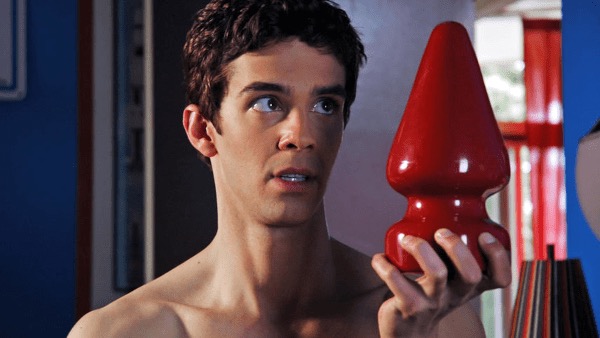
Another Gay Movie

Even campy comedies like Another Gay Movie or series like The White Lotus are part of this conversation—using nudity and sexual humor partly to titillate, yes, but also to satirize and expose cultural hypocrisy. 

Personally, I tend to agree that much of what we call pornography is shallow and transactional, whereas even the most sexually explicit arthouse films still aspire to say something about the human experience. Then again, as I’ve also noted, some modern “art” (abstract or otherwise) can feel just as empty or pretentious to some of us as porn can. 

We as gay viewers—long denied honest representations of ourselves—have often sought out films that blurred the line between art and eroticism, because sometimes that’s where we feel most seen. Cinema remains, perhaps, the most widely consumed art form in the gay community—precisely because it can contain beauty, sex, tenderness, and critique all at once. 

What do you think? Have you seen a film (ShortbusMinxAnother Gay Movie?) that you felt crossed a line—or one that made you feel understood? Does the presence of graphic sex diminish a movie’s artistic value for you—or enhance its honesty? 

Let’s keep the conversation going in the comments. 


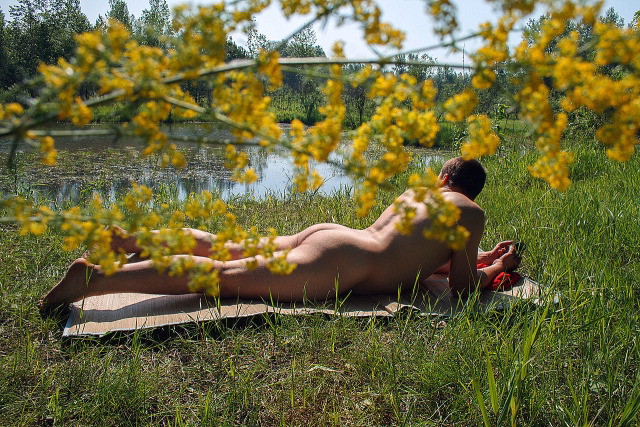
[It was summer when I found you]

[It was summer when I found you]
By Sappho

It was summer when I found you
In the meadow long ago,
And the golden vetch was growing
By the shore.

Did we falter when love took us
With a gust of great desire?
Does the barely bid the wind wait
In his course?

About the Poem

Sappho’s poem [It was summer when I found you] is a delicate fragment of longing, desire, and memory. Though much of her poetry has been lost to time, the pieces that remain still shimmer with emotional clarity and sensuality — and this little lyric is no exception.

The poem opens in the languor of summer, with the speaker discovering her beloved in a meadow by the shore. Nature itself seems alive with desire: the “golden vetch” blooming wildly and the sea just beyond. Sappho often entwines the natural world with human passion — here, love is as irresistible and inevitable as the gust of wind that bends the barley.

The second stanza asks a rhetorical question: Did we falter when love took us? The answer is implied — how could they? Just as barley cannot resist the wind, the lovers could not resist their “gust of great desire.” There’s a quiet defiance and acceptance in this image: love comes, fierce and unbidden, and the only possible response is to bend with it, to be swept up.

What makes this fragment so moving is how it acknowledges both the beauty and the powerlessness of love. It’s not simply a tender memory, but also a reflection on the force of desire that overtakes reason, propriety, and even hesitation. Sappho’s verses, like this summer meadow fragment, remind us that love and desire are as old and natural as wind through barley or waves on the shore — irresistible, ephemeral, and profoundly human.

Sappho and the Isle of Lesbos

Sappho was a lyric poet who lived on the Greek island of Lesbos around 600 BCE. Little is known about her life in detail, but her reputation as one of the greatest poets of antiquity endured even as most of her work was lost. She ran a kind of school or circle for young women, where they learned poetry, music, and perhaps prepared for marriage.

Her surviving poetry — preserved only in fragments — often speaks of intense affection, admiration, and desire for women. This has led her to be celebrated as an early voice of female same-sex love and to become a symbol of lesbian identity in modern times.

Lesbos itself, situated in the northeastern Aegean, was a center of culture, art, and education in the Archaic Greek world. Because of Sappho’s association with the island and her poetry about love between women, the term lesbian came to refer to women who love women. Similarly, the word sapphic — derived from her name — describes romantic or erotic relationships between women.

Why We Call Gay Women “Lesbians”

Centuries after her death, during the late 19th and early 20th centuries, when sexology and psychology were developing modern categories for sexuality, the name of her home — Lesbos — became shorthand for women who love women. The term lesbian originally referred simply to something from Lesbos, but gradually it became associated with female homosexuality, particularly in English by the early 20th century.

In this way, Sappho’s poetry and her island home gave language and dignity to generations of women who loved other women, helping to articulate their desires in a world that often tried to silence them.

Lesbos and the Olisbos

In ancient Greek comedy and satire, the island of Lesbos — and especially its city of Mitylene — was sometimes joked about as a place where women crafted and used olisboi, leather phallic implements we would now call dildos. These bawdy associations appear in vase paintings, lexicons, and plays, reflecting both curiosity and discomfort with women’s same-sex desire. While likely exaggerated, such references add another layer to the island’s long-standing connection to female sexuality.


Can Gay Porn Be Considered Art?

For as long as the male nude has existed in art — from the Kouros statues of ancient Greece to the sketches of Michelangelo — the erotic potential of the male body has fascinated artists and viewers alike. But what happens when we turn our gaze to the realm of gay pornography? Can gay porn — films and photography explicitly created for sexual arousal — also be considered art?

It’s a provocative question, but a worthwhile one. In fact, the history of gay porn itself often parallels the history of queer art: pushing boundaries, challenging taboos, celebrating bodies, and telling truths about desire. 

The Beginnings: Porn as Forbidden Art

Long before moving pictures, erotic images circulated as drawings, engravings, and photographs. In the 19th century, so-called “French postcards” depicted nude men as athletic models, though sometimes posed in implicitly homoerotic ways. One of the earliest and most influential figures to straddle the line between art and pornography was Wilhelm von Gloeden, whose photographs of Sicilian boys, taken between the 1880s and 1920s, combined classical references, soft lighting, and unabashed sensuality. These images were sold as art but carried undeniable erotic charge.

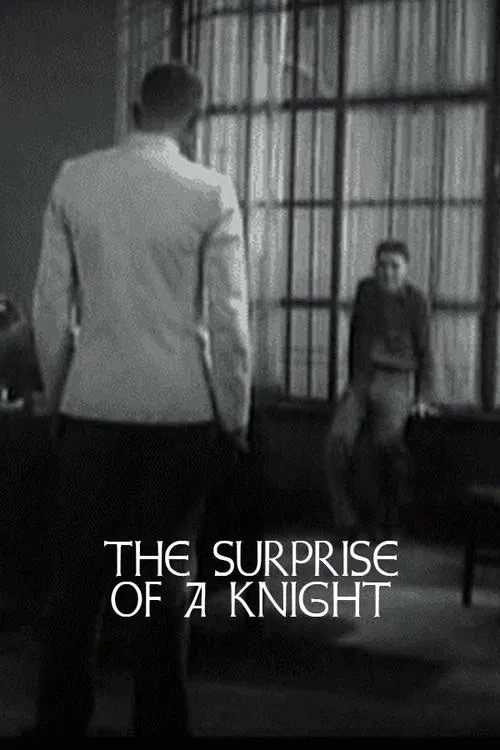
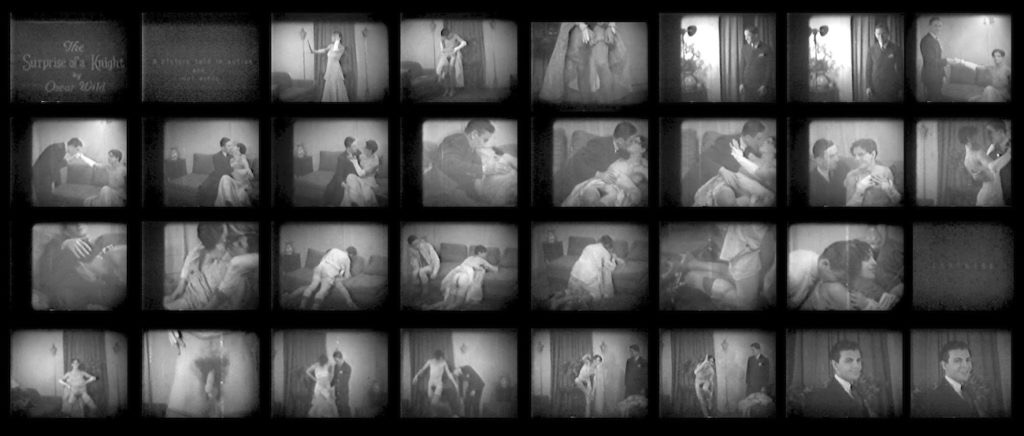
When film arrived, early pornography — called “stag films” — rarely included explicitly gay scenes. Still, there were clandestine reels from the 1920s–40s that showed male-male encounters. Though they were often anonymous and lacked narrative or polish, their very existence documented queer desire at a time when it was otherwise hidden. The Surprise of a Knight (1930), one of the earliest surviving gay stag films, is a fascinating precursor — a clandestine, playful short that captures queer desire in an era of strict censorship, showing how even in the shadows, erotic expression could hint at both art and resistance.

The Surprise of a Knight opens with an elegantly dressed “lady” preparing for a visit, who reveals a patch of pubic hair as an intertitle credits the screenplay to “Oscar Wild.” In the drawing room, the lady flirts and kisses her dapper “knight,” rebuffing his gropes before playfully slapping him and then performing oral sex. She then positions herself face-down on the sofa, and the knight simulates anal sex with her twice, both reaching climax. After he departs, the “lady” lifts her skirts to reveal he is actually a man, punctuated by an intertitle reading “Surprise.” The man dances nude, his penis visible, before the knight returns to help him undress completely; they dance together briefly, and in the final shot the man, now in business attire, winks at the camera before walking off.

The Classic Era: Porn as Provocation, Pleasure as Art

The so-called “Golden Age” of gay porn coincided with the sexual revolution of the late 1960s and 1970s. Explicit films were finally being made openly, screened in theaters, and even reviewed in mainstream publications. During this period, filmmakers experimented with narrative, cinematography, and symbolism — producing works that were undeniably pornographic but also clearly ambitious, aesthetically considered, and culturally significant. Some of these films are now preserved in archives and even screened in museums.

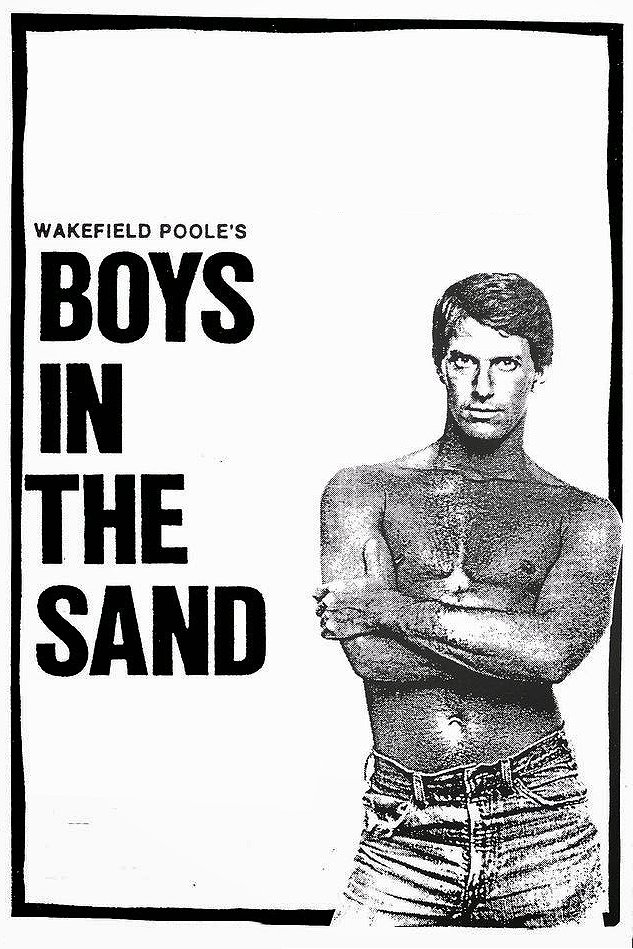
Perhaps the most famous of these was Boys in the Sand (1971), directed by Wakefield Poole, which portrayed erotic encounters on Fire Island in lush, painterly compositions. Poole’s film was groundbreaking for its beautiful cinematography and narrative flow — and it even premiered to a packed theater audience, signaling a new cultural visibility.

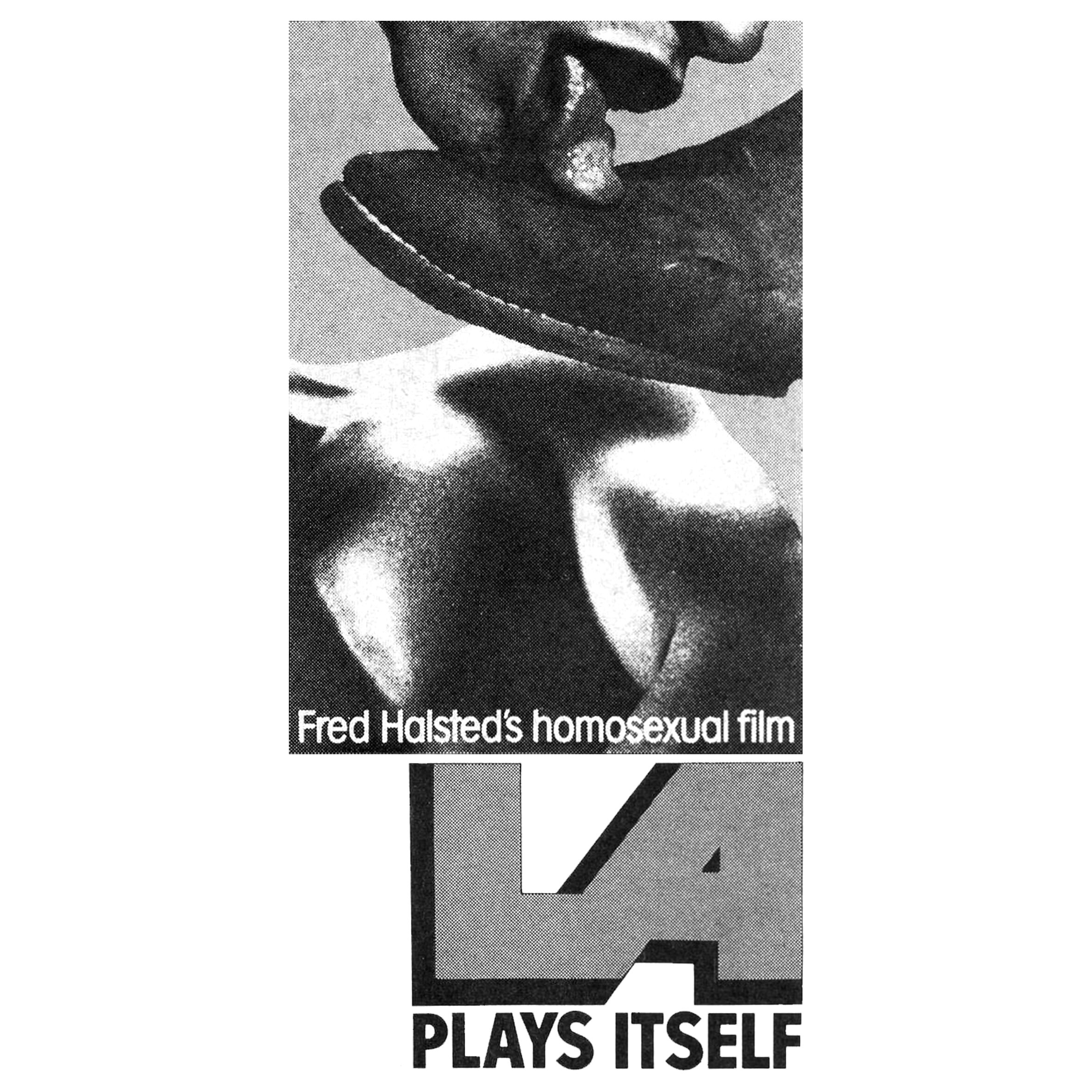
Around the same time, Fred Halsted’s LA Plays Itself (1972) took a radically different approach, presenting gay sex through a gritty, surrealist lens that reflected the urban experience of Los Angeles. In October 2023, New York’s IFC Center hosted a rare screening of Fred Halsted’s LA Plays Itself, shown on Friday, October 20 and Saturday, October 21. The IFC Center, a renowned independent art-house cinema in New York City, screening LA Plays Itself is significant because it affirms the film’s enduring status not just as underground pornography but as a provocative work of avant-garde queer art worthy of serious cultural recognition. This gritty, surreal classic of queer cinema was presented as part of a retrospective celebrating the film’s radical blend of explicit gay sexuality, avant-garde experimentation, and social critique — reminding audiences why it remains both controversial and artistically significant more than fifty years later.

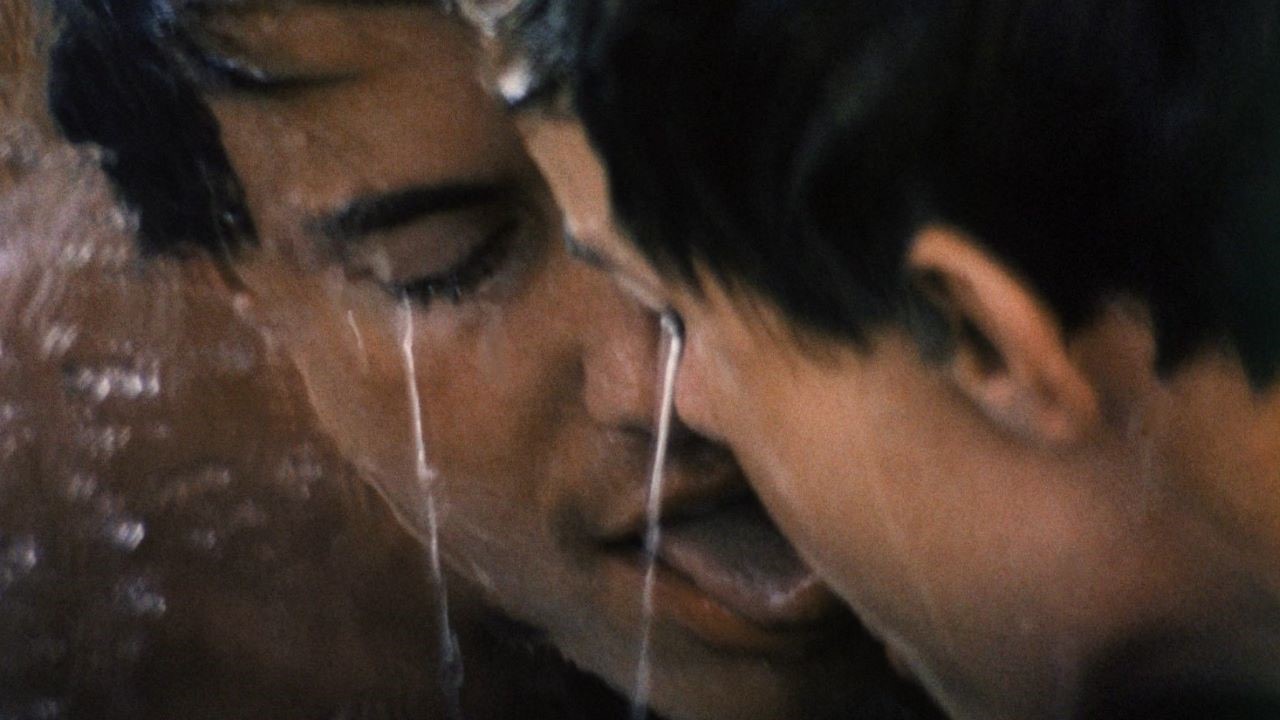
From: Fred Halsted’s LA Plays Itself (1972)

Other notable films of this era, such as Sex Garage and Drive!, blended explicit sex with experimental art-film techniques, offering a kind of avant-garde pornography. And beyond film, the hypermasculine, leather-clad drawings of Tom of Finland profoundly influenced the aesthetic of this era — his work infused pornographic imagery with style and self-confidence. These films treated sex not just as a physical act but also as an expression of fantasy, identity, and even politics — often blending sensuality with beauty and humor.

The Condom Era: Risk, Responsibility, and Reinvention

With the arrival of HIV/AIDS in the early 1980s, the landscape of gay porn changed dramatically. Fear and loss reshaped queer sexuality, and the industry adopted condoms both as a visual norm and as an ethical statement. Yet filmmakers continued to create works that were erotic, imaginative, and even moving. While the films of this era often retained the narrative ambition of the classic period, the urgent subtext of survival and safer sex advocacy gave them new weight. Many films explicitly incorporated education or chose to eroticize condoms themselves, making them part of the fantasy rather than an intrusion on it.

One example is More of a Man (1986), which managed to portray explicit gay sex as affirming and healthy during a time of crisis. Later films such as Oversized Load (1992) and Flashpoint (1994) demonstrated that high production values and eroticism could coexist with a commitment to showing safer sex. Directors like Chi Chi LaRue injected humor, camp, and even tenderness into their films while insisting on condoms, making the condom itself part of the fantasy rather than an obstacle. These works helped sustain gay erotic culture during a devastating epidemic, offering viewers both pleasure and reassurance. These films demonstrated how erotic art could adapt to a changed world, preserving desire while honoring safety and responsibility.

The Post-Condom Era: Emotional Realism and Erotic Storytelling

With the introduction of PrEP (pre-exposure prophylaxis) and better treatments for HIV, the last decade has seen a return to condomless (or “bareback”) porn. Some see this as a fetishization of risk; others view it as reflecting new realities where undetectable equals untransmittable (U=U) and consent is better understood. The artistry of the current era often lies in its diversity: high-definition cinematography, thoughtful storytelling, and a new openness about race, body types, and kink.

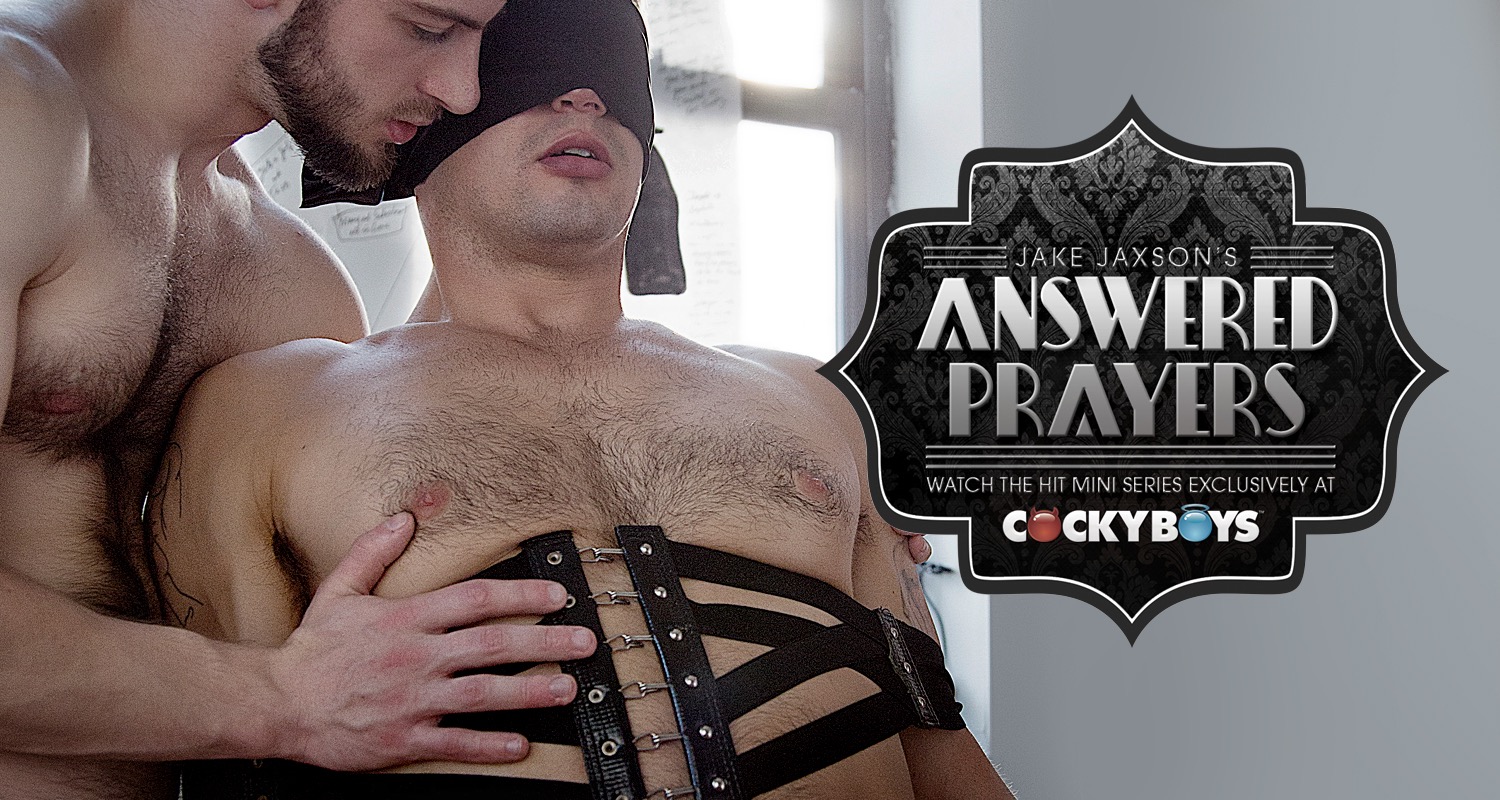
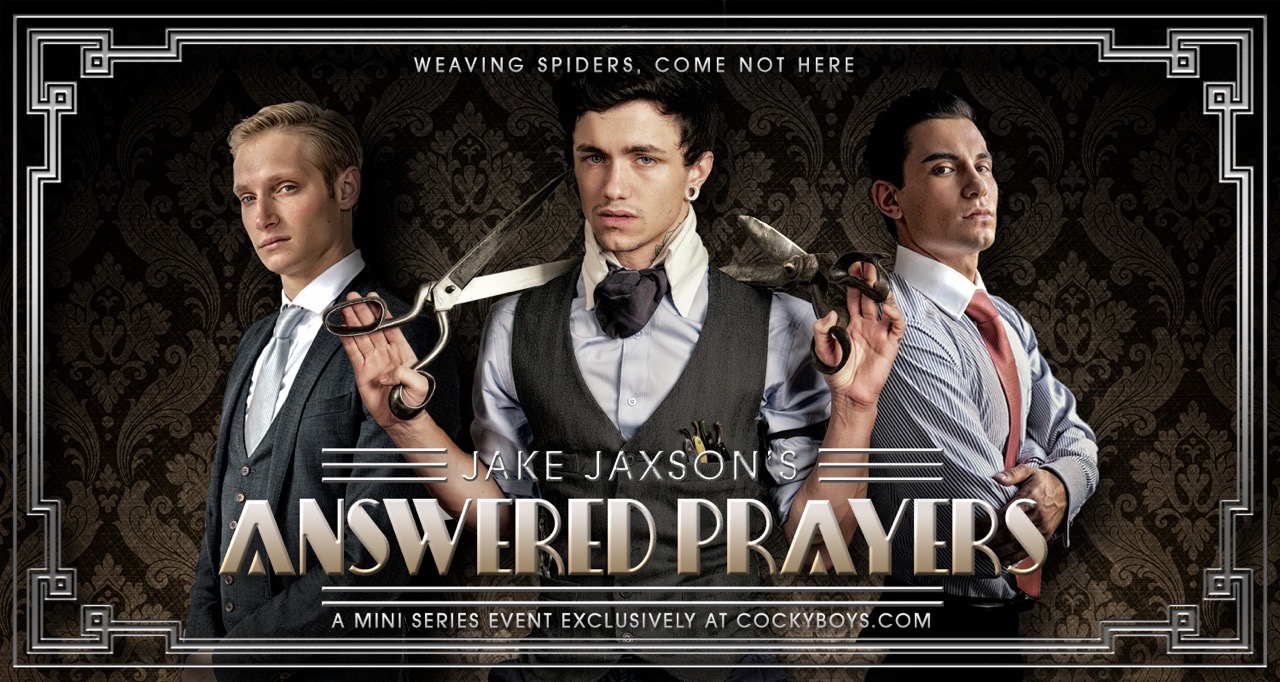
Studios like CockyBoys have embraced the idea of “art house porn” — their Answered Prayers series (2014–15) was highly conceptual, blending dreamlike imagery, emotional narratives, and striking cinematography with explicit sex. Meanwhile, queer filmmaker Bruce LaBruce has consistently created films that integrate hardcore gay sex into narrative art cinema, screened at film festivals and museums.

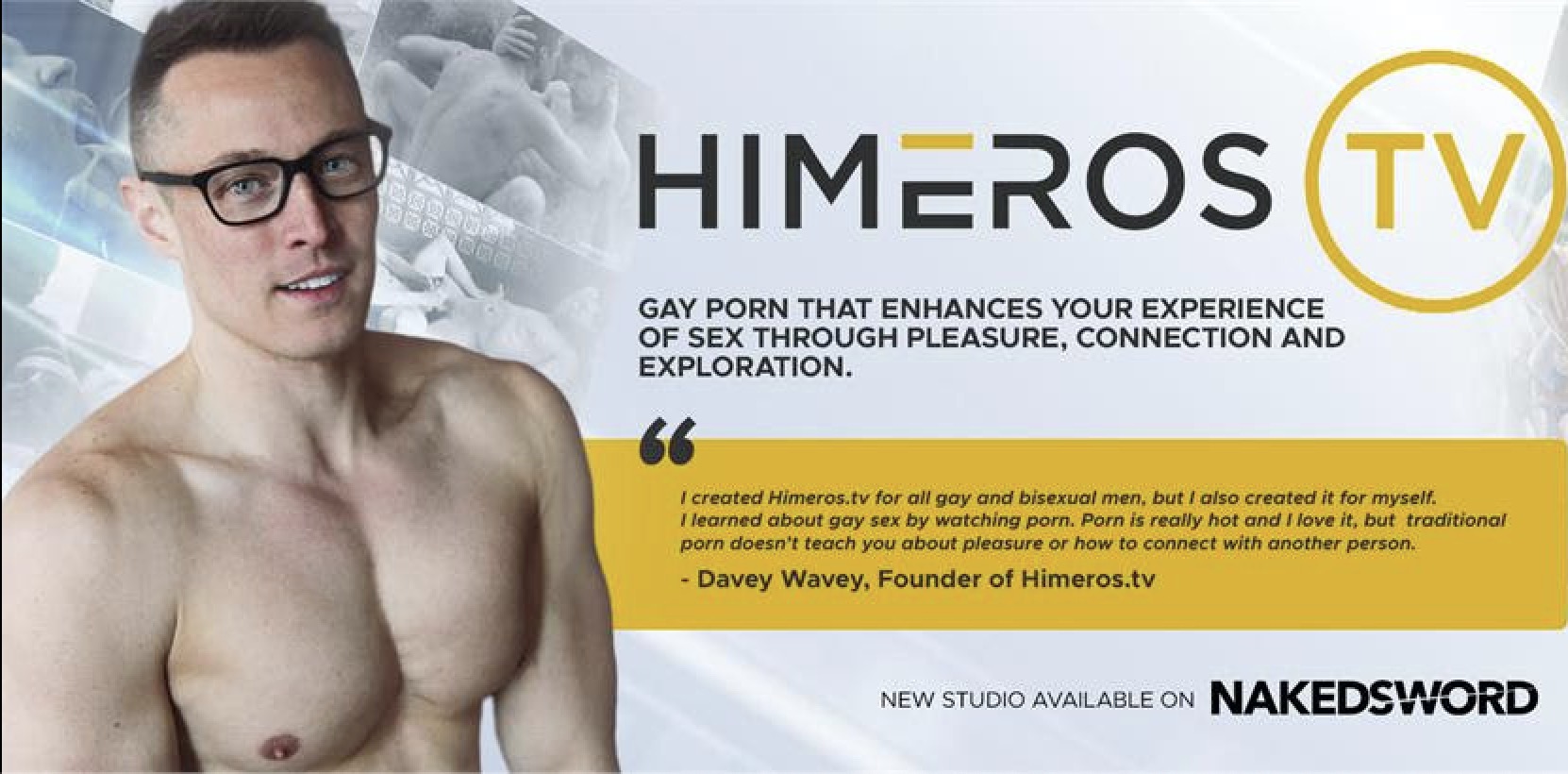
In addition, Davey Wavey’s Himeros project has taken the idea of porn-as-art even further, explicitly positioning itself at the intersection of eroticism, education, and body positivity. With its emphasis on advocacy and sensual exploration, Himeros aims to create porn that doesn’t just arouse but also affirms, teaching viewers to see their own bodies and desires as beautiful and worthy. And across the independent scene, more and more filmmakers are producing “post-porn” hybrids: installations, videos, and screenings in galleries that use pornographic elements to explore desire, identity, and politics.

What Makes Porn Art?

So, what distinguishes these works from “just porn”?

  • Intent: Many of these works aim not just to arouse but to say something — about desire, about queerness, about the human condition.
  • Aesthetic Vision: Careful cinematography, editing, sound design, and narrative ambition elevate the material.
  • Cultural Context: In eras when mainstream culture erased queer desire, these films asserted its legitimacy and beauty.
  • Emotional Resonance: Art moves us — and some of these films succeed in doing so even beyond the erotic charge.

Of course, not all gay porn is art — nor does it have to be. But these examples show that pornography can be artful, meaningful, and even beautiful. Whether you view it on a gallery wall, a festival screen, or your laptop at midnight, it is part of the long story of how queer people have imagined, celebrated, and preserved our desires.

What do you think? Where do you draw the line between porn and art? Or is there even a line at all? Share your thoughts in the comments.


A Soldier Stripped Bare: The Nude Photographs of Lt. Edgar Henry Garland

Some of you may know that my original academic passion—and the reason I first went to graduate school—was to study military history, with a particular focus on the First World War. Ever since I took my first undergraduate course on WWI, I’ve been captivated by the conflict: the way it reshaped nations, upended empires, and left cultural and emotional reverberations we still feel more than a century later. I’ve long been drawn to the poetry of the war, as well as the deeply human stories of the individuals and communities who lived through it.

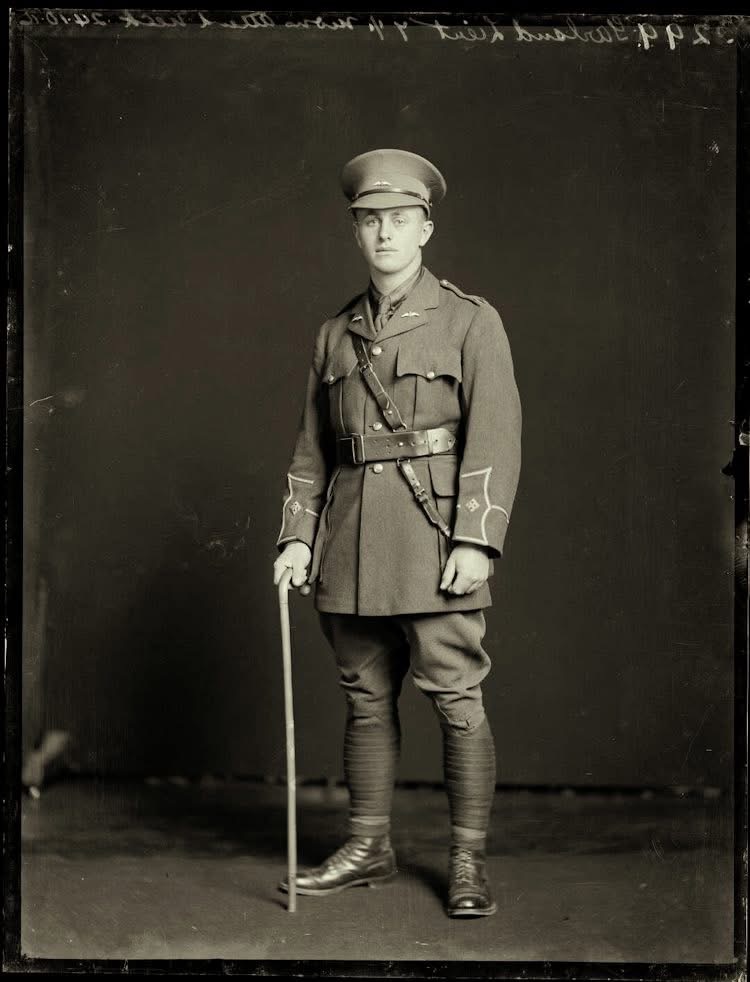
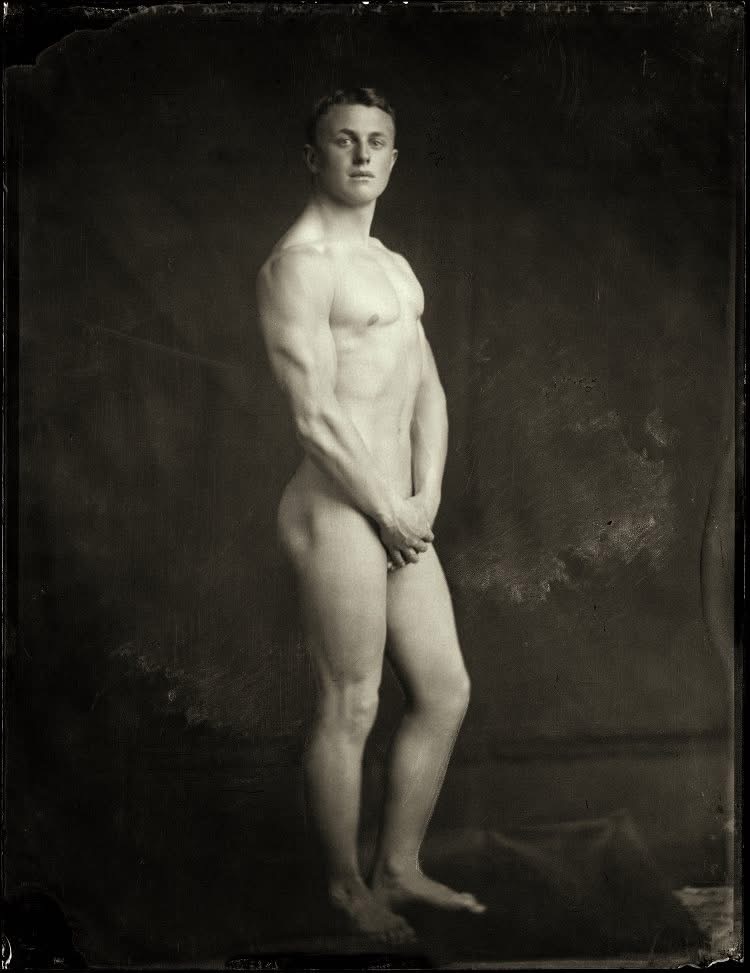
That’s why, when I came across a set of nude photographs taken of New Zealand soldier Lieutenant Edgar Henry Garland, I was immediately intrigued. The images are striking—not just for their artistic composition, but for the questions they raise about masculinity, memory, and identity during wartime. This week’s art history post centers on three rare and intimate photographs of a single soldier. There may have been others like them, but this particular case remains one of the most compelling and well-known examples of its kind.

Uncovering the Man Behind the Uniform: Art, Intimacy, and Queer Visibility in a WWI Portrait

In the archives of New Zealand’s photographic history lies a haunting and striking series of images: nude portraits of Lieutenant Edgar Henry Garland, a World War I soldier, posed with classical grace and remarkable vulnerability. Captured by the studio of S. P. Andrew Ltd., these images raise fascinating questions about art, masculinity, and queer subtext in the early 20th century.

At first glance, Garland might seem like any young officer from the Great War—handsome, lithe, a product of Edwardian values and imperial loyalty. But his story is far more remarkable.

Born in 1895, Edgar Henry Garland served with distinction in the New Zealand Expeditionary Force during World War I. He fought on the Western Front and was captured by German forces, becoming a prisoner of war. What set Garland apart was not just his courage in combat, but his extraordinary persistence in trying to escape captivity. He attempted to escape seven times from various POW camps—an astonishing feat that earned him admiration both during and after the war. His repeated escapes were acts of daring and defiance that turned him into a kind of folk hero in New Zealand military lore. By war’s end, he was among the most celebrated escapees in New Zealand’s wartime record.

And yet, tucked away behind this legacy of bravery is a quieter, more intimate chapter—one not written in medals or official commendations, but in a series of photographs that strip away the uniform and expose the man beneath.

These nude images were taken by S. P. Andrew Ltd., one of the most respected portrait studios in New Zealand. Founded by Samuel Paul Andrew, the Wellington-based studio was renowned for its official portraits of governors-general, judges, and prime ministers. It specialized in formal, large-format images meant to convey dignity, authority, and professionalism. That such a prestigious studio would also produce a set of male nudes—posed with artistry and elegance—speaks volumes about the complexity of photographic culture at the time.

So why were these photographs taken?

At one level, they reflect the influence of classical artistic ideals. In the late 19th and early 20th centuries, the nude male form was seen—at least within certain artistic circles—as a symbol of strength, youth, and aesthetic perfection. Garland’s poses recall ancient Greek statuary, suggesting a deliberate invocation of heroism and beauty. For a young man who had survived war and captivity, these images may have served as a personal monument—an assertion of vitality, resilience, and self-possession.

But there are other possibilities too.

The photographs may have been taken as private keepsakes, either for Garland himself or for someone close to him. Garland never married, and little is known about his private relationships. The possibility that these images were intended for a romantic or intimate partner—perhaps even a male lover—has been raised by queer historians who see in the photographs a coded form of homoerotic expression. The tenderness of the poses, the elegance of the lighting, and the sheer vulnerability on display all hint at a relationship between photographer and subject that goes beyond documentation.

Indeed, these photographs function within a long tradition of discreet queer representation. In an era when homosexuality was criminalized and forbidden by military and civil law, photography could serve as a silent language of desire. Studios like S. P. Andrew—though publicly respectable—may have discreetly permitted or even participated in the creation of such images for trusted clients. This wasn’t pornography; it was art. But it was art with layers of subtext—subtext that speaks volumes to those willing to see it.

Whether these photographs were meant as aesthetic studies, personal mementos, or secret love letters, they offer a rare and poignant glimpse into the inner life of a man whose public legacy is defined by heroism. In these images, we see not just the soldier who escaped seven times, but the human being who posed—naked, unguarded, and beautiful—for reasons we may never fully know.

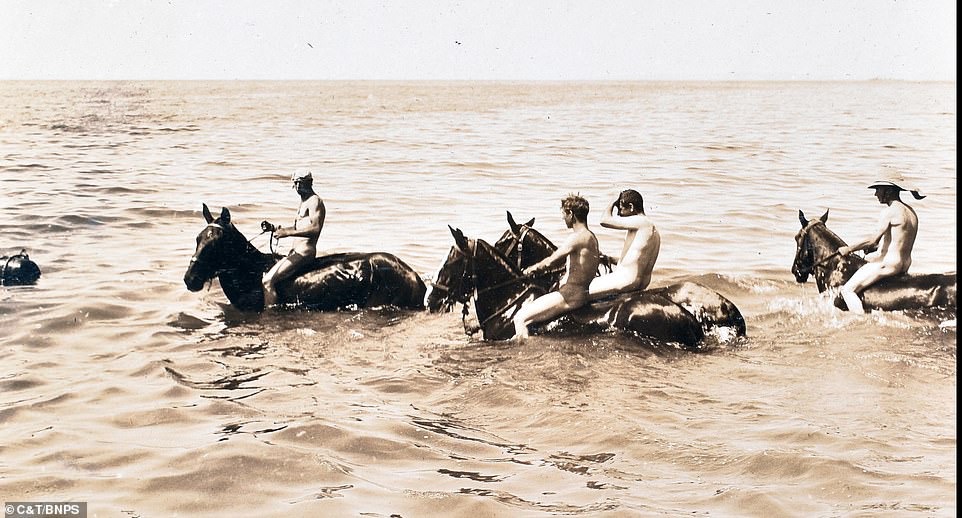
Taking a dip: Soldiers take a break from the heat with their horses in the sea. The men wash their steeds while completely naked as they enjoy a moment away from the battle

A Note on Queer Visibility in WWI Remembrance Culture

Photographs of nude soldiers—while rarely publicized—have existed across multiple conflicts, including World War I and World War II. Often taken in private or semi-artistic contexts, these images captured the male form not only as a symbol of strength and youth, but sometimes as an intimate keepsake, a personal act of vulnerability, or even a quiet expression of queer desire. Though such photographs were uncommon, they remind us that behind every uniform was a body, a story, and a complex humanity often left out of official histories.

Stories like Edgar Garland’s remind us how queer history often survives in the margins—in photographs, in letters, in quiet acts of defiance and longing. Mainstream remembrance of World War I tends to focus on duty, sacrifice, and masculine honor, but it rarely makes space for the hidden lives of queer soldiers. Yet they were there: loving, grieving, and serving alongside their comrades. For some, like Garland, a single photograph may be the closest we get to that truth.

As we commemorate the soldiers of the Great War, it is vital to recognize that their humanity was not confined to the battlefield. Some found intimacy in silence. Some left behind coded artifacts. And some, like Garland, posed for a camera and dared to be seen—fully, tenderly, and without shame.


The First Pride Was a Riot

In the early hours of June 28, 1969, something extraordinary happened on a quiet stretch of Christopher Street in New York City. After years—decades—of police harassment, social invisibility, and the criminalization of queer existence, a group of drag queens, trans women, gay men, and lesbians refused to be silent. When officers raided the Stonewall Inn—a dingy, Mafia-run gay bar in Greenwich Village—the community inside and outside the bar erupted in defiance. What followed were six nights of protest, resistance, and righteous rage. The Stonewall Riots weren’t the beginning of LGBTQ+ activism, but they were the spark that ignited a global fire.

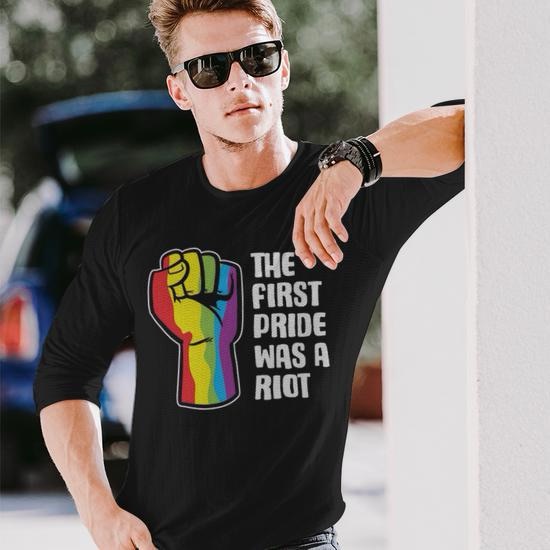
“The First Pride Was a Riot.” That slogan adorns t-shirts, protest signs, and banners today as a reminder that our liberation was not handed to us—it was demanded. It was thrown back in the faces of billy clubs, shouted in the streets, and carved into the consciousness of a country that would rather not have seen us at all. Marsha P. Johnson, Sylvia Rivera, Stormé DeLarverie—names that should be shouted from rooftops—were part of this uprising. They fought not just for acceptance, but for dignity. For survival.

The summer of 1969 marked a turning point. In the year that followed, LGBTQ+ organizations across the U.S. multiplied, and on the anniversary of Stonewall in 1970, the first Pride marches were held in New York, Chicago, and Los Angeles. These were not corporate-sponsored festivals with rainbow floats. They were loud, political, and unapologetic marches for visibility, safety, and rights.

Stonewall happened in a cultural moment when the world was already in upheaval: the Civil Rights Movement, the Women’s Liberation Movement, and anti-Vietnam War protests were reshaping the American political landscape. The gay rights movement joined that chorus—and for a time, especially into the 1970s, it began to sing with joy and newfound sexual freedom. The 1970s became a decade of exploration and visibility. Gay men in particular embraced a new culture of liberation: discos pulsed with rhythm and energy, bathhouses became places not of shame but of connection, and artists, writers, and activists pushed boundaries in the public eye.

But the joy of that revolution would come under brutal siege in the 1980s with the emergence of the AIDS crisis. As friends and lovers died in staggering numbers, the government remained indifferent, slow, and cruelly silent. The queer community rallied again—not just to mourn, but to fight. Groups like ACT UP and the Gay Men’s Health Crisis forced a reluctant nation to see us, to acknowledge our grief and fury. Stonewall had taught us how to protest. AIDS taught us how to organize for our lives.

And still, here we are.

Today, we celebrate Pride with parades, with community, and yes, with joy—but we cannot forget the riot that began it. Nor can we ignore the threats we continue to face. In this current political climate, with a Republican administration openly hostile to LGBTQ+ rights, we are watching hard-won freedoms come under attack. Trans healthcare, anti-discrimination protections, even the right to teach honest history in schools are being stripped away state by state. Pride is not just a celebration—it is a protest. A defiance. A promise that we will not go back.

The Stonewall Riots were not polished, pretty, or corporatized. They were angry, spontaneous, and necessary. We owe our thanks to those brave souls who threw bricks, linked arms, and stood their ground. And we honor them best not just with rainbows—but with resistance.

So wear that shirt with pride: The First Pride Was a Riot. And remember why.

🏳️‍🌈⸻🏳️‍🌈

What does Pride mean to you this year? How do you honor the history while living in the now? Share your reflections in the comments below.


Male-Order Desire: The Bold Legacy of International Male

Long before Grindr profiles and Instagram thirst traps, gay men turned to other sources for affirmation, fantasy, and fashion. And for many, there was nothing quite like opening the mailbox to find the latest issue of International Male—a glossy, unapologetically flamboyant catalog filled with mesh shirts, tight pants, deep V-necks, and men whose smoldering stares made it very clear: this wasn’t just about buying clothes.

From its founding in the 1970s through its peak in the ’80s and ’90s, International Male became a low-key lifeline for gay men across America. And even if it never explicitly said the word “gay,” the message was clear: these clothes—and these bodies—were for you.

International Male was launched in 1974 by Gene Burkard, a San Diego-based entrepreneur with an eye for flamboyant fashion and emerging markets. His goal? To create a mail-order catalog for men who wanted more than just workwear and flannel. This was high-collared, disco-era glam for men who wanted to be seen—and desired.

Though never overtly labeled as gay, the catalog’s aesthetic left little doubt. Muscular male models posed in silky robes, sheer tank tops, and outrageously tight trousers, often in settings that felt more boudoir than boardroom. But because it was technically a fashion catalog, it flew under the radar. For closeted men in conservative towns, this was covert contraband—an acceptable, even respectable way to engage with queer desire.

At its peak in the 1980s and early ’90s, International Male had over 3 million customers. Its sister brand, Undergear, took things even further, focusing almost entirely on underwear and swimwear. Both catalogs were often tucked under beds, stuffed in gym bags, or secretly flipped through while pretending to look for a new blazer.

The magic of International Male was never really about the clothes. It was about fantasy. About possibility. About creating a world where men could be sexy, flamboyant, and free.

For gay men—especially those in the pre-Internet era—the catalog served as coded affirmation. It said, “You’re not alone.” It offered a vision of masculinity that didn’t have to be rugged or repressed. It could be styled, sensual, even sultry.

As queer studies scholar Shaun Cole writes in Don We Now Our Gay Apparel, catalogs like International Male offered not just fashion but “performances of masculinity” that pushed boundaries and created new scripts for how men could look and be seen.

Other Icons of Queer Print Culture

International Male wasn’t alone. There was a whole universe of catalogs, zines, and magazines that played pivotal roles in gay history:

Physique Pictorial (1951–1990)

Launched by Bob Mizer, this “fitness” magazine was the first to feature nearly nude muscular men in a semi-legit format. It helped launch the careers of models like Joe Dallesandro and inspired generations of artists, including Tom of Finland.

Honcho, Mandate, and Blueboy (1970s–1990s)

Glossy gay lifestyle and erotica magazines that blended porn, interviews, fashion, and personal ads. They gave gay men access to a world far larger and more glamorous than their own.

A&F Quarterly (1997–2003)

While technically a catalog for Abercrombie & Fitch, under Bruce Weber’s lens it became a bold, glossy celebration of homoerotic youth culture—shirtless boys in golden fields, bathed in natural light and coded desire.

Undergear

A spinoff of International Male, this catalog was even more explicitly erotic—offering thongs, jockstraps, sheer briefs, and loungewear photographed with far less subtlety.

BUTT Magazine (2001–2016)

Launched in Amsterdam, BUTT was an indie, raw, and refreshingly honest publication that celebrated gay sex, intimacy, and everyday life. Pink pages, candid interviews, and gritty photography made it a cult favorite.

The Argument for Art

As with erotic photography and gay porn cinema, there’s a growing argument that catalogs like International Male should be remembered not just as pop culture oddities but as legitimate artifacts of queer history and visual art.

They reflect the shifting landscape of male identity. They archive our fantasies, our insecurities, our attempts to be beautiful in a world that once told us we didn’t belong.

Today, collectors preserve International Male catalogs as kitsch, camp, and cultural gold. Exhibitions of old issues have appeared in queer history museums, and documentaries (like All Man: The International Male Story, 2022) are reclaiming the catalog’s legacy as both fashion history and queer resistance.

For many gay men, flipping through International Male was a ritual—a private moment of longing and laughter. It was how you discovered new shirts and new dreams. How you imagined a body that might one day be yours—or in your bed.

And perhaps that’s the enduring power of such catalogs and magazines: they made desire visible. They turned clothing into code, fashion into fantasy, and mail-order into memory.

So, here’s to International Male—to its satin shirts, its sultry stares, its sneaky subversiveness. It was never just about the clothes. It was always about the possibility of being seen.

Further Reading and Viewing