 |
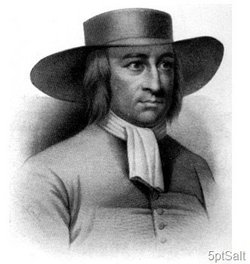
| Michael Wigglesworth |
When I was doing research at the Massachusetts Historical Society a few years ago for my dissertation, I did some research into the Wigglesworth Family Papers. My primary concern at the time were the diaries of Anna and George Wigglesworth and their travels to Europe in the mid 19th century. However, as I was looking through the OutHistory.org internet archives, that I blogged about yesterday, I came across the Reverent Michael Wigglesworth (1631–1705) who was a Puritan minister and poet. His most famous poem The Day of Doom was a bestseller in early New England. Wigglesworth is included in OutHistory.org’s section called “Age of Sodomitical Sin: 1607-1776” because of his extraordinary diary. I wanted to share this article with you because I found it so fascinating.
“Too much doting affection”
The extraordinary diary of the Reverend Wigglesworth documents the inner life of this Puritan divine, famous as the author of the poem “Day of Doom,” a popular classic in the New England hellfire and brimstone tradition. [1]His diary reveals that while Wigglesworth was a tutor at Harvard he was tormented by sexual feelings for his male students — feelings experienced as deeply sinful.
Historian Edmund Morgan’s introduction to the published edition of Wigglesworth’s diary admits that “We should scarcely exaggerate … if we described Michael Wigglesworth as a morbid, humorless, selfish busybody,” an “ugly,” “absurd,” “pathetic” cartoon caricature of a Puritan.[2]
As a striking example of the strict Puritan of popular imagination, Wigglesworth is a problem for those historians who, led by Edmund Morgan, have criticized the popular view of the early Puritans as “grossly overdrawn.” The Puritans, Morgan stressed, did not exclude “enjoyment”; they “read books, wrote verse,” “had their pictures painted,” were “unashamedly fond” of beer, wine, and harder liquors, liked to eat well, “made no pretensions to asceticism:’ were “not prudish,” and made “no attempt to stiffle natural passions in celibacy.”
Morgan then admitted that “the mark of the Puritan” was “his zeal, his suspicion of pleasure, his sense of guilt.” Those characteristics in Wigglesworth are not evidence of any purely individual eccentricity, but were “simply the qualities demanded of a good Puritan.” Many of Wigglesworth’s contemporaries were probably not quite so distressed by their inability to live up to the demands of a religious ideal. Philip Greven’s differentiation of colonial Protestants as strict “Evangelical,” “Moderate,” and “Genteel” usefully suggests a wider, and probably more realistic range of colonial personalities. Greven does view Wigglesworth’s extreme sense of sin as typical of the evangelical personality, however. And it was this strict Puritanism that was institutionalized in early statutes and in many prosecutions. Wigglesworth’s writing for New England “the most popular book of his time,” his teaching at Harvard, and his ministerial service to a Puritan congregation all suggest that his views were not unique, and appealed to a common chord in the early colonists.
Of special interest here are Wigglesworth’s intimate, problematic relationships with males, worldly and otherworldly, in particular with his father, his Harvard students, with God his “father,” and with Christ. Wigglesworth’s loving these, and being loved by them, either not enough or (in some cases) too much, was a central and continuing preoccupation. His feeling that his earthly loves detracted from his love for God indicates a concept of love as a scarce and limited good. Wigglesworth’s thinking of himself as a Bride of Christ (as did other evangelicals, male and female) sometimes led him to speak of kissing and embracing his “husband,” a metaphor with distinctly erotic overtones. Such ideas, together with his entries on marriage, make Wigglesworth’s diary quite a complete and amazing account of early Puritan sexual and affectional life.
Throughout his diary, Wigglesworth often referred to an earthly “creature” who kept stealing his affection away from God. That “creature” was usually earthly comfort in general. But in the early entries especially, that seductive “creature” often turns out to be Wigglesworth’s male students. It seems that one of the sins that made the Day of Judgment a “Day of Doom” for Wigglesworth was his “too much doting affection” for young Harvard males.
The most explicit sexual passages in the diary were written in a special shorthand code (decoded and printed in italics as in Morgan’s edition). While Wigglesworth reported his sins quite frankly to God, his code suggests he wanted to keep them hidden from his fellow humans.
In the first entry, dating to February 1653, Wigglesworth asked:
If the unloving carriages of my pupils can go so to my heart as they do; how then do my vain thoughts, my detestable pride, my unnaturalfilthy lust that are so oJt and even this day in some measure stirring in me . . . ?[3]
On February 7, Wigglesworth feared
there is much sensuality and doting upon the creature in my pursuit of the good of others… [4]
On February 15, Wigglesworth declared:
Lord I am vile, I desire to abhor my self (0 that I could!)…. I find such unresistable torments of carnal lusts or provocation unto the ejection of seed that I find my self unable to read anything to inform me about my distemper because oj the prevailing or rising of my lusts. . . . [5]
On February 17, 1653, Wigglesworth wrote:
The last night a filthy dream and so pollution escaped me in my sleep for which I desire to hang down my head with shame and beseech the Lord not to make me possess the sin of my youth and give me into the hands of my abomination. [6]
On February 26, he noted: “Some filthiness escaped me in a filthy dream. The Lord notwithstanding.” He fretted that when his affections were taken up with doing good, “it is very hard for me to set my heart upon God himself and not to rest in the creature. “
[7]On March 5, 1653, Wigglesworth recorded: much distracted thoughts I find arising from too much doting affection to some of my pupils one of whom went to Boston with me today. He felt no power to love God, he said, “my spirit is so leavened with love to the creature. This frame I am afraid of.”
[8]On April 1, Wigglesworth asked the Lord, his “father,” to “witness my daily sensual glutting my heart with creature comforts.”
[9]And, on April 5, Wigglesworth found
vain distracting thoughts molested me in holy duties. I find my spirit so exceedingly carried with love to my pupils that I can’t tell how to take up my rest in God. Lord for this cause I am afraid of my wicked heart. Fear takes hold of me. [10]
One morning in April, Wigglesworth wondered “will the Lord now again return and embrace me in the arms of his dearest love? Will he fall upon my neck and kiss me?” He then lamented that his love for God had grown cold; he was also “afraid” of his “want of natural affection” for his parents.
[11]At the end of April, Wigglesworth begged God to “give me some sweet soul ravishing communion with thy self. “
[12] He also recorded “whorish desertions of my heart from God to the creature.” Wigglesworth noted his “cooling affections” for God, and his “whorish outgoings of heart after other things. I fear my pupils formerly, and now my ease and sloth and pleasure are getting oft between christ and me.” Despite such “backslidings” Wigglesworth thought that God did not “upbraid me of my other lovers.” As a Bride of Christ he begged the Lord to restore “the love of my espousals thine to me and mine to thee.”
[13]On April 27, Wigglesworth told the Lord: “I seek at the hands of a father pardon and power over my still prevailing lusts, principally pride and sensuality, want of love to thee and fervent desires after communion with thee.”
[14] Unable to savor communion with God “above communion with men,” Wigglesworth felt unworthy.
[15]Click on more for the rest of this passage.
On June 24, Wigglesworth warned a rebellious Harvard student of “the dangers of pleasure”; the minister was later distraught to find that same student “at play” and making music “with ill company.”[16]
On July 4 and 5, Wigglesworth reported:
such filthy lust also flowing from myfond affection tomypupils whiles in their presence … that I confess myself an object of God’s loathing. . . . [17]
On July 7, Wigglesworth complained that he was so involved in his own business, and in “my pupils’ good,” that he had lost his love for God, and feared his “own spirit of whoredoms.” He prayed: “O give me a new heart a circumcized heart,” so he could again love “harking to God’s covenant.”
[18]On October 14, Wigglesworth thought of “my want of love and dutifulness to my parents,” and “the very next morning news is brought me of my father’s death.”
On October 18, he prayed for grace, wondering whether “I might not be secretly glad that my father was gone.” He added:
The last night some filthiness in a vile dream escaped me for which I loath myself and desire to abase myself before my God. [19]
On November 9, Wigglesworth told the Lord:
when thou showest me my face r abhor myself. Who can bring a clean thing out of filthiness. I was conceived bred brought up in sin.
He reported “too much savoring of the creature.”
[20]On November 30, Wigglesworth told the Lord that he knew he deserved “to be kicked out of this world because I have not had natural affections to my natural father,” because he had thought evil of all his “governors,” and because he had “rebell’d against … my heavenly father.” He asked the Lord not to punish and destroy others for his sins, mentioning one of his pupils who had been “taken away for my sin in too eager seeking their good.”
[21]On December 4, Wigglesworth wondered if he should get married, and hoped the Lord would guide him “in the weighty business that troubles me.”
[22]On February 15, 1655, Wigglesworth referred to “my weakness,” an “affiiction” which exposed him to “sin and temptations by day,” and caused him “dreams and self pollution by night.” Wigglesworth’s “weakness” (which he distinguished from “wantonness”) was apparently gonorrhea — with which he imagined himself to be diseased, and which he apparently thought of as provoking his sexual sins.
[23] He also mused that
To continue in a single estate, Is both uncomfortable many ways, and dangerous (as I conceive) to my life, and exposeth to sin, and contrary to engagement of affections, and Friends’ expectations, and liable to the harsh censure of the world that expecteth the quite contrary.
Yet he also believed that to get married and
change my condition endangers to bring me into a pining and loathsome disease, to a wretched life and miserable death and consequently 1 fear it would be injurious to another besides my self…[24]
Wigglesworth seems to have thought that the availability of marital intercourse would increase both his lust and his bodily infirmity. He admitted that no one knew of his infirmities, that he had not talked to anybody about them, and had “even been afraid to pray for myself,” since he feared to think much of his “sad condition.” But with “spring approaching” he had written for advice to John Winthrop, Jr., son of the governor, to John Alcock, a doctor, and to John Rogers, a minister. He had also written and proposed to his cousin, Mary Reyner, “dealing plainly with her in the business, what danger I apprehended,” so that she would “know with whom she matches.”
On February 18, he reported preaching in public on the “sins of these times and places. “
[25]On February 22, Wigglesworth declared himself
much overborn with carnal concupiscence nature being suppressed for I had not had my afflux [emission] in 12 nights. Friday night it came again without any dream that I know of Yet after it I am still inclined to lust. The Lord help’me against it and against discouragement by it and against temptations of another nature and disquietments.[26]
On March 7, Wigglesworth wrote:
I begin to think marriage will be necessary for me'(as an ordinance of God appointed to maintain purity…).[27]
On March 12 and 13, Wigglesworth reported that “fleshly lusts” were “sometimes too strong in me.” He was ashamed
that I wrong and grieve [Christ] my head and husband so by not loving and delighting in his presence; by my liking other loves more than him. Ah Lord! I pull down evils upon others as well as myself. Sickness, death of godly ones, wants, divisions, have not my sins a hand in these miseries?[28]
On March 18, Wigglesworth remarked that “sabbaths are blessed seasons wherein poor wandering harlots, may return to their husband again.” (The harlot of the metaphor was Wigglesworth himself, the husband, Christ.)
[29]At the beginning of April, Wigglesworth, despite a fever, hastened to Massachusetts Bay “To redeem the spring time for marrying or taking physic, or both.” There, Dr. Alcock advised him “to proceed with the business of marriage.” The Reverend Rogers, however, advised “physick” first, marriage later. But after “a little reasoning,” and a “fuller declaration of my illness,” The Reverend Rogers also advised the “consumation” of Wigglesworth’s planned marriage.
[30]Wigglesworth was ready to be “contracted” in marriage when the return of his “weakness” made him consult Dr. Alcock again. The doctor thought it would be a longer, more tedious, difficult cure by “physick” than “he hoped it would be by marriage.” Alcock told Wigglesworth that many other men had taken the marriage cure “with good success.” The doctor also told Wigglesworth “that mine was not vera Gon” (gonorrhea), but a condition caused by “a little acrimony” gathering in the mouth, which caused “humours to flow.” Marriage “would take away the cause of that distemper.”
Because of the inconvenience of “physick,” the “great charge and expense,” and Wigglesworth’s inability to live “with comfort and honesty” as long as he was single, he decided that “god calleth to a speedy change of my condition, which I therefore desire to attend as a duty.” Resolving further doubts about “the lawfulness of marrying with a Kinswoman,” Wigglesworth was “contracted” with his cousin.
[31]“At the time appointed,” he reported, “with fear and trembling I came to Rowley to be married.” Because of “Physicians’ counsel,” and because “the institution of marriage” had been created by God “for the preservation of purity and chastity,” Wigglesworth “went about the business which god call’d me to attend. And consumated it … by the will of god May 18, 1655.”
[32] The day following he noted:
I feel stirrings and strongly of my former distemper even after the use of marriage the next day which makes me exceeding afraid.[33]
On July 28, he thanked the Lord for “so much comfort in a married estate contrary to my fears.”
[34]On September 10, he recorded, of himself and his wife,
we can’t lay severally [apart]without obloquy and reproach neither can we lay together without exposing me to the return of grievous disease.[35]
On September 16, Wigglesworth reported:
some night pollution escaped me notwithstanding my earnest prayer to the contrary which brought to mind my old sins now too much forgotten . . . together with my later sins. [36]
In 1657 Wigglesworth still found his heart “as carnal as some years since,” and begged: “mortify Lord these earthly members.” He prayed: “let curiousness die this day for the Lord sake. I feel and I fear it.”
[37]In an undated section in the back of his diary Wigglesworth wrote a list of “Considerations against Pride.” This sin, he noted, “was the ringleader of Sodom’s sins, and pull’d down streams of fire and brimstone upon their heads.” Wigglesworth thought he retained “a Sodom [of pride] within the temple of the holy-ghost [his body].” He reiterated: “Sodom’s ringleading sin” was that its citizens “were proud and haughty and they must fry in the flame of fire for it.”
[38]
- ↑ Jonathan Ned Katz, Gay/Lesbian Almanac (NY: Harper & Row, 1983), p. 94-100 citing Michael Wigglesworth, The Diary of … 1653-1657′; The Conscience of a Puritan, edited with an introduction by Edmund S. Morgan (New York: Harper & Row, 1965). Also see Philip Greven’s comments on Wigglesworth in The Protestant Temperament.
- ↑ Wigglesworth, Diary, viii.
- ↑ Wigglesworth, Diary, p. 3.
- ↑ Wigglesworth, Diary, p. 3.
- ↑ Wigglesworth, Diary, p. 4.
- ↑ Wigglesworth, Diary, p. 5.
- ↑ Wigglesworth, Diary, p. 6.
- ↑ Wigglesworth, Diary, p. 9.
- ↑ Wigglesworth, Diary, p. 10.
- ↑ Wigglesworth, Diary, p. 11.
- ↑ Wigglesworth, Diary, p. 13.
- ↑ Wigglesworth, Diary, p. 15.
- ↑ Wigglesworth, Diary, p. 17.
- ↑ Wigglesworth, Diary, p. 19.
- ↑ Wigglesworth, Diary, p. 20.
- ↑ Wigglesworth, Diary, p. 27.
- ↑ Wigglesworth, Diary, p. 30-32.
- ↑ Wigglesworth, Diary, p. 31.
- ↑ Wigglesworth, Diary, p. 50.
- ↑ Wigglesworth, Diary, p. 53.
- ↑ Wigglesworth, Diary, p. 57.
- ↑ Wigglesworth, Diary, p. 78.
- ↑ Wigglesworth, Diary, p. 86 n. 42.
- ↑ Wigglesworth, Diary, p. 79.
- ↑ Wigglesworth, Diary, p. 80.
- ↑ Wigglesworth, Diary, p. 80-81.
- ↑ Wigglesworth, Diary, p. 81.
- ↑ Wigglesworth, Diary, p. 82.
- ↑ Wigglesworth, Diary, p. 82.
- ↑ Wigglesworth, Diary, p. 85-86.
- ↑ Wigglesworth, Diary, p. 86-87.
- ↑ Wigglesworth, Diary, p. 87.
- ↑ Wigglesworth, Diary, p. 87-88.
- ↑ Wigglesworth, Diary, p. 88-89.
- ↑ Wigglesworth, Diary, p. 92.
- ↑ Wigglesworth, Diary, p. 87-93.
- ↑ Wigglesworth, Diary, p. 98.
- ↑ Wigglesworth, Diary, p. 104.

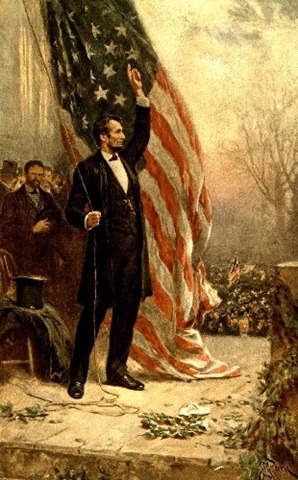
 The notion that Lincoln was a homosexual also portrays nearly perfectly two of my major pet peeves with historians. First, much of the argument is taken out of its historical context, and second, the authors who expound on this notion have no historical objectivity. I will explain these two pet peeves of mine as I relate the supposed homosexuality of Abraham Lincoln. Mostly, I will explain what is wrong with the theories of Lincoln’s homosexuality. If you are not familiar with the arguments concerning Lincoln’s homosexuality, please read the suggested readings below.
 The notion that Lincoln was a homosexual also portrays nearly perfectly two of my major pet peeves with historians. First, much of the argument is taken out of its historical context, and second, the authors who expound on this notion have no historical objectivity. I will explain these two pet peeves of mine as I relate the supposed homosexuality of Abraham Lincoln. Mostly, I will explain what is wrong with the theories of Lincoln’s homosexuality. If you are not familiar with the arguments concerning Lincoln’s homosexuality, please read the suggested readings below.
 In The Intimate World of Abraham Lincoln
 , C. A. Tripp contends that Lincoln had erotic attractions and attachments to men throughout his life, from his youth to his presidency. He further argues that Lincoln’s relationships with women were either invented by biographers (his love of Ann Rutledge) or were desolate botches (his courtship of Mary Owens and his marriage to Mary Todd). Tripp is not the first to argue that Lincoln was homosexual — earlier writers have parsed his friendship with Joshua Speed, the young store owner he lived with after moving to Springfield, Ill. — but he assembles a mass of evidence and tries to make sense of it.
 Tripp died in May 2003, after finishing the manuscript of this book, which means he never had a chance to fix its flaws. Tripp alternates shrewd guesses and modest judgments with bluster and fantasy. He drags in references to Alfred Kinsey (with whom he once worked) to give his arguments a (spurious) scientific sheen. And he has an ax to grind. Not only did he work with Kinsey, but Tripp was a well-known gay activist and psychologist. By the way, psychologists who write psycho-history are often the worst type of historians. They have very little understanding of the craft and they use their knowledge of psychology to interpret historical data. The same goes for most journalists, who do not have the same standards as historians when it comes to citing their sources. Psychologists who write history too often apply Freudian and Jungian psychology to people who had never had any knowledge of this type of psychoanalyzing.
 Intimacy between men was much more common and less sexually laced in the 19th century than it was in the later part of the 20th century. In 19th century America, men commonly slept with other men. For example, when lawyers and judges traveled “the circuit” with Lincoln, the lawyers often slept “two in a bed and eight in a room.” William H. Herndon recalled, “I have slept with 20 men in the same room.” A tabulation of historical sources shows that Lincoln slept with at least 11 boys and men during his youth and adulthood. There are no known instances in which Lincoln tried to suppress knowledge or discussion of such arrangements, and in some conversations, raised the subject himself. Tripp, who was not aware of this large number of Lincoln’s male co-sleepers, discusses only three of them at length: Joshua Speed, William Greene, and Charles Derickson.







 Joe
Joe


