Category Archives: History

What Can GLBT People Learn from the Harlem Renaissance?

Justin at A Gay College Guy in Virginia was so kind in giving a shout out to both this blog and my other blog.  Justin recently revealed on his blog that he will be taking a class on African American Literature this semester. In honor of Justin and the class that he is taking, I was inspired to write several posts about the Harlem Renaissance, one of the richest periods in American art and literature for African American artists.  Many of the topics of the literature of the Harlem Renaissance can be seen as an analogy for the plight of GLBT people in America and around the world as we work everyday for further acceptance, not to mention the number of gay and lesbian artists that made the Harlem Renaissance possible.
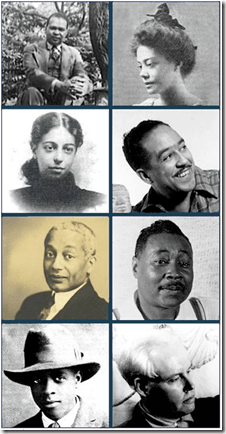
imageKnown also by the names Black Renaissance or New Negro Movement, the Harlem Renaissance represented a cultural movement among African Americans roughly between the end of World War I (1918) and the beginning of the Great Depression (1929). The names given to this movement reveal its essential features. Certainly the words “black” and “Negro” mean that this movement centered on African Americans, and the term “renaissance” indicates that something new was born or, more accurately, that a cultural spirit was reawakened in African American cultural life. Although most historians remember the Harlem Renaissance as a literary movement, in fact, African Americans during the 1920s also made great strides in musical and visual arts, as well as science. Finally, the focus on Harlem—an old Dutch-built neighborhood of New York City—indicates that this “renaissance” was something of an urban phenomenon. In fact, the exciting developments in African American cultural life of the 1920s were not limited to Harlem, but also had roots in other urban communities where black Americans migrated in great numbers: East St. Louis, Illinois; Chicago’s south side; and Washington, D.C.  The Harlem Renaissance included several important gay and lesbian writers.
The artists of the Harlem Renaissance forwarded two goals. Like the journalists and other “crusaders” of the Progressive era, black authors tried to point out the injustices of racism in American life. Second, newspaper editors, activists, authors, and other artists began to promote a more unified and positive culture among African Americans. Early efforts to publicize a more unified consciousness among African Americans included two publications in 1919: Robert Kerlin’s collection of editorial material in Voice of the Negro and Emmett Scott’s Letters from Negro Migrants. On the political front, leaders such as Marcus Garvey began to put forth plans for black economic self-sufficiency, political separatism, and the creation of a cross-national African consciousness.
image Several important developments during the World War I era gave rise to the Harlem Renaissance. First, black southerners since the turn of the century had been moving in large numbers to the North’s industrial cities. As a result, southern blacks who had been denied their political rights and had resorted to sharecropping as a means of livelihood came into contact with northern African Americans who were more often the descendants of free blacks and, therefore, had better access to education and employment. Additionally, black Americans moving to the cities had much to complain about. World War I, the so-called war to make the world safe for democracy, had been a bitter experience for most African Americans. The U.S. Army was rigidly segregated, race riots broke out in many American cities during or immediately after the war, and the North was residentially and economically segregated like the South, despite the absence of Jim Crow Laws.

Gays, Lesbians and The Harlem Renaissance

The culture of the Harlem Renaissance was one that was open to sexual exploration and gays and lesbians, both Black and White, found a community there. The jazz and blues clubs of Harlem felt like a welcoming place to gays and lesbians of different races. Author Arwyn Moore claims that many white gays and lesbians who frequented Harlem nightlife became a part of the Black culture: listening to the music, reading the literature and most importantly, relating to common prejudice and bigotry both experienced from the greater mainstream culture.

Rent Parties

In addition to the clubs of Harlem, private rent parties became a place where gays and lesbians could dance and socialize without fear of being arrested. Rent parties were private parties that people threw in their apartments to raise image rent. Rent parties became places for gays and lesbians to mingle in relative safety.

Out Blues Musicians

The Blues music that was popular at the time was also an attraction for gays and lesbians. Many of the lyrics spoke of gender-bending men and women, blurring of sexual boundaries and same-sex attraction. One of the most famous Blues singers of that time was Gladys Bentley who was notorious for wearing men’s clothing on stage and for her marriage to another woman.
Ma Rainey was another Black lesbian singer, her famous song begged listeners to “Prove it on Me.” Ma Rainey was said to have had a relationship with bisexual singer Bessie Smith.


Five Years Ago…

image At this moment, five years ago, I sat having brunch with my roommate, not knowing that in the next twelve hours, my world would be turned upside down.  We returned home form brunch, she passed out from too many mimosas, and I sat and watched in horror as a hurricane covered the whole Gulf of Mexico.  It was coming straight for us and was steadily strengthening.  I tried to wake my roommate to see if she wanted to evacuate, but once she had been drinking, not much would wake her until she had recovered.  The news from the Weather Channel got increasingly worse.  We had to get out of there. Finally, she woke up and realized the same thing.

image I had lived through hurricanes before, nothing though on this magnitude.  What most people don’t realize is that living inland an hour or two away from the coast can still be a devastating place.  The tidal surge is not as much of a concern for us as is the tornadoes and winds that come with the storm as it makes its way inland.  We decided not to wait out the storm and left town, almost too late.  The wind and rain had already begun.  We took a more rural course to avoid the massive traffic delays.  Finally, late into the night, we reached Texas and found a hotel room.  There, we were stuck for the next five day, in a town whose cable service refused to have any other news service but Fox News.  We watched as the levees broke in New Orleans, hoping to hear reports from home.  They didn’t come.

image On Thursday, we decided that it was time to head back home.  The closer we got, the more devastation and destruction we saw.  Roads were closed due to the number of trees that had fallen and not enough manpower was available to clear them.  Other roads that had been opened were closed to most traffic except for relief workers and emergency personnel. The devastation we saw was indescribable, and we weren’t even headed to New Orleans or the Gulf Coast. The most difficult part of the journey was finding a gas station that had both electricity and gas.  Most of the stations had run out and did not know when more could be delivered.  Most of the other stations had not had electricity restored to them and remained closed.

imageFinally, we got near home to see the street next to us with hundreds of pine trees piled up and completely blocking the road.  It looked more like a lumber yard than a residential neighborhood.  A tornado had landed in our neighborhood.  We passed a nearby church, that had been set up as a tent city.  Tents were all that many people had left.  Food and water was in short supply and everyone was trying to help out. Then we turned on our street.  I was wholly unprepared for the sight that was there.  The houses around us were largely spared.  Our house was barely visible from the pine trees that lay on top of it.  Thankfully, it was a sturdy house and the walls had survived.  One tree had gone through the roof like an arrow, leaving a hole in the roof that pierced though the air conditioner ducts and and eventually stuck out of the living room.  That one tree had done the most damage, for as the rain continued, the water flowed through the air conditioner ducts and out the vents, leaving what looked like waterfall paintings down the walls.  The carpet was sopping wet and with the humidity and heat, minus air conditioning, the house felt like a sauna.   The hundreds of books in my home office were destroyed with water damage, and most of my clothes were ruined by the same waterfalls that had come through the air conditioner ducts.  Those that weren’t destroyed by the water rushing into the house were already beginning to mold from the heat and humidity.

imageSuddenly, I had found myself homeless, since the house was utterly unlivable.  Family and friends came with trucks, trailers, and extra gas to load up my belongings and take them to a storage unit in the town my parents lived.  My life had suddenly been packed away in boxes and put into storage.  I would not find another permanent place to live for over a year.  During that year, I was forced to live in the schools dorms.  It was all that was available.  Then, a friend of mine had grandparents with an extra house and they allowed me to live there for the next six months.  Finally, things began to settle down and life returned somewhat to normal, but it has been a long process.  It is also one of the reasons that I am still in graduate school because certain milestones of my degree process had to be put off for months because of the turmoil caused by Katrina.

image New Orleans is what you hear about most in the news.  It was the larges city hit by the disaster and the floods caused by the levees breaking were extremely destructive.  What most of the news accounts today are forgetting is that the Mississippi Gulf Coast was what was where the hurricane made landfall.  The cities of Bay St. Louis and Waveland were wiped off the map.  They have rebuilt but it was a slow and long process.  The devastation was so great that the two towns discussed merging and becoming Bayland, because the destruction seemed too insurmountable.  They honestly wondered if they could rebuild the cities from the ground up.  The cities of Long Beach, Gulfport, and Biloxi were equally devastated.  Antebellum homes that had stood for over 100 years, and had survived Hurricane Camille in 1969, were lost forever.  Only the foundations remained, nothing else could even be seen of these houses.  Two universities were forced to close because of the devastation wrought by the storm. One never did rebuild and chose to concentrate their efforts on their other campus.  The other took up residence in an old abandoned hospital while they attempted to rebuild in a new location a few more mile inland.

So as the discussion of Katrina is on the news today, please remember that it was not just New Orleans that suffered.  It was the whole Gulf Coast from New Orleans to Pensacola, Florida.  Also, remember that the hurricane and its destruction did not end after it made landfall. The destruction continued inland for hundreds of miles.  South of Interstate-10 was hit the hardest, but inland the destruction reached all the way to Interstate-20.


Edward II, Queen of England?

The stern but dead Edward IThe fourteenth-century English king, Edward I was “afflicted” with a son who did not live up to the manly expectations he had for him; his son, Edward, liked gardening and shoeing horses more than jousting. Modern sensibilities aside, in the world of medieval royalty, such unmanly pursuits were simply unworthy of a future king. To clear up the problem, Edward I (also known as Edward Longshanks, “The Hammer of the Scots”) appointed him a wildly charismatic squire named Piers Gaveston from Gascony. The hope was that this successful, talented young man might rub off on young Edward. The two got on famously. A bit too famously:

…and when the King’s son saw him he fell so much in love that he entered upon an enduring compact with him, and chose and determined to knit an indissoluble bond with him, before all other mortals.

Other chroniclers note that the King feared Gaveston “loved his son inordinately,” that the younger Edward “had an inordinate affection for a certain Gascon knight,” and that the Gascon might find himself in trouble “on account of the undue intimacy which the young Lord Edward had adopted towards him.”

Medieval boys huntingBefore long, the King was looking for excuses to keep the two apart. The youngsters had gotten into trouble by trespassing onto the Bishop of Coventry’s property and poaching the Bishop’s deer, and the King seized upon this incident as an opportunity to separate them for a few months. However, rather than send away the squire, Edward removed his own son (their relationship was, admittedly, chilly). Young Edward was absent from court for the summer of 1305, and Gaveston was left without a playmate.

G3VRD00Z The happy pair couldn’t be kept apart forever. Edward returned to court, and before long he was bestowing gifts, titles and land on Gaveston. In one particularly bold move in April of 1307 he asked his father Edward I to make Gaveston the Count of Ponthieu, which was a pretty modest title but did include a fair bit of land. King Edward, who’d spent a lot of his time battling the Scots (and would later leave his son in rather a poor position there), would have none of it:

You baseborn whoreson! Do you want to give lands away now, you who never gained any? As the Lord lives, if it were not for fear of breaking up the kingdom you should never enjoy your inheritance!

King Edward reached forward and grabbed a handful of his son’s hair, and yanked it clean out. Gaveston was banished from England entirely, but Prince Edward followed him out, showering him with tapestries, quilts, assorted other presents and easy money. This banishment only lasted about three months, because Edward I died on July 7. This left Prince Edward, now Edward II, free to indulge himself.

The Reign of Edward II

image As such, the first thing Edward II did was recall Gaveston and appoint the man earl of Cornwall and give him tons of money. Gaveston was also immediately slated to marry Edward’s niece, even though his taste in girls was, well, somewhat questionable. The new king also stripped the bishop of Coventry (he of the poached deer) of his title and imprisoned the bishop in the Tower of London. Things went downhill from there.

At Gaveston’s wedding, Edward called for games and jousting, at which the young groom and his coterie excelled. This tweaked the old baronial guard to no end. Those nobles who enjoyed power during Edward I’s reign were now second-fiddle to the dashing young king, and a newcomer at that. To make matters worse, when out making arrangements for his royal marriage, Edward made Gaveston regent rather than any of the other more experienced, highly-placed barons. Edward had also been efficiently depleting the crown’s coffers by bestowing outrageous gifts on his friend. As contemporary chroniclers wrote,

Our King… was incapable of moderate favor, and on account of [Gaveston] was said to forget himself, and so [Gaveston] was accounted a sorcerer.

When Edward returned with his new bride Isabella, Gaveston met them toting so much jewelry he “quite eclipsed the king.” The king ditched his bride and ran to Gaveston, embracing him tightly, crying, “Brother, brother!” Isabella’s father, King Philip IV of France, had given Edward some fancy jewelry which was found to be hanging on Gaveston’s neck the very next day. This angered many of the nobles, and it was simply bad form for someone else to shows up wearing your wedding presents a few days after the ceremony.

English Nobles and Their Hatred of Gaveston

Several contemporary sources criticized Edward’s seeming infatuation with image Piers Gaveston, to the extent that he ignored and humiliated his wife. Chroniclers called the relationship excessive, immoderate, beyond measure and reason and criticized his desire for wicked and forbidden sex. The Westminster chronicler claimed that Gaveston had led Edward to reject the sweet embraces of his wife; while the Meaux Chronicle (written several decades later) took concern further and complained that, Edward took too much delight in sodomy. While such sources do not, in themselves, prove that Edward and Gaveston were lovers, they at least show that some contemporaries and later writers thought strongly that this might be the case.

Gaveston was considered to be athletic and handsome; he was a few years older than Edward and had seen military service in Flanders before becoming Edward’s close companion. He was known to have a quick, biting wit, and his fortunes continued to ascend as Edward obtained more honors for him, including the Earldom of Cornwall. Earlier, Edward I had attempted to control the situation by exiling Gaveston from England. However, upon the elder king’s death in 1307, Edward II immediately recalled him. Isabella’s marriage to Edward subsequently took place in 1308. Almost immediately, she wrote to her father, Philip the Fair, complaining of Edward’s behavior.

Gaveston the upstart was proving to be such a pain that a group of nobles threatened to boycott the coronation unless he wasn’t allowed to be there. Diplomatic Edward assured them he wouldn’t. Of course, he showed up anyway. Not only did he show up, but he was in the processional line carrying the crown, dressed in royal purple sewn with pearls, “so decked out that he more resembled the god Mars than an ordinary mortal.” Barons scrambled to throw him out or kill him outright, but, with some effort, calmed themselves.

As it turned out, Gaveston had also insisted upon coordinating the entire event, and he flubbed it completely. The ceremony ran over by three full hours and was short of seats, forcing nobility to stand. Standing room in the back was so crowded that a knight was suffocated underfoot. Even with the extra time, the banquet wasn’t ready when it finished. Food was poorly cooked and service was reportedly very poor. The ceremony was a complete disaster, and only because a certain Gascon had worked his way deeply in the king’s favor. It wasn’t long before Queen Isabella, by all accounts a charming, beautiful person, was writing her father that “I am the most wretched of wives,” and that Edward was “an entire stranger in my bed.”

Earls to Swine

Clearly, this situation couldn’t last. An overwhelming majority of barons got together and announced that this had gone far enough, and that Gaveston had to go. To be sure, Edward would not be the first or last English king to whore around the kingdom but, medieval attitudes towards homosexuality being seen as sinful and blasphemous, something bad was eventually bound to happen. Edward, surrounded by powerful, strong-willed men, capitulated, stripped Gaveston of his titles and land, and sent him off to Ireland. To make sure he wasn’t coming back, the bishops announced that the Gaveston would be excommunicated if he ever set foot back in England. However, before long, he lobbied the pope strongly and got the excommunication threat removed. He returned, and Edward obligingly appointed him to be the earl of Cornwall again. Three years later, the barons again united in disgust and threw Gaveston out. To reign in the king’s expenses they also took over his finances, in his words, “as one would provide for an idiot.”

Gaveston was back before long, associating openly with Edward, who made him earl of Cornwall for the third time. The bishops excommunicated Gaveston; the lords prepared for civil war. The king and his favorite fled to Scotland, hoping to secure safety there, but to no avail. As armies commanded by the Ordainers approached the couple in Newcastle, they fled, leaving behind not only household servants, furniture, and treasure, but Edward’s long-suffering wife Isabella. She was three months pregnant. If nothing else, she enjoyed a modicum of popular support, having been yanked around the country by her husband and his lover and, heavy with child, abandoned to advancing armies.

As the forces got closer to the couple, Edward was forced to dump Gaveston off and tried to stir up support for himself in any number of English cities. It didn’t work; Gaveston was captured by the earl of Pembroke, who promised to deliver him to the king and barons for suitable punishment. However, on the way back, the good Pembroke passed within a few miles of his own castle. He had been away for some time, and took this opportunity to slip by and freshen up the wife. The one night he was gone a renegade group of disgruntled barons swept over Gaveston and ransacked his room. And if they weren’t pissed enough, they found him in possession of some of the crown jewels. Gaveston’s weakness for jewelry and baubles had proved urgent enough for him to convince King Edward to loan them out. While Gaveston’s motives for “borrowing” the crown jewels were probably vanity rather than theft, the presence of such sacred items on his person was more than enough to get him in trouble. He was marched some miles on bare feet and thrown into a nearby dungeon.

To his credit, Pembroke was upset. He didn’t harbor kinder feelings for Gaveston than anybody else, but he had given his word that the prancer would make it back to Edward. He asked a variety of barons and other officials to intervene on his behalf so as not to lose face, but nobody wanted to rescue Gaveston — in the hands of barons, he was truly friendless.

An Untidy End

Finally, one of them took some initiative. Gaveston was marched outside, up a hill, and forced to lie his head on a stump, whereupon it was neatly removed. There was then some consternation about who exactly ought to grab the head and take responsibility for the deed; once that was settled they were stuck with the headless body of Gaveston and had to do something with it. The corpse was carried to the castle of one of Gaveston’s enemies, the earl of Warwick, but he turned it away at the door. It was accepted by some nuns in Oxford, but they couldn’t bury it because Gaveston had died an excommunicate.

While Gavseton had riled up enough nobility to instigate a civil war, his sudden death split their union and the kingdom drifted back to internal squabbling rather than armed conflict. However, Edward was inconsolable: “By God’s Soul, he acted as a fool. If he had taken my advice he would never have fallen into the hands of the earls,” he wept. Fortunately for his troubled imagepsyche, Isabella gave birth to the future Edward III just in time to distract him. The king cooed over his child. Isabella had been patient with him during this dalliance, and their relationship improved. For a little while, anyway. And then, it soured. Precipitously.

Following Gaveston’s death, the king increased favor to his nephew-by-marriage (who was also Gaveston’s brother-in-law), Hugh Despenser the Younger. But, as with Gaveston, the barons were indignant at the privileges  Edward lavished upon the Despenser father and son, especially when the younger Despenser began in 1318 to strive to procure for himself the earldom of Gloucester and its associated lands.

image With Hugh Despenser, the situation grew worse.  Edward II made similar mistakes with Despenser and his reign was challenged by the pretender John Deydras.  Deydras was eventually executed but not before Edward II’s unpopularity for his actions became even more apparent.  Eventually, Despenser was banished, but unlike Gaveston, he was not to return.  Queen Isabella had enough, and left Edward II for another lover – Mortimer.  Despenser was eventually tracked down and executed – he had his genitals cut off and burnt in a fire before his eyes.

In 1327, Edward II was imprisoned, and Isabella and her lover, Mortimer seized control of the kingdom.  After trying to escape, Mortimer eventually ordered Edward’s death. 

The government of Isabella and Mortimer was so precarious that they dared not leave the deposed king in the hands of their political enemies. On 3 April, Edward II was removed from Kenilworth and entrusted to the custody of two subordinates of Mortimer, then later imprisoned at Berkeley Castle in Gloucestershire where, it was generally believed, he was murdered by an agent of Isabella and Mortimer on 11 October 1327.

On the night of 11 October while lying on a bed [the king] was suddenly seized and, while a great mattress… weighed him down and suffocated him, a plumber’s iron, heated intensely hot, was introduced through a tube into his anus so that it burned the inner portions beyond the intestines. — Thomas de la Moore.

It was said that the screams of the king were so loud that they could be heard miles away.

Edward III finally asserted his independence. In October 1330, a Parliament was called in Nottingham, just days before Edward’s eighteenth birthday, and Mortimer and Isabella were seized by Edward and his companions from inside Nottingham Castle. In spite of Isabella’s entreaty to her son, “Fair son, have pity on the gentle Mortimer,” Mortimer was conveyed to the Tower.

image Accused of assuming royal power and of various other high misdemeanors, he was condemned without trial and ignominiously hanged at Tyburn on 29 November 1330, his vast estates being forfeited to the crown. Mortimer’s widow, Joan, received a pardon in 1336 and survived till 1356. She was buried beside Mortimer at Wigmore, but the site was later destroyed.

Cultural depictions of Edward II of England

Edward II of England has been portrayed in popular culture a number of times. The most famous fictional account of Edward II’s reign is Christopher Marlowe’s play Edward II (c. 1592). It depicts Edward’s reign as a single narrative, and does not include Bannockburn.

In 1991 English filmmaker Derek Jarman adapted the Christopher Marlowe play into a film featuring Tilda Swinton, Steven Waddington, Andrew Tiernan, Nigel Terry, and Annie Lennox. The film specifically portrays a homosexual relationship between Edward II and Piers Gaveston.

Edward II was portrayed as an effeminate homosexual in Braveheart. Edward II’s death and sexuality are mentioned a number of times in Michael Crichton’s novel Timeline

A major new biography of Edward II by Seymour Phillips was published in 2010.


Alfred Lord Tennyson’s In Memoriam

clip_image002One of the most influential Victorian poems, Alfred Lord Tennyson’s In Memoriam (1850) is actually 133 poetic fragments or sections that differ in theme, tone, and presentation, but are all unified by the poetic persona’s grief, doubt, and search for faith. The composition of In Memoriam was initiated by Tennyson’s deep suffering at the loss of his brilliant young friend, the promising poet and scholar Arthur Henry Hallam, who died suddenly in 1833 at the age of twenty-two. Although many of the sections were written in the three years following Hallam’s death, when Tennyson’s grief was most acute, he continued adding to and rearranging his long poem as science and religion shook traditional beliefs in God and Christianity. Finally, in 1850, Tennyson published his lyrical elegy. Immediately well-received, it brought Tennyson considerable fame and was undoubtedly influential in the decision to appoint Tennyson as William Wordsworth’s successor as British poet laureate.

Tennyson clearly does not fit into convenient categories such as “radical” or even “progressive”; rather, he, like so many of his contemporaries, clip_image004was an eager participant in the ongoing debates on gender roles and the place of emotion and commitment in a society that seemed obsessed with technological progress and the accumulation of wealth.

As part of his explorations of alternative forms for social organization and moral engagement, he looked to homosocial bonding as one source for positive (in the case of men) or negative (in the case of women) emotional ties that might have an effect upon the fragmentation that he saw around him.

But homosocial and homosexual desire are not always easily distinguishable, and certainly in In Memoriam the boundary between platonic and actively erotic forms of love seems fuzzy.

In this way, Tennyson challenges are our own ability to classify writers as “gay” and “straight.” Though heterosexual, Tennyson wrote poetry dealing with love between men that is still capable of evoking a profound response from gay audiences today and that has an important place in any consideration of gay literary history.

Selections from In Memoriam:

XXVI.


Still onward winds the dreary way;

          I with it; for I long to prove

          No lapse of moons can canker Love,

Whatever fickle tongues may say.


And if that eye which watches guilt

          And goodness, and hath power to see

          Within the green the moulder’d tree,

And towers fall’n as soon as built–


Oh, if indeed that eye foresee

          Or see (in Him is no before)

          In more of life true life no more

And Love the indifference to be,


Then might I find, ere yet the morn

          Breaks hither over Indian seas,

          That Shadow waiting with the keys,

To shroud me from my proper scorn.

XXVII.

I envy not in any moods

          The captive void of noble rage,

          The linnet born within the cage,

That never knew the summer woods:


I envy not the beast that takes

          His license in the field of time,

          Unfetter’d by the sense of crime,

To whom a conscience never wakes;


Nor, what may count itself as blest,

          The heart that never plighted troth

          But stagnates in the weeds of sloth;

Nor any want-begotten rest.


I hold it true, whate’er befall;

          I feel it, when I sorrow most;

          ’Tis better to have loved and lost

Than never to have loved at all.


Naked Male Camaraderie

_0piggybackfightAfter my rant yesterday about finding the right man, I thought I would lighten things up before I got to my next post which for me is a bit of a downer. So let’s talk about naked men…
BOTD-081310-002 For the past three decades, America seems to be getting more prudish than ever where nudity is concerned. Take the Janet Jackson episode during the Super Bowl a few years ago. Has America always been this prudish? In television and movies, yes, but in everyday life, I don’t believe the evidence supports it. John Quincy Adams used to get up two hours before sunrise to go skinny dipping in the Potomac River, and he was not even the only president to enjoy skinny dipping. Rumor has it that Harry Truman enjoyed swimming au naturel, and that Billy Graham went skinny dipping with Lyndon Johnson.
vintage_Harvard_rowing_crew_naked_5_13_09_wcmUntil the last three decades, American high school boys took showers after PE classes. Nudity in gyms showers was quite normal. Guys didn’t do the towel dance. If you were in the steam room or sauna, you went naked. You took your shower in the open, but now most guys wear towels in the steam room and sauna, and shower in private stalls.
Columbus,OhioYMCA1930s What’s so odd is that 40 years ago, nude swimming was the norm. It’s what was acceptable. Below, you can see that they even used to shower in groups before they jumped in the pool.
nude-guys-showering-at-pool
A paradigm shift has happened and I’m curious as to why? I really can’t help but wonder — of all the factors that have gone into this shift. The YMCAs used to enforce nude swimming and many, like the one below, even gyms right above or next to the pool. Between laps, guys would just head over and lift weights — yes, completely nude.
nude-men-working-out
From the 1890s to the 1930s, men who swam at the YMCA did so in the nude, apparently wool swimsuits (the fashion of the time) clogged up the pool filters. An excerpt from the history of the Seattle YMCA gives a reason for the change:
3159460.e3f26999.560

An early casualty of gender equity was males-only nude swimming in the downtown pool. Men and boys had been accustomed to swimming au naturel at the YMCA, not only in Seattle but in Ys everywhere, since the 1890s. The practice may have evolved from problems created by the long, wool swimming suits then in fashion, which apparently shed so much they gummed up the pool filters. Later, nude swimming was justified on the grounds of hygiene. A handbook in use at the Seattle Y in the 1920s required that “A good soap bath must be taken before entering the swimming pool” in the same paragraph that specified “The wearing of swimming suits or supporters will not be allowed except by permission from the director.”

ghp-442807-ymca-pool-1YMCA2 Is gender equality the only reason for the change in nudity in all-male arenas? I doubt it. Women are still not allowed in boys locker rooms. Public baths have largely closed because of the AIDS scare, but also because of a crack down on “morality.” Could the movie Caligula be made today? It is doubtful. One of the major changes has to do with the Reagan presidency. Many Republicans venerate him because of his ushering in of patriotism (which had declined since the l_400_323_723b4073-feb0-4d8b-af3e-067fcff6b715Vietnam War), deregulation, and the Christian Right. Did the resurgence of prudish behavior begin with the Reagan administration, or did it begin before then? The Puritans supplied us with a large number of our founding fathers. Yet, as prudish and “pure” as the Puritans were, they still had more illegitimate births per capita than any other group in American history. Why? Because most of them lived on the frontier, and they could not wait to have sex until after the next time that a minister would travel through to marry them. Puritan ministers were not a populous group, so communities shared ministers, only getting a minister every few months. The same is true of the rural South during colonial times, when Anglican priests were few and far between.
nude-swim-team-posing
The ultimate question is, with the resurging popularity of porn and the internet, why is America so prudish?

More after the JUMP.

3245016.94d019ea.560l2SxYqu2cful
ddr_paratroopers_bathing_naked
boys on HOLIDAY-DAYSl_400_336_67b1bb95-86e4-41e0-a660-11bbfe43c829
l0XddHNCHEupvb09
l7tHmz9dZh9Fl8c2G2q3EEWl
l8llPZNG63IHl8K6kl7jLXUP
l9R4IDecJAl4l856WTPUaG3v
n_a-341nude-swimming
nudists-swimmers-in-1900s-poolp_400_317_c7bfa901-6de4-4b0c-b731-2ec6a22a2f1e
TarakanIsland1945uniforms004
unknown[1]uniforms006
Vintage2vb02
vintage-beach-706263vintage-lakeswim-705282

Is There Any Sport More Homoerotic Than Rugby?

My roommate in college used to play rugby.  It is a rough and tumble sport with men in short shorts and “rugby” shirts.  After the games, the guys would generally get drunk and/or high, which eventually led to them getting naked at various points.  Every time my roommate told me about the traditions that were associated with rugby, they tended to included nudity.  I hope I get the terminology right here, if not, let me know.  I am doing this by memory.  There seemed to be a lot of hazing of new team members.  First of all, when a player scored his first try, he would strip naked, right there and then and run around the field.  Another tradition was the elephant walk, to show team unity.  As I understood it, all the guys would be naked and reach through the guy in front’s leg to grab their dick and then walk around the room.  Do any of you have any stories of sports hazing?

55290481 552905745529058455290609 552905775529058755290588

So to go along with this post, I thought I would give a little history of rugby for those who might not be as familiar with the sport.  William Webb Ellis is credited with inventing rugby in 1823 by picking up the ball while playing football at Rugby School and running with it. The claim is disputed but there is little doubt that rugby developed at public schools out of a large-scale, few-rules, mauling scrum game. Definition of the code began in 1863 when the Football Association was formed and outlawed handling and hacking. Richmond, Blackheath, and some London clubs stayed with the handling code and in 1871 the Rugby Football Union was formed. As in soccer, the balance moved in favor of northern clubs and there were accusations of professionalism. In 1895 St Helens, Wigan, and a number of northern clubs formed a breakaway union, which became the Rugby Football League in 1922. The number of players was reduced from fifteen to thirteen and scrums restricted to produce a fast handling game.

ab1 ab2 ab3 ab4 ab5 ab6 ab7 ab8 ab9 ab10 ab11 ab12 ab13 ab15

The two codes, amateur and professional, treated each other with disdain for many years. But the advent of television after the Second World War led to a gradual thaw. Rugby union introduced a league system, with promotion and relegation, expenses became ever more substantial, and the ban on players returning after playing rugby league was lifted in 1995. Full professionalism followed, together with substantial restructuring of competitions.


The Photography of the Argentine Marcos López

While doing a little research about sensuality and sports, I came across an article in Dissidence (The Hispanic Journal of Theory and Criticism) entitled “Homosocialism ↔ Homoeroticism in the Photography of Marcos López” by David Williams Foster.  Here is an excerpt from that article:

…One of the most homosocial spaces in modern society is the locker room, which is closely associated with other athletic and gymnasium spaces like the shower, the steam room, the jacuzzi, the massage room, and the infirmary. The bath house/sauna was, before AIDS, one of the great meeting places for gay men, and the fancy gym is, for today’s guppy, one major site for same-sex cruising (American university sports centers are notorious in this regard).  The homoerotic dimensions of sports has long been maintained, and it is difficult to forget that the original Olympics were performed in the nude; homoerotic overtones have also long been associated with European soccer, and Bazán recalls the 1995 controversy surrounding the Argentine national team. The sociologist Juan José Sebreli first broached the subject in print in a book from 1981, Fútbol y masas, but develops it as a major theme in his 1998 La era del fútbol .
In López’s image—titled El vestuarioimage ,—one is particularly struck by the fact that none of the seven men (athletes and trainers) whose faces can be seen (there is an eighth man stretched out on a massage table, his face hidden by one of the other players) looks anywhere else but directly at the camera: no one peeks out of the closet here at the body of another man… Moreover, all of the men visible are hypermasculine, confident in their pose before the camera, with marked secondary sexual characteristics well in evidence, such as hairy chest and legs, heavy beard, mustaches, muscular torso and legs, with appropriate tertiary accoutrements such as athletic wear, soccer ball, the ankle bandage and what appears to be a tube or container of ointment that are metonymies of strenuous physical activity. The file of identical lockers against the back wall iconicizes the continuity between these men where the sameness of their macho presence guarantees the easy circulation of the norms of homosociality without any trace of the discrepancy from these norms that would signal the contramasculine, the effeminate, the threat of homosexuality. True, one of the men, to the left of the image, somewhat older than the others, is fleshier than one associates with a sustained athletic life, while, in the right-hand background there is a frankly paunchy individual with long hair (he is, nevertheless, properly uniformed for athletic play). But these are, if they are discordant notes, minor ones that only serve to affirm the overall conventional hypermasculinity of the men we see in the foreground.  In short, this is a world of men and for men, and if resolute homosociality were ever to segue into homoeroticism, it is not likely to include any sign of the feminine. It is precisely the homoerotic undertones of the hypermasculine universe of soccer that both Bazán and Sebreli speak of, and, while Archetti underscores the way in which soccer—like many all-male sports—transculturally serve to assimilate young men to the codes of masculine homosociality, there is no way of categorically specifying when the frisson of the homoerotic will occur.
imageOne of López’s most outrageous compositions is Tomando sol en la terraza,  which was used for the invitation and publicity for the exhibit for the early 2005 show of his work at the White Box….Yet, by contrast, the [image] more readily evoke[s] the homoerotic, which is located here in the display of the partially naked male body. Indeed, the lack of an explicit homosocial context would indicate, precisely, that sunbathing  is not routine masculine behavior.  And although the image of the partially naked male body is legitimated in certain contexts, such as that of the athletic locker room, it does not customarily involve the privileged exposure of the penis.
Tomando sol is constructed around the common occurrence of sunbathing, which in an apartment-dwelling metropolis like Buenos Aires often means stretching out on a towel on the rooftop of one’s high-rise building. Certainly, the majority of sunbathers are women, and sports and other physically active undertakings are the most appropriate way for the male body to gain whatever are considered the beneficial aspects of direct exposure to the sun;
concomitantly, to lie inert in the sun is a female/womanlike activity. True, López’s male sunbather is surrounded by the details of a masculine world: various bottles of beer and a bottle opener, along with a half-consumed glass of brew. There is an ashtray with the butts of two consumed cigarettes, a carton of Marlboros (unquestionably a real man’s tobacco of choice), and there is a stack of magazines at hand, the top one of which appears to be a sports magazine, as its cover carries a routine soccer image. One rather whimsical detail is the garden hose (often laughingly referred to as a penis substitute), which runs alongside the reclining man and loops its way around one of the beer bottles, as though it were a sunning serpent; its two tones of green partially match the colors of the blanket on which the man lies sunning.
The model here is, in all regards, one of López’s by-now familiar hypermasculine bodies: trim and muscular, with firm and hairy legs and a nicely matted chest; his strong facial characteristics are manly in every regard: in sum, a man’s man. What is jarring, however, is the way he is dressed and what that dress leaves exposed. Nude sunbathing on a private rooftop may be preferred by some men, although heterosexual men are less likely than women (or homosexual men) to worry about tan lines: indeed, the tan line on a naked male body might be viewed by some as sexy, since it frames the now exposed but usually concealed genitals or buttocks. But the covering of the lower regions of the body means wearing a swimsuit; even underwear might be permissible. However, López’s model is swathed in athletic bandages from his midriff to halfway down his thighs, something like an improvised locker-room version of surfing shorts, although tighter and neutral in color, as opposed to the often colorful and baggy original. Moreover, the athletic bandage around the model’s middle picks up on the more reasonable presence of the wrapping around both his ankles and instep, such as one might find on an athlete’s foot to prevent or remedy a sprain from action in sports.
But what is specifically transgressive about Tomando sol is the way in which the model’s penis is exposed. The athletic bandage is wrapped around the image man’s waist, buttocks, and upper thighs in such a way that, although some minor glimpses of skin are allowed, his genitals are exposed, with his penis (notably uncircumcised from the point of view of a North American viewer) resting on the edge of a strip of the bandage. One does not normally sunbathe the penis without the rest of the lower body being exposed, and, aside from the medical inadvisability of such exposure, one is unaware of any known fetish of the sunbathed (or sunburned) penis. López is known for his over-the-top whimsicalness, and it is amply evident in this composition, with its showcasing of the model’s respectably sized penis and the echoes of the strongly masculine phallus in the beer bottles, the cigarettes, and the garden hose. The contemplation of the male body required by this composition, one that underscores the phallic, disrupts the heterosexist homosocial convention whereby the male body is masculine (a condition of the appropriate of the homosocial pact), but it is not erotic: the genitals are assumed to be there, and with acceptable potency, but they can never be the
object of confirming scrutiny. Whenever the male body is the occasion for the spectacular gaze, as the female body routinely is, it is placed at the disposal of a homoerotic interest that is inadmissible within the manly homosocial pact.

For the full article, check out http://www.dissidences.org/MarcosLopez.html.
Excerpt from:
Foster, David William. “Homosocialism ↔ Homoeroticism in the Photography of Marcos López”. Dissidences. On line. Internet: 30/08/05 (http://www.dissidences/MarcosLopez.html)


Bullfighting

Bullfighting seems to be the most masculine of sports.  However, it is also highly erotic in a barbaric sort of way.  Bullfighters themselves exude sex.  A few years ago in 2001, Patricia Nell Warren wrote The Wild Man, a book about a gay bullfighter who was deeply closeted during the reign of Generalissimo Francisco
Franco.  I became fascinated with the sensuality and machismo of bullfighters.image Warren, best known for The Front Runner, the ground-breaking novel about a gay athlete, created another gay sports figure in The Wild Man. With his overweening machismo, the complex hero, a closeted matador at the end of Franco’s rule in Spain, is never entirely sympathetic but always fascinating. He is aware of the political and social changes of the 1960s but must face the conflict between the demands of his aristocratic family and the traditions of his sport, on the one hand, and his growing love for an idealistic young peasant on the other. Warren’s overly romantic style sometimes threatens to turn this into a romance novel. The depiction of gay life under a right-wing dictatorship and the start of the ecological movement in Spain are often more absorbing than the love stories. In spite of stylistic flaws, Warren tells an absorbing story, and his characters transcend stereotypes in a setting that will be exotic to most American readers
image Called the corrida de toros in Spanish, the bullfight takes place in a large outdoor arena known as the plaza de toros. The object is for one of the bullfighters (toreros)-the matador-to kill a wild bull, or toro, with a sword.
A modern bullfight consists of three stylized parts (tercios). When the bull enters the ring, toreros wave capes to prod it to charge; then the picadors administer pic (lance) thrusts, which tire the animal and cause him to lower his head; in the second part, the banderilleros image come out and, while on the run, plant banderillas (short barbed sticks) on the withers of the bull; these often spur him into making livelier charges. In the final segment the matador-almost always a man, although some women have entered the sport in recent decades, amid controversy-holds the muleta, a small cloth cape, in one hand, and a sword in the other. Daring passes at the bull work to dominate the animal until it stands with feet square on the ground and head hung low; the matador must then approach the bull from the front and kill him by thrusting his sword between the shoulder blades and into the heart. A matador’s performance requires great skill and courage, and successful matadors reap immense awards in money and adulation. Fighting bulls are bred and selected for spirit and strength.
image The Minoans of Bronze Age Crete practiced bull leaping as part of religious ritual, and later Greeks and Romans also had rites that involved the slaughter of bulls. The Moors, who fought bulls from their horses and killed them with javelins, probably introduced the sport to Spain (c.11th cent.). Originally the central figure in the Spanish bullfight was the mounted torero; Francisco Romero is generally credited with being the first (c.1726) to fight on foot. Bullfighting is also popular in the Latin American countries of Mexico, Peru, Colombia, Venezuela, and Ecuador, and in S France. The Portuguese practice a style of fighting from horseback in which the bull is not killed in the ring. Critics contend that bullfighting is an inhumane spectacle of animal torture; aficionados respond that it is a complex ritual central to Spanish culture.

imageimage

Ancient Sports

Sports seem to have existed from the beginning of time. The original sports were established as a way to train soldiers. Some sports like bull jumping were purely for pleasure and the beauty and sensuality of the sport. Most of them served as entertainment. The winners basked in the glory of their victory. A great athlete was at the height of sexual desire from men and women.
Bull Jumping
imageBull-jumping is thought to have been a key ritual in the religion of the Minoan civilization on Bronze Age Crete. image As in the case of other Mediterranean civilizations, the bull was the subject of veneration and worship. Representation of the Bull at the palace of Knossos is a widespread symbol in the art and decoration of this archaeological site.
The assumption, widely debated by scholars, is that the iconography represents a ritual sport and/or performance in which human athletes literally vaulted over bulls as part of a ceremonial rite.
Gladiators
imageimage Gladiatorial combats usually took place in amphitheaters. They probably were introduced from Etruria and originally were funeral games. Gladitorial combats, which took place in the Colosseum and in hundreds of other amphitheaters throughout the Roman world, reached their height in the 1st and 2d cent. A.D.
image The gladiators were paired off to fight each other, usually to the number of about 100 couples, although in the imperial shows there were sometimes as many as 5,000 pairs. There were various types of gladiators, armed and armored differently. Thus a heavily armored man, a Mirmillo or Samnite, might be opposed to a Retiarius, who fought almost naked, with a net and a trident as his only weapons. He also image might be pitted against a Thracian, who fought with a dagger and a small round shield. Often gladiators were made to fight wild beasts. A defeated gladiator was usually killed by the victor unless the people expressed their desire that he be spared.
At first, gladiators were invariably slaves or prisoners, including Christians. They normally underwent rigid training, and some gained immense popularity. Later, impoverished freedmen also sought a living as gladiators, and finally even members of the ruling classes took part in gladiatorial combats on an amateur basis. Some gladiators, led by Spartacus, took part in the third of the Servile Wars (73 B.C.-71 B.C.). Constantine I forbade gladiatorial games, but they nonetheless continued until A.D. 405.
image
Olympic Sports
image
image Although records cannot verify games earlier than 776 B.C., the contests in Homer’s Iliad indicate a much earlier competitive tradition. Held in honor of Zeus in the city of Olympia for four days every fourth summer, the Olympic games were the oldest and most prestigious of four great ancient Greek athletic festivals, which also included the Pythian games at Delphi, the Isthmian at Corinth, and the Nemean at Argos (the Panathenaea at Athens was also important). image The Olympics reached their height in the 5th-4th cent. B.C.; thereafter they became more and more professionalized until, in the Roman period, they provoked much censure. They were eventually discontinued by Emperor Theodosius I of Rome, who condemned them as a pagan spectacle, at the end of the 4th cent. A.D.
Among the Greeks, the games were nationalistic in spirit; states were said to image have been prouder of Olympic victories than of battles won. Women, foreigners, slaves, and dishonored persons were forbidden to compete. Contestants were required to train faithfully for 10 months before the games, had to remain 30 days under the eyes of officials in Elis, who had charge of the games, and had to take an oath that they had fulfilled the training requirements before participating. At first, the Olympic games were confined to running, but over timimage e new events were added: the long run (720 B.C.), when the loincloth was abandoned and athletes began competing naked; the pentathlon, which combined running, the long jump, wrestling, and discus and spear throwing (708 B.C.); boxing (688 B.C.); chariot racing (680 B.C.); the pankration (648 B.C.), involving boxing and wrestling contests for boys (632 B.C.); and the foot race with armor (580 B.C.).
Greek women, forbidden not only to participate in but also to watch the Olympic games, held games of their own, called the Heraea. Those were also held every four years but had fewer events than the Olympics. image Known to have been conducted as early as the 6th cent. B.C., the Heraea games were discontinued about the time the Romans conquered Greece. Winning was of prime importance in both male and female festivals. The winners of the Olympics (and of the Heraea) were crowned with chaplets of wild olive, and in their home city-states male champions were also awarded numerous honors, valuable gifts, and privileges.

imageEach of these sports had an erotic element to them, whether it was the sensuality of the acrobatic movements of the bull-jumpers, the raw sexuality of the brutality and athleticism of the gladiator, or the nudity the ancient Olympians who competed for the glory of victory.
image In ancient times, it was believed that athletes literally exuded sexuality. image After sports, athletes would bathe in olive oil and then scrape that oil off their bodies to remove the sweat. As the oil and sweat was being scraped from their bodies, it would be collected in small bottles to be sold as a sexual enhancer. Now for some, this might sound utterly disgusting. I find it highly erotic. Mostly, it was used by women to enhance sexual pleasure, but could you imagine using it as a lube for masturbation. I mean, OMG, the smell of a musty athlete, mixed with the olive oil against your own skin, and then the ultimate smell once you cum and the sweat and oil is mixed with your cum. Now that would be an aphrodisiac.


Naked Warriors in History

angus-mcbride-celtic-warriors No, I am not talking about the movie Avatar. I am speaking of the Celtic warriors of ancient Scotland known as the Picts. From the accounts of Britain made by the classical authors, we know that by the fourth century AD, the predominant people in northern Scotland were referred to as “Picts”. Historians really don’t know what they called themselves, but Picts is the name that came down through history. The Latin word Picti first occurs in a panegyric written by Eumenius in AD 297 and is taken to mean “painted or tattooed people” (Latin pingo “to paint”; pictus, “painted”, cf. Greek “πυκτίς” – puktis, “picture”). Their Old English name gave the modern Scots form Pechts and the Welsh word Fichti.

1267 The Romans were only in Britain for a little over three centuries before their empire collapsed. Romanized Celtic culture survived in many places, particularly Wales, while a more purely Celtic tradition survived in Scotland. The Picts were MYTHS214gradually absorbed by their Celtic allies. The Romans never tried to conquer Scotland, a poor area which never supported more than 100,000 people during this period. A principal occupation of the “Scots” was raiding the wealthier Roman lands to the south and most Roman military activity in Britain was against the Pict and Celtic tribes in Scotland. The Romanized Celts in Britain sometimes rebelled, or at least a a few of them did. Until the Romans withdrew the last of their legions in the early 5th Century (to deal with the Germans, and civil war), the Romans always had the upper hand. This should come as no surprise. The Romans were supreme organizers and managed to keep up to 60,000 trained soldiers on duty in Britain. No one was able to repeat this feat until near the end of the Medieval period.

Throughout history, these Picts have been shadowy, enigmatic figures. From the outset, they were regarded as savage warriors The_True_Picture_of_One_Pict and by the time the Norsemen were compiling their sagas, and histories, the memory of the Picts had degenerated into a semi-mythical race of fairies.

Theories abound, although these days it is generally accepted that the Picts were not, as once believed, a new race, but were simply the descendants of the indigenous Iron Age people of northern Scotland.

The cloud of uncertainty that surrounds the Picts is simply because they left no written records. Because of this we have no clear insight into how they lived, their beliefs or society. All we know of them is second-hand anecdotal evidence, lifted from the various historical writers who recorded their own, possibly biased, impressions of the Pictish people.

The earliest surviving mention of the Picts dates from 297AD.picts

In a poem praising the Roman emperor Constantius Chlorus, the orator Eumenius wrote that the Britons were already accustomed to the semi-naked ‘Picti and Hiberni (Irish) as their enemies’.

From Emenius’ statement we can see that the Picts were already a major thorn in the side of the Roman Empire. And they continued to be a problem for their neighbours – continually harassing their neighbours for centuries after the Roman legions abandoned Britain. But who were they?

Pollaiuolo_nude_warriors_in_combat-1470-80- The term “Picti” was more than likely a Roman nickname used to describe the people north of Hadrian’s Wall. In much the same way as the term “European” is used today to describe people from a number of countries, Pict was a blanket term applied to an agglomeration of different people in the northern Scotland, probably with different cultures and, if the Life of St Columba is to believed, language.

If you know much about the Roman Empire, you know that its army was very effective and rarely broke ranks. The Roman military was comprised of legions of 5,000 men each. Each Roman_soldiers_with_aquilifer_signifer_centurio_70_aClegion consisted of 50 centuries,100 men each, led by a Centurion. Legions were accustomed to 20 mile marches. Courage was rewarded through promotion and honors. Cowardice was punished by stoning or flogging to death. If a century broke ranks, the punishment was decimation—every tenth soldier in the legion was executed. Because of the military structure of the Roman Empire, it was highly unlikely that they would break rank and run the other way. However, that was exactly what happened when they encountered the Picts.

The Picts fought completely naked, with their bodies either painted or tattooed blue (we really don’t know which, the Romans wouldn’t get close enough to find out). When an army of pictaumueboai9ep naked, blue men came running and screaming at the Roman army, the army broke ranks and ran away. They were scared to death of the Picts. What would you do if an army of naked men came running after you? (Well, I know some of you would just turn around and bend over, LOL, but that’s not what the Romans did.) The Romans were well-organized, well-armed, and disciplined; the Picts were not.

Other Celtic tribes the Romans had encountered were more organized (and civilized) than the Picts. The Germans and Gauls of continental Europe had armies that the Romans knew how to deal with. The Picts were not what the Romans expected, and thus, they didn’t know how to deal with them. They became such a problem, that the Romans under Emperor Hadrian decided that the best thing was to build a wall.

20090101220308!Hadrians_Wall_map hadrian's wall

Hadrian’s Wall is an ancient Roman wall, 118.3 km (73.5 mi) long, across northern England. Built by the emperor Hadrian c. A.D. 122-126 and extended by Severus a century later, the wall marked the northern defensive boundary of Roman Britain. Fragmentary ruins of the wall remain. The wall was primarily built to keep out the crazy blue men, who the Romans failed to ever conquer.

knightsgroup Later in the Middle Ages, the Vikings had an interesting counterpart to the Picts, called the Berserker. These warriors were the secret weapon of the Vikings. Berserkers (or Berserkers (or Berserks) are Norse warriors who are reported in the Old Norse literature to have fought in a nearly uncontrollable, trance-like fury, a characteristic which later gave rise to the English word berserk.

In old-Norse sagas, they were warriors who dressed themselves in bear skins or were bare-skinned, to make use of the fear bears common people had for wild animals. Many of the Vikings were very hairy, and thus even naked would look like bears (the original bear fetish, LOL). They whipped themselves up to a sort of battle frenzy, biting their shields and howling like animals. They were ferocious fighters and seemingly insensitive to pain while this madness lasted; berserks made formidable enemies. In their rage they even attacked the boulders and trees of the forest; it was not uncommon that they killed their own people. The belief in berserks can be compared with the belief in werewolves; both are magical transformations of humans who assume the shape of an kindred animal.

The name berserker arose from their reputed habit of wearing a kind of shirt or coat (Old Norse: serkr) made from the pelt of ahairy-men bear (Old Norse: ber-) during battle. In earlier studies, the element ber- was often misinterpreted as berr-, meaning “bare”, understood as indicating that the berserkers fought naked. It is unclear as to whether they dressed like bears or were bare, but either way, they came into battle without armor generally with a battle axe or spear and, in a frenzied drug-induced state, killed anyone and everything that came in their way, friend or foe alike.

A little note about historical interpretation. In a broad look at historians there are four types: traditionalists, revisionists, neo-030-05 traditionalists, and neo-revisionists. The traditionalist often used myths and legends to supplement the telling of history. Revisionists tried to prove traditionalists wrong by saying they found new source material that proves that the traditionalist historians are backwards looking. Neo-traditionalist tend to say, “wait a minute,” there may be flows in the traditionalist view, but there are also some hard facts behind what they wrote. Then you have the neo-revisionists, who say, maybe all three have some validity, but here is what the real history is. 87215_Cole_Ryder_25_U_Oct_06_123_526lo Then the cycle begins again. Case in point, the name berserker: originally it was interpreted as bare-skinned not bear-skinned. But a neo-traditionalist (like myself) would say that “Wait, you miss the point of the traditions of Celtic, German, and Scandinavian warriors were often naked in battle to show they had no fear. You also forget that the Scandinavians were hairier as most northern Europeans were because of the cold climate, and either naked or in bear skins would have looked like huge bears.575759 The neo-revisionist would totally contradict me and state (as in the Wikipedia article about Berserkers) “The name berserker arose from their reputed habit of wearing a kind of shirt or coat (Old Norse: serkr) made from the pelt of a bear (Old Norse: ber-) during battle. In earlier studies, the element ber- was often misinterpreted as berr-, meaning “bare”, understood as indicating that the berserkers fought naked. This view has since been abandoned.” They leave no room for other interpretations, but there is always room for interpretation.

So the last bit was my rant about historians, it is up to you how you interpret history. I tend to prefer the more salacious accounts of history, since Judeo-Christian morals have been placed on the writing of history since the Roman Empire converted to Christianity. Therefore, it is my opinion that the more salacious details are probably more accurate than myth. Men have always been horny beasts, and that will never change. If they could get away with it, they did. Plus, they liked to prove their masculinity through nudity. Fraternities didn’t get their pranks and love of nudity out of nowhere, it came down through the history of man.