Category Archives: Literature

Innocence, Desire, and Discipline in Billy Budd, Sailor

This week we turn from the visual arts to the literary, continuing our discussion of Herman Melville with a closer look at his haunting final work, Billy Budd, Sailor.

Herman Melville’s Billy Budd, Sailor (published posthumously in 1924) is, on the surface, a moral tragedy about innocence destroyed by rigid authority. Yet for many readers—especially in LGBTQ+ literary studies—it has long carried unmistakable queer undertones.

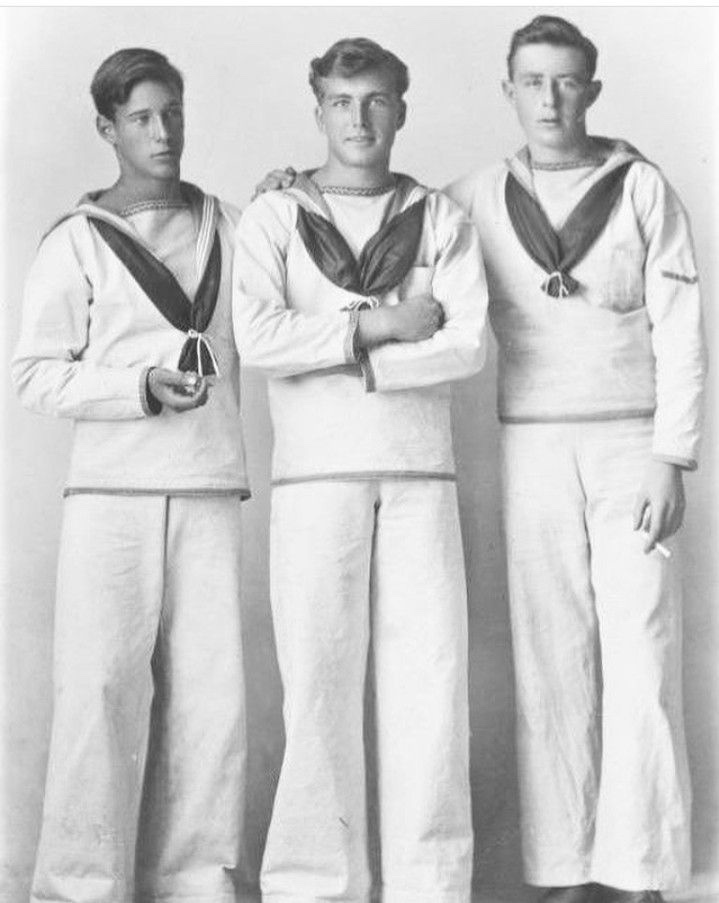
The novella tells the story of Billy Budd, the “Handsome Sailor,” whose beauty and innocence win the admiration of nearly everyone on board the Bellipotent. But his very perfection provokes the envy of John Claggart, the ship’s master-at-arms. Claggart’s obsession with Billy has been widely read as coded desire—an attraction so repressed that it curdles into destructive malice. When Claggart accuses Billy of mutiny, and Billy’s stammer leaves him unable to defend himself, Billy lashes out and strikes him dead. Captain Vere, though he believes in Billy’s essential innocence, insists on enforcing naval law, and Billy is executed.

This framework—an innocent young man destroyed not by his own fault but by the inability of others to reckon with their own desires—fits squarely within a long tradition of queer literature. For centuries, queer-coded characters in fiction have met tragic ends: death, exile, madness, or erasure. From Carmilla to The Well of Loneliness, from coded Hollywood films of the mid-20th century to countless novels well into the late 20th century, queer lives were depicted as doomed. The rare exception—stories offering queer joy and fulfillment—did not become more common until the 21st century. Read in this light, Billy Budd becomes more than a moral allegory; it is part of this larger pattern, a queer tragedy written before the word “queer” had the meaning we give it today.

It is not only the text that invites this reading, but also the life of the author himself. Herman Melville (1819–1891) wrote with unusual intensity about male beauty and intimacy, often setting his stories in all-male environments—ships, armies, or remote islands. His close friendship with Nathaniel Hawthorne produced letters of remarkable passion, describing a “sweet mystery” and “infinite fraternity” that some scholars have read as expressions of romantic love. While we cannot say with certainty what Melville’s own sexuality was, his works consistently return to themes of male closeness, desire, and repression.

That is why Billy Budd continues to resonate. It is a story of desire unnamed, beauty destroyed, and innocence sacrificed to rigid authority. Billy’s calm acceptance of his fate, his blessing of Captain Vere even as he goes to his death, echoes the countless queer characters who, in fiction and in history, have borne the cost of a society unwilling to recognize the fullness of their humanity.

I have not returned to Billy Budd, Sailor since first reading it in college, because it left me with an unsettling feeling and a profound sadness. Billy is pressed unwillingly into service, yet he performs his duty faithfully. He is beloved for both his sweetness and his beauty, but his flaw—his speech impediment—ultimately seals his fate. Having struggled with a speech impediment myself as a child, that aspect of his character resonated deeply. So too did the queer subtext. The tragedy in Billy Budd does not lie in Billy’s own sexuality, but in the repressed same-sex desires of others. I have often wondered whether Billy may have been subjected to unwanted advances, whether he resisted them, or whether it was simply the intensity of others’ unacknowledged longing for him that condemned him. His Christ-like depiction suggests that he does not die for his own sins, but rather as a sacrifice demanded by the sins of those around him.

That is what has always made the story so unsettling for me: Billy’s destruction comes not from his own flaws, but from the world’s inability to deal honestly with desire. In that sense, Melville’s novella anticipates the tragic arc of so much queer literature to follow, where beauty, love, or innocence is sacrificed to repression and fear. And yet, reflecting on Billy Budd today, I take some comfort in knowing how far literature has come. We now have stories that celebrate queer joy and resilience, stories where love does not have to end in silence or the grave. Wrestling with Melville’s tragic vision honors the past, but telling and living new stories of survival and fulfillment blesses the future.


Edmund White: Illuminating the Path of Gay Awakening Through Literature

Yesterday, the literary world bid farewell to Edmund White, a pioneering voice in queer literature, who passed away at the age of 85 in his Manhattan home. His death marks the end of a prolific career that not only chronicled the gay experience but also profoundly influenced countless individuals’ journeys toward self-discovery and acceptance.

Born in Cincinnati in 1940 and raised in Evanston, Illinois, White’s early life was marked by the societal pressures of conformity. Despite being accepted to Harvard, he chose to study Chinese at the University of Michigan to remain close to a therapist who promised to “cure” his homosexuality—a reflection of the era’s prevailing attitudes. This personal struggle became a cornerstone of his literary work, providing an authentic lens through which he depicted the complexities of gay life.

White’s debut novel, Forgetting Elena (1973), received acclaim from literary figures like Vladimir Nabokov. However, it was A Boy’s Own Story (1982) that solidified his place in literary history. This semi-autobiographical novel, the first in a trilogy, offered an unflinching portrayal of a young man’s coming-of-age and grappling with his sexual identity in mid-20th-century America. The trilogy continued with The Beautiful Room Is Empty (1988) and concluded with The Farewell Symphony (1997), each delving deeper into the evolving landscape of gay life.

In 1977, White co-authored The Joy of Gay Sex with Dr. Charles Silverstein. This groundbreaking manual combined candid discussions of sexual practices with insights into gay culture, politics, and relationships. At a time when such topics were taboo, the book served as both a practical guide and a bold statement of affirmation for the gay community.

White’s commitment to visibility extended beyond his writing. He was a founding member of the Violet Quill, a group of gay writers who sought to create literature that authentically represented their experiences. Additionally, he co-founded the Gay Men’s Health Crisis in 1982, the first organization dedicated to addressing the AIDS epidemic, demonstrating his dedication to activism and community support.

White’s influence permeated both literature and academia. He taught creative writing at institutions like Brown and Princeton, mentoring a new generation of writers. His literary contributions earned him numerous accolades, including the PEN/Saul Bellow Award for Achievement in American Fiction and France’s Ordre des Arts et des Lettres.

Beyond awards, White’s true legacy lies in the personal awakenings his work inspired. By articulating the nuances of gay identity with honesty and artistry, he provided readers with a mirror to see themselves and a window into the broader human experience. His narratives offered solace to those grappling with their identities and challenged societal norms, fostering greater understanding and acceptance.

As we reflect on the impact of pop culture on personal identity, as discussed in yesterday’s blog post, Edmund White’s contributions stand as a testament to the power of storytelling in shaping self-awareness and cultural perception. His voice may be silenced, but his words continue to resonate, guiding many on their paths to self-discovery.

Rest in peace, Edmund White. Your stories have illuminated the path for countless others.


Wine & Truth

Since I started back to being able to actually read books, because improvement with my headaches, instead of only listening to audiobooks, I’ve been reading a series of male/male romances called “Vino & Veritas.” The series has one pre-series book (Roommate by Sarina Bowen), nineteen books with in the original Vino and Veritas series (two of the books are female/female romance, which I skipped) and an additional six books in the “In Vino Veritas” series. The description of the series says:

Welcome to Vino & Veritas, your new favorite LGBTQ+ friendly and inclusive bookstore and wine bar in Burlington, Vermont! Have a seat at the bar, or browse the aisles. There’s romance lurking behind every corner…

Two things drew me into this series from the beginning: it takes place in Burlington and it’s about an inclusive bookstore and bar. I wish Vino & Veritas really existed in the Church Street Marketplace, but sadly, it’s all fictional. With twenty-seven books, there are some good and some not so good. Each of the books is written by a different author. There are very few of them, besides the lesbian ones, that I would not recommend. Some stand out more than others. 

The books by J. E. Birk are particularly good because she was raised in Vermont, and the real familiarity with Vermont makes a difference. She has also started another series “Devon Falls” which continue to take place in this fictional Vermont, though not centered around the Vino and Veritas bookstore and wine bar. Most of the other books are written by women (most m/m romance authors are women) who have probably never been to Vermont, but most have done their research. Vermont is a quirky place, and in the books where Vermont itself feels like a character in the book instead of merely a backdrop are the best in my opinion.

When I finish the book I’m currently reading, Unforgettable by Marley Valentine (I find it funny that I just happened to start this book on Valentine’s Day), I have two more books in the series. Then I’ll move on to the “In Vino Veritas” series.


This Is What You Shall Do

“This is what you shall do; Love the earth and sun and the animals, despise riches, give alms to every one that asks, stand up for the stupid and crazy, devote your income and labor to others, hate tyrants, argue not concerning God, have patience and indulgence toward the people, take off your hat to nothing known or unknown or to any man or number of men, go freely with powerful uneducated persons and with the young and with the mothers of families, read these leaves in the open air every season of every year of your life, re-examine all you have been told at school or church or in any book, dismiss whatever insults your own soul, and your very flesh shall be a great poem and have the richest fluency not only in its words but in the silent lines of its lips and face and between the lashes of your eyes and in every motion and joint of your body.”

—“Preface” to Leaves of Grass, Walt Whitman

On July 4, 1855, Walt Whitman published the first edition of Leaves of Grass. This first edition consisted of 12 poems and was published anonymously. It contained a preface, which Whitman left out of subsequent editions. Whitman set much of the type himself and paid for its printing. Over his lifetime, he published eight more editions, adding poems each time. He was continually revising Leaves of Grass. There were 122 new poems in the third edition alone (1860-61), and the final “death-bed edition,” published in 1891, contained almost 400. The first edition received several glowing — and anonymous — reviews in New York newspapers. Whitman wrote most of the reviews himself. The praise was generous: “An American bard at last!” One legitimate mention by popular columnist Fanny Fern called the collection daring and fresh. Praise for the work was not universal, however. Many called it filth, and poet John Greenleaf Whittier threw his copy into the fire. Writing in The Atlantic, Thomas Wentworth Higginson said of Whitman’s book: “It is no discredit to Walt Whitman that he wrote Leaves of Grass, only that he did not burn it afterwards.”

Leaves of Grass has its genesis in an essay by Ralph Waldo Emerson called “The Poet” (1844), which expressed the need for the United States to have its own new and unique poet to write about the new country’s virtues and vices. Reading the essay, Whitman consciously set out to answer Emerson’s call as he began working on the first edition of Leaves of Grass. However, Whitman downplayed Emerson’s influence, stating, “I was simmering, simmering, simmering; Emerson brought me to a boil.” Whitman sent a copy of the first edition of Leaves of Grass to Emerson. In a letter to Whitman, Emerson wrote, “I find it the most extraordinary piece of wit and wisdom America has yet contributed.” He went on, “I am very happy in reading it, as great power makes us happy.” Emerson’s positive response to the first edition inspired Whitman to quickly produce a much-expanded second edition in 1856, which saw the book grow from a meager 95 pages to 384 pages with a cover price of a dollar. This edition included a phrase from Emerson’s letter, printed in gold leaf on the spine of the book, “I greet you at the beginning of a great career. R.W. Emerson.” Emerson later took offense that this letter was made public without his permission and became more critical of the work. Emerson once said, “Without ambition one starts nothing. Without work one finishes nothing. The prize will not be sent to you. You have to win it.” Whitman certainly had ambition, and Emerson should have recognized his own advice in Whiteman’s use of Emerson’s quote on the second edition’s spine.

While Whitman is not my favorite American poet, I am a great admirer of Emerson. The 1841 essay “Self-Reliance” by Emerson is one of my favorite literary works. It contains the most comprehensive statement of one of Emerson’s recurrent themes: the need for each individual to avoid conformity and false consistency and follow your instincts and ideas. It is the source of one of Emerson’s most famous quotes: “A foolish consistency is the hobgoblin of little minds, adored by little statesmen and philosophers and divines.” Emerson emphasizes the importance of individualism and its effect on an individual’s satisfaction in life. He stresses that anyone is capable of achieving happiness, simply if they change their mindset. Emerson focuses on seemingly insignificant details explaining how life is “learning and forgetting and learning again.” 

I think Emerson’s influence on Whitman is apparent in that Whitman often lived his life in his way. As a humanist, Whitman was a part of the transition between transcendentalism (Emerson) and realism (Mark Twain), incorporating both views in his works. Whitman is among the most influential poets in the American canon, often called the father of free verse. His work was controversial in its time, particularly Leaves of Grass, which was described as obscene for its overt sensuality. Whitman’s own life came under scrutiny for his presumed homosexuality. Yet, Whitman became one of America’s most influential poets. Critics have called him the first “poet of democracy” in the United States, a title meant to reflect his ability to write in a singularly American character. Whitman also believed in his own greatness and considered himself a messiah-like figure in poetry. Whitman became one of America’s most influential poets.


Yesterday

Yesterday was not a good day. First of all, for the past few days, I’ve had a toothache when I lie down at night. It doesn’t really hurt any other time. Sunday night, the pain stopped and I thought all was okay. Then on Monday night, the pain was back. I didn’t have a choice but to call my dentist and make an appointment. Luckily, they were able to get me in right away. They did an x-ray of the tooth. Underneath the filling I just had done a few weeks ago, there was s huge cavity that had grown into the pulp of my tooth. The only way to eliminate the pain is to do a root canal. However, I have to wait until April 30 to do anything about it. So that’s how my morning started out.

Then I got two emails. One asked me to do an oral history on a 90-year-old alumnus. The problem is not doing an oral history; that is still part of my job description. The problem is when he’s in Vermont, I am not. So it looks like I may have to go to New Jersey for the interview. The trip may or may not involve a funeral.  In the second one, the speaker I had hoped to get for an event in November can’t make it for the dates we need. This is my third try at a speaker. So I am back to square one. We do have an alumnus who is the head of a major Washington museum whom my boss is trying to get instead. It turns out, though, he has to go through our Development Office first. That’s just one more delay.

I also realized how much I still have to do before I leave for Alabama on Sunday.

On top of all that, I had a migraine for most of the day.


It’s a Small (Ancient) World After All…

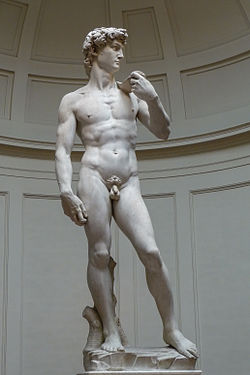
'David'_by_Michelangelo_JBU0001-1.JPG

On Sunday, BosGuy wrote the following blog piece:

An article with a similar title was sent to me by a reader and friend of this blog and it made me laugh so I thought I’d share it with you for some light reading.

According to art historian Ellen Oredsson, the reason virtually every ancient statue you’ll ever see has a rather small penis is because of cultural perceptions and biases of the time. Apparently, big penises were associated with specific negative characteristics: foolishness, lust and ugliness. By contrast the ideal man was meant to be rational, intellectual and authoritative and a small penis allowed a man to remain coolly logical.

Who can say if this is true or not but the brief and colorful article (they use a bit more direct language) can be read in its entirety here.

Here is a story from history to back up Oredsson’s theory. While Marc Antony was away with Cleopatra in Egypt, Octavian and his enemies in Rome began to slander him.  One of the forms of slander was that Marc Antony was well hung. While that would not be slander in today’s world, it was slander in the ancient world. In the ancient world this meant that he was lead by his penis. Because it was so large he could not control his sexual appetite and thus had Cleopatra, who was known to have affairs with men to gain power, i.e. Julius Caesar. In Aristophanes The Clouds, he describes the perfect man:

If you follow my recommendations,
and keep them ever in mind,
you will always have a rippling chest, radiant skin,
broad shoulders, a wee tongue,
a grand rump and a petite dick.
But if you adopt current practices,
you’ll start by having
a puny chest, pasty skin,
narrow shoulders, a grand tongue,
a wee rump and a lengthy edict.


The Crooked Man


Charles Beaumont wrote the short story “The Crooked Man,” which presented a dystopian future wherein heterosexuality is stigmatized in the same way that homosexuality was in the 1950s. It depicts heterosexuals living as furtively as pre-Stonewall gays and lesbians. “The Crooked Man” was first rejected by Esquire magazine, which found it too controversial, and then published by Hugh Hefner, a young man from Chicago who had recently launched a magazine called Playboy. After letters of outrage at Beaumont’s “The Crooked Man” poured in, Hefner addressed readers. “If it was wrong to persecute heterosexuals in a homosexual society,” he wrote in response, “then the reverse was wrong, too.”

“The Crooked Man” is really just a couple of scenes. A handsome young man named Jesse furtively ducks into a nightclub. He sits in a private booth, closes the beaded curtain around the booth, and dims the light. He is instantly hit-on by two separate men. The men have a code, fingers tapping across the stomach, to indicate that they want sex. Jesse turns them down. He is waiting for someone — a woman named Mina.

Jesse is in love with Mina, but this future love between heterosexual couples is forbidden. Artificial insemination is the law, and the sexes are strictly segregated. Heterosexuals are considered perverts, and hunting them down is official government policy: “These sick people must be cured and made normal,” announces the platform of the majority political party. Jesse has learned to “pass” in this culture. He learns how to walk gay, and turn down sexual advances — which seem to happen constantly — with tact.

Mina shows up. She is disguised, her flowing blonde hair tucked under a wig. Yet it’s very difficult to hide the movement and expressions of a woman, and she and Jesse are found out. He is quickly removed to a government van, which will take him for surgery, re-education, the works.

Though Hefner is most famous for his numerous romantic exploits over the years, he has always been a proponent of sexual freedom: heterosexual, homosexual, or bisexual.  Even now, the twice-divorced 89-year-old entrepreneur says that gay marriage isn’t hurting anyone.  “Without question, love in its various permutations is what we need more of in this world,” he said. “The idea that the concept of marriage will be sullied by same-sex marriage is ridiculous. Heterosexuals haven’t been doing that well at it on their own.”  Hefner should know, he’s been married three times already.