Category Archives: Miscellaneous

Frat Star Fridays!

I had planned on writing this post for last Friday, but with everything that was going on, I’m embarrassed to say, that I forgot. However, I want to introduce you to a new blogger, Frat Star. Frat Star has his own blog, A Bi Kid’s Life, along with two other bloggers. After a short hiatus, they are back to blogging. I was introduced to Frat Star’s writing by a friend of mine and have found it a wonderful change of pace. Frat Star also writes for BI LIKE ME every Friday in a segment called Frat Star Fridays. I hope that you will check out his writing because I think you will find it interesting.

On the most recent post by Frat Star on BI LIKE ME, he writes about his relationship with women, and I think that many of us can identify with:

I come from a family of strong women, and that prototype is still sexy to me. To some extent, I wish I was straight just so that I could fall in love with one of these women and learn to grow with them. I understand them. I like them. I just can’t have sex with them anymore, because I’ve found that I connect with men far more. 

It may be a stereotype that gay men like strong women, but where would we be without them.  Many of my greatest friends have been strong women.

Check out Frat Star’s blog, A Bi Kid’s Life, I think that you will enjoy it.  And just a side note, it is apparent by Frat Star’s writing that he is an intelligent young man.  He has a maturity with his language that I wish more people his age had.  It’s very refreshing.


Red-Faced Jazz

A U.K.-based radio station’s programmers are understandably red-faced after they inadvertently aired five minutes of a gay porn soundtrack.

Pink News reports that Jazz FM, which focuses on light jazz, standards and occasional blues numbers, aired a recording of what sounded like “two British men in a mostly wordless, but fairly graphic, exchange” on Sunday.

You can listen to a recording of the broadcast here (WARNING: contains graphic language).

Mike Vitti, the station’s head of programming, has issued a statement apologizing for the gaffe: “Unfortunately we had an unauthorized access to the live feed this evening which resulted in a highly regrettable incident. Please accept our profound and sincere apologies for any offence that may have been caused.”

Mike Vitti, station programme director, said disciplinary action would follow.

A spokesman for the broadcasting regulator Ofcom told PinkNews.co.uk that it has “received a small number of complaints and is currently assessing whether the broadcast broke the Broadcasting Code”. If found in breach, broadcasters can receive a fine or the loss of a license although this is thought highly unlikely in this case.

PinkNews.co.uk wrote that a broadcast assistant was watching pornography while the recorded show was being broadcast and that they accidentally transmitted the audio of the porn to the nation because their microphone was erroneously active.


15 Gay Reasons to Watch the Super Bowl (Not Counting Madonna)

From:
John Polly

This Sunday brings the Super Bowl, and like many Americans, I will attend a party, watch the mega-spectacle unfold while eating lots, drinking a bit, and hooting and hollering as stuff happens on TV.

Why should you care as a gay person? Why should you watch? Here’s the deal. (Some generalizations will follow. And some X-rated suggestions. Mom, please, don’t read number 6. And yes, I’m skipping Madonna entirely in this equation, to truly make a valid case.)

15. Because gays like sports.

Many gay males enjoy pop divas, theater, watching Toddlers & Tiaras, home decorating, and anal sex. And very, very many gay males also enjoy playing sports, watching sports, talking trash about sports, obsessing about players’ stats, and cheering uproariously for their favorite teams.

Simply put, the old saw that homos aren’t into jock-related things (jock-straps aside) is dated and bogus. And I’m not even talking about lesbians, which is an entirely different article or thesis project on sports history, gender roles, and sexual identity.

14. Because the two quarterbacks are worth watching.

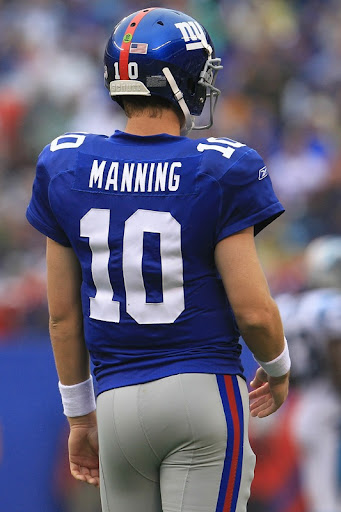
Tom Brady is very, very handsome. Remember all those pics from VMan a few years back? And Eli Manning, though not as Bruce-Weber-ly handsome as Brady, possesses his own dorky cuteness. (They tried to dress him up for Men’s Vogue a few years back. An adorable effort.)

Let’s put it like this. You’re 14 years old and in high school. Brady’s the Big Man on Campus who is your older sister’s boyfriend, whom you follow around like a pup. He’ll be nice of you in front of your sister but never give you the time of day otherwise. Eli, on the other hand, is the approachable jock down the street who’d actually give you a ride home from school, even though you’re in 9th grade and he’s a senior (and All-State!), just because he’s nice (and honestly, not that cool). How can you not love them both?

(At the risk of digressing completely, what is with all of the hot QBs these days? Mark Sanchez. Alex Smith. And can you just imagine how good the searingly studly Aaron Rodgers must smell?)

Also, Brady and Manning are both at the top of their game and completely unpredictable, which makes for a good match, yes?

13. Because a supermodel is pleading for your help.

Brady’s wife, Brazilian supermodel/gazillionaire Gisele Bundchen sent out a mass email asking friends/family/fans to send prayers and good vibes to the powers that be so that her hubby can win the big game. Like, really!

I don’t know about you, but I listen to my supermodels. They know best. And if you disobey, you might get clocked in the head with a pointy cell phone. (JK, Naomi!)

12. Because you’re a snarky media whore (social and otherwise).

Gays love to be all slick and on top of every media moment. The Oscars. Fashion Week. Presidential Inaugural Balls. New Britney demos being leaked. And while we gush about those sorts of things, the Super Bowl really is the big, honking grandmama of all media events, people. Nothing else comes close to taking over all the news, coverage, cultural conversation, ad dollars… Face it, the Oscars are a forlorn, gay stepchild when it comes to the sheer onslaught of 360-degree-medianess of the Super Bowl.

Thusly, your Facebook and Twitter will be exploding. Own it. Instagram pics of mounds of chicken wings. Unleash your wit and gift for pervy sass as the big match rolls on, blinding others with your gift for double entendre and sharp, punny comments.

11. Because you’re an advertiser’s wet dream.

I’m not ashamed to admit I’m excited to see the commericials. Even though I’ve already watched many of the biggies online (part of that aforementioned social media Super Bowl juggernaut), including the return of Ferris Bueller for Honda.

But to add extra gay excitement, we get David Beckham in his undies, adorable John Stamos getting owned by some chick over a bit of yogurt, Sir Elton John in a furry robe and crown, and… doggies and Star Wars!

Also, I must admit, I loooooove the stupid, gratuitous T&A that the GoDaddy ads deliver each year. (I also grew up loving the buxom, hayseed ladies of Hee-Haw and laughing madly to Benny Hill’s antics. What can I say? I like cheese!)

And if you really want to get into a social-media/advertising K-hole, you can point your iPhone at the TV during a number of the ads, use your Shazam app, and you’ll get coupons for free stuff or entered to win cars! Gaaaah! Consume like you’ve never consumed before!

10. Because you like musical TV fare.

The Super Bowl is on NBC this year, so it will be followed by a very special episode of The Voice. (Gay-friendly hottie Adam Levine! Diva/mess extraodinaire Xtina!). And you can be assured that throughout that, NBC will also be promoting the hell out of its new TV series Smash, featuring Grace (Deborah Messing), Anjelica Huston, Broadway musicals, and Marilyn Monroe. Expect random gayish promo-splosions amid the first downs and car ads.

9. Because the Super Bowl is gay-supportive.

Both teams this year hail from states where gay marriage is legal. And according to the gay sports experts at OutSports.com, the N.Y. Giants have sent representatives to queer sporting events (like the “Gay Super Bowl”), and Giants’ owner Steve Tisch released a video supporting gay marriage, as has former Giants superstar Michael Strahan. The owner of the Patriots has spoken at LGBT business and networking events, and players from each team have supported the NOH8 campaigns. Woo-hoo! Go gays!

Also, in a very cool move, fans in Indianapolis’ Lucas Oil Stadium will see a PSA created by GLSEN that features NBA stars Jared Dudley and Grant Hill and targets anti-LGBT language among teens. The PSA will be shown to the 70,000 fans attending the Super Bowl and to the 80,000 watching from the tailgating mania surround the place. Rah, rah, gay!

8. Because you like food.

Over a billion chicken wings will be consumed in the U.S. this Sunday. Which is terrifying (if still kind of tasty). But chances are, you’ll also have a chance to hang with friends with decent palates and food-prep skills, so you’ll be noshing on really good versions of BBQ, chili, hoagies, and sweets and chips and dips for days. And if you follow food mags like Food & Wine or Bon Appetit or sites like Epicurious.com, they’ve been exploding for weeks with a million ideas of great party eats.

Indulge your inner Ina Garten (or Martha or Paula or Giada or whichever culinary idol melts your butter) and turn your kitchen out!

7. Because you like food and you’re twisted.

Ummm… This is somewhat scary, but the freaky and possibly bearishly hot guys behind Epic Meal Time have schemed up this jaw-dropping video about making a disgusting creation called a “Big Dirty Manningwich,” which gets topped with “Brady Gravy.”

Watch, use your filthy mind, and recognize that this video (and its participants) are not very far off from some version of amateur gay bear porn. You could almost just loop the existing soundtrack over another sort of video and you’re good to go. (Did I mention “Brady Gravy?”)

6. And speaking of being twisted…

(Skip this part, Mom.) Maybe you have no interest in football, splashy commercials, chicken wings, gay-supportive sports franchises, or pop divas. You are just a proudly shameless, filthy sex fiend. Go to Craigslist.org for your city. You’ll already see M4M ads looking for willing partners for all flavors of Super-Bowl-themed action. Maybe you just wanna “help out” a party of straight guys as they watch the big game? Maybe you’re a hungry human end zone ready to be violated by an opposing team? Maybe you just like to watch people who like to watch a big game? Maybe you just wanna dress as a maid and… you get the idea.

Also, Grindr and ManHunt will likely be blowing up during this whole thing. Folks drinking early on a Sunday evening. It’s gonna get trashy.

Listen: This. Is. Your. Moment. Sex it up. Go team!

Speed Round!

5. Because there will be puppies.


4. Because there will also be a kitty-cat half time show.


3. OK, how about a puppy and Jimmy Fallon?


2. Because Chaz Bono is into it!

And…

1. Because you love America.

Right?

1.1. Because… Madonna!

Oh, how could I not? Honestly, I’m very excited about the Giants/Patriots match-up. But come on! How can any person with a pulse not be a little curious about what Madonna — arguably, the biggest living pop icon — is going to do at half time? We already pretty much know about the songs (the new one, as well as most likely “Vogue,” “Music,” “Ray of Light,” and possibly “Holiday”) and the guest stars (M.I.A., Nicki Minaj, Cee Lo Green, LMFAO?).

Will she crash and burn? Will it be awesome? At the very least it’ll be dishy, spectacular, overblown, and dish-worthy! (I’m still grinning from the half time show three years ago when Bruce Springsteen [whom I love] slid crotch-first into an onstage camera, putting the entire planets’ collective eyes out with his man-groin.

Still, I can’t help but root for old Madge to pull something off brilliantly. She’s due. And though seeing her pointy mug splayed up live on a 72-inch, HD, plasma screen might be jarring, I’m ready for it.

And, yes… while I’m at it, I am ready for some football.

Now, please pass me some of that “Brady Gravy.”

Truthfully, I personally am not very excited about this Super Bowl.  I only get excited if the Saints are playing, so I have only been excited once, LOL.  However, I will bow to the social pressure and watch the game, really only for the commercials.  After you’ve watched the Super Bowl, what was your favorite commercial this year?


I will be pulling for the Giants because I have a former student in their starting line-up.


From Shenzhen – He Xiao’s Story

Shenzhen

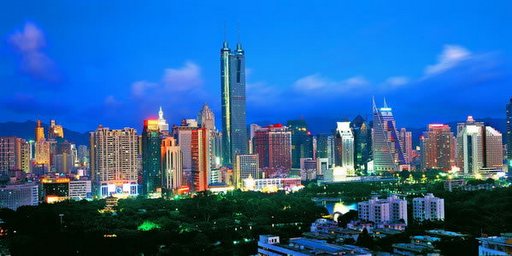
He Xiao is a 25-year-old gay man working in hotel management in Shenzhen. He is comfortable and confident about his sexuality, even coming out to his colleagues on his first day of work.

Coming from a small town, however, he had a difficult time growing up with his lifestyle.

“My hometown is quite a small town, we didn’t have any information about what homosexuality is,” He says. “I did know that I liked my head teacher very much, but I wasn’t sure what I was. It was a very scary and confusing time. I didn’t know what I might be. I thought I might be the only one like that, I thought I might be sick or there was something wrong with me.”

At the time, with no computer and no knowledge of how to use the internet, he tried to avoid thinking about his problems.

In 2003, he went to Tianjin for university. The first classmate he met was a lesbian from Beijing who came out to him two months after school started. He confessed to her that he thought he might be gay as well. She introduced him to lesbian and gay resources. Within three months, He had come out to his classmates, friends and two brothers.

“For me, it was very easy to accept being gay,” He says. “It was very fresh air for me, as I was really longing for that information.”

While some of his friends viewed homosexuality as a curable psychology problem, on the whole, He says young people are more open to homosexuality.

“I came out to my brothers separately, but their reaction was very calm. Both asked me exactly the same question: ‘Are you happy?’ They said as long as I’m happy they’re happy for me.”

However, He is afraid of coming out to his parents, saying it is difficult since he comes from a small town, his parents don’t even know what homosexuality is. Every time he visits his hometown, his relatives ask if he has a girlfriend and urge him to get married.

But He is optimistic that his parents would accept it, especially having seen positive coming-out stories among his friends. His lesbian classmate who he first met is now living with her girlfriend and her parents in her parents’ house.

“I asked her parents once why they are so cool with her having a girlfriend and living together with them,” He says. “Her mom answered very simply, saying ‘She’s my daughter, I love her, I want her to be happy.’ They’re from Beijing, so they have a much better understanding of what homosexuality is.”

He hopes his parents will be as understanding. “I cannot imagine how my parents will react, but I’m sure they’ll want me to get married and have kids because they’re very traditional parents,” he says. “ But they’re very kind and understanding people, so if I explain it to them correctly, tell them I’m happy and have a good life, they’ll understand eventually since they love me.”

SOURCE: “Homosexuality in China,” US-China Today


From Shanghai – Dr. Wang’s Story

Shanghai

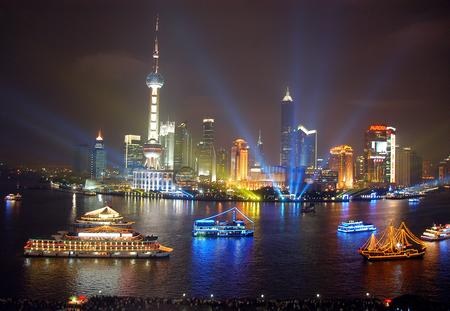
Dr. Wang, a 45-year-old medical officer at a multinational company in Shanghai, has lived through the “don’t ask, don’t tell” mentality. Wang began having sex with men in college, but did not know the correct term for his lifestyle. He was also at an all-male medical military school where men weren’t allowed to date. However, after graduating, with no gay bars existing yet, he began to frequent parks and public gardens to meet other gays and realized his sexuality at age 23.

But even more than two decades later, he has not come out to his friends or colleagues, despite an anti-discrimination policy at his workplace, believing it is his personal business. He hasn’t told his family either, but suspects they can guess. They have stayed with Wang and his boyfriend on visits and Wang has taken his boyfriend to visit his family.

“We never talk about this because it’s the best way to handle it,” Wang says. “I don’t want to give them too much pressure because many people in China still don’t think gays are normal. Others might think your children are not normal. I think maybe they can guess, but they don’t want to discuss it because of the pressure, because it’s too embarrassing or because of the culture, but I know they love me.”

Wang doesn’t plan to tell his parents, saying it’s the best way, but says if they ask, he would tell them.

Though Wang is 45 years old, his family hasn’t given him pressure to marry. One reason may be he was married for half a year. He worked in an army hospital where he would only be given an apartment if he was married so he paid a woman to marry him in order to obtain an apartment. Though his friends knew it was a fake marriage, his parents did not and still have not pressured him to remarry, a sign they may know his sexuality as Confucianism emphasizes the importance of marriage in society while having children to continue the family line is considered a duty to one’s parents. Some consider a childless son to have failed in his filial duty.

“Chinese people think it’s the biggest duty for sons and daughters to get married and have children,” says Robin, a gay student living in Shanghai. “Someone who can’t have children, that’s the biggest disrespect to their parents.”

Despite being content with his current status quo, Wang has hopes for the future.

“I think some day if gays can get married in China, that will be perfect,” Wang said. “I don’t think it will include my lifetime, but that’s just my hope.”

SOURCE: “Homosexuality in China,” US-China Today


Is Homosexuality is No Longer Taboo in China?

As I was doing research about Homosexuality in Asia, I came across the following article from US-China Today a student-driven publication of the University of Southern California U.S.-China Institute. Like the Institute, the magazine focuses on the multidimensional and evolving U.S.-China relationship and on significant trends in contemporary China. The magazine offers coverage of and commentary on a wide range of political, economic, social, and cultural issues.  The article below, which had the tagline “In China, where tradition reigns, homosexuality is no longer taboo. What is the view from those living in the country?”  I thought this would make an interesting contrast to yesterday’s post.  I hope that you find it as interesting as I did.

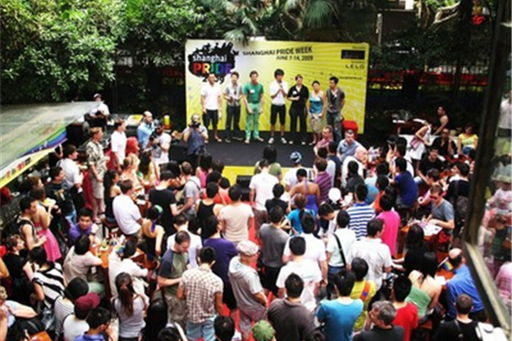
Shanghai Pride, mainland China’s first gay pride festival. Photo courtesy of Kenneth Tan.

Hong Kong native Joe Lam knew he was different. As a 14-year-old, he began to wonder if he was gay, confused by his attraction to boys. But with no portrayals of gay people in the media, no discussion of gays and no Internet, he wasn’t quite sure what he was. He only knew he was different.

When he was 21, Lam traveled outside of Hong Kong for the first time. In London, he witnessed gay men holding hands on the street, something he had never seen before. Having been exposed to a different world, he returned to Hong Kong and immersed himself in a new life.

He was soon living with his boyfriend and had come to terms with being gay. Yet he had still to confront one major obstacle – he hadn’t come out to his family, worried how his traditional Chinese family would react. For New Year’s dinner, he asked if he could bring his roommate. His mom said yes.

“Let’s be honest, he’s my partner,” Lam told his mom.

“Of course I know, I’m your mother,” his mom replied.

Today, 35-year-old Lam is the publisher of Dim Sum Magazine, Hong Kong’s first gay magazine, as well as festival director of the Hong Kong Gay and Lesbian Film Festival. Though his parents struggled with the idea of him being gay at first, Lam said they have come to accept it.

“My mom said to me, as long as you’re happy, I’m fine,” Lam said.

While Hong Kong has long been ahead of China, Lam’s story is an example of China’s changing attitudes towards homosexuality. In a country where homosexuality was once a taboo subject, increasing numbers of Chinese are becoming more tolerant of homosexuality.

Homosexual intercourse has been legal in Hong Kong since 1991. Prior to this, sodomy was illegal, instituted by British colonial rule. Until 2005, there was also an unequal age of consent in Hong Kong. While the age of consent for heterosexual sex was 16, it was set at 21 for sex between males. However, in 2005, it was found to violate the right to equality and was struck down.

As for mainland China, well into the 1990s, homosexuality was considered both a crime and a mental illness in the People’s Republic. Gays were prosecuted under the “hooligan” law while the Chinese Psychiatric Association labeled it a mental disease.

In 1997, the Chinese government abolished the hooligan law, an act considered by most to be a decriminalization of homosexuality. In 2001, the Chinese Psychiatric Association removed homosexuality from its list. The association’s evidence included a 1999 study that followed the lives of 51 Chinese gays and lesbians over the course of a year. The group found that only six of the subjects had emotional disorders.

Since then, the Chinese gay community has rapidly expanded, with dozens of gay bars and hangout spots across the country, hundreds of Chinese gay websites, and many LGBT organizations. These groups help organize gay rights campaigns, HIV/AIDS prevention efforts, film festivals and pride parades.

Public attitudes are also changing, with many people growing more accepting of gays. The vast majority of educated, young people in urban areas have no problem with homosexuality.

“You’ve got 50 and 60-year-old men coming out, young teenagers coming out, everyone coming out,” says Kenneth Tan, a native Singaporean who has been living in Shanghai for the past seven years. “There is a lot of energy in the scene right now because all these people are coming out for the first time in their life, in the life of the community and the history of modern China. There is a great sense of freshness to the scene.”

Fudan University in Shanghai offered China’s first undergraduate gay studies course in 2003. A China chapter of PFLAG was established in 2007. Gay publications have sprouted up as well as other “gay” businesses, restaurants and shops frequented by mostly gay patrons.

Tong Yu, known as Common Language in English, is a Beijing support and rights group for lesbian and bisexual women founded in 2005. Its founder, Xu Bin, says that at the time there were no lesbian groups and only about thirty gay groups. Now she estimates there are several hundred gay and lesbian groups throughout China.

The Beijing LGBT Center, founded in 2008 by four LGBT groups including Common Language, even began issuing symbolic “marriage certificates” to gay couples.

Hong Kong hosted its first gay pride parade in December 2008, attracting approximately 1,000 people. The second parade was held in November 2009.

2009 also saw the 20th anniversary of the Hong Kong Gay and Lesbian Film Festival.

Lam, the festival director, said last year the festival drew 6,000 visitors, including people from China who came to see films banned on the mainland. Over the years, Lam has witnessed changes in the gay population.

“We used to see quite a few people who would wear big jackets trying to disguise themselves as they go into the cinema, but we’re seeing less and less,” Lam says.

The change is indicative of the growing gay community and the growing numbers of gays coming out in China.

Tan, who serves as editor-at-large for the popular website Shanghaiist.com, has watched the Shanghai scene grow up.

“When I first came here, the bars were hidden and had to be very quiet, and now it’s like we’ve got huge bars that cater to different segments of the population,” he said. “If you’re a middle-aged Chinese gentleman, you go here. If you like big burly men, go here. The scene has developed to the point that you see very measurable social stratification going on.”

China had its first gay pride event in Shanghai in June 2009, consisting of plays, film screenings, discussions and parties scattered throughout one week. The event, called Shanghai Pride, attracted a few thousand people from all over China.

While police did monitor the events and plans for a parade were called off, the fact they were able to hold the event is a testament to the progress China has made. In 2004, a different group tried to hold a similar event in Beijing, but was shut down. Tan thinks the fact that Shanghai is away from the political center of Beijing enabled them to hold the event.

“People didn’t think it was possible,” says Tan, who served as one of the masterminds behind the event. “We had a small, humble start, but it was a good one. These individuals have been coming out for a while and this pride event gives them a reason to come out collectively as a community.”

Even new terminology for the gay community has emerged. Gays have commonly been referred to as “tongzhi” (同志), a term meaning comrades. Lesbians refer to themselves as “lala” (拉拉). The word “ku” (酷) or “ku’er” has also been used to mean queer, but also carries a double meaning as the word “cool.”

Walter Williams, a University of Southern California professor who has been studying gender and sexuality in Asia since 1983, says, “China right now is very similar to the U.S. in the 1960s, in regards to homosexuality…but I think that at the rate China is moving along, we will see China at the forefront of gay liberation.”

Homosexuality has been documented in the country since ancient times. Daoism emphasizes maintaining a balance between yin and yang. Yin was regarded as feminine while yang was regarded as masculine. Every man was considered to contain some yin in him, thus feminine behavior was not considered unnatural.

And though Confucianism emphasized traditional duties of marrying and bearing children, it did not include homosexuality in its list of prohibited practices. Scholars have even concluded that many emperors had male concubines.

“Historically, once the role of getting married and having children was filled, people were free to do what they wanted,” Williams says.

Williams says that many of the negative attitudes toward homosexuality in China are a byproduct of Western colonialism.

“Many people think homosexuality is a European import, but actually it was homophobia that was a European import,” Williams says. “A lot of it was a direct influence from the British coming in establishing colonial power. Many of them were against homosexuals so to avoid persecution, the Chinese took similar attitudes.”

One difference between China and other countries may explain the increasing tolerance of homosexuality: the one-child policy, implemented to stem China’s overpopulation.

“Gays and lesbians fit in quite nicely with China’s population programs,” Williams said. “Why punish people who don’t reproduce when their natural inclination would be to remain non-reproductive? They are model citizens as far as the population policy.”

Another key difference is religion. In the United States, the debate against homosexuality is fueled by Christianity while in Southeast Asia, it’s Islam. However, China has no dominant religion and most Chinese are secular.

“Lack of religion means China in some ways is more accepting,” Williams says. “Any time there is a big cultural change, there will be elements that continue the old way. But to not have a strong institutionalized religion against it allows a gradual evolution of thoughts.”

“Religion doesn’t play such a huge role in social and cultural discourse,” Tan adds. “They don’t look at this thing through a religious or moralistic standpoint. When you come to me and say what I’m doing is a sin, there can be no more discussion because you say what you believe in because God tells you. But in China, there is room for discussion.”

Increasing migration to cities from rural areas may play a role in the opening attitudes toward homosexuality. Many gays like He Xiao and Robin who originate from small rural towns have only confirmed their sexuality after immigrating to cities for university. In China’s rural areas, homosexuality is mostly not discussed while gay populations are invisible, leaving many gays isolated. Those who come to the city find more resources and can connect with more LGBT people. He, who works in Shenzhen, said many gays choose to work in cities away from their parents for more freedom.

Robin also believes education is a factor. “The higher the education, the easier it is to accept gays,” he said. “They know homosexuality is not a sickness. From what I know, it’s the truth. I’ve changed my school three times, for bachelor’s degree, Master’s, and now Ph.D. Each time, more and more classmates are open-minded toward gays.”

Some attribute the growth of China’s LGBT scene to the influx of expatriates in China. Hannah Miller, an openly gay woman from the United States who lived in Shanghai for seven years, started the group Shanghai LGBT, which now has 1,000 members. She also helped jumpstart and organize Shanghai Pride. Miller says that though the Chinese gay movement was progressing long before she was there, the presence of expatriates allows the community to be more open in organizing events.

“If I get in trouble, I can leave,” she says. “Whereas, Chinese people have families, jobs, they’re subject to laws. So having expatriates helps them to be more public in organization.”

Yet while the increased activity in China’s gay community is proof of its growth, much of Chinese society remains stuck in the past, ignorant of homosexuality. Large generational, educational and societal gaps persist.

“90 percent of the people I know don’t come out to their parents because they are afraid of rejection,” says Xu. Though Xu’s parents know she is lesbian, she avoids discussing her sexuality with them.

“The overall atmosphere is one of ‘don’t ask, don’t tell,’” Miller says. “Some people know that members of their family are queer, but if you don’t address it, you are given some level of freedom to live the lifestyle you want to live. If you don’t talk about it, you can pretend nothing happened. Some people think that this system gives more freedom, but it’s unfortunate because it means children feel estranged. There’s no open communication in the family.”

“Some parents know their children are gay, but they still ask them to get married and lead a heterosexual life. Of course some people are afraid of losing their family, so they get married,” Xu says. “Every Chinese has to get married, it’s such a dominating lifestyle. In China, the pattern of family is not diversified. It’s basically heterosexual marriage that everyone needs to go into whether gay or straight.”

In the past, many gay and lesbian Chinese stayed closeted their whole lives, marrying heterosexuals and having children. Sociologist and sexologist Li Yinhe has dubbed the wives of gay men ‘homowives,’ estimating there are 16 million of them in China.

However, in recent years, there has been a growing phenomenon of lesbians and gays marrying each other and having children. This arrangement is considered to be mutually beneficial, allowing each to please their parents while leading their own lives. Tan even says a new gay bar in Shanghai named The Box serves to match gays and lesbians.

He, a gay man living in Shenzhen, says he would also consider marrying a lesbian to please his parents, though he hasn’t come out to them yet.

“One of my lesbian friends is actually asking me to maybe get married in the future, so that’s an option,” He says. “I will consider that, if I come out to my parents and they won’t accept it and insist I get married.”

Xu says the phenomenon will eventually disappear. “I think it’s a temporary fix,” she said. “It’s a strategy gay and lesbians use to deal with social pressure. To some people, the cost of coming out is too much.”

Even outside the home, ignorance and misconceptions continue to persist. For Xu’s organization Common Language, volunteers went on the streets in Beijing to ask people what they thought of homosexuality. Many said that homosexuality was imported from Western culture while others said that if all of China is gay, China will die out.

Xu began suspecting she was lesbian in high school, but it was only at the age of 25 in 1997 when she first jumped online that she truly understood her sexuality.

“I was really struggling, trying to find information, and I didn’t know any other gay or lesbians,” Xu says. “It was not until the late 1990s when the internet was introduced to China that I fully understood it. Lesbian websites got started and I got connected to other people and that really helped me a lot in identity searching process. I finally found my identity.”

In a country where most newspapers are government-owned and gays aren’t portrayed on television, the internet provided homosexuals with a way to find current information about the gay community and understand their sexuality.

Lam thinks the internet has been a catalyst for the gay community, especially the younger generation.

“Because of internet, younger people know what’s going on in the world,” Lam says. “The younger generation is much more open-minded and willing to stand up and fight for rights.”

Many Chinese have used gay websites such as gayhk.com and fridae.com to meet partners. Tan helped develop gays.com, coined as the social network for the LGBT community.

For some gays like Robin who remain closeted to everyone, the internet has served as their only outlet. Robin uses gay websites such as gaydar.co.uk to meet gay friends around the world.

“For me, it’s everything,” Robin says. “For many Chinese, the Internet is the only way to contact and find gay friends. We don’t need to hide ourselves on the Internet. I can’t imagine how bad my life would be if I could not use the Internet. It has changed my life.”

Yet, even with the Internet, there is still a need for information.

Lam started Dim Sum, the first gay magazine in Hong Kong, in 2002, hoping to provide people with information he didn’t have growing up.

“It’s really bad when you’re young and alone and can’t find any information on being gay,” Lam says. “Before, I was always locked in my bedroom and didn’t know what was going on with the world. If I was young and had read this magazine, I would get a bigger picture and realize I’m not alone.”

However, the lack of discussion may have a surprising benefit—there is less violence toward gays in China.

“It’s been shown in more developed countries where awareness of homosexuality is a lot higher, lots of different sections and opposing camps are free to say what they want, a lot of people are free to hold very polarized views,” Tan said. “This conflict can cause a lot of backlash. But you don’t hear of someone getting killed because they’re gay in China.”

Lam attributes the lack of violence to the Chinese culture, saying, “Chinese people are less aggressive. Even if people don’t like something, they won’t do anything.”

Miller thinks there may be violence against gays occurring in China that simply isn’t publicized. However, she does feel that China may be safer for homosexuals.

“I never felt I was in physical danger in China because of my sexuality, but I have felt that in the U.S.,” she said. “If I’m in a rural American town and men there don’t like the fact that I’m gay, they can be aggressive with me, because it is talked about. But in China, that would never happen because they would never bring it up.”

Still, most Chinese gays and lesbians hope that greater discussion about homosexuality will occur.

“The problem is the government doesn’t do enough to tell people what homosexuality is,” He said. “They won’t encourage or discourage it, but there’s no official information anywhere in China which means many people still have the idea from 20 years ago that gay people are sick.”

While the government hasn’t necessarily supported gay rights in China, Williams thinks the government has come a long way. “China has changed more than any other government in the world in as short a period of time,” he says. “It’s certainly one of the shortest turnarounds than any government in the world. Not that China is perfect, but it has made great strides compared to decade ago.”

At times, local police will sweep parks that are popular hangouts for gay men, arbitrarily arresting and questioning them. Prior to the 2008 Olympics, Dongdan Park in Beijing was the scene of one police crackdown, where some 40 people were arrested at the popular LGBT cruising spot. However, these efforts mostly occur on a local level and are not actions of the central government.

HIV infection has been rapidly rising in Asia, especially among gay populations. Previously, China turned a blind eye to the problem, however the government has began cooperating with gay groups to address the issue. It is believed that the 2003 SARS epidemic sparked these efforts, demonstrating the importance of public health.

“The Chinese government has improved its attitude toward HIV/AIDS,” Williams said. “They used to deny the reality, but they have realized it’s not productive to ignore social issues.”

Williams says that in comparison to countries like Indonesia and Malaysia, China is far ahead. Malaysia enforces anti-gay laws, sometimes leading to police beatings, harassment and bloody floggings. LGBTs are not allowed to appear on television or any state-run media while the Islamic faith ensures that most people consider homosexuality immoral.

Although Chinese media coverage of gay activities is not frequent, the government-owned media will occasionally cover LGBT activities. However, gay movies are still forbidden in theaters and on television on the mainland.

“There is a cautiousness about the Chinese government,” Williams says. “They don’t want to make waves. They’re not rabid against homosexuality, they don’t see it as a threat to the future. They just want people to do their work, get along and be a good citizen. That’s great progress compared to decade ago.”

The majority of people acknowledge that the government has made great improvements over the years and predict that the government will eventually adopt a positive stance toward homosexuality.

“I remember when it was so bad that I’m just so grateful for the changes that have been made,” Williams says. “People’s lives are so much better than 20 years ago. I think what we will see is a move from negative to neutral to positive.”

Shenzhen worker He is confident that China will continue to move forward.

“We are experiencing the same things happening in Europe or the U.S. 20 years ago,” He says. “After a certain time, I think our government will open up and face reality.”

Robin agrees, saying, “It just takes time.”

Steffi Lau is a junior at the University of Southern California, majoring in Public Relations and East Asian Languages and Cultures and minoring in Marketing.

"David’s" Story: Gays and Modern China

“David” is a 23-year-old Chinese politics student. Few friends know he is also a homosexual looking for a lover in a society where even fellow gays are disgusted by their own behaviour. While in awe of the handful of gays who are daring to speak openly in order to promote awareness in a hostile society, the student, like most Chinese homosexuals, has little intention of joining them.

“Coming out publicly would be a disaster for an ordinary person – he would be fired and ostracised,” said David, who was willing to speak on condition that his Chinese name not be used. “Most just care about their own lives, they just want to try to be happy.”

“This is hard enough. Many Chinese gays – burdened with ignorance, discrimination and fear – are unable to comprehend their homosexual yearnings and close themselves off from society, tormented by self-hate,” said Wu Chunsheng, one of China’s few campaigners.

“It’s very common for Chinese gays not to have a single homosexual lover in their life,” said Wu, noting that finding a steady partner was hard even for the minority who dared to venture out to tolerated gay meeting spots like Beijing’s Dongdan Park and the five-star Kuniun Hotel’s discotheque.

On certain nights, more than a third of the disco’s crowd are gays at their most relaxed.

But, even here, intimacy is limited to furtive glances, whispers over a can of Coca Cola or, for the daring, a brief touch on the packed dance floor. Holding hands or any openly camp behaviour is out and, to the untrained eye, the club’s gay crowd remain all but impossible to distinguish.

The disco is also expensive, putting it off-limits to ordinary Chinese like David, who complains it is full of “money gays” looking only for sex. He, like many others, is also uncomfortable picking partners up in parks.

“I’ve been to Dongdan to look for a lover but I was disgusted. I don’t think Dogdan’s a good place, I don’t like the atmosphere,” he said.

“I’d prefer to meet someone during my normal life – but that’s very, very difficult,” said the student, who, since recognising his homosexuality in January, has managed to overcome his initial disgust thanks to privileged access to objective material in his university library.

Most gays are not so lucky, which their ignorance and guilt instead reinforced by scant information in the media that tends to connect homosexuals with either AIDS or crime.

While long-term jail sentences for homosexuals on “hooliganism” charges have become rare in recent years, police continues to promote fear in the cowed community by occasionally rounding gays up and fining them or detaining them for several days.

With so many negative factors preventing gays from nurturing a stable relationship, many instead resort to sordid, “unsafe” encounters in public toilets. Afterwards, they return home to their wives and resume pretence of a heterosexual life.

“After the age of 30, more than 90 percent of gays get married – because social pressure makes them believe they have no choice. But they continue to find gay partners on the street and have unprotected sex,” said campaigner Wan Yanhai.

Wan, Wu and other activists are seeking to tackle massive ignorance about AIDS and homosexuality, in part to help prevent an explosion in sexual transmission of the deadly disease.

In their most ambitious initiative yet, they gathered some 40 nationwide specialists in Beijing for a two-day conference aimed at drawing up policy recommendations to be forwarded to the government.

Wu is meanwhile conducting a nationwide survey of homosexuals, while Wan recently resurrected a salon and hotline shut down by the government last year.

“I want to bring homosexuals out from underground and improve interpersonal relations by promoting daylight gatherings and encouraging people to discuss their problems,” said Wan.

But the activist’s efforts to change social attitudes are frustrated, in part by the lack of cohesion within the gay community as well as by the absence of government support.

“Change won’t happen fast. We can’t yet start talking about gay rights – if you push for this too fast in China then you’ll just get the opposite,” said Wu.

“We have to take it step by step – first by convincing the government of the need to tackle the gay issue in order to deal with urgent practical matters like AIDS,” he said.


Meditation

One of the earliest forms of meditation was the ancient Chinese meditation, and includes Taoist meditation, wuji qigong and Chi Gun. Chinese meditation has been practiced for many years and it has been found highly effective, even today, for relaxing the mind and body and bringing people to a state of rumination. While it can be practiced both sitting or standing, this type of meditation lends itself to bringing the mind to a time on contemplation and reflection.

While Chinese meditation has been popular in the East for thousands of years, it is only in the past 10-20 years that it has begun to rise in popularity in the West. Chinese meditation focuses on harmonizing the body, the breathing, and the mind, until the entire being is in a state of meditation by deliberation. If stress has you anxious, tense and worried, consider trying meditation. Spending even a few minutes in meditation can restore your calm and inner peace.  Anyone can practice meditation. It’s simple and inexpensive, and it doesn’t require any special equipment. And you can practice meditation wherever you are — whether you’re out for a walk, riding the bus, waiting at the doctor’s office or even in the middle of a difficult business meeting.

Understanding meditation

Meditation has been practiced for thousands of years. Meditation originally was meant to help deepen understanding of the sacred and mystical forces of life. These days, meditation is commonly used for relaxation and stress reduction.

Benefits of meditation

Meditation can give you a sense of calm, peace and balance that benefits both your emotional well-being and your overall health. And these benefits don’t end when your meditation session ends. Meditation can help carry you more calmly through your day and can even improve certain medical conditions.

The emotional benefits of meditation include:

  • Gaining a new perspective on stressful situations
  • Building skills to manage your stress
  • Increasing self-awareness
  • Focusing on the present
  • Reducing negative emotions

Meditation and illness


Meditation also might be useful if you have a medical condition, especially one that may be worsened by stress. While a growing body of scientific research supports the health benefits of meditation, some researchers believe it’s not yet possible to draw conclusions about the possible benefits of meditation.

Types of meditation

  • Guided meditation. Sometimes called guided imagery or visualization, with this method of meditation you form mental images of places or situations you find relaxing. You try to use as many senses as possible, such as smells, sights, sounds and textures. You may be led through this process by a guide or teacher.
  • Mantra meditation. In this type of meditation, you silently repeat a calming word, thought or phrase to prevent distracting thoughts.
  • Mindfulness meditation. This type of meditation is based on being mindful, or having an increased awareness and acceptance of living in the present moment. You broaden your conscious awareness. You focus on what you experience during meditation, such as the flow of your breath. You can observe your thoughts and emotions but let them pass without judgment.
  • Qi gong. This practice generally combines meditation, relaxation, physical movement and breathing exercises to restore and maintain balance. Qi gong (CHEE-gung) is part of traditional Chinese medicine.
  • Tai chi. This is a form of gentle Chinese martial arts. In tai chi (TIE-chee), you perform a self-paced series of postures or movements in a slow, graceful manner while practicing deep breathing.
  • Transcendental meditation. You use a mantra, such as a word, sound or phrase repeatedly silently, to narrow your conscious awareness and eliminate all thoughts from your mind. You focus exclusively on your mantra to achieve a state of perfect stillness and consciousness.
  • Yoga. You perform a series of postures and controlled breathing exercises to promote a more flexible body and a calm mind. As you move through poses that require balance and concentration, you’re encouraged to focus less on your busy day and more on the moment.

Elements of meditation

  • Focused attention. Focusing your attention is generally one of the most important elements of meditation. Focusing your attention is what helps free your mind from the many distractions that cause stress and worry. You can focus your attention on such things as a specific object, an image, a mantra, or even your breathing.
  • Relaxed breathing. This technique involves deep, even-paced breathing using the diaphragm muscle to expand your lungs. The purpose is to slow your breathing, take in more oxygen, and reduce the use of shoulder, neck and upper chest muscles while breathing so that you breathe more efficiently.
  • A quiet setting. If you’re a beginner, practicing meditation may be easier if you’re in a quiet spot with few distractions — no television, radios or cellphones. As you get more skilled at meditation, you may be able to do it anywhere, especially in high-stress situations where you benefit the most from meditation, such as a traffic jam, a stressful work meeting or a long line at the grocery store.
  • A comfortable position. You can practice meditation whether you’re sitting, lying down, walking or in other positions or activities. Just try to be comfortable so that you can get the most out of your meditation.

Everyday ways to practice meditation

  • Breathe deeply. This technique is good for beginners because breathing is a natural function. Focus all attention on your breathing. Concentrate on feeling and listening as you inhale and exhale through your nostrils. Breathe deeply and slowly. When your attention wanders, gently return your focus to your breathing.
  • Scan your body. When using this technique, focus attention on different parts of your body. Become aware of your body’s various sensations, whether that’s pain, tension, warmth or relaxation. Combine body scanning with breathing exercises and imagine breathing heat or relaxation into and out of different parts of your body.
  • Repeat a mantra. You can create your own mantra, whether it’s religious or secular. 
  • Walk and meditate. Combining a walk with meditation is an efficient and healthy way to relax. You can use this technique anywhere you’re walking — in a tranquil forest, on a city sidewalk or at the mall. When you use this method, slow down the pace of walking so that you can focus on each movement of your legs or feet. Don’t focus on a particular destination. Concentrate on your legs and feet, repeating action words in your mind such as lifting, moving and placing as you lift each foot, move your leg forward and place your foot on the ground.
  • Engage in prayer. Prayer is the best known and most widely practiced example of meditation. Spoken and written prayers are found in most faith traditions. You can pray using your own words or read prayers written by others. 
  • Read and reflect. Many people report that they benefit from reading poems or sacred texts, and taking a few moments to quietly reflect on their meaning. You also can listen to sacred music, spoken words or any music you find relaxing or inspiring. You may want to write your reflections in a journal or discuss them with a friend or spiritual leader.
  • Focus your love and gratitude. In this type of meditation, you focus your attention on a sacred object or being, weaving feelings of love and gratitude into your thoughts. You can also close your eyes and use your imagination or gaze at representations of the object.

Building your meditation skills

Don’t judge your meditation skills, which may only increase your stress. Meditation takes practice. Keep in mind, for instance, that it’s common for your mind to wander during meditation, no matter how long you’ve been practicing meditation. If you’re meditating to calm your mind and your attention wanders, slowly return to the object, sensation or movement you’re focusing on.

Experiment, and you’ll likely find out what types of meditation work best for you and what you enjoy doing. Adapt meditation to your needs at the moment. Remember, there’s no right way or wrong way to meditate. What matters is that meditation helps you with stress reduction and feeling better overall.


Have A Purr-fect Day!

A cat can be trusted to purr when she is pleased, which is more than can be said for human beings.


Coffee Talk

I don’t know how many of you remember “Coffee Talk with Linda Richman,” but it was a sketch performed by Mike Myers on  Saturday Night Live. It ran from October 12, 1991, until October 15, 1994, although Myers (who had since left the show) reprised the role once more on March 22, 1997.

In the sketches, Myers plays a stereotypical Jewish middle-aged woman named Linda Richman with an exaggerated New York accent who sports long, painted fake nails; lots of gold jewelry; gaudy sweaters; large dark glasses; and big hair, which she constantly adjusts. This character was a spoof on his real-life mother-in-law, Linda Richman.  The above clip is a classic skit with Mike Myers, Madonna and Roseanne Barr as their characters.

Richman’s hero was Barbra Streisand. She constantly “dedicated” the show to her, often claiming her to be the greatest actress in all of history.

In what could be considered to be the sketch’s most memorable moment, Myers was joined on February 22, 1992, by special guests Madonna and Roseanne Barr as other stereotypical Jewish women. Madonna also lampooned herself by having her character attack Madonna as a bad example for teenage Jewish girls (“She is such a tramp. Please! Every week with the different boyfriend already!”). They discussed Streisand’s film The Prince of Tides (1991) on the show.

Whenever Richman would get upset, she would put her hand on her chest and say “I’m all verklempt” or “I’m a little verklempt.” Then she would say, “Talk amongst yourselves,” sometimes waving her hand in a dismissive gesture toward the audience. She would often follow this with an example by saying, “I’ll give you a topic.” The topic would usually follow this format: “[two- or three-part phrase] is neither [first part] nor [second part] (nor [occasional third part]). Discuss.” (Or: “Discuss amooangst yooaselves”).

The one that I will always remember is “The Holy Roman Empire was neither holy nor Roman nor an empire. Discuss.” (This quote is based on a famous comment by Voltaire.)  By the way, I always use this in class when I discuss the Holy Roman Empire, but few of my students ever get the reference, because they are too young to remember Mike Myers on SNL.

This is a roundabout way of doing what started as a short post, but believe it or not there was a point, and it had nothing to do with cross-dressing comedians, gay icons Barbara Streisand or Madonna.  By the way, I never understood Streisand as a gay icon. I, personally, never liked her that much, to which some of you might get upset about and get “all verklempt”  in which case I am going to give you the following quote (the real reason I started this post before I decided that I might need to explain Coffee Talk):

These names: gay, queer, homosexual are limiting. I would love to finish with them. We’re going to have to decide which terms to use and where we use them. For me to use the word “queer” is a liberation; it was a word that frightened me, but no longer.
Derek Jarman

Discuss amooangst yooaselves.
By the way, as a post that started out as a way of just have a discussion about a quote, I think I have made a darn good post, LOL–not to brag on myself or anything.  Y’all might think this is a crappy post.