Category Archives: Movie Review

Gone with the Wind

IMG_8873.PNG

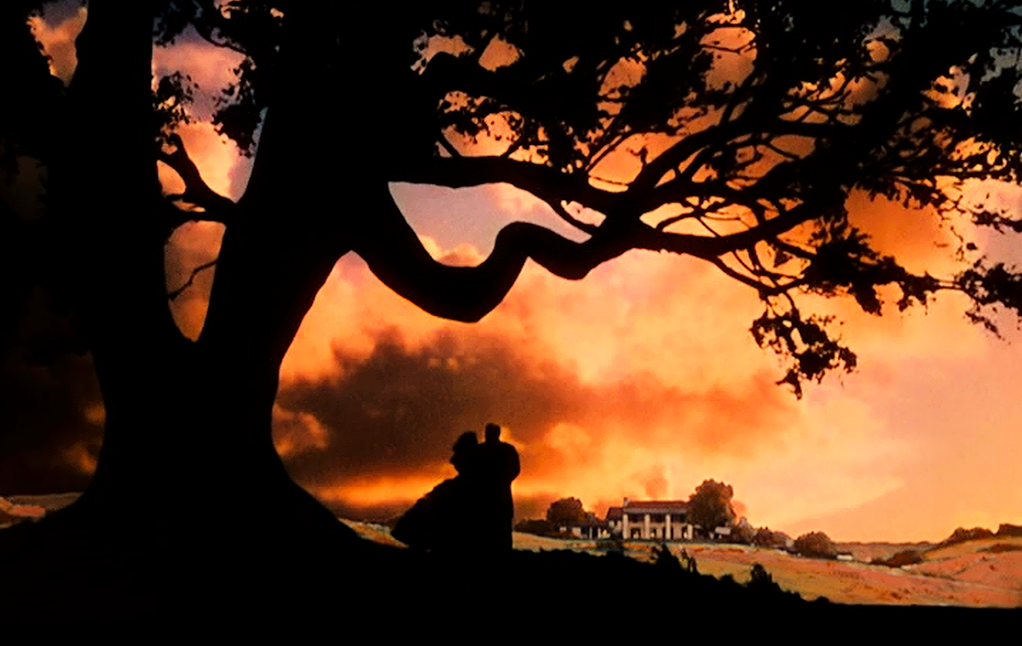
‘Gone With the Wind’ to celebrate 75th anniversary with theatrical screenings showing the movie as it was originally shown seventy-five years ago. I took my mother to see GWTW, and it was worth every second of the five hours we sat in that theater. Though the movie has a running time of 238 minutes (with overture, intermission, entr’acte, and exit music), the theater where we saw it apparently didn’t know how to run a movie. The intermission should have been 15 minutes, but due to technical difficulties was over 45 minutes. It was still worth it to see my mama enjoy a movie that she has loved since she was a teenager.

TCM is presenting screenings of Gone With the Wind on Sept. 28 and Oct. 1 in movie theaters across the nation. If you are a fan of the movie, it is worth the price of the ticket to see it (even if ticket prices are more than the $10 that was the cost to see the originally premiere in Atlanta with Clark Gable and Vivien Leigh in the audience).

Because we still give a damn: Long considered among the greatest films ever made, Gone With the Wind starring Clark Gable, Vivien Leigh, Leslie Howard and Olivia de Havilland celebrates its 75th anniversary this month.

Here are the details from Fathom Events, Warner Bros. Home Entertainment and TCM:

Scarlett O’Hara won and then lost Rhett Butler, Atlanta burned and the antebellum South was shown in all its splendor and decimation in one of cinema’s most treasured and most successful films, “Gone With the Wind.” And now, as part of the festivities to mark the 10-time Oscar©-winning film’s 75th anniversary, Fathom Events is joining with Warner Bros. Home Entertainment and Turner Classic Movies to bring “TCM Presents: Gone With the Wind” back to its original home in select theatres nationwide and presented in its original aspect ratio so audiences can experience it as it was originally shown 75 years ago. The film will be exhibited on Sunday, September 28 and Wednesday, October 1 at 2 p.m. and 7 p.m. local time.

In addition to the classic film, which starred Vivien Leigh as Scarlett O’Hara, Clark Gable as Rhett Butler, Olivia De Havilland as Melanie Hamilton and Leslie Howard as Ashley Wilkes, “TCM Presents: Gone With the Wind” included a specially produced introduction by TCM host and film historian Robert Osborne.

As any fan of classic films or American literature surely knows, “Gone With the Wind” is the Epic Civil War drama about spoiled southern belle Scarlett O’Hara. Starting with her idyllic life on the plantation Tara, it traces her unrequited love for Ashley Wilkes, her tempestuous relationship with roguish Rhett Butler and her struggles as Atlanta burns, her family home is decimated and she vows to never go hungry again. As has been evident from the enduring devotion that fans have for the story – on film, on the pages of Margaret Mitchell’s original novel, on TV and home entertainment formats – frankly, they DO give a damn about Scarlett’s triumphs, travails and ultimate will to survive.


Pitch Perfect: It’s Aca-Awesome

IMG_8742.JPG

Pitch Perfect is an enjoyably snarky campus romp that’s both wildly nerdy and somewhat sexy, which makes it totally my kind of movie. Set in the unlikely world of a cappella singing, this snappy, smart-mouthed comedy with tons of great one-liners and fantastic music, offers choice opportunities for a bunch of young performers to pop out of the crowd while playing game characters searching for modes of self-expression. Girls, gays and music fanatics represent the core audience, but the good times also should go down easily with a wider in-the-know crowd. Think Glee in college. And to add a little eye candy for the gay crowd there are plenty of sexy guys in this movie along with a few dorky types.

A too-cool-for-you smarminess sheathes the cutthroat competitiveness at Barden U., where, on club recruiting day, The Bellas, an all-female a cappella group, urgently need new blood to have a chance of beating male rivals The Treblemakers, who prevailed in the national finals the previous spring.

Debuting feature director Jason Moore, best known for having staged Avenue Q on Broadway, sets a quick but not frantic pace and keeps it there; one easily could believe he goosed the actors before every scene, so alert are they to everything going on. The unusually attractive cast, which is consistently filled with performers well over college age, is fun to watch. Among the Bellas, Anna Kendrick’s Beca appealingly blossoms from wary outsider to the one everyone counts upon; Anna Camp’s Aubrey seemingly would rather die than take off her self-imposed straitjacket; Brittany Snow’s Chloe receives some of the knocks she needs to begin straightening herself out; Rebel Wilson’s Fat Amy has a hilarious arsenal of quips, looks and moves; Ester Dean’s Cynthia Rose shows the kind of right stuff you always want on your side; and, for maximal eye candy, Alexis Knapp’s Stacie is always towering voluptuously and informing everyone how much sex she has. You get the feeling all of these talents will be heard from more decisively in the near future.

Scarcely five minutes of screen time goes by without music, be it in rehearsals, impromptu challenges or regional competitions leading up to the national finals at Lincoln Center in New York, and the bulging soundtrack calls upon oldies, newbies and everything in between to be rendered vocally without instrumentation, with normally arresting results unless it’s supposed to sound bad. The choreography is similarly sharp without tipping over into the outlandishly professional.

As I was reading about this movie, I came across a review from a “religious” site called Dove Family Friendly Movies that reviewed it as “Not Recommended for Families.” Well, as Aubrey says to one character, “It’s time to get your head out of your ass, because it’s not a hat.” Yes, there is some language but nothing that’s not regularly on television. Dove Family Friendly Movies was too funny not to read their review. At one point they state, “The music is really quite good and except for one line uttered by a lesbian, ‘I’ll make you my queen,’ the soundtrack might be considered family friendly.” To top off their stupidity, this is what they said about nudity in the film, “close-up of boy in a speedo swimsuit; cleveage [sic]; two girls and a guy talking while naked in the shower (nothing shown on screen); girl with see-thru t-shirt; girl rips open blouse during performance.” The thing is there is absolutely no nudity in the whole movie, and “close-up of boy in a speedo swimsuit” just made me want to see it more.

A friend had sent the movie when he found out that HRH had passed. He said that I needed something that would help cheer me up. After watching this movie last night, I can honestly say it worked. I haven’t been in this good of a mood in nearly two weeks. Even before Victoria got sick, I had suffered from a three day migraine. So this movie was just what I needed, and I laughed a lot, something I haven’t done in a while. One of the ladies at school told me that she missed my smile. She understand though why I have been sad.

If you have not seen Pitch Perfect than you really should. It’s a fun and wonderful movie. I plan to watch this movie over and over again. This movie is perfect for putting me in a good mood, and I recommend anyone who has not seen it to run to the store and buy it.


Great Sadness

20140812-211334-76414000.jpg

On Monday, the same day I posted about my own battles with depression, Robin Williams committed suicide. Williams had been seeking treatment for depression. The Oscar-winning actor for years dealt with bouts of substance abuse and depression and referenced his struggles in his comedy routines. Just last month, Williams announced he was returning to a 12-step treatment program.

The circumstances of the death do not help explain what motivated him, suicide experts said. Understanding that would require a detailed “psychological autopsy” that includes the review of medical and other records, and interviews with family and friends. These experts stressed that suicide rarely is triggered by a single factor, such as depression or substance abuse. Typically there are at least two such influences, often compounded by acute stress, such as from financial hardship or troubled personal relationships.

I think that if you looked at any of Williams’s performances you will see one of the most explosively, exhaustingly, prodigiously verbal comedians who ever lived, yet you would also see an undertone do sadness. Maybe that is 20/20 hindsight, but Mrs. Doubtfire, Good Morning, Vietnam, Patch Adams, and so many others show a troubled man who also used humor to hide what was underneath, a great sadness.

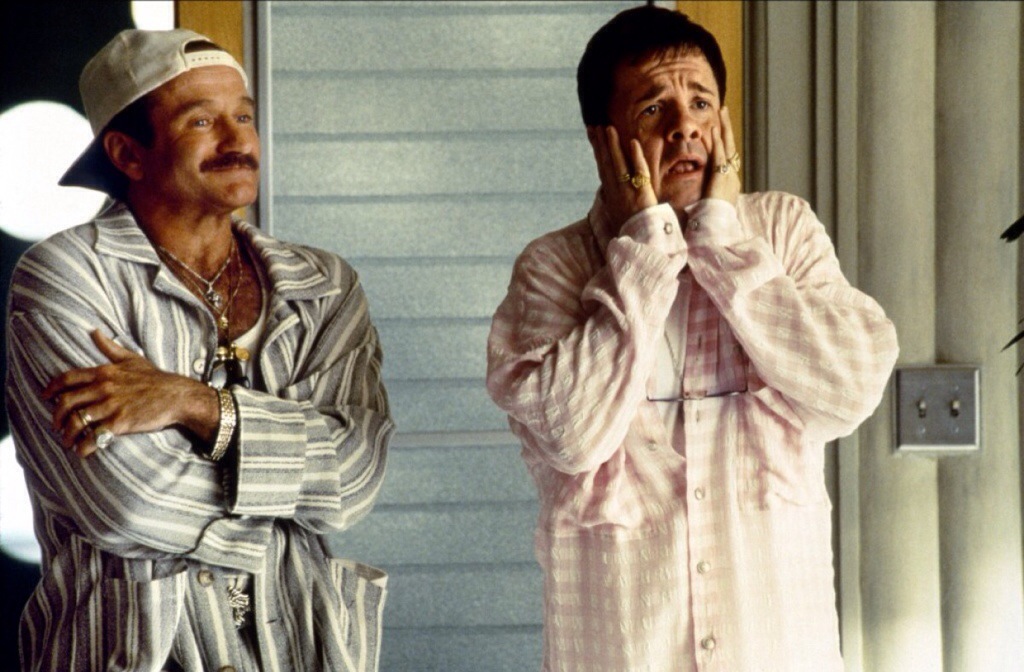
The first “gay” movie I think I ever saw was The Birdcage. It showed men who were gay and were proud to be gay. It showed something that I had never seen before, and it didn’t degrade gay men, just used them as part of the comedy as any other character in the film was used. It’s actually the heterosexuals in the film that become the most ridiculous.

Robin Williams will be greatly missed. I am sorry that depression took someone who made so many people happy.

20140812-211424-76464104.jpg

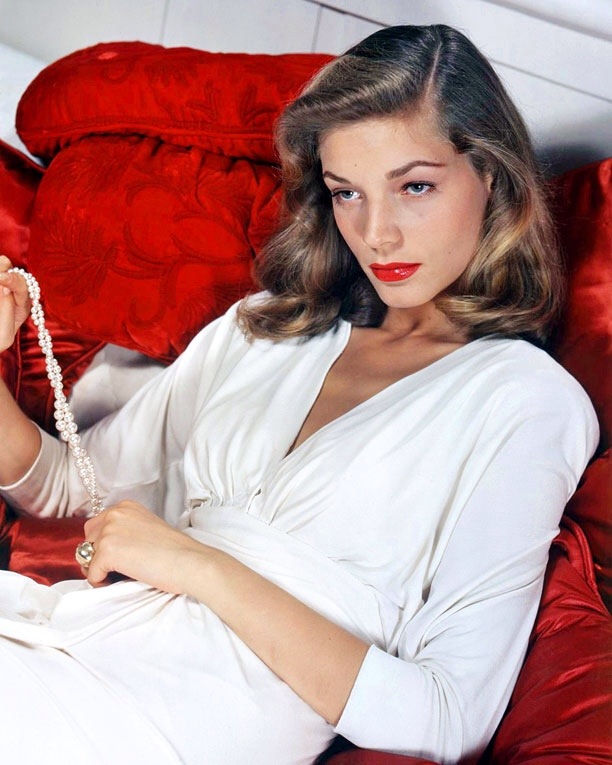
If the loss of Robin Williams was not tragedy enough, Lauren Bacall, the smoky-voiced movie legend who taught Humphrey Bogart how to whistle in To Have and Have Not, died at the age of 89 yesterday.

Her death was confirmed by Robbert de Klerk, the co-managing partner of the Humphrey Bogart Estate with her son Stephen Bogart. “She passed away peacefully earlier today in New York,” according to family, De Klerk said. Some news sources state that she died of a stroke.

With an insinuating pose and a seductive, throaty voice — her simplest remark sounded like a jungle mating call, one critic said — Ms. Bacall shot to fame in 1944 with her first movie, Howard Hawks’s adaptation of the Ernest Hemingway novel To Have and Have Not, playing opposite Humphrey Bogart, who became her lover on the set and later her husband.

It was a smashing debut sealed with a handful of lines now engraved in Hollywood history.

“You know you don’t have to act with me, Steve,” her character says to Bogart’s in the movie’s most memorable scene. “You don’t have to say anything, and you don’t have to do anything. Not a thing. Oh, maybe just whistle. You know how to whistle, don’t you, Steve? You just put your lips together and blow.”

The film was the first of more than 40 for Ms. Bacall, among them The Big Sleep and Key Largo with Bogart, How to Marry a Millionaire with Marilyn Monroe and Betty Grable, the all-star Murder on the Orient Express (1974), each are some of my favorite films. Those that you can see a hundred times and never tire of them.

In 1996, Bacall appeared as the meddling mother to Barbra Streisand in The Mirror Has Two Faces, a role for which she received her only Academy Award nomination as supporting actress.

She was considered a shoo-in to take home the Oscar but lost out to Juliette Binoche for The English Patient.

The actress told The Times in 1998 that she wasn’t bitter.

“The part I had in Barbra’s movie was a terrific part just on its own,” she said. “The opportunity to work with her was great, but you know, the whole thing of awards is a nightmare, I think. It has gotten out of hand. There are too many awards.”

She said she was surprised when she received the prestigious Kennedy Center Honor in 1997, calling it “a very special honor.”

“Listen, I never went into this business thinking of winning anything,” she said. “I went into it because I loved it and I wanted to be good at it. It was a form of expression for me. I love to hide behind characters. So [any recognition] I get is a perk. It’s just an extra. Just the fact that all that happened to me last year, it is — well — fabulous.”

Lauren Bacall and Robin Williams were class acts and their legend will continue. Of you haven’t seen one of their movies in a while, I encourage you to do so. It might just inspire you.


Do I Sound Gay?

20140430-232834.jpg

Confession: I’ve always been self-conscious about “sounding gay.” It’s one of the main things that “gives me away” as gay. I knew that my anxiety came from my internalized homophobia telling me: Gay = bad, so sounding gay = bad. A compelling new documentary is bringing together some of the biggest lesbian, gay, bisexual and transgender (LGBT) celebrities to discuss a question that probably crosses the mind of every gay man at some point in his life: Do I sound gay?

From director David Thorpe, “Do I Sound Gay?” aims to present an intelligent and and provocative cultural analysis of the “gay voice.” Throughout this process, Thorpe talks to linguists, celebrities, historians, voice coaches and total strangers to share their own thoughts and experiences surrounding the idea of ‘sounding gay.’

In the tradition of funny-but-serious first-person movies like Supersize Me, Roger and Me and Good Hair, Thorpe encounters a colorful cast of linguists, historians, voice coaches, speech therapists, friends, family, and total strangers on the street, gay and non-gay, who share their wisdom and touching, funny stories about the “gay voice.” There are also intimate confessions and hilarious anecdotes from LGBT icons – Margaret Cho, Tim Gunn, Don Lemon, Dan Savage, David Sedaris and George Takei – as they open up about the “gay voice.” Over the course of three years, Thorpe did 165 interviews in four countries.

Here are five reasons. David Thorpe gives for making this film and a few comments from me:

Reason No. 1:

Some gay men are self-conscious about “sounding gay,” even famous ones like David Sedaris. Let’s start hashing out this whole “sounding gay” thing, so we can all be OURSELVES in this small but crucial way. It’s something about me that I’ve come to own and make it my own.

Reason No. 2:

“Sounding gay” is still a trigger for mockery, bullying and violence. LGBT kids are far more likely to commit suicide or drop out of school because they feel unsafe. Zach King, one of our brave young subjects, was viciously assaulted at school. I was always made fun of for my “gay voice,” sometimes I still am, and it has always, even to this day, raises my hackles.

Reason No. 3:

Hard to believe, but nobody has comprehensively explored the phenomenon of “sounding gay.” Voice and sexuality – two fundamental features of human existence, and yet most people don’t have a clue how they’re related. Instead, we have stupid stereotypes. Let’s toss ‘em in the trash. Knowledge is power.

Reason No. 4:

A lot of people think it’s okay to be gay as long as you don’t act – or sound – that way. The daily pressure to cover, hide or “pass” affects many minorities. Let’s relieve the pressure.

Reason No. 5:

Our title isn’t just a title. Combined with our rainbow tongue logo, it’s an empowerment icon, a sneaky, fun, viral way to say it’s OK to sound – and be – gay. When the movie gets made, you’ll see rainbow tongues everywhere, asking, “Do I Sound Gay?”

The film is currently engaged in a Kickstarter campaign in order to fund post-production. Visit the project’s Kickstarter for more information.


Divergent

20140324-001807.jpg

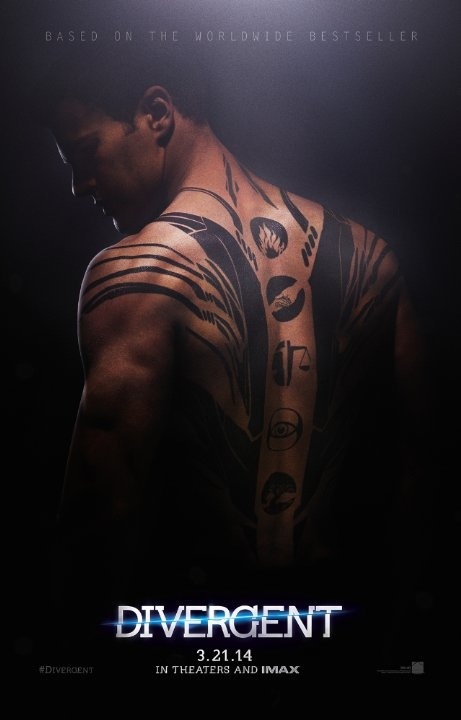
Last night, I went to see the movie Divergent, which I thought was excellent. I had just finished reading the book just prior to seeing the movie. The movie isn’t exactly like the book, but is probably as close as a book and movie can get. I loved the book and am ready to begin the second in the trilogy. One of the things I found most fascinating about the books is the idea of the factions.

In the Divergent trilogy and film, factions are societal divisions that classify citizens based on their aptitudes and values. The factions are Dauntless (the brave), Amity (the peaceful), Erudite (the intelligent), Abnegation (the selfless), and Candor (the honest). On an appointed day of every year, all sixteen-year-old’s must select the faction to which they will devote for the rest of their lives with after taking a placement test. A further explanation of the factions is below.

Abnegation (the selfless)

Abnegation do not draw attention to themselves. Instead, they help others such as the factionless (homeless). Since the Abnegation are so selfless and have no lust for power, they are the leaders of the government. Their uniform is gray loose-fitting clothing chosen so that they will blend in and be unnoticeable. They can also wear a plain watch.

Dauntless (the brave)

Always on the run, the Dauntless jump on moving trains and battle with each other. They are known for having many tattoos and piercing. They can also be reckless and cruel in order to show their bravery. The Dauntless normally dismiss Abnegation as “Stiffs.” Their uniform is black.

Erudite (the intelligent)

The Erudite are the city’s scientists and teachers. They elect representatives based on their I.Q . An interesting faction, but they value intelligence over everything else, even compassion. Much like the ancient Greeks who felt that being cunning and outwitting your opponent was often better than brute force, though this is not always true of their faction, which can be ruthless when their values demand it. Their uniform is blue because of its significance to tranquility and intelligence.

Amity (the peaceful)

The Amity value peace above everything. They greet each other with hugs and initiate new members with sing-alongs. They tend to be the city’s farmers, nurses, and artists. Their uniform is orange and yellow.

Candor (the honest)

The Candor value honesty and can’t tell a single lie. They say whatever’s the truth, even if it gets them in trouble. They are often lawyers, for they are truthful about everything. The Candor believe that truth is black and white, so that is what they wear.

If you had to choose one of these factions, which would you choose?

I would hope that I’d be divergent, but if I had to choose a faction, I would most likely choose Erudite on the choosing day, but I most admire Abnegation, Amity and Candor. I find the Dauntless to be a bit scary. We can always hope that each of us has the best qualities of each faction within us.


Did the “Hills Come Alive”?

20131205-230718.jpg

NBC’s three-hour televised musical The Sound of Music Live!, starring country music star Carrie Underwood as Maria von Trapp and True Blood‘s Stephen Moyer as Captain von Trapp, aired live last night.

For the uninitiated (and if you’re not familiar with The Sound of Music, then I am surprised that you are reading this blog), The Sound of Music tells the story of aspiring nun Maria’s adventure to become governess for the widower Captain von Trapp’s seven kids, but her romantic emotions for the Captain kick in and she begins to doubt her religious calling.

I will be honest with you, I didn’t think there was anyway they could have improved on the original movie, and they didn’t. However, I did come into watching it with an open mind. I was quite excited to see it, since The Sound of Music is one of my all-time favorite movies. To be fair, this was a televised version of the musical and there is a fair amount different, including the placement of songs. However, even though it was not a remake of the Julie Andrews classic, I felt that in a lot of ways it fell flat.

First off, I hate when a movie changes something that would have been too far fetched historically for the sake of political correctness. And The Sound of Music Live! did this in the first second of the production. Audra McDonald is a wonderful actress and she sings beautifully, but really NBC an African-American Mother Superior in 1930s Austria. (And yes, I am fully aware that the movie is nearly wholly inaccurate historically, but…) That’s a smaller detail, and I did my best to suspend my belief on this. However, by halfway through the movie, I was ready to give up on it. I was a bit bored. I didn’t give up, but I wanted to. Carrie Underwood is a fine singer, but she’s not particularly a great actress. The descendants of the real Maria von Trapp would have preferred Anne Hathaway, though I don’t necessarily agree with that either. Underwood did a decent job, just not a wowing performance like I had hoped for.

What I want to know is: did you watch it? what did you think? I would love to hear your opinion. I liked it, but I also didn’t like it. The fact is, I’m a bit neutral when it comes to my opinion of The Sound of Music Live!


Defying Gravity

20130728-231426.jpg

20130728-231435.jpg

Because you didn’t know she felt the same way about you… or if she did, for some reason it wasn’t okay… thought that people wouldn’t like it. And one day, after months, years, it’s just another day, nothing special, just the two of you. For some reason everyone’s out of the house. You can’t turn back, you can’t let go, you can’t stop – as if you were one person, defying gravity, together.

–John ‘Griff’ Griffith, Defying Gravity

I came across an article the other day about the MPAA creating a new website so that people can find legitimate and legal movies for download. I noticed that one of the websites was Wolfe Video. If you’ve ever watched a fair amount of gay cinema, you have no doubt come across Wolfe Video, the oldest and largest exclusive distributor of gay and lesbian films in North America. As I was looking through WolfeOnDemand, I came across one of my all time favorite LGBT movies, Defying Gravity.

Defying Gravity was filmed in just 13 days using a cast largely of first-time actors, the film played the gay and lesbian film festival circuit in 1997 and 1998. It is an earnest, heart-felt movie. While its edges are rough, both in terms of the performances and the filmmaking, it’s these rough edges that actually make the movie feel more real in a way that polished Hollywood acting and production values would undermine. One could complain that it is yet another coming out story, and in many ways it is, but it’s an effective one.
John ‘Griff’ Griffith (Daniel Chilson) is a college student who lives in a frat house with your typical college guys. Everyone is assumed to be straight, and the majority of brothers are. Griff wants to belong, but as a young gay man, he feels a certain amount of isolation. Because of his wanting to fit in, he remains in the closet despite the efforts of his boyfriend Pete (Don Handfield) to help him come to terms with his identity. Finally, a crisis forces Griff to take a stand for himself and for Pete. Yes, anyone who has seen more than a few gay-themed movies or TV shows will have seen this plot. But it is handled in such an honest and affecting way that you will forgive it.
What sets this movie apart are the character relationships. Griff’s interesting relationships with best friend Todd (Niklaus Lange), with Todd’s girlfriend Heather (Leslie Tesh), with fellow student Denetra (Linna Carter), and with Pete’s father are what helps us to forgive the cliched elements of the plot. Of particular note are the relationships with Todd and with Pete’s father. Their reactions to Griff’s relationship with Pete are not what you have come to expect from coming out films. It makes for a refreshing change of pace, and writer/director John Keitel deserves credit for putting new spins on these stock characters.
The acting never really rises above college drama student level, but that works for a movie about college students. Chilson, Lange, Tesh, and Carter all act earnestly and come across as believable college kids in ways that technically-trained performers might not. There is one particular scene when Griff goes to see Pete in the hospital. Griff utters one word, “Man….” He utters it in a long drawn out way, that melted my heart. Any flaws in the film were forgotten for me when I heard that line.
I hope you will give this little movie a chance.

The most glorious, groundbreaking gay and lesbian movies of all time

I can’t remember where I first saw this list (I think it was on a Tumblr blog), but when I searched again it seems to be a list by Josh Winning at TotalFilms.com.  Personally, I think there are movies on this list that do not belong and some that should be closer to #1 such as Latter Days (#42).  Furthermore, if they are going to include such movies as The Color Purple and Mulholland Drive, then how can they omit such classics as Some Like It Hot and Fried Green Tomatoes. Or, why include The Birdcage but omit La Cage Aux Folles? Most, if not all, of the movies listed are American movies, but some of the best in gay cinema tends to be foreign movies.  The French and Latin American countries have made some wonderful gay movies.  I’ve seen a fair number of these movies and really question how good many of them are. So what do you think of this list? What movies do you think are missing?  What movies do you feel should be excluded from the list?  Here are the 50 movies that made Mr Winning’s list of “the most glorious, groundbreaking gay and lesbian movies of all time”:

50. Shelter (2007)  
49. When night is falling (1995)

48. Loose Canons (2010)
47. She-Monkeys (2011)
46. C.R.A.Z.Y (2005)  

45. The Birdcage (1996)  
44. Go Fish (1994)
43. L.I.E (2001)
42. Latter Days (2003)

41. D.E.B.S. (2004)
40. The Hours (2002)
39. Female Trouble (1974)
38. Dog Day Afternoon (1975)
37. All Over Me (1997)
36. Prayers For Bobby (2009)
35. The Celluloid Closet (1995)
34. Mulholland Dr. (2001)
33. The Wedding Banquet (1993)
32. Gods And Monsters (1998)
31. My Summer Of Love (2004)
30. Kissing Jessica Stein (2001)
29. Patrik 1.5 (2008)
28. But I’m A Cheerleader (1999)
27. Your Sister’s Sister (2012)
26. Tomboy (2011)
25. The Colour Purple (1985)
24. Maurice (1987)
23. Transamerica (2005)
22. High Art (1998)
21. Show Me Love (1998)
20. Bent (1997)
19. The Crying Game (1992)
18. The Boys In The Band (1970)
17. Mysterious Skin (2004)
16. The Adventures Of Priscilla, Queen Of The Desert (1994)
15. My Own Private Idaho (1991)
14. Shortbus (2006)
13. Water Lilies (2007)
12. Beautiful Thing (1996)
11. The Kids Are All Right (2010)
10. Philadelphia (1993)
9. Monster (2003)
8. Boys Don’t Cry (1999)
7. Milk (2008)
6. Bound (1996)
5. A Single Man (2009)
4. Weekend (2011)
3. Heavenly Creatures (1994)
2. My Beautiful Laundrette (1985)
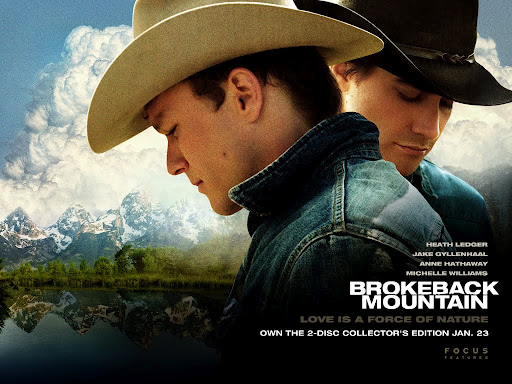
1. Brokeback Mountain (2005)


TMI Movies

On Sean’s blog, Just a Jeep Guy, he posted on Tuesday “TMI TUESDAY QUESTIONS: LET’S GO TO THE MOVIES.”  And I decided that I would once again participate.  So here we go:

LET’S GO TO THE MOVIES

1. Do you still go to the movies? Why or Why not?
I do, but it is very rarely.  I tend to wait for a movie to come out on DVD, unless I am really excited about the movie and can find the time to go see one. I love watching a movie in the theater, but sometimes it’s just too much of a hassle.  Though I love the experience, I have never been a big movie goer.
2. Would you go by yourself?
Generally, I do end up going by myself, which is another reason I don’t go often.
3. What was the last movie you saw? Recent recommendation?
The last movie I saw was the Hunger Games.  ( I wanted to see Magic Mike, but wasn’t able to make it, because too much was going on during the time it was in the theaters.)  Hunger Games was a good movie, but it still could have been better.  The books was far superior.  That being said, since the second and third book in the series were mediocre, I’m hoping that the movies based on those books will be better.  If the movies are on par with the first movie, then they should be better than the actual second and third books of the trilogy. They could be worse, but I hope not.
4. Snacks: Buy, Bring or Boycott?
I usually buy a Coke and a bag of popcorn.  It just makes the experience better for me, even if it tends to be way overpriced. I love good salty movie theater popcorn, but no extra butter please.
5. Teenagers used to go to the movies to make out. Have you ever and if so, when was the last time?
I did when I was a teenager and in college, but I have not been to the movies on a date in years.  I probably wouldn’t now anyway.
6. Have you ever gone to an adult movie theater? Did you pull a Pee Wee Herman?
Never been to an adult movie theater.  They just don’t exist around here.

Bonus


Which all-time favorite movie would you pay to see on the big screen again? Of course cell phones, babies, and assholes are banned.
Hands down, without a doubt in my mind, Fried Green Tomatoes. I never had the chance to see it in the theater, but given the chance, I would be the first in line if it was shown again. I could watch this movie over and over again and never tire of it.  But to really answer the question, a movie that I saw in the theater that I would go see again…it would have to be between Indiana Jones and the Raiders of the Lost Ark or the latest Star Trek.  Indiana Jones makes the list mainly because I don’t remember seeing it the first time, though I know we saw it in the theater.  I think it would be so cool to see it on the big screen.  Star Trek makes the list because it was truly fantastic on the big screen (I’m a bit of a Trekkie) and loses some of the effect when watched on the small screen.

The History of the Movement in One Man’s Life

Credit: Rink Foto / HBO


To LGBT people who came of age in the 1970s and ’80s, Vito Russo is an icon. But among younger generations, Russo is barely known — and that’s something Jeffrey Schwarz set out to change with his comprehensive, affecting documentary Vito, premiering tonight on HBO. 

“I felt like making a documentary could help introduce him to a new generation,” says Schwarz, producer and director of the film about the man who was author of The Celluloid Closet, a key player in ACT UP, and so much more.

Schwarz, 42, never met Russo, who died in 1990 at age 44, but the filmmaker has a long history with his subject nonetheless. “Vito has always been a beacon to me,” says Schwarz. “One of the first things I did when I was coming out was read The Celluloid Closet,” Russo’s landmark 1981 book about gay and lesbian images in film.

This was in the late 1980s, but Schwarz had been aware of Russo for several years before that. In 1982, when Schwarz was 12, he saw an episode of the movie-review show Sneak Previews, then hosted by Gene Siskel and Roger Ebert, about gay-themed films coming out that year, and the critics mentioned Russo and The Celluloid Closet.

Later, after Schwarz had been through film school and fallen in love with the documentary form, he heard that Rob Epstein and Jeffrey Friedman were making a movie of The Celluloid Closet, and he asked to work on it. That 1995 documentary, for which Schwarz was apprentice editor, was his first job in the movie business, and the gig gave him access to archives through which he got to know Russo well.

Vito, which Schwarz began planning about five years ago, will give audiences the opportunity to know Russo well. Through archival footage and interviews with family members, friends, and a veritable who’s who of the modern gay rights movement, the film traces his love of movies along with his anger over their negative portrayals of gays; his development as an activist; his outgoing, outsize personality; and his struggle with AIDS, which eventually took his life, but not before he fought tirelessly for awareness and treatment as a member of the direct-action group ACT UP. Russo’s life is essentially a history of the gay movement from Stonewall through ACT UP, says Schwarz.

In one piece of archival footage, Russo says, “Everything I’ve done I’ve chosen to do. This is the life I wanted. I’m one of the very few people I know who can say I never did anything I didn’t want to do, and I always did exactly what I pleased. Very few people can say that about their lives.”

Born in 1946, Russo spent his early life in New York City and developed a passion for film early on, often tagging along with his cousin Phyllis Antonellis on her movie dates, then recounting the plots to his family. He also developed a passion for men, and “never once for a second believed that it was wrong to be gay,” as he observes in the film, despite his Catholic upbringing. In 1961 his family moved to Lodi, N.J., a suburban town he hated for many reasons, including the bullying he received from high school jocks, but he discovered other gay kids and formed a support system.

He returned to New York as soon as he turned 18, and he was a witness to the Stonewall riots of 1969, but he didn’t become politicized until after a raid on another bar, the Snake Pit. He joined the Gay Activists Alliance, an early gay rights group, and participated in many protests, including one for marriage rights in 1971, with an “engagement party” for Russo and his then-lover, Steve Krotz, at the New York marriage bureau. He also started movie nights for the GAA, showing classic films with gay-beloved divas like Judy Garland and Bette Davis.

As the 1970s progressed, Russo made a living and a name as a journalist for The Advocate and other publications, interviewing celebrities such as Bette Midler and Lily Tomlin, and worked in the film department at New York’s Museum of Modern Art, where he discovered many vintage movies with both coded and explicit gay and lesbian images. Out of this came “Celluloid Closet” lectures and eventually the book, documenting how gay characters were consistently either villains or objects of ridicule, and often died in the end.

“He was the first person to write about how Hollywood treated homosexuals,” says writer Bruce Vilanch in the film. Other well-known interviewees include Larry Kramer, Armistead Maupin, Malcolm Boyd, Gabriel Rotello, Jenni Olson, David Ehrenstein, former Advocate editor Mark Thompson, Tomlin, Epstein, and Friedman, along with many others who knew Russo, including members of his supportive family, such as Antonellis (everyone’s favorite, says Schwarz) and his brother Charlie.

“The film couldn’t have been made without Charlie Russo and other people in the family, like cousin ‘Perky’ [Antonellis],” Schwarz says. His first call when he decided to make the film, he says, was to Charlie. In the film, Charlie recalls the strong bond between Vito and their mother as well as the party atmosphere that reigned among the extended Russo family whenever Vito came to visit.

Other “angels” who helped make the film a reality include Bryan Singer, who came on as executive producer, and HBO executives such as Sheila Nevins. HBO got on board after Schwarz showed network officials a 20-minute sample of the film. “I’m still pinching myself that HBO is our partner in this,” Schwarz says. “It’s kind of a stamp of quality when a documentary airs on HBO.”

Schwarz, who has created many short documentaries used as bonuses on DVD releases, has also made feature-length ones on subjects including porn star Jack Wrangler and horror-film producer-director William Castle. By the end of the year, he hopes to finish I Am Divine, a doc about John Waters’s biggest star. Next up is a documentary on gay actor Tab Hunter, then one on antigay activist Anita Bryant and her infamous Save Our Children campaign.

Right now, he’s thrilled to be bringing Vito Russo to a new audience. In addition to making the film, he’s edited a two-volume collection of Russo’s writingsOut Spoken: A Vito Russo Reader,published by White Crane Books.

He was gratified, he notes, by the reception Vitoreceived as the opening-night attraction this month at Outfest, Los Angeles’s LGBT film festival. “The greatest thing about making this film is everyone is talking about Vito Russo,” he says. “It’s going to get people talking about our history. I hope it will inspire young people to go out there and live a life Vito would be proud of.”

Vito premieres tonight at 9 Eastern/Pacific on HBO.