Category Archives: Movie Review

Stonewall Uprising

Stonewall Uprising . American Experience . WGBH | PBS

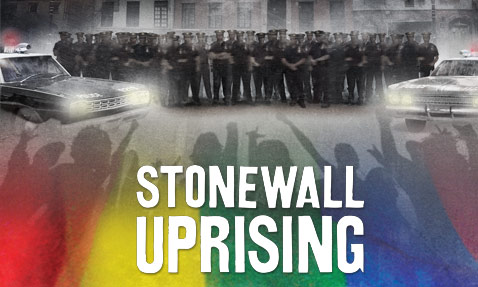
When police raided the Stonewall Inn, a popular gay bar in the Greenwich Village section of New York City on June 28, 1969, the street erupted into violent protests that lasted for the next six days. The Stonewall riots, as they came to be known, marked a major turning point in the modern gay civil rights movement in the United States and around the world.

In this 90-minute film, AMERICAN EXPERIENCE draws upon eyewitness accounts and rare archival material to bring this pivotal event to life. Based on David Carter’s critically acclaimed book, Stonewall: The Riots that Sparked the Gay Revolution, Stonewall Uprising was produced by Kate Davis and David Heilbroner.

For more information about the beginnings of the Gay Rights Movement in the United States and the Stonewall Riots, please check out my series of post on Stonewall.


Steve Hayes: Not Just Any Tired Old Queen

When I was first coming to terms with my sexuality, I discovered gay cinema at a local video store which had a wonderful selection of foreign and independent movies. The first video I picked up was the 1994 French movie “Wild Reeds.”. I will have to do a post soon about my gay cinema journey to coming out, but that is not what this post is about. This post is about the delightful actor Steve Hayes. The other night I came across a YouTube clip on Joe.My.God of Steve Hayes, an actor who I had first saw in the movie “Trick,” one of the first Fay movies I saw. If you have not seen it, it is a delightful movie and I have included a synopsis below and a clip of Hayes in it.

Trick:

Gabriel, an aspiring writer of Broadway musicals, meets Mark, a muscled stripper, who picks him up on the subway. They spend the night trying to find somewhere to be alone… forced to contend with Gabriel’s selfish roommate, his irritating best friend, and a vicious, jealous drag queen in a gay dance club. The sun rises on a promising new relationship. Steve Hayes sings a memorable and catchy little tune in the movie, and I have to admit, I have loved him since I first saw it. There is a clip below.

Now on to Steve Hayes. As already mentioned, Hayes starred as Perry in the Fine Line Features motion picture “Trick” directed by Jim Fall and starring Tori Spelling and Christian Campbell. “Trick” was nominated for Best Picture at the Sundance Film Festival. He recently completed the film; “The Big Gay Musical,” in which he sings three songs and plays GOD. He won Oustanding Actor at the International New York Fringe Theatre Festival. As a comedian, Steve is a nine time nominee and three time winner of the Manhattan Association of Cabarets and Clubs MAC Award for Outstanding Comedian and Characterization. He is also the recipient of the Backstage Bistro Award for Comedy Performer of the Year. He is a six time recipient of the ASCAP.

All that aside, the YouTube clip I came across was a series he hosts. Hayes is the host of the information/comedy show “STEVE HAYES: Tired Old Queen at the Movies,” which is seen weekly around the world on YouTube. “Tired Old Queen At The Movies” offers the dish on the classic movies we thought we knew and most likely didn’t. How they were made, why they’re classic, and what happens when they become the fixation of a man from upstate New York who was “raised by Warner Brothers.”. From Film Noir to Screw Ball Comedies, Social Dramas to Camp Classics, nothing escapes his scrutiny. Using his vast knowledge of film and Hollywood history, he not only describes the various films, but provides the inside scoops on who got who to do what to whom in order to get what was made, made. With a new segment every week, each two to four minute segment is shot on location in Thornfield Manor, Steve’s overly-opulent , nostalgia filled, sumptuously cluttered, Studio apartment and hosted by fellow actor John Bixler, Steve recommends what classics to see, what to avoid, what to take seriously, what not to and what to run out and rent as soon as the show is over. He also has a sharp, sexy wit that you just don’t find in the many gay men today, the kind where he can be giving you an explanation about why a movie is wonderfully horrible, take a tangent on why one of the actors is so sexy that your boxers will quiver, and then get right back onto the topic at hand without missing a beat.

In short, he really is an old queen, the delightful kind we don’t see often enough any longer. And I love, Love, LOVE that he’s out there making these great little pieces.

I started watching the clips, and before I knew it, two hours had passed and it was well past my bedtime. I couldn’t help myself. He reviewed movies such as “All About Eve,” “Auntie Mame,” “Key Largo,” “Roman Holiday,” “The Lion in Winter,” and so many more of my favorite classic Hollywood movies. It is obvious that his favorite Hollywood icons are Katherine Hepburn and Audrey Hepburn and director and producer Joseph Mankiewicz. Then again, they may just be part of my favorite movies, so it seems that they are his favorites. So, if you have ever wished that TCM’s Robert Osbourne was a bit funnier and camper, then you will love Steve Hayes.

P.S. Don’t get me wrong, I love Robert Osbourne and wish I had his job, but Steve is a lot more fun.  TCM really needs to hire him.


Mimosas and Mame

Yesterday, I had a nice relaxing day. Something I have needed for weeks. I am visiting a friend of mine, and we went to brunch after we got up late Sunday morning. After crab cakes, eggs, Cajun potatoes, cheese grits, and mimosas, we decided to head back home, take a nap, then went for sushi for dinner. The food was wonderful, so we decided to make the best of the evening and had more mimosas while watching Auntie Mame, one of our favorite movies.

The movie Auntie Mame is centered on the main character, Mame, an unconventional individualist socialite from the roaring 20’s. When her brother dies, she is forced to raise her nephew Patrick. However, Patrick’s father has designated an executor to his will to protect the boy from absorbing too much of Mame’s rather unconventional perspective. Patrick and Mame become devoted to each other in spite of this restriction, and together journey through Patrick’s childhood and the great depression, amidst some rather zaney adventures.

The movie was based on the book by Patrick Dennis. Patrick Dennis was an American author, whose novel Auntie Mame: An Irreverent Escapade (1955) was one of the bestselling American books of the 20th century. In chronological vignettes “Patrick” recalls his adventures growing up under the wing of his madcap aunt, Mame Dennis. Dennis wrote a sequel, Around the World with Auntie Mame, in 1958.

Throughout his life, Dennis struggled with his bisexuality, later becoming a well-known participant in Greenwich Village’s gay scene.

Dennis’ work fell out of fashion in the 1970s, and all of his books went out of print. In his later years, he left writing to become a butler, a job that his friends reported he enjoyed. At one time, he worked for Ray Kroc, the founder of McDonald’s. Although he was at long last using his real name, Edward Everett Tanner III, he was in essence working yet again under a pseudonym; his employers had no inkling that their butler, Tanner, was the world-famous author Patrick Dennis.

He died from pancreatic cancer in Manhattan at the age of 55 in November 1976.

At the turn of the 21st century there was a resurgence of interest in his work, and subsequently many of his novels are once again available. His son, Dr. Michael Tanner, wrote introductions to several reissues of his father’s books. Some of Dennis’ original manuscripts are held at Yale University, others at Boston University.


J. Edgar Hoover, Homosexual?

Leonardo DiCaprio, right, as Hoover, with Armie Hammer as Tolson

When Bill Baker heard that Dustin Lance Black was writing the screenplay “J. Edgar,” he was concerned. Mr. Black was the same guy who had written “Milk,” starring Sean Penn as a gay activist and politician.

“I knew he was a good writer, but I also know the theme of his projects,” says Mr. Baker, who is a former assistant director of the FBI, director of the J. Edgar Hoover Foundation and former chief of the Motion Picture Association. “So it was with some trepidation that we watched how the movie progressed.”

The private life of Hoover, who built the FBI into a law enforcement powerhouse and used political acumen and sometimes ruthless tactics to survive eight presidents, has always been mysterious.

He never married and lived with his mother until she died. Tales of a romantic relationship between Hoover and his longtime colleague and confidante, Clyde Tolson, have swirled for decades, but there’s no direct evidence. The film—not to reveal plot details here—suggests that Hoover was gay.

Mr. Black says he believes that Hoover felt his mother’s disapproval that he might be a “daffodil” (slang at the time) and the repression of his sexuality helped fuel his runaway ambition: “If you take away that ability to love, to have a family and to do so openly, it’s certainly going to influence things like empathy,” says Mr. Black. He theorizes that Mr. Hoover substituted romantic love with a craving for power.

Director Clint Eastwood, generally of conservative bent but a fierce defender of gay marriage, had no problems with the script, says Robert Lorenz, a producer on the film and longtime Eastwood collaborator.

J. Edgar Hoover

Hearing about the direction the movie was headed from his Hollywood connections, Mr. Baker helped draft a letter to the filmmakers, citing “a monumental distortion.” The Society of Former Special Agents of the FBI also weighed in. “We objected to the inference that he was homosexual but didn’t want the letter to be inferring we were opposed to gay relationships,” says spokesman Craig L. Dotlo.

Mr. Dotlo says former members of Hoover’s security detail say they never saw any indication of a romance between Tolson and Hoover. “Is it possible that they could have had a closet relationship? Sure. Our point is that there’s no empirical evidence.”

Mr. Eastwood and Mr. Lorenz wrote back: “Our main interest is the fascinating role Mr. Hoover played in American history.” They added that they didn’t intend to portray “an open homosexual relationship” between Hoover and Tolson.

Could the talk of his sexuality hurt the film, as many thought it did with Oliver Stone’s “Alexander,” about the ancient Macedonian conqueror?

Warner Bros. is soft-pedaling the theme in ads. “It is a polarizing concept,” says Sue Kroll, the studio’s marketing chief. “We’re not hiding it, but we’re not using it as an overt tool.”

Says Mr. Lorenz: “It would be a shame if people thought it was only about that. Nobody knows really what went on in his personal life. I think Lance has provided as plausible an idea as anybody could. That’s what makes Hoover human in this film.”

SOURCE: “Will Audiences Care Whether Hoover Was Gay?,” WSJ.com, By Rachel Dodes.

J. Edgar – In theaters November 9


13 Gayest Halloween Movies Ever

Dark, twisted tales that feed our need for revenge. Sexy scenes with hunky young bucks all desperately yearning to get laid. Gory sights and demented deeds that are so over-the-top they border on camp.

These are the staples of fright flicks, and though society may suspect that gays shy away from horror and violence, the truth is that we love it in films that speak to our unique sensibilities. So in honor of Halloween I compiled a list of our 13 favorites.

So sit back, cuddle closely with your man (or bestest girlfriends) and enjoy the show.

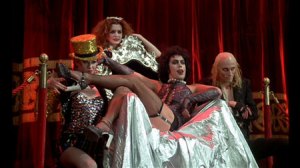
Rocky Horror Picture Show (1975)
It’s the weird and wonderful as newly engaged couple Brad and Janet encounter a problem when they car halts in the rain. They both look for contact only to find themselves at the castle of Dr. Frank-N-Furter a transvestite. A place to stay is offered, but will Brad and Janet want to remain there? Especially when a large group of Transylvanians dance to the ‘Time Warp’, Dr. Frank-N-Furter builds his own man and a whole host of participation for the audience to enjoy. This movie is high camp horror at its best.

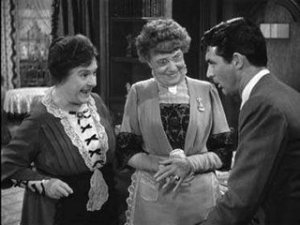
Arsenic and Old Lace (1944)
Mortimer Brewster is a newspaperman and author known for his diatribes against marriage. We watch him being married at city hall in the opening scene. Now all that is required is a quick trip home to tell Mortimer’s two maiden aunts. While trying to break the news, he finds out his aunts’ hobby; killing lonely old men and burying them in the cellar. It gets worse.  Who could not love this movie?

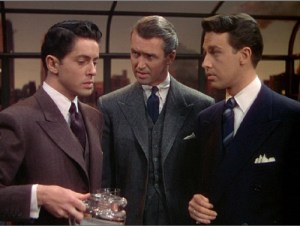
Rope (1948)
Inspired by real-life convicted killers (and lovers) Leopold and Loeb, Rope is Alfred Hitchcock’s gayest film ever. It features a gay couple (played by John Dall, and bisexual Farley Granger at his most luminous), a dinner party, witty repartee, and a body hidden in a stylish piece of furniture. Sounds like summers in Fire Island to me.

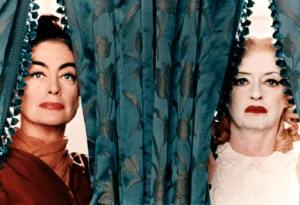
What Ever Happened to Baby Jane? (1962)
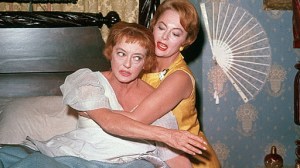
Cast two gay icons—Bette Davis and Joan Crawford—as crazy / tragic protagonists, then have them abuse one another while performing at level 10, and you’ve got one of the most camptastic movies ever made. The dialogue is deliciously mean, the hatred between these two actresses leaks off the screen, and because the characters’ bitter back-story creates a strong foundation you have a solid film rather than one of those “so-bad-it’s-good” features gays love so much.

Best served in a crowd of drunk gays who can truly appreciate the dark humor.

Hush…Hush, Sweet Charlotte (1964)
If Whatever Happened to Baby Jane? makes the list, this movie is also a must.  Charlotte Hollis, an aging recluse deluded into a state of dementia by horrible memories and hallucinations, lives in a secluded house where, thirty-seven years before, John Mayhew her married lover, was beheaded and mutilated by an unknown assailant.  Plus, there is always the back story behind why Joan Crawford refused to make this “sequel” and the why Vivian Leigh refused the role (Leigh famously said “I can just about stand to look at Joan Crawford at six in the morning on a southern plantation, but I couldn’t possibly look at Bette Davis.”)  Also, Agnes Moorehead is in this movie, not only was she the mother on Bewitched, but she was also a well-known lesbian.

Carrie (1976)
Along with Baby Jane, Mommie Dearest and Showgirls, Carrie is one of the films with dialogue most quoted by gay men. Gems like “I can see your dirty pillows,” to a screeching “They’re all gonna laugh at you!” and “They’re called breasts, and every woman has them…” have become part of the secret language of gays. And Carrie’s prom night-mare has become pop culture shorthand on TV shows from Ugly Betty to RuPaul’s Drag Race.

Nightmare on Elm Street 2: Freddy’s Revenge (1985)
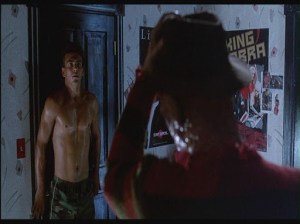
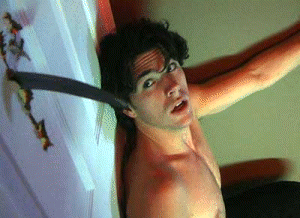
New Line Cinema’s second schlep up to Elm Street is bursting at the seams with homoerotic imagery and undertones. It features openly gay actor Mark Patton as Jesse, a teenage boy Freddy Krueger tries to possess in order to leave dreamland and continue his killing spree in the real world.

Even before the film’s writer, David Chaskin, admitted to including the screenplay’s gay subtext in the 2010 documentary Never Sleep Again: The Elm Street Legacy, Nightmare 2 had been herald as the ultimate homo-horror flick for years by countless fans.

A film about a boy struggling to repress “something” inside of him would have been enough to brand Nightmare 2 as an obvious gay allegory. However, it’s the moments following Jessie’s trek into a gay leather bar—where he discovers his P.E. coach—that rank this film among the gayest of all time. After all, tying up your coach in the locker-room showers and snapping his bare ass with a towel before you kill him from behind will earn you that kind of reputation.

Beetlejuice (1988)
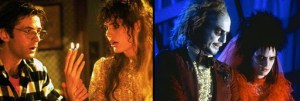
Aside from featuring Alec Baldwin at the height of hotness, Tim Burton’s Beetlejuice has enough camp to be welcome at any homo-Halloween haunt. The film’s quirky style has held up amazingly well since it debuted over 23 years ago, and Winona Ryder’s Lydia Deetz is a queer cinema classic. From the interior decorator played by the late openly-gay actor Glenn Shadix to outrageous musical numbers, there isn’t much about this film that isn’t gay.

Elvira, Mistress of the Dark (1988)
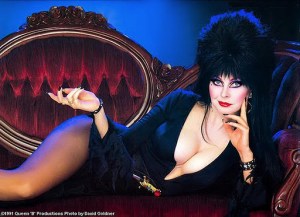
The Queen of Halloween’s first feature film has become a gay camp-classic for all the reasons that made Elvira one of the biggest gay icons of all time. Over-the-top in every way possible, from the costumes and sassy one-liners to the big musical number ending stuffed with hunky shirtless male dancers, Elvira, Mistress of the Dark is the Showgirls of Halloween movies.

Check it out.

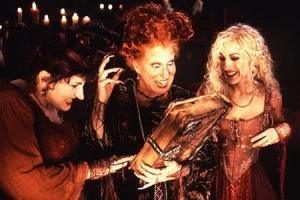
Hocus Pocus (1993)
This poor film has a bad reputation, and some of it is deserved. The movie is about time-displaced witches who fly on vacuums and sing songs, and the kids who must set things right. But it’s also a delightfully fun bad movie, comes from Disney and director Kenny Ortega (famous for the High School Musical franchise), and stars gay faves Bette Midler, Sarah Jessica Parker, and Kathy Najimy (fresh of her stint in Sister Act). No, it’s not brilliant filmmaking, however it works for babysitting, if you’re in the mood for something light, and if you can mix a potion of vodka and… well… anything… to go along with your screening.

The Covenant (2006)
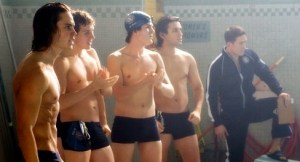
Abercrombie & Fitch goes supernatural in this good warlock vs. bad warlock fantasy/horror flick starring models-turned-actors Steven Straight (10,000 B.C.) and Taylor Kitsch (Friday Night Lights), as well as a pre-shag Chace Crawford. Between that and this picture, do you need any further explanation on why you should rent it?

Hellbent (2004)
Two gay men on a date are murdered the night before Halloween in West Hollywood, California. Eddie and his friends Joey, Chaz and Tobey are going out the following night to the West Hollywood Halloween festival when they encounter the psycho, who sets his eye on them. The killer stalks them through the festival as Chaz parties, Joey chases his jock crush, Tobey tries dressing in drag, and Eddie pursues Jake, the bad boy he wants to get to know better. Not until the very end do you find out who dies and who survives their night of terror.

Amazon.com Widgets


Hellbent

imageHalloween is less than a week away and happens to be one of my favorite holidays/celebrations.  And if you like scary movies to give yourself a little scare during Halloween, then I have a movie for you.
HELLBENT is the terrifying original feature from writer/ director Paul Etheredge-Ouzts and Joseph Wolf, the co-creator of such horror classics as Halloween and A Nightmare on Elm Street.
Taking place at the famed West Hollywood Halloween Carnival, there is a serial killer on the loose. A group of four gay friends will have to fight for their lives to make it through a night where flamboyant costumes, beautiful people, drugs, music, dancing and sex are everywhere.
A wild, relentless ride that combines winning and appealing characters, unexpected surprises, and shocking scares, HELLBENT is a refreshing new classic for the horror genre.
image
image
Since I first saw this movie, a real gay horror movie, (not one of those straight boys in their underwear horror movies that David DeCoteau has made so many of), I have watched this movie every Halloween.  It’s scary with a lot of eye candy, what more could you ask for on Halloween.
Tonight, I might also add another hot horror movie, which is considered one of the Top 5 Unintentional Gay movies on Cracked.com.  Ranking #4 on their list is The Covenant from 2006:
#4. The Covenant (2006)

Summary:
Caleb is the leader of a gang of “undercover” male witches who spend a lot of time showering together. He is obsessively targeted by a mysterious stranger, Chase, the new kid at their exclusive private school.
We don’t want to read too much into the fact that the school’s female students are featured mostly as blurry, indistinct figures in the background. Why read anything at all when we have an all-male naked locker room fight scene to watch?


“I’m gonna cast a magic spell. A magic ass spell. On your ass.

Yes, it’s the classic story of male friendship: One man defends another in a naked brawl, sparked when one of the men is called gay. Our memory is a little hazy, but we’re fairly certain that’s how Mel Gibson met Danny Glover in the first Lethal Weapon.
After their bond if forged through butt-naked combat, Chase and Caleb hit some bars together and engage in extended male swimming competitions while wearing tiny, tiny shorts. Their relationship reaches its climax when Caleb discovers the secret that Chase hides away from the world in the clos … cupboard deep within his soul. We’re of course talking about the fact that Chase is also an undercover witch.
Chase becomes desperate to consume Caleb’s magic, when he learns that Caleb has a special magic that will only fully develop once he turns 18. Chase stalks him, threatens his friends and eventually holds him down and kisses him.


“This is how we steal magic, right?”

This brings us to the final conflict, and the point at which the film pretty much whips the audience in the face with the homoerotic symbolism: In the climactic scene, the two men hurl magic translucent white globs of power at each other as Chase begs for Caleb’s consent.
Best Line:
“How about I make you my wi-atch?”
Wait, Are You Sure This is “Unintentional”?

“Be careful, my magic is very sticky and if it gets in your hair, you’ll never get it out.”
In this case, at least, all of the homoerotic subtext lurking just beneath the surface (and sometimes prominently above it) seems to be a strange, misguided attempt to appeal to the young women who this film was plainly aimed at. The filmmakers must have spent some time in some chat rooms, and decided that homoerotic fanservice is all that is needed to sell tickets in these modern times.
To be fair, the obligatory girl-girl make-out scenes in modern slasher flicks demonstrates that producers don’t have a much higher opinion of male horror fans.
Read more: http://www.cracked.com/article_17097_the-5-most-unintentionally-gay-horror-movies.html#ixzz13yFccdAH


Cary Grant

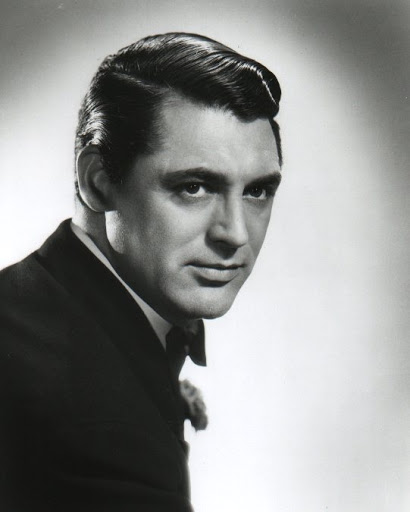
Yesterday on Tuner Classic Movies’s Summer of the Stars, Cary Grant was the feature star.  I love Cary Grant. In my opinion, there has never been, before or since, an actor as handsome and with such charisma as Cary Grant. In honor of Grant, I wanted to write a post about him.
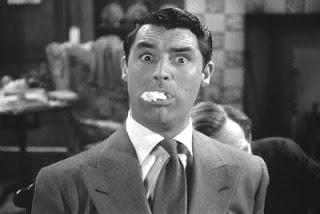
A master of the screwball comedy.

Archibald Alexander Leach, better known by his stage name Cary Grant. With his distinctive mid-Atlantic accent, he was noted as perhaps the foremost exemplar of the debonair leading man, not only handsome, but also witty and charming. He was named the second Greatest Male Star of All Time by the American Film Institute. Grant starred in some of the classic screwball comedies. His popular classic films include The Awful Truth (1937), Bringing Up Baby (1938), Gunga Din (1939), Only Angels Have Wings (1939), His Girl Friday (1940), The Philadelphia Story (1940), Suspicion (1941), Arsenic and Old Lace (1944), Notorious (1946), To Catch A Thief (1955), An Affair to Remember (1957), North by Northwest (1959), and Charade (1963).  From the beginning of his career to the end, I have never seen a bad or even mediocre, Cary Grant movie.  They have all been some of my favorite movies.
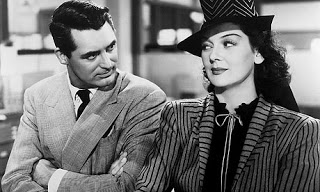
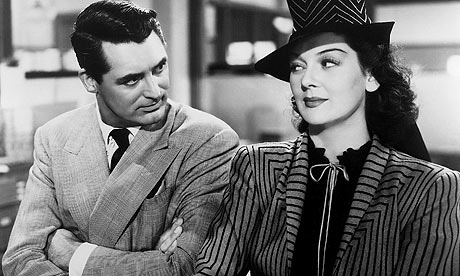
With Rosalind Russell in His Girl Friday

At the 42nd Academy Awards the Academy of Motion Picture Arts and Sciences honored him with an Honorary Award “for his unique mastery of the art of screen acting with the respect and affection of his colleagues”.

Cary Grant embodied the elegance, charm, and sophistication of Hollywood in its golden years. His good looks, charisma, and ambiguous sexuality enchanted women and men alike. As the star-struck comedian Steve Lawrence once said, “When Cary Grant walked into a room, not only did the women primp, the men straightened their ties.”

Grant was married five times. He wed Virginia Cherrill on February 10, 1934. She divorced him on March 26, 1935, following charges that Grant had hit her. In 1942 he married Barbara Hutton, one of the wealthiest women in the world, and became a father figure to her son, Lance Reventlow. The couple was derisively nicknamed “Cash and Cary”, although in an extensive prenuptial agreement Grant refused any financial settlement in the event of a divorce. After divorcing in 1945, they remained lifelong friends. Grant always bristled at the accusation that he married for money: “I may not have married for very sound reasons, but money was never one of them.”

On December 25, 1949, Grant married Betsy Drake. He appeared with her in two films. This would prove to be his longest marriage, ending on August 14, 1962. Drake introduced Grant to LSD, and in the early 1960s he related how treatment with the hallucinogenic drug—legal at the time—at a prestigious California clinic had finally brought him inner peace after yoga, hypnotism, and mysticism had proved ineffective. (In 1932, Grant had also met the Indian spiritual teacher Meher Baba.) Grant and Drake divorced in 1962.
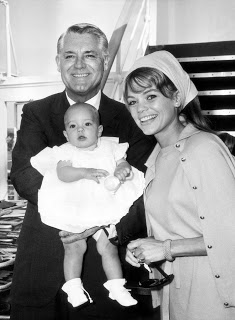
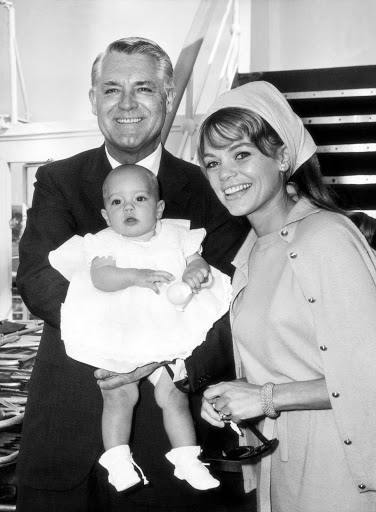
Grant and Cannon

He eloped with Dyan Cannon on July 22, 1965 in Las Vegas. Their daughter, Jennifer Grant, was born prematurely on February 26, 1966. He frequently called her his “best production” and regretted that he had not had children sooner. The marriage was troubled from the beginning and Cannon left him in December 1966, claiming that Grant flew into frequent rages and spanked her when she “disobeyed” him. The divorce, finalized in 1968, was bitter and public, and custody fights over their daughter went on for nearly ten years.

On April 11, 1981, Grant married long-time companion Barbara Harris, a British hotel public relations agent, who was 47 years his junior. They renewed their vows on their fifth wedding anniversary. Fifteen years after Grant’s death, Harris married former Kansas Jayhawks All-American quarterback David Jaynes in 2001.
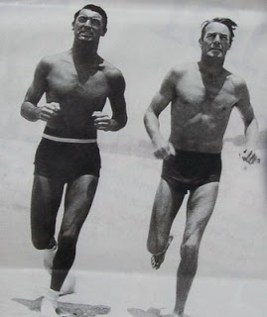
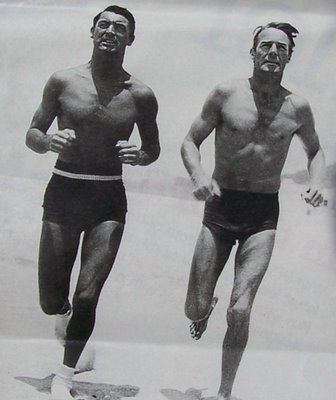
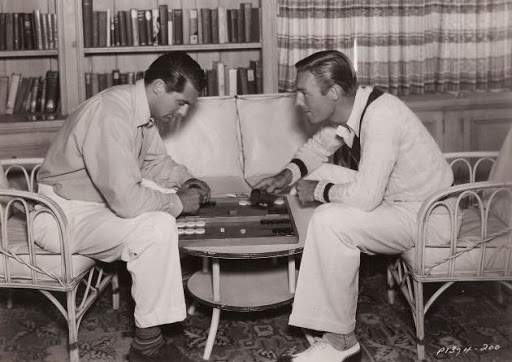
With Randolph Scott

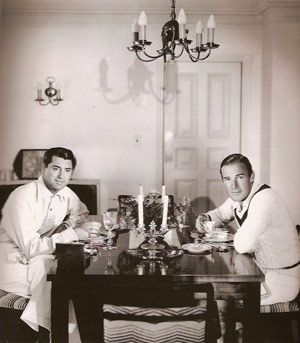
Some, including Hedda Hopper and screenwriter Arthur Laurents have said, that Grant was bisexual, the latter writing that Grant “told me he threw pebbles at my window one night but was luckless”. Grant allegedly was involved with costume designer Orry-Kelly when he first moved to Manhattan, and lived with Randolph Scott off and on for twelve years. Richard Blackwell wrote that Grant and Scott were “deeply, madly in love”, and alleged eyewitness accounts of their physical affection have been published. Alexander D’Arcy, who appeared with Grant in The Awful Truth, said he knew that Grant and Scott “lived together as a gay couple”, adding: “I think Cary knew that people were saying things about him. I don’t think he tried to hide it.” The two men frequently accompanied each other to parties and premieres and were unconcerned when photographs of them cozily preparing dinner together at home were published in fan magazines.
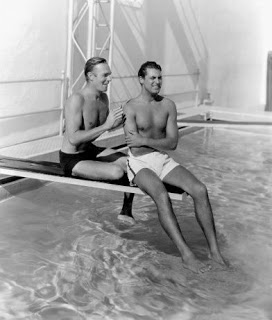
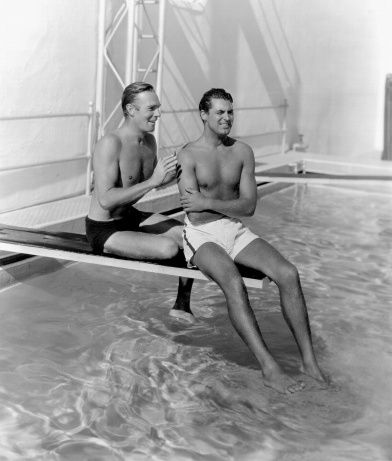
Grant and Scott

Barbara, Grant’s widow, has disputed that there was a relationship with Scott. When Chevy Chase joked about Grant being gay in a television interview Grant sued him for slander; they settled out of court. However, Grant did admit in an interview that his first two wives had accused him of being homosexual. Betsy Drake commented: “Why would I believe that Cary was homosexual when we were busy fucking?”

In 1932 he met fellow actor Randolph Scott on set, and the two shared a rented beach house (known as ‘Bachelor Hall’) on and off for twelve years. Rumours ran rampant at the time that Grant and Scott were lovers. From 1933 onwards, Cary Grant occasionally shared a house with Randolph Scott. There were many rumors about their relationship. Scott often referred to himself, jokingly, as Grant’s wife. Many studio heads threatened not to employ them unless they lived separately.

Grant and Scott

In their biographies of Grant, Marc Eliot, Charles Higham and Roy Moseley contend that Grant was bisexual. Higham and Moseley claim that Grant and Scott were seen kissing in a public car park outside a social function both attended in the 1960s. In his book, Hollywood Gays, Boze Hadleigh cites an interview with homosexual director George Cukor, who commented on the alleged homosexual relationship between Scott and Grant: “Oh, Cary won’t talk about it. At most, he’ll say they did some wonderful pictures together. But Randolph will admit it—to a friend.” (It should be noted that there is substantial disagreement as to the veracity of Hadleigh’s works.) It has even been suggested that Grant and Scott were married in a secret ceremony in Mexico. Randolph Scott’s son Christopher refuted these rumors. Following the death of his father in 1987, Christopher wrote a book, Whatever Happened to Randolph Scott?
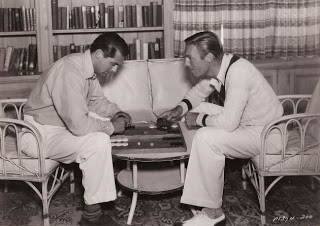
Grant and Scott

According to screenwriter Arthur Laurents, Grant was “at best bisexual”. William J. Mann’s book Behind the Screen: How Gays and Lesbians Shaped Hollywood, 1910-1969 recounts how photographer Jerome Zerbe spent “three gay months” (his words) in the movie colony taking many photographs of Grant and Scott, “attesting to their involvement in the gay scene.” Zerbe says that he often stayed with the two actors, “finding them both warm, charming, and happy.” In addition, Darwin Porter’s book, Brando Unzipped (2006) claims that Grant had a homosexual affair with Marlon Brando.
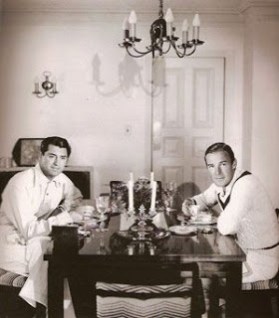
Grant and Scott

Whether Cary Grant was heterosexual, homosexual, or bisexual doesn’t really matter to me, he was a great actor.  His former wife, Dyan Cannon was thrust into the Hollywood celebrity whirlpool in 1965 when, at 28, she married superstar Cary Grant who was 35 years her senior. It was Cannon’s first marriage and Grant’s fourth. She has always been adamant when asked about Grant’s sexuality saying “I can tell you there isn’t an iota of truth to those ugly rumors. They would never have written that drivel when Cary was alive. He’d have sued the pants off those cowards. Cary can’t defend himself from the grave but I will go to mine insisting he was every ounce a straight man.”

My Inner Geek

First of all, I am an unapologetic GEEK, and I admit it.  If you’ve read my blog for a while, then you already know that I am a huge fan of “The Big Bang Theory.”  My inner geekiness goes far beyond “The Big Bang Theory” because I am a total Sci-Fi nerd.  I admit it.  It may not be very sexy to most people, but I am going to tell you why it is to me.  I really do love science fiction.  Had I gone to the right grad school and had the right advisor, I might have written my dissertation on the Representation of the Cold War in Science Fiction.  (Star Trek Example: Federation=The United States [with England as the Vulcans], Klingons=Soviet Union, Romulans=Chinese, etc.) It still might make a great book and research project one day if no one beats me to it.  It is not an idea original to me.
I love most things sci-fi: Star Trek, Star Wars, Stargate, and even Starship Troopers.  I love Babylon 5, Battlestar Galactica, and Buck Rogers.  I’m not a big comic book person, though I admit I do love the movies and TV shows that come from them, such as The Fantastic Four, X-Men, Batman, Wonder Woman, Daredevil, The Flash, Flash Gordon (and Flesh Gordon may come into this category, at least as a spoof).  I also have a long standing crush on Superman: Superman (Christopher Reeves), Lois and Clark (Dean Cain), Smallville (Tom Welling), Superman Returns (Brandon Routh), etc.  I also loved The 4400, great show.

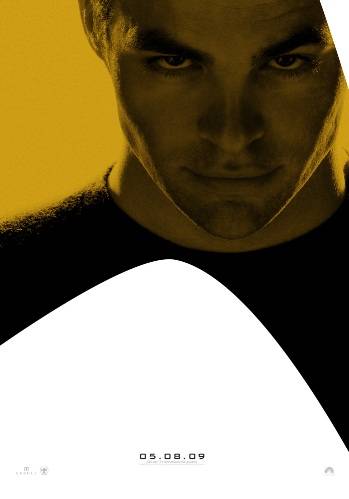
So lets go through a few of the examples and let me explain why I find science fiction appealing (and even sexy). Let’s begin with the Star Trek franchise. The Star Trek captains have all been sex symbols.  Kirk was always the sexy womanizer,.Picard the reserved cultured captain. Sisko was also a bit of a womanizer, though in a reserved damaged sort of way (his wife had been killed in the Borg attack, and he later married a female freighter captain).   Captain Janeway was always a very butch female captain, bordering on lesbianesque.  Of course, you then have Captain Archer who returned to the more womanizing sex symbol type like Kirk.  Now with the new series of movies, we have the absolutely gorgeous Chris Pine as Captain Kirk, and he is surrounded by the best looking of all of the Star Trek casts.  In addition the original Sulu, played by George Takei, is an openly gay man, giving gay Star Trek fans someone to look to.  Of course, Star Trek has had a number of hot male stars:  Wesley Crusher (TNG), Dr. Julian Bashir (DS9), Tom Paris (VOY).  Dr. Bashir was made out to be the first real sex symbol in the new incarnations of Star Trek after the original series.  Enterprise ramped up the sexiness with Trip, who was often seen in his “star trek/space age” underwear.  Enterprise was actually expected to have a gay character, rumored to be the weapons officer Malcolm Reed, but it never materialized with the low ratings the show received.

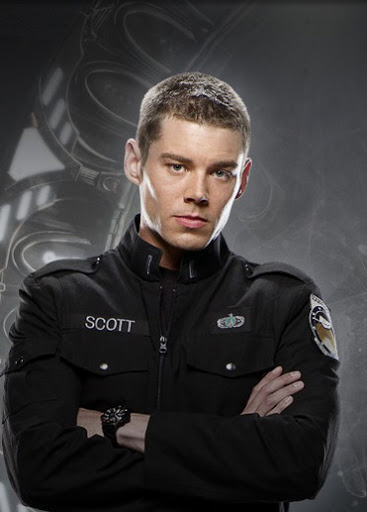
Stargate has also had it fair number of sexy men.  Daniel Jackson was smart, cultured, and always on a moral crusade would have made the most likely gay man in the series, but since it began with him being married, that was unlikely to materialize.  In my opinion, he was always very sexy.  Stargate: Atlantis has Col. Sheppard who could just make me weak in the knees, but it was the short-lived Stargate: Universe that really ramped up the sex factor.  Matthew Scott, played by Brian J. Smith, who has been known for playing several gay-themed characters in the movies Hate Crimes and The War Boys, both of which are highly recommended.  Also, and just because he played the dorky and somewhat awkward character of Eli, I always found him attractive.  The character also had a mother who suffered from HIV contracted when she was a nurse and was attacked by a drug addict.

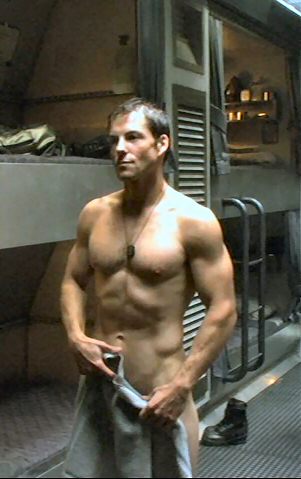
A few other science fiction movies and shows got my blood pumping, such as Starship Troopers  Who could forget Casper van Dien in the shower scenes showing off his lovely behind or the whipping scene, which I found oddly erotic?  Then in the new incarnation of Battlestar Galactica, you have the ever lovely Jamie Bamber, who has a particular towel scene that is amazing to watch. 

Most recently, we have several sci-fi/horror shows that give us just what we want with sexy guys.  True Blood has a host of sexy men, some of whom are gay, and MTV’s Teen Wolf has a host of sexy young guys, including the beautifully (and possibly gay) Colton Haynes (Warning: this link is NSFW).

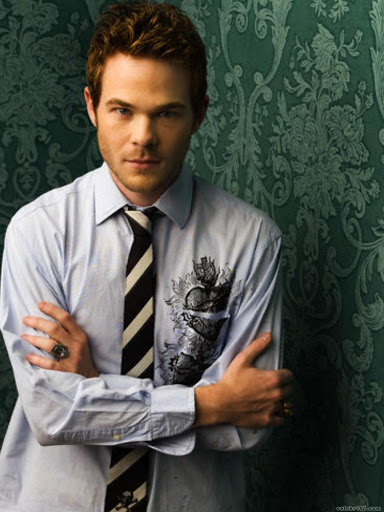
And finally, a science fiction show has an openly gay character.  Warehouse 13 on the SyFy Channel has a new character Agent Steve Jinx, played by Aaron Ashmore, who admitted on last night’s episode that he is gay.  Ashmore also has played at least on other gay character when he played Marc Hall in Prom Queen: The Marc Hall Story. I wonder if they will give him a boyfriend.  All of the other major characters on the show have been given love interests through the course of the show, so I certainly hope that Jinx will be given one as well.


Federico García Lorca

ecc136e4c1c9b6e1_LittleAshes750I recently watched the movie Little Ashes, a 2009 Spanish-British drama film, set against the backdrop of Spain during the 20s and 30s, as three of the era’s most creative young talents meet at university and set off on a course to change their world. Luis Buñuel watches helplessly as the friendship between Salvador Dalí and the poet Federico García Lorca develops into a love affair.  Years ago, I had read a book about García Lorca and had found him to be fascinating, so I wanted to see this movie.  (I’ve always found Dalí to be a little strange, I had to watch the film Buñuel co-wrote and directed with Dalí, Un chien andalou (1929), or An Andalusian Dog.  No matter how much I try I cannot forget the scene in which Simone Mareuil’s eye is seemingly split open with a razor blade. It still freaks me out to think of it.)
García Lorca’s death had been mentioned and discussed in the novel Wild Man by Patricia Nell Warren.  It always saddened me that this genius had been murdered by Franco’s death squad because of his political views and possible homosexuality.  Therefore, after seeing the movie Little Ashes, I wanted to do a post about his poetry.  Whether his poetry is about repressed homosexuality or not, is really not for me to say.  I am not an expert on his poetry.  I merely find it beautiful and wanted to present it with my interpretation.
Salvador-Dali-Federico-Garcia-Lorca-salvador-dali-from-little-ashes-6459167-800-600As for García Lorca’s homosexuality or bisexuality, I don’t think there is much of a historical debate about it.  While it is widely acknowledged that Lorca was infatuated with Dalí, for years the artist denied entering into a relationship with Lorca.  Dalí stated:

He was homosexual, as everyone knows, and madly in love with me. He tried to screw me twice …. I was extremely annoyed, because I wasn’t homosexual, and I wasn’t interested in giving in. Besides, it hurts. So nothing came of it. But I felt awfully flattered vis-à-vis the prestige. Deep down I felt that he was a great poet and that I owe him a tiny bit of the Divine Dalí’s asshole. He eventually bagged a young girl, and she replaced me in the sacrifice. Failing to get me to put my ass at his disposal, he swore that the girl’s sacrifice was matched by his own: it was the first time he had ever slept with a woman.

Writer Philippa Goslett supposes:

It’s clear something happened, no question… When you look at the letters it’s clear something more was going on there… It began as a friendship, became more intimate and moved to a physical level but Dalí found it difficult and couldn’t carry on. He said they tried to have sex but it hurt, so they couldn’t consummate the relationship.

Federico García Lorca Biography from Poets.org

3894e1b1-2a2c-472a-994b-9dfe63a86ca9Federico García Lorca is possibly the most important Spanish poet and dramatist of the twentieth century. García Lorca was born June 5, 1898, in Fuente Vaqueros, a small town a few miles from Granada. His father owned a farm in the fertile vega surrounding Granada and a comfortable mansion in the heart of the city. His mother, whom Lorca idolized, was a gifted pianist. After graduating from secondary school García Lorca attended Sacred Heart University where he took up law along with regular coursework. His first book, Impresiones y Viajes (1919) was inspired by a trip to Castile with his art class in 1917.
In 1919, García Lorca traveled to Madrid, where he remained for the next fifteen years. Giving up university, he devoted himself entirely to his art. He organized theatrical performances, read his poems in public, and collected old folksongs. During this period García Lorca wrote El Maleficio de la mariposa (1920), a play which caused a great scandal when it was produced. He also wrote Libro de poemas (1921), a compilation of poems based on Spanish folklore. Much of García Lorca’s work was infused with popular themes such as Flamenco and Gypsy culture. In 1922, García Lorca organized the first “Cante Jondo” festival in which Spain’s most famous “deep song” singers and guitarists participated. The deep song form permeated his poems of the early 1920s. During this period, García Lorca became part of a group of artists known as Generación del 27, which included Salvador Dalí and Luis Buñuel, who exposed the young poet to surrealism. In 1928, his book of verse, Romancero Gitano (“The Gypsy Ballads”), brought García Lorca far-reaching fame; it was reprinted seven times during his lifetime.
1928In 1929, García Lorca came to New York. The poet’s favorite neighborhood was Harlem; he loved African-American spirituals, which reminded him of Spain’s “deep songs.” In 1930, García Lorca returned to Spain after the proclamation of the Spanish republic and participated in the Second Ordinary Congress of the Federal Union of Hispanic Students in November of 1931. The congress decided to build a “Barraca” in central Madrid in which to produce important plays for the public. “La Barraca,” the traveling theater company that resulted, toured many Spanish towns, villages, and cities performing Spanish classics on public squares. Some of García Lorca’s own plays, including his three great tragedies Bodas de sangre (1933), Yerma (1934), and La Casa de Bernarda Alba (1936), were also produced by the company.
In 1936, García Lorca was staying at Callejones de García, his country home, at the outbreak of the Civil War. He was arrested by Franquist soldiers, and on the 17th or 18th of August, after a few days in jail, soldiers took García Lorca to “visit” his brother-in-law, Manuel Fernandez Montesinos, the Socialist ex-mayor of Granada whom the soldiers had murdered and dragged through the streets. When they arrived at the cemetery, the soldiers forced García Lorca from the car. They struck him with the butts of their rifles and riddled his body with bullets. His books were burned in Granada’s Plaza del Carmen and were soon banned from Franco’s Spain. To this day, no one knows where the body of Federico García Lorca rests.

Selected Sources:

  1. Smith, David (October 28, 2007). “Were Spain’s two artistic legends secret gay lovers?”. The Guardian (London). Retrieved May 11, 2010.
  2. Bosquet, Alain, Conversations with Dalí, 1969. p. 19–20. (PDF format)
  3. Federico García Lorca.” Poets.org – Poetry, Poems, Bios & More. Web. 22 Apr. 2011.

The Big Gay Musical

6a00d83451b26169e20120a608c39d970c
This weekend, Netflix sent me The Big Gay Musical.  I’ve been wanting to see it for a while, but I only recently was able to convince Netflix of my new address.  I’m loving my Netflix again.  But that is beside the point.  The Big Gay Musical was directed by Casper Andreas, a gay Swedish director, who has made several gay films that I have seen.  After seeing Andreas’s other films, truthfully, I didn’t have much hope for this one.  Not that the movies are awful, they were entertaining, just not great gay cinema.  At least in my opinion.
big-gay-musical-slideshow-pic
The Big Gay Musical blew me away though.  The plot is fairly simple.  Paul and Eddie have just begun previews for the new Off-Broadway musical “Adam and Steve: Just the Way God Made ‘Em.” Their lives strangely mirror the characters they are playing. Paul is looking for the perfect man and Eddie is dealing with how his sexuality and faith can mix. After yet another disastrous dating experience, Paul has an epiphany. He is done dating and just wants to be a slut like the sexy chorus boys that share his dressing room. Eddie has to tell his parents that he’s gay and is starring in a show that calls the bible the “Breeder’s Informational Book of Living Examples”. Eddie comes out to his family and Paul goes on Manhunt. Eddie’s parents are destroyed by the news and Paul can’t even have a good one-night stand. But after musical numbers with scantly clad tap dancing angels, a retelling of Genesis, televangelists, a camp that attempts to turn gay kids straight, and a bunch of show tunes.
Here are two clips:
1. “I Wanna Be A Slut” – The Big Gay Musical

2.  “Sing Me a Love Song – The Big Gay Musical

The reason for this post is because in last Thursday’s post, Are Gay Guys Obsessed with Sex?, I got a lot of responses that made think.  (Thanks to all those who commented.)  A lot of us seem to have gone through a slutty phase, but have since calmed down.  The two clips above featuring Daniel Robinson as Paul/Adam, struggling with the same issue.  Some have always been looking for love and still searching, but have yet to find it. I am much the same way, I have always been looking for someone to love and spend my life with, but I am still lonely.  Too often the guy I have tried to date either don’t want someone with intelligence, have an image of a guy they want, or just want a one night stand.  At times, I have been horny enough to go for #3, but I usually don’t fit the other two.  Oh well, the search continues.

biggaymustv

Watch The Big Gay Musical.  It’s a fun and feel-good movie.  Have any of you seen it already?