
To say that this video is a little odd would be an understatement; however, I think that the message is well worth it. I’m not a Lady Gaga fanatic by any means, though I do like her songs. This song, from her album by the same title, seems to be written for us, take the line “Don’t be a drag, just be a queen.” I love that. Then again, I may just be a little odd as well. On Saturday night, I saw Lady Gaga on The Graham Norton Show on BBCAmerica, and though she dresses outlandishly and has some weird videos, she appeared to actually be a very nice simple person at heart. Something I think we should all aspire to be. I was actually quite impressed with her. I had seen her on other shows and thought she was just too outlandish, but this changed my mind about her as a person (grant it, I don’t know her from Adam’s house cat, but she seemed nice).
Kitty Empire of The Observer writes of the album’s music, “Born This Way runs big, timeless American themes – freedom, self-actualisation, the romance of the road, the Boss, even Neil Young – through the pointy prism of decadent European dance music.” Dan Martin of NME views the album’s sound as a departure from her last two albums and a reflection of Gaga’s fanbase, stating “she wants to weld physically to her synthesisers as if to create one all-powerful dreadnought of self-empowerment. For the most part this is one relentless torrent of heavy-metal-rave-pop. At the very least it’s a triumph in sound engineering.” The song “Born This Way” is about how everybody is equal, regardless of the color of their skin, their sexuality or their creed, and that every single person can fulfil their dream. The song, which has been compared with Madonna’s “Express Yourself”, was written by Gaga and Jeppe Laursen and was produced by Lady Gaga, Jeppe Laursen, Fernando Garibay and DJ White Shadow. The “Government Hooker” producer, DJ White Shadow, called it a thumping and sexy track. He said to MTV News: “To me, that song is my favorite song, and it’s just a beast. I don’t even know how to clarify it. [Born This Way] is not a pop baby book; it’s a pop masterpiece of composition. If there was no category of pop composition, you wouldn’t call it pop composition.” He also revealed that they were in this studio in Vegas, and he was playing some “hip-hop stuff” and they [DJ Shadow and Vince] were talking about quicker songs, so Shadow sped it up and played it for Vince. (http://en.wikipedia.org/wiki/Born_This_Way)
And you know what, I do believe we are born this way; we are born to be gay. Would any of us chosen to live the often difficult life of being gay, if we were not “born this way.” I love men, so don’t get me wrong, but life would have been a whole lot easier if I had been born straight, or if (heaven forbid, I love my penis) that I had been born a woman. I wasn’t; I was born gay. Nothing could change that and nothing will. Whether I ever find the man who I will live the rest of my life with, I don’t know. I hope, but that is for the future is not ours to see. Que sera, sera.
I had actually planned on starting a series of posts on religion and coming out for today, but the posts are not yet where I want them to be, so I decided to hold off and maybe start them next Sunday. So stay tuned. I know that some of you are not religious. You have questioned me about this before and to some extent criticized me for my Christianity. I won’t be apologetic about it. I do hope that all of you will read these coming posts and that we can have a genuine discussion. It has been an interesting journey of research and reflection that I want to share with you. More on that later.
Category Archives: Music
Born This Way
An Affair to Remember
Tonight, I am going to sleep with tears in my eyes. You see, I am a hopeless romantic. I can’t help it. I watched one of my all time favorite movies tonight on TCM, “An Affair to Remember.” Why is it that the greatest movies always make you want to cry at the end? Not only this movie, but so many others that have so emotional endings, two that I can think of right off hand are “Casablanca” and “Fried Green Tomatoes.” These are some of my top movie favorites. If I were going to pick a favorite gay movie that always gets me at the end, it would have to be “Latter Days,” which if you haven’t seen, shame on you. It is well worth it.

Gay Anthems: Perfect for Coming Out
First up is the gay classic, the theme for gay clubs around the world: “I Will Survive.” I am posting two versions of this song. Primarily, because my all-time favorite band in Cake, who did a wonderful version of “I Will Survive.” In fact it is played at the end of the gay movie Mambo Italiano. After the Cake version, is the classic Gloria Gaynor version.


Here is another one of my favorite singers, and a request by our friend fan of casey, John Barrowman. In the first video he sings “I Am What I Am” from La Cage Aux Folles and in the second as the lovely Captain Jack from Torchwood – anything really does go, when the background music to the clip is John singing the Cole Porter classic, “Anything Goes.”


And of course, if I am going to do a post that is a soundtrack for coming out, how can I leave this song out?
FYI:
 John Barrowman‘s memoir and autobiography, Anything Goes, was published in 2008 by Michael O’Mara Books. His sister, English professor and journalist Carole Barrowman, helped write the book using her brother’s dictations. In 2009, Barrowman published I Am What I Am, his second memoir detailing his recent television work and musings on fame. In the book, Barrowman reveals that when he was just beginning his acting career, management sent a gay producer to talk to him. The producer told Barrowman that he should try to pretend to be heterosexual in order to be successful. Barrowman was offended by the incident, and it made him more aware of the importance of his role as a gay public figure: “One of my explicit missions as an entertainer is to work to create a world where no one will ever make a statement like this producer did to me to anyone who’s gay.” To this end, Barrowman is active in his community supporting the issues that matter to him most. He worked with Stonewall, a gay rights organization in the UK, on the “Education for All” campaign against homophobia in the schools. In April 2008, the group placed posters on 600 billboards that read, “Some people are gay. Get over it!” Barrowman contributed his support to the project asking people to join him and “Help exterminate homophobia. Be bold. Be brave. Be a buddy, not a bully.” In the same month, Barrowman spoke at the Oxford Union about his career, the entertainment industry, and gay rights issues. The event was filmed for the BBC program The Making Of Me, in an episode exploring the science of homosexuality.
 Cole Porter wrote hit Broadway musicals and many 20th-century pop standards, including the songs “You’re The Top,” “Night and Day” and “Let’s Do It (Let’s Fall In Love).” Porter was one of the greats of an era that included Iriving Berlin and Richard Rodgers. But Porter was no poor New York immigrant who lived the rags-to-riches dream — he was the son of prosperous midwesterners, a star pupil at Yale and a privileged expatriate who lived the gay life in Europe while writing hit Broadway musicals. His first popular success came in 1929, with Fifty Million Frenchman. Between the 1930s and 1950s he became one of Broadway’s biggest stars, writing music and lyrics for Anything Goes (1934), Kiss Me Kate (1948) and Can Can (1953), among others. His most famous songs include “I Get A Kick Out of You,” “Too Darn Hot,” “Begin the Beguine,” and “My Heart Belongs to Daddy.” Since his death his songs have become part of the canon of American pop music, and stories of his private life — his long “marriage of convenience” to wealthy divorcée Linda Lee Thomas and his well-known homosexual leanings — have contributed to a continued interest in his career.
If you have any other suggestions for great coming out themes or great gay anthems, let me know.
The Music of Josh Duffy

One of my music guilty pleasures and something that always gets my blood flowing, my body rocking, and puts me in a great mood is the music of Josh Duffy. Club music and electronica is usually something that I have to be in the mood for, but Josh’s music is just fun to listen to.  Singer-Songwriter JOSH DUFFY is a Pop/Dance artist from New Orleans. His debut solo album ARTIFICIAL (released 2007) garnered him national exposure on Satellite radio.
Voted as the 1 GLBT artist for three consecutive months on OutVoice.net, Josh is one of the few indie artists to have had multiple Top-20 hits on Sirius OutQ’s countdown – pretty impressive for a freshman effort!
Josh’s appearances at several major Pride festivals across the country have helped establish a devoted fan base that is limitless to age and sexual orientation. Josh has been very fortunate to receive rave reviews in news publications, with several calling him an artist to watch in 2010.
So what’s next for Josh? The long awaited music video for “I Will Love You” is set to premiere on Logo’s New Now Next. He is recording material for his next album planned for a Winter 2010 release. Also, after his lead feature in the Louisiana Lottery “Wild 10s” commercial, he picked up featured roles in the films National Lampoon’s Dirty Movie and the Dylan Dog comic Dead Of Night!
Read more: http://www.myspace.com/joshduffyonline#ixzz0ynGvaFZI

Josh Duffy knew his shiny, happy brand of pop wasn’t going to be an easy sell in Houston. Rock, country and hip-hop rule the local scene.  “Everywhere you go, there is a certain demand for a particular style of music,” Duffy, 23, says. “Yes, Houston has less of a pop-dance scene, but … that’s actually helped get my name out there.”
He also decided to push his debut disc, Artificial, where it would best be appreciated. Duffy took to performing late-night sets at clubs and at outdoor pride festivals throughout Texas and his home state of Louisiana. (He moved to Houston in 2004 after majoring in music performance at Louisiana State University.)
There was also aggressive promotion on satellite radio, which resulted in three top 20 hits on the Sirius charts. Duffy says he “screamed and jumped” when buoyant single Call Back topped the OutQ Hot 20 list over the summer.
“That song really means a lot to me. That was a big, big thing,” he says. “Now, if I could get my hands on a Grammy.”  A lofty goal, but Duffy isn’t being cocky. In person, he’s sincere and enthusiastic — qualities that also make Artificial a winning collection. It’s frothy but not forgettable, grounded by solid arrangements and easy, relatable lyrics.
The disc was produced by Alan Lett, a local whiz known for his work with duo Jason & deMarco (who collaborate with Duffy on the uplifting tune What If).
“My initial goals were to just record all these ideas and tunes that were in my head,” Duffy says.
“I really just wanted everyone to know that I had something to say lyrically — and something to sing.”
The cheeky title track is one example. It makes a pointed, rock-fueled statement on the endless obsession with plastic surgery.
“Pearl-white smile, collagen lips,” Duffy sings. “Bleach-blonde, clear-blue contact lens.”  He also sparkles during slower moments, particularly the gentle Ever Be and Pretend, which ride an airy, Euro-flavored groove.
Duffy is about to begin shooting a video for Truth, the next single from Artificial. He’s angling for — and has a good shot at — national play on Logo Channel’s “Click List” countdown.
And he’s already working with Lett on a new record, due for release next year under Duffy’s own J America Music banner. He promises an even “younger and fresher” pop sound, likely inspired by a spate of recent influences: Unwritten singer Natasha Bedingfield, piano pixie Regina Spektor and electro-pop singer Darren Hayes (ex-Savage Garden vocalist).
It’s a promising pop path that Duffy traces back to his teenage days as a wannabe superstar.
“When I was 15, my friend Jessica and I would get together and sing, write and record our vocals to a karaoke machine,” he says. “We were so proud of our songs that we would play them for our friends and family.
“I think at that moment, not only did I know that music was my passion, I knew that it was something I could make a career out of.”
A Midsummer Night’s Dream

Puck’s soliloquy from the last lines of A Midsummer Night’s Dream, a comedy by William Shakespeare, is one of my favorite lines from any of Shakespeare’s plays.
If we shadows have offended,
Think but this, and all is mended,That you have but slumber’d here
While these visions did appear.
And this weak and idle theme,
No more yielding but a dream,
Gentles, do not reprehend:
if you pardon, we will mend:
And, as I am an honest Puck,
If we have unearned luck
Now to ‘scape the serpent’s tongue,
We will make amends ere long;
Else the Puck a liar call;
So, good night unto you all.
Give me your hands, if we be friends,
And Robin shall restore amends.

 In his essay “Preposterous Pleasures, Queer Theories and A Midsummer Night’s Dream“, Douglas E. Green explores possible interpretations of alternative sexuality that he finds within the text of the play, in juxtaposition to the proscribed social mores of the culture at the time the play was written. He writes that his essay “does not (seek to) rewrite A Midsummer Night’s Dream as a gay play but rather explores some of its ‘homoerotic significations’ … moments of ‘queer’ disruption and eruption in this Shakespearean comedy”. Green states that he does not consider Shakspeare to have been a “sexual radical”, but that the play represented a “topsy-turvy world” or “temporary holiday”
 that mediates or negotiates the “discontents of civilization”, which while resolved neatly in the story’s conclusion, do not resolve so neatly in real life. Green writes that the “sodomitical elements”, “homoeroticism”, “lesbianism”, and even “compulsory heterosexuality” in the story must be considered in the context of the “culture of early modern England” as a commentary on the “aesthetic rigidities of comic form and political ideologies of the prevailing order”. Aspects of ambiguous sexuality and gender conflict in the story are also addressed in essays by Shirley Garner and William W.E. Slights (see citations below).
Garner, Shirley Nelson. “Jack Shall Have Jill;/ Nought Shall Go Ill“. A Midsummer Night’s Dream Critical Essays. Ed. Dorothea Kehler. New York: Garland Publishing Inc., 1998. 127–144
Slights, William W. E. “The Changeling in A Dream”. Studies in English Literature, 1500–1900. Rice University Press, 1998. 259–272.
If you love a good gay movie, musicals, cute guys, and/or Shakespeare, here is a suggestion for you. Indie movies are definitely not for everyone. In other words, specific movies tend to appeal to specific groups. Were the World Mine will obviously appeal to a gay audience, but also to people who are into Shakespeare, as it is fun and often ridiculous – just like the Bard’s play.

What Is It About?
 Were the World Mine was based on a short film entitled Fairies. The movie’s protagonist is Timothy (played by Tanner Cohen), a gay outcast at a prep school in a small town somewhere in America. He loves to daydream, and his daydreams always feature musical sequences and beautiful scenery. The object of his daydreams is Jonathan (played by Nathaniel David Becker), the star jock of the school. It is not long before Timothy gets involved into a school drama project, starts exploring Shakespeare and finds a recipe for the magical love potion in A Midsummer Night’s Dream – which allows him to turn the entire town gay.
Read more at Suite101: Were the World Mine Movie Review: An Indie Retelling of Shakespeare’s A Midsummer Night’s Dream.
Cupid’s Love Spell from A Midsummer Night’s Dream
OBERON
That very time I saw, but thou couldst not,
Flying between the cold moon and the earth,
Cupid all arm’d: a certain aim he took
At a fair vestal throned by the west,
And loosed his love-shaft smartly from his bow,As it should pierce a hundred thousand hearts;
But I might see young Cupid’s fiery shaft
Quench’d in the chaste beams of the watery moon,
And the imperial votaress passed on,
In maiden meditation, fancy-free.
Yet mark’d I where the bolt of Cupid fell:
It fell upon a little western flower,
Before milk-white, now purple with love’s wound,
And maidens call it love-in-idleness.
Fetch me that flower; the herb I shew’d thee once:
The juice of it on sleeping eye-lids laid
Will make or man or woman madly dote
Upon the next live creature that it sees.
Fetch me this herb; and be thou here again
Ere the leviathan can swim a league.

Having once this juice,
I’ll watch Titania when she is asleep,And drop the liquor of it in her eyes.
The next thing then she waking looks upon,
Be it on lion, bear, or wolf, or bull,
On meddling monkey, or on busy ape,
She shall pursue it with the soul of love:
And ere I take this charm from off her sight,
As I can take it with another herb,
I’ll make her render up her page to me.
But who comes here? I am invisible;
And I will overhear their conference.If you could have potion that could turn someone you have a crush on or are in love with gay, would you use it? Seriously, now. I am not talking about just on a whim. You would be changing this person’s life. Would you do it to satisfy your own happiness, even though it might not satisfy their own?

Love Potion #…Nah, I’m Not Eating That
“The Roman Emperor Vitellius gave a feast in honor of Minerva at which the piéce de résistance called for the brains of a thousand peacocks and the tongues of a thousand flamingos.”

 Throughout history man has searched the earth for ways of enhancing sexual desire, looking for substances which would act as aphrodisiacs, a word derived from the Greek goddess of love Aphrodite. This quest for sexual stimulants has encompassed a startling variety of substances, some with good reason but many on the basis of entirely unfounded ideas. One good example of a well known but false sex enhancer is the long sought after rhinoceros horn, which is powdered and consumed in alcohol. Equally unfounded is the consumption of other animal products such as various parts of the tiger and the bear and drinks containing such delicacies as crushed frog bones or snake droppings.
  Aphrodisiac recipes have been cooked up throughout the world for millennia. In Europe, up to the eighteenth century, many recipes were based on the theories of the Roman physician Galen, who wrote that foods worked as aphrodisiacs if they were “warm and moist” and also “windy,” meaning they produced flatulence. Spices, mainly pepper, were important in aphrodisiac recipes. And because they were reckoned to have these qualities, carrots, asparagus, anise, mustard, nettles, and sweet peas were commonly considered aphrodisiacs.
An aphrodisiac, as we use the term today, is something that inspires lust. It usually isn’t meant to cure impotence or infertility, problems that are now handled by separate fields of medicine. But until recently there was little distinction between sexual desire and function. Any lack of lust, potency, or fertility would have a common cure in an aphrodisiac. Galen thought that a “wind” — or as one 16th-century writer put it, an “insensible pollution” — inflated the penis to cause an erection, so anything that made you gassy would also make you erect.  Galen’s theories were not the only basis for concocting aphrodisiacs. Mandrake root was eaten as an aphrodisiac and as a cure for female infertility because the forked root was supposed to resemble a woman’s thighs. This was based on an arcane philosophy called the “doctrine of signatures.”In simple terms, the “Doctrine of Signatures” is the idea that God has marked everything He created with a sign (signature). This doctrine states that herbs that resemble various parts of the body can be used to treat ailments of that part of the body. Oysters may have come to be known as an aphrodisiac only by their resemblance to female genitals. However, because of the high amount of zinc in raw oysters, it actually worked to produce more semen and healthier sperm. Few old medical texts listed oysters as an aphrodisiac, although literary allusions to that use are plentiful.
  Parts of the skink, a kind of lizard, were thought to be an aphrodisiac for centuries. It’s hard to say why exactly, but three different ancient authors make the claim. Potatoes, both sweet and white, were once known as an aphrodisiac in Europe, probably because they were a rare delicacy when they were first transplanted from the Americas. Potatoes are also related to night shade, which was known as a poison in Europe, but the Incas who first cultivated and domesticated potatoes as a food source, bred out the inherent poisons.
  Some aphrodisiacs came out of mythology. Aphrodite, the Greek goddess of love (from whose name, of course, “aphrodisiac” is derived) was supposed to have held sparrows sacred. We think rabbits are promiscuous animals, hence the Playboy bunny and certain lewd sayings, but the ancient Greeks thought sparrows were especially lustful. Because of the association with Aphrodite, Europeans were inclined to eat sparrows, particularly their brains, as aphrodisiacs.
St. Thomas Aquinas, a 13th-century friar, also wrote a bit on aphrodisiacs. Like Galen, he thought aphrodisiac foods had to produce “vital spirit” and provide good nutrition.  So meat, considered the heartiest food, was an aphrodisiac. Drinking wine produced the “vital spirit.” The association between food and eroticism is primal, but some foods have more aphrodisiacal qualities than others. Biblical heroines, ancient Egyptians, and Homeric sorceresses all swore by the root and fruit of the mandrake plant. The grape figured prominently in the sensual rites of Greek Dionysian cults, and well-trained geishas have been known to peel plump grapes for their pampered customers. Fermented, of course, grape juice yields wine, renowned for loosening inhibitions and enhancing attraction (though as Shakespeare’s porter wryly notes in Macbeth, alcohol “provokes the desire, but it takes away the performance”).
  Honey sweetens the nectar-like philters prescribed in the Kama Sutra to promote sexual vigor, and the modern “honeymoon” harks back to the old custom for newlyweds to drink honeyed mead in their first month of marriage. Grains like rice and wheat have long been associated with fertility if not with love, and Avena sativa (green oats), an ingredient in many over-the-counter sexual stimulants, may explain why young people are advised to “sow their wild oats.” Numerous herbs and spices—basil, mint, cinnamon, cardamom, fenugreek, ginger, pepper, saffron, and vanilla, to name a few—appear in ancient and medieval recipes for love potions, as well as in lists of foodstuffs forbidden in convents because of their aphrodisiac properties.
  Among other delicacies banned by the Church in centuries past were black beans, avocados, and chocolate, presumably all threats to chastity. And truffles—both earthy black and ethereal white—caused religious consternation in the days of the Arab empire. One story has it that the muhtasib of Seville tried to prohibit their sale anywhere near a mosque, for fear they would corrupt the morals of good Muslims. For those who held debauchery in higher esteem, the list of favored aphrodisiacs was bound only by the imagination. The herb valerian, noted for its stimulant properties at lower doses, was long a brothel favorite, and yu-jo, professional women of pleasure in feudal Japan, supplemented their charms with the aphrodisiacal powers of eels, lotus root, and charred newts.
  Another foodstuff much favored by Casanova was chocolate, although the first person associated with chocolate as an alleged aphrodisiac was the Aztec ruler Montezuma, who is said to have drank 50 cups of hot chocolate a day in order to fully service his harem of 600 women. Such was the reputation of chocolate at that time, that the Aztecs and also the Mayans celebrated the harvest of the cocoa bean with festivals of orgies. However, this was far from being the earliest use of a vegetable substance for sexual purposes, as various plants were being extensively used in China thousands of years before that.
  The earliest known beneficiary was Huang Ti, the Yellow Emperor, who lived around 2600 BC. He was provided with a potion made from 22 herbal ingredients mixed with wine and it apparently bestowed him with an amazing sexual stamina. Empowered with this potent concoction of herbs he was able to enjoy the sexual favors of 1200 women and achieve a legendary status as the greatest of all lovers.
Coffee is another old one, and it’s still sometimes considered an aphrodisiac. “Every time you have an excitation, you have an effect of disinhibition,” says Paola Sandroni, MD, a neurologist at the Mayo Clinic. She reviewed the scientific evidence that exists on many supposed aphrodisiacs, and published her findings in the journal Clinical Autonomic Research.  But to call coffee or anything that contains caffeine an aphrodisiac would be misleading. “I think the effect is much more general,” she says. In the same way, cocaine and amphetamines may seem to be aphrodisiacs because they stimulate the central nervous system, but they have no specific effects on sexual desire.
Sandroni also looked at studies on ambergris, which comes from the guts of whales and is used in perfumes. Some consider ambergris an aphrodisiac and there is evidence to support this notion. In animal studies, it increased levels of testosterone in the blood, which is essential to the male sex drive, and is thought to play a part in women’s libido as well.
Next to oysters, the most well known aphrodisiac is the fabled “Spanish fly.”  It’s not just a legend. Such a thing does exist. Its active ingredient is the chemical cantharidin, which is found in blister beetles. Cantharidin irritates genital membranes, and so it is believed to be arousing. It’s also deadly, causing kidney malfunction or gastrointestinal hemorrhages in people who ingest too much. A quick Internet search is all it takes to find some for sale. Sandroni says she was “horrified” to see how easy it is to buy.
Then there’s the “herbal Viagra” pitched in spam emails. This is yohimbe bark. Some claim, falsely, that arginine, an amino acid in yohimbe, can restore erectile function and act as an aphrodisiac. “The only saving grace there is that arginine in large quantity is not harmful,” says Cynthia Finley, a dietician at Johns Hopkins University.
The Roman poet Ovid wrote in The Art of Love, after giving a litany of aphrodisiacs,
Prescribe no more my muse, nor medicines give
Beauty and youth need no provocative.
Similarly, Finley says she thinks the only true aphrodisiac is good health achieved by a balanced diet — which isn’t all that different from what St. Thomas Aquinas said 800 years ago.

What do you get when you fall in love?
I was listening to the Oldies radio station here and Bobbie Gentry’s “I’ll never fall in love again” came on. Now I am a hopeless romantic, not that I have ever had much of a chance to be a romantic at all, so this song is really not the way I feel, but I found the song lyrics to be pretty funny.
I’ll Never Fall In Love Again
by Burt Bacharach / Hal David
What do you get when you fall in love?
A guy with a pin to burst your bubble
That's what you get for all your trouble.
I'll never fall in love again.
I'll never fall in love again.

What do you get when you kiss a guy?
You get enough germs to catch pneumonia.
After you do, he'll never phone you.
I'll never fall in love again.
I'll never fall in love again.

Don't tell me what is all about,
'Cause I've been there and I'm glad I'm out,
Out of those chains, those chains that bind you
That is why I'm here to remind you

What do you get when you fall in love?
You get enough tears to fill an ocean
That's what you get for your devotion.
I'll never fall in love again.
I'll never fall in love again.

What do you get when you fall in love?
You only get lies and pain and sorrow.
So, for at least until tomorrow,
I'll never fall in love again!
I'll never fall in love again!
Don't tell me what it's all about
`Cause I've been there and I'm glad I'm out
Out of those chains, those chains that bind you
That is why I'm here to remind you. (here to mind you) 3x
What do you get when you fall in love?
You only get lies and pain and sorrow
So, for at least, until tomorrow
I'll never fall in love again
Oh, I'll never fall in love again
As I was looking up the song, I found that The Carpenters did it also, and I
like their version of it more than I did Bobbie Gentry’s, so here is their
version of the song.

Besides Karen Carpenter is considered a gay icon. Often overlooked as a ‘gay icon’ when thinking of the usual pantheon of 1970s queer popular cultural stars, she continues to inspire, soothe and motivate. Despite the tragedy of her death at 32, the struggle of her life was belied by her talent, her dignity and that unique, inimitable instrument- her contralto. She is an icon for all!
It All Started with the Big Bang…
 I have to admit that my favorite TV show right now is The Big Bang Theory. I absolutely love Jim Parsons (pictured above with a cute friend). Sheldon (Parsons) and Penny’s (Kaley Cuoco) interactions on the show are just too funny. I have to also say that I find Kunal Nayyarwho plays Raj Koothrappali on the show to be kinda hot.
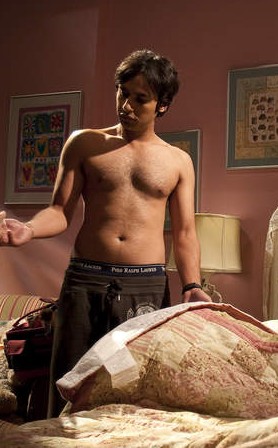
The title from this post comes from the show’s theme song. I know, I’m a geek (as if, you couldn’t figure it out by this blog, LOL), but I still like the show.
The theme song of The Big Bang Theory is a song from the Bare Naked Ladies called, “The History of Everything.” I love this song. What is not to like, except that technically, they built the pyramids before they built the wall. Listen to the song, and you will know what I mean.

The Last Castrato
 Today, anyone curious about the castrati’s unique voices can listen to a recording made in 1902 by the very last of the breed, Alessandro Moreschi (1858-1922). Even though the operation was banned in early 19th century, Italian doctors continued to create castrati until 1870 for the Sistine Chapel, and Moreschi went under the knife at the age of seven. Although he was not on a par with demigods like Faranelli, Moreschi’s voice, said an Austrian musicologist who heard him perform live, “can only be compared to the clarity and purity of crystal.” Although Moreschi kept performing for the pope until 1913, his fame was assured eleven years earlier, when the American recording pioneer Fred Gaisberg had a few days free in Rome and paid a call on the Vatican Palace. Instead of a studio, Gaisberg set up his unwieldy and primitive gramophone apparatus in a salon surrounded by Raphaels and Titians. The 44-year-old Moreschi had only one chance to record and made a few nervous mistakes. “He is surprising, but never exquisite,” opines the author and critic Angus Heriot, while one modern British curator dismisses him as “Pavarotti on helium.” Still, his voice provides a unique slice of the past. In order to recreate the sound for the film Farinelli, Il Castrato, The Institute for Musical and Acoustic Research in Paris blended electronically the voices of a male countertenor and a female coloratura soprano; the combination emulates the dazzling range of the top castrati, whose voices could trill across three octaves. •

CASTRATI IN FICTION
They are becoming popular as a subject for novels; try the following:
Amis, Sir Kingsley: (Cape, 1976) “The Alteration“; a very clever portrayal of the future, assuming there had been no Reformation; so castrati were still acceptable in the Catholic country of England!! Multi-layered and faceted, it uses a little of Heriot’s book as a basis, so he told me; and that the book was meant for me, too.
Fernandez, Dominique: “Porporino“: (Grasset, 1974), in French and Italian; there IS an English version available; long out of print, but copies can (sometimes) be obtained via amazon; this book won the Prix Medicis and is a fictional account of the lives of two castrati; they met everybody who was anybody in the musical world of the latter part of the eighteenth century; the novel has a Gothic subplot. This author taught Patrick Barbier.
Rice. Anne: “Cry to Heaven” (Knopff, NY, 1982), reprinted in England; basically accurate; lavish and lush and heavily (homo)sexual; the basic premise is doubtful, that a castrato could be “made” at around 14 years of age; however, a good “blockbuster read” by the Queen of Vampire novelists !


Authors
Recent Comments
Joe on Pic of the Day noisilycool3bc985058… on Pic of the Day vandycolt on Moment of Zen: Reading noisilycool3bc985058… on Pic of the Day iameverywhere1 on Not Quite as Planned Top Posts & Pages



Amazon Associate

As an Amazon Associate I earn from qualifying purchases. So, if you click on a link that takes you to Amazon.com, I may earn a commission.
Trust me, it isn’t much, but every little bit helps.

 Joe
Joe


 The Closet Professor