Category Archives: Music

Blessed Assurance 

Let us draw near with a true heart in full assurance of faith, having our hearts sprinkled from an evil conscience, and our bodies washed with pure water.

Hebrews 10:22 (KJV)

Blessed assurance, Jesus is mine!

O what a foretaste of glory divine!

Heir of salvation, purchase of God,

Born of His Spirit, washed in His blood.

This is my story, this is my song,

praising my Savior all the day long;

this is my story, this is my song,

praising my Savior all the day long.

Perfect submission, perfect delight!

Visions of rapture now burst on my sight;

Angels descending bring from above

Echoes of mercy, whispers of love.

This is my story, this is my song,

praising my Savior all the day long;

this is my story, this is my song,

praising my Savior all the day long.

Perfect submission, all is at rest!

I in my Savior am happy and blest,

Watching and waiting, looking above,

Filled with his goodness, lost in His love.

This is my story, this is my song,

praising my Savior all the day long;

this is my story, this is my song,

praising my Savior all the day long.


Blessed Assurance” is a well-known Christian hymn. The lyrics were written in 1873 by blind hymn writer Fanny J. Crosby to the music written in 1873 by Phoebe P. Knapp.

Crosby was visiting her friend Phoebe Knapp as the Knapp home was having a large pipe organ installed. The organ was incomplete, so Mrs. Knapp, using the piano, played a new melody she had just composed. “What do you think the tune says?” asked Knapp.
“Blessed assurance, Jesus is mine”, answered Fanny Crosby.
The hymn appeared in the July 1873 issue of Palmer’s Guide to Holiness and Revival Miscellany, a magazine printed by Dr. and Mrs. W. C. Palmer of 14 Bible House, New York City. It appeared on page 36 (the last page) with complete text and piano score, and indicated it had been copyrighted by Crosby that year. It is not certain that this was the first printing of the hymn, but it certainly helped to popularize what became one of the most beloved hymns of all time.
Because of Crosby’s lyrics, the tune is now called “Assurance” or “Blessed Assurance.”

Unusual Way

IMG_3328.JPG

Unusual Way
by Maury Yeston

In a very unusual way one time I needed you.
In a very unusual way you were my friend.
Maybe it lasted a day, maybe it lasted an hour.
But, somehow it will never end.

In a very unusual way I think I’m in love with you.
In a very unusual way I want to cry.
Something inside me goes weak,
Something inside me surrenders.
And you’re the reason why,
You’re the reason why

You don’t know what you do to me,
You don’t have a clue.
You can’t tell what its like to be me looking at you.
It scares me so, that I can hardly speak.

In a very unusual way, I owe what I am to you.
Though at times it appears I won’t stay, I never go.
Special to me in my life,
Since the first day that I met you.
How could I ever forget you,
Once you had touched my soul?
In a very unusual way,
You’ve made me whole.

Read more at http://www.songlyrics.com/john-barrowman/unusual-way-lyrics/#IowuxcTvFJZ5KEiY.99

I came across this song the other day when listening to John Barrowman songs. The music video below is scenes from the movie “From Beginning To End.” The song itself is from the musical “Nine” by Maury Yeston.

I don’t often post songs for my poetry Tuesday posts, but this song really gripped my heart. It reminded me of the friend of mine that I lost. The first thing I thought when I heard this song was to send it to him, but of course I couldn’t do that. We had an extremely close but somewhat unusual friendship. So much of this song described our friendship. As the song ends:

How could I ever forget you,
Once you had touched my soul?
In a very unusual way,
You’ve made me whole.


“He’s Alive”

Unknown.jpeg

Dolly Parton – He´s alive (Full song)

The gates and doors were barred
And all the windows fastened down
I spent the night in sleeplessness
And rose at every sound
Half in hope of sorrow
And half in fear the day
Would find the soldiers breakin’ through
To drag us all away

And just before the sunrise
I heard something at the wall
The gate began to rattle
And a voice began to call
I hurried to the window
Looked down into the street
Expecting swords and torches
And the sound of soldiers’ feet

But there was no one there but Mary
So I went down to let her in
John stood there beside me
As she told me where she’d been
She said they’ve moved Him in the night
And none of us know where
The stone’s been rolled away
And now His body isn’t there

We both ran towards the garden
Then John ran on ahead
We found the stone and empty tomb
Just the way that Mary said
But the winding sheet they wrapped Him in
Was just an empty shell
And how or where they’d taken Him
Was more than I could tell

Oh something strange had happened there
Just what I did not know
John believed a miracle
But I just turned to go
Circumstance and speculation
Couldn’t lift me very high
‘Cause I’d seen them crucify Him
Then I saw Him die

Back inside the house again
The guilt and anguish came
Everything I’d promised Him
Just added to my shame
When at last it came to choices
I denied I knew His name
And even if He was alive
It wouldn’t be the same

But suddenly the air was filled
With a strange and sweet perfume
Light that came from everywhere
Drove shadows from the room
And Jesus stood before me
With His arms held open wide
And I fell down on my knees
And I just clung to Him and cried

Then He raised me to my feet
And as I looked into His eyes
The love was shining out from Him
Like sunlight from the skies
Guilt in my confusion
Disappeared in sweet release
And every fear I ever had
Just melted into peace

He’s alive yes He’s alive
Yes He’s alive and I’m forgiven
Heaven’s gates are open wide
He’s alive yes He’s alive
Oh He’s alive and I’m forgiven
Heaven’s gates are open wide
He’s alive He’s alive
Hallelujah He’s alive
He’s alive and I’m forgiven
Heaven’s gates are open wide
He’s alive He’s alive He’s alive
I believe it He’s alive
Sweet Jesus

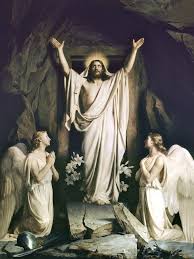
Now on the first day of the week Mary Magdalene came to the tomb early, while it was still dark, and saw that the stone had been taken away from the tomb. So she ran and went to Simon Peter and the other disciple, the one whom Jesus loved, and said to them, “They have taken the Lord out of the tomb, and we do not know where they have laid him.” So Peter went out with the other disciple, and they were going toward the tomb. Both of them were running together, but the other disciple outran Peter and reached the tomb first. And stooping to look in, he saw the linen cloths lying there, but he did not go in. Then Simon Peter came, following him, and went into the tomb. He saw the linen cloths lying there, and the face cloth, which had been on Jesus’ head, not lying with the linen cloths but folded up in a place by itself. Then the other disciple, who had reached the tomb first, also went in, and he saw and believed; for as yet they did not understand the Scripture, that he must rise from the dead. Then the disciples went back to their homes.

     But Mary stood weeping outside the tomb, and as she wept she stooped to look into the tomb. And she saw two angels in white, sitting where the body of Jesus had lain, one at the head and one at the feet. They said to her, “Woman, why are you weeping?” She said to them, “They have taken away my Lord, and I do not know where they have laid him.” Having said this, she turned around and saw Jesus standing, but she did not know that it was Jesus. Jesus said to her, “Woman, why are you weeping? Whom are you seeking?” Supposing him to be the gardener, she said to him, “Sir, if you have carried him away, tell me where you have laid him, and I will take him away.” Jesus said to her, “Mary.” She turned and said to him in Aramaic, “Rabboni!” (which means Teacher). Jesus said to her, “Do not cling to me, for I have not yet ascended to the Father; but go to my brothers and say to them, ‘I am ascending to my Father and your Father, to my God and your God.'” Mary Magdalene went and announced to the disciples, “I have seen the Lord”-and that he had said these things to her.

John 20:1-18

The song above is one of the most powerful Easter songs I know.  It never fails to bring tears to my eyes. It’s a Dolly Parton song, and it’s one of her most beautiful.  As you listen or read the words to the song, you can almost put yourself in the position that the disciples of Christ found themselves. Not only was there great sadness in the death of their savior but also there was fear of what the authorities would do to them. It must have been agonizing for them. Then He appears to them and 

He’s alive and I’m forgiven 

Heaven’s gates are open wide

For Jesus’ mother, his disciples and his followers, Jesus’ death was a tragedy. You can imagine that all hope was naturally gone. We today can face the same feeling. Many times in life, with homophobic politicians, the increasing rise of anti-gay homophobic groups, and everything that is going on in the world — war, famine, disease, natural disasters, discrimination, and hate — there can be a loss of hope and faith. Yet the resurrection gives us hope that no matter what has happened in our lives, no matter how much faith and hope we have lost, we can experience hope, we can overcome and regain whatever we have lost in our lives.

Our hope includes the knowledge that evil does not win. – Sometimes today, it seems that the bad guy often wins. Sometimes it seems that the one who cheats, the one who lies, the one who steps on others to get ahead, is the one who prospers. Far too often, I read of this person cheating or that one (or catching a student cheating) or another kid, gay or otherwise, who has been bullied, lost hope, and committed suicide. How often do we read of politicians cheating, or working to make sure their businesses get the good contract? It seems there is no hope for the little guy, the one who lives right, to ever get ahead.

With a positive attitude that through God we can accomplish anything, we truly can make the world a better place. With hope that springs eternal, just as the flowers in spring show the rebirth of the earth, we can be assured that God’s promises will deliver a better day, a rebirth our faith. The promise that Jesus would rise from the grave on the third day is remembered every Easter Sunday, it is the greatest sacrifice God could give for our sins. When we are baptized, it is done in symbolic reverence as our old body dies in its watery grave to be reborn and rise from the dead as Christ did for our sins.

Easter has always been the major religious holiday at my old church in Alabama. It is a day which has a date for us to celebrate, and it has the most meaning for Christians. It is the day when the Old Testament prophesies of the Messiah were ultimately fulfilled. It is the day that Christ rose from the dead. The resurrection is the most important of the miracles. When I was a child, our church had dinner on the grounds, and everyone brought a dish and the kids had an Easter egg hunt. It was always a wonderful day of fellowship. We no longer have dinner on the grounds because we once had a preacher (he didn’t last long with us) who was extremely hardcore and did not believe in having dinner on the grounds. I think he believed the only meal that should be taken at church was communion. Though he is long gone, we never revived the tradition of dinner on the grounds. I find it quite sad, since early Christian services were often centered around the dinner table where fellowship, worship, and food were part of the gathering.
I hope that all of you have a wonderful Easter. I, also, hope that each of you feels the hope of the rebirth that Easter brings to us today. May God’s love eternally bless you.


Precious Memories

IMG_3244

Precious memories, unseen angels
Sent from somewhere to my soul
How they linger, ever near me
And the sacred scenes unfold.

Chorus
Precious memories, how they linger
How they ever flood my soul
In the stillness of the midnight
Precious, sacred scenes unfold.

Precious father, loving mother
Fly across the lonely years
And old home scenes of my childhood
In fond memory appear.
(Chorus)

In the stillness of the midnight
Echoes from the past I hear
Old-time singing, gladness bringing
From that lovely land somewhere.
(Chorus)

As I travel on life’s pathway
Know not what the years may hold
As I ponder, hope grows fonder
Precious memories flood my soul.
(Chorus)


Don’t Look Back

image

The song playing at the restaurant I was at for lunch had the following lyrics:

Oh Lord, why have you forsaken me?
Got me down in Mississippi where I don’t want to be.

Switch Mississippi for Alabama and that was me 6 months ago. It was ironic because I went yesterday and got my new Vermont license plates and driver’s license. I am now an official citizen of Vermont. I was even able to register to vote as part of my driver’s license application. The bad thing is Becoming a Vermont citizen is quite expensive and I still have to pay for my car to be inspected and to get holes drilled on my front bumper to be able to mount the front license plate.

I’d planned to get them back on my birthday but had forgotten some of my documents and had to go home. By the time I got home, it had been almost 24 hours since I’d heard from my best friend and I tried desperately to get in touch with him only to find out that night that he’d died in a car accident. It has taken me this long to be able to go and try again. Plus, I had the afternoon off today.

Back to the song above, I had no idea who the artist was or the name of the song. I did some searching and found out that it is by The SteelDrivers and is called “Ghosts of Mississippi.” Here are the full lyrics:

Late one night behind corn whiskey
I fell asleep with a guitar in my hand
I dreamed about the ghosts of Mississippi
And the blues came walkin’ in like a man

Without a word I passed that guitar over
He tuned it up like I’d never seen
A crooked smile was his expression
Then he closed his eyes and began to sing

(chorus)
Oh Lord why have you forsaken me
Got me down in Mississippi where I don’t want to be
Oh Lord why have you forsaken me
Got me down in Mississippi where I don’t want to be

(repeat chorus)

When I woke up I looked into the mirror
I saw no reflection for a while
But as my eyes came into focus
I recognized that crooked smile

(repeat chorus)

Late one night behind corn whiskey
I fell asleep with a guitar in my hand
I dreamed about the ghosts of Mississippi
And the blues came walkin’ like a man

(repeat chorus)


A Beautiful Life

image

But a Samaritan while traveling came near him; and when he saw him, he was moved with pity. He went to him and bandaged his wounds, having poured oil and wine on them. Then he put him on his own animal, brought him to an inn, and took care of him. Luke 10:33-34

A Beautiful Life
By William M. Golden, 1918

Each day I’ll do a golden deed,
By helping those who are in need;
My life on earth is but a span,
And so I’ll do the best I can.

Refrain:
Life’s evening sun is sinking low,
A few more days, and I must go
To meet the deeds that I have done,
Where there will be no setting sun.

To be a child of God each day,
My light must shine along the way;
I’ll sing His praise while ages roll,
And strive to help some troubled soul.

The only life that will endure,
Is one that’s kind and good and pure;
And so for God I’ll take my stand,
Each day I’ll lend a helping hand.

I’ll help someone in time of need,
And journey on with rapid speed;
I’ll help the sick and poor and weak,
And words of kindness to them speak.

While going down life’s weary road,
I’ll try to lift some trav’ler’s load;
I’ll try to turn the night to day,
Make flowers bloom along the way.

This song reminds me of my friend who passed away. I think everyone who knew him thought he’d be gone far too soon. He was too good for us to keep forever. He struggled with issues that few people understand. One of the reasons we both seemed to click so well is because we both suffered from depression and anxiety. I still do, but he’s now in a place where there is no setting sun. He had a beautiful smile and it was infectious. He was a beautiful life.

He strove each day to do a golden deed. His golden deed might be telling someone good morning and have a great day, or it might be picking out a greeting card that he thought was perfect for someone he cared about, not for a special occasion but because he wanted to “give you a little happy” as he’d call it. He gave so much to so many. Those of us who knew him felt the love radiate from him.

He wanted to be a child of God. He succeeded because his light shone far and wide. He brought joy to so many and while he himself was a troubled soul, he worked to lift the weary load of other troubled souls. I can remember many times this past summer when I was searching for a job, when he would tell me that God had a plan. When I’d get a rejection letter, he’d say it was because God knew it wasn’t the right job for me. He always had an encouraging word.

While my friend may no longer have an earthly presence, he lived a life that will endure, because he was “kind and good and pure.” Each day he did lend me a helping hand, and I’m sure he lent a helping hand to many others. He was a genuinely good person.

When I needed someone most, he was always there. The only times that I didn’t receive a rapid response to a call for help was when he couldn’t give one. The last time I reached out to him and begged him to respond and let me know that he was okay, he couldn’t answer because he’d already left us. He always helped when I was sick, and he’d help the poor often by giving anonymously. He never wanted credit for his good deeds.

He journeyed down life’s weary road and took on the burdens of others. He believed his own load of worries was too much for anyone to bear, but he’d add on more worries from those who needed help the most. He always could turn my night to day. When I was in my darkest moods, he knew exactly how to cheer me up, and I’m sure he did that with many other people as well.

This song is based on the Parable of the Good Samaritan. You may know that the Samaritans were despised by the Jews, and vice versa. My friend tried to find a church where he lived. He’d wanted to worship God and be in his light, but at several churches he attended, he was told, sometimes in words, sometimes in deeds, that he was not welcomed because he was gay.

One of the lessons of the Parable of the Good Samaritan is that we should see each other equally and help out those in need, no matter who they are, what flaws we may perceive they have. The Samaritan didn’t see the Jew as a Jew, but as a man in need. Remember that a priest and a Levite, both holy men, had passed by the injured man, but it was the Samaritan, the outcast who’d helped.

We cannot turn our heads and ignore those in need, and we should strive to help others. We may not be able to financially, but there are always ways to lend love and support. Love and support are often worth far more than gold and silver. Imagine how wonderful this world would be if it were made up of people like my friend, people who followed the true ideals of Jesus.

My friend was not only a Good Samaritan but he also was a beautiful life.


Home for the Holidays

image

(There’s No Place Like) Home For The Holidays
By Al Stillman

Oh, theres no place like home for the holidays
Cause no matter how far away you roam
When you pine for the sunshine of a friendly gaze
For the holidays, you cant beat home, sweet home

I met a man who lives in Tennessee
He was headin’ for, Pennsylvania, and some home made pumpkin pie
From Pennsylvania, folks are travelin’ down to Dixie’s sunny shore
From Atlantic to Pacific, gee, the traffic is terrific

Oh, there’s no place like home for the holidays
Cause no matter how far away you roam
If you want to be happy in a million ways
For the holidays, you cant beat home, sweet home

Take a bus, take a train, go and hop an airplane
Put the wife and kiddies in the family car
For the pleasure that you bring when you make that doorbell ring
No trip could be too far

I met a man who lives in Tennessee
He was headin’ for, Pennsylvania, and some home made pumpkin pie
From Pennsylvania, folks are travelin’ down to Dixie’s sunny shore
From Atlantic to Pacific, gee, the traffic is terrific

Oh, there’s no place like home for the holidays
Cause no matter how far away you roam
If you want to be a happy in a million ways
For the holidays, you cant beat home, sweet home

I am heading this afternoon ” down to Dixie’s sunny shore,” actually it’s the heart of Dixie and it’s supposed to rain all week, but I will be home for the holidays. Though Vermont is now my home, a part of my heart will always remain with my family in Alabama. If you are fortunate enough to be able to spend the holidays with your family, please think of all those who aren’t able to do so. They many in the LGBT community who have been disowned by their family. Many of these people make their own families. I was fortunate to be part of the family of friends that surrounded my dear departed friend. I remember the first Christmas that I knew him, he was going to be alone. I got up early the morning of Christmas and purchased a Santa Claus gift card from Amazon.com to be delivered by email to him. I couldn’t stand the idea of him not having something to open. I sent him a text on Christmas morning saying that Santa had visited his email. We were separated by some distance and I wasn’t able to be there with him, but he knew I was in spirit. I had my gift all planned out for this year, but I never got to order it or send it to him. So please remember those who are separated from their families. Everyone needs someone for the holidays.

As it gets closer to Christmas, I am trying to think about the good things and remember some of my favorite moments of our friendship. Christmas songs have always gotten me in a more festive mood, but I haven’t felt much like listening to them. However, since I am going home for the holidays, I chose to do something that I haven’t done in a while and post a song for my Tuesday poetry post. I’ve always loved this song, but my holiday favorites have always been “O Holy Night,” “Winter Wonderland,” “Silent Night,” “The Christmas Song,” and “Happy Holidays.” Of course there are many others that I love, but those have always been my top five.

The music for “Home for the Holidays” was composed by Robert Allen, while the lyrics were written by Al Stillman and was published in 1954. The best-known recordings were made by Perry Como, who recorded the song twice. The first recording, done on November 16, 1954, was released as a single for Christmas, 1954, by RCA. The flip side was “Silk Stockings.” The next Christmas it was released again, with “God Rest Ye Merry Gentlemen” as the flip side. Como’s second recording of the song, in stereo and with a different musical arrangement, was made on July 15, 1959. It was released with “Winter Wonderland” on the flip side.

While it’s been hard for me to do the last few weeks, smile this holiday season. You never know when a simple smile can warm someone’s heart. And if you find yourself under some mistletoe, grab the cutest guy nearby, pull him under the mistletoe with you, and give him a kiss he will never forget. Happy Holidays, everyone.
P.S. Keep me in your thoughts tomorrow. I have severe anxiety about flying and can never do so without Xanax. I have two different layovers, one 1.5 hours and the other 2 hours, so I may have to take an extra dose. When flying between Burlington and Montgomery, there are no direct flights. It is going to be a long day.


The Morning of Joy

image

Listen, I will tell you a mystery! We will not all die, but we will all be changed, in a moment, in the twinkling of an eye, at the last trumpet. For the trumpet will sound, and the dead will be raised imperishable, and we will be changed. For this perishable body must put on imperishability, and this mortal body must put on immortality. When this perishable body puts on imperishability, and this mortal body puts on immortality, then the saying that is written will be fulfilled:

‘Death has been swallowed up in victory.’


‘Where, O death, is your victory?


Where, O death, is your sting?’


The sting of death is sin, and the power of sin is the law. But thanks be to God, who gives us the victory through our Lord Jesus Christ.


Therefore, my beloved, be steadfast, immovable, always excelling in the work of the Lord, because you know that in the Lord your labour is not in vain.


1 Corinthians 15:51-58

In The Morning of Joy

When the trumpet shall sound,
And the dead shall arise,
And the splendors immortal
Shall envelop the skies;
When the Angel of Death
Shall no longer destroy,
And the dead shall awaken
In the morning of joy:

In the morning of joy,
We’ll be gathered to glory,
In the morning of joy;
In the morning of joy,
We’ll be gathered to glory,
In the morning of joy.

When the King shall appear
In His beauty on high,
And shall summon His children
To the courts of the sky;
Shall the cause of the Lord
Have been all your employ,
That your soul may be spotless
In the morning of joy?

In the morning of joy,
We’ll be gathered to glory,
In the morning of joy;
In the morning of joy,
We’ll be gathered to glory,
In the morning of joy.

O the bliss of that morn,
When our loved ones we meet!
With the songs of the ransomed
We each other shall greet,
Singing praise to the Lamb,
Thro’ eternity’s years,
With the past all forgotten
With its sorrows and tears

In the morning of joy,
We’ll be gathered to glory,
In the morning of joy;
In the morning of joy,
We’ll be gathered to glory,
In the morning of joy.


I woke up Friday morning with this song in my head. As I sang it to myself, tears rolled down my face. This song was sang at my grandmama’s funeral, and I often sang it when I was the song leader of my church. It brings me comfort, since I know that in that morning of joy, I will be reunited with my friend.
The above sculpture is called “Angel of Grief” and is an 1894 sculpture by William Wetmore Story which serves as the grave stone of the artist and his wife at the Protestant Cemetery, Rome.


A Beautiful Life

image

Let us do good unto all men, especially unto them who are of the household of faithGalatians 6:10

A Beautiful Life

Each day I’ll do a golden deed,
By helping those who are in need;
My life on earth is but a span,
And so I’ll do the best I can.

Life’s evening sun is sinking low,
A few more days and I must go.
To meet the deeds that I have done.
Where there will be no setting sun.

To be a child of God each day,
My light must shine a-long the way;
I’ll sing His praise while ages roll
And strive to help some troubled soul.

Life’s evening sun is sinking low,
A few more days and I must go.
To meet the deeds that I have done.
Where there will be no setting sun.

The only life that will endure,
Is the one that’s kind and good and pure;
And so for God I’ll take my stand,
Each day I’ll lend a helping hand.

Life’s evening sun is sinking low,
A few more days and I must go.
To meet the deeds that I have done.
Where there will be no setting sun.

“A Beautiful Life” is a song which encourages us to do good unto others in order that we might be an influence for righteousness in this world. The text was written and the tune (Life’s Evening Sun) was composed both by William M. Golden (1878-1934). The song is dated 1918, but little information about its background is available. Perhaps Golden’s best known song is “Where the Soul Never Dies,” beginning, “To Canaan’s land I’m on my way.”

While I have sung this song many times in church, my most vivid memories are of my mother playing it on the piano. It was one of the songs that she loved to use to proactive playing the piano. I knew the tune long before I knew the words; however, this is one of the most beautiful songs when sung A Capella. When it is sung, the base begins “Each day I’ll do,” followed by the higher voices singing “A golden deed.” Each line alternates between the two and when done right it’s an amazingly beautiful song.

The song suggests several things that we can do to be a good influence on others. According to stanza 1, we must do our work for the Lord every day. Christianity is a religion that must be practiced daily and affect our daily lives. Therefore, daily we should be concerned about those who are in need. The reason that this is so important is that our lives are limited so we must do good while we have the time.

According to stanza 2, we must let our lights shine. God wants us to be His spiritual children. However, as His children, He wants us to let our lights so shine that men may see our good works and glorify Him. One way to do this is to sing His praise that we might teach and admonish others.

According to stanza 3, we must be kind to others. Our lives are more than just our physical existence, and to have an enduring quality they must be influenced by Christ. A life that is truly influenced by Christ will be characterized by kindness. Such a life will also not be ashamed to take a stand for God so that it can be a help to others.

The chorus re-emphasizes the need to be doing these things because of the brevity of life. God has eternal life planned for His people in heaven. However, to be made fit for such a wonderful dwelling place, we must strive while we journey here on this earth to have “A Beautiful Life.”


Bringing in the Sheaves


Those who sow in tears
     shall reap with shouts of joy!
He who goes out weeping,
     bearing the seed for sowing,
shall come home with shouts of joy,
     bringing his sheaves with him.

                            – Psalm 126:5-6

Bringing in the Sheaves

By Knowles Shaw

Sowing in the morning, sowing seeds of kindness,
Sowing in the noontide and the dewy eve;
Waiting for the harvest, and the time of reaping,
We shall come rejoicing, bringing in the sheaves.

     Bringing in the sheaves, bringing in the sheaves,
     We shall come rejoicing, bringing in the sheaves;
     Bringing in the sheaves, bringing in the sheaves,
     We shall come rejoicing, bringing in the sheaves.

Sowing in the sunshine, sowing in the shadows,
Fearing neither clouds nor winter’s chilling breeze;
By and by the harvest, and the labor ended,
We shall come rejoicing, bringing in the sheaves.

     Bringing in the sheaves, bringing in the sheaves,
     We shall come rejoicing, bringing in the sheaves;
     Bringing in the sheaves, bringing in the sheaves,
     We shall come rejoicing, bringing in the sheaves.

Going forth with weeping, sowing for the Master,
Though the loss sustained our spirit often grieves;
When our weeping’s over, He will bid us welcome,
We shall come rejoicing, bringing in the sheaves.

     Bringing in the sheaves, bringing in the sheaves, 
     We shall come rejoicing, bringing in the sheaves;
     Bringing in the sheaves, bringing in the sheaves,
     We shall come rejoicing, bringing in the sheaves.

Knowles Shaw (1834-1878) was a preacher, singer, and songwriter (of both words and music). In his day he was one of the best known figures in the American Restoration Movement. He was a member of the churches of Christ, which many of you know is a non-instrumental church. Perhaps Shaw’s best known work is the popular gospel song “Bringing in the Sheaves.”  Shaw was an exceptional singer by all accounts, and integrated hymns into his sermons as a natural extension of his message.

“Bringing in the Sheaves” was written in 1874, and was dedicated to the memory of Augustus Damon Fillmore (1823-1870), a fellow preacher and songwriter. For some reason this hymn has taken hold of the popular imagination as the go-to cultural reference for American “old-time religion.” It has appeared in a lengthy list of movies and television episodes. It is often associated with the Salvation Army because it is played by the Salvation Army band in the musical Guys and Dolls.

Ancient Israel was an agrarian society, and Jesus himself grew up in the farming country of Galilee, so the Bible naturally is full of references to the commonplace sights of planting and harvesting. It was difficult work to get a crop out of the dry, drought-prone land of Palestine, and then as now the farmers relied on their store of practical knowledge to get the most from their land. Jesus referred to this common knowledge in John 4:35, “Do you not say, ‘There are yet four months, then comes the harvest’?”

The harvest was a joyous time, especially if there was an assurance of a good yield after the uncertainties of the planting and growing season. Reapers would cut off the stalks close to the ground with a scythe, tying up convenient arm-loads and stacking them in groups for loading onto carts. The book of Ruth gives a detailed description of the ancient harvest practices, including the harvest feast when the crops were taken in and the work was over.

The Bible makes at least two spiritual applications of this earthly process. On a personal level, our actions and course of life, good or bad, are often compared to planting seed that grows to a harvest–good or bad, which I wrote about last week in the “Parable of the Soils.” And in a more outward-looking sense, our efforts toward spreading the gospel and leading others to Christ are frequently compared to sowing seed that will bring about a harvest in the lives of others.

Also, in the parable of the tares (or “weeds”) in Matthew 13:24-30, Jesus taught:

“The kingdom of heaven may be compared to a man who sowed good seed in his field, but while his men were sleeping, his enemy came and sowed weeds among the wheat and went away. So when the plants came up and bore grain, then the weeds appeared also. And the servants of the master of the house came and said to him, ‘Master, did you not sow good seed in your field? How then does it have weeds?’ He said to them, ‘An enemy has done this.’ So the servants said to him, ‘Then do you want us to go and gather them?’ But he said, ‘No, lest in gathering the weeds you root up the wheat along with them. Let both grow together until the harvest, and at harvest time I will tell the reapers, Gather the weeds first and bind them in bundles to be burned, but gather the wheat into my barn.'”

Jesus concludes with the warning, that although the wheat and the tares were growing side by side, and impossible to separate, the final reckoning would sort each out. God will not be mocked; His just judgment will return a harvest fitting to the seed that is sown.

The Old Testament spoke this truth in proverb and prophecy, and often with great poetic beauty. Proverbs 22:8 says, “Whoever sows injustice will reap calamity,” returning on himself the misfortunes he causes to others. Hosea 8:7 goes a step further, famously warning, “For they sow the wind, and they shall reap the whirlwind.” The result of continued sowing of wicked deeds is presented in terrifying language in Joel 3:13–“Put in the sickle, for the harvest is ripe. Go in, tread, for the winepress is full. The vats overflow, for their evil is great.” When God “tramples out the vintage” of His “grapes of wrath,” it is not a sight any wise person wants to witness. But even in the absence of great wickedness, the lack of good deeds has its consequences: “The harvest is past, the summer is ended, and we are not saved.”(Jeremiah 8:20)

On the positive side, the Bible also presents the harvest as a long-awaited recompense for the righteous person’s struggles. Hosea, though so much of his prophecy was of punishment, also exhorted the people with this beautiful picture of a better harvest to come: “Sow for yourselves righteousness; reap steadfast love; break up your fallow ground, for it is the time to seek the Lord, that He may come and rain righteousness upon you.”(Hosea 10:12) James seems almost to echo these words in this passage: “But the wisdom from above is first pure, then peaceable, gentle, open to reason, full of mercy and good fruits, impartial and sincere. And a harvest of righteousness is sown in peace by those who make peace.”(James 3:17-18)

In this sense we are all farmers, planting seed every day in the words we say and the things we do, for either good or bad; our harvest is being determined now, both in quality and proportion. “Whoever sows sparingly will also reap sparingly, and whoever sows bountifully will also reap bountifully.”(2 Corinthians 9:6)

As I said last week, we all will reap what we sow. God tells us that in numerous passages of the Bible. Many who call themselves Christians will tell us that as LGBT individuals, that we will reap Hell because we have sown a life of sin with our homosexuality. Even if I didn’t think they were wrong about this, their hatred is sowing not seeds of kindness but seeds of hatred and ungodly behavior. However, we cannot allow people like that to sow seeds of discord, nor can we allow them to push us away from God. Instead, we must continue to sow seeds of kindness so that we can nourish and grow in great faith within the Christian community.

We are already sowing the seeds of this with the faith initiatives of the Human Rights Campaign and within congregations who are LGBT friendly, such as the United Church of Christ and the Metropolitan Community Church. Some congregations are merely non-discriminatory and LGBT-affirming while others are specifically oriented toward gay, lesbian, bisexual, and transgender persons. Some local congregations, especially those designated as “Welcoming churches” in the Disciples of Christ, Baptist, Lutheran, Presbyterian, United Church of Christ, Methodist, Episcopal, and Brethren/Mennonite denominations, may consist of a majority of gay, lesbian, bisexual, and transgender members.

We cannot let the weeds of discord choke our growing faith communities and we should continue to celebrate the harvest of churches who are welcoming to all. The welcoming churches show the true spirit of the message of Jesus, and I believe as the LGBT community continues to gain acceptance and equal rights, we will see more churches opening their doors to the LGBT community.