Category Archives: Nudity

Blah

Last night, I had a bit of a sinus headache, so I took some NyQuil to help me sleep and to take care of the headache and sinus problems.  It worked, but I slept nearly all day.  Now I have the Blahs,  I don’t feel like putting together a post, so this is all there will be today.  I had a post in mind, but I will do that one for tomorrow.


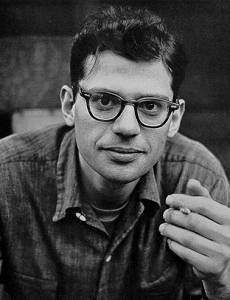
Song by Allen Ginsberg

Song 

The weight of the world
is love.
Under the burden
of solitude,
under the burden
of dissatisfaction

the weight,
the weight we carry
is love.

Who can deny?
In dreams
it touches
the body,
in thought
constructs
a miracle,
in imagination
anguishes
till born
in human–
looks out of the heart
burning with purity–
for the burden of life
is love,

but we carry the weight
wearily,
and so must rest
in the arms of love
at last,
must rest in the arms
of love.

No rest
without love,
no sleep
without dreams
of love–
be mad or chill
obsessed with angels
or machines,
the final wish
is love
–cannot be bitter,
cannot deny,
cannot withhold
if denied:

the weight is too heavy

–must give
for no return
as thought
is given
in solitude
in all the excellence
of its excess.

The warm bodies
shine together
in the darkness,
the hand moves
to the center
of the flesh,
the skin trembles
in happiness
and the soul comes
joyful to the eye–

yes, yes,
that’s what
I wanted,
I always wanted,
I always wanted,
to return
to the body
where I was born.

Allen Ginsberg


For more on Allen Ginsberg, click “More” below.

Allen Ginsberg, the visionary poet and founding father of the Beat generation inspired the American counterculture of the second half of the 20th century with groundbreaking poems such as “Howl” and “Kaddish.” Among the avant-garde he was considered a spiritual and sexually liberated ambassador for tolerance and enlightenment. With an energetic and loving personality, Ginsberg used poetry for both personal expression and in his fight for a more interesting and open society.
Allen Ginsberg was born in Newark, New Jersey on June 3, 1926. As a boy he was a close witness to his mother’s mental illness, as she lived both in and out of institutions. His father, Louis Ginsberg was a well-known traditional poet. After graduating from high school, Ginsberg attended Columbia University, where he planned to study law. There he became friends with Jack Kerouac and William Burroughs. Together the three would change the face of American writing forever.

With an interest in the street life of the city, Kerouac, Ginsberg and Burroughs found inspiration in jazz music and the culture that surrounded it. They encouraged a break from traditional values, supporting drug-use as a means of enlightenment. To many, their shabby dress and “hip” language seemed irresponsible, but in their actions could be found the seeds of a revolution that was meant to cast off the shackles of the calm and boring social life of the post-war era. While a nation tried desperately to keep from rocking the boat, Allen Ginsberg and the Beats saw the need for a more vibrant and daring society.
One of the primary first works of the Beats was Ginsberg’s long poem “Howl.” In an age plagued by intolerance, “Howl” (1956) was both a desperate plea for humanity and a song of liberation from that intolerant society. Ginsberg’s use of a gritty vernacular and an improvisational rhythmical style created a poetry which seemed haphazard and amateur to many of the traditional poets of the time. In “Howl” and his other poems, however, one could hear a true voice of the time, unencumbered by what the Beats saw as outdated forms and meaningless grammatical rules.
For its frank embrace of such taboo topics as homosexuality and drug use, “Howl” drew a great deal of criticism. Published by City Lights, the San Francisco based publisher of many of the Beats, the book was the subject of an obscenity trial. Eventually acquitted of the charges, City Lights came out with Ginsberg’s second book in 1961. “Kaddish, And Other Poems,” often considered Ginsberg’s greatest work, dealt again with a deep despair and addressed Ginsberg’s closeness with his mother while she was hospitalized and fighting insanity. The raw nature of the subject matter and Ginsberg’s desperate emotions found a perfect home in his poem “Kaddish.” Of “Kaddish,” Ginsberg wrote “I saw my self my own mother and my very nation trapped desolate…and receiving decades of life while chanting Kaddish the names of Death in many mind-worlds the self seeking key to life found at last our self.”
Throughout the 1960s, Ginsberg experimented with a number of different drugs, believing that under the influence he could create a new kind of poetry. Using LSD, peyote, marijuana and other drugs he attempted to expand his consciousness and wrote a number of books under the influence including the “Yage Letters” with William Burroughs. For much of the youth of the day, Ginsberg’s embrace of illegal drugs and unrestrained sexuality made him a central figure in the rebelling movements of the time. More than any other American poet of the 20th century, Ginsberg used his popularity for social change. Coining the phrase “flower power,” Ginsberg encouraged protesters of the 1960s to embrace a non-violent rebellion. By the 1970s, his fame had grown enormously, and though he cast aside drug use for an interest in Buddhism and yogic practices, he remained important to newly-formed youth movements.
By the 1980s, Ginsberg was the most famous living American poet. As a writer he continued to publish challenging and personal verse and as a celebrity he maintained an international presence as a spokesperson for peace and tolerance—working often as a teacher and lecturer . In the last decade of his life, Ginsberg wrote and performed at the prolific rate of his youth. He had sold millions of books and had often expanded into other genres. Among the collaborators of his final years were members of the bands Sonic Youth and U2. He died on April 5, 1997 at the age of seventy. At the time of his death, “Howl” had been reprinted more than fifty times, and the words of William Carlos Williams’ introduction still rang true—”This poet sees through and all around the horrors he partakes of in the very intimate details of his poem. He avoids nothing but experiences it to the hilt. He contains it. Claims it as his own—and, we believe, laughs at it and has the time and affrontery to love a fellow of his choice and record that love in a well-made poem.”


Barefoot in the Summer

Chestnuts, Burrs, and Leaves

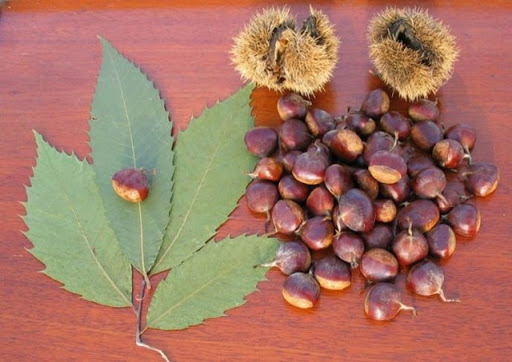
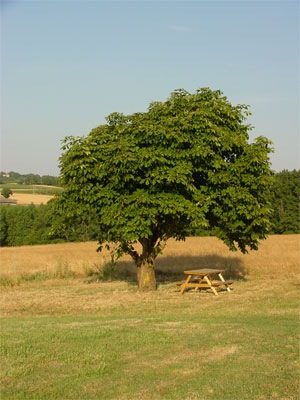
In honor of the official beginning of summer (though with this heat it has been here for a while now), I want to start off my summer poetry series with two poems about being barefoot. As a child of the South, we rarely ever played outside without being barefoot. Shoes were worn when we were going somewhere or when company was coming. I do remember one time when I truly wished I had not been barefoot. My grandparents had a chestnut tree. I don’t know how many of you are familiar with chestnut trees, but chestnuts grow inside burrs (see the picture on the right), which look like little porcupines. A group of us kids were playing around the chestnut tree, climbing it and fooling around. Stupidly we were barefoot, but being barefoot made climbing a tree easier. When we were down on the ground, I was backing up (I think my sister was threatening me). I stepped on one of these burrs. Hundreds of the little thorns went into the bottom of my foot. It took my grandfather and father all day and much of the night to get most of them out. A few that got really embedded in my foot didn’t come out for months and sometimes even years. It was not one of my finer moments.

Chestnut Tree

So in honor of those barefoot days of summer, here are some poems that I hope you will enjoy.

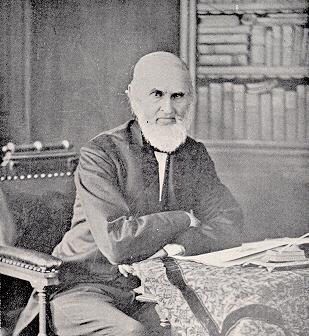
The Barefoot Boy by John Greenleaf Whittier

Blessings on thee, little man,
Barefoot boy, with cheek of tan!
With thy turned-up pantaloons,
And thy merry whistled tunes;
With thy red lip, redder still
Kissed by strawberries on the hill;
With the sunshine on thy face,
Through thy torn brim’s jaunty grace;
From my heart I give thee joy,—
I was once a barefoot boy!

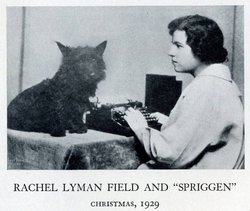
Barefoot Days by Rachel Field

In the morning, very early,
That’s the time I love to go
Barefoot where the fern grows curly
And the grass is cool between each toe,
On a summer morning – O!
On a summer morning!
That is when the birds go by
Up the sunny slopes of air,
And each rose has a butterfly
Or a golden bee to wear;
And I am glad in every toe –
Such a summer morning – O!
Such a summer morning!
For more information about the poets who wrote these poems, click “Read More” below.

John Greenleaf Whittier
The first poem “The Barefoot Boy” is by John Greenleaf Whittier (born Dec. 17, 1807, near Haverhill, Mass., U.S. — died Sept. 7, 1892, Hampton Falls, Mass.), a U.S. poet and reformer. A Quaker born on a farm, Whittier had limited education but was early acquainted with poetry. He became involved in journalism and published his first volume of poems in 1831. During 1833 – 42 he embraced the abolitionism of William Lloyd Garrison and became a prominent antislavery crusader. Thereafter he continued to support humanitarian causes while publishing further poetry volumes. After the Civil War he was noted for his vivid portrayals of rural New England life. His best-known poem is the nostalgic pastoral “Snow-Bound” (1866); others include “Maud Muller” (1854) and “Barbara Frietchie” (1863).
The second poem, “Barefoot Days” is by Rachel Lyman Field (September 19, 1894 – March 15, 1942), an American novelist, poet, and author of children’s fiction. She is best known for her Newbery Medal–winning novel for young adults, Hitty, Her First Hundred Years, published in 1929. Field was born in New York City, and, as a child, contributed to the St. Nicholas Magazine. She was educated at Radcliffe College. Field was also a successful author of adult fiction, writing the bestsellers Time Out of Mind (1935), All This and Heaven Too (1938), and And Now Tomorrow (1942). She is also famous for her poem-turned-song “Something Told the Wild Geese”. Field also wrote the English lyrics for the version of Franz Schubert’s Ave Maria used in the Disney film Fantasia (film). Field married Arthur S. Pederson in 1935, with whom she collaborated in 1937 on To See Ourselves. She died in Los Angeles, California on March 15, 1942, of pneumonia following an operation.

Moment of Zen: The Pineapple


The pineapple has long been a popular symbol of hospitality and friendship. This symbolism has a lengthy history beginning when Christopher Columbus and his men landed on the island now known as Guadeloupe on their second voyage of discovery. In 1493, Christopher Columbus brought the fruit back to Europe from his voyage through the Carib Islands. This tropical king of fruits was crowned the “pineapple” by the English because of its resemblance to a pine cone and its juicy center, which reminded them of an apple.
To the Carib, the pineapple symbolized hospitality, and the Spaniards soon learned they were welcome if a pineapple was placed by the entrance to a village. This symbolism spread to Europe, then to Colonial North America, where it became the custom to carve the shape of a pineapple into the columns at the entrance of a plantation. Families often put a fresh pineapple in the center of the table when they had visitors. This was not only a colorful centerpiece but symbolized the greatest welcome and hospitality to the visitor. The fruit would then be served after the meal as a special desert.

I remembered learning this at a tour of a plantation:  When guest would come over to spend a few days, they were greeted with a pineapple. But if they over stayed their welcome, they would find half a pineapple at the foot of their bed. This was an unspoken signal that it was time for them to leave.


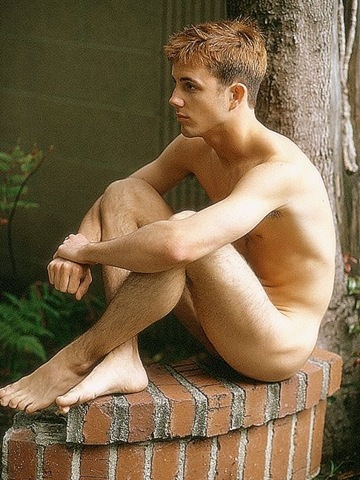
Thank goodness, the guy in the picture above seems to be welcoming us.
Text Source: http://EzineArticles.com/1044420


Rugby: Homoerotic?

First of all, is there a sport out there more homoerotic than rugby?  For me, well maybe baseball and/or lacrosse, but rugby, I think is still at the top.  My roommate in college played for our local rugby team, and he used to tell me about some of the traditions (such as ZULU, which was running around the pitch (field) naked after scoring your first try (points) and I used to have the camera of the pics of his ZULU, but I think he took it with him when he went home.  He was a sexy mofo, and I would have loved to have been there for that.)
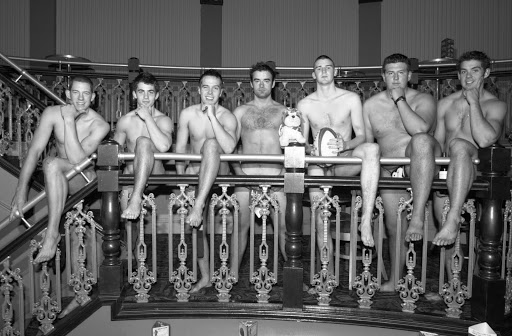
Anyway, memories aside, I have to tell you guys about SHU Rugby.  SHU Rugby has been doing a nude fundraising calendar since 2001, and they have gotten me hot and bothered since then.  The guys at SHU Rugby were kind enough to let me use some of their pictures and to promote their Calendars and DVDs.  If you click on the link for SHU Rugby, you can purchase Calendars, Making of DVDs, and Photo CDs.  They are quite reasonably priced to ranging from £4.00-£7.00 + shipping and handling.  I know once you seen some of these pictures you will want one for yourself.  And if you scroll all the way to the bottom of the post and click “more” there is a little exclusive for you guys.
I know this sounds like an advertisement, and basically it is, but I am not getting anything out of this.  The proceeds from the calendars and DVDs go to the club development fund which pays for training equipment, new kit, referee fees, coach, travel etc.  It also helps them to subsidize club fees so that they don’t lose players because a player can’t afford to come and play for them, and it also helps towards the fees for the coaching team.  It seems to be a great fundraiser for SHU Rugby and these pics are certainly “raising” something for me, and I hope for you too.  Enjoy the pics below and go help out SHU Rugby.
Click “more” below for the exclusive.

Here is the exclusive that I mentioned before.  This picture is a preview for their upcoming 2012 calendar.  I was told that this picture has not been released to anyone yet, so you will see it here first.  WOW!  My first exclusive (Actually, this picture was on my other blog first, but for those who did not see it there, this will be your first look).  Enjoy…


The Sonnets

palm copy[3]
As I stated to Ace in a comment about last week’s poem, sonnets are my favorite form of poetry.  The rhythm and cadence of a sonnet is pure beauty.  I wanted to share with you today my two favorite sonnets.

Shall I compare thee to a summer’s day? (Sonnet 18)
by William Shakespeare

2718_01[3]Shall I compare thee to a summer's day?
Thou art more lovely and more temperate.
Rough winds do shake the darling buds of May,
And summer's lease hath all too short a date.
Sometime too hot the eye of heaven shines,
And often is his gold complexion dimmed;
And every fair from fair sometime declines,
By chance, or nature's changing course, untrimmed;
But thy eternal summer shall not fade,
Nor lose possession of that fair thou ow'st,
Nor shall death brag thou wand'rest in his shade,
When in eternal lines to Time thou grow'st.
So long as men can breathe, or eyes can see,
So long lives this, and this gives life to thee.
 

How Do I Love Thee? (Sonnet 43)
by Elizabeth Barrett Browning

aint heavy[3]How do I love thee? Let me count the ways.
I love thee to the depth and breadth and height
My soul can reach, when feeling out of sight
For the ends of being and ideal grace.
I love thee to the level of every day's
Most quiet need, by sun and candle-light.
I love thee freely, as men strive for right.
I love thee purely, as they turn from praise.
I love thee with the passion put to use
In my old griefs, and with my childhood's faith.
I love thee with a love I seemed to lose
With my lost saints. I love thee with the breath,
Smiles, tears, of all my life; and, if God choose,
I shall but love thee better after death.

What is your favorite form of poetry?

What is your favorite poem?  

Sonnets from the Portuguese
Shakespeare's Sonnets

Moment of Zen: Getting Lost…

…in another world, as only books can take you.  Whether it is a great classic, a trashy summer read, a bestselling thriller, fiction/non-fiction, it doesn’t matter.  A well-written book can transport us to another world, one that lives in the imagination of the writer and reader or one that is a past gone by (I had to throw in the last one as a historian, LOL).


Storm Heaven and Protest

About six weeks ago, a new reader of this blog wrote to me and asked if I had ever written a post about John Rechy. I replied that I had not, mainly because I had never read any of this work.  If I am going to write about an author, I want to be familiar with his work. So I looked up some of Rechy’s essays, found them interesting and then ordered his most acclaimed book, City of Night.  The book came, but I was in the midst of wrapping the year up at the high school where I teach and with final projects and finals with my college class that I teach at night.  To say that I was busy would have been an understatement.  I had spent the five months since Christmas reading Steve Berry’s The Emperor’s Tomb. I’m a slow reader, but generally not that slow.  I enjoyed the book, but I would get home from work, finish some of the work I had at home to do: cook, clean, grade papers, watch a little TV, etc.  By the time I lay down to go to sleep, when I generally do some reading before bed, I was too damn tired to pick up a book, so The Emperor’s Tomb largely sat unread until school was over, then it didn’t take much to finish it.

Finally, I could delve into John Rechy’s City of Night.  I sat down with it and began to read, but at first I found it terribly difficult.  Maybe it’s the way he writes “didnt” for “didn’t,” “hes” for “he’s,””youll” for “you’ll.” Things like that drive me crazy as a teacher. At first I thought it was a typographical error, but then I realized that many errors wasn’t possible for a publisher, especially with words capitalized here and there seemingly without rhyme or reason.  Then I realized that this was Rechy’s style.  He used this type of grammar to emphasize various points and follow the cadence of the speaker.  I thought it would drive me crazy, and I almost put the book down to read later (which would probably mean never).  Luckily, I continued to read. 

“The City is of Night: perchance of Death, But certainly of Night…”

cityofnight_240City of Night is a novel about loneliness, about love and the ceaseless, furtive search for love. Set in the seamy, neon-lighted world of honky-tonk USA—Times Square in New York, Pershing Square in Los Angeles, Hollywood Boulevard, Chicago, and the French Quarter of New Orleans–and dealing with a little-known world of hidden sex and the hustlers, drag queens, and butch homosexuals who inhabited these worlds.  One of the main reasons I originally continued reading the book was to get to the section about New Orleans, a city which I love dearly.  I couldn’t bring myself to just skip to that part of the book, so I ventured on.

This book is a journey by a nameless narrator, through this clandestine world of furtive love. roberts3His journey takes him through the major cities of the United States, and through the lives of an extraordinary collection of characters who dwell either in this world or on its fringes: Pete, the “youngman”—or male hustler–at 42nd Street, who like the other youngmen goes with men for money but with women to prove his masculinity intact; the bedridden Professor, author of many books, for whom the only book that matters is the scrapbook of the Angels he has collected through the years in many countries; Miss Destiny, the queen of them all, with his-her endless succession of faithless husbands; Sergeant Morgan, the terror of Pershing Square, the cop who cracks down hard on the gay scene but has tried more than once to make it with those he arrests; “Mom” the New Yorker whose fetish is cooking for the male hustlers he takes home and undresses; Skipper, A Very Beautiful Boy, once beloved of one of Hollywood’s top directors, who now carries his yellowed pictures and clippings in an often-renewed envelope; Lance O’Hara, not long ago the most sought-after star in the Hollywood heaven, now openly pursuing a youngman a decade or two his junior, and groveling to get him; Neil and his world of masquerade.

The most fascinating and interesting characters throughout the book were not the ones mentioned above but the characters of Chuck the Cowboy and Jeremy, though Sylvia is also a beautiful and tragic character worthy of a note.  To be honest, I found most of the other character to be sad and/or creepy—for lack of a better word.  tumblr_llec7cLA1M1qh7mnvo1_1280Chuck’s lackadaisical attitude about life was just so carefree, listless, lacking enthusiasm and determination and carelessly lazy.  He is described as:

…sitting there complacently in the lazy afternoons, in the same spot, shoulders hunched, hands holding on the railing, balancing himself—long, lanky legs locked loosely under the bar by booted toes as if on a fence, on a ranch, sandy hair jutting out from a widehat over long sideburns—as he looks at the passing scene of Pershing Square with what I would usually think was amusement—but wonder, occasionally, Is it more like bewilderment?…

Chuck is one of those characters that is also lonely, like all of the characters in the book, but he has perfected the none caring attitude of the hustler and his masculine veneer.  The story he tells of when he left home and the night out with his mother is one of the most enjoyable sections of the book.  Probably, because I have known women like his mother.  The mother who took on the role of mother and father in the family.

The New Orleans depicted in the last chapter of City of Night is not the Tennessee Williams version of New Orleans.  In some ways it does have the seediness of A Streetcar Named Desire, but none of the false gentility of Blanche.  It is purely a “city of the night” taking place in a Mardi Gras celebration of the past. Sylvia is one of the earliest New Orleans characters that we meet in this section of the book, and though she is a favorite character of mine, I will not say much about her.  Her story needs to be read in its entirety, not summarized by me, and I hope that after reading this post, you will go out and read City of Night.  The other New Orleans character is Jeremy, who appears at the end of the book and in a way opens up the book for better understanding.  Once you have read the section on Jeremy, the book is a much more worthwhile read, but it still leaves you with a certain sadness.

Into the Night with John Rechy
John Rechy stated that “City of Night began as a letter to a friend of mine after I had been to New Orleans. city-of-night-rechy-johnI wrote City of Night because they were my experiences hustling, and it began as a letter. I didn’t think of it as a book.”  I did not read the introduction before reading the book, which is not normal for me. I usually delve into the introduction first, but in this case, and for what ever reason, I did not read the introduction first.  I read the introduction after completing the book, and it made all the difference.  I would suggest that for anyone.  Read the book, then read the introduction.  It made for a much more fascinating read this way.  In his novels about hustling, preeminently City of Night and Numbers, John Rechy moves from the world of homosexual behavior into the world of gay identity. Rechy was born in El Paso, Texas, in 1934. His parents, Mexican aristocrats, fled to avoid persecution during the purges of Pancho Villa. Rechy studied journalism at Texas Western College and the New School for Social Research in New York before serving in Germany in the U.S. Army.

Afterward, Rechy relocated to New York and began a period of hustling and drifting that inspired much of his early writing. Rechy’s first novel, City of Night (1963), began as a letter to a friend about his experiences at Mardi Gras and was then reworked into a short story for Evergreen Review.
obscene_03Rechy’s reputation as a gay writer rests primarily on City of Night, which documents the wanderings of a nameless male hustler from El Paso, to New York, Los Angeles, and New Orleans. This narrative is punctuated by recollections of the narrator’s childhood in El Paso.  Originally, Rechy had chosen the title “Storm Heaven and Protest” (hence the title of this post) for his first novel, but his editor wisely suggested that the book take its name from the title of the intermittent chapters throughout the book that links the various characters together.

When John Rechy published his first novel, City of Night, he was still earning his living as a prostitute on the streets of Los Angeles. It made sense: he didn’t expect a book that dealt with underground gay life in America to make him much money, and it’s a foolish writer who gives up the day job (or in Rechy’s case, the night job) with the first flush of publication.

To Rechy’s astonishment, and despite the best efforts of homophobic critics, the book was a smash and money started rolling in. But Rechy still couldn’t leave the streets. “It caught me out completely,” says Rechy, now 77, and still living in Los Angeles. “I was bewildered. I did nothing at all to promote the book, even to the extent of denying that I wrote it. I felt that if I left the streets as soon as I had some success, I’d be betraying the world that I wrote about. And the truth is that I couldn’t give it up. I’d been hustling for so long that it was a habit.”

“It got ridiculous,” says Rechy. “People hit on me all the time, far more than I say in the book. Looking back, I can see it was my own fault – I projected a very sexual image, Numbers Rechyand I shouldn’t have been surprised when people responded.” Ridiculous it may have been, but the masquerade continued well into Rechy’s thirties. “In the 1970s, when I was teaching at UCLA, I’d finish my evening classes, then change my clothes somewhat and go down to hustle on Santa Monica Boulevard. One night, a student saw me down there and said ‘Good evening, Professor Rechy. Are you out for an evening stroll?’.” I’m sure he was thinking what I think some of the time: “I can’t do anything or go anywhere without running into my students.” Only in the 1970s could a man be both a hustler and a professor. Really, can you imagine if a professor was a hustler in this age of internet technology?  I can just imagine what his ratings on RateMyProfessor.com would be like: “Professor Rechy is a great professor, very interesting.  And if you want to see him out of the classroom, just go to Pershing Square or Santa Monica Boulevard where for $20 you can having him for an evening.” Of course, he would also have plenty of chili peppers, and I am sure that the ratings would be high.  I’ve gotten a little off subject.

Rechy kept writing throughout the 1970s and 1980s, detailing the ups and (mostly) downs of his compulsive sex life in Numbers, Rushes and the non-fiction polemic The Sexual Outlaw. But it was City of Night that made his name, and on which his reputation rests. It’s an American classic, with its loner hero, its juke joints and neon signs, its restless shifting from city to city, bed to bed; a hybrid of On the Road and Catcher in the Rye.

RechyGala(2)10.03He has lectured at Harvard, Yale, Duke, UCLA, USC, Occidental College, University of Northern Illinois, among other academic institutions. He was the keynote speaker at the 1999 Writers’ Conference at UCLA and at the 1990 Out/Write National Writers Conference at San Francisco. He has been a key participant at numerous other literary conferences, including the 1999 Los Angeles Times Book Festival, the Guadalajara International Book Fair, Miami Book Fair, and New Orleans Literary Festival.

He has written essays for The Nation, Los Angeles Times Books, Washington Post Book World, The Saturday Review, New York Times Book Review, San Francisco Chronicle, The Philadelphia Inquirer, Dallas Morning News, London Magazine, Evergreen Review, New York Magazine, The Advocate, Mother Jones, Premiere, and many other national publications.

Of Mexican-Scottish descent, he makes his home in Los Angeles, California, where he teaches literature and film courses, for writers, in the graduate division of the University of Southern California.

Important? Inspirational? YES! NO! MAYBE!…

City of Night is the first book of its kind.  The homosexual subculture of the late 1950s and early 1960s was a dangerous time.  415290930_e28e194424Homosexuality and homosexual sex were illegal in the United States and the life of a hustler was certainly not picnic in the park.  While doing some research on John Rechy and City of Night, I came across a review written by Antonio W. Wilson of the book of Outlaw: The Lives And Careers Of John Rechy by Charles Casillo form the literary journal RALPH.  Wilson was not a big fan of John Rechy and had never been able to get through City of Night for much the same reason as I almost put the book down myself, but as he states at the end of the review: “But there is another side to the John Rechy story. I showed this review to a friend of mine who had read him many years ago. This is what he had to say about that time of his life”:

John Rechy was very important to me back when I was coming out, at age 40. He opened up a world of possibilities — anonymous sex, T-rooms, hustlers, dirty book-store sex, cruising, rough trade and other goodies. I am proud to say that I went out and lived for a while on Rechy’s wild side.

    Night people are different from day ones. They break all the rules. They do endless self destructive things. To the world we were brought up in they are scum, losers, dangerous. They make up a kind of fraternity of night men like themselves — druggies, drug dealers, hustlers, bartenders, cops and robbers. Sexy boys from West Virginia who will soon be dead (and this was before AIDS) dead of something — OD, knife fight, car crash. Once you are accepted in the fraternity it is a very, very seductive life. Harsh; no social pretense.

Bibliography:

  1. “A Substantial Artist” and “City of Night” from JohnRechy.com.
  2. Bredbeck, Gregory W. “Rechy, John” Ed. Claude J. Summers. glbtq: An Encyclopedia of Gay, Lesbian, Bisexual, Transgender, and Queer Culture. 2002 www.glbtq.com/literature/rechy_j.html.
  3. “John Rechy” Wikipedia.
  4. Savage, Jon. “John Rechy’s City Of Night and Stonewall @ 40”
  5. Smith, Rupert.  “Midnight cowboy: John Rechy recalls 40 yeas of hustle” Independent.co.uk. 27 April 2008.
  6. Wilson, Antonio W. Review of Outlaw: The Lives And Careers Of John Rechy by Charles Casillo. R A L P H: The Review of Arts, Literature, Philosophy and the Humanities, Volume XXXIV, Number 4: Mid-Spring 2003. (http://www.ralphmag.org/BY/john-rechy.html).

Thanks Andrew, for suggesting this book to me.

Travelling Between Places

TRAVELLING BETWEEN PLACES

baptiste-giabiconi-19Leaving nothing and nothing ahead;
when you stop for the evening
the sky will be in ruins,

when you hear late birds
with tired throats singing
think how good it is that they,

knowing you were coming,
stayed up late to greet you
who travels between places

when the late afternoon
drifts into the woods, when
nothing matters specially.

BRIAN PATTEN

Born near Liverpool’s docks, he attended Sefton Park School in the Smithdown Road area of Liverpool, where he was noted for his essays and greatly encouraged in his work by Harry Sutcliffe his form teacher. He left school at fifteen and began work for The Bootle Times writing a column on popular music. One of his first articles was on Roger McGough and Adrian Henri, two pop-oriented Liverpool Poets who later joined Patten in a best-selling poetry anthology called The Mersey Sound, drawing popular attention to his own contemporary collections Little Johnny’s Confession (1967) and Notes to the Hurrying Man (1969). Patten received early encouragement from Philip Larkin.

Patten’s style is generally lyrical and his subjects are primarily love and relationships. His 1981 collection Love Poems draws together his best work in this area from the previous sixteen years. Tribune has described Patten as “the master poet of his genre, taking on the intricacies of love and beauty with a totally new approach, new for him and for contemporary poetry.” Charles Causley once commented that he “reveals a sensibility profoundly aware of the ever-present possibility of the magical and the miraculous, as well as of the granite-hard realities. These are undiluted poems, beautifully calculated, informed – even in their darkest moments – with courage and hope.”


U.S. Navy Pre-Flight School, St. Mary’s, California

footerThe Christian Brothers who moved the College to Moraga in 1928 would scarcely recognize today’s Contra Costa County, with its crowded freeways and sprawling subdivisions in place of the orchards and pastures that once dominated the landscape.

Moraga itself, which has grown to a population of 16,000, maintains much of the bucolic charm that enticed the Brothers from Oakland’s Broadway and 30th Street eight decades ago. Yet the surrounding East Bay has experienced an almost continuous real estate boom — especially when World War II’s military mobilization and industrialization transformed the region.

The war certainly had a dramatic impact on the College, as the U.S. Navy’s Pre-Flight School took over most of the campus at 1928 St. Mary’s Road from 1942 to 1946. The arrival of thousands of Navy men housed in temporary barracks and trained in classrooms also brought a crucial missing ingredient to Saint Mary’s — a reliable supply of water that has allowed the College to expand ever since.

The Move to Moraga

tumblr_l7eyg41Fa81qc0um2o1_1280As the College started outgrowing the Oakland Brickpile campus after World War I, trains and automobiles were making it easier to settle in outlying parts of the Bay Area. In 1919, the Brothers purchased what seemed to be an ideal new location: 255 acres next to Lake Chabot in the San Leandro hills.

Unable to raise enough money for construction, the Brothers turned their attention elsewhere. In 1927, James Irvine’s Moraga Company — hoping a college would jumpstart real estate development — offered the Brothers 100 free acres, the beginnings of today’s 420-acre campus.

The Moraga location had many virtues — pastoral seclusion, rolling hills and plenty of elbow room — but it lacked a dependable water source. While the proposed San Leandro site was on a lake, the Moraga location was fed solely by the fickle flow from Las Trampas Creek through a marshy area north of campus.

“It’s amazing to me that the College was able to survive here for years without other sources of water,” says biology professor Lawrence Cory, a Saint Mary’s student in the 1930s. “Some years, there might be enough water, but what about years like this one (2007) when the creek is completely dry?”tumblr_l7eyh4AigG1qc0um2o1_1280

In fact, Moraga developed more slowly than its neighbors because Lafayette and Orinda were situated along the aqueduct system created by the East Bay Municipal Utility District (EBMUD) in the late 1920s. EBMUD, a public trust set up in 1923 to develop a steady water supply for East Bay communities, piped Mokelumne River water to reservoirs, including the Lafayette Reservoir, by 1929. But Moraga was too far away and too small, even with the arrival of more than 200 Saint Mary’s students in 1928, to merit the effort and expense of EBMUD incorporation.

This lack of water hindered early Moraga development efforts, as Nilda Rego chronicles in her history Days Gone By in Contra Costa County. In 1922, when the county and Irvine’s company split the cost of a “Moraga Highway” from Orinda — today’s Moraga Way from Highway 24 into the town — the project almost foundered due to lack of water.

E.E. O’Brien, the Martinez contractor who won the bid, had her crews implement creative solutions to the problem.

“They told me there would be many difficulties and said I could not get the water to mix concrete for one thing,” she told the Contra Costa Courier on May 8, 1922. “Water was obtained by impounding dams along the right of way, thereby conserving the rainwater that otherwise would have run off.”

Necessity: Mother of Invention

tumblr_l7l2dtaqx51qc0um2o1_1280During their first years in often-arid Moraga, the Brothers relied on similar improvisations to keep the College hydrated.

As they began setting up the College in 1927, however, lack of water did not appear to be a problem. If anything, there seemed to be an abundance.

With heavy rainfall in 1927 and 1928, the campus was often flooded, slowing construction. Las Trampas Creek frequently overran its banks, rainwater flowed down from the hills and the campus’ adobe soil turned to thick mud.

One of the College’s oldest Moraga alums, Bob McAndrews ’32, remembers his first year at the College as particularly muddy: “We had to slog between buildings in boots because roads and pathways weren’t finished and the winter was exceptionally rainy.”

The soggy beginning failed to dampen the Brothers’ spirits. They lived in an era marked by new confidence in water management feats similar to EBMUD’s successful dam and pipeline system. William Mulholland’s aqueducts had brought water hundreds of miles south to thirsty Los Angeles and earthquake-shaken San Francisco dammed faraway Hetch Hetchy Valley in Yosemite for a reliable water supply. The Brothers were convinced Las Trampas Creek could make a big enough reservoir to supply the College.tumblr_l7l2fkOnrT1qc0um2o1_1280

So Lake Lasalle, created with a $100,000 earthen dam constructed by Berkeley contractor J.P. Brennan, was formed. The College’s main source of water from 1928 to 1942, the 134-acre-foot reservoir was north of the campus (behind the Power Plant) at the mouth of Bollinger Canyon.

Wells supplied some of the College’s water, but Lake Lasalle provided the rest, including irrigation water for the campus’ 20 acres of lawns. A pumping station sent lake water to redwood storage tanks located in the hills behind De La Salle Hall (near today’s “SMC” logo). The College also set up a treatment system in the hills for purifying and chlorinating water.

The water tanks proved to be an irresistible target for some pranksters: At the height of the Saint Mary’s–Cal football rivalry in the early 1930s, Berkeley students tried to paint a big yellow Cal “C” on them before games.

For a while, the water system did more than quench the campus’ thirst. The lake itself was an added attraction, as students swam and boated there in the 1930s. A 1939 Gael yearbook writer rhapsodized: “Lake Lasalle, limpid, cool, inviting, where many an hour is whiled away in an easy jaunt around the mossy banks … a tranquil panorama of water, sky and rolling hills to soothe the weary eye escaping from the printed word.”
Soon enough, however, this aquatic idyll faced a significant problem — the steady accretion of silt due to erosion which threatened to overwhelm the lake.

The Brothers’ own ad hoc hydraulic engineer, Brother Nivard Raphael, took matters into his own hands. In 1941, he built a small foredam to catch silt upstream from Lake Lasalle. But Las Trampas Creek uprooted it, leaving him back at square one. He later attempted to use the sump valve that contractors built into the bottom of the lake to drain silt through an underground pipe. The valve failed, and much of the lake’s water was lost.tumblr_l7l2gpJNZ11qc0um2o1_1280

These efforts to revitalize Lake Lasalle were soon overshadowed by a more pressing national concern: preparation for World War II.

A Navy Needs Water

With an acute shortage of fighter pilots after Pearl Harbor, the U.S. Navy set up pre-flight training schools at colleges across the country. Naval officials considered several West Coast locations before accepting Saint Mary’s offer of its Moraga campus.
In a brusque wartime communication, Navy Secretary Frank Knox informed Brother President Austin via telegram on Feb. 27, 1942, that “St. Mary’s College has been selected by the Navy Department as one of the four locations for pre-flight training. Your patriotic cooperation in this vital program is appreciated.”

By June 1942, the campus’ population swelled from around 300 to more than 2,000 — the vast majority of whom were navy cadets and officers.tumblr_l7l2i0tpLe1qc0um2o1_1280

With a pre-flight curriculum that included boxing and swimming rather than Greek and Latin, certain accommodations were necessary. Major construction projects — including temporary barracks, a field house and a rifle range — were completed with lightning speed.

The Navy pumped silt from the bottom of Lake Lasalle to level out the area between the Chapel and St. Mary’s Road for athletic fields. The College still uses some of this space for rugby and soccer fields.

But Lake Lasalle itself, the Navy concluded, was not a good primary source of water, especially during a drought.

“When the Navy came here, they were determined not to have to rely on a creek,” Cory explains.

The College was still outside EBMUD’s service area. But while the utility district could turn down the Brothers’ request to run water pipes to Moraga, it couldn’t say no to Uncle Sam.tumblr_l7l2jbm1ns1qc0um2o1_1280

“The Navy went to EBMUD and told them to bring in water,” says Brother Raphael Patton, the College’s unofficial historian. “The response — that it was too far and too expensive — was what had denied the College a water connection since 1928. The Navy did not take this response kindly.”

Top Navy brass made it clear that water for the College was crucial to the war effort. Admiral L.E. Denfield sent a telegram about it to the Joint Army and Navy Munitions Board Priorities Division on May 12, 1942:

“To provide adequate water supply, both for drinking purposes and for fire protection, a pipeline will have to be constructed. The subject school (Saint Mary’s) is scheduled to open June 11, 1942, and accordingly it is requested that proper rating be assigned to the College as soon as possible.”

Rear Admiral Randall Jacobs, the chief of naval personnel responsible for overall manpower readiness, followed up with another telegram.tumblr_l7l2m8WVlO1qc0um2o1_1280

A few months later, EBMUD and the College made an agreement leading to the installation of iron pipe beneath St. Mary’s Road to the closest EBMUD water main (two miles away, near the intersection of Rheem Boulevard and Moraga Road) and pumping equipment to bring 200,000 gallons a day to the College.

With access to EBMUD’s Mokelumne River water established, the Navy trained thousands of pilots for action against the Axis powers. After the war, it left behind the water infrastructure that has allowed the College to grow over the last six decades.
Following years of improvisation and praying for rain, the College’s water supply was finally resolved — no more relying on Lake Lasalle, which gradually turned into a willow-covered wetland.

Photo_1

Source for text:  http://www.stmarys-ca.edu/news-and-events/saint-marys-magazine/archives/v28/sp08/features/01.html