Category Archives: Poetry

Hatred

Hatred
By Wisława Szymborska

See how efficient it still is,
how it keeps itself in shape—
our century’s hatred.
How easily it vaults the tallest obstacles.
How rapidly it pounces, tracks us down.

It’s not like other feelings.
At once both older and younger.
It gives birth itself to the reasons
that give it life.
When it sleeps, it’s never eternal rest.
And sleeplessness won’t sap its strength; it feeds it.

One religion or another –
whatever gets it ready, in position.
One fatherland or another –
whatever helps it get a running start.
Justice also works well at the outset
until hate gets its own momentum going.
Hatred. Hatred.
Its face twisted in a grimace
of erotic ecstasy…

Hatred is a master of contrast-
between explosions and dead quiet,
red blood and white snow.
Above all, it never tires
of its leitmotif – the impeccable executioner
towering over its soiled victim.

It’s always ready for new challenges.
If it has to wait awhile, it will.
They say it’s blind. Blind?
It has a sniper’s keen sight
and gazes unflinchingly at the future
as only it can.

It is not an easy thing, to live under a cruel and unjust system of rule. To constantly be on guard, to watch every word you say, to always be afraid, to know that a single mistake could cost you your very life. This is how I felt when I lived in Alabama, especially when I was teaching school. One wrong word, a gesture, the way I walked, and many other things I had to guard against for fear of losing my job because someone found out I was gay. Had they ever found out, I know I would have lost my job within a week, if not within a day. I grew up in rural Alabama where homophobia and racism were very strong. There are areas of Alabama that aren’t as conservative, but much of the state is. It is a state filled with hate and hateful people. However, there are some wonderful and loving people in the state as well.

Wislawa Szymborska was born on July 2, 1923, in Bnin, a small town in Western Poland. Her family moved to Krakow in 1931 where she lived most of her life. She was forced to face a different type of hatred, not once, but twice in her life. Szymborska was unfortunate enough to have lived through both Hitler’s reign of terror and Communist rule. She seems to have been greatly affected by these experiences, as can be seen through her poetry, which frequently deals with such topics as death, loss of self, and war. An excellent example of a poem that tangles with these topics would be “Hatred,” first published in her 1993 book The End and the Beginning.

In “Hatred,” Szymborska looks at the circular nature of hatred, grimly observing that “It gives birth itself to the reasons that give it life.” She then further reinforces this statement by describing these reasons in greater detail, justice and religion and a macabre pleasure-each one guiding the heart toward thoughts of bloodshed and ruin. In the poem, Szymborska writes, “Only hatred has just what it takes.” Only hatred has such a talent for destruction.

This is perhaps, rendered more understandable by the sheer devastation that she describes the fury and hate of war as causing, the endless slaughter and torment. Every word fairly drips with harsh sarcasm as she speaks of the “Magnificent bursting bombs” and “splendid fire-glow.” Perhaps most chilling is the poem’s complete lack of hope for a better future. There are no last minute words of comfort. War remains coldly merciless, for how could it not? It is the tool of hatred, which has “a sniper’s keen sight, and gazes unflinchingly into the future.”

Szymborska studied Polish literature and sociology at Jagellonian University from 1945 until 1948. While attending the university, she became involved in Krakow’s literary scene and first met and was influenced by Czeslaw Milosz. She began work at the literary review magazine Życie Literackie (Literary Life) in 1953, a job she held for nearly thirty years.

While the Polish history from World War II through Stalinism clearly informs her poetry, Szymborska was also a deeply personal poet who explored the large truths that exist in ordinary, everyday things. “Of course, life crosses politics,” Szymborska once said “but my poems are strictly not political. They are more about people and life.”

Well-known in her native Poland, Wisława Szymborska received international recognition when she won the Nobel Prize for Literature in 1996. In awarding the prize, the Academy praised her “poetry that with ironic precision allows the historical and biological context to come to light in fragments of human reality.” Collections of her poems that have been translated into English include People on a Bridge (1990), View with a Grain of Sand: Selected Poems (1995), Miracle Fair (2001), and Monologue of a Dog (2005).

Readers of Szymborska’s poetry have often noted its wit, irony, and deceptive simplicity. Her poetry examines domestic details and occasions, playing these against the backdrop of history. In the poem “The End and the Beginning,” Szymborska writes, “After every war / someone’s got to tidy up.” Wislawa Szymborska died on February 1, 2012, at the age of eighty-eight.

Thank you, Susan, for suggesting this thought-provoking poem.


The Dark Night (XVIII)

The Dark Night (XVIII)
By May Sinclair – 1863-1946

Our love is woven
Of a thousand strands—
The cool fragrance of the first lilac
At morning,
The first dew on the grass,
The smell of wild mint in the wood,
The pungent and earthy smell of ground ivy crushed under our feet;
Songs of birds, songs of great poets;
The leaping of the red squirrel in the tree,
The running of the river,
The commotion of stars and clouds in the high winds at night;
And dark stillness.
It is adorned with all the flowers
That stand in our garden;
It holds the night and the day.

Our love is made
Of the South Wind and the West Wind,
And the soft falling of rain;
Of white April evenings;
It is made of trees,
And of the many-coloured fields on the hills;
Of horizons,
Dark sea-blue of the west, thin sky-blue of the east,
With a yellow road between.
The flames of sunset and sunrise
Mingle in the fire of our love.

May Sinclair, born Mary Amelia St. Clair on August 24, 1863, in Rock Ferry, Cheshire, England, was a novelist, short story writer, poet, critic, and suffragist. She was the author of many books, including The Combined Maze (Harper and Brothers, 1913), The Life and Death of Harriett Frean (The Macmillan Company, 1922),and Uncanny Stories (The Macmillan Company, 1923), a collection of ghost stories. She died on November 14, 1946.


At the Spring Dawn

At the Spring Dawn
By Angelina Weld Grimké

I watched the dawn come,
Watched the spring dawn come.
And the red sun shouldered his way up
Through the grey, through the blue,
Through the lilac mists.
The quiet of it! The goodness of it!
And one bird awoke, sang, whirred
A blur of moving black against the sun,
Sang again—afar off.
And I stretched my arms to the redness of the sun,
Stretched to my finger tips,
And I laughed.
Ah! It is good to be alive, good to love,
At the dawn,
At the spring dawn.

Angelina Weld Grimké, born in Boston, on February 27, 1880, was a journalist, playwright, and poet from the Harlem Renaissance. Her work was collected in several Harlem Renaissance anthologies, including Negro Poets and Their Poems (The Associated Publishers, 1923) and The New Negro (Atheneum, 1925). She died on June 10, 1958.


No Matter What

No Matter What
Songwriters: Tobias Martin Gad / Calum Scott

When I was a young boy I was scared of growing up
I didn’t understand it but I was terrified of love
Felt like I had to choose but it was outta my control
I needed to be saved, I was going crazy on my own

It took me years to tell my mother, I expected the worst
I gathered all the courage in the world

She said, “I love you no matter what
I just want you to be happy and always be who you are”
She wrapped her arms around me
Said, “Don’t try to be what you’re not
‘Cause I love you no matter what”
She loves me no matter what

I got a little older wishing all my time away
Riding on the pavement, every sunny day was grey
I trusted in my friends then all my world came crashing down
I wish I never said a thing, ’cause to them I’m a stranger now

When I ran home I saw my mother, it was written on my face
Felt like I had a heart of glass about to break

She said, “I love you no matter what
I just want you to be happy and always be who you are”
She wrapped her arms around me
Said, “Don’t try to be what you’re not
‘Cause I love you no matter what”
Yeah

Now I’m a man and I’m so much wiser
I walk the earth with my head held higher
I got the love that I need
But I was still missing one special piece
My father looked at me

He said, “I love you no matter what
I just want you to be happy and always be who you are”
He wrapped his arms around me
Said, “Don’t try to be what you’re not
‘Cause I love you no matter what”
He loves me no matter what
And they love me no matter what

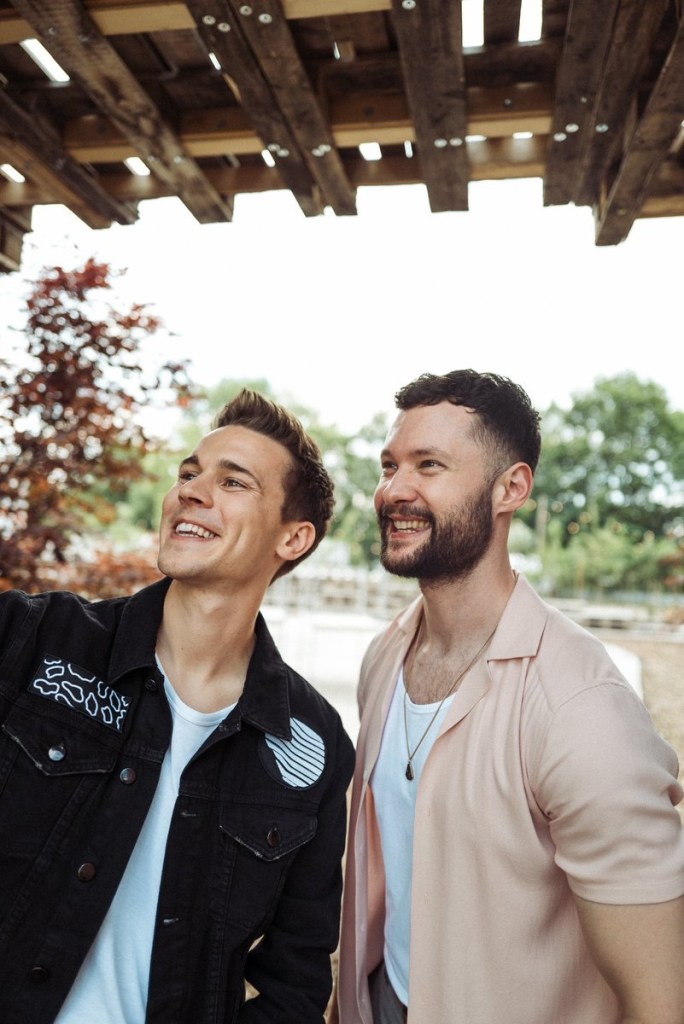
I mentioned to my friend Dylan that I was trying to figure out a song to finish up my “Musical March” posts. Songs, or at least the good one, always make great poetry. Dylan suggested this one. He also suggested “Come to My Window” by Melissa Etheridge or “Montero” by Little Nas X, which are both songs I like, but when I listened to Calum Scott’s “No Matter What,” I had tears in my eyes. The song was very emotional for me. When I came out to my mother, I found out that her love was conditional. She would not love me “no matter what.” My father on the other hand told her that, I was their son, and they’d love me no matter what. While my mother always does what my father says (sometimes much to my dismay), I’m glad she listened this time. Yet, I’ll always know, and she often reminds me, that if it was up to her, she’d have disowned me.

Calum Scott describes “No Matter What” as his “most personal song” and the song he is “most proud of.” The song tells the story of Scott telling his parents he was gay and their reactions of loving him “no matter what.” Scott said “It was a song that I always had to write, and a song I never thought I’d be able to share. This song has so much bones behind it and has such a wider discussion, not only about sexuality but about acceptance.” Adding “This hopefully will be a movement. I want to help people, I want to inspire people, I want to make people more compassionate.”

I wish all parents loved their children “no matter what” especially when they come out as gay, lesbian, bisexual, transgender, questioning/queer, etc. I’ve known too many parents who put conditions on their love for their children. I don’t want children. At one time, I thought I did because that’s what was expected of me, but I knew I’d never make a good father, not because I wouldn’t love my child unconditionally, but I know I have a temper like my father, and I’d never put a child through that. However, if I did have a child, I would have loved them no matter what. I would be accepting and loving. I don’t understand how anyone can put conditions on the love they give their children.

I wish all parents would be loving and accepting, and I said as much to Dylan who told me, “We have a Heavenly Father who does. Those are His feelings toward us. And you have friends who love you very much too.” I agree with him and said, “I just need to be reminded of that sometimes.” He wisely replied, “Yes, we all do!” We are all part of God’s family, and many in the LGBTQ+ community make our own families. I know I have people that I love and cherish, as much, and sometimes more so, than my own biological family (I’m referring to you here, Susan). Cherish the people in your life who love you “no matter what.”


I Like Boys

I Like Boys
Song by Todrick Hall
Songwriters: Carl Seante Mcgrier / Jean-Yves G. Ducornet / Kofi Owusu / Todrick Dramaul Hall

Mama come, come doll, take a seat
There’s someone you know that you’ve got to meet
So brace yourself for the big reveal
He’s about my height when he’s not in heels
Some boys play basketball
He played house with ratchet dolls
It’s not Santa Claus, it’s time for applause
It’s comin’ out the closet

Mama, I like boys, I like pecs
Like them arms when they flex
Like that print in them sweats
Tell them girls, “Thank you, next”
I like when they text me sexy pics of ’em
Like them abs when there’s six of ’em
Tell them girls I’m sorry
I like boys

Mama, boys like me (I like boys who like boys)
Mama (I like boys who like boys)
Work (I like boys who like boys)
Mama (I like boys who like)
Boys like me, yeah (boys like me)
Yeah, they do (boys like me)
Ooh (boys like me)
Motherfuckin’ boys like me (bitch)

I like when they shake it, shake it
I like when they grind real slow (real slow)
I like when they almost naked (damn)
Tell dad I’m so homo
Lights off, doors shut
Tall, dark, clean-cut
Thick with a bubble butt, yup

Mama, I like boys, I like pecs
Like them arms when they flex
Like that print in them sweats
Tell them girls, “Thank you, next”
I like when they text me sexy pics of ’em
Like them abs when there’s six of ’em
Tell them girls I’m sorry
I like boys

Mama, boys like me (I like boys who like boys)
Mama (I like boys who like boys)
Work (I like boys who like boys)
Mama (I like boys who like)
Boys like me, yeah (boys like me)
They do (boys like me)
Haha (boys like me)
Motherfuckin’ boys like me (bitch)

Style like they name Harry
Chocolate like Tyrese
I pick him up at Barry’s
Crunch, Planet Fitness
Shirt off in the lawn
Sizzlin’ like grease
By day his name Gaston
By night I call him Beast

Bitch, B to the O to the Y to the S
Boys will be boys and with boys I’m obsessed
Boys in their gym clothes, boys in a dress
And if boys are a crime then I’m under arrest
‘Cause I’ve been boy crazy since the boy scouts
Fuck the closets, let the boys out
Don’t be a camel when you are a llama, period
No comma, bring on all the drama

Mama, I like boys, I like pecs
Like them arms when they flex
Like that print in them sweats
Tell them girls, “Thank you, next”
I like when they text me sexy pics of ’em
Like them abs when there’s six of ’em
Tell them girls I’m sorry
I like boys

Mama, boys like me (I like boys who like boys)
Hahaha (I like boys who like boys)
Work (I like boys who like boys)
Mama (yeah) (I like boys who like)
Boys like me (sorry) (boys like me)
Not sorry (boys like me)
(Boys like me)
Motherfuckin’ boys like me, bitch

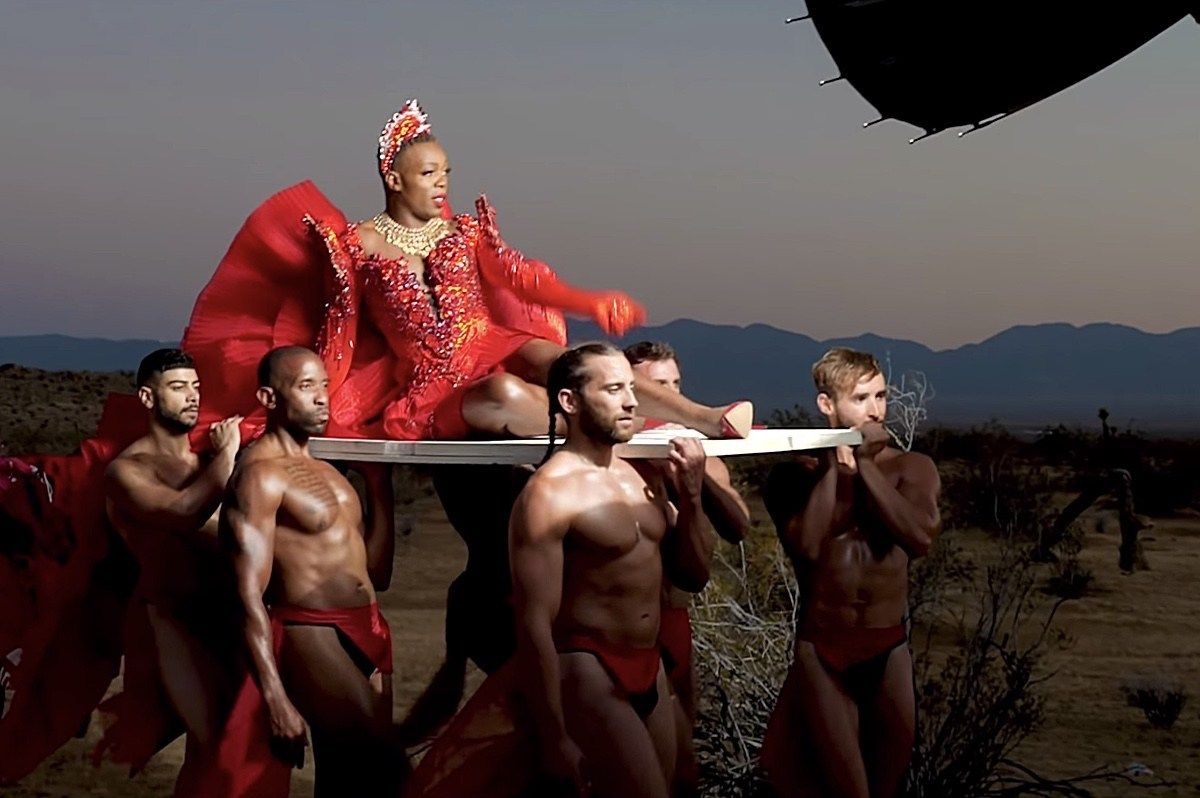
“I Like Boys” is a song by American singer Todrick Hall; he co-produced and co-wrote the song with Jean Yves Ducornet. Hall released the song during Pride 2019. The video opens with Hall coming out to his mother played by Luenell. The video shifts to a desert with Hall surrounded by male dancers and a camel. The song celebrates Hall’s sexuality, featuring color, cultural references, and male nudity. 

Hall describes “I Like Boys” as campy, and I would agree. I am sure it is not to everyone’s taste, but I suspect a lot of us can identify with what Hall says in the song:

I like when they almost naked
Tell dad I’m so homo
Lights off, doors shut
Tall, dark, clean-cut
Thick with a bubble butt, yup

Mama, I like boys, I like pecs
Like them arms when they flex
Like that print in them sweats

Todrick Hall (born April 4, 1985) is an American singer, songwriter, and choreographer. He gained national attention on the ninth season of American Idol. Following this, he amassed a huge following on YouTube with viral videos including original songs, parodies, and skits. He aspires to be a role model for LGBTQ and people of color. He once again gained notoriety in 2022 for his tactless and manipulative behavior on the third season of Celebrity Big Brother.

Starting with season eight, Hall became a resident choreographer and occasional judge on RuPaul’s Drag Race. From 2016 to 2017, Hall starred as Lola in Kinky Boots on Broadway. Later in 2017, he began appearances as Billy Flynn in Chicago on Broadway and the West End.

As a singer-songwriter he has released four studio albums, including the visual albums Straight Outta Oz (2016) and Forbidden (2018). In 2020 he released an EP, Quarantine Queen, in response to the COVID-19 pandemic featuring “Mask, Gloves, Soap, Scrub”, and was the international host of Global Pride 2020.


Younger Me

Younger Me
Songwriters: Kendell Marvel / John Osborne / Thomas Osborne

Younger me
Made it harder than it had to be
Trying hard to dodge my destiny
Would get the best of me

Younger me
Way too young to pace a bedroom floor
Always dreamed of kicking down the door
What were you waiting for

Younger me
Was as reckless as he should have been
Close calls and downfalls and getting back up again
And doing it all again

Younger me
Overthinking, losing sleep at night
Contemplating if it’s worth the fight
If he only knew he’d be alright
Yeah, younger me

Youth ain’t wasted on the young
These trips around the sun
I needed every one
To get where I’m standing now
It’s an uphill road to run
For my father’s son
Keep it together
It won’t be that way forever

Younger me
Hanging out but not quite fitting in
Didn’t know that being different
Really wouldn’t be the end
Younger me (yeah)

Yeah
Yeah, oh
Yeah

Youth ain’t wasted on the young
These trips around the sun
I needed every one
To get where I’m standing now
It’s an uphill road to run
Yeah, for my father’s son
Keep it together
It won’t be that way forever

Younger me
You got me where I am today
Got a few things right along the way
You’ll see, just wait
Younger me

About the Song

T.J. Osborne publicly came out as gay in an interview with Time on February 3, 2021. Following his coming out, Osborne wrote “Younger Me” as a letter to his younger self. Like many of us who have come out, Osborne said, “I’ve always wished I could speak to my younger self, give him a hug and show him who he’d become and what he’d achieve. Once I came out, that feeling was so overwhelmingly strong that this song was born.”

One of the things that makes country music so popular is that it is relatable. “Younger Me” blends that relatable country storytelling with a bit of a pop anthem. The song is a refreshing take on country music nostalgia. Often, nostalgic songs look back fondly on the songwriter’s childhood and simpler times, and the present is either presented as hard or having lost its innocence along the way. “Younger Me” is a different kind of story.

The song perfectly encapsulates a more compelling kind of nostalgia that does not rewrite the complexities and confusion of childhood: “Overthinking, losing sleep at night / contemplating if it’s worth the fight”. The lyrics are crisp and vital, evoking specific details (“To pace a bedroom floor”), and are wonderfully free of cliché. For Brothers’ Osborne, the future hold both threat and possibility, and the past contains both hurt and experiences from which to learn and grow. 

Brothers Osborne’s music has always had a broad appeal amongst pop and country fans, and “Younger Me” perfects this balance. This is a dazzling pop anthem if ever I heard one, yet the sharp storytelling proves that Osborne is a bona fide country songwriter too. 

T.J. Osborne is gay and proud with this song and shows that it is possible not only to be queer in country music, but also to celebrate these aspects of ourselves. “Younger Me” is the perfect embrace that a queer kid might need, a Pride anthem for country music fans.

Thank you, Dylan, for introducing me to this song.


Follow Your Arrow

Follow Your Arrow
Songwriters: Shane L. Mcanally / Kacey Musgraves / Brandy Lynn Clark

If you save yourself for marriage
You’re a bore
You don’t save yourself for marriage
You’re a horrible person
If you won’t have a drink
Then you’re a prude
But they’ll call you a drunk
As soon as you down the first one

If you can’t lose the weight
Then you’re just fat
But if you lose too much
Then you’re on crack

You’re damned if you do
And you’re damned if you don’t
So you might as well just do
Whatever you want

So, make lots of noise (hey)
Kiss lots of boys (yup)
Or kiss lots of girls
If that’s something you’re into
When the straight and narrow
Gets a little too straight
Roll up a joint, or don’t

Just follow your arrow
Wherever it points, yeah
Follow your arrow
Wherever it points

If you don’t go to church
You’ll go to hell
If you’re the first one on the front row
You’re self-righteous son of a-

Can’t win for losin’
You’ll just disappoint ’em
Just ’cause you can’t beat ’em
Don’t mean you should join ’em

So, make lots of noise (hey)
Kiss lots of boys (yup)
Or kiss lots of girls
If that’s something you’re into
When the straight and narrow
Gets a little too straight
Roll up a joint, or don’t

Just follow your arrow
Wherever it points, yeah
Follow your arrow
Wherever it points

Say what you think (Say what you think)
Love who you love (Love who you love)
‘Cause you just get so many trips ’round the sun
Yeah, you only
Only live once

So make lots of noise (hey)
Kiss lots of boys (yup)
Or kiss lots of girls
If that’s what you’re into
When the straight and narrow
Gets a little too straight
Roll up a joint, I would

And follow your arrow
Wherever it points, yeah
Follow your arrow
Wherever it points

Kacey Musgraves’ single, ‘Follow Your Arrow,’ caused some controversy in the often non-accepting country music industry when it came out. But according to the up-and-coming singer, the song started out as a simple gesture to a close friend. Musgraves said, “It started off as a poem, honestly, for this friend who was going off to Paris for four months studying and she was leaving everything she knew behind, going to a foreign country [and] didn’t know the language. I gave her this little arrow necklace and I wrote a little poem and it had ‘follow your arrow’ in it, ‘kiss lots of boys,’ and it kind of started there, but it turned into a bigger idea.”

The song is about self-acceptance, imploring listeners to not worry too much about whether others judge their life choices. The song’s live and let live lyrics regarding gay people came just three years after Chely Wright made headlines by being the first country star of her caliber to come out of the closet. Although some potential fans surely write off Musgraves as too liberal, the song didn’t halt Musgraves success. Either Wright and other openly gay country singers, like Billy Gillman, made a significant enough impact on changing listeners’ minds in a short span of years, or Musgraves’ ageless messages of loving your neighbor and minding your own business overshadowed socio-political divisiveness enough for her not to get banished from country music.

 I thought I’d do a Musical March for my poetry posts this month. Some of the greatest songs either began as poems like “Follow Your Arrow” did or they are poetry within themselves.


Laissez les bons temps roule

Laissez les bons temps roule
By Sterling Warner

For Hurricane Katrina’s Victims

Katrina’s torrent barely touched Vieux Carré.
It endures on high ground where the
Café Du Monte stands like a citadel,
Issues dark roasted Chicory Coffee 24/7,
Dusts powdered sugar on Beignet loving patrons;
No swampland crypt, the French Quarter presents
Pedestrians a sanctuary to suck down safe hurricanes
Chased with “Harry’s Huge Beers.”

Voodoo lovers slap legs together
Like alligator tails in brackish marshes;
Balcony flirts, evening ladies wear delicate masks
Fat Tuesday, last day before Lent’s forty day fast;
Mardi Gras magic exudes from every pore,
Elaborately costumed krewes toss beads off floats,
Give rise to fanciful celebrations of the dead,
Historic carnival steeped in Catholic doctrine.

Haitian halos encircle heads,
Bend minds, create
Sober motley moments among
Tarot card readings, psychic oracles
Jostling Bourbon Street crowds—
Backdrop for parading ramblers,
Mischievous, Puckish vagabonds,
Ragged marching saints.

Shuffling along as
Jazz bands blow Dixieland
Zydeco singers scrape wash boards, and
Street musicians mutter the blues,
Encouraged by two hands clapping,
Living dreams off guitar case offerings:
Copper tokens, silver coins,
Green paper gratitude.

Gris, Gris in my pocket, still
Scaling steps in New Orleans
Looking down Toulouse Street
Finding JAX Brewery gone
Replaced by Planet Hollywood. No
Mississippi miracle could heal Katrina survivors
Cleanse the river, recover such culture—
Foreboding yet enticing Gothic glamour.

Today is Mardi Gras, also known as Fat Tuesday or Shrove Tuesday. Mardi Gras is French for “Fat Tuesday,” reflecting the practice of the last night of eating rich, fatty foods before the ritual Lenten sacrifices and fasting of the Lenten season. Mardi Gras is a tradition that dates back thousands of years to pagan celebrations of spring and fertility, including the raucous Roman festivals of Saturnalia and Lupercalia. When Christianity arrived in Rome, religious leaders decided to incorporate these popular local traditions into the new faith, an easier task than abolishing them altogether. As a result, the excess and debauchery of the Mardi Gras season became a prelude to Lent, the 40 days of fasting and penance between Ash Wednesday and Easter Sunday.

While not observed nationally throughout the United States, a number of traditionally ethnic French cities and regions in the country have notable celebrations. Mardi Gras arrived in North America as a French Catholic tradition with the Le Moyne brothers, Pierre Le Moyne d’Iberville and Jean-Baptiste Le Moyne de Bienville, in the late 17th century, when King Louis XIV sent the pair to defend France’s claim on the territory of Louisiane, which included what are now the U.S. states of Alabama, Mississippi, Louisiana and part of eastern Texas.

The expedition, led by Iberville, entered the mouth of the Mississippi River on the evening of 2 March 1699, Lundi Gras. They did not yet know it was the river explored and claimed for France by René-Robert Cavelier, Sieur de La Salle in 1683. The party proceeded upstream to a place on the east bank about 60 miles (100 km) downriver from where New Orleans is today, and made camp on 3 March 1699, Mardi Gras. In honor of this holiday, Iberville named the spot Point du Mardi Gras and called the nearby tributary Bayou Mardi Gras. Bienville went on to found the settlement of Mobile, Alabama in 1702 as the first capital of French Louisiana. In 1703 French settlers in Mobile established the first organized Mardi Gras celebration tradition in what was to become the United States. The first informal mystic society, or krewe, was formed in Mobile in 1711, the Boeuf Gras Society. By 1720, Biloxi had been made capital of Louisiana. The French Mardi Gras customs had accompanied the colonists who settled there.

In 1723, the capital of Louisiana was moved to New Orleans, founded in 1718. The first Mardi Gras parade held in New Orleans is recorded to have taken place in 1837. The tradition in New Orleans expanded to the point that it became synonymous with the city in popular perception, and embraced by residents of New Orleans beyond those of French or Catholic heritage. Mardi Gras celebrations are part of the basis of the slogan Laissez les bons temps rouler (“Let the good times roll”).

When I lived in southern Mississippi and later while a friend of mine lived in southern Louisiana, I attended a number of Mardi Gras parades. I would never go to the one in New Orleans again. While it was interesting, it was far too crowded for my taste. People were crammed in everywhere shoulder to shoulder. It was enough to induce a panic attack in anyone who dared to be sober. I’ve also attended Mardi Gras parades in Thibidoux, Houma and La Rose, Louisiana. When I lived in Mississippi, I used to love to watch the parades in Biloxi and Gulfport, Mississippi on WLOX, the ABC station in Biloxi.

Ironically, I have never attended the parade in Mobile. When I was growing up in Alabama, the parade in Mobile was considered crime ridden and dangerous. Only the most adventurous who threw caution to the wind in order to catch a few plastic beads and Moon Pies ventured to Mobile for Mardi Gras. New Orleans wasn’t much better. The parades of the Mississippi Gulf Coast and in Southern Louisiana were much more pleasant, and often safer, alternatives.

I also chose this poem, because I lived through Hurricane Katrina. While it devastated parts of New Orleans, southern Mississippi lay in ruins afterward. Complete sections of Gulfport and Biloxi were leveled, and the towns of Bay St. Louis and Waveland, Mississippi were nearly completely destroyed and they were largely cut off from the world due the collapse of the major bridge in and out of the towns. Katrina struck the Gulf Coast in August 2005, and it has never been the same since. Mardi Gras continues and is a festive occasion, but so much was lost because of Hurricane Katrina and so many people moved away from the Gulf Coast, that it has taken many years for those areas to recover.

Sterling Warner is a retired English Professor and author of fiction, non- fiction, and poetry. He received the Jim Herndon Award in 2013 and was a Pushcart Award nominee in 2014. He received a Hayward Award in 2000 and was named the Atherton Poet Laureate in 2014. Warner formerly taught a wide variety of Composition, Literature, Creative Writing, and Rhetoric courses in the English Department at Evergreen Valley College, where he served as the Creative Writing Program Director, EVC Author’s Series Organizer, and Chief Editor of the literary magazine Leaf by Leaf. Enjoying his Washington retirement, Warner continues to write and regularly hosts the Union of Writers Open Mike.


One Today

One Today
By Richard Blanco – 1968-

A Poem for Barack Obama’s Presidential Inauguration
January 21, 2013

One sun rose on us today, kindled over our shores,
peeking over the Smokies, greeting the faces
of the Great Lakes, spreading a simple truth
across the Great Plains, then charging across the Rockies.
One light, waking up rooftops, under each one, a story
told by our silent gestures moving behind windows.

My face, your face, millions of faces in morning’s mirrors,
each one yawning to life, crescendoing into our day:
pencil-yellow school buses, the rhythm of traffic lights,
fruit stands: apples, limes, and oranges arrayed like rainbows
begging our praise. Silver trucks heavy with oil or paper—
bricks or milk, teeming over highways alongside us,
on our way to clean tables, read ledgers, or save lives—
to teach geometry, or ring-up groceries as my mother did
for twenty years, so I could write this poem.

All of us as vital as the one light we move through,
the same light on blackboards with lessons for the day:
equations to solve, history to question, or atoms imagined,
the “I have a dream” we keep dreaming,
or the impossible vocabulary of sorrow that won’t explain
the empty desks of twenty children marked absent
today, and forever. Many prayers, but one light
breathing color into stained glass windows,
life into the faces of bronze statues, warmth
onto the steps of our museums and park benches
as mothers watch children slide into the day.

One ground. Our ground, rooting us to every stalk
of corn, every head of wheat sown by sweat
and hands, hands gleaning coal or planting windmills
in deserts and hilltops that keep us warm, hands
digging trenches, routing pipes and cables, hands
as worn as my father’s cutting sugarcane
so my brother and I could have books and shoes.

The dust of farms and deserts, cities and plains
mingled by one wind—our breath. Breathe. Hear it
through the day’s gorgeous din of honking cabs,
buses launching down avenues, the symphony
of footsteps, guitars, and screeching subways,
the unexpected song bird on your clothes line.

Hear: squeaky playground swings, trains whistling,
or whispers across café tables, Hear: the doors we open
for each other all day, saying: hello / shalom,
buon giorno / howdy / namaste / or buenos días
in the language my mother taught me—in every language
spoken into one wind carrying our lives
without prejudice, as these words break from my lips.

One sky: since the Appalachians and Sierras claimed
their majesty, and the Mississippi and Colorado worked
their way to the sea. Thank the work of our hands:
weaving steel into bridges, finishing one more report
for the boss on time, stitching another wound
or uniform, the first brush stroke on a portrait,
or the last floor on the Freedom Tower
jutting into a sky that yields to our resilience.

One sky, toward which we sometimes lift our eyes
tired from work: some days guessing at the weather
of our lives, some days giving thanks for a love
that loves you back, sometimes praising a mother
who knew how to give, or forgiving a father
who couldn’t give what you wanted.

We head home: through the gloss of rain or weight
of snow, or the plum blush of dusk, but always—home,
always under one sky, our sky. And always one moon
like a silent drum tapping on every rooftop
and every window, of one country—all of us—
facing the stars
hope—a new constellation
waiting for us to map it,
waiting for us to name it—together

Watch Richard Blanco read “One Today” at President Obama’s inauguration in 2013:

About Richard Blanco

Born on February 15, 1968, in Madrid, Spain, Blanco grew up in Miami, where he received a Bachelor of Science degree in civil engineering as well as an MFA in creative writing from Florida International University.

He is the author of the poetry collections How to Love a Country (Beacon Press, 2019); Directions to the Beach of the Dead (University of Arizona Press, 2005), winner of the 2006 PEN/American Center Beyond Margins Award; and City of a Hundred Fires (University of Pittsburgh Press, 1998), winner of the 1997 Agnes Lynch Starrett National Poetry Prize, among others.

Blanco’s first book of poetry, City of a Hundred Fires, was published in 1998 to critical acclaim, winning the Agnes Lynch Starrett Poetry Prize from the University of Pittsburgh Press. The collection explored his cultural yearnings and contradictions as a Cuban American and captured the details of his transformational first trip to Cuba, his figurative homeland. After the success of his first book, Blanco took a hiatus from his engineering career and accepted a position at Central Connecticut State University as a professor of creative writing. While living in Connecticut, he met his current life-partner, Dr. Mark Neveu, a renowned research scientist.

Driven by a desire to examine the essence of place and belonging, Blanco traveled extensively through Spain, Italy, France, Guatemala, Brazil, Cuba, and New England. Eventually, in 2002, he and Mark moved to Washington, DC, where he taught at Georgetown and American universities, The Writers Center, and the Arlington County Detention Facility.

In 2004, Blanco returned to Miami and resumed his engineering career. Engineer by day, he designed several town revitalization projects; poet by night, he began working on another collection before moving once again, this time to Bethel, Maine, where he sought the peace and tranquility of nature. While in Maine, he completed his third book of poetry, Looking for The Gulf Motel (2012), which related Blanco’s complex navigation through his cultural, sexual, and artistic identities, and received the Paterson Poetry Prize, the 2012 Maine Literary Award for Poetry, and the Thom Gunn Award.

He is the recipient of two Florida Artist Fellowships, a Residency Fellowship from the Virginia Center for the Creative Arts, and the John Ciardi Fellowship from the Bread Loaf Writers Conference. Blanco has taught at various schools, including American University, Georgetown University, and Wesleyan University, and has been an artist in residence at Colby College’s Lunder Institute for American Art. He is currently a distinguished visiting professor at Florida International University.

Richard Blanco is first Latino, immigrant, and gay person to serve as an inaugural poet, Blanco read “One Today,” an original poem he wrote for the occasion, at Obama’s inauguration ceremony on January 21, 2013. I’m posting this poem today in honor of Presidents’ Day (officially Washington’s Birthday), which was yesterday. Since the inauguration, Blanco has been named a Woodrow Wilson Visiting Fellow and has received honorary doctorates from Macalester College, Colby College and the University of Rhode Island. His memoir, The Prince of Los Cocuyos: A Miami Childhood (Ecco Press, 2014), is a poignant, hilarious, and inspiring exploration of his coming-of-age as the child of Cuban immigrants and his attempts to understand his place in America while grappling with his burgeoning artistic and sexual identities. It received the 2015 Maine Literary Award for Memoir and the 2015 Lambda Literary Award for Gay Memoir. He is also the author of For All of Us, One Today: An Inaugural Poet’s Journey (Beacon Press, 2013). His inaugural poem, One Today, was also published as a children’s book illustrated by Dav Pilkey (Little, Brown, 2015).

Whether speaking as the Cuban Blanco or the American Richard, the homebody or the world traveler, the shy boy or the openly gay man, the engineer or the presidential inaugural poet, Blanco’s writings possess a story-rich quality that illuminates the human spirit. His work asks those universal questions we all ask ourselves on our own journeys: Where am I from? Where do I belong? Who am I in this world?


The White Rose 🥀

The White Rose
By John Boyle O’Reilly – 1844-1890

The red rose whispers of passion,
And the white rose breathes of love;
O, the red rose is a falcon,
And the white rose is a dove.

But I send you a cream-white rosebud
With a flush on its petal tips;
For the love that is purest and sweetest
Has a kiss of desire on the lips.

I was not going to post another poem today, since I posted several yesterday for Valentine’s Day, but, I came across the picture above and wanted to use it so I quickly searched poems about roses. (I didn’t want to use “Roses are red, Violets are blue, Sugar is sweet, And so are you.” It’s just too cliché.) as I was looking at poems, I came across the one above and liked it. Then, I read about the poet’s life, which I found fascinating. Hopefully, you will too.

I hope all of you had a wonderful Valentine’s Day, whether you were with a loved one, or like me, all by yourself. The only thing I think I really missed is I wish I had a box of chocolate caramels. I need to run to the grocery store this evening, maybe I can find a box half off in a post-Valentine’s Day sale.


About the Poet

John Boyle O’Reilly was born near Drogheda, Ireland, on June 24, 1844. His father, William David O’Reilly, directed the local school, and his mother, Eliza Boyle, managed an orphanage. After several years at his father’s school, he turned to journalism, taking apprenticeships first at the local paper Drogheda Argus and then at The Guardian in Preston, England, where he lived with his aunt and uncle.

In 1863, after four years in Preston, O’Reilly enlisted in the Tenth Hussars, a cavalry regiment stationed in Ireland. However, beginning in 1865 he was also an active member of the Irish Republican Brotherhood, or the Fenians, a revolutionary group planning an armed uprising against British rule. He was dedicated to recruiting other Irish soldiers to the cause, but in 1866 some of his recruits within the Hussars exposed his dual allegiance. Within the year he was court-martialed, convicted of treason, and sentenced to twenty years of penal servitude. After spending time in several English prisons, he was placed on the last ship transporting convicts to Australia.

O’Reilly escaped from the Penal Colony of Western Australia in 1869, slipping away from his convict camp and securing passage on an American whaling ship. He then spent eight months at sea, on a series of different vessels, before disembarking in Philadelphia. Once in America, he moved to Boston and began working at the country’s foremost Catholic newspaper, The Pilot, where he became editor in 1874. He remained editor for over twenty years.

Between 1873 and 1886, O’Reilly also published four poetry collections: In Bohemia (The Pilot Publishing Co., 1886), The Statues in the Block and other poems (Roberts Brothers, 1881), Songs, Legends, and Ballads (The Pilot Publishing Co., 1878), and Songs from the Southern Seas and other poems (Roberts Brothers, 1873). Despite his involvement in Boston’s literary scene, only a few of his poems were reprinted in anthologies. Of those few, the most popular was “A White Rose” from In Bohemia. He also penned a novel, Moondyne: a story from the under-world (The Pilot Publishing Co., 1879).

O’Reilly married another journalist, Mary Murphy, in 1872, and together they had four children. He died on August 9, 1890, after an overdose of sleeping medicine. He has been honored with a bronze sculpture on the Fenway in Boston and with several buildings and associations bearing his name.