Category Archives: Poetry

Mr. Macklin’s Jack O’Lantern

Mr. Macklin’s Jack O’Lantern
David McCord – 1897-1997

Mr. Macklin takes his knife
And carves the yellow pumpkin face:
Three holes bring eyes and nose to life,
The mouth has thirteen teeth in place.
Then Mr. Macklin just for fun
Transfers the corn-cob pipe from his
Wry mouth to Jack’s, and everyone
Dies laughing! O what fun it is
Till Mr. Macklin draws the shade
And lights the candle in Jack’s skull.
Then all the inside dark is made
As spooky and as horrorful
As Halloween, and creepy crawl
The shadows on the tool-house floor,
With Jack’s face dancing on the wall.
O Mr. Macklin! where’s the door?


To — — –. Ulalume: A Ballad

To — — –. Ulalume: A Ballad
BY EDGAR ALLAN POE
The skies they were ashen and sober;
The leaves they were crispéd and sere—
The leaves they were withering and sere;
It was night in the lonesome October
Of my most immemorial year;
It was hard by the dim lake of Auber,
In the misty mid region of Weir—
It was down by the dank tarn of Auber,
In the ghoul-haunted woodland of Weir.

Here once, through an alley Titanic,
Of cypress, I roamed with my Soul—
Of cypress, with Psyche, my Soul.
These were days when my heart was volcanic
As the scoriac rivers that roll—
As the lavas that restlessly roll
Their sulphurous currents down Yaanek
In the ultimate climes of the pole—
That groan as they roll down Mount Yaanek
In the realms of the boreal pole.

Our talk had been serious and sober,
But our thoughts they were palsied and sere—
Our memories were treacherous and sere—
For we knew not the month was October,
And we marked not the night of the year—
(Ah, night of all nights in the year!)
We noted not the dim lake of Auber—
(Though once we had journeyed down here)—
We remembered not the dank tarn of Auber,
Nor the ghoul-haunted woodland of Weir.

And now, as the night was senescent
And star-dials pointed to morn—
As the star-dials hinted of morn—
At the end of our path a liquescent
And nebulous lustre was born,
Out of which a miraculous crescent
Arose with a duplicate horn—
Astarte’s bediamonded crescent
Distinct with its duplicate horn.

And I said—”She is warmer than Dian:
She rolls through an ether of sighs—
She revels in a region of sighs:
She has seen that the tears are not dry on
These cheeks, where the worm never dies,
And has come past the stars of the Lion
To point us the path to the skies—
To the Lethean peace of the skies—
Come up, in despite of the Lion,
To shine on us with her bright eyes—
Come up through the lair of the Lion,
With love in her luminous eyes.”

But Psyche, uplifting her finger,
Said—”Sadly this star I mistrust—
Her pallor I strangely mistrust:—
Oh, hasten! oh, let us not linger!
Oh, fly!—let us fly!—for we must.”
In terror she spoke, letting sink her
Wings till they trailed in the dust—
In agony sobbed, letting sink her
Plumes till they trailed in the dust—
Till they sorrowfully trailed in the dust.

I replied—”This is nothing but dreaming:
Let us on by this tremulous light!
Let us bathe in this crystalline light!
Its Sybilic splendor is beaming
With Hope and in Beauty to-night:—
See!—it flickers up the sky through the night!
Ah, we safely may trust to its gleaming,
And be sure it will lead us aright—
We safely may trust to a gleaming
That cannot but guide us aright,
Since it flickers up to Heaven through the night.”

Thus I pacified Psyche and kissed her,
And tempted her out of her gloom—
And conquered her scruples and gloom:
And we passed to the end of the vista,
But were stopped by the door of a tomb—
By the door of a legended tomb;
And I said—”What is written, sweet sister,
On the door of this legended tomb?”
She replied—”Ulalume—Ulalume—
‘Tis the vault of thy lost Ulalume!”

Then my heart it grew ashen and sober
As the leaves that were crispèd and sere—
As the leaves that were withering and sere,
And I cried—”It was surely October
On this very night of last year
That I journeyed—I journeyed down here—
That I brought a dread burden down here—
On this night of all nights in the year,
Oh, what demon has tempted me here?
Well I know, now, this dim lake of Auber—
This misty mid region of Weir—
Well I know, now, this dank tarn of Auber—
In the ghoul-haunted woodland of Weir.”

Said we, then—the two, then—”Ah, can it
Have been that the woodlandish ghouls—
The pitiful, the merciful ghouls—
To bar up our way and to ban it
From the secret that lies in these wolds—
From the thing that lies hidden in these wolds—
Had drawn up the spectre of a planet
From the limbo of lunary souls—
This sinfully scintillant planet
From the Hell of the planetary souls?”


Halloween Party

Halloween Party
BY KENN NESBITT

We’re having a Halloween party at school.
I’m dressed up like Dracula. Man, I look cool!
I dyed my hair black, and I cut off my bangs.
I’m wearing a cape and some fake plastic fangs.

I put on some makeup to paint my face white,
like creatures that only come out in the night.
My fingernails, too, are all pointed and red.
I look like I’m recently back from the dead.

My mom drops me off, and I run into school
and suddenly feel like the world’s biggest fool.
The other kids stare like I’m some kind of freak—
the Halloween party is not till next week.


Annabel Lee

Annabel Lee
by Edgar Allan Poe

It was many and many a year ago,
In a kingdom by the sea,
That a maiden there lived whom you may know
By the name of Annabel Lee;
And this maiden she lived with no other thought
Than to love and be loved by me.

I was a child and she was a child,
In this kingdom by the sea,
But we loved with a love that was more than love—
I and my Annabel Lee—
With a love that the wingèd seraphs of Heaven
Coveted her and me.

And this was the reason that, long ago,
In this kingdom by the sea,
A wind blew out of a cloud, chilling
My beautiful Annabel Lee;
So that her highborn kinsmen came
And bore her away from me,
To shut her up in a sepulchre
In this kingdom by the sea.

The angels, not half so happy in Heaven,
Went envying her and me—
Yes!—that was the reason (as all men know,
In this kingdom by the sea)
That the wind came out of the cloud by night,
Chilling and killing my Annabel Lee.

But our love it was stronger by far than the love
Of those who were older than we—
Of many far wiser than we—
And neither the angels in Heaven above
Nor the demons down under the sea
Can ever dissever my soul from the soul
Of the beautiful Annabel Lee;

For the moon never beams, without bringing me dreams
Of the beautiful Annabel Lee;
And the stars never rise, but I feel the bright eyes
Of the beautiful Annabel Lee;
And so, all the night-tide, I lie down by the side
Of my darling—my darling—my life and my bride,
In her sepulchre there by the sea—
In her tomb by the sounding sea.


Song of the Witches

Song of the Witches: “Double, double toil and trouble”
BY WILLIAM SHAKESPEARE
(from Macbeth)

Double, double toil and trouble;
Fire burn and caldron bubble.
Fillet of a fenny snake,
In the caldron boil and bake;
Eye of newt and toe of frog,
Wool of bat and tongue of dog,
Adder’s fork and blind-worm’s sting,
Lizard’s leg and howlet’s wing,
For a charm of powerful trouble,
Like a hell-broth boil and bubble.

Double, double toil and trouble;
Fire burn and caldron bubble.
Cool it with a baboon’s blood,
Then the charm is firm and good.

Notes:
Macbeth: IV.i 10-19; 35-38


Sonnet 116

Sonnet 116: Let me not to the marriage of true minds
William Shakespeare

Let me not to the marriage of true minds
Admit impediments. Love is not love
Which alters when it alteration finds,
Or bends with the remover to remove.
O no! it is an ever-fixed mark
That looks on tempests and is never shaken;
It is the star to every wand’ring bark,
Whose worth’s unknown, although his height be taken.
Love’s not Time’s fool, though rosy lips and cheeks
Within his bending sickle’s compass come;
Love alters not with his brief hours and weeks,
But bears it out even to the edge of doom.
If this be error and upon me prov’d,
I never writ, nor no man ever lov’d.


Derrida/Coleman

Derrida/Coleman

Were it possible, I would be naked. Of the nude philosophy:
consider the globalization of the expensive american sound.

Should we worry? We should work. I believe you’re right.
I distrust the word “white.” It’s sanctified propaganda.

Repetition is my language of origin, the highest technology. Anyway
the body is only mine provisionally. For reasons that I’m not sure of,
I am convinced that before becoming music, music was only a word.

I prefer to destroy the composer, renew the concept.
Extraordinary limitation playing freedom.

Credit

Copyright © 2019 by Taylor Johnson. Originally published in Poem-a-Day on August 26, 2019, by the Academy of American Poets.

About this Poem

“I improvised upon a 1997 interview between Jacques Derrida and Ornette Coleman, the PDF version of which I read was an english translation of the interview which was transcribed into french from the original audio of english. I was trying to play out Coleman’s concept of harmolodics. In the interview, Coleman describes the brain as ‘a conversation.’ And I like when Derrida asks, ‘What is the strategy of your musical choice for Paris?’ I wanted to see what kind of conversation could happen if I put Derrida and Coleman in one head. Sometimes the language turns on itself, and turns itself over. Listen to ‘Civilization Day’ off The Complete Science Fiction Sessions.”
—Taylor Johnson

Author

Taylor Johnson

Taylor Johnson’s first book of poems, Inheritance, will be published November 2020 with Alice James Books.

Date Published: 2019-08-26

Source URL: https://poets.org/poem/derridacoleman


Slicing Limes for Dustin

Slicing Limes for Dustin
by Stephen S. Mills

“and what does it mean
if he tells his wife she’s unpleasant or dull
and what
does
it mean
if his wife takes sleeping pills or walks
in front of a car?”
—Diane Wakoski, “Slicing Oranges for Jeremiah”

And what does it mean to stand in a kitchen
slicing limes for cocktails?
Limes for Dustin?
For drinks we will consume
which will make us happy for a time
then horny
angry
sleepy
depressed
and maybe
if we are lucky
fully alive for just a second?

And what does it mean
that we can’t eat as many limes as we want?
That we can so easily get sick
on the citrus?
Stomachs aching?
What does it mean to care
for a sick person?
To wash his body?
Comb his hair?
And what does it mean
for a body to show signs of stopping?
Or for a mind to get confused?
To regret an action?
To do the things it never thought possible?

What does it mean
to stand here
taking care
of you
taking care of me?
To find comfort in this knife
puncturing the bright green skin
of a lime?
Green balls of light.

And what does it mean to fall in love again
and again
with limes in drinks
and the cutting board
smeared with pulp?
Or to go out into the city
and dance
with other bodies?
To be on display?
To have more drinks with sliced limes?
Limes cut by other hands
by other men
in other places.

And what does it mean for an old queen to say
we don’t live in the real New York?
That it’s gone?
Dead?
That somehow only one person’s experience
is real?
And what does it mean
to never want to be that old queen?
To never be that jaded?

And what does it mean
that we stood outside
the Stonewall Inn and drank cocktails
with limes
on the day the Supreme Court
struck down DOMA?
Was that not real?
And what does it mean to only look backward?
To always be longing for another decade?
Another time?

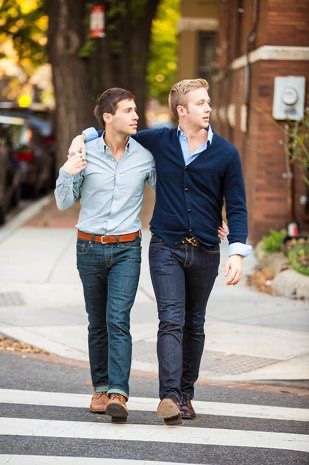
And what does it mean for two men
to be protected
under the law?
To call each other husband?
And what does it mean to know
that if we ever want to leave
each other
it will have to be official?
Paperwork goes both ways.

And what does it mean to become
a housewife voluntarily?
To slice limes for a husband?
Limes for Dustin?
And what does it mean to be married
yet remain queer?
Remain two men in love?
Bonded together?
What does it mean?


The Past

img_6713-1

The Past
By Ralph Waldo Emerson

The debt is paid,
The verdict said,
The Furies laid,
The plague is stayed.
All fortunes made;
Turn the key and bolt the door,
Sweet is death forevermore.
Nor haughty hope, nor swart chagrin,
Nor murdering hate, can enter in.
All is now secure and fast;
Not the gods can shake the Past;
Flies-to the adamantine door
Bolted down forevermore.
None can re-enter there,—
No thief so politic,
No Satan with a royal trick
Steal in by window, chink, or hole,
To bind or unbind, add what lacked,
Insert a leaf, or forge a name,
New-face or finish what is packed,
Alter or mend eternal Fact.


Ode to the Happy Day

img_6588-2

Ode to the Happy Day
by Pablo Neruda (1904-1973)
This time let me
be happy.
Nothing has happened to anybody,
I am nowhere special,
it happened only
that I am happy
through the four chambers
of my heart, walking,
sleeping or writing.
What can I do? I am
happy,
I am more uncountable
than the meadow
grass
I feel my skin like a wrinkled tree
and the water below,
the birds above,
the sea like a ring
around my waist,
the Earth is made of bread and stone,
the air sings like a guitar.

You, by my side in the sand,
you are the sand,
you sing and you are a song,
today the world
is my soul:
song and sand,
today the world
is your mouth:
Let me
be happy
on your mouth, on the sand,
be happy just because, because I am breathing
and because you are breathing,
be happy, because I am touching
your knee
and it is as though I am touching
the blue skin of heaven
and its pristine air.

Today let me
and me only
be happy,
with everybody or without them,
be happy,
with the grass
and the sand,
be happy
with the air and the earth,
be happy,
with you, with your mouth,
be happy.