Category Archives: Poetry

The Snow Storm

The Snow Storm
Ralph Waldo Emerson, 1803 – 1882

Announced by all the trumpets of the sky,
Arrives the snow, and, driving o’er the fields,
Seems nowhere to alight: the whited air
Hides hills and woods, the river, and the heaven,
And veils the farmhouse at the garden’s end.
The sled and traveler stopped, the courier’s feet
Delayed, all friends shut out, the housemates sit
Around the radiant fireplace, enclosed
In a tumultuous privacy of storm.

Come see the north wind’s masonry.
Out of an unseen quarry evermore
Furnished with tile, the fierce artificer
Curves his white bastions with projected roof
Round every windward stake, or tree, or door.
Speeding, the myriad-handed, his wild work
So fanciful, so savage, nought cares he
For number or proportion. Mockingly,
On coop or kennel he hangs Parian wreaths;
A swan-like form invests the hidden thorn;
Fills up the farmer’s lane from wall to wall,
Maugre the farmer’s sighs; and, at the gate,
A tapering turret overtops the work.
And when his hours are numbered, and the world
Is all his own, retiring, as he were not,
Leaves, when the sun appears, astonished Art
To mimic in slow structures, stone by stone,
Built in an age, the mad wind’s night-work,
The frolic architecture of the snow.


Guy Fawkes Day

The Fifth of November

    Remember, remember!
The fifth of November,
The Gunpowder treason and plot;
I know of no reason
Why the Gunpowder treason
Should ever be forgot!
Guy Fawkes and his companions
Did the scheme contrive,
To blow the King and Parliament
All up alive.
Threescore barrels, laid below,
To prove old England’s overthrow.
But, by God’s providence, him they catch,
With a dark lantern, lighting a match!
A stick and a stake
For King James’s sake!
If you won’t give me one,
I’ll take two,
The better for me,
And the worse for you.
A rope, a rope, to hang the Pope,
A penn’orth of cheese to choke him,
A pint of beer to wash it down,
And a jolly good fire to burn him.
Holloa, boys! holloa, boys! make the bells ring!
Holloa, boys! holloa boys! God save the King!
Hip, hip, hooor-r-r-ray!


Perhaps most widely known in America from its use in the movie V for Vendetta, versions of the above poem have been wide spread in England for centuries. They celebrate the foiling of (Catholic) Guy Fawkes’s attempt to blow up (Protestant controlled) England’s House of Parliament on November 5th, 1605. Known variously as Guy Fawkes DayGunpowder Treason Day, and Fireworks Night, the November 5th celebrations in some time periods included the burning of the Pope or Guy Fawkes in effigy.

This traditional verse exists in a large number of variations and the above version has been constructed to give a flavor for the major themes that appear in them. Several of the books referenced below cite even earlier sources.

While not all eight cited versions contain all five groupings of lines, the “verses” present in each of the eight appear relative to each other in the order used above. 

References:

  • Chambers, Robert.  The Book of Days. London: W. & R. Chambers, 1888. 
  • Hems, Harry. The fifth of November: Guy Fawkes Celebrations.  Notes and Queries, 1908; s10-X, 496-497. 
  • J.C.R. The fifth of November.  Notes and Queries, 1857; s2-IV, 450-451.
  • McDowall, S.S. The fifth of November: Guy Fawkes Celebrations. Notes and Queries, 1908; s10-X, 496.
  • Moore, Alan & Lloyd, David. V for Vendetta. New York: DC Comics, Inc., 1990. 
  • Northall, G.F. English Folk-Rhymes. London: Kegan, Paul, Trench, Trübner & Co. Ltd., 1892. (As reissued by Detroit: Singing Tree Press, 1968).
  • Thiselton-Dyer, Rev. T.F.  British Popular Customs, Present and Past. London: George Bell and Sons, York Street, Covent Garden, 1876. (As reissued by Detroit: Singing Tree Press, 1968.)
  • From:  
  • Habing, B. (2006, November 3).  The Fifth of November – English Folk Verse. Retrieved from http://www.potw.org/archive/potw405.html

  • The Raven

    The Raven
    Edgar Allan Poe, 1809 – 1849

    Once upon a midnight dreary, while I pondered, weak and weary,
    Over many a quaint and curious volume of forgotten lore—
    While I nodded, nearly napping, suddenly there came a tapping,
    As of some one gently rapping, rapping at my chamber door—
    “‘Tis some visitor,” I muttered, “tapping at my chamber door—
    Only this and nothing more.”

    Ah, distinctly I remember it was in the bleak December;
    And each separate dying ember wrought its ghost upon the floor.
    Eagerly I wished the morrow;—vainly I had sought to borrow
    From my books surcease of sorrow—sorrow for the lost Lenore—
    For the rare and radiant maiden whom the angels name Lenore—
    Nameless here for evermore.

    And the silken, sad, uncertain rustling of each purple curtain
    Thrilled me—filled me with fantastic terrors never felt before;
    So that now, to still the beating of my heart, I stood repeating,
    “‘Tis some visitor entreating entrance at my chamber door—
    Some late visitor entreating entrance at my chamber door;—
    This it is and nothing more.”

    Presently my soul grew stronger; hesitating then no longer,
    “Sir,” said I, “or Madam, truly your forgiveness I implore;
    But the fact is I was napping, and so gently you came rapping,
    And so faintly you came tapping, tapping at my chamber door,
    That I scarce was sure I heard you”—here I opened wide the door;—
    Darkness there and nothing more.

    Deep into that darkness peering, long I stood there wondering, fearing,
    Doubting, dreaming dreams no mortal ever dared to dream before;
    But the silence was unbroken, and the stillness gave no token,
    And the only word there spoken was the whispered word, “Lenore?”
    This I whispered, and an echo murmured back the word, “Lenore!”—
    Merely this and nothing more.

    Back into the chamber turning, all my soul within me burning,
    Soon again I heard a tapping somewhat louder than before.
    “Surely,” said I, “surely that is something at my window lattice;
    Let me see, then, what thereat is, and this mystery explore—
    Let my heart be still a moment and this mystery explore;—
    ‘Tis the wind and nothing more!”

    Open here I flung the shutter, when, with many a flirt and flutter,
    In there stepped a stately Raven of the saintly days of yore;
    Not the least obeisance made he; not a minute stopped or stayed he;
    But, with mien of lord or lady, perched above my chamber door—
    Perched upon a bust of Pallas just above my chamber door—
    Perched, and sat, and nothing more.

    Then this ebony bird beguiling my sad fancy into smiling,
    By the grave and stern decorum of the countenance it wore,
    “Though thy crest be shorn and shaven, thou,” I said, “art sure no craven,
    Ghastly grim and ancient Raven wandering from the Nightly shore—
    Tell me what thy lordly name is on the Night’s Plutonian shore!”
    Quoth the Raven “Nevermore.”

    Much I marvelled this ungainly fowl to hear discourse so plainly,
    Though its answer little meaning—little relevancy bore;
    For we cannot help agreeing that no living human being
    Ever yet was blest with seeing bird above his chamber door—
    Bird or beast upon the sculptured bust above his chamber door,
    With such name as “Nevermore.”

    But the Raven, sitting lonely on the placid bust, spoke only
    That one word, as if his soul in that one word he did outpour.
    Nothing further then he uttered—not a feather then he fluttered—
    Till I scarcely more than muttered “Other friends have flown before—
    On the morrow he will leave me, as my hopes have flown before.”
    Then the bird said “Nevermore.”

    Startled at the stillness broken by reply so aptly spoken,
    “Doubtless,” said I, “what it utters is its only stock and store
    Caught from some unhappy master whom unmerciful Disaster
    Followed fast and followed faster till his songs one burden bore—
    Till the dirges of his Hope that melancholy burden bore
    Of ‘Never—nevermore.'”

    But the Raven still beguiling my sad fancy into smiling,
    Straight I wheeled a cushioned seat in front of bird, and bust and door;
    Then, upon the velvet sinking, I betook myself to linking
    Fancy unto fancy, thinking what this ominous bird of yore—
    What this grim, ungainly, ghastly, gaunt and ominous bird of yore
    Meant in croaking “Nevermore.”

    This I sat engaged in guessing, but no syllable expressing
    To the fowl whose fiery eyes now burned into my bosom’s core;
    This and more I sat divining, with my head at ease reclining
    On the cushion’s velvet lining that the lamp-light gloated o’er,
    But whose velvet violet lining with the lamp-light gloating o’er,
    She shall press, ah, nevermore!

    Then, methought, the air grew denser, perfumed from an unseen censer
    Swung by Seraphim whose foot-falls tinkled on the tufted floor.
    “Wretch,” I cried, “thy God hath lent thee—by these angels he hath sent thee
    Respite—respite and nepenthe, from thy memories of Lenore;
    Quaff, oh quaff this kind nepenthe and forget this lost Lenore!”
    Quoth the Raven “Nevermore.”

    “Prophet!” said I, “thing of evil!—prophet still, if bird or devil!—
    Whether Tempter sent, or whether tempest tossed thee here ashore,
    Desolate yet all undaunted, on this desert land enchanted—
    On this home by Horror haunted—tell me truly, I implore—
    Is there—is there balm in Gilead?—tell me—tell me, I implore!”
    Quoth the Raven “Nevermore.”

    “Prophet!” said I, “thing of evil—prophet still, if bird or devil!
    By that Heaven that bends above us—by that God we both adore—
    Tell this soul with sorrow laden if, within the distant Aidenn,
    It shall clasp a sainted maiden whom the angels name Lenore—
    Clasp a rare and radiant maiden whom the angels name Lenore.”
    Quoth the Raven “Nevermore.”

    “Be that word our sign in parting, bird or fiend!” I shrieked, upstarting—
    “Get thee back into the tempest and the Night’s Plutonian shore!
    Leave no black plume as a token of that lie thy soul hath spoken!
    Leave my loneliness unbroken!—quit the bust above my door!
    Take thy beak from out my heart, and take thy form from off my door!”
    Quoth the Raven “Nevermore.”

    And the Raven, never flitting, still is sitting, still is sitting
    On the pallid bust of Pallas just above my chamber door;
    And his eyes have all the seeming of a demon’s that is dreaming,
    And the lamp-light o’er him streaming throws his shadow on the floor;
    And my soul from out that shadow that lies floating on the floor
    Shall be lifted—nevermore!

    This version appeared in the Richmond Semi-Weekly Examiner, September 25, 1849. For other versions, please visit the Edgar Allan Poe Society of Baltimore’s site: http://www.eapoe.org/works/poems/index.htm#R.



    Queer

    Queer
    by Frank Bidart, 1939

    Lie to yourself about this and you will
    forever lie about everything.

    Everybody already knows everything

    so you can
    lie to them. That’s what they want.

    But lie to yourself, what you will

    lose is yourself. Then you
    turn into them.

    *

    For each gay kid whose adolescence

    was America in the forties or fifties
    the primary, the crucial

    scenario

    forever is coming out—
    or not. Or not. Or not. Or not. Or not.

    *

    Involuted velleities of self-erasure.

    *

    Quickly after my parents
    died, I came out. Foundational narrative

    designed to confer existence.

    If I had managed to come out to my
    mother, she would have blamed not

    me, but herself.

    The door through which you were shoved out
    into the light

    was self-loathing and terror.

    *

    Thank you, terror!

    You learned early that adults’ genteel
    fantasies about human life

    were not, for you, life. You think sex

    is a knife
    driven into you to teach you that.


    He would not stay for me, and who can wonder

    He would not stay for me, and who can wonder
    A. E. Housman, 1859 – 1936

    He would not stay for me, and who can wonder?
    He would not stay for me to stand and gaze.
    I shook his hand, and tore my heart in sunder,
    And went with half my life about my ways.


    At the Touch of You

    At the Touch of You
    Witter Bynner, 1881 – 1968

    At the touch of you,
    As if you were an archer with your swift hand at the bow,
    The arrows of delight shot through my body.

    You were spring,
    And I the edge of a cliff,
    And a shining waterfall rushed over me

    This poem kind of summed up what I was feeling last night.


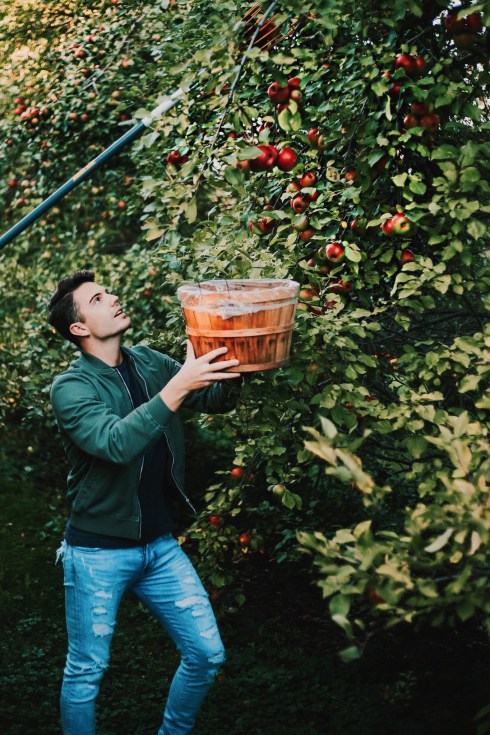
    An Apple Gathering

    An Apple Gathering
    by Christina Rossetti, 1830 – 1894

    I plucked pink blossoms from mine apple-tree
    And wore them all that evening in my hair:
    Then in due season when I went to see
    I found no apples there.

    With dangling basket all along the grass
    As I had come I went the selfsame track:
    My neighbours mocked me while they saw me pass
    So empty-handed back.

    Lilian and Lilias smiled in trudging by,
    Their heaped-up basket teased me like a jeer;
    Sweet-voiced they sang beneath the sunset sky,
    Their mother’s home was near.

    Plump Gertrude passed me with her basket full,
    A stronger hand than hers helped it along;
    A voice talked with her through the shadows cool
    More sweet to me than song.

    Ah Willie, Willie, was my love less worth
    Than apples with their green leaves piled above?
    I counted rosiest apples on the earth
    Of far less worth than love.

    So once it was with me you stooped to talk
    Laughing and listening in this very lane:
    To think that by this way we used to walk
    We shall not walk again!

    I let me neighbours pass me, ones and twos
    And groups; the latest said the night grew chill,
    And hastened: but I loitered, while the dews
    Fell fast I loitered still.


    The Road Not Taken

    The Road Not Taken
    By Robert Frost

    Two roads diverged in a yellow wood,
    And sorry I could not travel both
    And be one traveler, long I stood
    And looked down one as far as I could
    To where it bent in the undergrowth;

    Then took the other, as just as fair,
    And having perhaps the better claim,
    Because it was grassy and wanted wear;
    Though as for that the passing there
    Had worn them really about the same,

    And both that morning equally lay
    In leaves no step had trodden black.
    Oh, I kept the first for another day!
    Yet knowing how way leads on to way,
    I doubted if I should ever come back.

    I shall be telling this with a sigh
    Somewhere ages and ages hence:
    Two roads diverged in a wood, and I—
    I took the one less traveled by,
    And that has made all the difference.


    Nothing Gold Can Stay

    Nothing Gold Can Stay

    by Robert Frost

    Nature’s first green is gold,

    Her hardest hue to hold.

    Her early leaf’s a flower;

    But only so an hour.

    Then leaf subsides to leaf.

    So Eden sank to grief,

    So dawn goes down to day.

    Nothing gold can stay.

    Robert Frost wrote a number of long narrative poems like “The Death of the Hired Man,” and most of his best-known poems are medium-length, like his sonnets “Mowing” and “Acquainted with the Night,” or his two most famous poems, both written in four stanzas, “The Road Not Taken” and “Stopping by Woods on a Snowy Evening.” But some of his most beloved poems are famously brief lyrics—like “Nothing Gold Can Stay,” which is condensed into only eight lines of three beats each (iambic trimeter), four little rhyming couplets containing the whole cycle of life, an entire philosophy.

    “Nothing Gold Can Stay” achieves its perfect brevity by making every word count, with a richness of meanings. At first, you think it’s a simple poem about the natural life cycle of a tree:

    “Nature’s first green is gold,

    Her hardest hue to hold.”

    But the very mention of “gold” expands beyond the forest to human commerce, to the symbolism of wealth and the philosophy of value. Then the second couplet seems to return to a more conventional poetic statement about the transience of life and beauty:

    “Her early leaf’s a flower;

    But only so an hour.”

    But immediately after that we realize that Frost is playing with the multiple meanings of these simple, mostly single syllable words—else why would he repeat “leaf” like he’s ringing a bell? “Leaf” echoes with its many meanings—leaves of paper, leafing through a book, the color leaf green, leafing out as an action, as budding forth, time passing as the pages of the calendar turn….

    “Then leaf subsides to leaf.”

    As the Friends of Robert Frost at the Robert Frost Stone House Museum in Vermont point out, the description of colors in the first lines of this poem is a literal depiction of the spring budding of willow and maple trees, whose leaf buds appear very briefly as golden-colored before they mature to the green of actual leaves.

    Yet in the sixth line, Frost makes it explicit that his poem carries the double meaning of allegory:

    “So Eden sank to grief,

    So dawn goes down to day.”

    He is retelling the history of the world here, how the first sparkle of any new life, the first blush of the birth of mankind, the first golden light of any new day always fades, subsides, sinks, goes down.

    “Nothing gold can stay.”

    Frost has been describing spring, but by speaking of Eden he brings fall, and the fall of man, to mind without even using the word. That’s why we chose to include this poem in our seasonal collection of poems for autumn rather than spring.


    The Flower

    The Flower
    by George Herbert

    How fresh, O Lord, how sweet and clean
    Are Thy returns! ev’n as the flow’rs in Spring,
    To which, besides their own demean
    The late-past frosts tributes of pleasure bring;
    Grief melts away
    Like snow in May,
    As if there were no such cold thing.

    Who would have thought my shrivel’d heart
    Could have recover’d greennesse? It was gone
    Quite under ground; as flow’rs depart
    To see their mother-root, when they have blown,
    Where they together
    All the hard weather,
    Dead to the world, keep house unknown.

    These are Thy wonders, Lord of power,
    Killing and quickning, bringing down to Hell
    And up to Heaven in an houre;
    Making a chiming of a passing-bell.
    We say amisse
    This or that is;
    Thy word is all, if we could spell.

    O that I once past changing were,
    Fast in Thy Paradise, where no flower can wither;
    Many a Spring I shoot up fair,
    Offring at Heav’n, growing and groning thither,
    Nor doth my flower
    Want a Spring-showre,
    My sinnes and I joyning together.

    But while I grow in a straight line,
    Still upwards bent, as if Heav’n were mine own,
    Thy anger comes, and I decline:
    What frost to that? what pole is not the zone
    Where all things burn,
    When Thou dost turn,
    And the least frown of Thine is shown?

    And now in age I bud again,
    After so many deaths I live and write;
    I once more smell the dew and rain,
    And relish versing: O, my onely Light,
    It cannot be
    That I am he
    On whom Thy tempests fell all night.

    These are Thy wonders, Lord of love,
    To make us see we are but flow’rs that glide;
    Which when we once can find and prove,
    Thou hast a garden for us where to bide.
    Who would be more,
    Swelling through store,
    Forfeit their Paradise by their pride.