Category Archives: Poetry

The Poet

The Poet
by Yone Noguchi

Out of the deep and the dark,

A sparkling mystery, a shape,

Something perfect,

Comes like the stir of the day:

One whose breath is an odour,

Whose eyes show the road to stars,

The breeze in his face,

The glory of Heaven on his back.

He steps like a vision hung in air,

Diffusing the passion of Eternity;

His abode is the sunlight of morn,

The music of eve his speech:

In his sight,

One shall turn from the dust of the grave,

And move upward to the woodland.

About This Poem

“The Poet” was published in Selected Poems of Yone Noguchi (The Four Seas Company, 1921).

Yone Noguchi, the first Japanese-born writer to publish poetry in English, was born in 1875 in Tsushima. His first book of poetry in English was Seen and Unseen, or Monologues of a Homeless Snail (Gelett Burgess & Porter Garnett, 1896). He died in Toyooka-mura on July 13, 1947.



It Was Summer Now and the Colored People Came Out Into the Sunshine

It Was Summer Now and the Colored People Came Out Into the Sunshine
by Morgan Parker

They descend from the boat two by two. The gap in Angela Davis’s teeth speaks to the gap in James Baldwin’s teeth. The gap in James Baldwin’s teeth speaks to the gap in Malcolm X’s Teeth. The gap in Malcolm X’s teeth speaks to the gap in Malcolm X’s teeth. The gap in Condoleezza Rice’s teeth doesn’t speak. Martin Luther King Jr. Boulevard kisses the Band Aid on Nelly’s cheek. Frederick Douglass’s side part kisses Nikki Giovanni’s Thug Life tattoo. The choir is led by Whoopi Goldberg’s eyebrows. The choir is led by Will Smith’s flat top. The choir loses its way. The choir never returns home. The choir sings funeral instead of wedding, sings funeral instead of allegedly, sings funeral instead of help, sings Black instead of grace, sings Black as knucklebone, mercy, junebug, sea air. It is time for war.

About This Poem

“This is one of the last poems I wrote for my collection Magical Negro, which has an epigraph from Gertrude Stein’s Three Lives, from which the poem title comes. Magical Negro deals largely with intergenerational connection and Black American iconography, and the gap between Angela Davis’s teeth is one of the mascots that shows up in a few poems. I wanted this poem to be, in Glenn Ligon’s words, ‘negro sunshine’—a collective embrace and armoring. The last line of the poem wrote itself.”
—Morgan Parker
Morgan Parker

Morgan Parker is the author of There Are More Beautiful Things Than Beyoncé (Tin House Books, 2017), Other People’s Comfort Keeps Me Up at Night (Switchback Books, 2015), and Magical Negro, forthcoming from Tin House Books in 2019. She lives in Los Angeles.


14th Street Gym

14th STREET GYM

Beauty that does not disguise the wound,
but reads through the lack of it,
the one-armed man lifts himself again

on the assisted pull-up machine—
sleeve of sparrows and morning glories
swelling with each upward pull.

In the locker room, I praise his ink
and he turns to thank me, and so I notice
(what you can’t restore, inscribe)

the blue wing needled on the socket.

~ Mark Doty


Amid the Roses

Amid the Roses
by Alice Dunbar-Nelson

There is tropical warmth and languorous life
Where the roses lie
In a tempting drift
Of pink and red and golden light
Untouched as yet by the pruning knife.
And the still, warm life of the roses fair
That whisper “Come,”
With promises
Of sweet caresses, close and pure
Has a thorny whiff in the perfumed air.
There are thorns and love in the roses’ bed,
And Satan too
Must linger there;
So Satan’s wiles and the conscience stings,
Must now abide—the roses are dead.


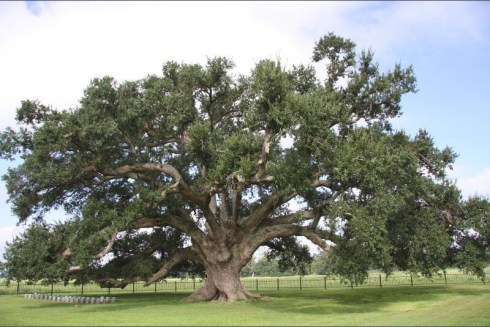
I saw in Louisiana a live-oak growing

I saw in Louisiana a live-oak growing
by Walt Whitman

I saw in Louisiana a live-oak growing,
All alone stood it and the moss hung down from the branches,
Without any companion it grew there uttering joyous leaves of dark
green,
And its look, rude, unbending, lusty, made me think of myself,
But I wonder’d how it could utter joyous leaves standing alone there
without its friend near, for I knew I could not,
And I broke off a twig with a certain number of leaves upon it, and
twined around it a little moss,
And brought it away, and I have placed it in sight in my room,
It is not needed to remind me as of my own dear friends,
(For I believe lately I think of little else than of them,)
Yet it remains to me a curious token, it makes me think of manly love;
For all that, and though the live-oak glistens there in Louisiana solitary
in a wide flat space,
Uttering joyous leaves all its life without a friend a lover near,
I know very well I could not.


Experience

Experience
Carl Sandburg, 1878 – 1967

This morning I looked at the map of the day
And said to myself, “This is the way! This is the way I will go;
Thus shall I range on the roads of achievement,
The way is so clear—it shall all be a joy on the lines marked out.”
And then as I went came a place that was strange,—
’Twas a place not down on the map!
And I stumbled and fell and lay in the weeds,
And looked on the day with rue.

I am learning a little—never to be sure—
To be positive only with what is past,
And to peer sometimes at the things to come
As a wanderer treading the night
When the mazy stars neither point nor beckon,
And of all the roads, no road is sure.

I see those men with maps and talk
Who tell how to go and where and why;
I hear with my ears the words of their mouths,
As they finger with ease the marks on the maps;
And only as one looks robust, lonely, and querulous,
As if he had gone to a country far
And made for himself a map,
Do I cry to him, “I would see your map!
I would heed that map you have!”


Boston

Boston
Aaron Smith

I’ve been meaning to tell
you how the sky is pink
here sometimes like the roof
of a mouth that’s about to chomp
down on the crooked steel teeth
of the city,

I remember the desperate
things we did
and that I stumble
down sidewalks listening
to the buzz of street lamps
at dusk and the crush
of leaves on the pavement,

Without you here I’m viciously lonely

and I can’t remember
the last time I felt holy,
the last time I offered
myself as sanctuary

*

I watched two men
press hard into
each other, their bodies
caught in the club’s
bass drum swell,
and I couldn’t remember
when I knew I’d never
be beautiful, but it must
have been quick
and subtle, the way
the holy ghost can pass
in and out of a room.
I want so desperately
to be finished with desire,
the rushing wind, the still
small voice.

I will be in Boston most of this week for work, and I thought this was an appropriate poem to use. The imagery in this poem is quite interesting to me, especially the last stanza about the two men and the poets perception of self beauty, or lack there of.


Fire and Sleet and Candlelight

Fire and Sleet and Candlelight
by Elinor Wylie

For this you’ve striven
Daring, to fail:
Your sky is riven
Like a tearing veil.

For this, you’ve wasted
Wings of your youth;
Divined, and tasted
Bitter springs of truth.

From sand unslakèd
Twisted strong cords,
And wandered naked
Among trysted swords.

There’s a word unspoken,
A knot untied.
Whatever is broken
The earth may hide.

The road was jagged
Over sharp stones:
Your body’s too ragged
To cover your bones.

The wind scatters
Tears upon dust;
Your soul’s in tatters
Where the spears thrust.

Your race is ended—
See, it is run:
Nothing is mended
Under the sun.

Straight as an arrow
You fall to a sleep
Not too narrow
And not too deep.


[Sonnets are full of love, and this my tome]

[Sonnets are full of love, and this my tome]

by Christina Rossetti

Sonnets are full of love, and this my tome
Has many sonnets: so here now shall be
One sonnet more, a love sonnet, from me
To her whose heart is my heart’s quiet home,
To my first Love, my Mother, on whose knee
I learnt love-lore that is not troublesome;
Whose service is my special dignity,
And she my loadstar while I go and come.
And so because you love me, and because
I love you, Mother, I have woven a wreath
Of rhymes wherewith to crown your honoured name:
In you not fourscore years can dim the flame
Of love, whose blessed glow transcends the laws
Of time and change and mortal life and death.


The Voice of God

The Voice of God

by Crystal Williams

Poem for Aretha Franklin

when she opens her mouth
our world swells like dawn on the pond
when the sun licks the water & the jay garbles,
the whole quiet thing coming into tune,
the gnats, frogs, the dandelion pollen, the
pebbles & leaves & the whole world of us
sitting at the throat of the jay
dancing in the throat of the jay
all of us on the lip of the jay
singing doowop, doowop, do.

About This Poem

“Many years ago I heard someone describe Aretha Franklin’s voice as the voice of God, which was an amazing thing to say. This meditation is my attempt at understanding why that statement struck me as profoundly true. In the end, Aretha’s voice is an aggregation of the choruses of the natural world—all of their harmony, complexity, and distinctiveness—and it is as close to the divine as I can imagine.”
—Crystal Williams